After the impressive surprise which was Jericho Ridge, I figured I should try out another BET Original movie and see how it fared. As the grade above should tell you, the answer is comparatively poorly. While technically adequate in most departments, it’s one of the more implausible Die Hard knockoffs I’ve seen. In a world where No Contest exists, that takes some doing. The high concept here is “Die Hard in a court-house” with Judge Jaeda King (Naughton) about to pronounce sentence in the trial of convicted murderer Sean Samuels (Mitchell). Barely has she said “death”, when the court is stormed by a force led by Sean’s brother Gabriel (Gross), a.k.a. “Black Caesar”.
King escapes the initial onslaught, along with Sean, his defense attorney, and Stryker (Messner), one of the courthouse guards. Gabriel, however, is not just interested in freeing his brother. He also puts the prosecuting attorney on trial in a kangaroo court, designed to prove the flaws and biases inherent in the system. Much of the film is therefore split between King and her group trying to figure out how to survive, as well as escape, and the courtroom side of things, where nasty little secrets are revealed, such as the prosecutor’s relationship to King having been more than professional. I will say, Miller does a good job of keeping both sides of the story moving forward. It would have been easy for the chattier portions to bring things to a halt: that doesn’t happen.
This aspect is certainly helped by a strong performance from Gross, who manages to avoid the obvious tropes of such a situation, and comes over as smart, well-spoken and committed. He’s no Alan Rickman of course; then again, who is? I found myself, if not quite on Gabriel’s side, at least seeing his point of view and his grounds for extreme action. The main problem is a failure to set King up as credible opposition. Before things kick off, there’s no reason to view her as an action heroine: all we see is her being easily beaten by her martial-arts teacher. Then, suddenly, she – or, rather obviously, Naughton’s stunt double – is kicking butt and spraying bullets around like a grizzled Army Ranger.
Okay, Naughton is far better than Anna Nicole Smith, though that’s a low bar for anyone to clear. She does okay with the dramatic side of things, though the script occasionally gives her little to work with. The broken relationship with her spouse feels like another element poorly lifted from Die Hard, and things like her overhearing another judge go full racist were so obvious as to trigger an eye-roll. Miller does have a nice visual eye, e.g. the shot of the attackers marching towards their target was a genuine stand-out, and there’s enough competence to stop it from being actively annoying. However, its script needed more work, and perhaps a better central concept, to succeed in an over-crowded field.
Dir: Wes Miller Star: Naturi Naughton, Lance Gross, Jason Mitchell, Johnny Messner
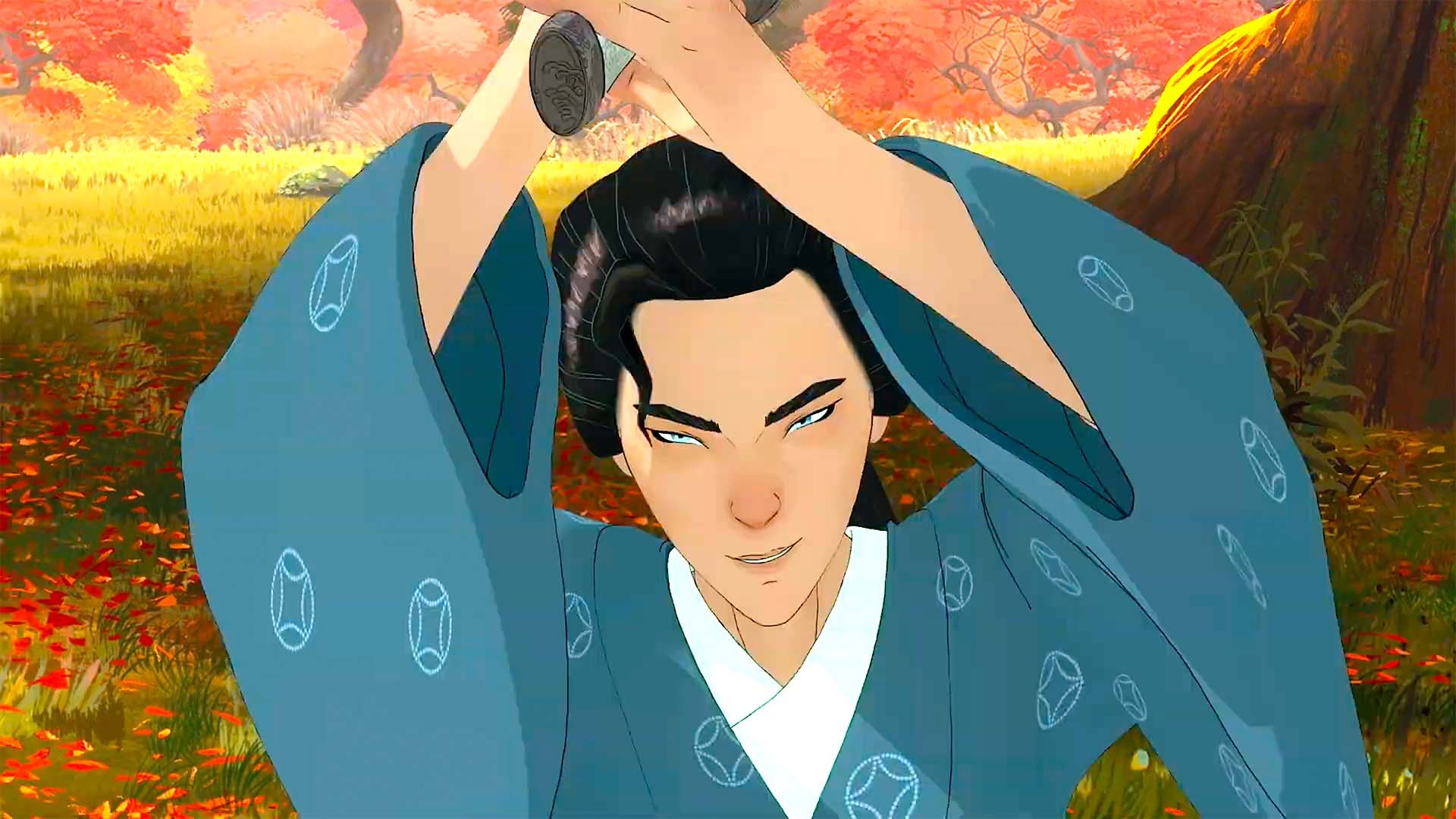
Plot. Mizu (Erskine) has a grudge. She’s a mixed-race young woman living in 17th-century Japan, a position which leaves her at the bottom of society. But she has dragged herself up to become an onna-musha, a warrior with ferocious sword skills, courtesy of Master Eiji (Cary-Hiroyuki Tagawa), the blind swordsmith who raised her. Now, she’s on the hunt to take revenge on the man she believes is her father, Abijah Fowler (Branagh). He’s an Irish smuggler, who is upsetting the delicate balance of Japanese society, closed to foreigners, by importing firearms. He’s involved in planning a coup to overthrow the current shogun.
[Editor’s note: the original plan was for Dieter and I to review it independently, then combine the two pieces. But Dieter went into rather more detail! So most of what follows is his opinion, with my thoughts sprinkled as garnish, in italics]
I have to admit my opinion on this show has changed a couple of times while watching it. First, there was the enthusiasm of a Japan-based-action series with a female main character. After that I thought about the “wokeness” of the show (after all, it’s Netflix), something that hardly can be overlooked. And finally, I recognized the strong effort that went into the storytelling, the visual beauty, and small details of the show and realized that while definitely a “woke” story, these elements are neither too strong nor too dominant to destroy the genuine pleasure I had when watching it.
I liked this, but it’s probably fair to say I didn’t love it. I tend to have a blind-spot with regard to animated action. Personally, I find it’s a medium that dilutes the intensity of fight scenes, because it applies a distancing effect to it. I’m always aware that I’m watching drawings or pixels beating the heck out of each other, which is intrinsically going to be less impressive than people “really” doing so. If this had been live-action, and equally gory, it could have been awesome. There’s also a weird visual choice here in that Mizu’s nose is typically shadowed. This has the unfortunate effect of making her look to me either as if she has a bad head cold, or if she is a habitual alcoholic.
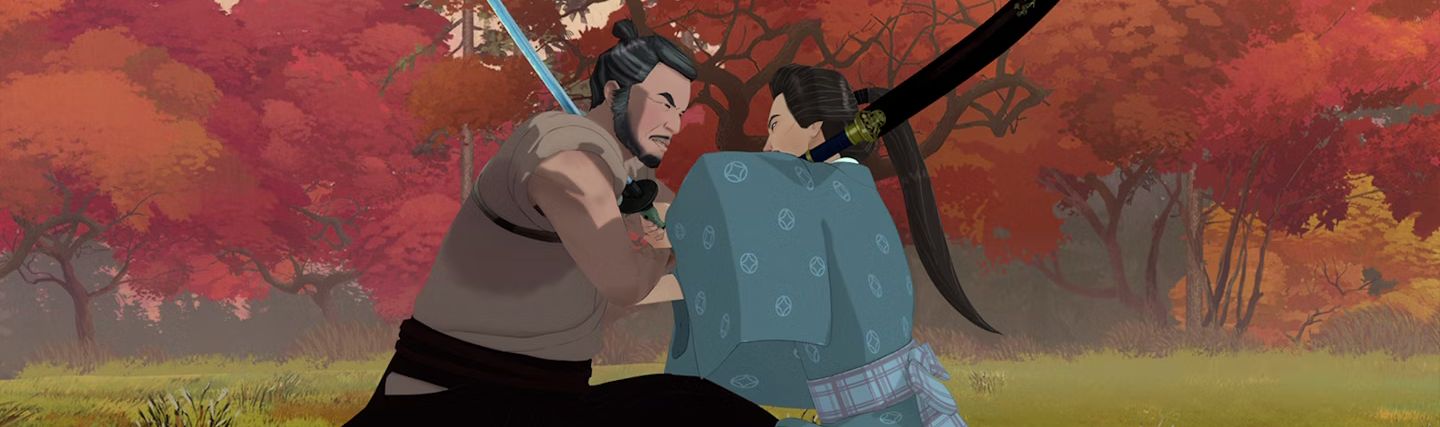
But first things first: despite its title and the location (Japan in 1657 in the Edo era) Blue Eye Samurai is – an American product, so certain allowances have to be made. While I do love a story of female persistence, this 8-part show pushes the limits of believability. We have to accept that, at a time when foreigners are forbidden to be in Japan, not only there is such a person living there, but also this man fathered a daughter. This means she is half-Caucasian, half-Japanese and therefore considered a “demon”, harassed by pure-blood Japanese who have never seen such a stranger in their country. She will then become a trained “samurai” – quotes used advisedly, as we’ll see – with the appropriate sword skills.
It’s a stretch, though still in the reign of possibility, since there have been, real swordswomen in Japan. That woman then going on a rampage, hell-bent on revenge for… well… her own creation? This does not make much sense to me. After all, should we not all be happy we exist? But then, my own life, like most, has been peaceful and harmonious. In contrast, the main character, Mizu, has led a life of misery, constantly been harassed, pursued with hatred, endangered and betrayed. It’s not difficult to imagine, if you grew up that way, you would sooner or later start to hate the man responsible for your very existence. Though strangely, she doesn’t seem to hold a similar grudge against the mother who gave birth to her,
Mizu’s path leads her to Ringo, the son of a innkeeper, who has no hands (remember, this is Netflix!). After being saved by her, he becomes her servant. There’s also Taigen, a samurai-in-training, who once lived in the same town as Mizu and almost succeeded in killing her as a child. After she beat him in battle, he feels his honour is insulted and follows Mizu to challenge her to a rematch. But his revenge has to wait. A further complication arises in Japanese noblewoman Akemi, who is in love with Taigen and would like to marry him. Though her father has other marriage plans and Taigen is not ready to marry her until he has regained his honor. None of them know (yet) that Mizu is a woman. And as Mizu mercilessly pursues her path of revenge, Ringo and Taigen become her allies, with some indication of a mutual attraction between Mizu and Taigen.
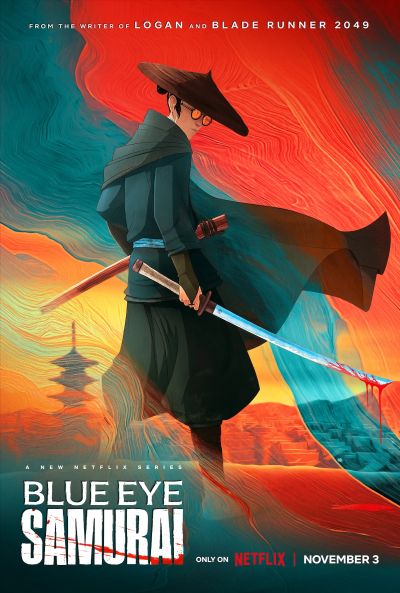
Blue Eye Samurai is a French-American animated show by Blue Spirit for Netflix, created by Michael Green (the screenwriter for Logan and Blade Runner 2049) and Amber Noizumi. They were inspired by their daughter, who was born 15 years ago with blue eyes. Noizumi spoke about how she, herself biracial, wondered what it would have been like to lived as a biracial person in 17th-century Japan, when Japan’s borders were closed to the outside world and strangers from abroad would have no chance to be accepted in society. Another, unconfirmed inspiration might be British navigator William Adams who travelled to Japan in 1600, and was called “the blue-eyed samurai”. He also inspired the ever-popular series Shogun, which Netflix just remade. What a coincidence.
Other influences, according to Noizumi, were movies such as Kill Bill, Lady Snowblood, and… Yentl, Barbara Streisand’s musical about a Jewish woman who wants to study and has to take on a male identity. It has been confirmed by Noizumi that Mizu was inspired by Clint Eastwood’s break-out Man with No Name role in the famous Dollars trilogy by Sergio Leone, This fits, because the show often reminded me less of a typical Japanese jidaigeki (historical drama) or chanbara (sword-fighting movie with a historical background), but more a Western in disguise. If the mix between East and West was intended, whether this makes it “the best of two worlds” or a travesty is up to you. But it’s not really the first of its kind, considering Tom Cruise’s The Last Samurai.
I personally don’t like it when words like “emancipation” or “discrimination” are thrown around in relation to a show mainly meant to entertain. But in this case, they are justified given the very basis of the show, in medieval Japan. This setting is different to current Western countries, being one with a mostly homogeneous population, traditional conservative values and what feminists nowadays like to call “patriarchal”, as a background for a story of female emancipation and racist discrimination. You may question what “woke propaganda” Netflix is tossing at an innocent viewer this time. But it’s a relief that any messaging comes, not in heavy-handed preaching, as is typical for many Netflix shows, but mostly carefully integrated into the show, rather than feeling like they were bolted on.
The show certainly ticks all the diversity check-boxes with its characters. We have a biracial female who taught herself everything, a repressed (though in the context of the era “spoiled” might be more accurate?) lord’s daughter, a helpful assistant born with no hands, a blind sword-maker, while an old white man is the perverse, cruel villain, and women have no say in society, serving as servants or prostitutes. Did I forget anything? Despite it all, this feels acceptable given the time and place in which the story occurs.
As noted, in choosing this kind of story, time and place, the creators often stretch the limits of believability. In particular, with Akemi, the daughter of a powerful lord who wants to marry her to the son of the shogun. She is in love with Taigen, so absolutely resists that idea. Akemi comes across the entire series as enormously stubborn, resisting advice and always wanting to get her way. I have to shake my head in disbelief, knowing that the idea of “marriage for love” was in those times rare both in Japan and Europe (Historians say the idea of what we call today “romantic love” was born around 1850). People married due to sharing social class, to keep property within a circle of families, or because their business-partnered parents decided so, sometimes even before they were born.
Even more unbelievable for the time, is the idea a Japanese woman would have been allowed to voice her wishes or opinion in the blunt manner depicted here. Quite honestly, I think if any woman would have behaved so disrespectfully to an older man, giving strong, vocal objections or even slapping the shogun’s son, she would have immediately been beheaded or drowned in the nearest pond. The wish of the creators to have another strong female character in the show backfires here. Akemi is what you would expect a modern, Western young woman to be, not a Japanese woman from the Edo era. This is fan-fiction at best, bad research at worst.
Probably my least favourite aspect was this significant side-plot involving noble samurai Taigen (Barnet), and his true love, the Princess Akemi (Branda Song), who is about to be married off against her will. Neither of those characters seemed significant, and it felt like this sometimes became an excuse for male-bashing. Brothel madam Kaji (Ming-Na Wen) was the worst for that: look, nobody is keeping you a prostitute. Get out of the profession or quit complaining about your customers. Oh, and if men are bad, white men as embodied by Fowler are the absolute worst.
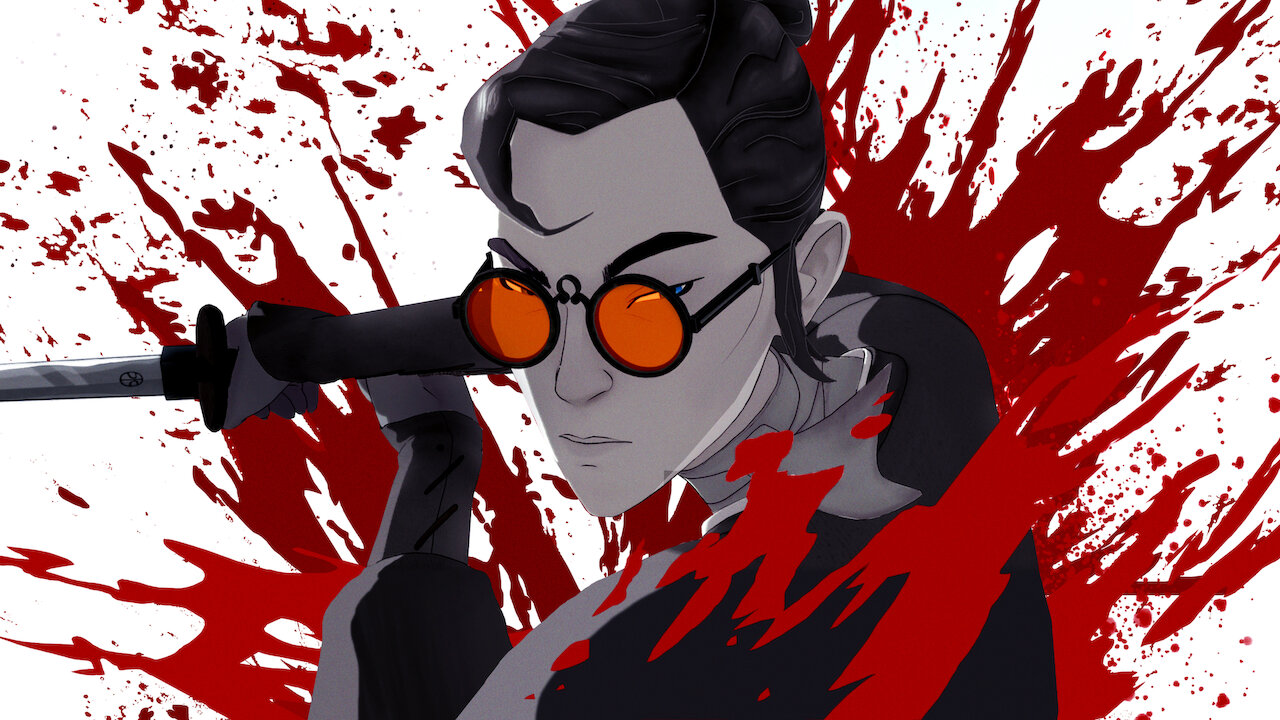
A word of warning to the uninitiated. The show does not hold back in the depiction of violence. The slicing-off of extremities sometimes made me wonder if the victims’ bodies were made out of styrofoam, and I also found a bit excessive, the arterial blood spray. How many litres does the human body contain? The same goes for sexuality, though less often. I personally have seen more extreme things, but this is Western animation, and the audience may not be quite prepared for the graphic content. But I guess anyone going to watch the show would probably know beforehand it is not a show for children. You wouldn’t expect kid-friendly content from an Akira Kurosawa samurai movie, wouldn’t you?
This was not a problem for me. Indeed, I would have been disappointed had it been any other way! The “garden hose” approach to blood has long been a mainstay of Japanese cinema, certainly back as far as the early seventies and the Lone Wolf & Cub films – a staple of Western VHS stores under the title of Shogun Assassin. Realism isn’t a factor, and this is an area where animation can really push the pedal to the metal, being unconstrained by the limits of latex and Karo syrup.
Ah, yes… samurai, that’s a key word: after all, it’s in the title and is mentioned several times. I should stress here, Mizu definitely is no samurai by the traditional definition. He would usually act in service of a daimo, a feudal landlord serving the shogun. This usually comes with certain obligations and behaviour that would be seen as a code of honor. Mizu quite definitely doesn’t fit the description. However, many of Kurosawa’s “samurai” don’t either, including The Seven Samurai or the character Toshiro Mifune plays in Yojimbo and Sanjuro (which, cycling back, served as inspiration for Eastwood’s Man with No Name). But the writers of the show were really smart, and address it within the story. When Ringo complains she doesn’t act like a samurai would, she turns and angrily shouts: “I never said I am one.” It’s a sign of well thought-out screenwriting, and I like it very much. Kudos to the storytellers: now, will they make the show eventually deliver what the title promises?
I was less impressed with the music. More than once the people responsible seemed to think, “As long as it’s cool, everything is fine” – an attitude I personally don’t agree with at all. For example, in a training montage of Mizu, the famous “Battle Without Honor Or Humanity” by Tomoyasu Hotei plays. Sure, a cool tune from a Japanese composer. But it’s modern music and – though first used somewhere else – so closely associated with Kill Bill, it really felt like a misstep. Other popular pieces, e.g. by the Black Cats or Metallica, have even less justification. You tell a story in 17th century Japan, please apply music that fits the time period. And partly the show feels like a check-list of everything you ever heard or saw in the West about classic Japanese culture, from bunraku (classical puppet theatre) through geishas, samurai, Zen-like philosophy, sword-making, kimonos, calligraphy and so on and on. You name it, they have it.
With regard to the cultural depictions, I wasn’t happy with the fact these obviously Japanese characters were speaking in English, to the point I even checked for a Japanese dub option (no luck). It felt like the creators sent out a casting call for any Hollywood voice talent with somewhat Asian origins, e.g. Song, born in California to Thai parents, and having Kenneth Branagh putting on a dodgy Irish accent doesn’t help. Were all genuinely Celtic actors unavailable?
Episode 6 really knocked my socks off. It played virtually like a computer game: think Tomb Raider’s Lara Croft going through different levels of the game, plus elements from Resident Evil for good measure. I’m not saying it was bad. so much as unexpected. It’s also a point when it became harder to suspend my disbelief concerning Mizu’s abilities. I mean, how many people can you still fight, after one of your feet gets perforated? Or fighting a dozen-plus armed men without a weapon? Or carrying a man on her back, hanging from her sword on a stone wall, then climbing with said sword in her mouth (!) to safety on higher ground? Are we really sure she is not the child of a supernatural monster? I’m willing to believe this woman is exceptional, but this was a bit much. Mizu gets dangerously close to the superheroes of popular comic-book movies who can do anything, and usually do.
Part 6 was my favourite of the entire show, because it removed all the extraneous elements (hello, Taigen, Ringo and Akemi!), leaving it a blow-dart episode – all it had was point, simply Mizu fighting her way inexorably towards her goal. Which was what I came here to see, frankly.
What saves the character’s depiction again and again, is the makers never make it easy for her. She bleeds a lot over the course of the story. Mizu is shown making mistakes, and is not a hero since, as much as you sympathize with her goal, it is in the end selfish. I attribute the fact she survives this season to her remarkable physical skills, absolute die-hard dedication to her self-set cause, the help of her (very often smarter) allies and an enormous portion of luck. Which… works for me, though I’d have wished for a bit more realism in a show that explicitly is not fantasy. What is impressive is the visual style. A lot of work went into the landscapes, the backgrounds, and probably researching how ancient Japanese houses, buildings and temples looked. There are a lot of little details that you may overlook when watching the show for the first time. Also, as expected, the voice performances by actors such as Erskine, Takei, Branagh, Tagawa and many others are excellent.
I agree, the animation was great, especially in the action scenes, which were probably as good as anything I’ve seen this side of a Miyazaki movie. Fluid, and assembled in a way that certainly seemed cinematic. It was often easy to forget you were watching animation, and that’s close to the highest praise I can give the medium. Plot-wise, the main storyline was also excellent. I loved the fact that Mizu is single-mindedly focused on her revenge. That it might help avoid the Shogun being overthrown is utterly irrelevant to her.
It must be said that Mizu herself is a character ‘work in progress’. As mentioned, less a hero, than driven by years of abuse, mistreatment, non-acceptance, anxiety and sheer hatred. I guess any little boy with red hair and glasses who was harassed in class can understand her. The feeling of not being part of society or a group, of being rejected due to just being how you are, is something many people will identify with. Though again: does it justify a violent rampage on a merciless one-woman war against the person that fathered you? Hardly. The feeling is softened by the fact Abijah Fowler, who may be her biological father, is a real piece of abhorrent trash. He is a disgusting, almost inhuman, pervert, who deserves his just deserts.
Interestingly, the final fight between Mizu and Fowler is the catalyst for the fire of 1657 which devastated Edo (today’s Tokyo). Perhaps the message here is, if you follow only your own egotistic trail – Mizu’s wish for revenge and Fowler’s to take over Japan – you risk turning into a destructive force that causes more harm than good. I hope Mizu might realize her thirst for revenge is not the best motive, but rather acting to prevent the mayhem Fowler and his people would bring to the world if allowed to run it. This would make Mizu a real heroine and earn her my respect. Perhaps indicators for such a development can be spotted when Mizu decides to save her “frenemy” Taigen from death. If the show is willing to follow this developing character trait, it could evolve into something very beautiful and extra-ordinary. We will see.
It ends on something of a cliff-hanger, without much resolved. Yet where it’s going has me genuinely interested, and it’s quite possible the (already announced) second season may end up addressing most of the issues. In particular, some of the more annoying characters look likely to be left behind!
In a time where female protagonists get everything they need or want on a platter, without having to do the hard work, make difficult decisions or sacrifices, a character like Mizu feels different. She has character flaws, feels pain and has to become a better person, not just to achieve her own goals, but better the world around her. That is what popular fiction needs right now, and Hollywood screenwriters should take notice. That’s how you should write a character: flawed, not perfect. If your character can already do everything and is perfect you end up with boring, bland characters like Rey or Captain Marvel. So, while still a bit too superwoman and “Xena-ish” for me, Mizu is a big step in the right direction. Despite some complaints, the show as a whole exceeds the large majority of current female-centered TV and films. I hope it might inspire other producers to learn from its example. This is how you do female empowerment right, without hitting both sexes of your audience on the head with messages or propaganda.
Creators: Amber Noizumi and Michael Green Star (voice): Maya Erskine, Masi Oka, Kenneth Branagh, Darren Barnet
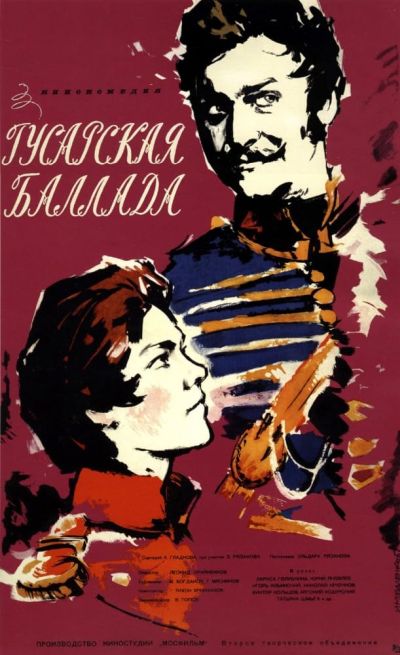
This is an adaptation of a Russian play A Long Time Ago by Alexander Gladkov, but was inspired by the real-life exploits of Nadezhda Durova. She was a woman who basically pulled a Mulan, concealing her gender in order to defend her homeland in the Napoleonic and other wars of the early 19th century. Durova joined the army on her 23rd birthday and served honourably for a decade, even after her true gender was discovered. Tsar Alexander I was impressed when he heard about Durova, giving her a promotion after summoning the soldier to his palace in St. Petersburg. Wounded by a cannonball at the Battle of Borodino, she eventually retired in 1816, with the rank equivalent to captain-lieutenant.
Somehow this became a light and fluffy slice of musical rom-com. 17-year-old Shura Azarova (Golubkina) is an accomplished rider and tomboy, who meets Hussar officer Dmitry Rzhevsky (Yakovlev), and is mistaken by him as a brother in arms. [As usual in these things, significant suspension of disbelief is required!] When war with France breaks out, Rzhevsky returns to his unit and Shura convinces faithful family retainer Ivan (Kryuchkov) to help her join the army in disguise. She makes a name for herself as a skilled and brave courier, though her relationship with Dmitry is more adversarial than romantic. There’s a French actress on whom he has designs, triggering her jealousy. Mistaken as rivalry, Dmitry and Shura end up having a duel, though the war keeps interfering in its execution.
All is forgiven after Shura is captured on a spying mission, Dmitry leading his platoon to the rescue, and leading to a rather decent extended fight, running through a ransacked stately home. [While the actual swordplay is no great shakes in general, the other stunts aren’t bad, including Shura leaping down off a balcony, which looks to have been done by the actress herself] The sudden moments where people burst into song are a little jarring initially, yet I got used to them – probably, again, a point of comparison to Mulan. The production is quite large in scale: there’s an opening ball sequence that’s impressive, and the battle scenes aren’t bad, albeit not quite War and Peace [though some of the costumes from it were recycled here!]
There is the obvious, and given the era probably entirely expected, patriotic theme, with discussions about defending the motherland. The film’s premiere took place on the 150th anniversary, to the day, of the previously-mentioned Battle of Borodino, a famous and bloody encounter between Russia and Napoleon’s forces – best known for inspiring the 1812 Overture by Tchaikovsky. However, it’s rarely heavy-handed, and for all its fluffiness, lack of substance and shortcomings in the motivation department, you do find yourself rooting for Shura. To be honest, perhaps to a greater degree than Dmitry, who comes off as a bit of an arrogant dick. Likely more genuinely progressive than anything coming out of Hollywood around the same time.
Dir: Eldar Ryazanov Star: Larisa Golubkina, Yuriy Yakovlev, Igor Ilyinsky, Nikolay Kryuchkov
This French film takes place a little way into the future, though society has undergone radical changes. Law enforcement is now privatized, with investigations contracted out to private investigators, who have to balance their costs in order to turn a profit on the cases they accept. One such PI is Blondie Maxwell (Langlart) – and to get the obvious out of the way first, no, she is not blonde It’s mentioned once, but never explained. She is currently on the trail of the terrorist Boloch, who has been mounting a campaign against Chronos Industry, the all-encompassing tech company, which is invested in almost every area of everyday life. The reward would go a long way to solving her perilous financial situation.
She gets a case to investigate the murder of an escort. It seems an open-and-shut case with the evidence squarely pointing at a journalist. However, something doesn’t sit right with Blondie, and the more she picks at the crime, the more it seems a set-up job. Even her getting the case seems suspicious, since authorities know she doesn’t have the resources to investigate it properly. The journalist claims the victim was actually his source, who was going to blow the lid of Chronos, not least a “dark” area of their network where murder for hire is bought and sold. Is he telling the truth, and what does this have to do with Boloch and his campaign?
As the tag-line above implies, this bears a significant resemblance to Stephen Spielberg’s Minority Report, with its tale of law and order run by technology. which someone on the inside gradually comes to realize isn’t as idyllic as it seems. This is rather less nuanced. At one point, a colleague of Blondie says, “Our job is to make the world safer. If that means sacrificing a little liberty, it works for me. It works for us all. It’s a choice we make as a society.” However, it’s clear Ivanowich’s sympathies are more aligned with Benjamin Franklin. This is very much a pre-liberty screed, though credit for being at least somewhat ahead of the curve with its concerns about artificial intelligence, an issue of increasing scrutiny in 2023.
Unlike Minority Report, it doesn’t have the budget to create a fully-fledged future society. This one looks like ours in almost every way, just with a few added bits of gadgetry, such as displays embedded into contact lenses. Maxwell’s main trait is her dogged determination to find out the truth, regardless of the personal cost, and she makes for an admirable heroine. As played by Langlart, she’s down to earth, though there were points where it seemed like the script had all but forgotten about Blondie. Either Ivanowich fell too much in love with the setting. or the story might have benefited from fewer characters and a sharper focus. Definitely not terrible though, and a good example of what can be done with imagination instead of budget.
Dir: Julien Ivanowich Star: Léonie Langlart, Stéphane Dufourcq, Vincent Terrier, Boris de la Higuera
It’s kinda interesting to compare this to Mercy Falls. Both concern an ill-fated trip into a scenic wilderness – all trees and waterfalls – by a group of friends, which goes increasingly off the rails. The main difference is, in Mercy, the call was coming from inside the house, as it were. Here, the threat is definitely external. The target is four friends, just finished high school and about to enter the world at large. Jesse (Oulette) will work as a mechanic; his girlfriend Alex (Waisglass) wants to leave their small town and go to college, but hasn’t plucked up the courage to tell Jesse yet. Making matters more complex, her father is part of the Dark Saints, a biker gang and generally criminal enterprise.
This matters, because the Dark Saints just lost a shipment of drugs, the plane carrying it having crashed in a remote region of a nearby national park. Their minions are on the hunt for it, but – what are the odds? – Alex and her friends are first to stumble across it. A discussion ensues about what to do, but it’s all rendered moot after they cross paths with the minions. Before you can say, “implausible plot line,” Jesse has broken his leg and he, plus another of the quartet, pregnant pal Em (Laflamme-Snow) have been captured by the bad guys. It’s up to Alex to figure out what to do, as the only member of the group left able to operate freely.
Which is fortunate, since she’s also the smartest of the people wandering in the woods, and it’s not even close. Let’s just say, pond life would likely rate second or third place among these people, and I’m including both the hikers and the minions in those rankings. Seeing her mental wheels spinning as she out-thinks and outmanoeuvres her enemies is one of the few pleasures this offers. But it’s like watching a grand master playing chess against a pigeon. The only genuine and credible threat is her Dad and the Dark Saints, and they don’t show up until the very end of proceedings. With Alex’s witless friends, dumb and/or unlikable, the ones in peril, the stakes here aren’t enough to engage the viewer either.
I will say, the film does look half-decent, with Diego Guijarro’s cinematography popping nicely off the screen, and the Canadian backdrop is scenic. But too often, the film pulls its punches, whether it’s a character leaping off the waterfalls, depicted with them simply vanishing out of sight, or a pivotal car crash in which it appears no vehicles were actually harmed. This might as well be a TVM, with only the potty-mouths of some inhabitants meriting more than a PG rating. It’s all blandly innocuous, and despite Waisglass’s best efforts, it never gels. Things like Em’s pregnancy, for instance, feel like an afterthought, which goes nowhere and seems like nothing more than a cheap ploy to get audience sympathy. Memo to the film-makers: it didn’t work.
Dir: Egidio Coccimiglio Star: Sara Waisglass, Joel Oulette, Sadie Laflamme-Snow
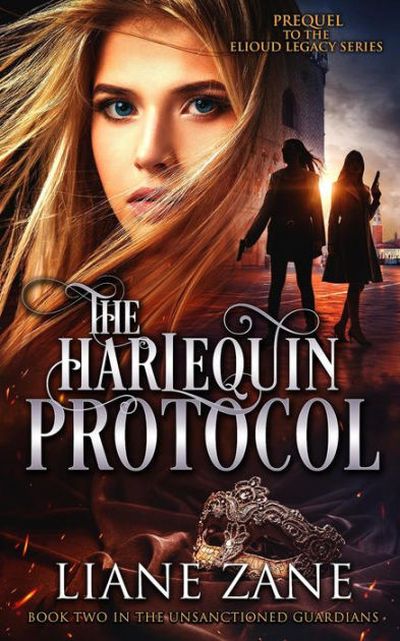
This is the second novel in the author’s Unsanctioned Guardians trilogy, a prequel to her earlier Elioud Legacy series. The new trilogy presents the background of how the three heroines of the first one (all of whom were intelligence agents, though of different nationalities) met and formed their sub rosa partnership as off-the-books rescuers of female victims of sexual abuse and trafficking. In the first book, The Covert Guardian, Zane focused entirely on Olivia Markham, who would become the trio’s ringleader, describing her recruitment and first mission with the CIA. Olivia continues to be the main (and almost sole) viewpoint character here, but this installment also introduces the other members of the threesome, Capt. Alzbeta “Beta” Czerna of Czech military intelligence and Anastasia “Stasia” Fiore of Italy’s CIA equivalent, AISE.
My impression is that about two years have passed in Olivia’s career since the previous book (the date for this one, 2011, isn’t mentioned in the text itself as I recall, though it is in the cover copy; but I don’t remember any exact date for the first one.) Here as in all of Zane’s work, her knowledge of spy-craft, of the various brands, specs and capabilities of firearms and explosives used by U.S. and European military and intelligence services, and of the cultural and physical geography of a variety of European settings is a strength of the series, and never delivered intrusively. (Action here moves from Berlin to Brussels, to Prague and the Czech-Polish border region, and to Venice.)
We also get an inside look at the bureaucratic mindset of the present-day CIA (which has been negatively commented on in nonfiction writings by intelligence professionals who know about the subject), the penchant of some of its honchos for turf and ego protection, and the tendencies towards abuse of power that can be endemic in secret organizations. (The latter is a point of contact with John LeCarre’s work, though I suggested in my review of the previous book that Zane’s vision is more like that of Manning Coles or Alistair MacLean –like the latter, she does view espionage in moral terms, as properly concerned with thwarting genuine evil, but she’s also realistic about the moral shortcomings and conflicting agendas that intelligence agencies staffed by fallible humans can be prey to.)
Because the author and I are Goodreads friends, she graciously gifted me with a review copy of the paperback edition of this book, as she has with all of her books, as soon as it was published; though she knew I’d really liked the previous book, she didn’t pressure me for a favorable review, but trusted that the book would stand on its merits. It definitely did; I actually liked this one even better! What earned the added appreciation (and the fifth star) was what I felt was the heightened dimension of moral challenge and choice here, which for me often makes the difference between great and merely good fiction, and which isn’t as strongly present in the first book. Discerning what the right thing is here requires thinking for oneself, not just obeying orders; and deciding to do it comes with a real risk, not just of harm to life and limb, but of disapproval from the powerful, of serious repercussions to one’s career, and maybe of legal punishment. The strong, distinct characterizations of the three heroines, who are each very different individuals though sharing a basic gut instinct for justice and decency, is also a positive feature that makes the book stand out from the pack.
Bad language here is minor. There’s no explicit sex; Olivia stumbles on a gang rape at one point, but it’s not graphically described, and though we see the traumatized and abused victims of sex trafficking (and in one case the dead body of a victim), we aren’t forced to see what they went through. As far as Olivia’s personal life is concerned, it’s briefly mentioned that since the first book, she’s been intimate with only one man, whom she loved and expected to marry (readers of the preceding trilogy will know that didn’t happen!), but the couple’s privacy isn’t violated.
We do have a lot of violence here, and a high body count, but Zane doesn’t make it any more gory than it has to be. IMO, this trilogy should be read in order. However, I wouldn’t say that the previous trilogy necessarily needs to be read first; and it’s really in a different genre(s) than this one, so might not actually appeal to all of the same readers (though I greatly like both). This is neither obviously supernatural fiction (though readers who’ve read the Elioud Legacy will pick up on something that others won’t) nor romance. But it should appeal to all fans of action adventure and espionage fiction, especially those who appreciate heroines in action roles (here, we’ve got not just one but three ladies who can and do kick some serious evil-doer butt!).
Author: Liane Zane Publisher: Zephon; available through Amazon, both for Kindle and as a print book. A version of this review previously appeared on Goodreads.
As soon as I saw the running time of this was one hundred and thirty-one minutes, it immediately went onto the back-burner. I have a busy life, and I’ve going to devote close to two and a quarter hours to a low-budget movie, it is going to be when I have a lot of time to spare. My qualms were obvious, and proved very well-founded. This absolutely had no need to be so long. Indeed, it feels like a first draft, which became a shooting script, and everything filmed then ended up in the end product. Entire scenes are superfluous, and those which aren’t could use between “some” and “an oce-lot” of tightening up.
It’s the story of Ruth Keeley (Huljak), who comes home one day to find her father shot dead in his car. She eventually discovers that he had been a hit-man, working for Rod Porter (Jackson), and ends up following into the family business, as it were. On one job in a hospital, she ends up befriending Mrs. Connors (Wallace), the patient in the next bed to her target, and starts sharing her life with the old woman, who offers zero moral judgement. That includes her relationship with long-suffering boyfriend Cameron (Sanzari), and the quest to find out who was behind the death of her father, and why. Which turns out to be exactly who I expected, from about two hours previously.
The idea at its core is not a bad one. There’s something to be said for the idea of an assassin being plain and unremarkable, allowing them to slide past without attracting attention. Ruth is certainly that, being a waitress until her change in career direction, and Huljak is a good choice. She’s incredibly normal, and about as far from the Luc Besson-style of supermodel hit-woman as you can imagine. I’d like to see a film where we have a hitwoman dealing with everyday issues in between violent killing sprees, such as figuring our taxes, or dealing with annoying neighbours. This, however, is more interested in low-key conversations – and by “low-key”, I mean too many scenes which, to borrow a Python quote, wouldn’t “voom” if you put four million volts through them.
Even Wallace, who brings value to everything she’s in, isn’t able to energize things adequately. Not helping: the film brings in ideas, then discards them again, almost at random. For example, Ruth’s late father shows up and talks to her for a bit, then just… doesn’t. Or she gets a mysterious letter from her father’s killer; an angle which the movie forgets about entirely for a good hour, before bringing it back in, semi-randomly, at the end, to try and achieve closure. Long before that point, this had been reduced to the level of background radiation. It was on, and I was in the same room as it. Much more than that, I can’t commit to. But it definitely fails as action, probably as a thriller, and largely as drama too.
Dir: Nicholas Kinsey Star: Irena Huljak, Dee Wallace, Kevin Jackson, Patrizio Sanzari
This was a sequel to hit series, The Gentle Touch, which had finished its run after five series in November 1984. Police detective Maggie Forbes (Gascoine) has quit the force, but had been recruited by Nigel Beaumont (Warrington) to join a somewhat unofficial Home Office group called Covert Activities Thames Section a.k.a. CATS, along with two other women. Their cover is the “Eyes” detective agency – hence the show’s title. They investigate various crimes and cases, mostly but not exclusively those which pose a threat to British national security. It ran for three series, covering thirty episodes, from April 1985 through June 1987, and was apparently fairly successful in the ratings.
The obvious inspiration is Charlie’s Angels, in that you have a female trio, of different styles, solving crimes under the loose supervision of a man. However, the differences may be more significant than the similarities. While they do have different personalities, the clearest distinguishing trait in the British show is class, rather than hair colour. There’s working class Fred Smith – short for Frederica (Ash) – middle class Maggie, and upper class Pru Standfast (Rosalyn Landor), replaced after the first season by equally posh Tessa Robinson (Ward). It’s more grounded as well. Although the trio here do sometimes go undercover, it’s not an excuse for cheesecake, with them taking on the roles of women in prison, roller derby girls, etc. The CATS ladies are more likely to be barmaids or hotel workers in the line of duty.
You can also play “Spot the British actor”, with a near-constant stream of guest stars who you might recognize from other places, past or future. As well as Warrington, who’d go on to be the Caribbean commissioner in much-loved Brit-show, Death in Paradise, they include Ray Winstone, Lionel Jeffries, Charles Gray, Marina Sirtis, Peter Capaldi, Anthony Head, James Cosmo, Alan Ford, Ronald Lacey, Penelope Wilton and Alfred Molina. The last-named actually ended up marrying Gascoine in 1986, after his appearance. So that’s nice. The episodes are a bit more of a mixed bag. Some do a good job of capturing the murky world of intelligence, where expedience determines outcomes as much as justice. Other seem frankly implausible.
Unlike The Gentle Touch, where the work/family balance was a key part of proceedings, we get very little about the trio’s life outside their work. That may be for the best, since Gasgoine is the most effective actress of the three, and things elevate whenever she gets the chance to do her dramatic thing. Action wise, it’s… reasonable. The sponsorship of the Ford Motor Company is kinda obvious, in that almost every episode contains several unnecessary scenes of them driving to or from places, but it’s certainly more credible and genuinely liberated than Charlie’s Angels. While certainly a time-capsule of the eighties (not least the hair!), it has generally stood the test of time reasonably well, and indeed, some aspects may have more resonance now. We watched the show on Sunday mornings, and that may be the best way to approach them.
Creator: Terence Feely Star: Jill Gascoine, Leslie Ash, Tracy Louise Ward, Don Warrington
The traditional rule of thumb is, Cynthia Rothrock’s Hong Kong movies are good, but her American ones are bad. The question is, what category should this one be placed? On the one hand, it’s a Hong Kong production. On the other, it’s filmed in America, with an American cast. On the third hand, it’s directed by notorious schlockmeister Ho, as “Godfrey Hall”. I’m painfully aware how much his work can vary in quality, though I’ll confess, I am generally adequately amused. The results here are a real grab-bad of the good, the bad and the laughable. Put it this way: Cynthia is probably close to the best actor. That’s not something you’ll hear often.
She plays former gang member Kristi Jones, now trying to go straight. But in order to put her sister through medical school, Kristi raises money by taking part in street fights, arranged through her former colleagues in the Red Dragons. Meanwhile, Paul (Niam), a.k.a. “Stingray”, another fighter on the underground circuit, goes mad after his wife leaves him. He begins kidnapping, torturing and killing any woman who resembled his departed spouse. Unfortunately, his victims include Kristi’s sister, and she’s not happy about it. With the help of police detective Nick DiMarco (Miller) and psychiatrist Dr. Jennifer Simmons (Jason), Kristi makes her way through various opponents who might be involved, before focusing on Paul, and the warehouse from which he operates.
This is all, quite obviously, total nonsense. It’s the kind of film where everyone is adept at martial arts – even Dr. Simmons throws a few punches when she gets a visit from Stingray. It’s also the kind of film where a police officer will let the sister of a murder victim tag along on his investigation, because reasons. One wonders how much direction Ho was actually giving the cast. In particular, Niam, whose entire performance seems to revolve around making veins pop in his forehead. There is one (1) decent scene, where Dr. Simmons tries to figure out Stingray’s traumas and issues (his Mommy was bad to him or someting), in order to use them against him and escape. It’s the only moment this rises above the utterly basic.
On the other hand, we’re not here for the psychology. We’re here for the ass-kicking, and the film has no shortage of this, with Ms. Rothrock in decent form, both with her fists and some weapons. There’s a nice – if entirely pointless – scene of her doing forms on the lawn outside her house. But it’s mostly reasonably well-staged hand-to-hand fights, and there’s no question Rothrock acquits herself well. The end fight is slightly disappointing, in that Kristi has been hurt in a previous encounter with Stingray, so has one arm in a sling, and needs help from DiMarco. However, there are not one but two groanworthy eighties action one-liners there: the one in the tag-line above is perhaps only second worst. I couldn’t call this good, yet was I not entertained? Yes. Yes, I was.
Dir: Godfrey Ho Star: Cynthia Rothrock, John Miller, Don Niam, Donna Jason
When the best part of a movie is the opening credits, we have a problem. That’s the case here, with an 007-influenced montage that feels as if it cost more than the entire rest of the film to put together. However, by that point, the movie was already on thin ice, because the volume of the music was roughly three times that of dialogue in the pre-credit scene. Lunging repeatedly for the button on the remote is always a red flag for any indie movie, and proved accurate here. The same goes for the gratuitous name-checking of much better black heroines, such as Christie Love and Cleopatra Jones. They just draw attention to the deficiencies here – not that they are hard to see.
The unusually named heroine (Lamb) is a former stripper turned insurance fraud investigator, and unwillingly accepts a case to look into the disappearance of 16-year-old girl, Ny’Kia (Elizabeth). She had become part of the retinue of former gangster turned pastor, Caleb Truth (Chandler, who looks like you ordered Snoop Dogg on wish.com). He is supposedly a reformed character, and speaks all his lines in rhyme. This is an affectation which grows steadily more annoying, every time he speaks. It seems it may even have irritated the makers, because that thread – which I’d have thought would have been the main plot – is ended, alongside Truth’s doggerel rapping, with relatively little trouble by Ebony, when there’s still half an hour to go.
The remaining time is largely filled by Ebony’s romantic entanglements. She’s a highly predatory cougar, which seems something of a double standard, considering the way she goes after Caleb Truth, for activities that aren’t really that different. There are also far too many unconvincing FaceTime conversations, though at least these are largely free of the audio issues which infect many of the face-to-face scenes. There is one which does work, between Ebony and former husband, police detective Wayne (Stevenson), both expressing regret over their shared past. Both actors are convincing, and it offers a rare moment of emotion which feels genuine here. It helps it’s understated and quiet, standing in sharp contrast to the shrill yelling and show-boating which permeates just about every other moment.
I can see where the makers were trying to go. It’s just that they managed to ignore all the elements which made black heroines of the seventies so memorable. Here’s a clue, it wasn’t flirty chat-chat with younger men over the telephone. Not to say the likes of Foxy Brown weren’t sexual creatures: it just never felt it was their main raison d’etre. Here, it feels like… well, Ebony may have left the strip-club, but the strip-club never left Ebony. Her crime-fighting trails in, a long way behind and seeming little more then an afterthought. Any time this feels like it might be achieving its ends, something happens – such as Ebony’s boss appearing, an early contender for worst actor of the year – and it all comes crashing back to earth.
Dir: Jamezz Hampton Star: Michelle l Lamb, Andrew Chandler, Ryan Elizabeth, Joel Stevenson



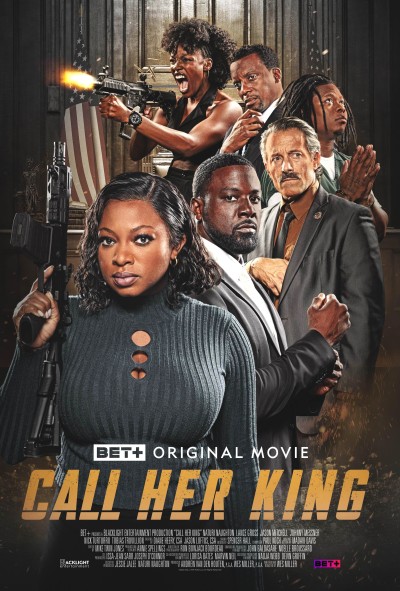 After the impressive surprise which was Jericho Ridge, I figured I should try out another BET Original movie and see how it fared. As the grade above should tell you, the answer is comparatively poorly. While technically adequate in most departments, it’s one of the more implausible Die Hard knockoffs I’ve seen. In a world where No Contest exists, that takes some doing. The high concept here is “Die Hard in a court-house” with Judge Jaeda King (Naughton) about to pronounce sentence in the trial of convicted murderer Sean Samuels (Mitchell). Barely has she said “death”, when the court is stormed by a force led by Sean’s brother Gabriel (Gross), a.k.a. “Black Caesar”.
 Jim: ★★★
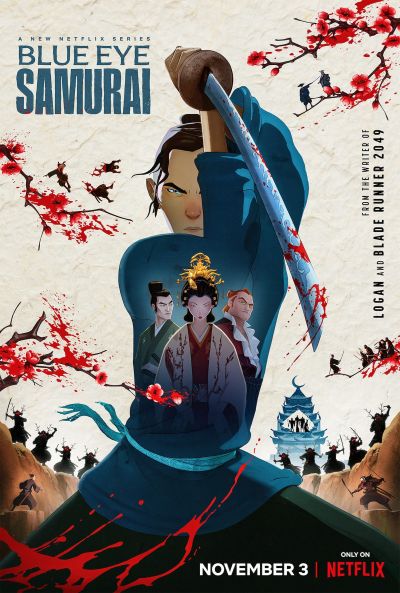 But first things first: despite its title and the location (Japan in 1657 in the Edo era) Blue Eye Samurai is – an American product, so certain allowances have to be made. While I do love a story of female persistence, this 8-part show pushes the limits of believability. We have to accept that, at a time when foreigners are forbidden to be in Japan, not only there is such a person living there, but also this man fathered a daughter. This means she is half-Caucasian, half-Japanese and therefore considered a “demon”, harassed by pure-blood Japanese who have never seen such a stranger in their country. She will then become a trained “samurai” – quotes used advisedly, as we’ll see – with the appropriate sword skills.
 The show certainly ticks all the diversity check-boxes with its characters. We have a biracial female who taught herself everything, a repressed (though in the context of the era “spoiled” might be more accurate?) lord’s daughter, a helpful assistant born with no hands, a blind sword-maker, while an old white man is the perverse, cruel villain, and women have no say in society, serving as servants or prostitutes. Did I forget anything? Despite it all, this feels acceptable given the time and place in which the story occurs.
 This was not a problem for me. Indeed, I would have been disappointed had it been any other way! The “garden hose” approach to blood has long been a mainstay of Japanese cinema, certainly back as far as the early seventies and the Lone Wolf & Cub films – a staple of Western VHS stores under the title of Shogun Assassin. Realism isn’t a factor, and this is an area where animation can really push the pedal to the metal, being unconstrained by the limits of latex and Karo syrup.
  It must be said that Mizu herself is a character ‘work in progress’. As mentioned, less a hero, than driven by years of abuse, mistreatment, non-acceptance, anxiety and sheer hatred. I guess any little boy with red hair and glasses who was harassed in class can understand her. The feeling of not being part of society or a group, of being rejected due to just being how you are, is something many people will identify with. Though again: does it justify a violent rampage on a merciless one-woman war against the person that fathered you? Hardly. The feeling is softened by the fact Abijah Fowler, who may be her biological father, is a real piece of abhorrent trash. He is a disgusting, almost inhuman, pervert, who deserves his just deserts.
 This is an adaptation of a Russian play A Long Time Ago by Alexander Gladkov, but was inspired by the real-life exploits of Nadezhda Durova. She was a woman who basically pulled a Mulan, concealing her gender in order to defend her homeland in the Napoleonic and other wars of the early 19th century. Durova joined the army on her 23rd birthday and served honourably for a decade, even after her true gender was discovered. Tsar Alexander I was impressed when he heard about Durova, giving her a promotion after summoning the soldier to his palace in St. Petersburg. Wounded by a cannonball at the Battle of Borodino, she eventually retired in 1816, with the rank equivalent to captain-lieutenant.
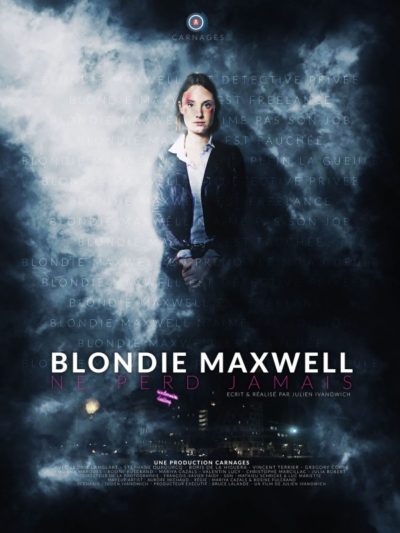 This French film takes place a little way into the future, though society has undergone radical changes. Law enforcement is now privatized, with investigations contracted out to private investigators, who have to balance their costs in order to turn a profit on the cases they accept. One such PI is Blondie Maxwell (Langlart) – and to get the obvious out of the way first, no, she is
 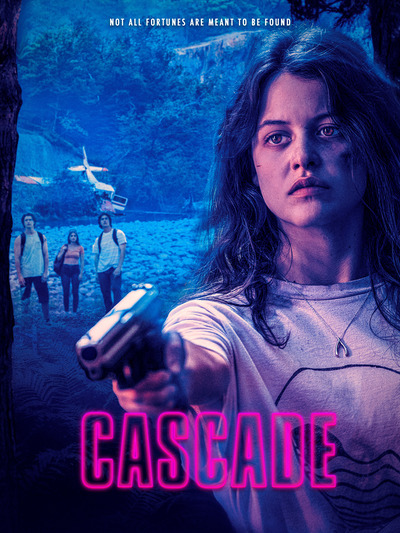 It’s kinda interesting to compare this to
  This is the second novel in the author’s Unsanctioned Guardians trilogy, a prequel to her earlier Elioud Legacy series. The new trilogy presents the background of how the three heroines of the first one (all of whom were intelligence agents, though of different nationalities) met and formed their sub rosa partnership as off-the-books rescuers of female victims of sexual abuse and trafficking. In the first book,
  Because the author and I are Goodreads friends, she graciously gifted me with a review copy of the paperback edition of this book, as she has with all of her books, as soon as it was published; though she knew I’d really liked the previous book, she didn’t pressure me for a favorable review, but trusted that the book would stand on its merits. It definitely did; I actually liked this one even better! What earned the added appreciation (and the fifth star) was what I felt was the heightened dimension of moral challenge and choice here, which for me often makes the difference between great and merely good fiction, and which isn’t as strongly present in the first book. Discerning what the right thing is here requires thinking for oneself, not just obeying orders; and deciding to do it comes with a real risk, not just of harm to life and limb, but of disapproval from the powerful, of serious repercussions to one’s career, and maybe of legal punishment. The strong, distinct characterizations of the three heroines, who are each very different individuals though sharing a basic gut instinct for justice and decency, is also a positive feature that makes the book stand out from the pack.
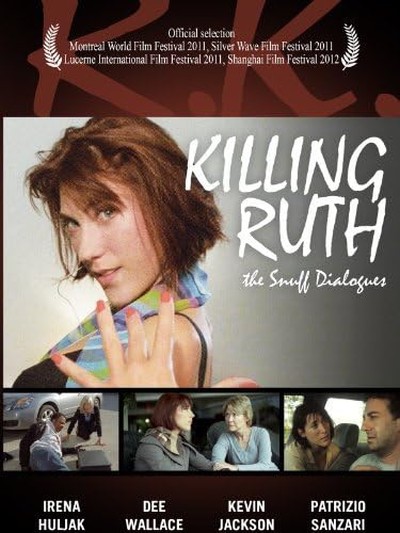 As soon as I saw the running time of this was one hundred and thirty-one minutes, it immediately went onto the back-burner. I have a busy life, and I’ve going to devote close to two and a quarter hours to a low-budget movie, it is going to be when I have a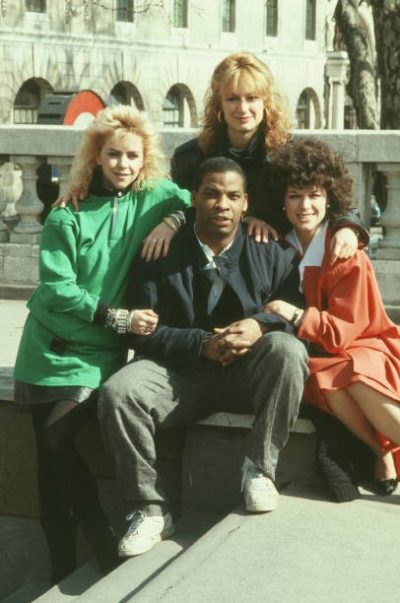
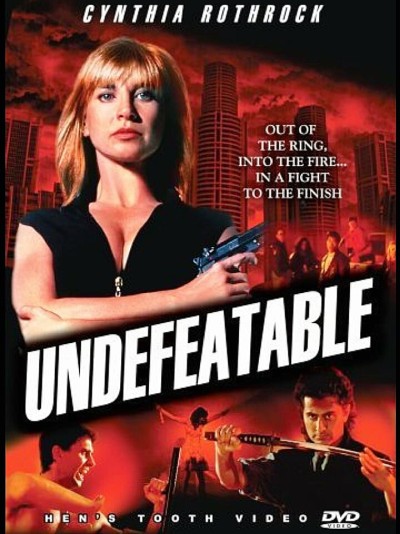 The traditional rule of thumb is, Cynthia Rothrock’s Hong Kong movies are good, but her American ones are bad. The question is, what category should this one be placed? On the one hand, it’s a Hong Kong production. On the other, it’s filmed in America, with an American cast. On the third hand, it’s directed by notorious schlockmeister Ho, as “Godfrey Hall”. I’m painfully aware how much his work can vary in quality, though I’ll confess, I am generally adequately amused. The results here are a real grab-bad of the good, the bad and the laughable. Put it this way: Cynthia is probably close to the best actor. That’s not something you’ll hear often.
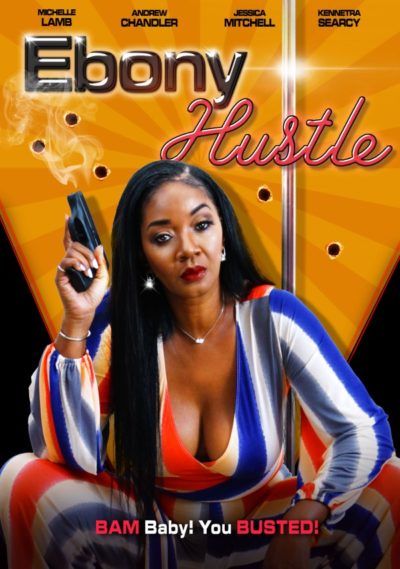 When the best part of a movie is the opening credits, we have a problem. That’s the case here, with an 007-influenced montage that feels as if it cost more than the entire rest of the film to put together. However, by that point, the movie was already on thin ice, because the volume of the music was roughly three times that of dialogue in the pre-credit scene. Lunging repeatedly for the button on the remote is always a red flag for any indie movie, and proved accurate here. The same goes for the gratuitous name-checking of much better black heroines, such as