 This self-published novel was recently donated by the author to the library where I work, a kindness that we appreciate. The author and I are both members of the Action Heroine Fans group here on Goodreads, and I was intrigued by his posts there about the book. Understanding (from experience!) the frustrations of waiting for reviews in today’s glutted book market, and being a fan of kick-butt female protagonists myself, I’d hoped to help him out with a good review, though he didn’t donate the book with any such expectation. As my rating indicates, my reaction wasn’t as positive as I’d hoped, so I would have refrained from writing a review at all; but Tom graciously indicated that he didn’t have a problem with a less than stellar review.
I’ll say at the outset that if you like to discover the plot of a novel (as opposed to the basic premise) for yourself as you read it, I would NOT advise reading the cover copy, which gives away a fair bit of the plot. Suffice it to say that our chronological setting is the year 3177. Chapter 2 begins –and Chapter 1 is just a one-page set-up; chapters here tend to be quite short, which helps the plot flow quickly– with our title character, a cook from Idaho in the Galactic Federation army (who’s recently been discovered to have extremely good natural marksmanship skills with a rifle) being acquitted by a court-martial of murder charges in the killing of her commanding officer, General Bloodworthy. The physical evidence overwhelmingly proved that General Bloodworthy had been raping her at the time. But the late General was the head of the Guardian Council, a semi-secret cabal of “right-wing” army officers who are suspected of self-serving and illegal behavior aimed at advancing and protecting their own members; and their power within the military makes them “virtually unstoppable.” Since it’s pretty plain that the Council will murder Belinda in retaliation for Bloodworthy’s death, Intelligence officer Lt. Col. Andrew Jackson Jones conceives the idea of spiriting her off-world for her own protection. (Why an Intelligence officer is serving on the Judge Advocate’s staff in the first place is only one of several unexplained problems here.) So these two characters take off for the stars, and the plot takes off along with them.
Holzel’s fictional universe has similarities to that of many other writers in the SF tradition: FTL space travel, a galaxy-spanning Federation, etc. But he puts his own original spin on this. Here, the Federation extends into several different galaxies, reachable by navigating through wormholes associated with black holes. There are, however, not very many habitable planets out there, and the few there are are populated by alien species that are all pretty much humanoid (this is explained by convergent Darwinian evolution adapting them all to similar conditions). Earth turned out to be the most technologically advanced of the lot (that, and the distances involved, might serve as a plausible explanation for the old chestnut about why, if there are alien civilizations out there, we’ve never picked up their radio waves, though Holzel doesn’t mention this). Jones and Belinda’s destination is the far-off, Jupiter-sized planet Magnus, a major source of a mineral that’s critical to FTL travel. The planet’s ultra-rapid rotation reduces its gravity around the equator to Earth-like levels, and its extremely strong magnetic field prevents electricity from being transmitted on the planet’s surface. As this discussion indicates, this novel is very much in the “hard” SF tradition. The effects of the planetary conditions on local technology are worked out in some detail, which will please fans who like that sort of thing. (Personally, I’m much more of a “soft” SF fan.)
I’m not scientifically knowledgeable enough to understand or evaluate much of Holzel’s above use of actual science, though I would say that it comes across as plausible. My interest in fiction, in this or any genre, is more in the human and literary elements of the stories. On that level, the plot is predictable, has serious logical gaps (beginning with the fact that the military even tolerates the Guardian Council to begin with, or that they would let a serving soldier simply go off planet with no orders), and IMO makes excessive use of coincidence. Some readers have found Belinda too passive; I’m not sure that criticism is entirely fair, since she grows here from a fairly naive and passive young woman to a greater maturity. But the characterizations are not well-developed, and I particularly don’t feel the romance as believable. (Jones treats Belinda with a degree of duplicity and manipulation that’s more or less treated here as just an example of how boys will be boys, but which I don’t think most women would or should accept.)
No serious Intelligence officer would confide his mission to total strangers the way Jones does twice here; and I seriously question whether it’s physically possible for one crucial plot point to have happened the way it did. The Galactic Federation’s policy of paternalistically controlling interstellar trade (to “protect” other species from the “bad” competition) and Exporting Democracy strikes me as a naive extension of the worst aspects of globalist American foreign policy extrapolated onto an inter-galactic scale, and the cavalier attitude of the characters towards mass destruction of innocent life with a tactical nuke was a really serious negative for me. There are also repeated editing issues, numerous plot points that are inadequately explained, and not much world building outside of the technological area. (A minor quibble is the unexplained variation in Belinda’s name, which seems to be random; I could understand “Bea” as a plausible nickname, but she’s also sometimes “Linda” rather than Belinda.)
On the positive side, I was interested enough in the story to finish it. There’s a certain amount of bad language (though I don’t recall any obscenity –there might be some I’ve forgotten) including religious profanity, but it’s probably within the bounds of realism for the milieu. Although there’s no explicit sex, there are sexual situations, and Belinda tends to be a frequent target of sexual harassment and rape attempts. However, this isn’t condoned, and it’s dealt with forcefully. I don’t think the “moral tendency” of the novel would be to encourage that sort of thing in any sense.
Author: Tom Holzel
Publisher: Self published, available through Amazon, both for Kindle and as a printed book.
A version of this review previously appeared on Goodreads.




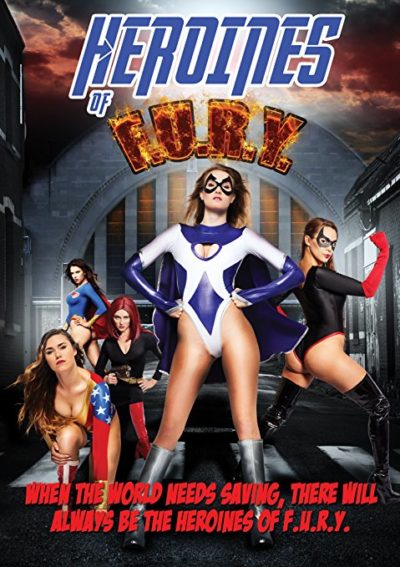 Given the cover, you might reasonably have expected one of the above, but if you saw the rest coming, you’re a better judge of cinematic dreck than I am. It’s hard to work out exactly who would form an overlap between the various potential audience sections here. And even someone not averse to any of the categories (I’d probably qualify) might well be turned off by the poor production values and overall shoddy quality of this.
 There are times when a film doesn’t deliver anything close to what the sleeve promises. This would be one of those times. However, in this case, while disappointed, I can’t claim it was an entire waste of my time. Or, at least, it wasn’t a waste of very
  This production had a long, convoluted and quite interesting path to the screen. While Lazenby was always on board, the original plan was for him to be a Western bad guy, going up against Bruce Lee and Sonny Chiba. But Lee’s death – oddly, he was supposed to have had dinner with Lazenby that night – resulted in Chiba quitting, and Warner Bros then also backed out of their worldwide distribution deal. It was reworked as a much smaller film, at less than one-tenth the original budget (although at around $850,000, was still very expensive for the time, location and genre), with Lazenby now teaming up with Angela Mao.
 This appears to have been filmed somewhere in South America around 1966, then “poorly translated and dubbed by Germans”. The truth? It’s a modern spoof, a loving re-creation of the sixties Eurospy thriller, featuring two gun-toting leggy lovelies, Bridget (supposedly “Jasmine Orosco”, but actually Wedeen) and Sophia (“Paola Apanapal”, Larsen), who are international fashion supermodels by day, and jet-setting bounty hunters and secret agents by night. They acquire a microchip, capable of storing a whole one kilobyte of data – more than all the computers of Interpol and the Pentagon combined! – which embroils them in an evil plot to unleash wholesale devastation on the world’s population. As you do.
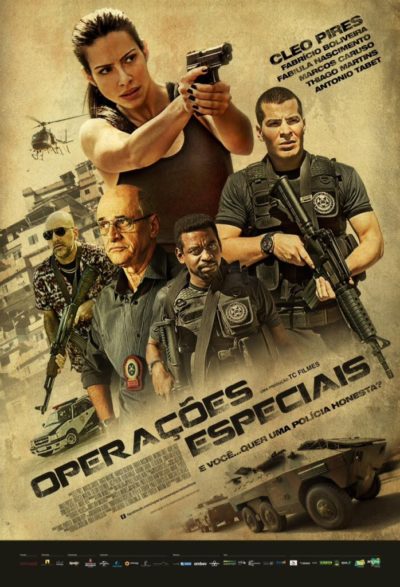 The Brazilian special police unit, known as BOPE (Batalhão de Operações Policiais Especiais) have a ferocious reputation for a hard-edged approach to its work. This is, likely, necessary for surviving the favelas (slums) of Rio in which they operate, going up against heavily-armed drug dealers. But with this also comes a “by any means necessary” approach, which has come in for criticism. They’ve been the topic of films before, most notably the incredible Elite Squad, which is an all-time classic of action cinema (and removed any chance of us attending the 2016 Olympics). It’s into this obviously macho environment, that rookie policewoman Francis (Pires) is dropped, and has to make her way.
 I think it was only as the end credits were rolling, that I perhaps appreciated this series fully. Sure, in many ways, these films have been a poor man’s Lord of the Rings knock-off, with a disparate band of hardy adventurers on a quest to stop Ultimate Evil (TM) from taking over. But, dammit, I found myself enjoying them, appreciating their smaller-scale charms and actually liking the characters – possibly even more than Frodo. While this finale doesn’t sustain the non-stop pace of its most recent predecessor, it does a good job of tying up all the loose ends. And if you’ve watched all five, and don’t have a slight moistness around the eyes at the end, you’ve a harder heart than I.
 ★★½
★★½ Amy (Theobold) is insane. Or so the rest of society thinks, due to her being able to see things nobody else can. She’s trying to keep her head down, working quietly at a bowling alley. But after being attacked, she is rescued by Raquel (Wokoma), another young woman who can see exactly the same things. Amy learns from her new friend that demons are real, and live among us: Raquel has appointed herself a demon-hunter, and convinces the reluctant Amy to join her. This causes no end of issues, not the least of which is Amy’s room-mate becoming one of the possessed, and the most of which is likely the apocalyptic plan of Callum (Curran). He intends to use Raquel to open the gates of hell on Halloween, allowing thousands more demons to flood into our world and take over humans.
 Generally, if someone is roaming the country, carrying out brutal attacks on apparently innocent citizens, blinding and disfiguring them, they’d be the villain of the piece, right? Not so here. For despite such distinctly non-heroic actions, Iron Swallow (Lee) is the heroine, disabling the men she holds responsible for killing her father years earlier. Needless to say, they’re not exactly impressed with the situation. To make matters worse, someone is flat-out killing her targets, intent on covering up something or other, and is trying to make it look like Swallow is responsible, by leaving her trademark darts behind at the scene. There are also two friends (Tao and Chung) rattling around, the son and pupil respectively of the region’s leading martial arts master Chu Hsiao Tien (Yuen), who get involved in the murky situation because Chu is one of Swallow’s targets and has hired a particularly loathsome assassin to bury the case.