 ★★★
★★★
“The mother of unintended consequences.”
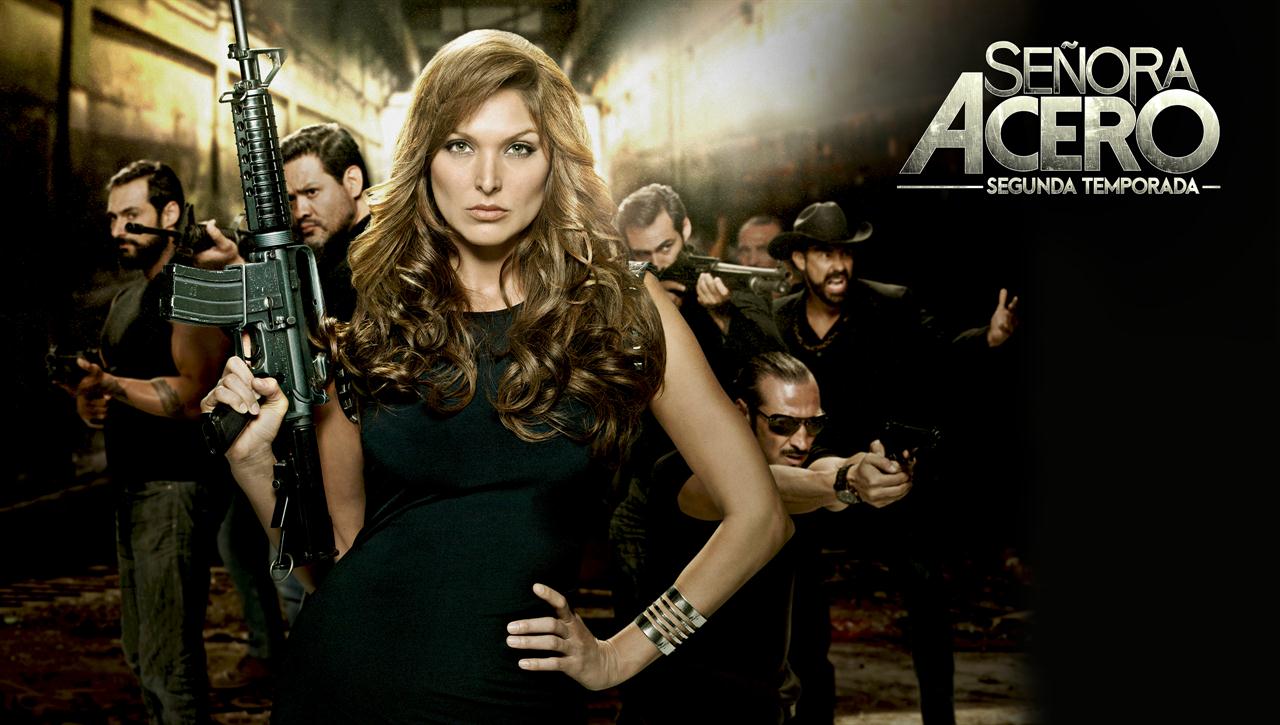
It’s supposed to be the happiest day of her life for Sara Aguilar (Soto). She’s marrying respected police commander Vicente Acero, legitimizing a relationship that has already given them a son, Salvador. But masked hitmen attack the party, killing her father – by the end of the day, Sara has also become a widow, the cartel having taken revenge on Vicente, for the three million dollars he apparently stole. To Sara’s horror, it turns out her husband-to-be was no less corrupt than anyone else. When Salvador then falls desperately ill, and in need of highly expensive health-care, there’s only one way Sara is going to be able to fund his treatment.
It’s a decision which brings her into conflict with a whole slew of people. Her main enemy in the first series is Indio Amaro (Zárate), a local gangster responsible for killing Vicente. He has vowed to make Sara’s life a living hell – not least because following that murder, she chopped off two of his fingers in a frenzied attack. There’s also Enriqueta Sabido, the owner of a local beauty salon where Sara gets a job after being thrown on her own resources; she also does (bad) plastic surgery in the back. And even her own sister, Berta, is jealous of Sara for marrying Vicente, and who blames her – with some justification, it has to be said – for everything bad that happens subsequently.
She does have allies, though I wouldn’t be selling any of them life insurance, if you get my drift. They include honest cop Elio Tarso; Colombian dreamboat Manuel Caicedo; and even an affable cartel boss, Miguel Quintanilla, who possesses a quite fascinating collection of suits. [The white ones make a terrible background for subtitles, producers please note.] However, it’s mostly Sara’s motherly inclinations that lead to problems, whether financing a transplant for Salvador by any means necessary, or demanding her cartel employer close down the tunnels through which drug-carrying kids are employed to cross the border, because… Well, Sara doesn’t like it, that’s why.
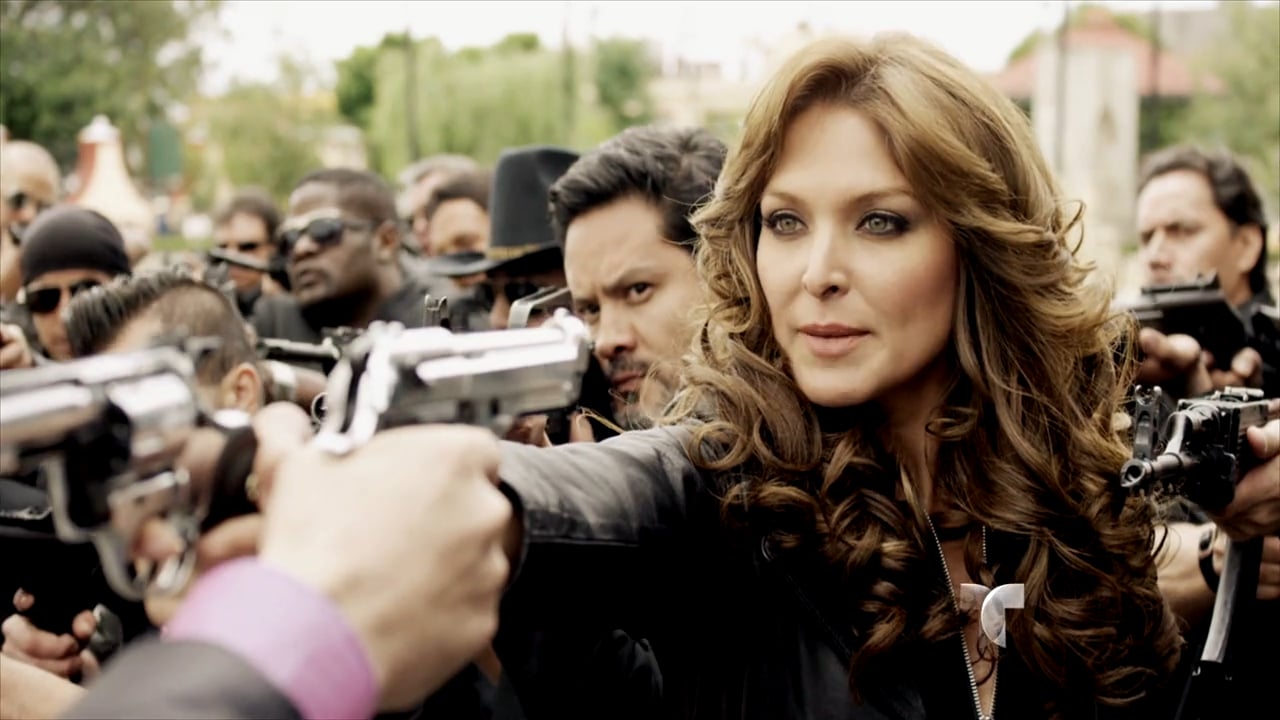 But it is actually fairly rough on occasions: for instance, the removal of Indio’s fingers is well-staged, and revisited frequently [this show loves its flashbacks, more than any other I’ve seen to date – sometimes even revisiting scenes from earlier the same episode]. There’s another scene where Indio is torturing someone for information. He has them stand on a bed of spikes, then breaks their ankles to ensure they can no longer support their own weight. While mild in terms of cartel acts – some of the stories I’ve read would make your hair curl – the show is relatively brutal by the standards of the telenovela, and contains more bloodshed than most.
The obvious influence is another Telemundo production, La Reina Del Sur, with which it shares a number of crew, in particular writer Roberto Stopello – its heroine is even name-checked explicitly here, in one episode toward the end. Both share protagonists who are dumped into trouble after the demise of their other halves, and find the only way out is to get their hands dirty and become part of the criminal underworld. Despite this, the leading ladies share a strong sense of morality, with lines they won’t cross, and despise the exploitation of others – in Reina, it’s trafficking in women, while here it’s the use of children that provokes the central character’s ire.
Notwithstanding the double-meaning of her married name in the show’s title – Senora Acero can be translated as “Woman of Steel” – I find there’s a certain hypocrisy to Sara, compared to Teresa Mendoza. She’s strident about only wanting to be involved in money laundering rather than the drug trade, which seems a perilously thin moral distinction to me. Where the heck does she think the money she’s taking across the border comes from? It’s an almost privileged attitude, which seems to permeate her character from the start. For me, this left her less appealing, in comparison to her telenovela sisters, and this central weakness may be the show’s biggest flaw.
It’s a bit of a shame, as the supporting cast are fun to watch, on both sides of the coin. The villains are led by Acasio “Don Teca” Martínez (Reséndez), a cartel boss who has longed after Sara from afar, since he was a geek in the local barrio. Now, he has a shrine to her at the back of his office, and wields his power in a creepy stalking campaign, designed to drive her into his arms at any cost. Meanwhile, on Sara’s side is Aracely Paniagua (Litzy), a good-hearted former hooker and drug addict, who just can’t seem to escape her past, which keeps dragging her back in. She offers a more traditional telenovela heroine, almost harking back to Victorian melodrama.
 The music in the show is interesting… Norteña band Los Tucanes de Tijuana produced and performed a song for it, titled “La Señora de Acero”, which the series incorporates, as having being commissioned by one of Sara’s drug-cartel bosses in her honour. It’s the usual oompah laden nonsense (I don’t like country & western either!), and far more fun is the bombastic score that accompanies the tensest moments. I’ve not been able to pin down the creator – it may be Rodrigo Maurovich, credited for “musicalization”, or it may be stock composer Xiaotian Shi. But it’s so wildly over-dramatic, swelling ominously to a crescendo, even when no-one is doing anything more than staring at a door, I can’t help but love it.
Back before the show had even begun to air, in mid-2014, there was an option apparently granted to USA Network to produce an English-language version of Senora Acero. Nothing appears to have come of this, and it was only a couple of months later that the station ordered a pilot for Queen of the South instead. Having seen both Mexican series now, as well as the USA Network remake of Reina, the choice was probably a smart one. The darker storyline of Reina likely renders it more easily adaptable. I’d be hard-pushed to imagine this, really a story of maternal instincts gone wrong, being able to make an effective transition to the gritty series which USA apparently wanted.
Despite this diss by the American market, unlike Reina, the show wasn’t one and done. Senora Acero almost doubled its US audience over the four-month run, its finale winning its time-slot in a number of key demographics, regardless of language. And, so, a year, later season two began, with another 75 episodes, and a third season, with a monstrous 93 episodes, started last summer. [The most recent installments appear not to involve Blanca Soto, for reasons which would require major spoilage to discuss…] All three are currently on Netflix, and I’ll confess some of the pics used here are from them – but at somewhere north of 50 hours of viewing per series, I wouldn’t hold your breath waiting for in-depth reviews of the later seasons!
Star: Blanca Soto, Jorge Zárate, Litzy, José Luis Reséndez




 ★★★
★★★ Originally pitched as a vehicle for Gillian Anderson – creator Spotnitz was a head writer on The X-Files – the main problem here is likely a structure which demands a second season the show never received. This seems to have come as a surprise to the creators, since they had put together a writing team and planned out storylines. Then, the show was abruptly not renewed, in response to sagging British ratings (the series lost 30% of its viewers over the eight-week run). Even after the BBC pulled the plug, there were hopes Cinemax would continue the show, as it had sustained its audience much better in the US. Those failed to come to fruition either, and the story of Sam Hunter is left frustratingly incomplete.
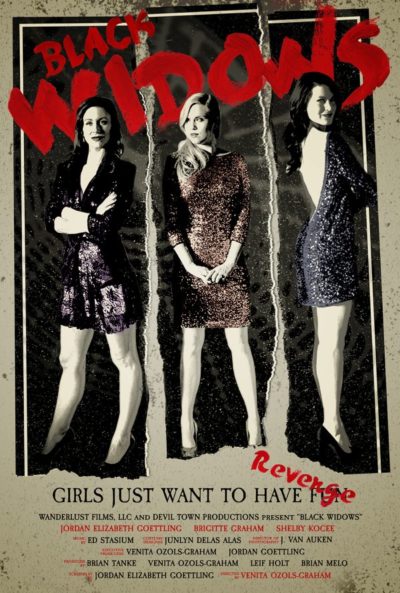 Three women friends – Darcy (Elizabeth), Nora (Graham) and Olivia (Kocee) – are all having shitty luck with their relationships. Olivia is in the middle of an ugly divorce from Adam. Nora’s boyfriend Ryan is a control freak. And while Darcy’s new friend Blair (Brown) initially seems fine, he turns out to be the worst of them all. After he refuses to take no for an answer, the trio decide revenge is a dish best served naked in the middle of the desert. Unfortunately for him, Blair ends up lacking a pulse. Unfortunately for the film, it takes forever to get to this point, and for the vast majority of its running-time the promised “dark comedy” is neither dark nor comedic.
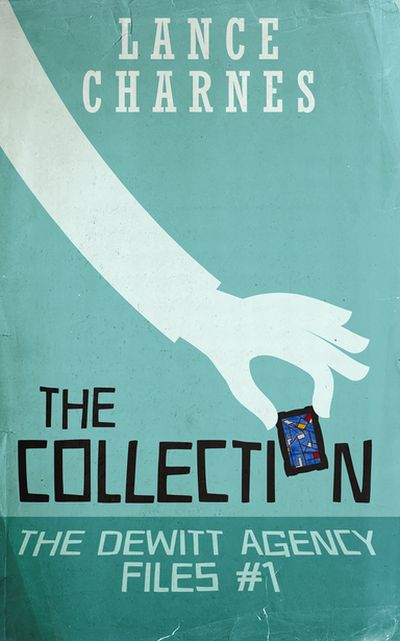 Lance Charnes and I are Goodreads friends, having “met” (electronically) a few years ago through the Action Heroine Fans group. Some time ago, I bought a copy of his outstanding debut novel, Doha 12, and it got five stars from me. This new novel, the opener for a projected series, didn’t come to me as an official review copy –instead, Lance generously donated a print copy to the library where I work– but he knew I would read and review it, and knew my tastes well enough to be pretty sure I’d like it. Of course, we both understood that he might be wrong –but he wasn’t! For much of my reading experience, I expected to rate the book four stars –a denouement and conclusion that blew me to pieces and then knit me back together easily pushed it up to five stars.
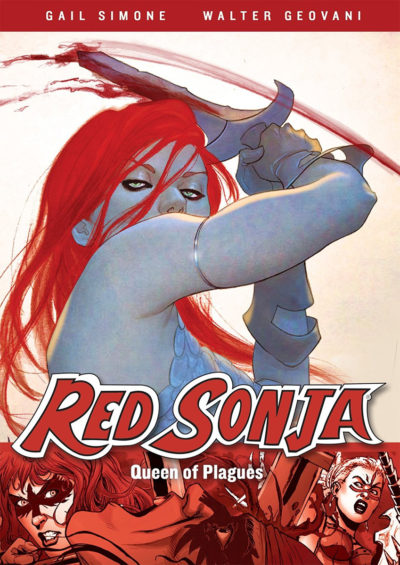 The rating here is largely based on my (I’d say, not unreasonable) expectation going in, that this would be actual animation. It isn’t. This appears to be, what I’ve since learned is called, a “motion comic”: think of it more as an illustrated radio play, with voice actors playing the parts in front of somewhat animated panels. And when I say, “somewhat”, I mean there is typically no more than one thing moving on them e.g. a character’s mouth. I can see comics for which this approach would work; unfortunately, a heavily action-oriented story such as Red Sonja is not among them.
 ★★★★
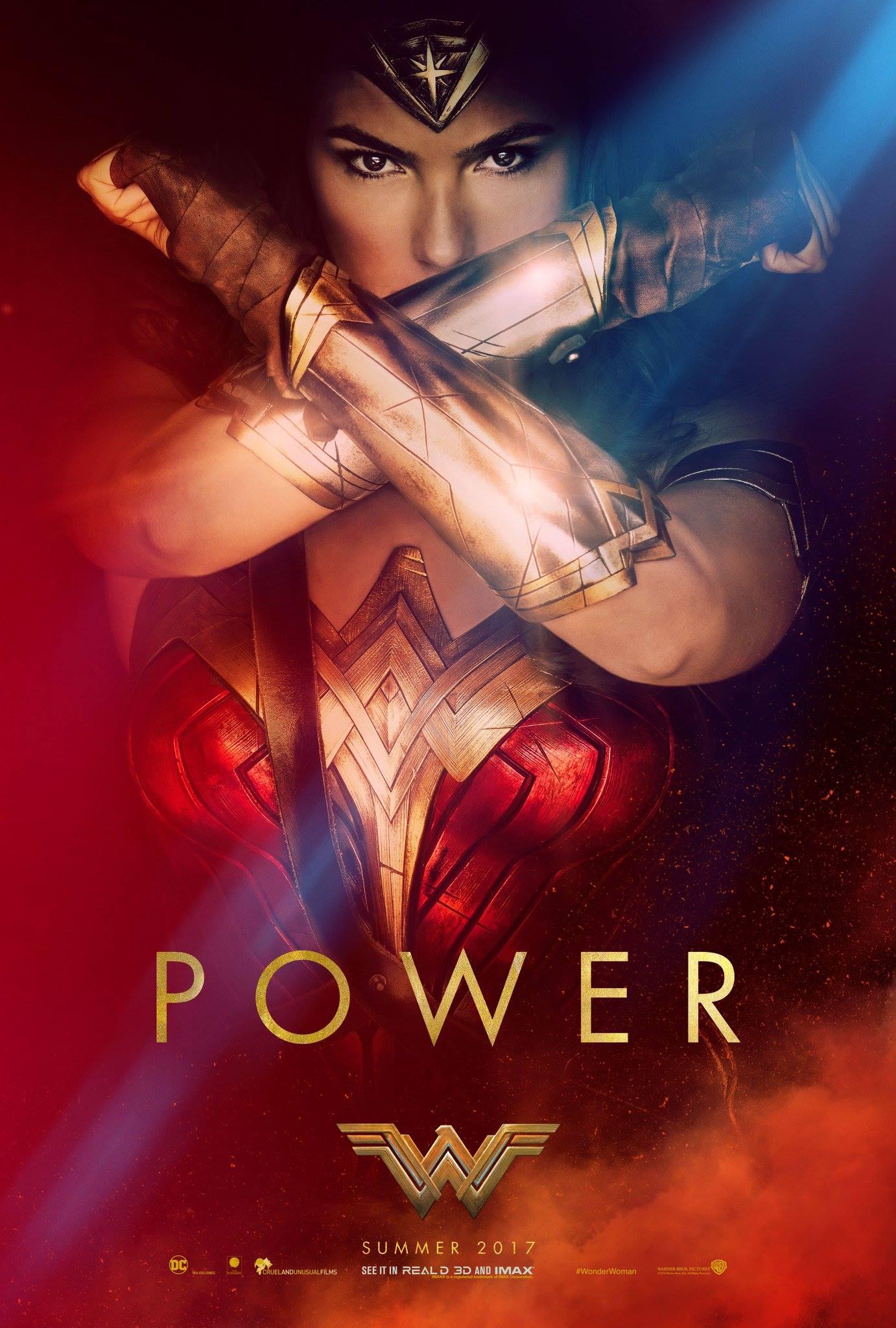
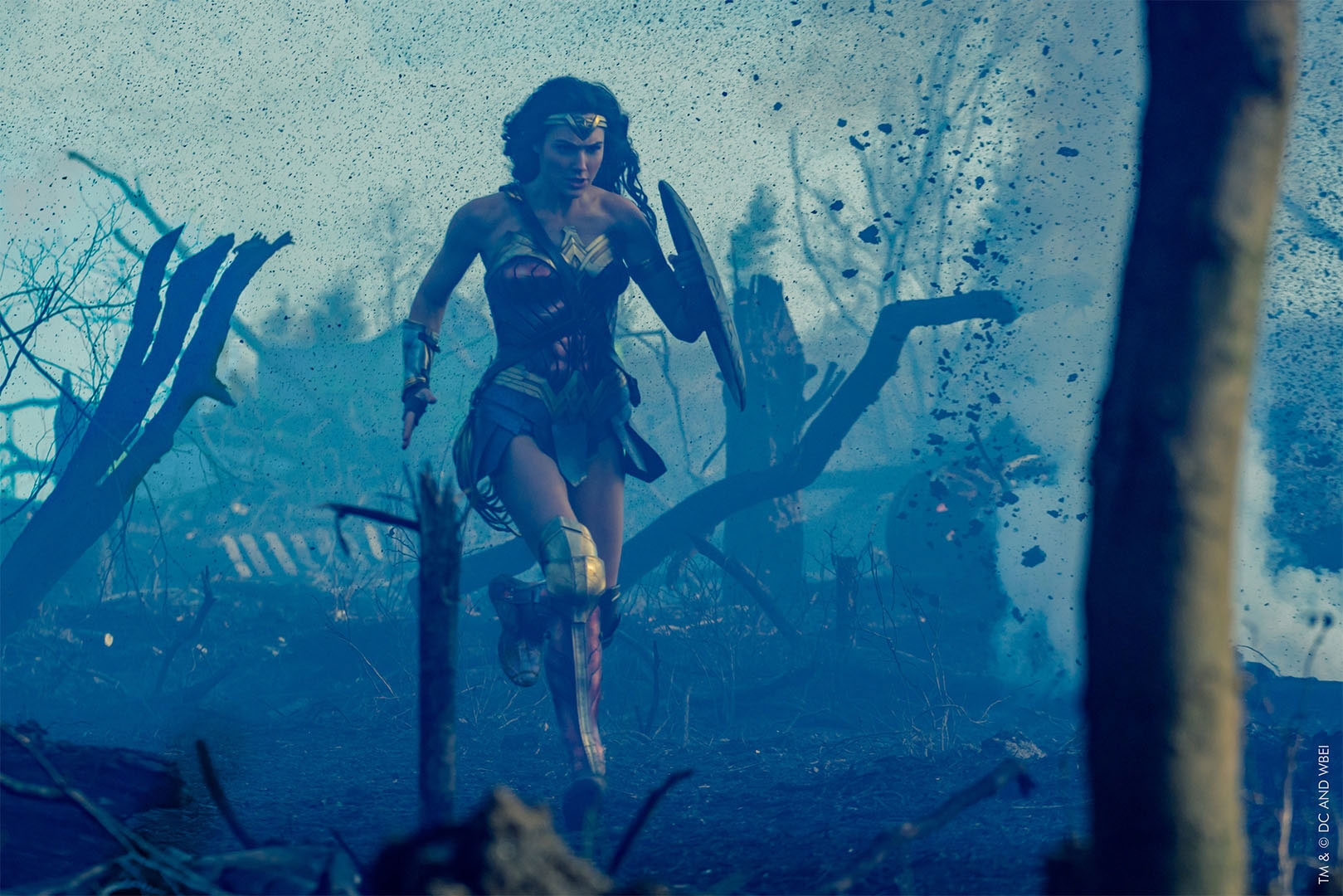
★★★★ I’m not an enormous fan of either the Marvel or DC Cinematic Universes. Superhero films tend to bore me: the concept in general seems like lazy writing, and nor can I handle the subsequent contortions needed to generate a credible threat e.g. Kryptonite. The Dark Knight is the only film from either stable that I actually possess, mostly due to Heath Ledger’s incredible performance. The others I’ve seen, from Iron Man through to Suicide Squad, have been no better than popcorn pleasantries, without much to offer in the way of emotional heart. That’s the biggest improvement Wonder Woman offers: a heroine who, as personified by Gal Gadot, cares – indeed, perhaps too much. And through her passion, she makes the audience care.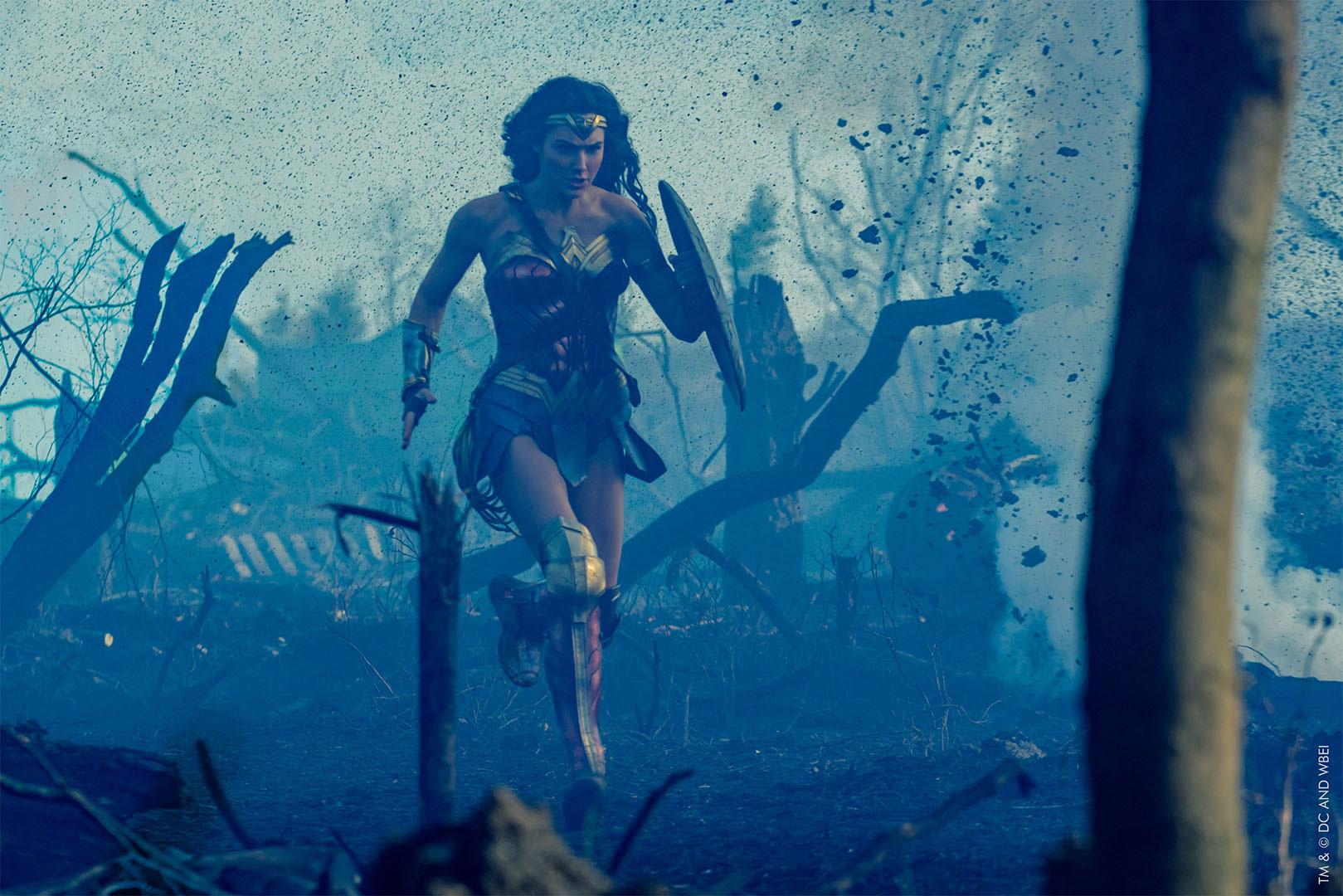














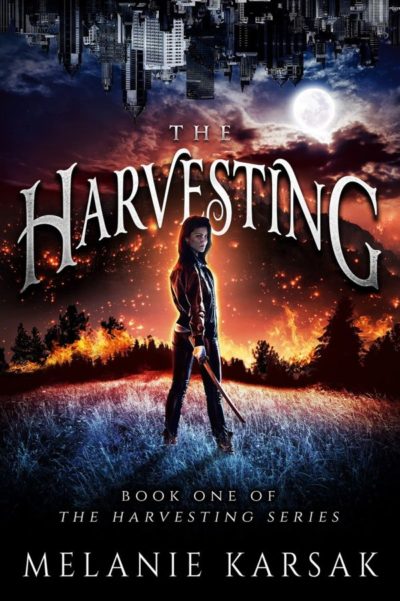 This is likely the kind of book you enjoy rather than appreciate. While no-one will ever mistake this for great literature – you could go with “ludicrous nonsense,” and I’d not argue much – it’s a fun enough bit of pulp fiction that I kept turning the pages.
 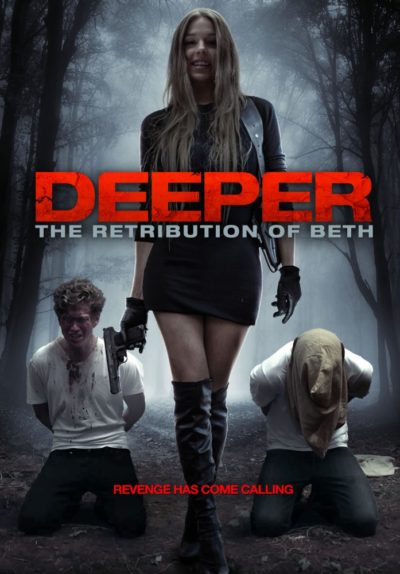 Investigative journalist Mark (Anderson) is not too happy about his latest investigative assignment: going on a ride-along with Steve (Francis), the sleazy owner of porn company “XBus”. He picks up girls on the street and supposedly, talks them into getting naked for his website, Girls Gone Wild-style. But Steve’s latest predatory mission doesn’t go as planned, after picking up the very lovely Beth (Sam) and her friend Sam (Gatien). For Beth pulls a gun, hijacks the limo, and drives the two men into the forests on the outskirts of town, clearly with savage vengeance on her mind for an incident in her – and Steve’s – past. Not quite the story Mark anticipated getting.
 Perhaps surprisingly, this is not the first attempt to cross over between the worlds of zombies and pro wrestling. There was also the imaginatively-named Pro Wrestlers vs Zombies, which included Roddy Piper, Kurt Angle and Matt Hardy. This is much lower-budget, Australian and almost certainly contains nobody of whom you’ll have heard. But what both movies share is that… they aren’t actually very good. And that’s a shame, because I’m pretty much the ideal target audience, being a fan of both wrestling and horror. That this one has a heroine, should be another factor in support of it, but it ends up falling apart and devolving into a second half that is little more than a procession of uninteresting set-pieces.
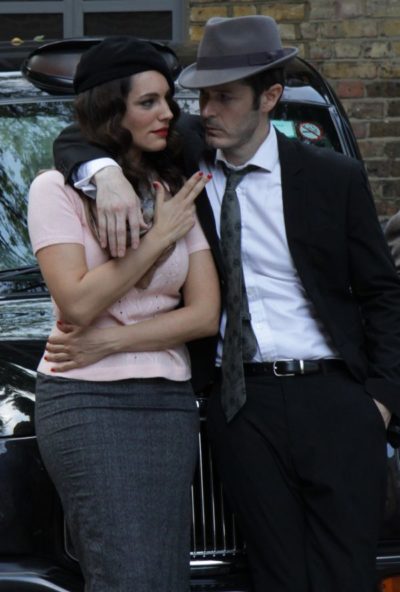 Kate’s (Brook) life has fallen apart: she has just been told the store she works at is closing because the owner is cashing in on a redevelopment offer; her boyfriend has dumped her; and Kate’s attempt at suicide by gas oven is doomed since she failed to pay the bill. What’s a girl to do? The answer is apparently, take inspiration from her heroine, Bonnie Parker. But rather than robbing banks, Kate teams up with her other disgruntled work colleagues, hatching a daring plan to copy the key to the store, seduce the safe combination out of the firm’s accountant, Mat (Williams) and plunder the ill-gotten gains.