
★★★★
“Now available for Playstation and Xbox”

 This rattled around in pre-production for a while, originally being called Lady Bloodsport, and with the names linked to it being significantly higher in profile: Maggie Q, Shu Qi and Zhiyi Zhang. The end result here is obviously smaller and cheaper – the fights at its core all take place in the bastion of martial arts, a warehouse – and you can’t help but think, “What if…?” However, it’s still thoroughly enjoyable, despite – or, perhaps because of – feeling like a throwback to straightforward movies such as the original Bloodsport, which helped launch the career of Jean-Claude Van Damme in 1988.
The basic approach seems entirely deliberate, and the simplicity works to the film’s benefit. You don’t watch a film with this title for intricate plot or subtle character study; you watch it to see asses being kicked, and there’s enough of that, you’d be hard-pushed to feel cheated. The excuse is the well-worn trope of a martial-arts tournament for women, the kumite, being held in Hong Kong. The last time it happened, it ended in a tie between deadly rivals, Shu (Hofmann) and Wai (K. Wu). They’re now both looking for someone who can fight on their behalf. Shu selects Jane Jones (Johnston), in Hong Kong seeking a father who vanished under murky circumstances years earlier. Wai chooses and trains Ling (J. Wu), a cocky, streetwise fighter. But there are 14 other entrants, hailing from all over the world, including Russia, Australia and Brazil, who must be defeated before the inevitable Jones vs. Ling showdown.
Yes, it’s utterly contrived, not least in not one, but two, master-student threads. If you can’t think of better ways to achieve the same end, you need to watch more movies. Fortunately, it’s salvaged by a quarter of decent performances from the lead women, who take the clichés they’re given by the script, and round them out into at least an approximation of real characters, good enough for the movie’s purposes. Bonus points due, for not inflicting any sappy romance (although Jones’s interactions with the spirit of her father are occasionally on perilously thin ice instead) and also largely avoiding potentially sleazy cheesecake, save for one locker-room pan.
As the tag-line above suggests, this feels very much like an adaptation of a non-existent video-game. As such, it would have helped if they’d mixed up the environments for the fights a bit, in the name of variety. This is a minor quibble, however, and what you get are some well-crafted slabs of action, showcasing various styles and approaches. Outside of Jones and Ling, the character which stuck in our mind most was likely Mayling Ng’s monstrous Svietta, freed from a Russian prison for the kumite. All tattoos and snarls, she might have made a better “final boss” for the heroine than Ling, who is perhaps a little too sympathetic. Despite any flaws, it’s a brisk tale, energetically told, and with plenty to commend its no-nonsense approach.
Dir: Chris Nahon
Star: Amy Johnston, Muriel Hofmann, Jenny Wu, Kathy Wu










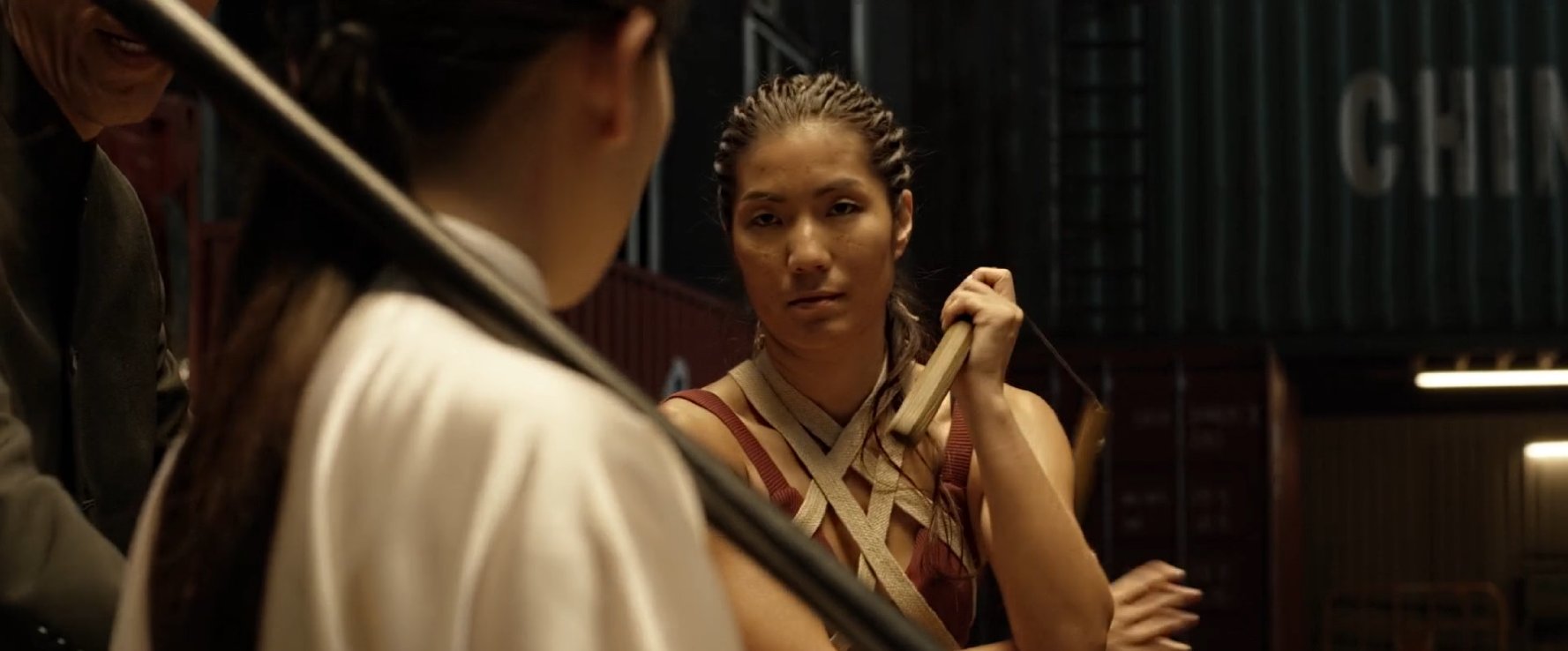

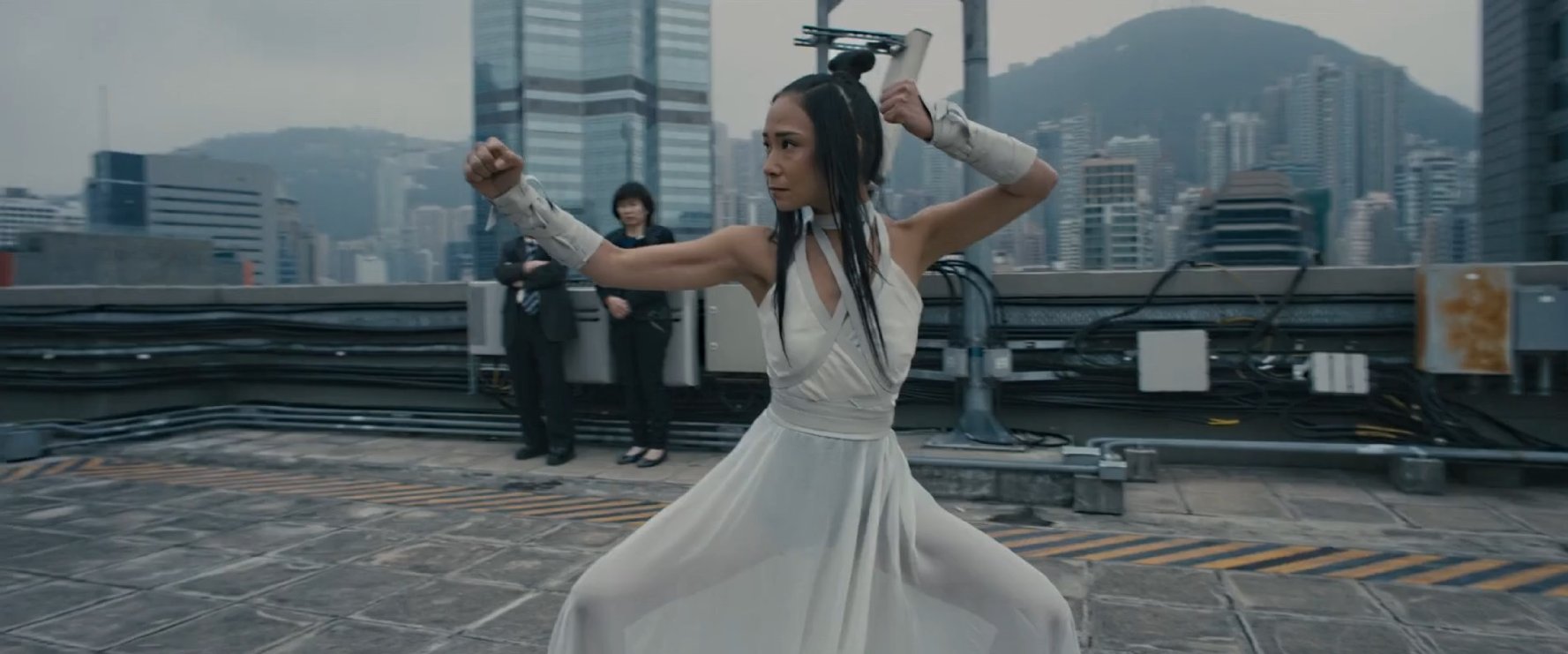

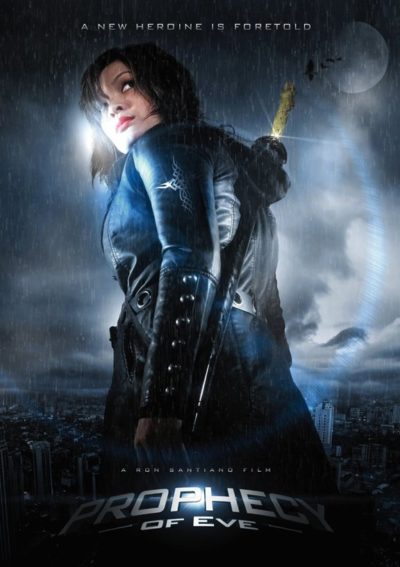
 Shanti is a bad-ass. Not that you’d know it when we first encounter her, staggering through the wilderness on the edge of death, after an ill-considered choice of route as she escapes from… Something. We’ll get back to that. Fortunately, she is found by Sanders, a career soldier from a nearby city, out on a training mission with a band of raw recruits. They take her back to their town, where she’s nursed back to health – then the awkward questions begin, concerning where she was going and precisely why she was carrying weapons. But the key turns out to be Captain Cayan, who possesses the same psionic warfare capabilities as Shanti; except, he’s all but unaware of it, a sharp contrast to her finely-honed and practiced expertise.
 This is confusing. For the IMDb
 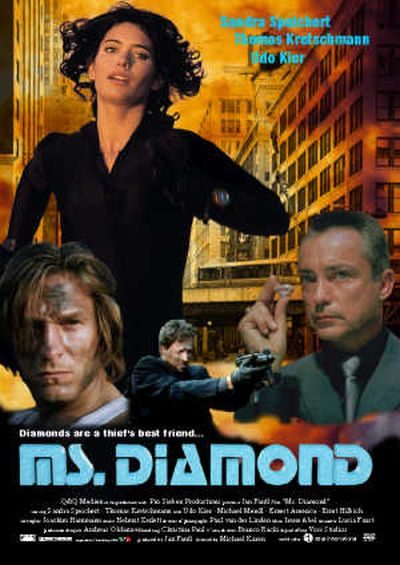 There’s an exhibition showcasing the first diamonds ever mined in Germany, dug up by the company belonging to Buhler (Kier). Keeping thing safe is the responsibility of security expert Tim (Kretschmann), who doesn’t realize that renowned jewel thief Lana (Speichert) has her eyes on the jewels. So they’re both in for a nasty surprise, because after Lana is caught by Tim in the process of stealing them, it turns out the diamonds are completely fake. Buhler gives her an ultimatum: Lana must find the real diamonds, or she’ll be handed over to the police, and to ensure she doesn’t just run off, tasks Tim with keeping an eye on her. It soon becomes clear, though, that there is more to the mystery than there appears initially, and someone is very keen to stop them from getting to the truth.
 This will be a slightly shorter review than usual. For there’s not much to say about a film which runs only 77 minutes, yet still somehow managed to feels both confused and full of unnecessary padding. “Well done”, maybe? Certainly, as a model of what
  Teetering on the edge of qualifying as false information, this TVM was originally released under the more relevant, yet great deal less salacious (and, let’s be honest, less appealing) title of A Nanny’s Revenge, along with a greatly subdued sleeve. Marketing works, people: for put it this way, I’d never have watched it in that presentation. I can’t feel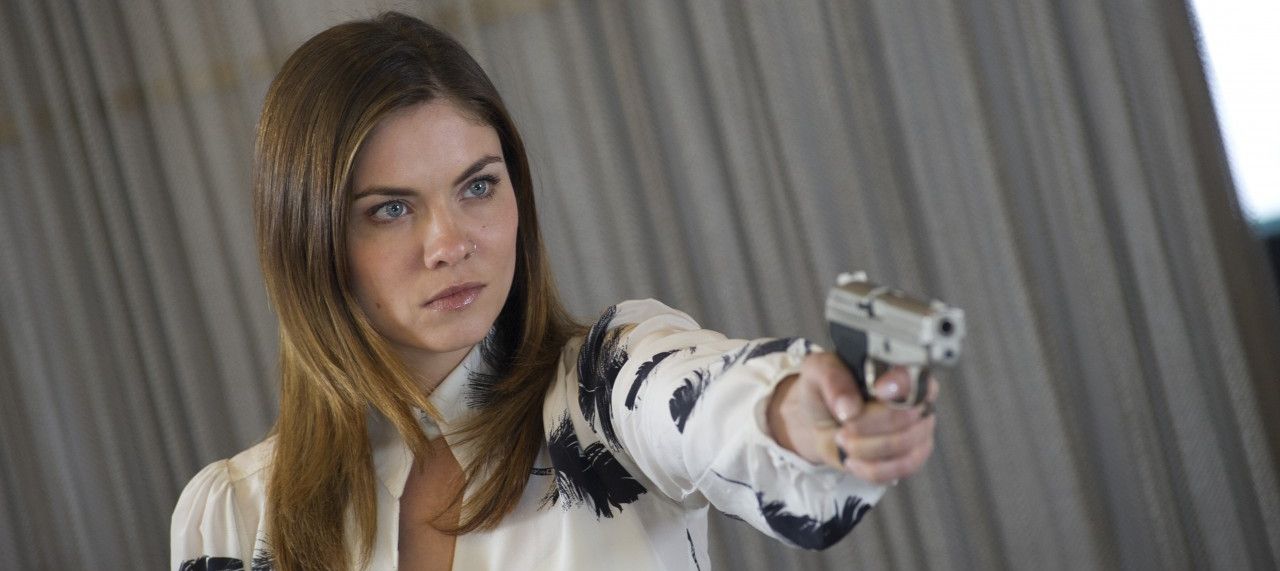
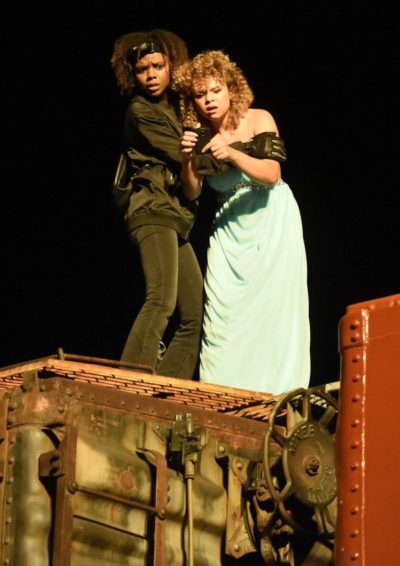 After their mother has a meltdown at her job and ends up in jail: teenage sisters Deidra (Murray) and Laney (Crow, somewhat infamous for her post-elimination meltdown on The X Factor) are left to fend for themselves. With household bills piling up – never mind trying to fund Mom’s bail, or even Deidra’s long dreamed-of college tuition – and Child Protective Services looming, things look bleak. But a visit to deadbeat Dad Chet (Sullivan, channeling David Spade), who works for a railway company, gives Deidra an idea. Hop aboard the freight trains that run by the back of their house, pop open a container to take some goods, and fence them on for cash. Things go surprisingly well, until a disgruntled railroad cop, Truman (Nelson), starts to close in on the pair, intent on rebuilding his reputation after an incident in Arizona.
 I think it’s the “poorly written” aspect which I find most offensive. For I’m entirely down for some good ol’ entertainment in the form of justified violence, from Dirty Harry through Ms. 45 to Starship Troopers. But this… Oh, dear. The most stunning thing was discovering that this was the first in a series of twenty-seven novels in the “Sisterhood” series. Twenty-seven. I guess this proves there’s a market for this kind of thing, though I am completely at a loss as to who it might be. It certainly isn’t me.
 My wife is a big fan of Sandra Oh, for her long-time work on soapy medical drama, Grey’s Anatomy. This is about as far from that as imaginable. It’s a gloriously mean-spirited “comedy” [and I used the quotes out of reverence, not in a bad way], which combines social satire with gleeful hyper-violence, at a level where you would not expect to find serious actresses. Veronica (Oh) and Ashley (Heche) knew each other in college, and have since grown apart. Veronica is now wife to a defense contractor; Ashley a largely unsuccessful artist. They meet at a birthday party, and instantly the hate begins, each representing everything the other finds reprehensible. The night ends in a stairwell brawl, which leaves Veronica in a coma for two years. She awakens, to discover she has lost everything, and Ashley is now on top, enjoying commercial and critical success.
 ★★★
★★★ The story has a very clever approach to the whole “whitewashing” controversy: at least initially, rather than Motoko Kusanagi, she has been reinvented by Hanka Robotics as Mira Killian, who give her a whole new set of memories, which may or may not be accurate. It’s this quest for her real identity which drives the plot, containing more than a few echoes of Robocop. And that’s an illustration of the main problem here: it feels less like anything cutting edge, than a conglomeration of elements taken from films which has gone before. That half of these stole from the animated Ghost, doesn’t help the live-action version much.