The latest stop in our ongoing tour of female-driven urban crime movies brings us to the nation’s capital in Washington, where the police are celebrating just having taken down a leading light in the city’s organized crime industry. Now, they set their sights on a new target: the gang led by Racine Robinson (Vaughan) and her two daughters, Kat (Crosby) and Candy (Bethea). These might prove a tougher nut to crack, since the Robinson crew have a harsh, zero tolerance policy to anyone who messes with them in the slightest, yet also gathered local support during the coronavirus pandemic. Indeed, Racine is so popular in the neighbourhood, a run for political office is not out of the question. However, she has rivals, who have more than a passing interest in seeing her taken out of the picture – albeit for very different reasons, in order to make room for them to rise up.
This is a real grab-bag of elements, ranging from those which work very well, to those which are almost unmitigated disasters. To start on the positive side, there’s a callous disregard for human life here that’s genuinely disturbing. Even if the CGI splatter is far from convincing, head shots abound. And unlike some entries, the women in this one have no issue getting their hands dirty, for even the most trivial of reasons e.g someone tossed water at them. The guns they tote on the cover aren’t just for show. There are plenty of strong female characters on both sides of the law, from the Robinson family through Police Commissioner Stallworth, to dirty cops who have no issue shooting someone in cold blood and planting a gun on them. Perhaps the most impressive is Jada (Simmons), who looks like she actually would pop a cap in you for looking at her the wrong way. Even if there are points where I wondered if I was watching a black Russ Meyer movie, there are worse things as influence.
These good points are, unfortunately, outweighed heavily by the other side of the scale. Some of them are par for the course, such as the way the movie appears a vehicle for the makers to tout their pals’ music, businesses or whatever, in a painfully obvious way. The shaky technical elements are also unsurprising, with a “police station” that is little more than empty rooms. Audio is, as usual, the main culprit: there are points where two sides of the supposed same conversation will sound radically different. The main problem though, is a script which has no idea of the direction it wants to take, once it has set out its pieces on the chess-board. Scenes happen, with little or no connection to each other, and supporting characters drift in, drift out or (more often) get gunned down, without ever establishing relevance. Throw in embarrassingly amateur lesbian canoodling, without delivering any actual nudity, and you have a film which swings wildly from “That’s actually well-done” to “How could they include this without cringing?” every couple of minutes.
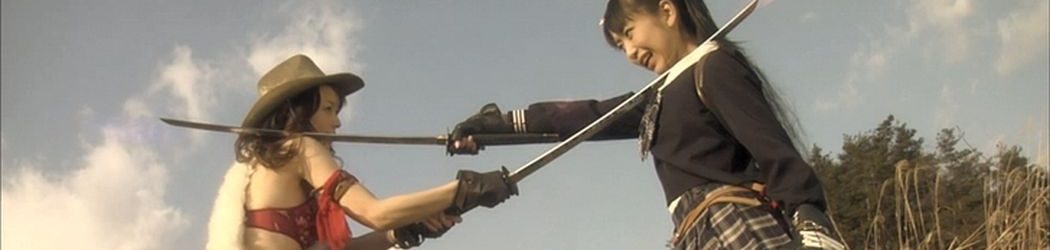
This is part of the Blood universe, which previously gave us anime series Blood +: Episodes 1-25 and Blood: The Last Vampire in both animated and live-action versions. That’s small beer compared to the Blood-C segment, which began as a 12-episode anime show, subsequently becoming two manga series, a novelization, a stage play, and three live-action movies. The other two, set in the current day and entitled Blood Club Dolls 1+2, aren’t of interest here despite their title (and aren’t very good), since at least the first only includes a brief cameo by Saya, the heroine of the series. Her role here is considerably more substantial, and it’s basically a better production all round. Not least because most of it works reasonably well with no prior knowledge.
It takes place not long before the outbreak of World War II, in a small rural village, plagued by a series of mysterious deaths. Brutal military policeman Amakatsu (Furuta) is charged with investigating, blaming local communist sympathizers. However, two elements suggest otherwise. Firstly, the arrival of Saya Kisaragi, member of a vampiric race called the ‘Elder Bairns’, who hunts her own kind. Then there is the contraction of a mysterious blood-based disease of Ran (Aono), the sister to village resident Ren (Matsumara). He encounters Saya when she meets a police squad, and tries to rescue her. If you’ve seen any of the entries linked above, you’ll know that she isn’t a character exactly in need of rescuing.
Wisely, the film doesn’t stretch out the “who” aspect of the mystery, since it’s not exactly hard to guess. The “why” does turn out to be a bit more unexpected, and at the end, there are a few moments where it does feel like some familiarity with the world in which it works would be helpful. Generally though, it’s fine as a standalone piece. I would have liked to have seen more of Sana in action: after taking on the police, she takes a back seat to Ran and the struggles of the village to convince Amakatsu they’re not better off dead than red. However, it certainly qualifies for the site, with some solid sword-fights at the end, which make up for in very enthusiastic, crunchy sound design, what they may lack in explicit gore and impalement.
Outside of Sana, it is a bit bland in terms of characters. Ran doesn’t make much of an impression and, until the final third, neither does his sister. There were points where this reminded me of a Hammer film, albeit one obviously set in a different time and place, with the concept of a small village plagued by a terrible evil. Twins of Evil might be the closest, as it also had a strong authoritarian figure (played by Peter Cushing), who was correct about the presence of evil – just terribly wrong in regard to its source. Amakatsu doesn’t have anything like the same arc, though this remains a considerable improvement, in most ways, over the contemporary live-action film.
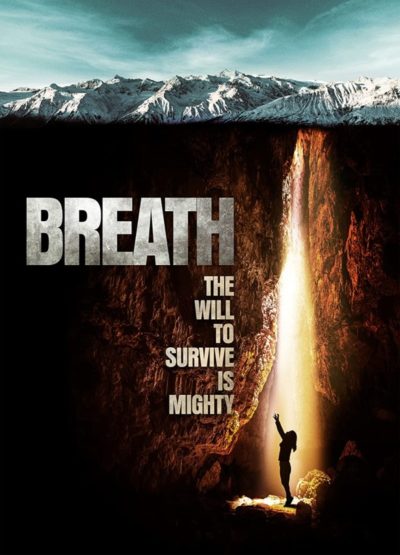
Lara Winslet (Daigh) is a vulcanologist, who is on the side of a mountain in Italy, taking samples, when the ground gives way beneath her, and she falls into an underground pit, damaging her leg in the process. Help isn’t going to come, so with limited resources (not to mention a count of functioning limbs that stops at three), she is going to need to cope with the situation on its own, and figure a way out of what could easily become a fatal scenario. Meanwhile, on the outside, her father (Cosmo) is becoming increasingly frantic. This is erhaps because if Lara doesn’t come back, he’s going to be stuck permanently with her kid (Di Mauro). That would be my reaction, anyway…
There may be ways to make this kind of thing exciting. I imagine 127 Hours must have been able to manage it, though not having seen it, I can’t be specific on the techniques it used. Breath could have used some help, as there isn’t a great deal of adrenaline pumping through the veins of this situation. To try and generate some, it keeps flashing back to sequences set earlier and off the mountain, covering things like Lara’s affair with fellow scientist Adam (Chupin), or her more or less abandoning her daughter for the sake of career advancement in the name of scientific discovery. While this does provide some fill-in colour for her character, we eventually go back to her sobbing in a literal pit of despair.
I can’t really complain about the performances, and the photography does generate a decent sense of claustrophobia. I get the message that there are times when you can’t rely on anybody else, and have (again, more or less literally) to pull yourself up. Though I tend to feel that most life-threatening situations like this require more than a stern self-talking to, in order to get out of them: that is, however, what we get here. Lara’s leg seems injured only when necessary to the plot, and while being buried underground does bypass the usual cellphone issue, I can’t help wondering why she didn’t lob it (and its GPS) out of the pit – the hole wasn’t that deep. Or eat the nutritious, if not delicious, snake sharing it with her.
In the end, it’s just too simplistic a story: it’s almost binary, with the heroine either being in the pit or out of it. A more stepped approach, e.g. overcome the issue of her leg; figure out the water situation; try and attract attention, etc. would perhaps have done a better job of sustaining interest. Hell, even her background as a geologist never comes in useful, and it could have been anyone ambling around that mountainside. There’s a near-complete lack of ingenuity needed. In the end, it purely comes down to brute strength, as to whether or not Lara can make it out. Dare I say it, this was hole-y unremarkable.
Dir: John Real Star: Rachel Daigh, James Cosmo, Neb Chupin, Alba Di Mauro
★★½
“Initially hits the bull, ends up firing blanks.”
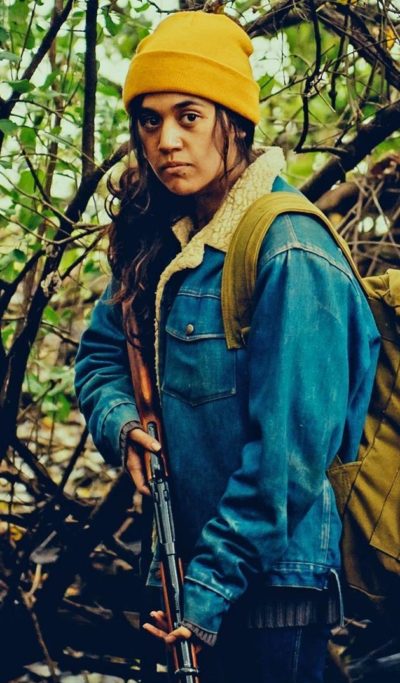
Margo Crane (DelaCerna) has been brought up by her native American father, since her mother walked out on them several years ago. Under his guidance, they have become self-sufficient, and Margo has become a crack shot. However, her creepy uncle ends up having sex with the teenager, an incident for which she gets blamed, ruining her life. She resolves to apply her shooting skills on him, only for the resulting incident to become a tragedy. Margo strikes out on her own up the Stark river, in search of her absent mother. Doing so, she meets a variety of people, then has to try and reconnect with a woman who now has her own life, one not necessarily helped by the unexpected arrival of a teenager.
The set-up here is remarkably engrossing, creating an interesting selection of characters that achieve depth in only a few minutes. Well, except for Creepy Uncle, who is almost entirely obvious, from the moment he invites Margo on a “hunting trip”, and certainly well before he offers to teach her how to “skin deer”. The period up to the unfortunate turn of events could well have been expanded to an entire movie, rather than compacted into a terse 25 minutes. That’s all the more so, because once Margo hits the river, the film loses much in the way of narrative thrust. Certainly, her talents with a firearm become all but irrelevant, and the film instead gets bogged down in its own drama.
It instead goes further down the character-driven path, such as the old geezer whom Margo helps, or the young man she encounters who is rather more in touch with (read: gives a damn about) his Native American heritage. Though it’s hard to tell with Margo, due to her subdued nature: it’s not often that she says more than a sentence, and seems particularly adept (out of necessity?) at keeping her emotions in check. Which makes for an increasingly frustrating viewing experience, the equivalent of deciding whether to buy a house, without being allowed to enter it. Then there’s an abortion subplot, awkwardly shoehorned in, without any particular effect on Margo’s character arc.
It’s all especially annoying, since Margo is initially set up as being a decisive character. The encounter with her uncle could have been depicted in a way that turned her into a victim. Instead, it’s more the repercussions thereafter which are the problem, and cause her to resort to violent action. After finding her mother (Pulsipher), in particular, she never seems to find a purpose to replace her maternal quest. She’s like a dog that has finally caught the car it was chasing. “Now what?” is the resulting question, and the movie doesn’t provide enough of an answer. It ends up falling awkwardly between a number of stools, being not-quite a coming of age film, nor a social drama, and there’s no sense of resolution. If your reaction when the end credits roll is greater than “Huh”, you were more affected than I was.
Dir: Haroula Rose Star: Kenadi DelaCerna, John Ashton, Tatanka Means, Lindsay Pulsipher
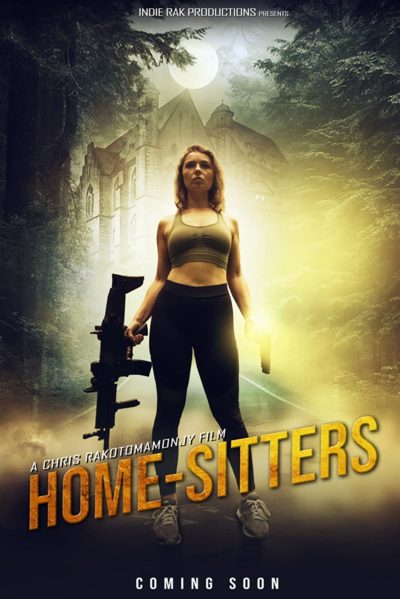
June Williamson (Guillot) is an out-of-work actress, who just broke up with her boyfriend, Oliver (Vernet), and is behind on the rent to her creepy landlord. An unexpected lifeline arrives in the shape of a very well paid gig, house-sitting a large house, deep in the countryside. Things get annoying when Oliver and his asshole pal Marcel (Thevenoud) show up. They get worse when Oliver admits they had an accident on the way, and there’s a body in the car boot. A stare of “terrible” is reached when the body vanishes. And we reach peak awful, when the house comes under siege from Wolfströeme (Bary) and his heavily-armed gang of mercy, who are looking for…
Well, that’s the question, isn’t it? June doesn’t have a clue, yet Wolfströeme is very insistent she does. Fortunately, the house has some defensive systems, which help delay the inevitable. There’s also an underground section, with a firmly locked gate, which may be keeping everyone out… or keeping something in. It’s quite a lot for the film to handle in just 90 minutes, and doesn’t all get the exposition needed to work. To be fair though, it’s mostly a delivery system for the action, and there’s no shortage of this, in the second half at least. June leads the way here: Oliver is fairly useless (both as a boyfriend and as a fighter), and all you need to know about Marcel is, he’s wearing a T-shirt depicting Donald Trump as Rambo.
I do have to wonder why she is quite as competent as she appears. Are unemployed French actresses usually able to wield automatic weapons effectively, and go toe-to-toe with professional soldiers? I kept expecting an explanation for her skills to be forthcoming. Never showed up. Taking this as read though, it’s not badly-staged, without the frenetic editing style which I hate. Truth be told, there were times when this could perhaps have used quicker editing – probably the first time I’ve ever said that! – in order to punch up the impact and heighten the pace. There is also some underwhelming CGI blood that, for example, flies through the air without landing on anything. I’d be inclined not to have bothered with it at all.
I did like the ending, which has a glorious sense of the makers deciding they might as well go big or go home. It might not work for everyone, to put it mildly. Yet it did for me, in a way that’s hard to describe. The end credits then thank the likes of John Carpenter, John McTiernan and Tsui Hark, which made me wonder if the director had been rifling through my DVD collection. They finish by acknowledging the owner of the Chateau de Laye, where this was filmed, and justifiably so, as it’s almost an additional character. As an indie effort, the heart here is always apparent; for me, that goes a good way towards balancing the less effective elements.
Dir: Chris Rakotomamonjy Star: Chloé Guillot, Francis Vernet, Boris Thevenoud, Bary The film is now available to view on Tubi – depending on your region, perhaps!
This is another entry in the sprawling Kurtherian Gambit universe, which must have well over a hundred books in it, by a slew of different authors. I’m gradually coming to a couple of conclusions: a) it’s a very loosely-tied series, and b) the quality varies. When you give your book a title like this, evoking the spirit of Judge Dredd, you are setting certain expectations. Unfortunately, this is a book which fails to meet them, with a heroine who never achieves the level of intensity necessary to live up to the series title: Judge, Jury, Executioner. It has reached 16 volumes, which suggests either there’s a market for it, or the author has too much time on their hands. No prizes for guessing my opinion.
I guess this is loosely “legal space opera,” with the heroine being Rivka Anoa, a barrister who has the talent to read people’s memories and feelings through simple physical contact. When a criminal she knows is guilty gets released, she can’t control herself and kills him. Arrested, she’s given the Nikita choice. Work for the government as an all-in-one justice system, or pay the price for her homicide. Not exactly a difficult choice, and she is quickly pumped full of nanomachines to enhance her physical abilities, trained in lethal arts by her mentor, Grainger, and sent off across the universe with a bodyguard, Red… to troubleshoot a family squabble.
Yeah, my disappointment was palpable. I get it’s a governor’s family squabble: still, it felt like James Bond being assigned to direct traffic. The other mission in this book, brokering a treaty between two squabbling planets, wasn’t particularly interesting, exciting or a good use of her newly-acquired talents either. Indeed, her original ability, being able to sense emotions and history by touch – something you’d think would make her unstoppable as a member of the legal profession – is hardly ever used. Speaking of which, in terms of law, this is so unconvincing, to the degree it can only be read as childish parody.
With the emphasis there firmly on “childish”. Rivka doesn’t sound at all like a barrister, and even less like a judge. You get absolutely no sense about the moral weightiness of having to hand down capital punishment, and the attempts at witty banter between her and Grainger are flat-out cringe inducing. Do not even get me started on an alien species being vulnerable to being kicked in the crotch. Yeah, we are literally at the “Ow! My Balls!” level of entertainment here, folks. I was quite glad the last 12% of the book was unnecessary filler like the author’s outline, which I could skip entirely. I don’t know how much input Anderle had into this, but I would strongly recommend he exercise a greater degree of quality control over the material which goes out under his imprint. This kind of rubbish leaves me very cautious about buying other Kurtherian Gambit books.
Author: Craig Martelle and Michael Anderle Publisher: LMBPN Publishing, available through Amazon, both as a paperback and an e-book Book 1 of 16 in the Judge, Jury, Executioner Book series.
I’d been aware of this movie for some time, through its innovative crowd-funding approach, which raised $3 million to cover the cost of production. After COVID hit, there were doubts it’d ever see the light of day, but here it is: the first “Swissploitation” film [If not quite the case, it’s certainly the first one with a seven-figure budget, as well as the first Swiss movie covered on this site] And it’s not bad: if you’re familiar with similarly crowd-funded spoof, IronSky, this is along similar lines of broad parody. It covers almost every genre of cult from kung-fu films through Starship Troopers to women-in-prison films, e.g. there’s an Asian prisoner sporting inmate number #701. It doesn’t all hit, yet safe to say, the more you’re a fan of B movies, the more you’ll get out of it.
The film takes place in s dystopian version of Switzerland, where the authoritarian government are the only ones allowed to produce cheese, under “very Swiss leader” President Meili (Van Dien, making the Troopers spoof propaganda film which opens proceedings, all the more amusing). They crack down harshly on black-market cheese dealers, and this includes shooting dead the boyfriend of Heidi (Lucy) in spectacularly gory fashion, blowing up her grandfather (Schofield) and imprisoning Heidi, under the tender care of warden Fraulein Rottweiler. The heroine eventually escapes, learns martial arts from two nuns and Helvetia, which I am guessing is the spirit of Switzerland. She then takes revenge, Gladiator style, on Meili’s second-in-command, Kommandant Knorr (Rüdlinger), and finally the big cheese himself.
There is a standard by which all nostalgic attempts at recreating grindhouse cinema are measured, and that is the near-perfection of Hobo With a Shotgun. I think the main area in which this falls short is the lead actress. While it’s almost unfair to compare anyone to Rutger Hauer, Lucy simply doesn’t make the same impression as the likes of the original #701, Meiko Kaji, Tura Satana, or even Dyanne Thorne. Although I cannot fault her effort, I was never fully convinced Heidi was the bad-ass necessary to the plot. However, the supporting cast are solid, led by Van Dien hamming it up to thoroughly entertaining effect.
It looks slick, with every cent squeezed out of the budget, and some startling bits of violence. Could have used more nudity, I’d say: the main source is Swiss performance artist Milo Moiré, who has quite the resume. I think I was hoping for it to be more outrageous. Operating entirely outside the confines of the studio system, it feels rather too safe. Yet I will admit to genuinely laughing out loud on occasion, and some of the sequences are fabulously deranged. For example, a prisoner is tortured with cheeseboarding – it’s like waterboarding, except with melted cheese – then finished off by being impaled through the head with a Toblerone, sorry, for trademark purposes, a generic, triangular bar of Swiss chocolate. Whether that concept has you appalled or intrigued, is likely a good guide as to whether or not you should watch this.
Dir: Johannes Hartmann, Sandro Klopfstein Star: Alice Lucy, Max Rüdlinger, Casper Van Dien, David Schofield
It’s always interesting to look back at the previous year’s entry in this series, and see what lived up to or even surpassed expectations, what didn’t, and what failed to show up entirely. The first category would include The Princess, the second is headlined by Bullet Train, which ended up not even qualifying for inclusion here, and also includes the dismal Interceptor. As for the the no-shows… pour one out for Batgirl, which the studio spent $90 million on, before deciding not to release it at all, even though it was already in post-production.
This should act as a salutary lesson that everything you are about to read is subject to change…
The Abyss (September)
This is the first major Swedish disaster movie: “At the center of events is Frigga (Tuva Novotny), who tries to balance her risky job as a security manager in the Kiirunavaara mine with her family life, her new love Dabir and her ex, who doesn’t want to let go. But when the ground suddenly starts to shake under their feet, the puzzle of life doesn’t matter and the struggle to not be pulled into the abyss begins.” I’ve enjoyed some of the other Scandinavian disaster-porn films, so this one has my interest.
Becky 2: The Wrath of Becky (TBA)
You will be unsurprised to hear that this is a sequel to Becky, which was an unexpected pleasure and a bit of a sleeper hit from 2020. While there are new directors, Lulu Wilson and Seann William Scott return for this: “Becky has been living off the grid for two years. She then finds herself going toe to toe against Darryl (Scott), the leader of a fascist organization, on the eve of an organized attack.”
Black Canary (TBA)
Unlike Batgirl, this project seems to have survived the carnage in the Warner Bros DC Cinematic Universe, even if I’m aware of nobody who was actually asking for this to be a spin-off from Birds of Prey. If you’d asked me who Black Canary was in that film, I probably couldn’t have told you. No plot details, Jurnee Smollett stars, and that’s about all we know: even the reported 2023 release date has not been confirmed.
Bond of Justice: Kizuna (TBA)
This one has been a long time in the making – it had a Kickstarter campaign back in 2015, and Sonny Chiba is in it, and he has been dead for 18 months! – but we do at least now have a trailer for this one. The synopsis says, “A rookie detective’s friend is brutally murdered by the Japanese mafia, she must take revenge for her and bring justice to the world, as an assassin.” As you do.
Dominique: Rise of the Phoenix (January)
“A Ukrainian woman, hunted by a Russian criminal, as she attempts to begin a new life in South America. But in a land plagued with violence and police corruption, Dominique will be forced to face her past to protect a family who takes her in.” I’m a bit confused. This is described as being a sequel to Dominique, which was mentioned in last year’s preview, but never seemed to show up. Either way, it’s from Michael S. Ojeda, who gave us The Russian Bride and Savaged, so has a track record here.
Heart of Stone (TBA)
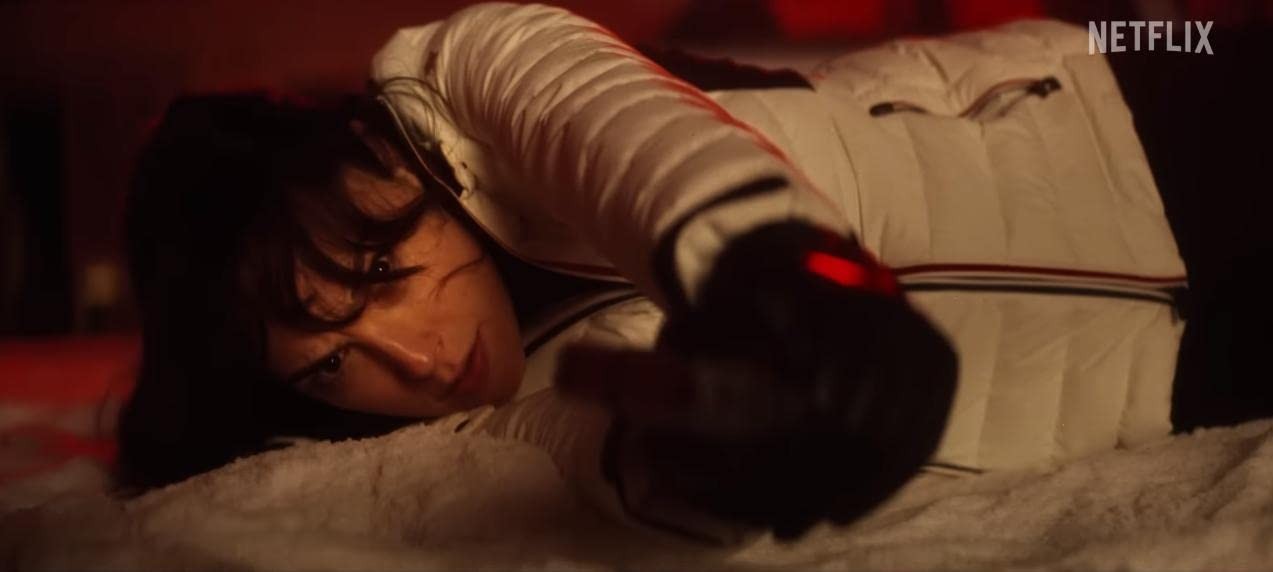
“Rachel Stone (Gal Gadot) is a CIA agent, the only woman who stands between her powerful, global, peace-keeping organization and the loss of its most valuable — and dangerous — asset.” So, a bit vague on details: the above could have been generated by a fairly lazy plot generating AI. Still Gado, pictured top, is typically worth a look and the (equally vague) first look trailer suggests it’s certainly in our wheel-house. It will be a Netflix release: filming wrapped in July, so probably the middle to latter half of the year is my guess.
In the Lost Lands (TBA)
“A sorceress travels to the Lost Lands in search of a magical power that allows a person to transform into a werewolf. ” So this is what Milla Jovovich is doing, in her post-Resident Evil career. It’s directed by husband Paul W.S. Anderson, and is an adaptation of a short story by Game of Thrones author George R.R. Martin. Milla was linked to this project a few years ago, and Dave Bautista plays her faithful sidekick. The budget is reportedly around $55 million, so should be able to pay for significant amounts of ass-kicking.
The Marvels (July 23)
The sequel to Captain Marvel, which in case you had forgotten, was one of the more underwhelming of the superhero comic-book movies. Wikipedia says, “Following the events of Ms. Marvel, Carol Danvers, Kamala Khan, and Monica Rambeau begin swapping places with each other every time they use their powers and must team-up to figure out why.” Which might make more sense if I’d seen a single minute of Ms. Marvel. I feel no great sense of loss at this omission. File this review under “contractual obligation,” and keep expectations in line with that.
The Mother (May)
“While fleeing from dangerous assailants, an assassin comes out of hiding to protect her daughter she left earlier in life.” At least this one seems to have a bit of an excuse for being carried forward, with shooting being shut down last January due to the COVID variant. In addition to Jennifer Lopez in the title role (insert “Jenny with a Glock” joke here), the case now includes Joseph Fiennes, Omari Hardwick, Gael García Bernal, and we now have a teaser trailer for the film, directed by Niki Caro, of Mulan fame.
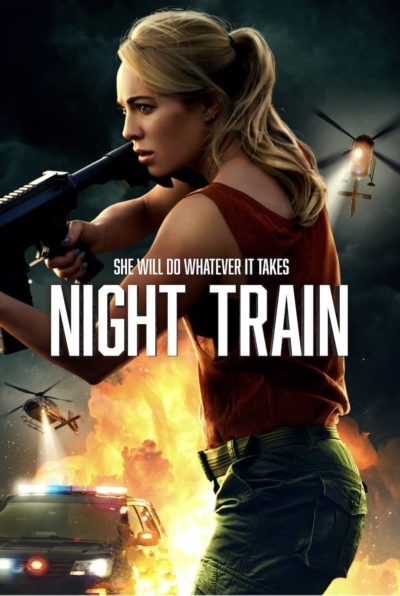
Night Train (January 13)
“A single mom struggling to make ends meet as a Hollywood teamster evades capture by a ruthless FBI Agent while running black market medical supplies in her legendary souped-up pickup truck.” This looks to be the first entry of 2023, but looks kinda bland and fairly cliched. However, it stars Danielle C. Ryan, who has shown promise before, but if her recent Double Threat (review pending) is any guide, is an action actress in need of better material. Maybe this will be it? Or maybe not.
The Street Avenger (TBA)
As suspected, this one was a no-show, and I note that the IMDb page has replaced previous lead actress Mischa Renee with Karina Encarnacion. The supporting cast is a veritable who’s who of straight to video names, including Tom Sizemore, Kevin Sorbo and Robert LaSardo. But, hey, it’s still got Danny Trejo. The IMDb page now says, I suspect more in hope than anything, “This is a raw, action-packed adventure that shows the inner strength of a young woman that will stop at nothing to avenge her father.” Release date: 25 December
Trigger Warning (TBA)
According to Deadline, “Trigger Warning, directed by Mouly Surya, tells the story of Parker (Jessica Alba), an active-duty Special Forces officer described as a female John Wick. Parker takes ownership of her grandfather’s bar shortly after he dies, and soon finds herself at odds with the violent gang that killed him.” I did find an interview from May 2022 with co-star Alejandro De Hoyos, who plays Grandpa, where he says, “Jessica Alba kicks ass. It’s nice to see a female role that shows so much strength and training. Sometimes you see movies with fighters doing action and they don’t seem very efficient. You know they’re not really trained. But Jessica had plenty of physical and mental preparation for this and it shows.” We’ll see this one on Netflix at some point.
Wildwood (April 23)
“Beyond Portland’s city limits lies Wildwood. You’re not supposed to go there. You’re not even supposed to know it exists. But Prue McKeel (Carey Mulligan) is about to enter this enchanted wonderland. Her baby brother Mac has been taken by a murder of crows into the forest’s depths, and she — along with her hapless classmate Curtis — is going to get him back. Prue might think she’s too old for fairy tales, but she’s just found herself at the center of one.” What’s interesting about this is it’ll be stop-motion animation, from renowned Laika studio (Coraline and Kubo and the Two Strings).
Below are the available trailers, first looks, etc. for some of the films discussed above.
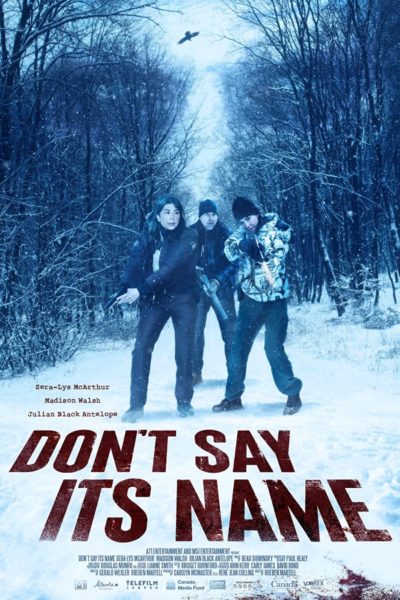
I was going to start this with a warning to try and avoid reading other reviews of this before watching it, because it felt as if, without exception, they all included spoilers for a significant plot-point, that wasn’t actually revealed until deep into the movie. Heck, the IMDb synopsis does it too. However, having sat through the entirety of this bland piece of indigenous folk pseudo-horror, all I can say is “Meh.” You do you: it’s probably not as if it’s going to have much impact, because it’s hard to spoil something which already smells past its best before date.
It takes place on a remote Canadian reservation, where the body of a local activist is found on a road, apparently the victim of a hit-and-run accident. Local sheriff Betty Stonechild (Walsh) is trying to investigate, with the limited resources available to her, and deputizes former soldier, now a local tracker, Stacey Cole (McArthur) to help her. It’s not long before other bodies start appearing in more mysterious circumstances. For example, a surveyor for a mining company, looking to move into the area – something to which the car victim was vehemently opposed – is brutally slain, within feet of a work colleague. He can offer no clues as to what happened, beyond reporting an odd smell and a crow circling menacingly overhead, immediately beforehand.
The problems start with the characters, where both Stonechild and Cole are right out of the box of overused tropes. The former is a single parent, trying to bring up a teenage nephew, for reasons that may have been explained, but which failed to make any impact on my recollection. The latter, worse still, is affected with the kind of PTSD common to movies, which has no effective impact on them, and appears to exist solely as an excuse for lazy writing, instead of developing a rounded personality. The rest of the players are similarly underwhelming. While the film is clearly sympathetic to the local native population, its messaging is clunky at best, reaching its worst point during what feels like a five minute YouTube rant.
The positives are mostly on the technical side, with some nice photography of chilly yet beautiful locations, and decent use of both practical and CGI effects. The two heroines have decent chemistry, and at least we don’t have any unnecessary romantic threads, for either of them: Cole’s way in particular of dealing with unwanted attentions is laudably brusque. It’s not enough to salvage a plot, which spends too long getting to where it wants to be, and isn’t particularly interesting once it gets there. It does offer one amusing moment, after they find the creature responsible and discover to their bemusement it is impervious to their bullets. Otherwise, there is precious little here to stick in the mind, and it feels more like a drama with an agenda, dressed up in genre trappings to become a sheep in wolf’s clothing
Dir: Rueben Martell Star: Sera-Lys McArthur, Madison Walsh, Julian Black Antelope, Samuel Marty



 The latest stop in our ongoing tour of female-driven urban crime movies brings us to the nation’s capital in Washington, where the police are celebrating just having taken down a leading light in the city’s organized crime industry. Now, they set their sights on a new target: the gang led by Racine Robinson (Vaughan) and her two daughters, Kat (Crosby) and Candy (Bethea). These might prove a tougher nut to crack, since the Robinson crew have a harsh, zero tolerance policy to anyone who messes with them in the slightest, yet also gathered local support during the coronavirus pandemic. Indeed, Racine is so popular in the neighbourhood, a run for political office is not out of the question. However, she has rivals, who have more than a passing interest in seeing her taken out of the picture – albeit for very different reasons, in order to make room for them to rise up.
 This is part of the Blood universe, which previously gave us anime series
  Lara Winslet (Daigh) is a vulcanologist, who is on the side of a mountain in Italy, taking samples, when the ground gives way beneath her, and she falls into an underground pit, damaging her leg in the process. Help isn’t going to come, so with limited resources (not to mention a count of functioning limbs that stops at three), she is going to need to cope with the situation on its own, and figure a way out of what could easily become a fatal scenario. Meanwhile, on the outside, her father (Cosmo) is becoming increasingly frantic. This is erhaps because if Lara doesn’t come back, he’s going to be stuck permanently with her kid (Di Mauro). That would be my reaction, anyway…
 Margo Crane (DelaCerna) has been brought up by her native American father, since her mother walked out on them several years ago. Under his guidance, they have become self-sufficient, and Margo has become a crack shot. However, her creepy uncle ends up having sex with the teenager, an incident for which she gets blamed, ruining her life. She resolves to apply her shooting skills on him, only for the resulting incident to become a tragedy. Margo strikes out on her own up the Stark river, in search of her absent mother. Doing so, she meets a variety of people, then has to try and reconnect with a woman who now has her own life, one not necessarily helped by the unexpected arrival of a teenager.
 June Williamson (Guillot) is an out-of-work actress, who just broke up with her boyfriend, Oliver (Vernet), and is behind on the rent to her creepy landlord. An unexpected lifeline arrives in the shape of a very well paid gig, house-sitting a large house, deep in the countryside. Things get annoying when Oliver and his asshole pal Marcel (Thevenoud) show up. They get worse when Oliver admits they had an accident on the way, and there’s a body in the car boot. A stare of “terrible” is reached when the body vanishes. And we reach peak awful, when the house comes under siege from Wolfströeme (Bary) and his heavily-armed gang of mercy, who are looking for…
 This is another entry in the sprawling Kurtherian Gambit universe, which must have well over a hundred books in it, by a slew of different authors. I’m gradually coming to a couple of conclusions: a) it’s a very loosely-tied series, and b) the quality varies. When you give your book a title like this, evoking the spirit of Judge Dredd, you are setting certain expectations. Unfortunately, this is a book which fails to meet them, with a heroine who never achieves the level of intensity necessary to live up to the series title: Judge, Jury, Executioner. It has reached 16 volumes, which suggests either there’s a market for it, or the author has too much time on their hands. No prizes for guessing my opinion.
 I’d been aware of this movie for some time, through its innovative crowd-funding approach, which raised $3 million to cover the cost of production. After COVID hit, there were doubts it’d ever see the light of day, but here it is: the first “Swissploitation” film [If not quite the case, it’s certainly the first one with a seven-figure budget, as well as the first Swiss movie covered on this site] And it’s not bad: if you’re familiar with similarly crowd-funded spoof, Iron Sky, this is along similar lines of broad parody. It covers almost every genre of cult from kung-fu films through Starship Troopers to women-in-prison films, e.g. there’s an Asian prisoner
  It’s always interesting to look back at the
  Dominique: Rise of the Phoenix (January)
 Night Train (January 13)
 I was going to start this with a warning to try and avoid reading other reviews of this before watching it, because it felt as if, without exception, they all included spoilers for a significant plot-point, that wasn’t actually revealed until deep into the movie. Heck, the IMDb synopsis does it too. However, having sat through the entirety of this bland piece of indigenous folk pseudo-horror, all I can say is “Meh.” You do you: it’s probably not as if it’s going to have much impact, because it’s hard to spoil something which already smells past its best before date.