If you’re even slightly familiar with the Star Trek universe, you’ll be aware of the Prime Directive. While never explicitly stated, it’s the rule which prohibits interfering with the development of less technologically advanced civilization, in particular those that are not capable of space travel, or are unaware of the existence of life beyond their own planet. It’s a key concept in this book too, though is meshed together with a religious theme – not something often found in this kind of science fiction.
The central character is Commander Hickory Lace, part of the Alien Corps. This is a group created by the Vatican to investigate extraterrestrial “messiahs” as they are reported, to see if they are potentially also the Son of God like Jesus. After a century, they’ve had no success: perhaps the latest candidate, Kar-sèr-Sephiryth of the planet Prosperine, might be “the one”. The Corps are working with Earth’s Intragalactic Agency, in which Hickory’s father is an admiral, as Prosperine has the rare material Crynidium, essential to faster-than-light travel. The IA has their version of the Prime Directive, so Hickory and her crew have to disguise themselves as the local population. Not everyone abides by the same rules. The Bikashi, an outlaw race thrown out of the Galactic Alliance, are present on Properine, seeking to control the Crynidium for themselves, and don’t care about manipulating the development of the natives.
I liked the concept and the world-building here, with Prosperine truly seeming like an alien planet in every regard. The scenario poses an interesting challenge for the heroine, with the strictures imposed by the Intragalactic Agency limiting her ability to counter the Bikashi, who are operating under no such constraints. Fortunately, she has some tricks up her sleeves, most notably her empathic abilities, which even work on the native wildlife. Along with her team, she has to find a way to thwart the rebellion being fomented among certain radical elements by the Bikashi, while also trying to decide whether or not Kar-sèr-Sephiryth is legitimate. This process does lean more heavily on smarts than firepower, in part because the weapons so far invented on Prosperine are relatively primitive.
It feels as if every member of the Alien Corps ends up both captured by, and then escaping from the Pharlaxians, the religious reactionaries leading the revolt, with Bikashi help. I’d have a word about their security protocols, if I were their leader. The religious elements are not overpowering, and there is a lack of resolution which is a bit unsatisfying: we never reach a conclusion as to Kar-sèr-Sephiryth’s divine status. Still it’s kinda brave even to suggest the concept that the second coming of Jesus Christ could be as an alien. The ending feels like Hickory and allies are heading off on another mission: however, naming the series after the planet suggests they’re not going anywhere. Nor are Hickory’s Daddy issues. It may be a somewhat optimistic take on first contact, yet was thoughtful enough to make for a satisfactory read.
Author: P.J. McDermott Publisher: Patrick McDermott Publishing, available through Amazon, both as a paperback and an e-book Book 1 of 4 in the Prosperine series.
The latest take on one of Britain’s greatest historical heroines has come in for a fair bit of critical flak. But I really did not think it was all that bad. Sure, it plays fast and loose with historical accuracy (Christianity wasn’t a thing in Britain at the time). However, we’re dealing with someone about whom there is very little reliable record. Why not throw in chunks of the Arthurian mythos, if it might make for a more interesting end product? The usual basics are there. Queen of the Iceni Boudica (Kurylenko) loses her husband (Standen), and subsequently falls foul of the occupying Roman Empire. She raises an army, leads a rebellion, kicks Roman butt for a while, but eventually goes down, fighting. That’s the Cliff Notes version.
The variations are in the details, and the versions previously reviewed each take a different approach. For example, Warrior Queen (2003) leaned into the drama. This goes the other way, coming to life most in the battle sequences. It should be no surprise: Johnson is a former stuntman, who has turned to directing action films. He’s best known for excellent Scott Adkins vehicle Avengement, but here we previously reviewed his war film, Hell Hath No Fury. There isn’t the budget here for the necessary scale – the Iceni army reportedly numbered well into six figures, but when Boudica is giving her inspirational speech, it’s more like a soccer mom offering half-time motivation. Yet it makes up for this in gory intensity: this is certainly the most blood-drenched version of the story ever told.
It does take its time getting there. Initially, Boudica is not a warrior queen at all. It’s only after she gets a sword handed down from previous generations that she begins to head in that direction. She encounters a female fighter (Martin), who regards Boudica as the fulfillment of prophecy. It’s when the Roman’s take over, flogging and branding her, then doing worse to her daughters (an angle which is handled weirdly, yet not ineffectively), that Kurylenko becomes the bad-ass Brit bitch we expected from the likes of Sentinelle. She paints up her face and takes the battle to the enemy, in a way which is up-close and personal.
At least for the first few battles, the Romans won’t know what hit them, and this absolutely doesn’t soft-pedal the brutality of hand-to-hand combat. It’s a shame there’s some stuff around the periphery that doesn’t work so well, such as a mercenary called Wulfgar (Franzén), who speaks modern-sounding French – was that even a thing in 61 AD? – and appears to have the hots for Boudica. There’s also the way her sword seems almost magical, which does perhaps take away from her intrinsically heroic nature, and doesn’t add much. I think if you took the best elements of both this and Warrior Queen, you might have something close to definitive. This can provide Kurylenko and a solid eye on the action. That’s still good enough for me.
Dir: Jesse V. Johnson Star: Olga Kurylenko, Clive Standen, Peter Franzén, Lucy Martin
This documentary takes a look into the lives of three women in Texas, who are all operating in the male-dominated world of ranching. Some were born into it, while others came to it through choice. In particular, Mandy Dauses falls into the latter category, having left her East-coast home because she felt that Texas represented the best chance to fulfill her ambition of becoming a ranch manager. On the other hand, Sara Lemoine Knox is struggling to balance what she feels is an obligation to carry on in the family business, with her own goal of becoming a lawyer. Meanwhile, Martha Santos is looking to find work in that line, but without her own property, is finding it a challenge.
It’s a way of life which is gradually becoming more endangered for both men and women. For example, Martha’s family used to own land near Laredo, but they sold it to satisfy the ever-increasing appetite for land on which homes and businesses could be built. Similarly, Sara’s heart really isn’t in farming, even though she was given her first property, covering 160 acres, at the age of 12. Even beyond their chosen (or imposed) profession, they have other ambitions. Mandy desperately wants to start a family, but at age 37, time is running out for her. Though during the course of the documentary, she does discover she is pregnant. These are all imperfect lives, and that’s probably the point, offering an non-idealized take that’s radically different from the fictional, romantic version of cowgirls.
Dauses likely represents the most interesting and complex of the characters. On the one hand, she’s clearly a strong, independent woman, who moved half-way across American in pursuit of her dreams. On the other, she still cooks dinner for her long-term boyfriend, John, who expects a meal to be ready on the table when he comes home (regardless of the fact that she has her own job, too). Outside of the story of her pregnancy, however, there is not much sense of development. This is more a snapshot of the three women’s lives at this moment in time, without any narrative. When the end credits roll, nobody is particularly in a different place from there they were at the beginning.
This is not to say there’s any need for forced drama, but there’s not even much sense of time passing. Contrast, say, documentary series Clarkson’s Farm, which had a much more compelling narrative, simply through covering an entire year. Of course, it had the advantage of more time to tell its story, but the dramatic moments here, such as coming across a dead cow in the middle of giving birth, have no particular emotional resonance. Instead, it’s most interesting when you are shown the difficult task the women have to balance the various forces (internal or external) in their lives, looking to achieve harmony. The film probably needed to do a better job of that itself, if it wanted to have a lasting impact.
Dir: Sarah Brennan Kolb Star: Mandy Dauses, Sara Lemoine Knox, Martha Santos, Joyce Gibson Roach
For a Lifetime Original Movie, this is actually close to the best of its kind I’ve seen., but it is surely docked points for being a thoroughly shameless knock-off of a certain Liam Neeson movie, all the way down to the title. As there, we have an American abroad, searching for a teenage daughter who has been kidnapped by even more foreign sex-traffickers. They will stop at nothing – nothing, I tell ya! – to recover their child, be that personal danger or interference from local corrupt police. The main difference is it’s a heroine, NYPD detective Stevie Parker (Benz), with the location being shifted from Paris to Moscow – though under current circumstances, the location has not aged well.
Certainly, letting your daughter Sophie (Battrick) now go by herself to Russia, even if she is friends with the ambassador’s daughter, would feel like utterly irresponsible parenting. Even a decade ago when this was made, it seems questionable, and concerns prove justified. Despite the presence of lurking CIA minder Nadia (Bailey), it’s not long before Sophie and her pal have snuck out, gone to a nightclub, been roofied, and are on their way to becoming the playthings for some rich tycoon, courtesy of the Chechen mafia. Mama Parker is not happy. She’s on the first plane to Moscow, where she teams with Nadia and reluctant local cop Mikhail (Byron, who’s English, though his IMDb credits are littered with Eastern Europeans!) to work her way up the chain and rescue the girls.
It’s never less than glaringly obvious, and the first thirty minutes are especially excruciating in this department, not least due to a shoehorned romance for Stevie: it is Lifetime, after all. Once she arrives in Russia – actually, Bulgaria standing in for it – while things don’t get any less predictable, the energy level ramps up several degrees, and this becomes considerably more watchable. Benz has the necessary intensity to be the unstoppable force she needs to be, and pairing her with another woman is an additional wrinkle that works nicely. The action is a bit limited, with the only real sequence of note at the end, when the pair storm the hotel where Sophie is being held before her departure, followed by a chase back to US sovereign territory at the embassy.
There’s no denying a major case of American saviour complex here, with the locals being portrayed as useless or actively evil, and needing the help of the USA in order for any action to be taken. Chris noted the presence of a large Stars and Stripes in the film’s final shot, and it seems entirely deliberate, reminding viewers that they are now back on safe, i.e. American soil. Yet there is surprising darkness, not least in the uncompromising fate meted out to the corrupt official. After a start where this struggled to hold my attention, by the end I was being just about adequately entertained. Given the source, that’s high praise indeed.
Dir: Don Michael Paul Star: Julie Benz, Amy Bailey, Andrew Byron, Naomi Battrick
RIP James Caan. I mention his passing, because by coincidence I watched this the same day, and there are a couple of nods to Misery, one of Caan’s most famous works. There’s a character called Mrs. Wilkes, and we also get an explicitly acknowledged re-enactment of that scene. You know the one. That aside, I’d be hard pushed to call this a good film, yet I can’t deny I largely enjoyed it. It feels like an influence on Knock Knock, and if perhaps not quite coming up to that mark, it’s only marginal below, and I’m still a sucker for a full on, scenery chewing psycho bitch. In Sadie (McCord), we certainly get one.
She and boyfriend Kevin (Zane) are starting a romantic getaway in a remote cabin. Well, that’s his plan. Sadie’s is rather different, having found incriminating text messages on his phone – worse still, to her best friend, Jennifer (Bianca). Not helping matter: Sadie recently discovered she was pregnant, and out of concern for her unborn child, stopped taking her lithium and anti-psychotic meds. Kevin wakes to find himself tied to a chair, with some very awkward explaining to do, and Jennifer is being lured to the cabin with a not-so-genuine text message saying Kevin had split up from Sadie. Adding to the mix, a scary looking convict (Drucker) has just escaped from the prison just down the road, and is headed in their direction.
There’s one scene where I fell… well, I won’t say in love with the movie, but I’d not mind a one-night stand with it. It’s when Sadie has Jennifer and Kevin tied to the bed. She drags a microwave in there too, slaps Sadie’s pet in there and demands Kevin go down on his other woman, “or I will start this microwave, and her little doggie will cook from the inside out.” No, seriously. It’s clear that this film is not to be taken seriously, and the three performances at the core are perfect for that, with Zane and Bianca dead-panning their way through the carnage, playing the straight man and woman to good effect, in contrast to McCord’s over the top, dramatic excesses. For she is going to make Kevin and Jennifer pay for their betrayal. PAY, I tell ya!
Turns out she was brought up in a mental facility and given electroshock therapy, after an incident when she was 12. She is, in essence, the poster child for “Don’t stick your dick in crazy.” Which makes it all more fun to watch her tormenting the errant couple for their sin. It all builds, inevitably, to a climax which is just as gloriously silly. I mean, who keeps a loaded spear-gun on their sideboard? Kevin, meanwhile, is moving with the agility of a gazelle, considering what happened to his ankle previously. All that said, I genuinely didn’t know who would survive at the end. I’ll say it again: I enjoyed this considerably more than I would necessarily recommend it, and the rating above reflects the former.
Dir: Mark Jones Star: AnnaLynne McCord, Billy Zane, Viva Bianca, Doug Drucker
By that, I am referring to the unnamed heroine of this film, because she doesn’t have to leave the house. She works as a hitwoman for Yakuza boss Yasuhiro Kokubu (Katô), and he delivers the targets to the front-door of her rural home, on the pretext of her being their entertainment. She then gives them the Black Widow treatment, having sex with them, before a couple of post-coital shots. She barely has to get out of bed, literally. In some way this makes sense, since she’s blind – I guess it’s nice to see the disabled being given equal opportunities in the assassin field. But she’s not exactly happy with her lot; her cleaner and handler Masahiko Yoshizawa (Murai) is concerned about her spiralling into alcoholism.
Of more immediate concern though, is Kokubu’s paranoia, which has convinced him that his trio of killers need to be disposed of, before they become a liability. His sent one assassin to visit her, only for her to prevail. So he follows up by dispatching the other one, Kenji Sakagami (Kusakari), to finish the job. Except he had followed the first killer and knows all too well what’s going on. Unsurprisingly, he suspects that once he kills her, his name will be next on his boss’s list, and so makes other plans, which involve him escaping with his target. However, Yoshizawa will need to be handled, and Sakagami also needs to convince her of his genuinely good intentions.
As you can imagine, given her static nature, it’s not exactly action-packed, though does ramp up nicely down the stretch. Until then though, it’s of an angsty drama, with more than the normal amount of sex. The focus is perhaps more on Sakagami than anyone else, with the heroine being quite passive. While this is perhaps inevitable, given her particular set of circumstances, it doesn’t make for thrilling cinema. The director seems fond of depicting things in real time, which is a bit of a mixed blessing. I could have done without a lengthy depiction of Sakagami’s first journey out to her home, but when the love-making between them gets a similar treatment, it’s an interesting variation on the way such things are usually depicted.
This is the first of the series which would give us Beautiful Beast a couple of years later, but is a little lower key and, in general, less interesting. The elements are all reasonable enough in themselves, it’s just that they are combined in a way which occasionally borders on the soporific. Action is probably not a secondary consideration here, likely ranking below both the drama and the eroticism, and very much of the “blink and you’ll miss it” kind. The finish is strong, though this too seems over-extended beyond what it might merit. As a portrait of a damaged assassin, it just doesn’t convince, perhaps because we do not spend enough time with her, and even her blindness doesn’t matter much.
By the time I reached the end of this, what stood out most is how far we had come from the initial scenario. We start way out in deep space, where the crew of the Váli are awoken from their cryo stasis after the ship suffers significant damage as a result of a hull breach. By the end, everything has changed dramatically. The situation back on Earth, the mission of the Váli, and the very nature of the heroine, 25-year-old comms and electronics specialist, Daisy Swathmore, are are all radically different from what they initially seem to be. It’s basically a dramatic arc for the entire human race.
It begins with Daisy adjusting the setting of her neuro-stim. It’s designed to allow learning while the wearer sleeps. But she disables the firewalls which are there to stop the brain being overloaded. She becomes a lot more knowledgeable and skilled – but also incredibly paranoid, believing the cyborgs and enhanced human colleagues are plotting… something. Daisy is already prejudiced against those who are not entirely human, but are her concerns the result of mental illness, or is there something genuinely going on? She eventually decides to go AWOL, hiding out in the bowels of the ship as she digs for the truth, becoming a one-woman human resistance, before leaving in a shuttle and making her own way back to Earth. Where things are certainly not as she expected to find them.
Baron does an excellent job of engaging the viewer from the very first page. The opening line is, “Should we wake them? I mean, the ship is on fire, after all,” and if that doesn’t get you interested in reading on, I don’t know what to say. It’s an interesting exercise in reverse world-building, in that it starts out at the small and personal level, only gradually opening up to reveal what’s going on in the universe at large. Getting there involves going along on the heroine’s paranoid journey, and in the middle I was increasingly convinced that her fears were justified. They are. And they aren’t. That’s a tricky task to pull off, but the author manages it.
The neuro-stim is a nice Macguffin, which allows Daisy to have the necessary talents for the plot, but Baron doesn’t just rely on that as a crutch. For example, this allows her to build a scanner that will tell her which crew-mates are human and which are cyborg. However, just as tricky is then having to get them to pass through it. The book occasionally feels like the text of a space-based adventure game, with a cycle of problem > solution > progress > problem. Yet this keeps the narrative moving forward, and we learn alongside Daisy the truth about the situation. While ut comes as much of a shock to this reader as it does to her, the facts seems to fit the preceding elements. Well done, Mr. Baron. I think we’ll be revisiting Daisy down the road.
Author: Scott Baron Publisher: Self-published, available through Amazon, both as a paperback and an e-book Book 1 of 6 in the Clockwork Chimera series.
There are times where I regret my choice of pastime. It means I end up watching things for this site that I would never give the time of day, given the choice. This is one such, having endured the almost physically painful experience which was Hellfire, starring the same three lead actresses, and to which this appears a loose sequel. In this case, Mercedes also took over directorial duties, and… it’s actually somewhat of an improvement. Still not good, by any objective standards, let’s be clear. Yet there’s a punky and unrepentant attitude that clearly doesn’t care what I, or anyone else, thinks. Put it this way, if you want a film which includes close-up shot of the director having a pee, here you go. Offense is its raison d’etre.
The story has (loosely) Greek goddesses Lilith (Divine), Athena (Peach) and Toxie (Mercedes) roaming the blasted hellscape of Tromaville, taking on the evil forces of misogyny and white supremacy, mostly through the superpowers of really bad acting and highly deliberate offense, it would appear. This probably teaches its peak with a recreation of the assassination of John F. Kennedy in a strip-club. It feels as if Mercedes simply threw every idea of questionable taste she could come up with into her script, and filmed the result, largely using her pals. If you want a puppet, voiced by Troma movies head honcho Lloyd Kaufman, sitting on the toilet and delivering a lecture on artistic freedom. Again: here you go.
There’s even stuff here I can’t describe, without getting down-ranked by Google for explicit content. Trust me. There is certainly an aesthetic here, and it’s one to which Mercedes is clearly 110% committed, and personally too. [Is it exploitation if you’re doing it yourself?] But it’s not a style which overlaps more than fractionally with my tastes. I’ve been a fan of Troma since back in the days of Toxic Avenger (its star Torgl has a supporting role as creepy motel owner N. Bates). That looks like a Christopher Nolan movie in comparison to Divide & Conquer. Philosophically, I tend to have a different view of empowerment. To me, it doesn’t mean women copying the worst of male behaviour, as seems too often the case here e.g. rape.
There are times when restraint is not necessarily a bad thing. If you drop F-bombs every second word, eventually people are going to tune you out, and this is pretty much the cinematic equivalent. About half way through, as the story meandered its way to, then past, a confrontation with a geriatric Adolf Hitler and his pet werewolf (there’s a phrase I didn’t expect to be writing today!), I simply lost interest. There’s only so much toilet humour, potty-mouthed dialogue and amateur acting I can take in one sitting. This provides an all-you-can-handle buffet of those things, with enough left over to feed your entire family the next day. I prefer something a little less in your face. Quite often here, literally.
Dir: Mercedes Star: Irie Divine, Knotty Peach, Mercedes, Mark Torgl
Over on our Facebook page, we regularly post girls with guns images. These are the photos which have been the most popular there over the past year – one for each month, and a couple of wild-card entries. We’re currently voting for the best pic of 2023 there, so come and cast your vote! Otherwise: enjoy; use the arrows at the bottom to scroll through the pics…
Let’s be completely clear. 2023 was a dismal year for the genre, probably the worst in the decade or so I’ve been doing these annual previews. Of all the films listed in last year’s piece, there was not a single one – of those which actually showed up – that was half-way decent. Mind you, I haven’t seen TheMarvels yet. I kinda lost the will to live for that one, having failed to complete the necessary homework of all those TV series on Disney+. I’ll maybe get round to it… eventually. It was a dismal flop at the box-office, but still remains the closest thing to a hit for an action heroine this year, albeit barely reaching the year-end top thirty. After that? The holdover of Everything Everywhere All at Once was the only other in the top hundred. At #100.
Will 2024 be better? I think it might be, albeit partly because it would be hard pushed to be any worse. There is one obvious tent-pole entry, though I have some qualms about it, and below that, the usual slew of maybes and possibles. Let’s tear in, with the usual caveat that all release dates are vague, approximate and subject to change at a moment’s whim. I’ve also not included a few entries which are apparently scheduled for next year, but about which little or nothing is known, such as The Old Guard 2.
Ballerina (June 7)
Not to be confused with the Korean movie of the same name, this is the John Wick prequel, focusing on Eve, played by Ana de Armas. The storyline revealed so far seems largely boilerplate: “A young female assassin seeks revenge against the people who killed her family.” However, its presence in the Wick-iverse certainly elevates it, and the director is Len Wiseman, best known for his work on the Underworld franchise. So he clearly knows his way around an action heroine. Hell, he married one. :)
Breathe (TBA)
You had me at Milla Jovovich. “Air-supply is scarce in the near future, forcing a mother and daughter to fight to survive when two strangers arrive desperate for an oxygenated haven.” Neither mother nor daughter are actually Milla, however, so I’m going to presume she’s one of the strangers. While we’re on the topic of Jovovich, what happened to George R.R. Martin adaptation In the Lost Lands, starring her and Dave Bautista? It’s supposedly has been in post-production since last January, but the IMDb doesn’t even give it a year any more. Weird.
Christie the Movie (TBA)
This one is still listed as being in pre-production as of September, and the cast list on the IMDb doesn’t even mention the lead actress (which a still shows as Janessa A. Morgan). But what’s interesting is that this is based on cult series Get Christie Love! which originally aired on TV in the mid-seventies: we reviewed the pilot here. I’d certainly not mind seeing a movie version, but the general lack of information leaves me doubtful this will see the light of day next year.
Damsel (March 8)
Dieter brought this one to my attention, and after the trailer looked somewhat ho-hum for much of its running time, the end – more or less, the still at the top of this article – did get my attention. It will star Netflix’s favourite young woman, Millie Bobby-Brown (of Enola Holmes), as “A dutiful damsel [who] agrees to marry a handsome prince, only to find the royal family has recruited her as a sacrifice to repay an ancient debt. Thrown into a cave with a fire-breathing dragon, she must rely on her wits and will to survive.” The last time we saw one of those subversive fairy tales, it was The Princess, and was great. So fingers crossed…
Echo 8 (TBA)
“An assassin flashes between a nightmarish dream and her reality at a secret underground organization. When her latest mission involves killing a grieving mother, she discovers her target is closer to home than she realizes-much closer.” This is a low-budget labour of love for star Maria Tran, who also co-directed (with her husband Takashi Hara), edited, produced and worked on the fight choreography.
Furiosa (May 24)
There it is. The prequel to the god-tier work which was Mad Max: Fury Road, though with Anya Taylor-Joy replacing Charlize Theron. The trailer for this came in for some criticism when it came out, in particular due to the shaky nature of some CGI elements. Given how the practical approach of Fury Road was one of its outstanding elements, this is understandable. Hopefully it’s something they can fix in post-production. My other concern is Taylor-Joy, who doesn’t have much pedigree in action, and based on the trailer, does not have the same physical presence as Theron. However, it is an origin story, and I would expect the character arc to reflect this. In George We Trust. This may end up being a rare cinema trip for us.
Griselda (January 25)
I’ve not typically included TV series in this feature, but feel this one deserves an exception. We’ve previously a number of films regarding drug-lord Griselda Blanco, both dramatizations of her life and documentaries. This is the former, being a Netflix miniseries, with Sofia Vergara in the lead role. This feels a bit of a double-edged sword. She’s Colombian, like Griselda. But she’ll always be Gloria from Modern Family to us. I think this one might be just a little more blood-spattered though, coming as it does from the makers of Narcos.
Mr. and Mrs. Smith (February 2)
As with Griselda, the TV series remake of the 2005 movie of the same name deserves inclusion. Maya Erskine and Donald Glover star as the marriage couple who are also spies, though based on the trailer, it seems like it begins with them separate. The synopsis offers a different direction too: ” Two strangers land jobs with a spy agency that offers them a life of espionage, wealth, and travel. The catch: new identities in an arranged marriage.” Erskine isn’t exactly Angelina Jolie, so we’ll see.
Rebel Moon – Part 2: The Scargiver (April 19)
The follow-up to part one looks set to continue the story of Kota, who has now assembled her band of rebels to take on the evil empire of the Motherworld. I imagine we can expect more of the same as what we’ve seen so far. Which would be spiffy visuals, albeit accompanying a plot which could use rather more originality. The jury is likely still out on whether Zack Snyder will get his desired cinematic universe of this. Didn’t work out too well for Army of the Dead.
Seize Them! (UK April 5)
The synopsis sounds promising: “Queen Dagan is toppled by a revolution led by Humble Joan . The Queen becomes a fugitive in her own land, and must face hardship and danger as she embarks on a voyage to win back her throne.” However, it is a comedy – the cast include Nick Frost and Jessica Hynes, both out of the Edgar Wright nexus. So how much actual action will be involved here is uncertain: I’m still going to watch it.
The Street Avenger (December 24)
“When a young girl being raised by a single father loses him to gang violence, she tries to take the law into her own hands and finds out being a vigilante is nothing like she reads about in the comics… This is a raw, action-packed adventure that shows the inner strength of a young woman that will stop at nothing to avenge her father.” Okay, I am interested. But let’s see if the makers can deliver on everything the promised in that synopsis…
Tomb Raider: The Legend of Lara Croft (TBA)
Another Netflix series, this will be an animated show, with Hayley Atwell voicing Lara. Not much information, beyond that the series “Follows heroine Lara Croft as she explores new territory.” There is a “First Look” video available, which is included as part of the watch-list below: the animations looks quite nice. Hopefully it’ll be an improvement over the underwhelming Alicia Vikander version of the character.
Trigger Warning (TBA)
Out of the “long in production” file comes this Jessica Alba vehicle, with the following synopsis: “A traumatized veteran who inherits her grandfather’s bar and faces a moral dilemma after learning the truth behind his untimely death.” Filming on this apparently wrapped back in October 2021, so quite what the hold-up, I don’t know. It’s supposed to be a Netflix release, but we’ll see.




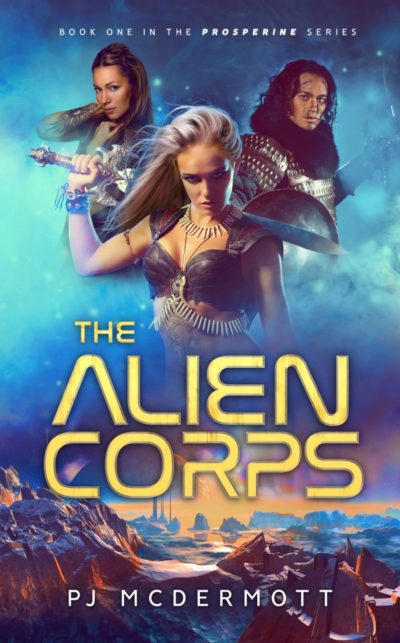 If you’re even slightly familiar with the Star Trek universe, you’ll be aware of the Prime Directive. While never explicitly stated, it’s the rule which prohibits interfering with the development of less technologically advanced civilization, in particular those that are not capable of space travel, or are unaware of the existence of life beyond their own planet. It’s a key concept in this book too, though is meshed together with a religious theme – not something often found in this kind of science fiction.
 The latest take on one of Britain’s greatest historical heroines has come in for a fair bit of critical flak. But I really did not think it was all that bad. Sure, it plays fast and loose with historical accuracy (Christianity wasn’t a thing in Britain at the time). However, we’re dealing with someone about whom there is very little reliable record. Why not throw in chunks of the Arthurian mythos, if it might make for a more interesting end product? The usual basics are there. Queen of the Iceni Boudica (Kurylenko) loses her husband (Standen), and subsequently falls foul of the occupying Roman Empire. She raises an army, leads a rebellion, kicks Roman butt for a while, but eventually goes down, fighting. That’s the Cliff Notes version.
  This documentary takes a look into the lives of three women in Texas, who are all operating in the male-dominated world of ranching. Some were born into it, while others came to it through choice. In particular, Mandy Dauses falls into the latter category, having left her East-coast home because she felt that Texas represented the best chance to fulfill her ambition of becoming a ranch manager. On the other hand, Sara Lemoine Knox is struggling to balance what she feels is an obligation to carry on in the family business, with her own goal of becoming a lawyer. Meanwhile, Martha Santos is looking to find work in that line, but without her own property, is finding it a challenge.
 For a Lifetime Original Movie, this is actually close to the best of its kind I’ve seen., but it is surely docked points for being a thoroughly shameless knock-off of a certain Liam Neeson movie, all the way down to the title. As there, we have an American abroad, searching for a teenage daughter who has been kidnapped by even more foreign sex-traffickers. They will stop at nothing –
  RIP James Caan. I mention his passing, because by coincidence I watched this the same day, and there are a couple of nods to Misery, one of Caan’s most famous works. There’s a character called Mrs. Wilkes, and we also get an explicitly acknowledged re-enactment of
  By that, I am referring to the unnamed heroine of this film, because she doesn’t have to leave the house. She works as a hitwoman for Yakuza boss Yasuhiro Kokubu (Katô), and he delivers the targets to the front-door of her rural home, on the pretext of her being their entertainment. She then gives them the Black Widow treatment, having sex with them, before a couple of post-coital shots. She barely has to get out of bed, literally. In some way this makes sense, since she’s blind – I guess it’s nice to see the disabled being given equal opportunities in the assassin field. But she’s not exactly happy with her lot; her cleaner and handler Masahiko Yoshizawa (Murai) is concerned about her spiralling into alcoholism.
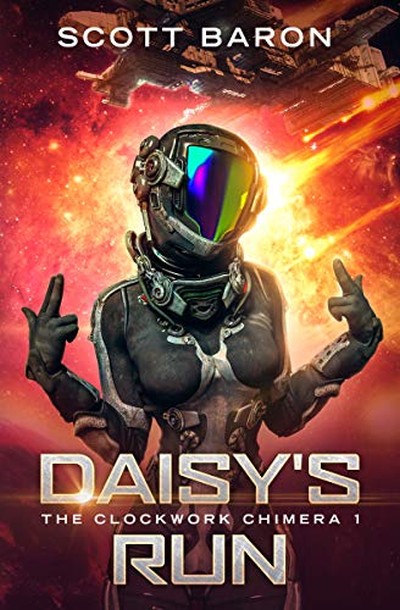 By the time I reached the end of this, what stood out most is how far we had come from the initial scenario. We start way out in deep space, where the crew of the Váli are awoken from their cryo stasis after the ship suffers significant damage as a result of a hull breach. By the end, everything has changed dramatically. The situation back on Earth, the mission of the Váli, and the very nature of the heroine, 25-year-old comms and electronics specialist, Daisy Swathmore, are are all radically different from what they initially seem to be. It’s basically a dramatic arc for the entire human race.
 There are times where I regret my choice of pastime. It means I end up watching things for this site that I would never give the time of day, given the choice. This is one such, having endured the almost physically painful experience which was
 Let’s be completely clear. 2023 was a dismal year for the genre, probably the worst in the decade or so I’ve been doing these annual previews. Of all the films listed in
  Ballerina (June 7)
 Furiosa (May 24)
 Griselda (January 25)