




★★★
“Ping-pong diplomacy.”
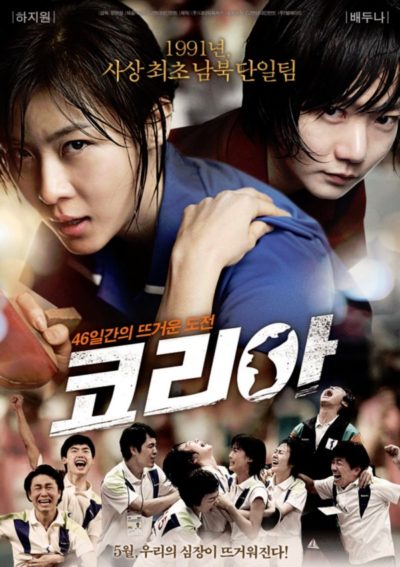 After the bombing of a South Korean jet by North Korean agents in 1987, relations between the two nations sank to perilously low levels. In an effort to help mend fences, the countries agreed to join forces and send a unified squad to the 1991 World Table Tennis Championship in Japan, to take on the all-powerful Chinese. The process was not without its bumps, as the South’s star player, Hyun Jung-hwa (Ha), and her counterpart in the North, Ri Bun-hui (Bae), struggle to overcome their differences and become a cohesive doubles partnership. Their respective coaches (Park and Kim) also have to learn to navigate shoals both sporting and political on the way to the gold medal match in Tokyo.
Since this is based on real events, it’s no spoiler (and certainly would not have been for the Korean audience) to say that the unified team triumphs in dramatic fashion. Indeed, the whole thing is more or less an exhibition of Sports Clichés 1.0.1, with moments which you feel have been needlessly juiced up for emotive purposes. For example, did the entire South Korean roster really kneel in the rain outside their hotel, after the North Korean players were withdrawn for breaches of the rules? Did Ri really collapse during the last few minutes of the final, before an inspirational speech from Hyun? I’ve been unable to confirm either incident and it feels like a case of the writers over-egging the pudding, dramatically speaking.
Fortunately, everything else is excellent, and it’s clear a lot of attention went into details, some of which may not be visible to a Western audience e.g. the North Korean players speaking with appropriate dialect and accents. What was impressive even to me, was that the actresses genuinely looked like they were professional table-tennis players. Months of training went into that, with the real Hyun being one of the coaches. Praise in particular to Bae, who had to learn how to play with her left-hand, to match the one used by Ri. Although CGI was used to “fill in” the ball during the actual tournament sequences, there were no doubles used for the actresses, and the results look close to impeccable – as good as any sports movie I’ve seen.
Even away from the table, the performances are good, and if the melodrama is turned up a little too high, the balance otherwise is nicely handled, with a mix of humour, human interest and patriotism which is effective. While the Chinese are depicted as the “villains” her – and it’s not exactly subtle! – there is very much a message of how sport can act as a unifying force for a country. That’s something I tend to agree with, which is why I have little time for those who use it in divisive ways, such as kneeling during the anthem. There’s no doubt the intent here is almost nationalistic, yet it still works well enough for non-Koreans – and for those who still call the game ping-pong.
Dir: Moon Hyun-sung
Star: Ha Ji-won, Bae Doona, Park Chul-min, Kim Eung-soo
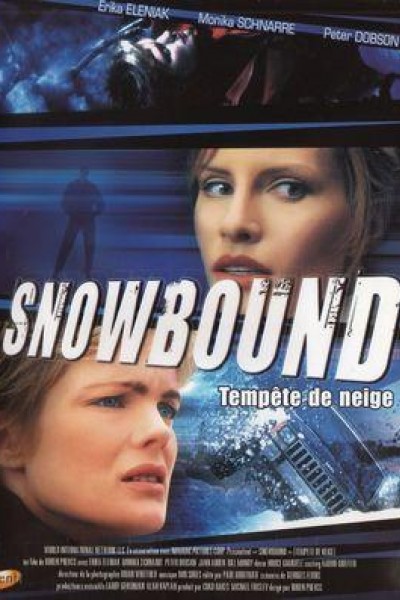 Though not formally listed on the IMDb as a made for television movie, it has all the hallmarks of one, down to what look suspiciously like pauses into which commercial breaks could be inserted. It’s the story of work colleagues, Liz Bartlett (Schnarre) and Barbara Tate (Eleniak). The former is attacked in the company’s parking garage one night, and confesses to her friend that her former husband is stalking her. She fears for her life, having helped put him behind bars. So what is the most sensible thing for the pair to do in these circumstances? If your answer is, “Head off to a remote mountain cabin, in the middle on an impending blizzard”, give yourself two points.
 Despite critical derision, this is actually perfectly serviceable pulp SF. Sure, it’s derivative as hell. But the critics getting all huffy about the similarities to Star Wars seem to have forgotten George Lucas only made his film, after failing to acquire the rights to Flash Gordon. This is Snyder’s equivalent to The Fifth Element, in that it’s a long-gestating SF idea, originally conceived well before he became a director. “The Dirty Dozen in space” was the high concept, although there is no denying the SW similarities, especially in the early going. I mean, young orphan on a backwater farming planet gets sucked in to galaxy-hopping adventures, joining a rebellion against an evil empire? Yeah, a little more originality would be welcome.
  When I see “Reader discretion is advised,” on an Amazon page, I tend to take it with a grain of salt. I’ve been enjoying media at the outer edges for longer than most readers here have been alive, and so am not easily shocked, disturbed or offended, to put it mildly. I’m ussure this quite managed to do any of those, but I will definitely say this: yes, reader discretion
 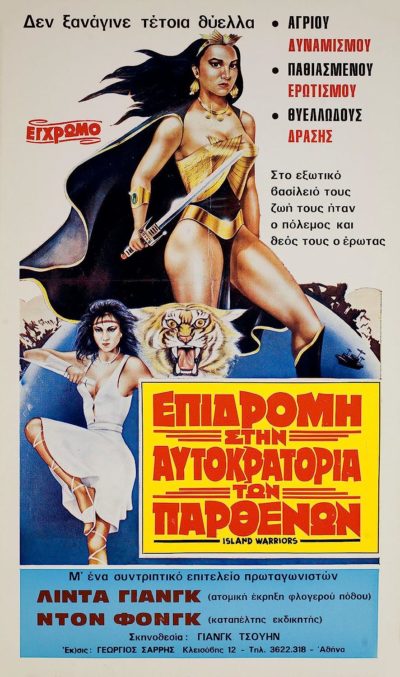 This Taiwanese production takes place on an island where women have been separate from men for 23 generations, developing more or less your stereotypical Amazonian society. Men are rejected, male babies tossed out to see to sink or swim (typically the former) and they have build a giant, albeit largely unconvincing, statue of their founding ruler, which fires cannonballs out of its eyes. This is not inappropriate, since the current occupant of the throne, Queen Nadanwa (Yeung). has a harsh line in anti-male rhetoric (“All men are dangerous!”), accompanied by castration. Her subjects dress either in flimsy white robes or shiny battle armour, and engage in gymnastic or circus-related forms of entertainment.
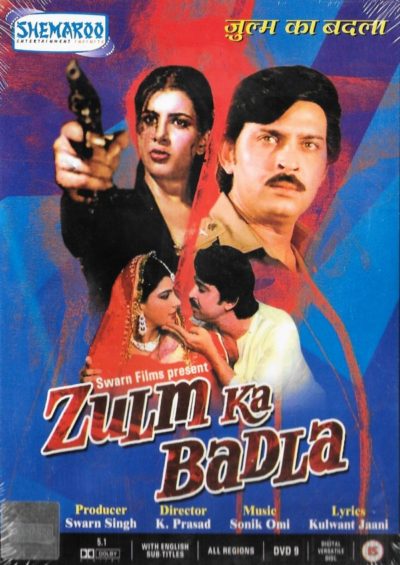 In recent years, the gap in cinema between Bollywood and Hollywood has closed dramatically. The likes of Indian blockbusters such as RRR (technically Tollywood rather than Bollywood) can stand, in terms of technical competence, beside their American equivalents. It’s mostly due to a dramatic improvement from Asia, because it wasn’t always the case, as we see when we go back to the mid-eighties for this slice of vengeance served cold. It looks pretty rough if you compare it to what Hollywood was making at the time, and in many ways feels like it’s about twenty years older than it is. I still found it more watchable than I expected, but then, I’m somewhat used to the style of Indian cinema. Newcomers might find this a bumpy ride.
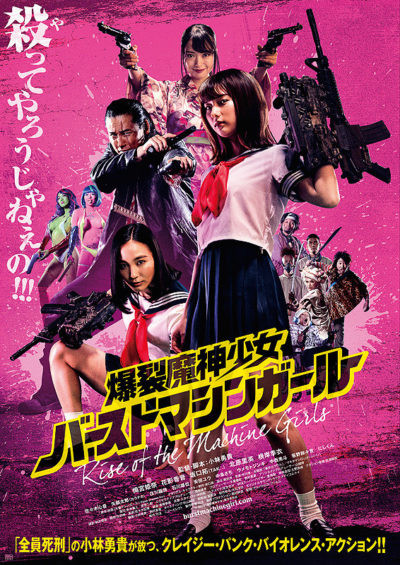 A decade after the splattery joy which was
  Zombies and jail aren’t quite as new an idea as you might think. The Walking Dead had a major arc which took place at a prison, the facility’s fences now more useful for keeping things out than in. And back in 2005, The Asylum released the (surprisingly decent)
 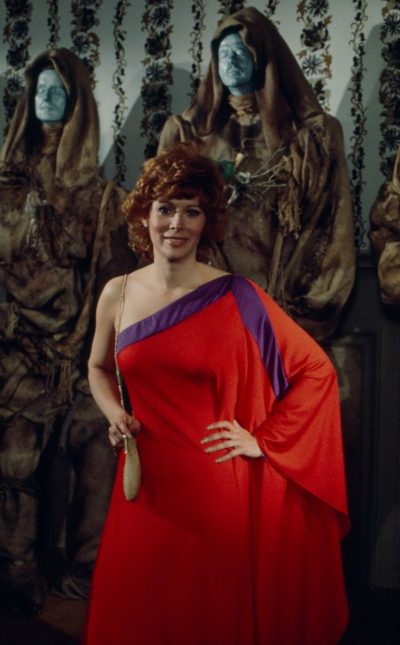 No, not the eighties version of Brenda Starr: that is well known, and justifiably much derided, to the point it didn’t even reach the necessary level for inclusion here. But neither was it the first version of the comic-strip to reach the screen. Well, at least the small screen. There had previously been a 1945 series, Brenda Starr, Reporter, though some reports describe this as nearly action-free. But the late seventies saw two television efforts: as well as the one under discussion here, three years later in 1979, there was an unsold television pilot movie (now apparently lost) in which Sherry Jackson played the intrepid girl journalist. In contrast, this appears to have been intended as a stand-alone from the get-go. While I’m sure ABC wouldn’t have minded had this been successful enough to become a franchise, it suffers from much the same problem as all the other adaptations, with a heroine that’s too passive to pass muster
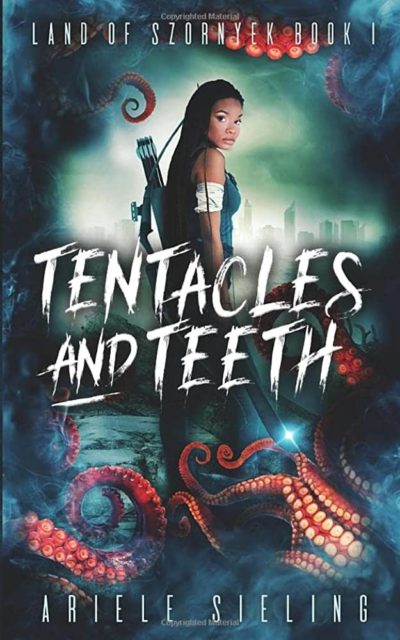 I was disappointed by the lack of tentacles. However, there were certainly no shortage of teeth in this post-apocalyptic tale, which takes place decades after the arrival of monsters, from an uncertain source, has led to the collapse of civilization on Earth. The survivors are left to scratch out a fragile existence, trying to dodge the many kinds of lethal new fauna which inhabit the landscape. Askari is a young woman who forms part of one such nomadic group, but finds herself increasingly questioning the strict rules by which they operate. As punishment for breaking these laws, is sent by elders of her tribe on a hazardous mission into a long-abandoned urban area.