




Literary rating: ★★★
Kick-butt quotient: ☆☆½
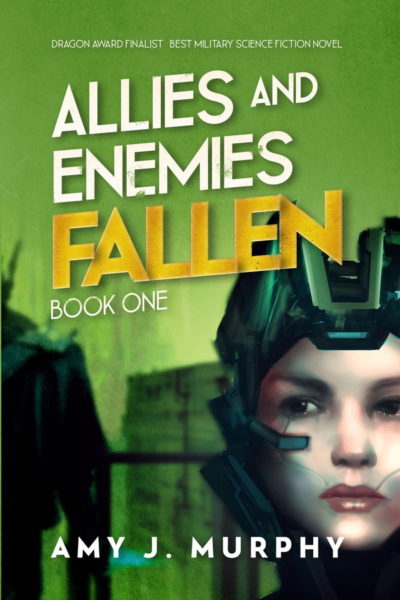 It’s a little hard to explain the universe in which this takes place. Humanity existed. However, their encounter with other races proved problematic for a variety of reasons, and led to them being exterminated, a genocide that was partly collateral damage in a war between the human-adjacent Eugenes and the definitely not Sceeloids. The former have a severely class-based society, where the lower-tiers are bred specifically to be soldiers, for example. One such “breeder” is Sela “Ty” Tyron, though she differs from the rest of her platoon in a couple of important ways. Firstly, her son is part of her group – though he doesn’t know it, having been removed from her care on his birth. His death (at the very beginning of the book, so not much of a spoiler) causes Ty to question everything she has believed about society, and her place in it.
Then there’s her commanding officer, Captain Jonvenlish Veradin. While her absolute loyalty to him is one thing, Ty’s feelings go past that, even if she won’t allow herself to admit it. Veradin is suddenly accused of treason; while he refuses to do anything except trust in the process, she spirits him away from execution, to life as a fugitive on the run. The cause of the accusation turns out to be related to his sister, Erelah. She’s a scientist who has just made a discovery which will revolutionize faster-than-light travel. She and Jonvenlish share a secret, which brought them to the attention of Ravstar, the regime’s infamous black operations group, and its even more notorious commander, Defensor Tristic. She’s half-Sceeloid (which raises questions in itself) and has plans to use Erelah as a vessel, whether or not the target consents. But doing so awakens some long-dormant talents in Erelah. Between those and Ty’s rogue military abilities, Tristic won’t find things going all her own way. On the other hand, Erelah and Ty have their own issues to work through, not least their conflicting ideas of what’s best for Captain Veradin.
This is… okay. The split focus is a bit rough, in that the switch from focusing on Ty to Erelah, is sudden and perhaps too long to work. The two stories don’t come together at all in the first third, and the unclear previous history turns out to be quite significant, to the point I wished it had been better explained. If the plotting is generally too murky for its own good, the characterization is well enough handled to balance things, or thereabouts. Ty, in particular, is a genuine bad-ass, whose loyalty is exemplary. If the action is limited in quantity, it’s partly because she’s so competent, the fights in which she’s involved tend not to last long. While it is enough to salvage this as a read, it’s not sufficient to get me more than slightly interested in reading further entries.
Author: Amy J. Murphy
Publisher: Self-published, available through Amazon, as an e-book only (unless you fancy paying $59.99 for the paperback!).
Book 1 of 5 in the Allies and Enemies series.
 After enjoying
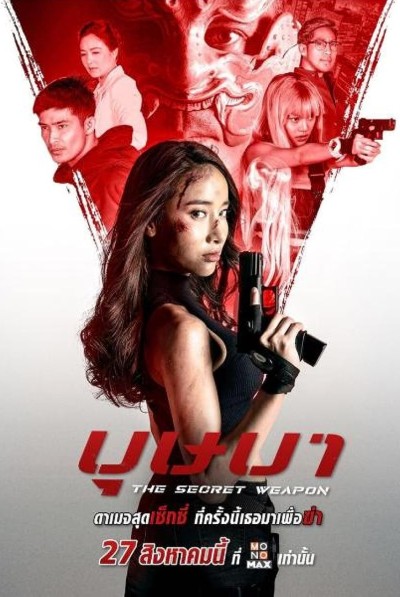
  For a TV movie, this is very impressive. When you hear that phrase, I usually think of something which appears on Lifetime or, worse still, Hallmark. But it seems that Thai television is made of sterner stuff. This plays much tougher, more like something you might see on AMC or FX. The story may not be particularly original, but it’s done with enough style and energy to make for more than passable entertainment The heroine is Angie (Rittapinun), an orphan who was brought up by her uncle and trained as an assassin. Her latest mission involves the retrieval of a data chip which contains a list of all the members in the organization of which she’s part. In the wrong hands, it could be disastrous.
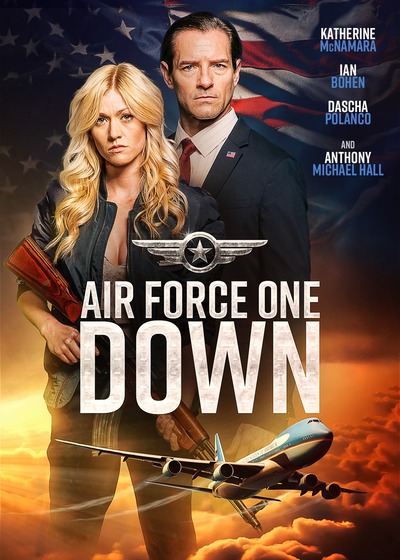 As we head towards the 2024 election, I’m forced to conclude that the most implausible element here is not terrorists hijacking Air Force One, or a lone Secret Service agent taking out scores of bad guys. No, it’s having a President under fifty: someone who can string coherent sentences together, parachute out of a plane without breaking his hips, and personally gun down an enemy or two as well. Yeah, that’s not happening anytime soon. Otherwise, this teeters on the edge of being as generic as its title. But it passes muster due to decent performances, especially from McNamara as agent Allison Miles, and well-managed action from Bamford, who has 30+ years experience in stunt work.
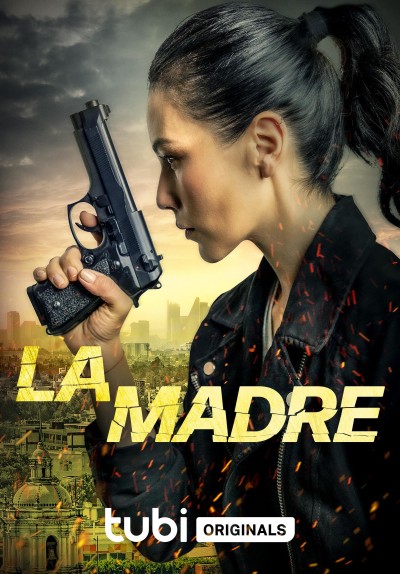 I ask, because this film, made in Mexico City and starring mostly Mexicans, seems to be trying to take place in America. It’s not doing a good job of it. The heroine is Martha (Mazarrasa), a single mother running a shop in a border American city with the help of her two daughters, Eva (Reynaud) and Raquel. Then Eva is kidnapped by evil Mexican cartel boss, El Chacal (Guerrerio), and held by him, even after Martha pays the requested ransom. However, it turns out Mom has a hidden past, which gave her a set of special skills. With the help of sympathetic cop, Juan Cinderos (Dulzaides), she sets out to bring down his organization and retrieve her daughter.
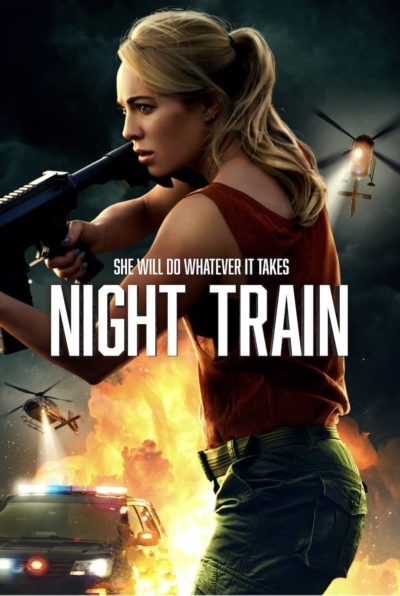 Danielle Ryan’s quest for a movie worthy of her talents meets another swing and a miss. I guess you have to give credit to this one: it is at least trying to go in a different direction, making the Mexican cartel the
 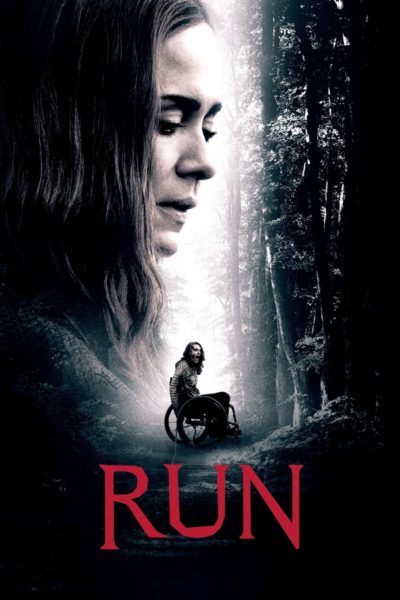 The title here is used ironically, because “run” is the last thing the heroine can do. She is Chloe Sherman (Allen), a teenage girl who has been plagued by medical issues since birth, requiring full-time care from her mother, Diane (Paulson). She’s partially paralyzed, unable to walk, and also suffers from severe asthma. Chloe is, however, awaiting the result of her college application, and is eagerly looking forward to starting a new, independent life, having been home-schooled by Mom, who is the very definition of a helicopter parent. One day, Chloe discovers some of her medication is in her mother’s name, and gradually discovers more evidence that something is very wrong with Diane. If her suspicions are right, the bigger question is, what can Chloe do about it?
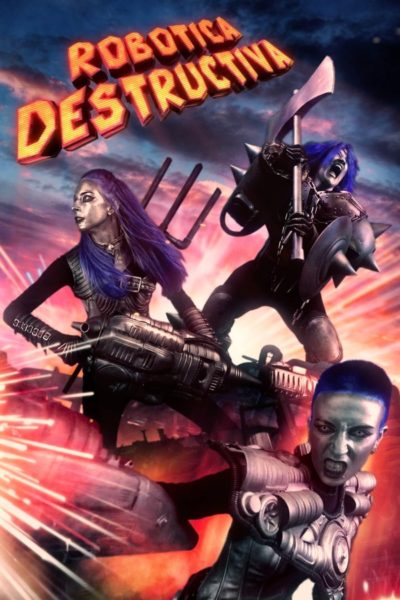 To bring out one of my go-to phrases, if I was eleven years old, and hopped up off my face on candy-floss, this would probably be one of my favorite movies. Instead, it’s the kind of film which apparently caused my brain to shut off as some kind of defense mechanism. I’m not kidding. Ten minutes into my first viewing attempt, I suddenly fell asleep. I think my mind may have experienced the cerebral equivalent of a blue screen of death and ran out of memory, forcing a shutdown. For this is just an insane overload of a movie, all the more so considering it was a labour of love, assembled over a period of multiple years.
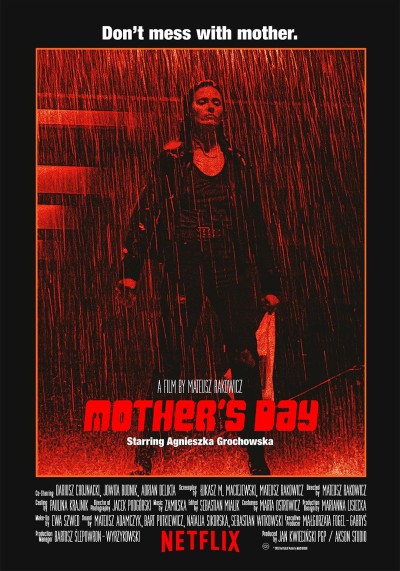 I’d be the first to admit, those issues likely extend beyond the characters in the movie, and probably extend to the script writers, because there are certainly… well, let’s just say, some novel concepts here. The heroine is Nina Nowak (Grochowska), a former Special Ops soldier, who had to fake her own death and give her son Maks up to adoption, for both their security. She’s been keeping an eye on Maks (Delikta) from afar, but after he’s abducted at the request of a gangster Nina took down, she needs to become considerably more hands-on. Rescuing Maks, however, will bring her into contact with a number of rather odd people, on both sides of the law.
 There’s an interesting idea here, at least. As a young child, Elena (Ayala) has to watch as her mother and brother are killed by crime boss babe Maeve (McComb), after her father (Pardo) made the ill-advised decision to try and steal from her. It’s particularly awkward, since Maeve made him choose which of his two children should live… then killed the one he picked, his son. This Sophie-like choice has, understandably, left the father-daughter relationship somewhat strained, to put it mildly. 15 years later, Elena is a druggie, who robs a liquor store and gets sent to jail as a result. Except, this incarceration is entirely deliberate, because it’s the facility in which Maeve is now serving time, giving Elena her long-awaited chance for revenge.