




Literary rating: ★★½
Kick-butt quotient: ☆
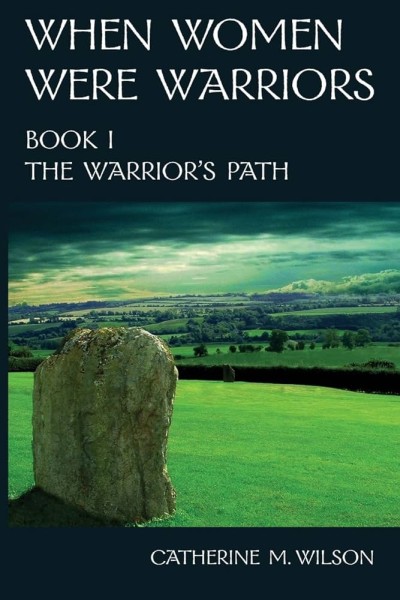 To be frank, I was expecting rather more action given the title here. Almost all of it, however, takes place “off-screen”, as it were, being described second-hand, rather than experienced. It makes sense in the context of the book, and it’s not badly written. But when you use the word “warrior” or derivations thereof, not once but twice in your title, it would seem fair to expect a higher quotient of… warrioring. I tagged this as fantasy, mostly because it clearly takes place elsewhere and/or elsewhen. It is fairly grounded e.g. no dragons or vampires, but certainly contains elements I would call mystical.
The book tells the story of Tamras, who is sent to join the house of Lady Merin, hoping to progress through the ranks of apprentices and become a warrior woman herself, like her mother before her. Tamras feels too small and weak to succeed, but bonds with another outsider there, Maara, a mysterious woman with no past, who came from the north and whose loyalties are consequently suspected by the others. Maara initially rejects Tamras, but after the warrior is hurt while fending off cattle raiders, it’s Tamras who is largely responsible for nursing her back to health, and the pair begin to forge a relationship. After providing valuable information, Maara wins Merin’s trust, although others in the house still perceive her as a threat.
There is a great deal of sitting around here, though I suspect that might be partly the point. To quote Maara, “Most of a warrior’s days are uneventful” this coming after a month when she and Tamras have been part of a group which spent a month guarding against further livestock theft, without very much happening at all. The nearest to proper action are the reports of the battle where the warriors successfully repel an attack, thanks to Maara’s intel. I liked the setting, this being a world where gender – at least, in this part of the world – is not seen as an issue, with men and women fighting side by side. It’s also definitely lesbian friendly – more so than action heroine friendly, I would suggest.
For there was a point, probably about two-thirds of the way through, that I realized the author really wasn’t interested in providing an adrenaline-packed thrill-ride. This is much more about the relationships between the women – we poor men rarely merit a mention – and in Tamras’s growth as a person. Taken as that character study, it’s by no means bad: Wilson has a good turn of phrase, with some of the more spiritual experiences having particular weight. But at other points, it does feel more like sword ‘n’ soap-opera, and the overall sense of much more interesting stuff happening elsewhere became overpowering before the end. The rating above reflects that; while on purely literary terms, it’s likely better, I was left wanting less talk and more fighting.
Author: Catherine M. Wilson
Publisher: Shield Maiden Press, available through Amazon, both as a paperback and an e-book
Book 1 of 3 in the When Women Were Warriors series.
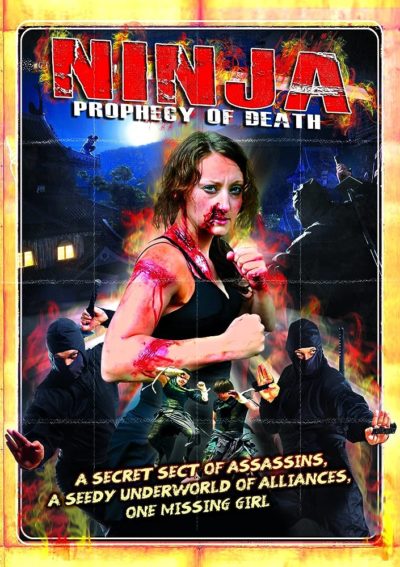 To a certain degree, this should be graded as “incomplete”. Easiest to quote the IMDb on the reason why. “This film was to be shelved by director Kabasinski, when post-production had a lengthy delay and he went on to produce the film Skull Forest. Very happy with the improvements in overall production value of Skull Forest, Kabasinski was going to just take this film as a ‘loss’ having already moved forward. It was not until an editor from Buffalo, NY stepped in and expressed desire in taking on the project. Feeling indebted to the cast and crew for the film and post-production going better then expected, Kabasinski decided on releasing the film.”
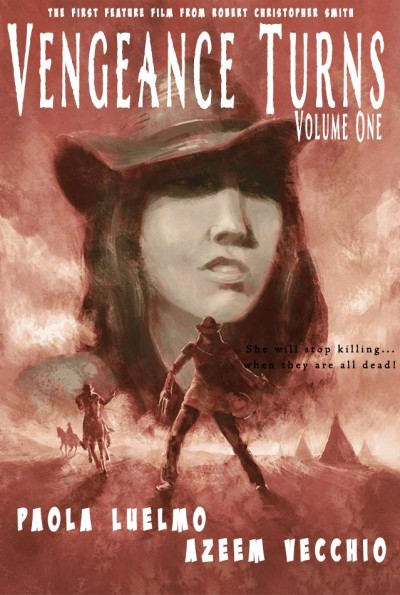 The film opens with a caption, “The first feature film from Robert Christopher Smith,” and it’s largely superfluous. Because, to be brutally honest, you can tell. It’s filled with choices which virtually scream, movie-making debut. That it’s a passion project for Smith is clear, and the persistence with which he pursued his vision is clear, and highly laudable. Perseverance can only take you so far, however, and is no substitute for skill and experience. It does feels this was a learning experience on the fly, with a palpable improvement over its course, and Smith left the production a significantly better film-maker than he came in, I suspect. At least it does tell a fairly complete story (glares over at
 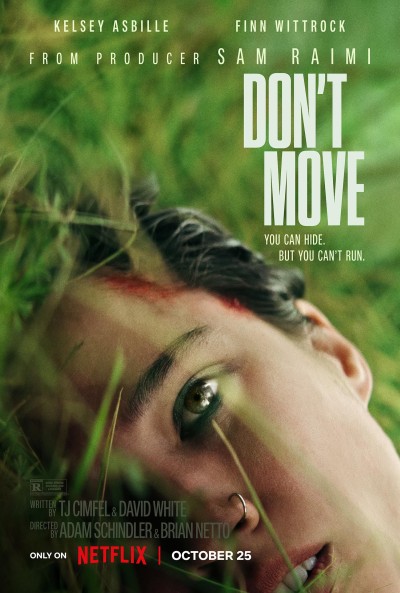 A somewhat gimmicky but adequately competent Netflix Original, I guess the moral here is that being abducted and stalked by a serial killer is the best kind of therapy. We meet Iris (Asbille) in the remote woods where her young son previously died. She never recovered, and is now standing on edge of a cliff, contemplating suicide. She’s interrupted by the arrival of a stranger, Richard (Wittrock), who talks her down. However, it turns out he has an ulterior motive: he wants to be the one to kill Iris. He tazes her, and while subsequently managing to escape, she has also been injected with a muscle relaxant that in twenty minutes will render her unable to move.
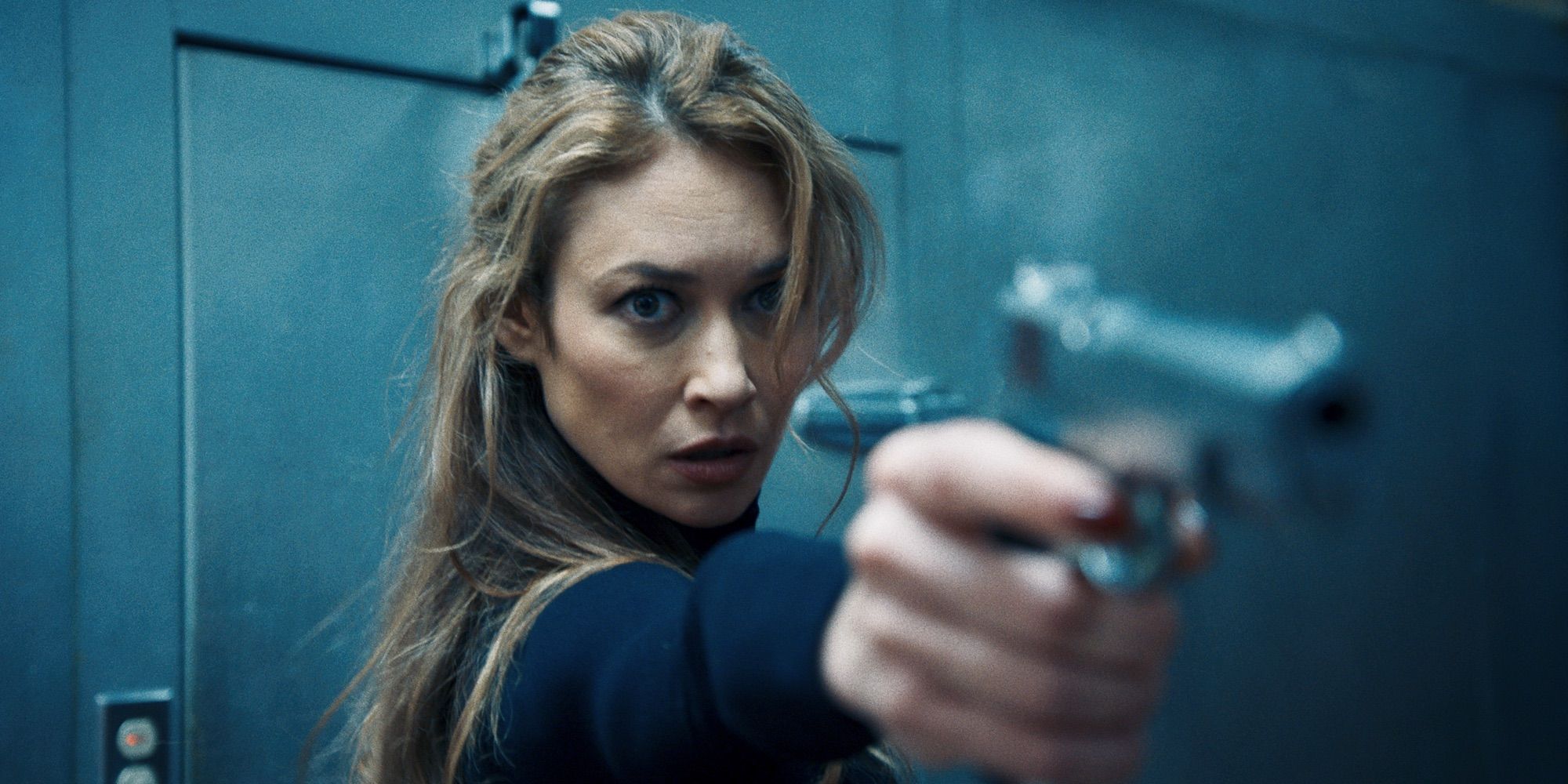
  Both director Morel and star Beckinsale should be familiar names around here. The former directed
  Director Tjahjanto gave us one of the best action films of the last decade in
 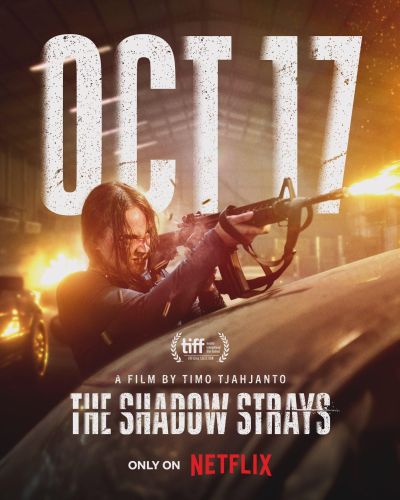 The Shadows are a sect of assassins, who are basically unstoppable. 13 (Ribero) is a teenage trainee, who screws up a mission in Japan alongside her instructor, Umbra (Malasan), and barely survives. 13 gets put on administrative leave, and her enforced idleness is where the problems start. In a thread strongly reminiscent of Leon, she watches a neighbour get killed by a gang, and takes care of the son, Monji. However, he vanishes, apparently abducted by the gang, and 13 isn’t standing for that. Beginning by turning low-level enforcer, Jeki (Emmanuel), she works her way up the power structure, which goes right to the top of Indonesian political society. The resulting chaos threatens to expose the Shadows, so Umbra is then dispatched to terminate their rogue agent.
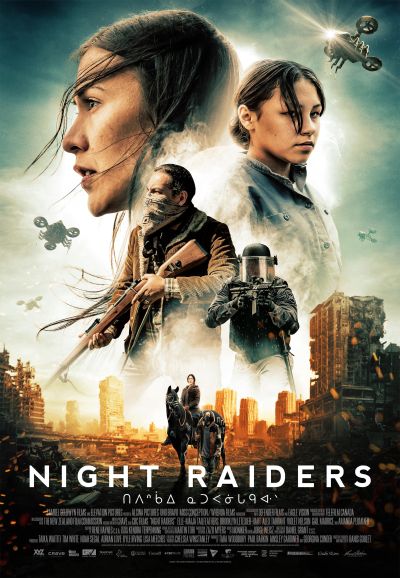 This rather gloomy slice of social science-fiction seems to take place in a post-apocalyptic version of Canada, albeit a fairly low-key apocalypse. It seems to have led to a rigidly class-based system, with a sharp division between “citizens” and the rest. That leaves the indigenous population on the outside, scrabbling hard to survive and avoid having their kids “re-educated” in military-style academies. [This pointedly echoes
 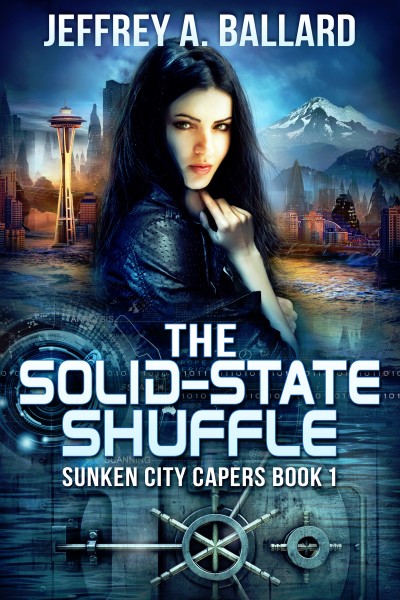 There’s an interesting setting here, and the concept isn’t bad. However, the author is flat-out terrible at explaining things, and that derails the book badly. There were entire pages which seemed to be an written almost in another language, such was the level of technological gobbledygook spouted – and I write as someone who works in the field. Too often, it felt as though the writer was using technology as an alternative to magic: whatever needed to be done, there seemed to be some gadget, gizmo or app which the heroine or her allies could whip out to perform the necessary task.
  This is one of those films where the same person wrote, directed and starred in it, and once again, the results illustrate the problems with such an endeavour. Almost any project will benefit from an external perspective which can offer constructive criticism, but when this is removed, the flaws typically end up multiplied. That said, this isn’t terrible. I think Riches the screenwriter comes out best, with a story which bypasses the usual cliches of urban storylines e.g. gangster rising out of the gutter, and does offer some genuine surprises. Director Riches also gets some points for restraint on the soundtrack front; it’s not comprised entirely of her mates rapping badly.
  ★★★½
★★★½