
Country House

★★½
“Well, that’s different.”

The title above is the one by which it appeared on Tubi, though everywhere else calls it Aggression. I guess both are appropriate, in different ways. Neither shed a great deal of light on proceedings here. Then again, you could argue, the film itself is largely deficient in the area of enlightenment too. It takes place in rural France, where Sarah (Nicklin) has been reunited with her sister Marie (Duchez), after twelve years living in England. The circumstances are not happy, the visit being the result of their father’s death. However, there appears to be a dark past surrounding the circumstances of Sarah’s departure. Meanwhile, Marie is mute, although this does not play into the scenario which unfolds. 

After a chunk of small-scale family drama, things kick off with a home invasion staged by Chris (Torriani) and his colleague (Jacquet), who doesn’t seem to have a name. As is common in these cases, one of the criminals is “nice”, while the other is a psycho. And similarly, Marie is timid, and inclined to run, while Sarah is… not. I probably don’t want to say much more, even if simply by not saying more, I am in fact… saying more. Let’s just add, the original title becomes considerably more relevant. That, alone, would be something we’ve seen before in the home invasion genre. However, it’s just the start, because things go entirely off the deep end, in terms of motivation especially.

Just do not expect anything orbiting in the same solar system of a coherent explanation. The only other review of this I could find (in French) called this a giallo. After a first half where I was very hard-pushed to spot the similarity, I can see where that’s coming from. It has the same air of unfiltered madness, as well as suddenly switching to a lurid colour scheme, which makes as much sense as the plot i.e. none at all. One second, a scene will be lit in neon blue; the next shot, taking place in the same location, will be mint green. You could say this is a striking and brave choice of artistic palette. Or you could say it’s pretentious bollocks. I’d not argue either way. 

It is, I suspect, the first Lovecraftian home-invasion movie. Admittedly, after watching it, you may well understand why this is the case. I did like Nicklin, who has been seen here previously in Sister Wrath, and does the best she can in terms of selling the insanity inherent in the script. I could potentially have enjoyed the madness, had it bothered at least to attempt an explanation. Instead, the lack of anything close comes over as lazy film-making. I do appreciate a good swerve, and this undeniably ends up somewhere very different from what I was expecting. However, when you unexpectedly pull the rug out from under your audience, you need also to provide somewhere for them to land.

Dir: Rick Jacquet
Star: Sarah Nicklin, Marie Duchez, Cédric Torriani, Rick Jacquet
a.k.a. Aggression

Choppa City Queens

★½
“Black to very basics.”

We return to the prolific well of Jeff Profitt, last seen here with Keisha Takes the Block. And by prolific, I mean that the IMDb lists now fewer than thirteen upcoming projects he is slated to direct. Fortunately for my backlog, most of these do not appear to be candidates for the site: I do confess some curiosity as to what Trap House Pizza is about. Anyway, both Choppa and Keisha are among the six features he directed in 2023, a number he exceeded last year. Quality is clearly subsidiary to quantity, and this has much the same problems as the last film we covered here, In particular, it’s mostly talk and not enough action.

You have three friends: Leah (Robinson), Jada (Alysha) and Shanice (Collins), all of whom are out of work and seeking a way to make money. Leah literally stumbles across a cache of weapons belonging to gun dealer Ricky (Profitt), and convinces him to let her sell his merch in the ‘hood. For the “Choppas” of the title are Kalashnikov AK-47’s, the weapon of choice for the discerning gang-banger. After the initial sale goes well, Leah gets a bigger order, and has to ask for the guns on credit. Which is a problem, first when Leah’s buyer delays paying for the weapons, and then Shanice’s boyfriend Ray discovers what she’s doing, and decides he wants in on the action. That eventually leads to the only bit of AK action this provides.

The skeleton of a decent movie is present here. It’s possible to read the above synopsis and see how it could be done in an exciting manner. For instance, tensions escalate among the group as the lure of the profits from their new, illegal, but hopefully temporary business, drags them over to the dark side, when the trio only wanted to make a living. It’s a classic tale of the slippery slope into criminality, with the net of the authorities closing inexorably around the participants. Unfortunately, the resources here do not allow for anything like that. It’s telling that the women are buying just three (3) guns at a time, and there are absolutely no cops to be found here at all. 

Meanwhile, the script is strictly of the Point A to Point B variety, without real energy. The trio of lead actresses are okay: there are a few scenes where you can believe they genuinely are friends. The main problem on the performance side is Profitt himself, who is a contender for the world’s least convincing gun-runner. Used cars? Perhaps. Cellphones? Certainly. But now illegal firearms. He’s also very white, and I speak as someone whose skin colour is legally classified as “transparent.” If they’d made him an Aryan Nation type… that would have been a wrinkle. That, however, would be too much like hard work for a film which seems to be uninterested in anything except the path of least resistance to an underwhelming ending.

Dir: Jeff Profitt
Star: Tuckeya Robinson, Jasmine Alysha, Chanel Collins, Jeff Profitt

Robbin

★½
“Robbed of two hours of my life.”

I’ve seen worse films, to be quite clear. Technically, this is perfectly acceptable, with an apparently reasonable budget, put to decent use. But I don’t think I’ve seen one which has been more annoying. It manages to hit that sweep spot of being both incredibly stupid, while also congratulating itself for being very smart in its attempts at social commentary. But the annoyance extends beyond that, to purely instinctive reactions like really bad hairstyles sported by some players. I can’t explain these responses, and am not interested in analyzing or defending them. But they certainly played their part in my steadily increasing irritation at the plot, characters and execution, over an excessively long running-time of one hundred and sixteen minutes.

The heroine is Robbin (Serayah) – and, yes, there are two b’s there. She is a former bank employee, who was falsely accused of stealing two million dollars. With the evidence stacked against her, she took a plea agreement rather than risk a long jail sentence. When she gets out, she decides the best way to respond is… by actually stealing from the bank. Yeah. Let that morality and wisdom sink in. She assembles her old crew from the South Central ‘hood where she grew up, and they begin planning their heist. But one theft is deemed insufficient payback, and another, even bigger robbery is planned. This is despite the increasing attentions of the police, including a detective (Lee), who has known Robbin and her friends since they were kids.

Far and away the worst thing here is the script, also by Stokes. It demonstrates a repeated, startling level of ignorance about how banks work, how computers work [authority check: I spent over a decade in IT with HSBC], and how the police work. For example, in the world of this movie, a detective under announced and active investigation by Internal Affairs for corruption, is not only allowed to keep working on the case concerned, she then gets to lead a raid on the suspects’ base of operations. #NotHowCopsOperate Hell, you could possibly also throw how criminals work onto this heaping pile of no-knowledge, since at one point a robber clearly asks a bank cashier for “No unmarked bills.” Um… shouldn’t that be “No marked bills”? 

Then there’s the whole clunky parallels to Robin Hood, beginning with the heroine’s first name. All her team – fresh off robbing a convenience store, I note – suddenly acquire altruistic reasons for their move into big-ticket crime. Add on a nasty racial strand, where just about everyone black is good, and everyone white is malicious and evil, to an almost tiresome degree, and you will perhaps begin to see from where my irritation stems. “Tubi Originals” are well-known for setting a low bar, to put it kindly. This falls short of reaching that bar.  If it weren’t for the fact that Tubi is a free service, I would seriously be contemplating cancelling my subscription.

Dir: Chris Stokes
Star: Serayah, Erica Pinkett, Jadah Blue, Robinne Lee

Overturned Heart, by A.W. Hart

Literary rating: ★★★★★
Kick-butt quotient: ☆☆☆☆

A. W. Hart, the nominal “author” of the Avenging Angels series of western adventures featuring a twin brother-sister pair of bounty hunters in the post-Civil War West, is actually a house pen name; the books are all really written by different authors. (The writer here, Paul Ebbs, though working in a quintessentially American genre, is an Englishman, but a long-standing Western fan.) Barb and I were introduced to the series because the author of one of the books, Charles Gramlich, is one of my Goodreads friends. Before starting on this one, together we’d read and liked three of the books. But, because it’s a long, episodic series (in which the books after the first one don’t have to be read in order), and I was impatient to see whether one romantic connection and another possible one set up in the first book would really come to fruition, I suggested that we make this concluding volume our next read, and she agreed. (To avoid a spoiler, I won’t say whether or not my hopes on that score were fulfilled.)
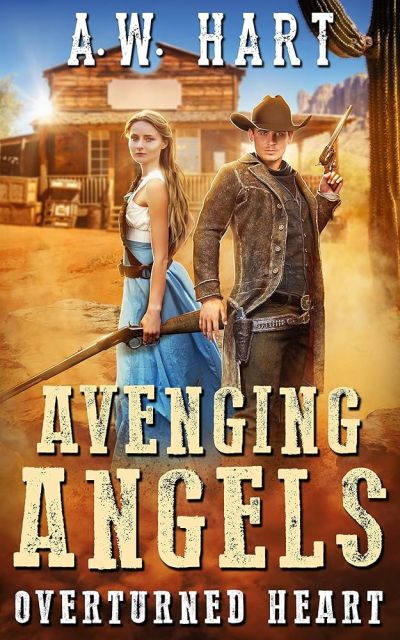
No exact dates are given here; but since the first book began in 1865 (the next book would have to have been set in 1866) and judging from the number of intervening adventures, I’d guess the main storyline here to be set no earlier than 1870, making co-protagonists George Washington (“Reno”) and Sara Bass in their early 20s at least. But the book opens with three short Prologue vignettes, the first dated “twelve months ago,” from the viewpoint of an unnamed female pushed off of a bridge to a 40-foot drop into a raging river, followed by two more dated, respectively, three and two “months ago.” None of these give us much information; but we are told that she survived, that her brother Robert Stirling-Hamer was a wealthy Arizona copper-mining magnate who has been murdered, and that his accused killer “Don” was in turn killed by bounty hunters (guess who?), but that Don’s brother in New York has now gotten an anonymous letter claiming that his brother was innocent.

Our main story opens with the Bass twins in a tight situation in West Texas, in danger from a psychotic fugitive who’s already murdered his own parents and set fire to a schoolhouse full of kids. But they’re soon to learn that there are now wanted posters out for them, claiming that their killing of Donald Callan eight months previously was an unauthorized murder. From there, the present narrative is periodically interspersed with flashbacks to “eight months ago,” doling out strategic memories of the earlier events (which will finally come together with the present), and at times some short scenes from an omniscient third-person narrator describing present goings-on in Robert’s town of Dry Mouth; but none of these fully explain what actually happened with Robert’s murder. and may at times deepen the mystery.

Ebbs writes very well, with a gift for apt and fresh (but not overdone) similes and vivid turns of phrase. He also brings the varied Southwestern landscape to well-realized life. The publisher and writers have always tried to make this series Christian-friendly; but where it’s clear that some of the authors had only vague knowledge of Christian beliefs, Ebbs actually does explicitly refer to Christ’s sacrificial death for sin in one place. A unique feature here (at least, compared to the other three installments we read) is that all of the chapter titles have biblical or hymnic cadences, and epigraphs that I’m guessing come from the Anglican Book of Common Prayer. Although the book is very violent (as usual for this series), bad language is scanty and not very rough, and there’s no graphic sexual content and little reference to sex at all. (A Catholic priest is a sympathetic character, Reno’s search for God’s guidance here is a realistically-treated and important theme, and the Bible he inherited from his dad plays a big role.) Reno and Sara’s character portrayals are in keeping with the earlier series books we’ve read (except that Sara’s ruthless streak, at one point, cranks up a notch that even startles Reno).

There are a few nits to pick here, mostly with a number of places where typos in the form of omitted words, negative statements inadvertently expressed as positives or vice versa, etc. change the meaning of sentences; but I could always tell what was meant. A statement early in the book seems to suggest that Sara has lost her faith, but Ebbs subsequently back-peddles from that. Reno’s Bible at one point is described as a “Lutheran Bible,” so while the author knew about the Christian gospel, he obviously wasn’t much versed in church history. (Many U.S. Lutherans in the 19th century were still German-speaking, so would probably still have used Luther’s 16th-century translation; but any that were English-speaking used the King James Version, like all other Anglophone Protestants.) But these are minor quibbles. Overall, I found this an outstanding entry in the series! However, Barb did not; she greatly/exclusively favors linear plots, so she was VERY put off by Ebbs’ non-linear storytelling here (and also disliked the ending, though I didn’t), to the extent of being soured on the rest of the series. So, we’ll be abandoning it, at least for a while.

Author: A.W. Hart
Publisher
: Wolfpack Publishing, available through Amazon, both as a paperback and an e-book
Book 12 of 12 in the Avenging Angels series.


Fight to Live

★★★½
“One tough mother.”

Bec ‘Rowdy’ Rawlings is an Australian mixed martial-artist, who fought in the UFC for a bit, and then became the first woman to win a bare-knuckle boxing world title. This documentary covers her life, from growing up as a teenage tearaway, through motherhood transforming her character, her discovery of mixed martial-arts, a disastrous and highly toxic first marriage, and escaping that to become eventually the Bare Knuckle Fighting Championship federation’s Women’s Featherweight World Champion. Phew. That’s quite a lot to get through in less than eighty minutes. The film does a decent job of covering its bases, through interviews with Bec, and her family and friends, plus no shortage of archive footage of Rawlings, both in and out of the ring.

Everyone in it, but Bec in particular, comes over as down-to-earth: it might be an Aussie thing. Certainly, she makes for an interesting contrast to the more… outspoken American and male MMA fighters, like Conor McGregor. Rawlings seems almost humble, speaking of the respect she has for anyone tough enough to get in the ring. Admittedly, this is likely in contrast to her early years when she was very much on the path to delinquency. Particularly awkward, since her sister was a police officer, who remembers getting a radio call describing a suspect, and knowing immediately that it was her sibling. But parenthood flicked a switch, and Bec realized after having her first son Zake, she needed to take responsibility for her actions.

However, life took a darker turn in her relationship with fellow MMA fighter, Dan Hyatt. For three years, he abused her, both physically and mentally. At one point in the documentary, the interviewer asks for specifics of what he did, and… Well, to be honest, it feels unnecessarily invasive, and almost exploitative: I didn’t feel like the details added anything. Eventually, she was able to escape the situation, and it certainly appears to be a case of “What doesn’t kill you, makes you stronger.” While the recovery process took a number of years, she can now look back on the horrors of that period in her life, and as Rawlings says, it happened to her, but does not define who she is, an awesome attitude.

To be honest though, I was more interested in the sporting side of the documentary, which follows Bec as she prepares to defend her title belt in Cancun, Mexico, against Cecilia Flores. She won – hey, it’s on her Wikipedia page – although it’s a little odd that this fight took place back in February 2019, but the film basically ends there, with only a couple of captions covering the five years between then and its release. I had, again, to check Wikipedia for more up-to-date information. After spending time fighting for Bellator, she’s now back fighting for the BKFC, winning her last (at time of writing) bout in January 2025. More power to her, both in the ring and as a mother.

Dir: Tom Haramis
Star: Bec Rawlings, Adrian Rodriguez, Mal Van, Jacqui Rawlings

Get My Gun

★★★½
“Inside out.”

You could accuse this film of pulling a bait-and-switch. The first thirty minutes are set up to point emphatically towards one scenario. It then goes off in a completely different direction for much of the final hour – one very clearly inspired by French New Wave of Horror masterpiece, À l’interieur (Inside). Then it circles back around to kinda-sorta tie up the loose ends. Fortunately, I came into this one with almost no preconceptions. A poster of a nun wielding a shotgun? That’s all it took to add this one to my watch-list, and whatever happened thereafter was alright with me. Providing it delivered on the promise of a heavily-armed Sister of No Mercy on the advertising, at least.

It does, somewhat – though I have reason to doubt her nun authenticity. It’s Amanda (Hoffman), whom we first see forcing a man into the trunk of her car at the point of her boomstick. We then flashback to her working as a hotel maid, alongside BFF Rebecca (Casey). One day, Amanda is raped by a hotel guest (Jousset), whom we recognize as the man getting trunked, and ends up getting pregnant. She decides to keep it – that’s a discussion in itself – but to offer the baby up for adoption, and the selected parent is Dr. Catherine Gilden (Rubino), who initially appears perfect. Key word there: initially. Because Catherine becomes too stalkery for Amanda’s tastes, so she breaks off the arrangement. Which is where the film makes a sharp right.

Admittedly, in the annals of poor decisions, Amanda escaping her stalker by going to a remote cabin owned by Rebecca’s dad, is probably not the best idea. Anyone who has ever seen a horror movie can predict how well this works, i.e. not at all. After a brief homage to The Shining, we’re off to the races, with Catherine and Amanda engaged in a no-holds barred battle over the unborn child. Well, some holds barred: Inside, now that was truly no-holds barred, most memorably when Beatrice Dalle tried to excavate the disputed foetus with scissors from its mother. Nothing so extreme here, although this does have its moments. For good reason does Amanda proclaim, “Why won’t you fucking die?”

I would probably have to admit, this is rather more fun than the early going, though the relationship between Amanda and Rebecca feels genuine. You will probably learn more about the process of cleaning hotel rooms than you wanted to know, and it feels as if the makers suddenly realized the movie they originally set out to make wasn’t very interesting. I feel the second half makes up for it, and it’s clear by the end, when we circle round to her assailant, that Amanda has been changed by her experience. I certainly have questions, not least about Rebecca’s fate, and its definitely not as grindhouse as it thinks it is. But as a nasty slice of female empowerment, I reckon this certainly has its moments.

Dir: Brian Darwas
Star: Kate Hoffman, Rosanne Rubino, Christy Casey, William Jousset

True Story Of A Woman In Jail: Sex Hell

★★
“Bad behind bars.”

With that title, you’ll understand why it’s one I opted not to make part of family movie night. I mean, you can’t argue with the forthrightness, though I’ve little doubt it’s as “true” as most films which make that claim i.e. barely at all. However, the bigger problem is that it’s fairly borderline “pinky violence”, being considerably more interested in the pink than the violence: it’s arguably more of a roman porno. It’s as if someone presented a checklist of cliches from the woman in prison genre, and asked the director to cross them off as rapidly as possible. The resulting speed-run lasts barely more than seventy minutes, especially impressive considering the amount of time devoted to soft-core sex couplings, in various combinations.

We begin with the arrival in prison of serial re-offender Harumi Matsunaga (Seri*), a prostitute now on her fourth stay, and the taciturn Mayumi Hojo (Kozue), sent to jail for… Well, the film holds back on that information for a while, so I’m not going to spoiler it. After the obligatory induction into prison life, her silence quickly brings Mayumi into conflict with her cell’s resident top dog, Sadako Nogawa (Hiromi*), and the pair butt heads. Inevitably, eventual mutual respect develops, especially when a key is found, which could give both women the opportunity to escape the hellish environment of the facility. 

The gap between these and the likes of Female Prisoner #701: Scorpion, made three years earlier, could hardly be greater, and its not in this film’s favour. It begins with Kozue’s fairly bland portrayal of the heroine, in sharp contrast to Meiko Kaji. Given the absence of a strong central character, the film subsequently feels more like porn. Albeit porn with decent production values, though an apparently loose grasp on the concept of “informed consent”. Though I was somewhat impressed with the scene in which a guard has sex with an inmate being held in solitary confinement, through a slot in the cell door. The inventive means by which prisoners are checked for contraband – it involves a custom set of stairs – was also momentarily interesting.

But it’s mostly about sex: what else would you expect, from the director of the similarly-imaginatively titled, White Rose Campus: Then Everybody Gets Raped. And a great deal of sex too – in a variety of configurations, be it straight, gay, or solo. Let’s just say, in hindsight, giving the sexually repressed prisoners clay might have been a questionable decision by whoever is in charge of leisure activities.  You’ll be left to tick off the items from your list. Sleazy prison doctor? Check. Extended sequence in the shower? Check. Revenge on the person responsible for incarceration? Take a guess. It’s all extremely formulaic, and doesn’t do it with enough energy to overcome its limitations, despite a funky soundtrack, courtesy of the Downtown Boogie Woogie Band.

Dir: Kôyû Ohara
Star: Hitomi Kozue, Meika Seri, Maya Hiromi, Rie Ozawa
* – There’s discrepancies between who plays who listed in reviews, and those in the IMDb. I’ve gone with the latter. 

Blast

★★★
“Not a bomb.”

To some extent, Sonia (Arnezeder) is the very antithesis of an action heroine here. For she spends the vast bulk of the ninety minute running-time, sitting in the driver’s seat of her car. Admittedly, this is for good reason, because somebody has wired an anti-tank mine into the car’s circuitry, in a number of diabolical ways. There’s a countdown timer, anti-tamper device and it’s also liable to be triggered if the weight in the car drops below a certain amount. Making matters worse, her two kids are in the back. The reason is because of her work in bomb disposal, part of a charity that disarms mines in the Ukraine, a task which has made her certain enemies.

Fortunately, she’s not alone. Her other half, Fred (Kiwitt), is there for moral support, and – probably more helpfully – colleagues from her agency are also present, in particular Igor (Bukvic) and Camile (Mortensen). Together with Sophie, they have to figure out both a solution to the immediately explosive situation, and find out who’s responsible. There are no shortage of candidates, and no shortage of strong female characters either, even beyond Sophie and Camile. These are involved on both sides of the scenario, as it eventually turns out. Though I must confess, I’m a little uncertain about the motivation of those involved. In particular, why the rather complex approach taken here, was deemed to be the most appropriate method. Sometimes, simpler is better, when it comes to evil plans.

That said, it’s a film which doesn’t hang about. Barely a couple of minutes pass before Sophie and her kids are sealed in, with a literal ticking clock. Though we do know this won’t be the end, because the countdown is for only half an hour, it sets the tone early. Peirani-Vignes then does a solid job of keeping the tension high, for the rest of the way. Every time you think you know where this is heading, the script, by the director and Pablo Barbetti, finds a new wrinkle to go in a different direction. As noted, I… have questions about some aspects. However, these did not stop me from remaining engaged, in particular during the front two-thirds of the film.

It did seem to struggle down the stretch. You know there’s inevitably going to be some heroic sacrifice needed. It wasn’t the character I expected: a bit of a mixed blessing, because I really wanted to see them get some degree of payback and/or redemption. Considering the entire movie takes place in an underground car-park, it feels impressively unrestricted, and the calm behaviour of the players is in sharp contrast to the ever-looming lethality of the situation. You will probably learn more than a little about the art and science of bomb disposal. While I cannot vouch for the authenticity of the information, it has the ring of plausibility. In the context of a thriller such as this, sounding legit is what matters. 

Dir: Vanya Peirani-Vignes
Star: Nora Arnezeder, Pierre Kiwitt, Radivoje Bukvic, Sara Mortensen
a.k.a. Déflagrations

Mardaani 2

★★★
“Naan but the brave.”

This sequel to Mardaani sees Rani Mukerji return in the role of hard-edged police superintendent Shivani Shivaji Roy. She’s now on the hunt for a serial killer, who is brutally murdering and raping victims in her jurisdiction, the city of Kota in the northern Indian state of Rajasthan. The killer is Sunny (Jethwa), a 21-year-old psychopath, whose father murdered his mother, and who also works as an assassin for rising politician Govind Mishra (Ketkar). When Sunny sees SP Roy on television, making disparaging remarks about the killer, and vowing to catch him, he decides to target her. This is in addition to his work for Mishra, though after that relationship goes sour, Mishra’s family becomes yet another target of Sunny’s unhinged wrath. 

The director of this was the writer on the previous movie, and it’s slightly less effective overall, mostly due to a tendency to descend into polemic on occasion. For example, it opens and closes with the kind of trite, “Well, actually” nuggets of information you’d expect to find on Twitter. There’s also a television interview late on, which seems to serve no purpose, except to allow Roy to go off on a rant about how downtrodden women are in Indian society. I mean, she’s not wrong. It’s just that a moral lecture is not why I’m here. I am here for the heroine slamming her car-door on a suspect’s head. Fortunately, the film is able to deliver this as well.

The two performances at the centre of this are spot-on, and do a fine job of keeping your attention, when the storyline occasionally falters. Sunny is barking mad, with enough issues for an entire conference of forensic psychologists, and the details of his crimes, even if just described, are grim. Yet he is undeniably smart, though fatally flawed by his ego. He breaks the fourth wall on a number of occasions, directly addressing the audience to explain himself. It’s highly creepy. Meanwhile, SP Roy is every bit as driven on her side, willing to bend protocol into a pretzel in pursuit of justice. She just doesn’t care about anything else: she may be married, but her husband is entirely irrelevant to proceedings. 

There’s a ticking clock too. After a possible witness is killed by Sunny, she is reassigned, and only has 48 hours to close the case, over the holiday of Diwali. That’s the Hindu festival of lights, and offers a glowing backdrop against which the climax of the movie can unfold. When it dies, there’s a good sense of catharsis in the way things unfold. It’s not only Roy who gets to punish the evil in the world, doing so in a way which is as much about making a statement as anything else. Despite occasional missteps, this is a decent sequel, and if you’re worried about it being Bollywood, there are no musical numbers to derail proceedings. Mardaani 3 is in production, and I’m looking forward to it.

Dir: Gopi Puthran
Star: Rani Mukerji, Vishal Jethwa, Prasanna Ketkar, Shruti Bapna

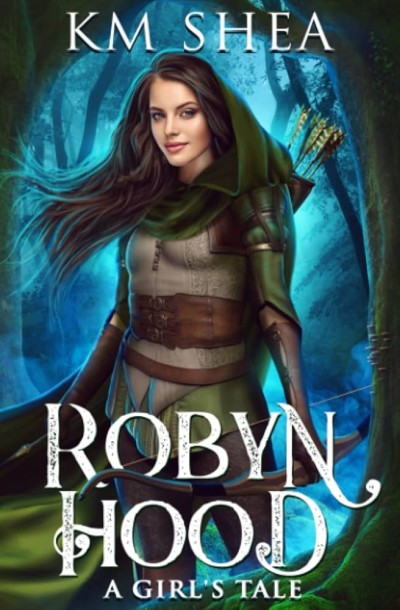
Robyn Hood: A Girl’s Tale, by K.M. Shea

Literary rating: ★½
Kick-butt quotient: ☆☆

Despite being a short 158 pages, this definitely managed to out-stay its welcome. There’s books aimed at the young, and then there are books which leave you feeling like you have actively lost IQ points reading them. Guess what category this falls into? It’s not a terrible idea, taking Robin Hood and making her a woman. Could have been worse: she could have been a black, bisexual rapper too [I wish I was joking]. We have been somewhat here before, with The Adventures of Maid Marian, in which Marian takes over after Robin Hood goes off to join the Crusades. The problem here is, a gender switch is where the creativity stops.

The setting is the same: ye olde middle-ages England. Robyn is forced to flee after shooting with an arrow one of the Sheriff of Nottingham’s men. She hides out in nearby Sherwood Forest, stealing from the rich to give to the poor, and assembling a band of outlaws around her: Friar Tuck, Little John, various people called Will. There is an archery contest. In order words, pretty much all the stuff that happens in the original story, or one of the dozens of adaptations which are embedded deep in popular culture. Apart from RobYn, Shea does nothing interesting with the tropes. Life for the heroine is pretty, pretty easy, with the locals giving them everything necessary, and wannabe outlaws falling over themselves to become Merry Men.

Indeed, there’s only one point at which there is a genuine sense of danger, when the Sheriff’s men launch a surprise attack, where Robyn is thrown into a river and nearly drowns… until she is rescued by her horse. Yep. Said equine is certainly smarter than the antagonists here, who are mind-numbingly incompetent, when they aren’t being purely obnoxious. The ease with which Robyn is then able to rescue her captured henchmen renders their threat impotent. I get that this is not intended to be, in the slightest, a realistic depiction of the time. However, it’s not a convincing depiction of any time, and might as well take place as a skit at your local Renaissance Fair.

This volume ends with Robyn leaving the group, after being beaten in an archery contest by one of her men – under dubious circumstances. While it makes precious little sense, considering the slavish devotion they have shown to her up until that point, it’s the first time the author has done anything with the potential to be interesting. However, it comes far too late to salvage my interest in my going on to the second book. Which, given the short length, could easily have been combined into this volume. If you’re going in, to avoid disappointment I would suggest you expect something aimed at a slightly backward eleven-year-old. To be safe, maybe expect something which was written by one as well. 

Author: K.M. Shea
Publisher: Self-published, available through Amazon, both as a paperback and an e-book
Book 1 of 2 in the Robyn Hood series.