



Literary rating: ★★★
Kick-butt quotient: ☆
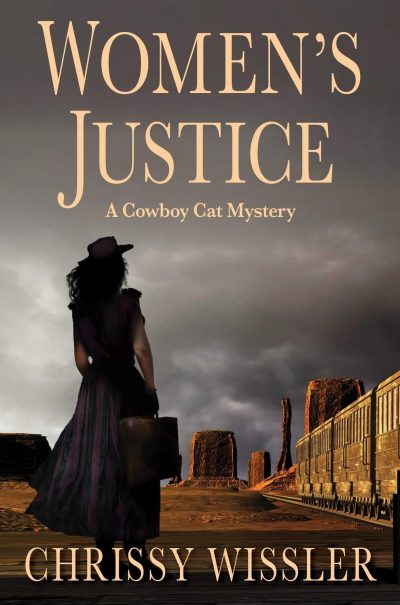 In the 1880’s, the town of Butte, Montana is a mining boom-town – instead of gold, it’s mostly copper which fuels its economy. The wealth comes at a cost, as the huge amounts of acrid smoke belched from the smelters and plants turns day into night, along with creating perpetually “noxious, disgusting air.” Off the train and into this smog steps Cat, a woman with no shortage of a past. A former prostitute, but also a ranch-hand, her preferred outfit of blue jeans and six-shooter is most atypical for a woman of the times. Almost immediately, she is drawn into the mysterious and suspicious death on the street of another “fallen woman,” Norma. The apparent cover-up goes right up to “Copper Kings” such as Marcus Daly (a real tycoon from that time and place), and it quickly becomes clear that whoever was behind Norma’s demise, is none to happy to find Cat looking into the matter. To find the truth, she’s going to have to navigate her way through both ends of Butte society.
What stands out for me is Wissler’s incredibly verbose style, in which a whack on the shoulder with a plank merits several pages of descriptive prose. There’s one sequence, where Cat returns to the boarding-house where she’s staying, and discovers an unexpected dinner party in progress, when it feels like chapters elapse between the front-door and dining-room. That isn’t necessarily a bad thing – it’s not like she’s Alexandre Dumas, getting paid by the word. Indeed, it’s often interesting to get a deep dive into Cat’s thoughts and motivations, since she has a past that influences much of her behaviour; not least, a hinted-at violent incident involving her sister, Alice and her abusive husband. But there were times when I would have been happier for the plot to move forward at less of a glacial pace.
There’s no denying the author’s talents at generating the nightmarish world, with its poisonous air, and yawning gulf between the haves and the have-nots. Those like Norma can be pitched from the former category into the latter in a moment – and return is almost impossible. Instead, you can end up in the tunnels below the city streets, a virtual living hell for the lowest of the low. Cat’s history gives her an ability to empathize with the lower classes, while still capable of interacting with their “betters”, though there are times when her abilities seem to come close to telepathy, in terms of reading people. She could probably make a great living as a poker player. And despite the pistol on her hip, the action is limited – she never gets to draw it at all. Even the final face-off with Norma’s killer in those tunnels, entered from one of Butte’s grandest brothels, sees her largely defer to others in the name of justice.
There are some typos and missing words in the text, and I wonder if the word “bum” – as in rear – would genuinely have been used repeatedly by an 1880’s cowgirl. It seems rather too British: surely “ass” or “butt” (not to be confused with Butte!) would have been more likely? But despite flaws, this does remains an evocative depiction of a time and place which feels different from the usual Western fare. And it’s all the better for that.
Author: Chrissy Wissler
Publisher: Blue Cedar Publishing, available through Amazon, both as a paperback and an e-book
1 of 2 in the Cowboy Cat series.
 Having enjoyed the previous
 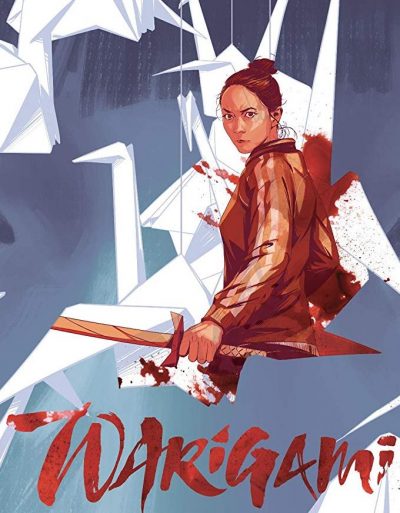 This feature-length entity is the omnibus edition of a series created for Canadian streaming service, CBC Gem. Originally 10 x ten-minute episodes, they’ve been combined into one entity, though the joins are still pretty visible. It is, however, a brisk and generally entertaining work, with a good twist to the usual martial-arts shenanigans.
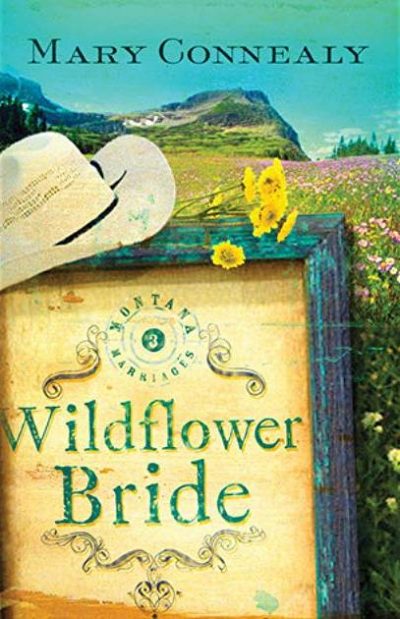 Barb and I discovered evangelical Christian author Mary Connealy through her Sophie’s Daughters trilogy, partially set in Montana in the years from 1878 to 1884. Several characters who figure in her earlier Montana Marriages trilogy, of which this novel is the third, also play important roles in the later one. So we were interested in their back stories; and when I found this book in a thrift store, it was a natural purchase! (We’ve also just started reading the second installment; long story!) This means we’re reading the trilogy in reverse order; so we started with much more knowledge of the characters’ future than the original readers would have (the read was more like a visit with old friends). However, I’ll avoid spoilers in this review. (Obviously, though, it might contain “spoilers” for the earlier Montana Marriages novels.)
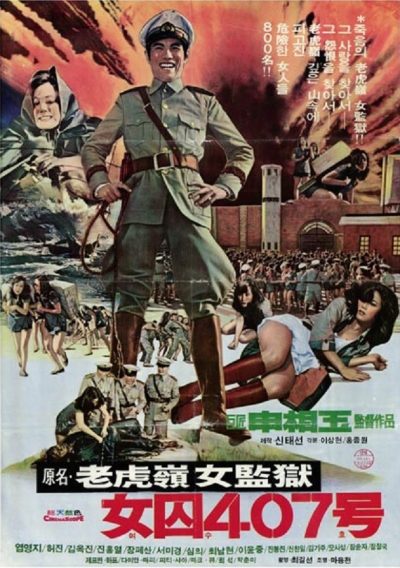 An apparent knock-off of Japan’s
 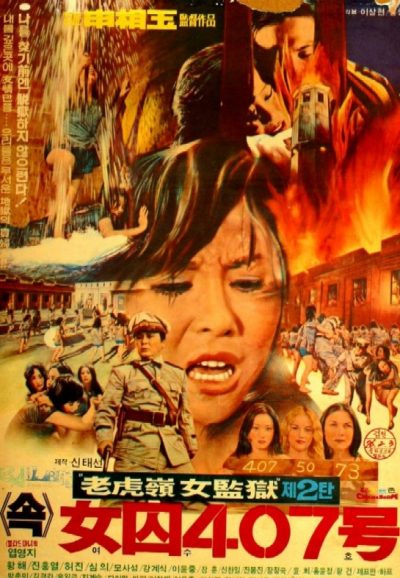 Moving onto part two, things have… changed. Part one ended with its sole survivor sailing off in a boat. This opens with its two heroines, Kuan Mou-Hua (Yip) and Kao Chuan Tze (Heo), back running through the jungle, apparently escaping from… something. I actually watched this part first, and initially presumed the specifics were all explained in the previous installment. I can now confidently state: nope. Like so much here, even down to the location, it’s unclear. Perhaps the untranslated captions shed light on this; the dubbing (the version I saw was in German with English subs!) certainly doesn’t.
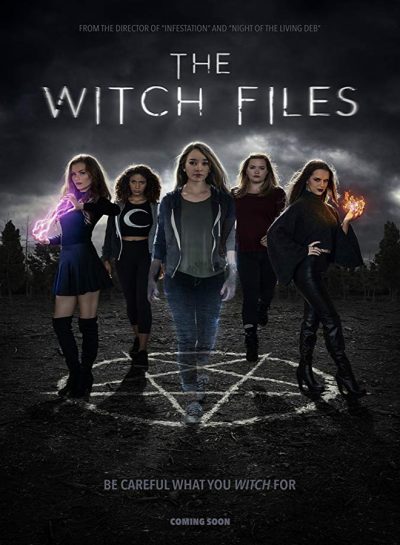 If John Hughes directed a film about witchcraft, it’d probably end up like this. For you have five stereotypical high-school girls in detention: Brooke the rich bitch (Ziolkoski); Greta the jock (Adrienne Rose-White); M.J. the timid mouse (Robinson); Jules the goth (Flatmo); and Claire the nerd (Taylor), who isn’t actually
 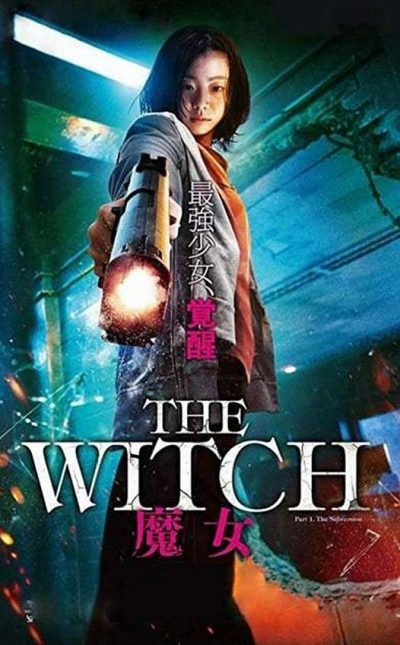 The first in an intended trilogy, this stands on its own reasonably well, balancing between tying up the loose ends and leaving the future uncertain. The heroine is Ja-Yoon (Kim), who begins by escaping from a shadowy, quasi-governmental facility as a raw eight-year-old, despite being hunted by the woman in charge, Dr. Baek (Jo) and her minions. She is found by husband and wife farmers, and they adopt Ja-Yoon, who has no apparent memory of her early life as their own. Ten years later, with Mom suffering from Alzheimer’s, and the farm struggling financially, Ja-Yoon enters a nationwide singing contest. However, the resulting attention brings her firmly back on the radar of Dr. Baek and Nobleman (Choi), the other survivor from that night a decade ago. The not-so-good doctor won’t let Ja-Yoon escape this time.
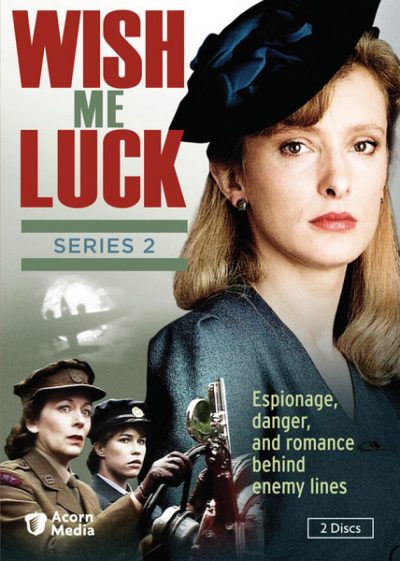 This British TV series ran for three series from 1988 through 1990, with 23 episodes (each an hour long including commercials) in total. The same creators had previously been responsible for another WW2-based show, Tenko, about women in a Japanese prisoner-of-war camp after the fall of Singapore. The time period here is similar – the second half of World War 2 – but the focus moves from the Far East to Occupied Europe, in particular, France. At this point, the Allies were sending in agents to assist the local Resistance – and as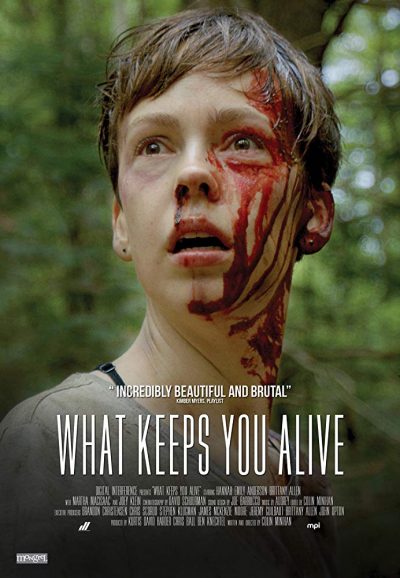
 In the modern, politically-correct era, it’s less common to see a film which has a sexual minority as an unabashed villain. Something like Basic Instinct got a lot of flak at the time, and would likely be rejected out of hand by gay-friendly Hollywood these days, as would Silence of the Lambs. So it was kinda refreshing to see a movie which brings us an unashamedly psycho lesbo in the form of Jackie (Anderson). Yet it’s not her sexuality which makes her evil, though she does feel she was “born this way” – or, as Jackie puts it: “It’s nature, not nurture.”
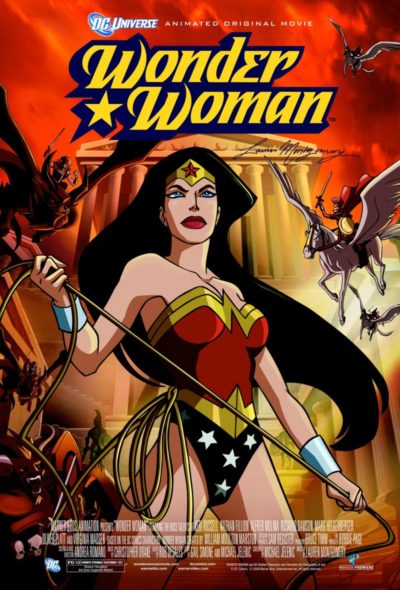 Often forgotten in the critical acclaim for the