
★★★
“Civil War of the Sexes”
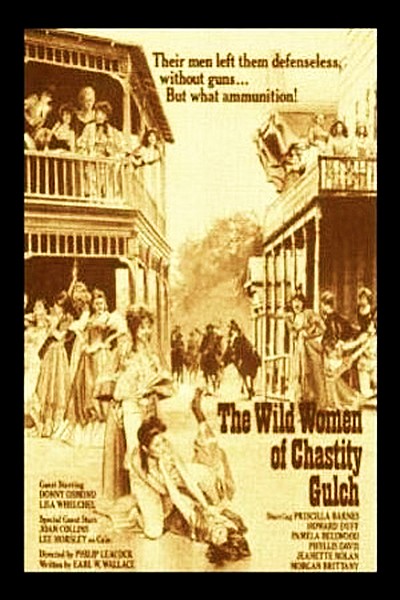
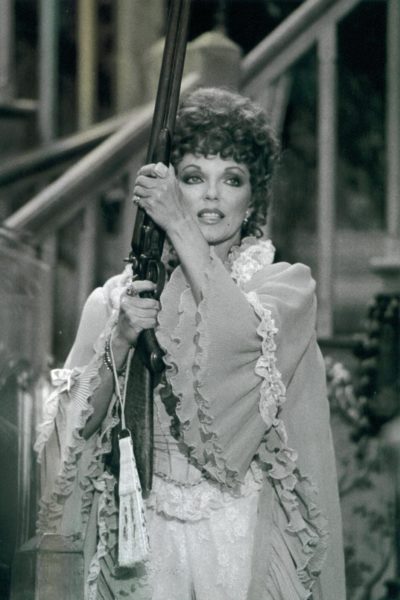 This sprightly TV movie from 1982 boasts a rather decent cast and, at least in the first half, manages to go in unexpected and interesting direction. It does end up descending into rather familiar territory thereafter, and the finale doesn’t manage to be as rousing as it should be. Yet it managed to keep my interest, and as this genre goes, that probably makes it better than average. It takes place in the last stages of the American Civil War, when the Southern women of Sweetwater have been left bereft of men, after the Confederate Army has recruited them all to their cause. Newly arrived in town is doctor Maggie McCulloch (Barnes), who has arrived to help her ailing aunt, Annie (Collins). She is shocked to discover Annie is less the mine owner touted in her letters, and more the owner of the town brothel.
With the men out of the picture, the local townswomen try to drive Annie and her business out of town, only to find the madam is made of sterner stuff. Such petty grievances are set aside with the arrival of Union forces under Colonel Samuel Isaacs (Duff), who demands Maggie’s services to help his injured son, Frank (former teen heart-throb, Donny Osmond!). Leaving Frank behind to take care of business elsewhere, the Colonel promises to leave the town alone if Frank is saved, though Confederate surgeon John Cain (Horsley) doubts he’ll keep his word. The women of Sweetwater need to be formed into a fighting unit capable of repelling Isaacs and his men if they return with ill intent.
From a modern perspective, perhaps the most unusual thing is seeing the Union soldiers (with the exception of Frank) portrayed as the villains of the piece. These days, the Confederate flag is basically the same thing as the swastika, yet the movie seems perfectly happy to accept that there were basically decent people on both sides. Pointedly, at the end, nobody mentions who won the war, because that’s not important – just that it’s over. Though on the other hand, there is literally not a single non-Caucasian in the entire movie. It’s flat-out impossible to imagine any depiction of the Civil War like this being made nowadays, making it a period piece almost as much as the era it represents.
 That aside, the plot unfolds largely as you’d expect. There’s the initial tension between whores and housewives, and the women struggle to come to terms with the everyday business of running the town. For example, there’s a fire drill, which ends up with half the ladies thrashing around in shallow water, and some other slapstick involving whitewash, that is somewhere between lightly amusing and embarrassing. However, Barnes – at the time a sitcom star in Three’s Company – does a very good job of keeping the film grounded, and the supporting cast help admirably in that aspect. Collins is particularly good, projecting an attitude which clearly proclaims she will take no shit from anyone.
Inevitably, there’s the expected romance between Maggie and John, and the latter slowly succeeds in getting the townsfolk from literally falling over when they fire their weapons, to a reasonable degree of competence. On the one hand, it is implausible that civilians could defeat trained and experienced soldiers in a firefight. However, they don’t have to win, just make the situation unpleasant enough the Colonel decides it’s not worth it, and moves on. That perhaps happens rather too quickly, and the film might have benefited from devoting less time to the romantic aspects, in order to give us a more satisfying finale.
Obviously, given the medium, it’s never quite going to be able to live up to a title which feels considerably more “mature viewer” than the content here ever reaches. However, considering the limitations, it wisely concentrates on the dramatic elements, and that’s when it comes admirably close to being, not just a “real movie”, but a good one at that.
Dir: Philip Leacock
Star: Priscilla Barnes, Lee Horsley, Joan Collins, Howard Duff
 This showed up as a bit of a surprise. Obviously, even the title suggested that the makers were looking for a sequel to
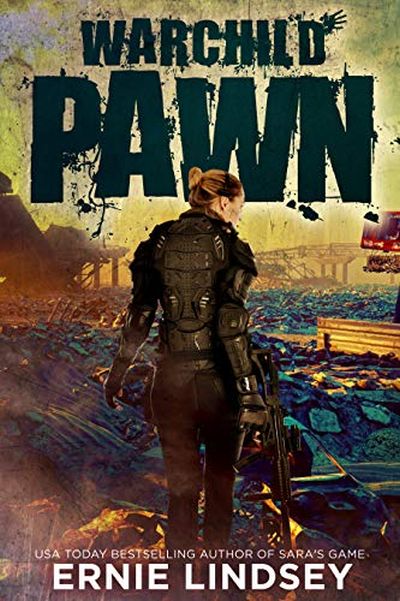 This dystopian future takes place after the United States of America is no longer united, having fragmented into a group of disparate regions that exist in an uneasy piece with each other. The heroine is 14-year-old Caroline, who lives in a remote part of the Appalachians, her town loosely affiliated to the People’s Republic of Virginia. She’s a scout, and one day encounters forces from the Democratic Alliance. The population of her village who escape, head towards the state capital of Warrenville, pursued by the invading army. On the way, Caroline begins to come into startling abilities which were literally injected into her as a small child.
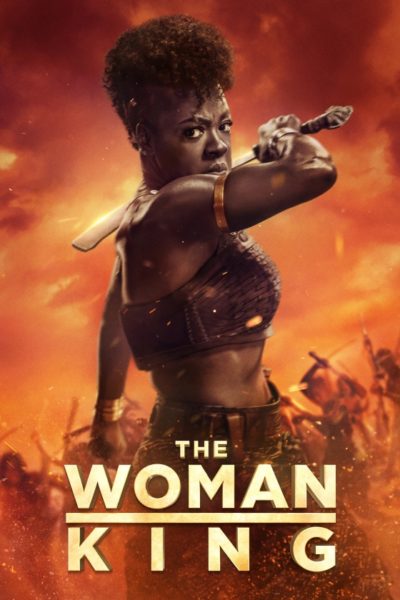 The above – though expressed rather more bluntly! – was Chris’s reaction to the opening scene, in which Nanisca (Davis) leads her female troops, the Agojie, in the ambush of slavers from the neighbouring Oyo tribe. The Oyo are rivals to the Kingdom of Dahomey, under King Ghezo (John Boyega), who relies on Nanisca and the Agojie to protect his territory, and it’s getting closer to all-out war. The Agojie get a new recruit, Nawi (Mbedu), whose father drops her off at the palace gate, because of her refusal to accept an arranged marriage. Nawi turns out to have a very close connection to Nanisca, but also ends up captured by the Oyo and needs to escape before being sold to Brazilian slavers.
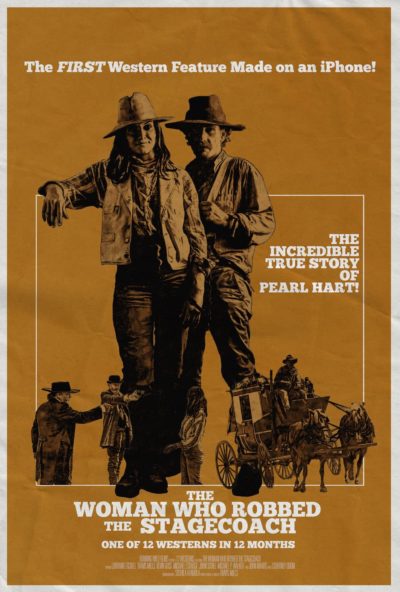 There are a couple of points to note going in. This was one of “12 Westerns in 12 months”, a project run by the director during 2020. It also proudly pronounces itself as the first ever Western feature to be shot entirely on an iPhone. Both of these do lead to limitations. The sheer speed involved obvious has an impact, and I can’t help wondering if a more measured approach would have been better for the end product. As for the iPhone… Well, on the plus side it looked perfectly watchable on my 49″ television, especially the outdoor scenes. However, the indoor sequences seemed almost
 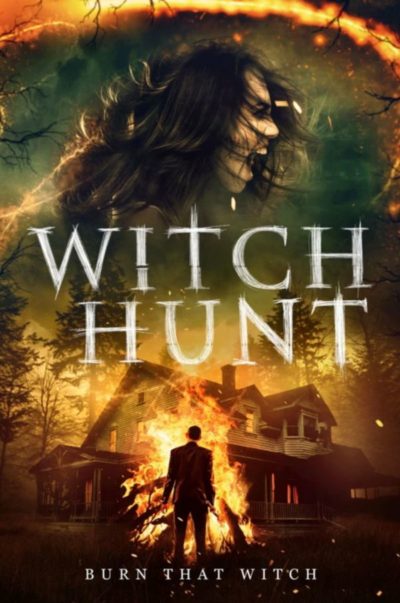 This is set in the everyday world – but with one major tweak. Witchcraft exists, and has been outlawed in the United States by the 11th amendment. Now, government agents from the BWI seek out witches, using tried and true methods from the middle ages (the “sink test” is exactly what it sounds like), and punish those found or suspected to be practicing witchcraft. But those opposed to this have set up an “underground railroad” to smuggle the targets over the boarder to Mexico. Teenage girl Claire (Adlon) is part of one such family, courtesy of her mom Martha (Elizabeth Mitchell); Dad is out of the picture. Claire is rather ambivalent about their activism, since she just wants to fit in at school. But the arrival of Fiona (Cowen) and her little sister, siblings whose mother was burned at the stake, forces Claire out of her professed neutrality,. Especially as the investigation of the unrelenting BWI Agent Hawthorne (Camargo) gets closer to home.
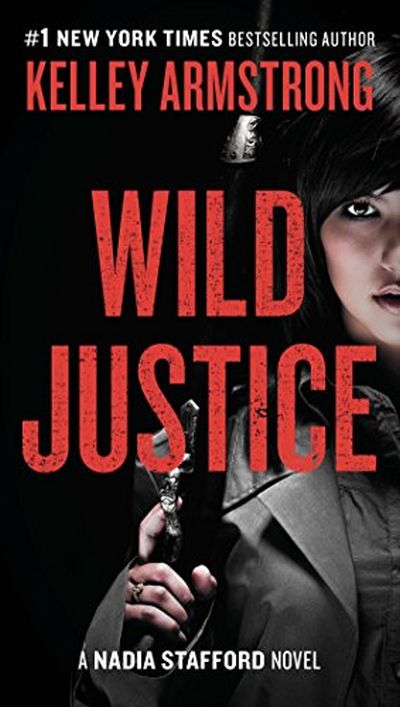 That’s what happened here, about a month ago,with Quinn wanting to move in the direction of engagement and marriage and Nadia not willing to, leading to a messy breakup that left him very hurt and her “feeling like [vulgarism deleted].” :-( On top of that stress, when this book opens, she’s in rural Michigan on a job (of the kind that she doesn’t advertise). That quickly results, though through no fault of her own, in a traumatic event which has her on the point of meltdown. But before long, she’s in for a moral and emotional ordeal which will make her present distresses look relatively mild.
 This is one of those books where the cover (right) feels at odds with the synopsis: “After witnessing an execution, a resourceful young woman attempts to disappear while being pursued by a hitman and a handsome federal agent.” Having read the book, the reality sits somewhat uncomfortably in the middle. It might have been better if the author had committed to writing either an action novel or a romance; the combination of them here is awkward and clunky. Naturally, my preference was for the former. But it seems that every time the book got into a rhythm there, the heroine would start lusting after one (frankly, close to all) of the male characters, and the energy would be derailed.