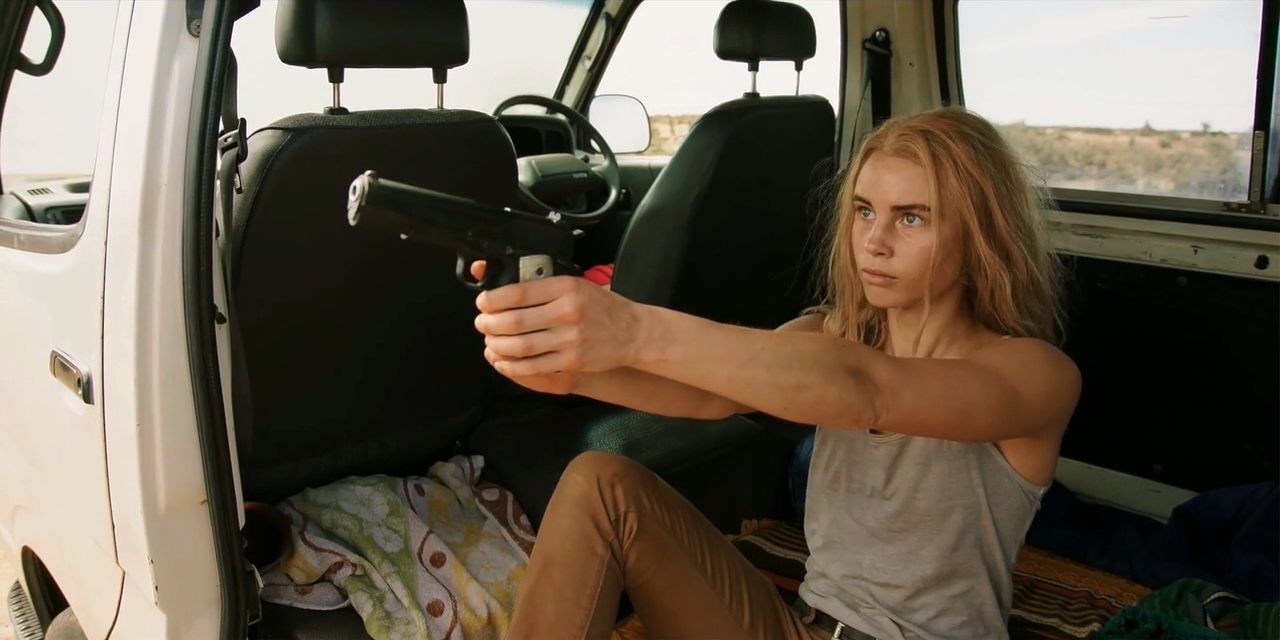
 ★★★★
★★★★
“The dark side of Crocodile Dundee.”
 Here is a confession: I have never seen the acclaimed two Wolf Creek movies (2005 and 2013 – a third movie is planned). The reason was simple: I just didn’t care for ultra-cruel slashers from Australia. After watching this TV-spin off I might revise my opinion and catch up with them; if they are as good as this TV series I definitely want to see them!
So, what’s the story? The American Thorogood family is on holiday in Australia. Unfortunately for them, their young son is swimming in a crocodile-infested lake (who goes swimming in Australia? Don’t we all know their waters are full of deadly animals?). Fortunately for them, Australian animal hunter Mick Taylor (John Jarratt) arrives, right on time, to shoot the crocodile before it can attack the boy. Unfortunately for them, Mick is a psychopathic sadistic serial killer who kills them all before the evening is over, including daughter Eve (Lucy Fry). Or so he thinks, because Eve survives. As she is slowly nursed back to health, and answers the questions of the police, she comes to the realization that the authorities won’t be able or willing to catch the killer.
She decides to hunt Mick herself and take revenge for the death of her family. Eve is originally innocent, and carries feelings of guilt, since her family was only in Australia because she was recovering from drug addiction – she used to be an athlete. She has to learn to get along in a hard, merciless country by herself, and avoid or defeat the criminals, thieves and would-be-rapists there who pose a threat during her journey. Eve is pursued by the police, as she herself has broken the law, and also by a well-meaning policeman who wants to help her. Not to mention Mick who – happily slashing his way through unpopulated areas – has realized that someone is pursuing him and starts to play a cat-and-mouse-game with Eve…
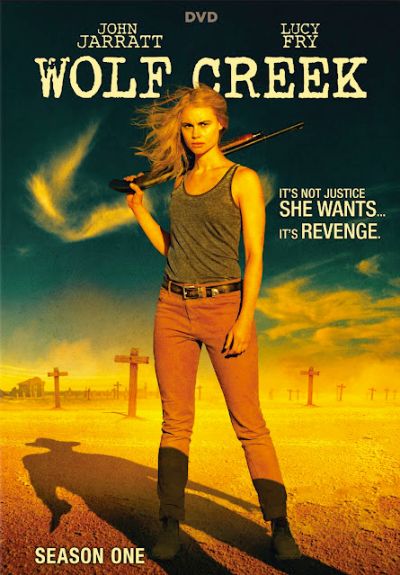 I have to say that this series really surprised me. I had bought it based solely due to the cool cover photo and didn’t expect much more than a probably over-gruesome third-rate slasher, I mean, is Australia really famous for great serial killer psycho thrillers? Though there is the very good Stacy Keach and Jamie Lee Curtis thriller from 1981, Road Games. As a matter of fact, this short (six episodes) series blew me away with its astounding quality. When you read the above, you might be forgiven for getting the impression the whole thing will come across as a bit cheap in its storytelling, or the motivation of its characters – a bit schlocky in general.
But… it isn’t.
The best way I can describe the show is with the word “unpretentious”. That might sound strange. Yes, it is, at its core, a revenge story. And, yes, people are tortured and killed in cruel ways: when someone has an infected hand, you see him cut it off with a saw. But I never got the feeling these scenes were gratuitous or to make the blood-thirsty gorehounds happy. Quite the opposite: things like this are carefully integrated into the narrative of the story, and have a meaning that goes above mere shock value. I would almost call this story, about a serial killer tracking his prey across desert hunting grounds, decent and yes, even tasteful – considering how different this narrative could have been presented.
Most surprising for me was, though big game hunter Mick is always looming in the background, it’s mainly Eve’s story. In the beginning I wasn’t too impressed with her. She seemed like a bland, pale character, just a victim who survived a catastrophe. I was half expecting her to become the usual superwoman, who knows it all and can do everything better than every male – thanks, mister! But the filmmakers were smarter than your average Hollywood screenwriter and producer, who nowadays seem only to be able to create one-dimensional, flawless, conveyor-belt manufactured heroines. Eve does not know it all, she can not do it all alone, and makes mistakes – some really terrible. She fails and learns from it. She falls and has to stand up again. It alone makes the character better than almost 95% of today’s female protagonists in American movies or shows. Kudos for that!
Also, there is a second season, which I have not seen yet (it isn’t available in my home country). Given it has everyone’s favourite killer from Down Under again, but not Eve, I began seriously to worry about her fate. You really start to sympathize with her. Running away from the police in the beginning might be anything but rational, but as the series develops, so does she. You start to understand who she is, and she gets a backstory: she is not a random female character out for revenge anymore. She has these understandable feelings and more than once I thought: “Gosh, this could be going different, girl. You should be working together with the police. There could be common ground if you were not so stuck on the idea that you’ve got to do this all on your own!”
Then there are moments when she realizes herself she is way over her head, fighting insurmountable odds. She gets better at it, slowly, and the point in a way is about self-discovery. It becomes an odyssey for oneself, where the protagonist has to question when reaching the nadir of life: What am I standing for? Why do I do what I do? Is it really worth all that? Could I choose a different life? There are moments that indicate that Eve might give up her hunt. The series repeatedly contrasts her persona with other characters who have lost themselves, who may have been destroyed by this vast open country where you seem to be far from civilization or God.
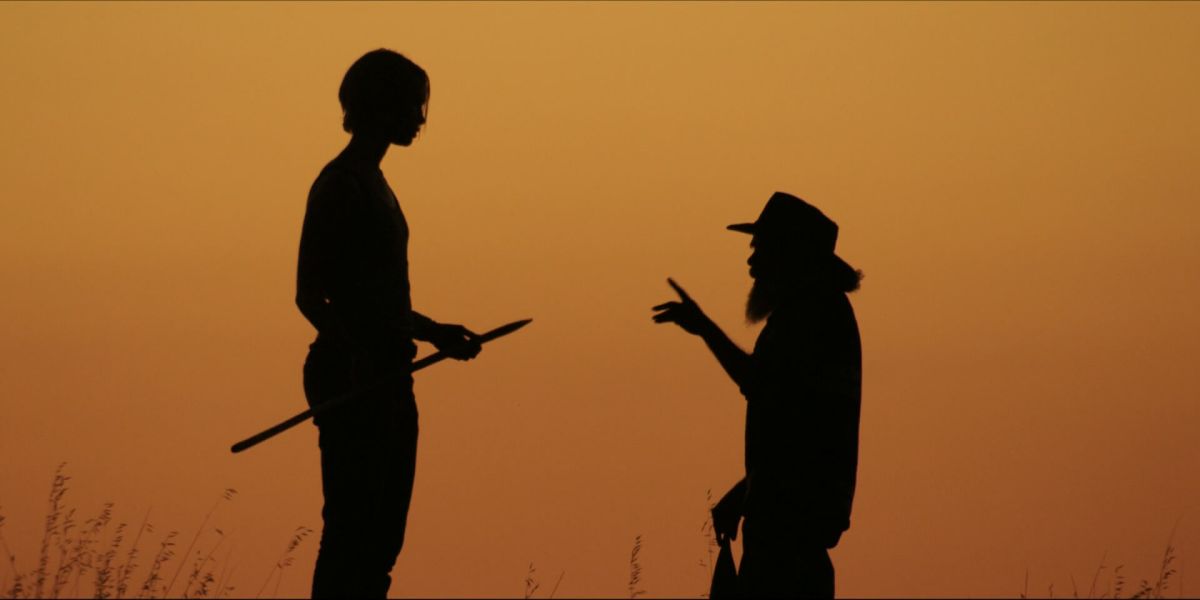 Eve is repeatedly confronted by these criminals, or wanna-be-rapists who see a normal dressed woman as an offer, and experiences family tragedies that actually form the core of the narrative. She is not without help though. As well as the policeman on her trail who reluctantly starts to cover-up for her, there is a criminal whom she meets in the desert, an old Aborigine who fits into the classic mentor role, a colleague in a bar and she even gets a canine companion. Though the question always lingers while watching the show: Will she get her revenge? What will she do when meeting the man who killed her family? Does she even have a chance against an experienced, sadistic killer like Mick?
So, yes, I applaud Lucy Fry’s performance in the role. Thanks to an excellent script, it made me believe she – albeit slowly- becomes a potential threat to the seasoned serial killer. But also John Jarrat, playing this role for a third time, is incredibly good. Mick Taylor is a nightmare of a character, superficially charming, but essentially a disgusting sleazebag. Though it’s great even he has been given a backstory. While he kills the way other people drink their morning coffee, we get to know enough about him to deduce how he became that way. An episode tells us in flashback about a key event in his childhood that may have been the catalyst for his murderous doings. If this is believable is up to the viewer, I think. I like it they gave him more than the “Well, he’s insane” explanation so many movies and shows tend to give their killers nowadays.
Having Eve faced with what can only be labelled as a devil in human form, touches an even more ambitious question. It’s a theme that classic The Hitcher (C. Thomas Howell and Rutger Hauer) dared to ask. How much of your own humanity do you have to leave behind, to be able to fight the devil? I think it refers to the age-old Nietzsche-ism “If you gaze long enough into an abyss, the abyss will gaze back into you.” I’m not saying how this “psycho thriller” ends, but I really, really recommend this show. Every episode had me glued to my TV, and I got much more enjoyment out of this short Australian TV show than I imagined. Also, I think it’s far superior to your average American product playing in the same genre pool.
I really feel I should get my hands on season 2, even though the main actress won’t be back. Also, I look forward to the third movie – and I wish you happy hunting! 😉
Creator: Greg McLean
Star: Lucy Fry, John Jarratt, Dustin Clare, Jessica Tovey



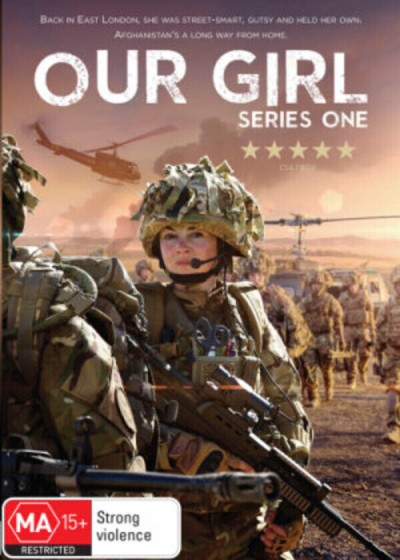 Having very much enjoyed the Our Girl movie, I was interested in checking out the TV series version, which ran for four seasons from 2013 through 2020. You’ll notice, however, that only two are being covered here. Part of the reason for that is logistical: only seasons 1-2 are available on any of our current streaming services. That wouldn’t necessarily be an absolute show-stopper. But there were also reasons why we – mostly Chris – opted to draw a line under the second season. Each series tells the story of a different nurse in the British army. The first is about teenager Molly Dawes (Turner), who joins to escape a dead-end life in East London. The second follows established soldier Georgie Lane (Keegan).
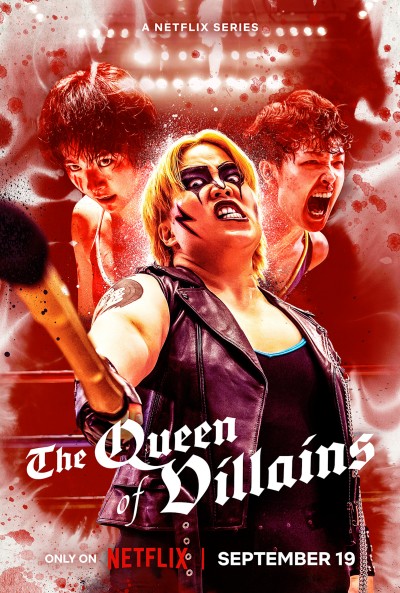 We all know professional wrestling is staged, with the outcomes predetermined, right? [Do not used the word “fake”: I will cut you!] Here, things are… murkier. This treads a delicate line between that and kayfabe, the wrestling term for promoting it as reality, and genuine competition. The stance here is interesting, suggesting that while those in charge, like promoter Toshikuni Matsunaga (Saitoh), can have a result in mind, that relies on those in the ring agreeing to it. This isn’t always the case [one wrestling show I remember attending definitely had a genuine fight, for backstage reasons], and here, Matsumoto is a loose cannon, prepared to go to any lengths to put herself over. Or her character: the lines are certainly blurred here, to the point of near invisibility.
 Interesting the title dropped the “Special Ops” prefix from the title for this series, necessitating a bit of a retro-fix on
  ★★★½
★★★½ I’ll treat these two seasons as one entity. Indeed, there’s a case to be made that you could include
  Not to be mixed up with
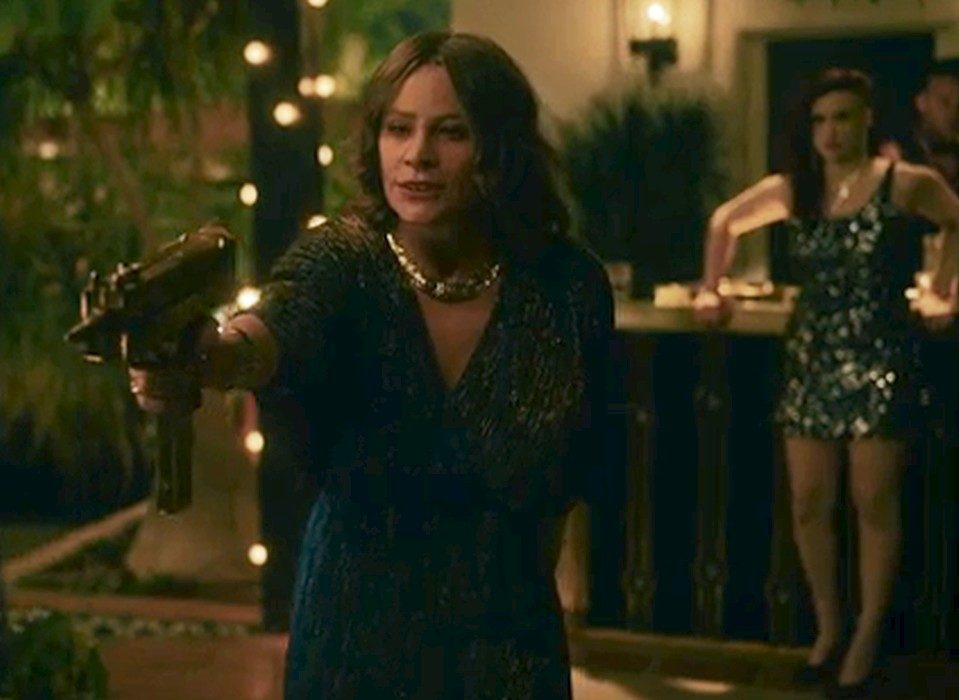 ★★★★
★★★★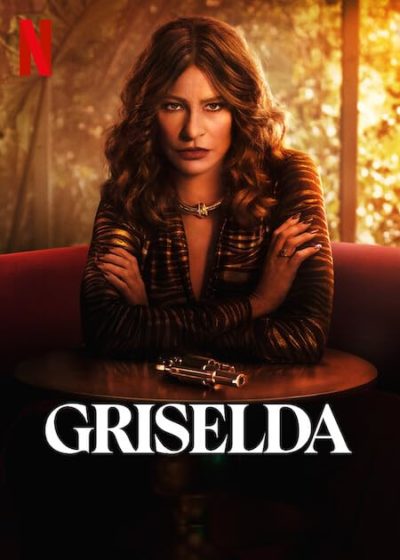 It’s kinda inspiring, weirdly. Early on, the series can be seen a twisted version of the American dream, where an immigrant can come to America, pull themselves up by their bootstraps, and anyone can achieve success if they work hard. The reality is, Blanco didn’t arrive in Miami seeking asylum from domestic abuse, but fleeing increased law-enforcement heat for drug trafficking in New York. Not exactly what Vergara
 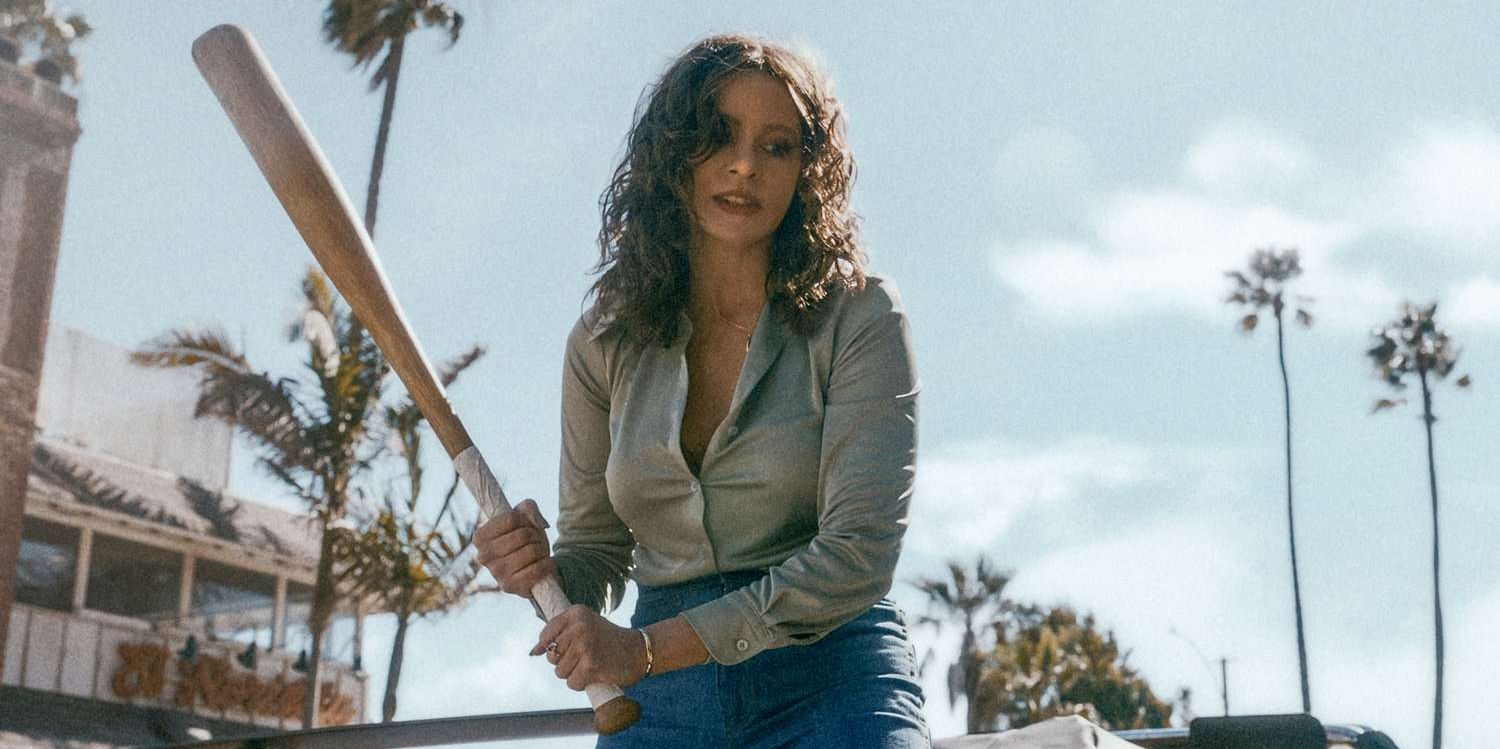 In terms of production value, this is definitely several slices above the other efforts, even if Los Angeles stood in entirely for Miami (the latter no longer resembling what it was at the time). Of particular note is the make-up work on Vergara. It must have been a challenge, because events unfold over a significant number of years: your lead is, obviously, more or less fixed at a point in time. Initially, there’s little of note, but it gradually builds up, in a way that’s so subtle you might not notice. Until, by the end, you suddenly realize the character no longer looks like the actress. Though still rather prettier than the real Griselda.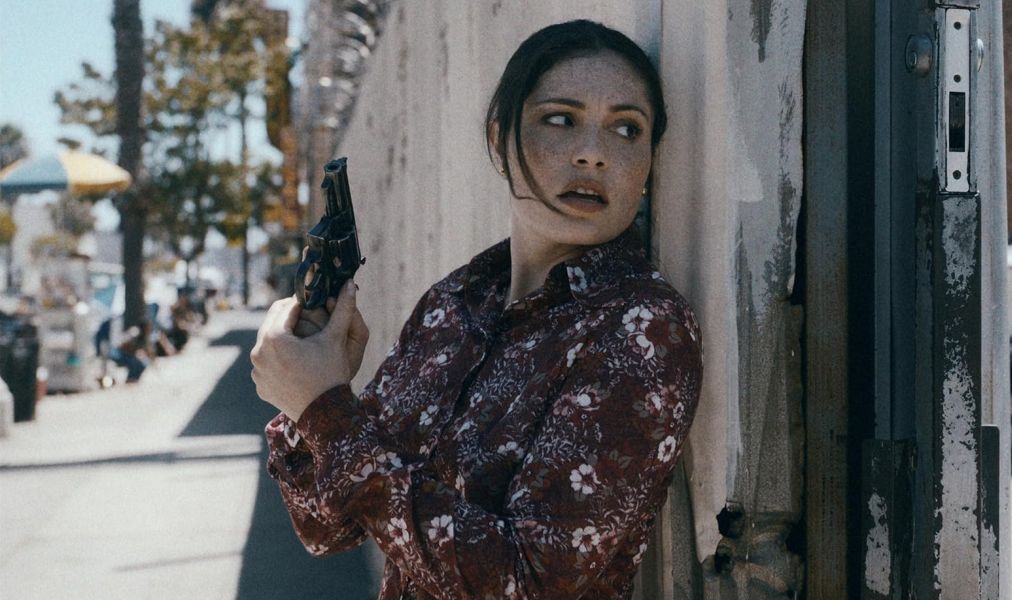
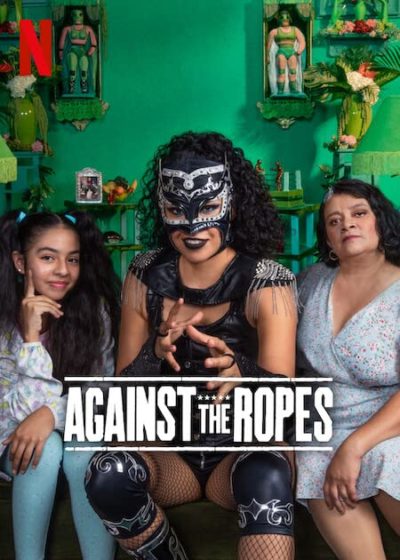 In one of the odder remakes I’ve seen in a while, this is a repurposing of the French 2013 film, Les reines du ring, which translates as “Queens of the Ring”. The core concept is retained, but the location is changed from France to Mexico, and the idea is expanded to a ten-part series. These changes make for a bit of a mixed blessing. Pro wrestling is certainly a more well-established part of the cultural landscape in Mexico, where lucha libre is extremely popular. On the other hand, the multiplication of the running time a factor of about four, leads to the necessary injection of superfluous storylines, which definitely reduced the entertainment value as far as I was concerned. It’s less a wrestling soap-opera, than a soap-opera with wrestling in it.