



★★★½
“Girls with gauntlets.”
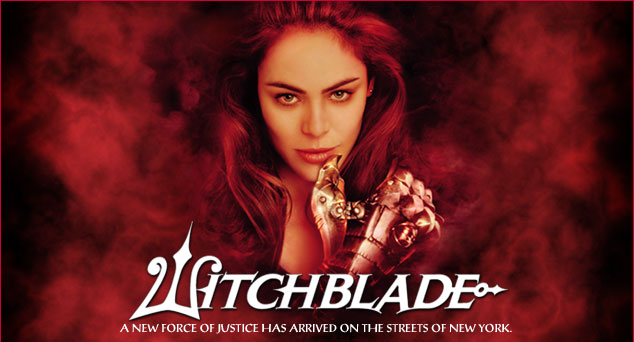
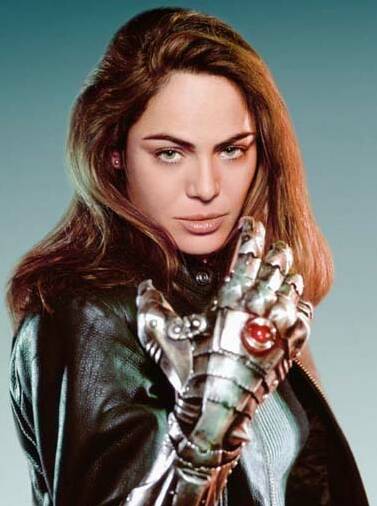 Much as in the first season, the second series of Witchblade brushed against greatness. Unlike the first, where you can point at the final episode as the key weakness, this time round it is a chronic rather than acute malaise that prevents it from getting the seal of approval. When it was great, it was fabulous – it just seemed that for every full, satisfying episode, there was a lame clunker to compensate. Particularly at the start of the season, there seemed to be precious little imagination on view.
Before we get to that, however, there was the little matter of heading forwards once again, Sara having effectively wished the entire first season into a plot-hole. To the writers’ credit, everything went forward in a completely different direction, from the moment Sara and her partner opted not to go into the theatre where, in the first series, everything had begun. Things diverged so rapidly from here that by the end of the double-length first episode, Kenneth Irons was dead, though as previously seen, this is only a minor inconvenience in the Witchblade universe. As Gabriel says in the finale, “Death is a revolving door.” I profess myself quite satisfied with how this was handled – it was the next few episodes which were distinctly ho-hum, with little in the way of memorable moments. Oh, look: there’s a new drug in town; Nottingham hires assassins to kill Sara; multiple personalities. And I had to cheat and look up synopses elsewhere to glean this much information, since they were notable largely for the lack of impression they made on me. I do recall being immensely irritated by the strobe-lit fight scenes, however, the sort of thing you do when you’re trying to hide ineptness.
Things probably reached their nadir in Nailed, in which a stereotypical, drooling paedophile kidnapped Danny’s niece. The Witchblade, with an impressively convenient sense of dramatic timing, revealed his location just in time for them to rush to the rescue, in what was otherwise little more than a lame rip-off of Cape Fear. Fortunately, I missed this episode when it aired (being off getting married!), and only caught up with it during the marathon. Otherwise, I might well have given up on the show. Which would have been a terrible shame, as things started to perk up thereafter. I always enjoy episodes where external mythos enter the show, and Lagrimas mixed the Wandering Jew fable in beautifully, with its cursed immortal, seeking death at the hands of the Witchblade. Hierophant was a little too Keyser Sose-ish for my tastes, but Veritas probably ranks as my favourite episode to date. Oddly, the legend it utilised, while much more recent, didn’t seem out of place in the slightest. We were largely one step ahead of the story, but only in an “Wouldn’t it be cool if…?” way, and I suspect the Powers That Be will rear their ugly heads again in season three.
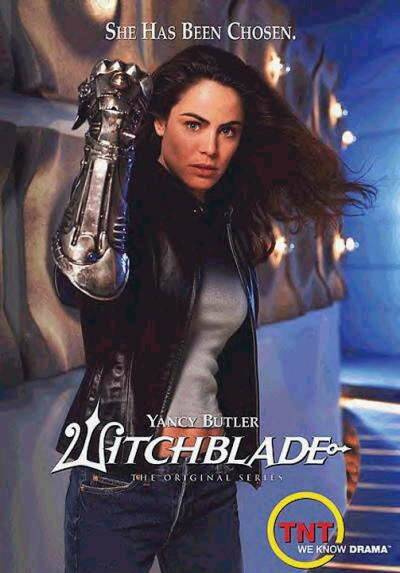 The finale, Ubique, also has to rate highly, for sheer perversity at the very least – Nottingham reaches new levels of creepiness in his final scenes with Lucrezia. Throw in a kicking soundtrack (Lords of Acid!), some spectacular deaths, and we’ll forgive a central plot device teetering curiously close to the main premise of feardotcom, which opened in cinemas the very same week. Among the interesting themes on view are the way both Pezzini and Nottingham both struggle to come to terms with the loss of their fathers, albeit temporarily in the latter’s case. This may be linked to one of the unresolved issues carried forward; who is the guy with wavy grey hair who always seems to be lurking round Sara? Indeed, the whole Nottingham/Pezzini relationship had perhaps more depth than any other in the show; veering between love, hate and obsession, with never a dull moment.
Season 3 looked like it might have some stiff competition for Sara’s favours, particularly with Concobar (rather less irritating this time round) lurking in a coma. Add in Gabriel’s little kiss in the finale, and it seemed like time for all applicants to take a number and form an orderly queue. On the other hand, couldn’t see why they keep both Jake and Danny in the show, as their roles overlapped far too much. A permanent, irrevocable death would have made people sit up and take notice – my vote in this department goes to Jake… Despite the second season, overall, rating the same as the first, I reached the end of this one with more optimism in Witchblade‘s future. However, TNT didn’t share this confidence, in part perhaps because of Yancy’s inability to keep out of bars, and the series wasn’t renewed. This may have been wise – on January 3rd, 2003, Butler was arrested after allegedly punching her father, punching and attempting to bite her uncle, and head-butting a police officer. For the moment, Sara Pezzini is in limbo, but really, a better fate is deserved for one of the more innovative series to hit the airwaves in the past couple of years.
Star: Yancy Butler, David Chokachi, Eric Etebari, Will Yun Lee
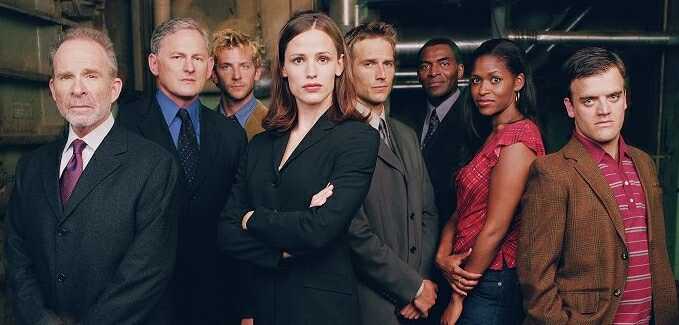
 “It’s everything you want, and more.” That was Chris’s opinion – I was kinda stuck for the right way to start, and as always, she delivered. As, indeed, Alias pretty much delivers, with a crunchy-yet-chewy first series that juggled drama, action and comedy to fine effect, twisting the plot frequently. One problem in TV drama is that you must allow viewers to tune in at any point and rapidly work out what was going on, and former Felicity scribe J.J. Abrams does so in less than 150 words – see above for the heroine’s monologue which opens each show.
 ★★★½
★★★½ Put simply, having killed of most of the cast (a refreshing change from more cowardly shows, which refuse to let
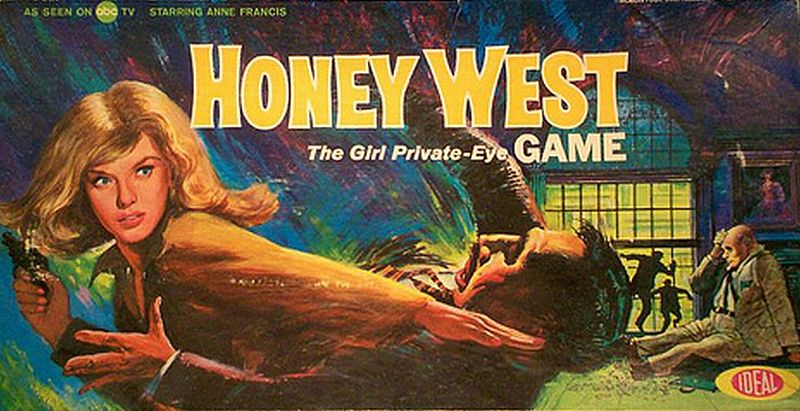 ★★★★
★★★★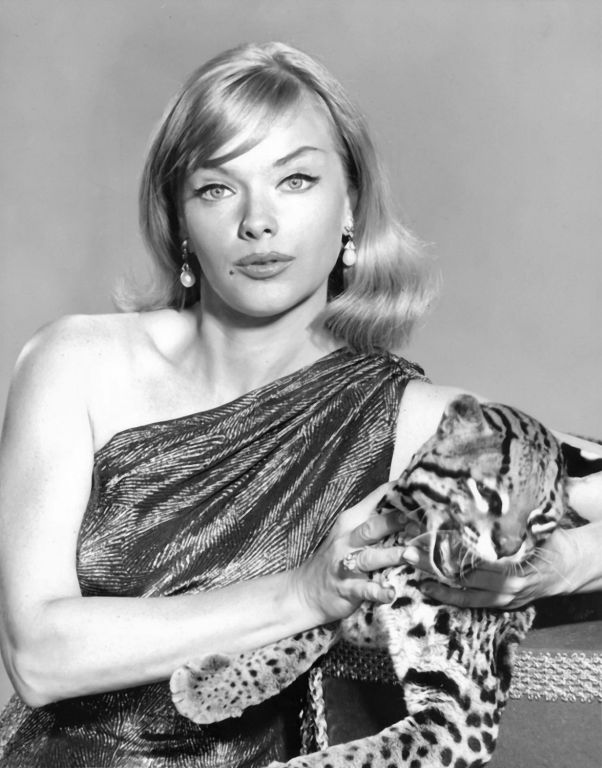 Naturally, this being the mid-sixties, the racier elements of the pulp novels had to be toned down, but the presence of Forbidden Planet star Anne Francis added its own share of potential, especially to boys of the appropriate age, which
 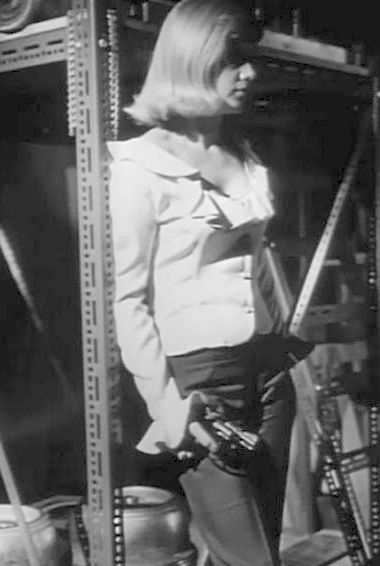 We also appreciated the parade of supporting actors, which include a significant number of familiar names, especially if you watch other shows from the era. Other names should be recognized regardless, including Kevin McCarthy, Michael J. Pollard, Richard Kiel, Joe Don Baker and Dick Clark. The music, by Joseph Mullendore, is an appropriate blast from the past, resulting in much snapping of fingers and shaking of shoulders from the GWG couch by myself and Chris. Indeed, Chris even came up with her own set of lyrics for the theme-tune, which you can find in the sidebar; we were singing lustily along with the opening credits, to the utter bemusement of our son. [The middle section is a bit tricky, and should probably only be attempted by trained professionals. We ended up going, “Raindrops on roses, and whiskers on kittens…” much of the time!]
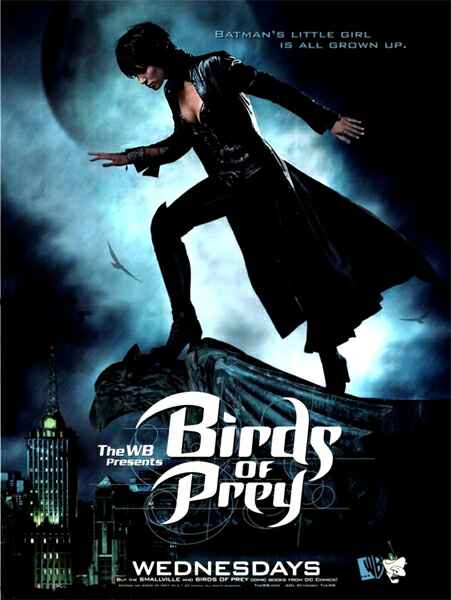 2002 should have been a great time to start a TV series based on a popular comic book – the biggest box-office hit that year was Spiderman, and with a host of other high-profile movies in the pipeline, comics had their highest profile in a long time. So what happened? Why was the show cancelled before Christmas, limping lamely along to the conclusion of its 13-episode run, the finale sacrificed against American Idol and The Bachelorette?
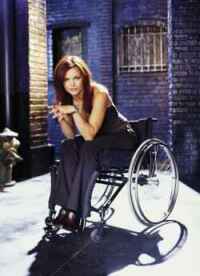
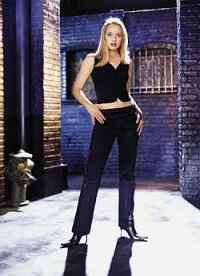
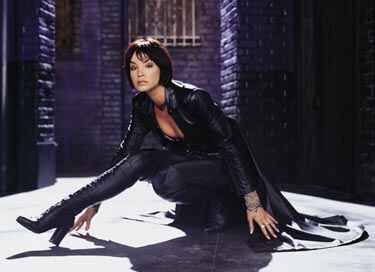 The show was at its best playing with the conventions of superhero TV; I particularly remember a discussion over secret identities and whether you could have one without a mask. But the same episode also featured – like the WWE, just without the chocolate pudding – a fight club where evil men watched as women fought. Given part of the appeal of the series itself was exactly this, it was shooting the audience in the foot, and illustrates the apparent schizophrenia of the show.
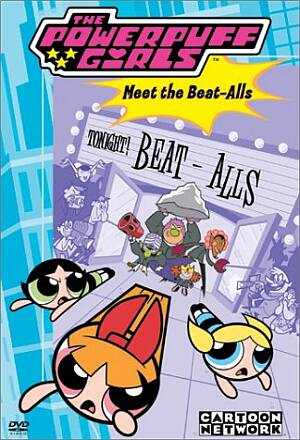 This sprang virtually fully-formed from the twisted mind of McCracken back in 1992, as a student film: even then, he intended it as a series, with most the characters, both heroines and villains, already present. The main change was to the title, the Cartoon Network balking at presenting a show called The Whoop-Ass Girls, and so the “can of whoop-ass” which was originally part of their make-up, was replaced by Chemical X.
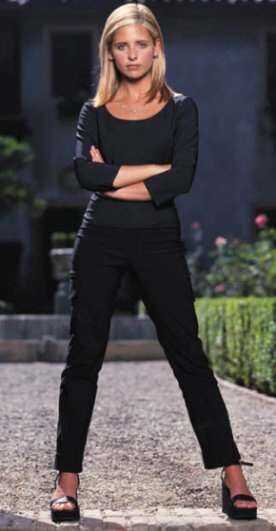 Season Six was in trouble from the start, with the titular heroine (literally) dead and buried. Bringing Buffy back from beyond was a problem always likely to perplex, because once you start resurrecting characters, nothing is a threat any more. Although this was handled moderately well, the show really started to fall apart after the musical episode. This demonstrated one thing beyond all reasonable doubt – why the cast are actors. From then on, most of the stories seemed to have been cribbed from daytime soaps. Buffy has sex with Spike, feels bad about it, then does it again. Xander and Anya’s on-off-off-on-off wedding and relationship. Willow and Tara were no more solidly committed, and the clumsy “magic=drugs” story arc was the sort of thing I’d expect to see on Charmed. In addition, the main bad guys for 90% of the series were a trio of geeks, minor bit players from previous episodes, who were about as threatening as flies, albeit rather more annoying.
 Women-in-prison is not a genre greatly within our remit, since they’re often just an excuse for a bit of soft-core masochism. There are occasional exceptions, however, and this is one, with its origins as a network TV show forcing restraint of the more exploitative aspects, as well as permitting the characters to develop more fully than in a movie.
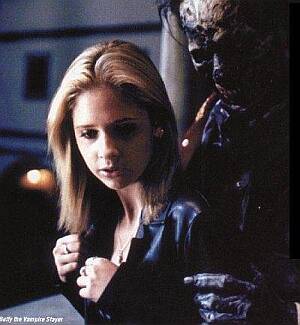 While there have been stand-out Buffy episodes since, season two perhaps ranks as the most consistently high in quality. There’s hardly an episode that ranks as less than excellent, and the writing is sparklingly witty, with more eminently quotable lines than you can shake a stake at.
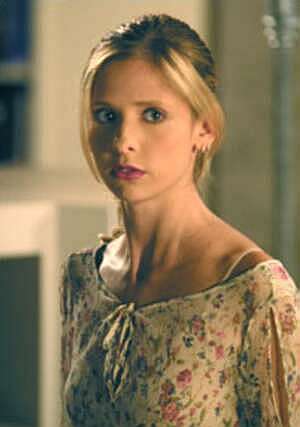 Hannigan and Brendon claim to have learned about the show’s demise in Entertainment Weekly, but it was apparent early on that Gellar in particular was going through the motions. Whedon too, seemed to have lost interest, and you know a show is in trouble when they drag back characters from previous series, who seem ten times more interesting than the regulars. The thrust this season was towards a confrontation with the ultimate evil. Oh, my: an apocalypse – how original. And look! It’s a vampire with a soul! Pushing Buffy back into the school environment was another admission that the show had lost its way when it “graduated”, abandoning the whole concept which had powered it early on. It never found a replacement, floundering around in search of a point.