 ★★★★
★★★★
“Sheilas behind bars.”
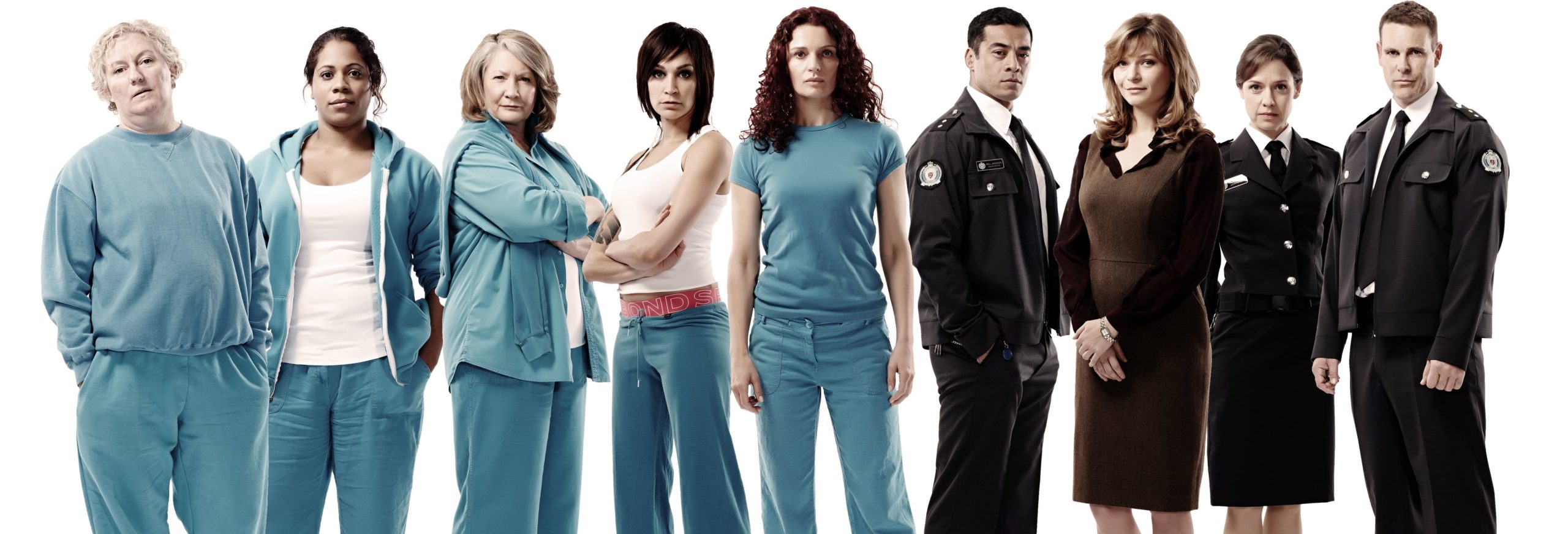
 Back in the eighties, there was an Australian women-in-prison soap opera called Prisoner Cell Block H. [It was called Prisoner on its home turf, but was renamed in the UK and US, to avoid confusion with The Prisoner] It ran for eight seasons, totalling 692 (!) episodes, and achieved a fair bit of cult status, mostly through late-night screenings on TV. Much of its reputation was based on “so bad it’s good” elements, such as the wobbly sets; a review calls it, “one of the most bizarre, violent, lesbian-fetishy-heart-warming dramas ever created.” The show concluded its run in 1986, but was never forgotten.
More than 25 years later, the concept was rebooted in 2013 as Wentworth, and enjoyed a renaissance. While also running for eight seasons, rather than trash (not that there’s anything wrong with that, mind you!), this version proved to be remarkably well made. It likely helped that the remake’s production schedule here was rather less frantic, ending at exactly 100 episodes last October. The show is currently ranked by the IMDb in the top 250 TV series of all time, and was sold to over 90 countries, achieving a worldwide audience, thanks in part to its distribution on streaming services like Netflix and Amazon Prime.
 It spawned local remakes in a number of countries. The Dutch was the most successful, running for four seasons, but Belgium, Germany and Turkey also took the show and recreated it. [Here is as good a place as any to mention that back in 1982, there was a male spin-off of the original show called Punishment. Though it lasted only one season, the cast included some guy called Mel Gibson…] Indeed, the Turkish one, known on Netflix as The Yard, was reviewed here in August 2020. That review began, “I really must get round to reviewing Wentworth.” And eighteen months later, here we are…
It’s a show I’ve thought about covering on a number of occasions over its run, but now that it’s finished, I feel I can finally do it justice. I definitely can’t argue with the acclaim it has received. For Wentworth features a slew of extremely strong female characters, including one of the most memorable villainesses in TV history, and maintained a high degree of dramatic quality from beginning to end. That’s rare for a series; even classics like Buffy dropped off after a certain point, with commercial motivations typically surpassing artistic ones. Not so here, with the eighth series virtually as strong as the first.
One element, which it does share with its predecessor, is that the setting is the “star”, rather than any performer. I think this certainly helped contribute to its longevity, and sustained the show’s freshness. If one of the actresses began to feel jaded, and wanted out, their character could be replaced by another. The prison scenario meant there were always new arrivals potentially coming in, and scope for departures too, without excessively disrupting the overall structure. If you look at many of the ultra-long running shows, e.g. Dr Who or the many incarnations of Law and Order, they have a similar ability to rotate their cast seamlessly.
Not to say there weren’t main characters – many of them with the names and/or backgrounds as their “ancestors” in Cell Block H. But they tended to have arcs across three or four years; few lasted the full eight, mostly on the guard side. This timeframes was long enough to allow for fulfilling development, without getting stale. The first such was Bea Smith (Cormack), who arrives at Wentworth after attempting to murder her husband, following years of abuse. She becomes involved in the struggle for “Top Dog” status – the role of the most powerful prisoner – between two existing inmates, only to end up becoming Top Dog herself. However, it’s a lonely position, where you always have to watch your back, and allies can suddenly become enemies.
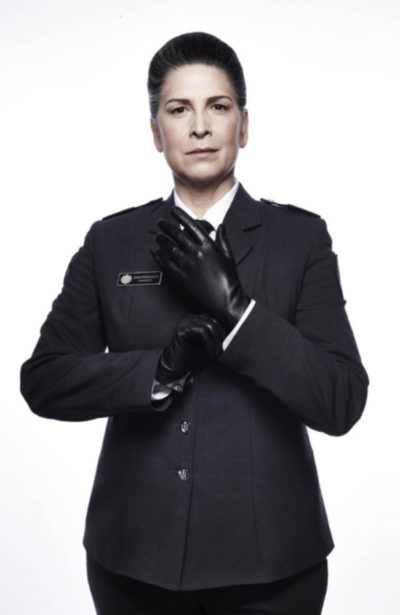 One such was the character mentioned above: Joan Ferguson (Rabe), known as ‘The Freak’ (left). She joined the show as the new governor of Wentworth in season 2, and was, to be blunt, a clinical psychopath, devoid of empathy and incredibly manipulative. She was also very smart, a lethal combination. However, it’s not enough to save her from ending up a prisoner in the jail herself. The first episode of season 5, where Ferguson is released into the general population was, for me, peak Wentworth, and one of the best 45 minutes of television I’ve seen, in any genre.
Remarkably, she didn’t just survive this reversal of fortune, but thrived. She took over as Top Dog. until an escape plan misfired, ending in her being buried alive by long-serving prison officer Will Jackson (Robbie Magasiva)). But you can’t keep a good villainess down, though it appeared the trauma led to amnesia, with Ferguson subsequently using a different name and with a completely different personality. Was this genuine, or another of her ruses? I couldn’t possibly reveal that. What I will do though, is laud a glorious performance by Rabe, who at six feet tall, has a remarkable physical presence, backed up by ferocious intensity. She’s Cersei Lannister on steroids. And without the incest.
In general, it’s perhaps less exploitative than you might expect, with nudity only when genuinely necessary to the plot, rather than for titillation purposes. On the other hand, the show does not soft-pedal the brutality of prison life, with violence and death a common occurrence. Inmates tend to handle their own infractions internally, the Top Dog having the ability to impose punishments for theft, deceit or, perhaps the worst offense of all, “lagging” i.e. talking to prison authorities. It would definitely be rated a hard R, purely for its authentically no-holds barred language. Boy, do the Aussies love themselves a good c-bomb – even more than us Scots!
There were, admittedly, times where the story-lines seemed to get away from the creators. A few threads did appear to be ended, rather than properly resolved. But considering the 70+ hours of television the show represented, such misfires proved remarkably few. The writers definitely had a talent for juggling multiple plot threads and keeping them all moving forward simultaneously. In the end though, it was the actresses (and actors) who made this show what it was, and which kept us coming back for the best part of a decade. If not our favourite show ever on Netflix, it’s definitely up there with the very best.
Creators: Lara Radulovich and David Hannam
Star: Danielle Cormack, Pamela Rabe, Kate Atkinson, Katrina Milosevic



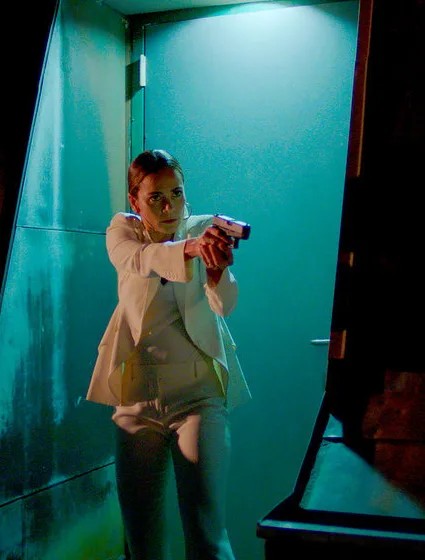
 Okay, I will admit that this strained credibility on a number of occasions, to the point that buttons were popping off its shirt. But I don’t think the makers were exactly going for gritty realism, and the bottom line is: I enjoyed this a lot. Certainly, more so than Special Ops: Lioness, another limited series which we were watching concurrently. To at least partially address the question posed by the title, Eric Carter (Ahmad) is a supply teacher working in a Spanish school. She lives with her partner, Jordi (Teale), and their somewhat disabled daughter, Harper (Watson). But at the supermarket, Erin foils a robbery in order to save Harper, and it becomes very clear that her skills are not limited to the arena of education.
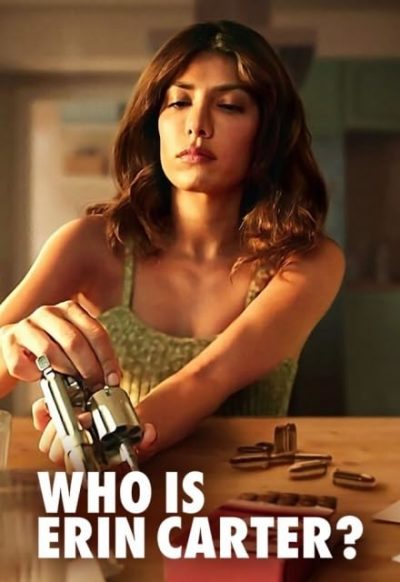 Turns out, Erin has a past, and the publicity resulting from her impromptu heroism brings it to visit. She finds herself embroiled in murder, organized crime and police corruption, as well as more normal familial drama, such as neighbourhood jealousy and whiny pre-teen nonsense. One of the seven 45-minute episodes is entirely in flashback (unexpected Jamie Bamber!), explaining the reason she changed her identity and moved to Spain, as well as why those from her history are keen to catch up with her. Even the spectacularly unobservant Jordi begins to realize that his other half is not quite as claimed. Her original explanation of a relapse into alcoholism doesn’t exactly explain all the sudden absences, injuries and unusual behaviour Erin is now exhibiting, as she tries to manage the escalating situation.
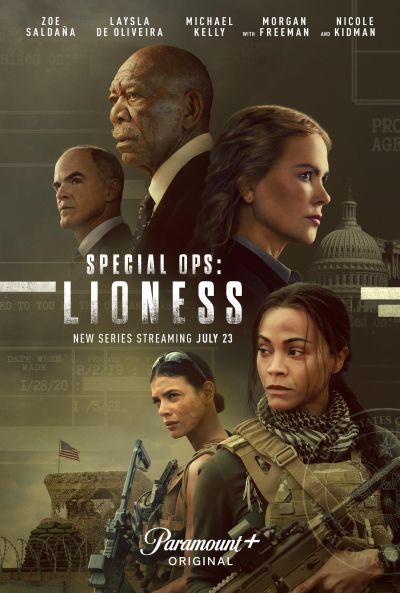 If 2023 has been underwhelming on the theatrical front (to put it mildly), the various streaming services have certainly had no shortage of entries to keep us occupied here. This one comes to us from Paramount+, and stars Saldaña – already known around these parts, most likely for
  To be honest, it’s more character- than action-driven overall, yet that’s its strength, since it does a great job of creating people who feel “real”. Nobody here is perfect: everyone has flaws, and struggles to cope with life’s ups and downs. Maggie is the focus, having to operate in an era when casual disregard for a woman’s talents was the norm. Not least by her Scottish colleague, Bob Croft (Gwaspari), though he eventually came to appreciate her many talents, such as Forbes’s fierce devotion to justice. Fortunately, her boss, Detective Chief Inspector Bill Russell (Marlowe) always had her back, even if his approach means cutting her no slack either. But every episode seemed to have one or more great performance, taking advantage of the vast pool of top-tier British character actors.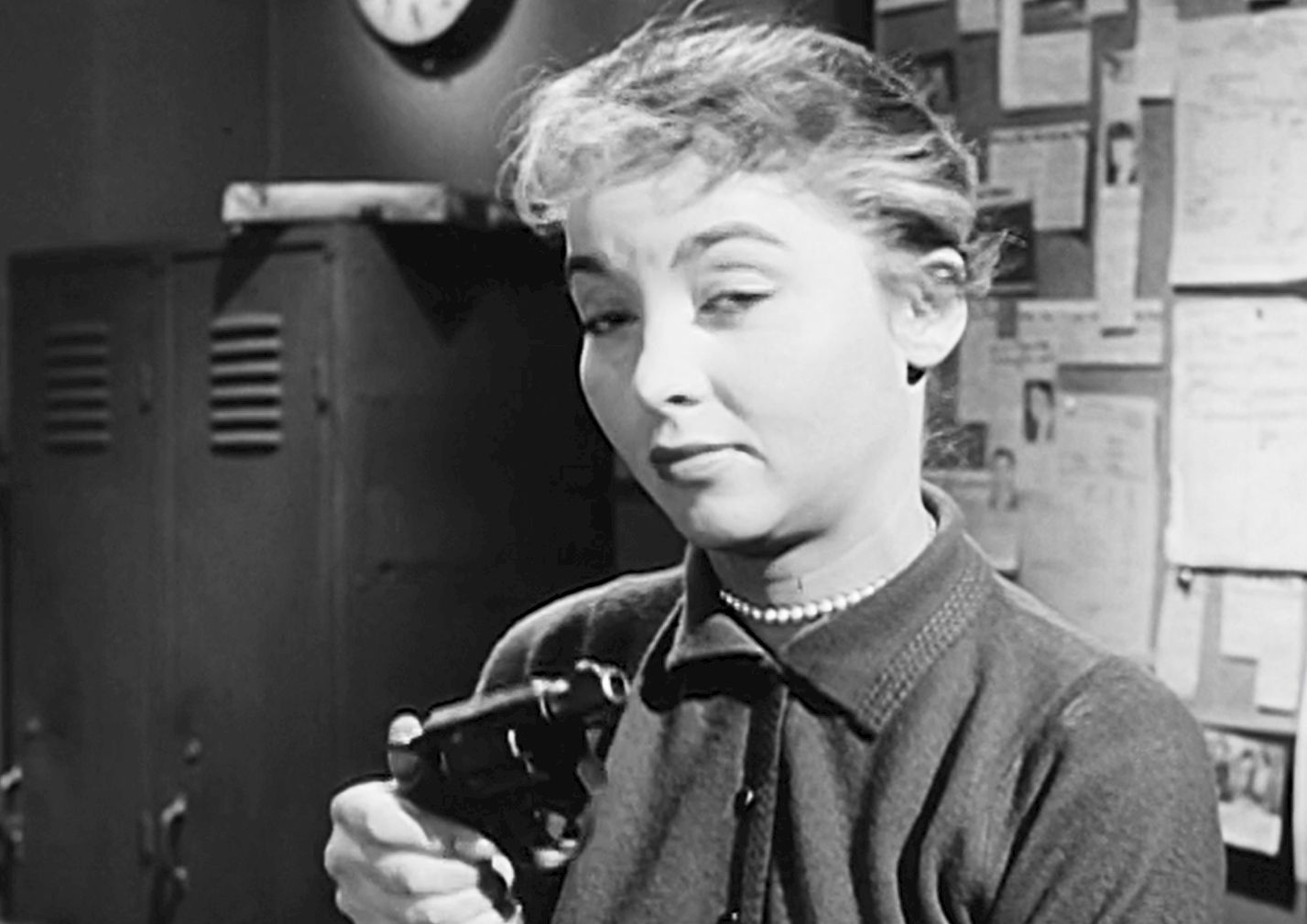
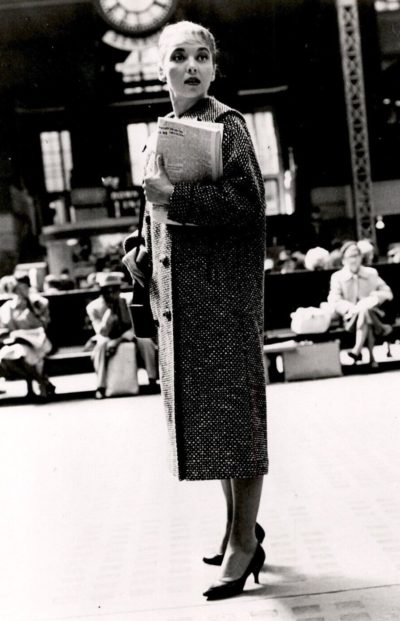 With a lot of voice-overs, the style feels reminiscent of Dragnet, which had been a very popular show for most of the fifties. Each episode opens with a stern reminder: “Presented as a tribute to the Bureau of Policewomen, Police Department, City of New York,” and centre on the cases worked by Patricia “Casey” Jones (Garland). As the title suggests, most of them involve Jones going undercover in some guise. That covers an extremely broad range of assignments, from a photographer to a junkie, a nurse to a blackmailer, a high society girl to a prisoner. However, some of the episodes do not require such subterfuge, though there is a tendency for these crimes she is given for investigation to be fairly gynocentric, e.g. trying to find a delinquent father.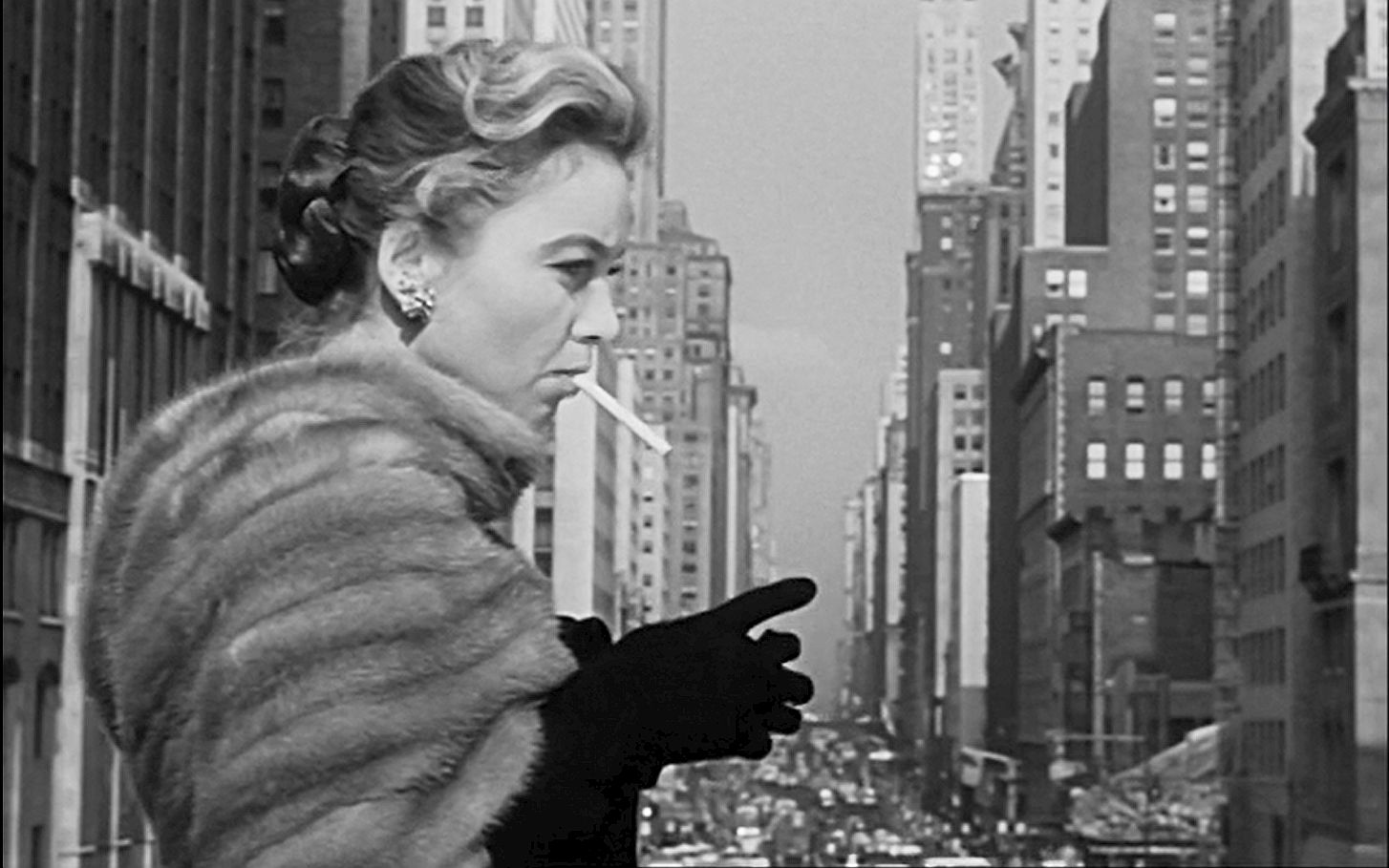
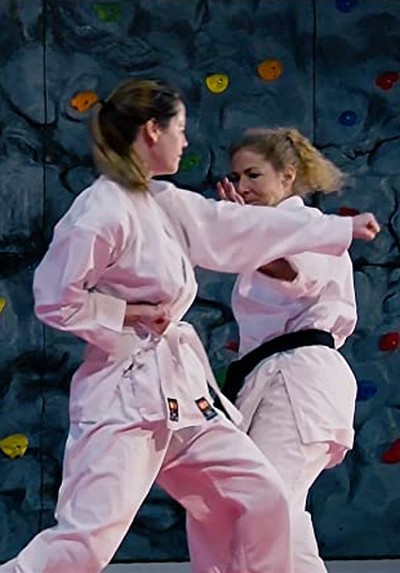 Firstly, I’m not quite sure whether this is a movie or not. The IMDb lists it with a running time of 98 minutes, but Tubi had it as 4 x 25-minute episodes. I’m guessing the former is just a compilation of the latter, it works about the same either way. The title translates as “The way of the empty hand”, and the emphasis here is very much on the first part: the journey. The heroine is Nicki Wright (G. Niebauer), who has barely got out of rehab for alcohol problems, when she gets involved in a brawl, after seeing a woman being assaulted by a man. Her mother had had enough of dealing with Nicki’s taciturn BS, and dumps her on her father, Cliff (D. Niebauer).
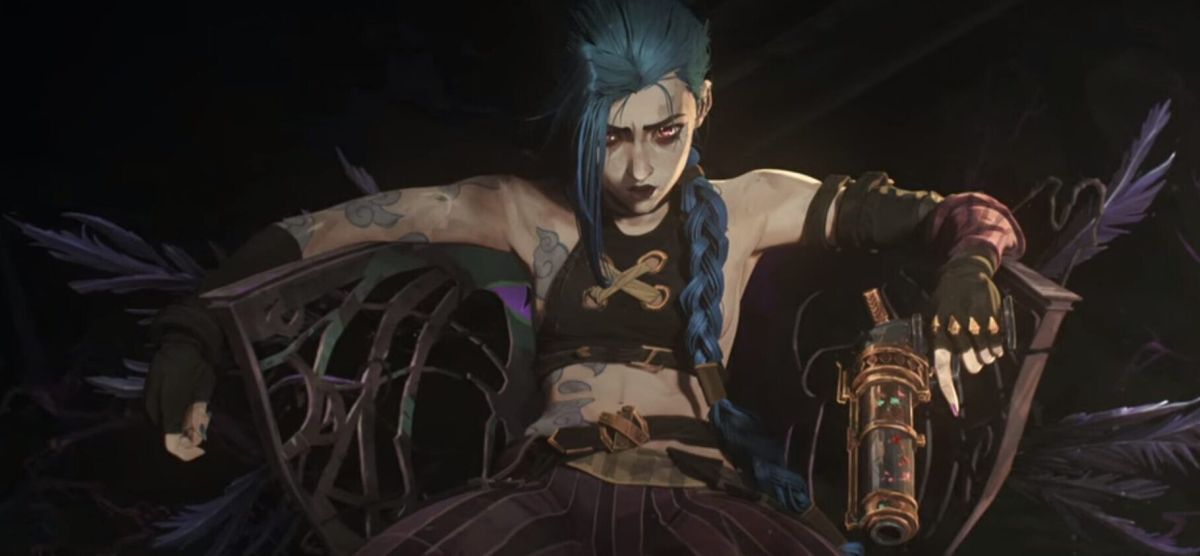
 I’ve never played League of Legends, but the good news is, you don’t need to, in order to enjoy Arcane. While that may provide some extra depth, it works perfectly well on its own. There is a degree of over-familiarity with the high-level scenario, which is Generic Fantasy Plot #3. Per Wikipedia’s premise, “Amidst the escalating unrest between the advanced, utopian city of Piltover and the squalid, repressed undercity of Zaun…” Yeah, it’s class war time again, cut from the same basic stamp as