




★★★½
“Revenge has never been so… messy.”
 This begins with a caption detailing the horrendous number of gun deaths annually in Brazil, including several thousand per year in police actions. Given the synopsis, I wondered how the film was going to reconcile this with its own subject – would the answer to gun violence be… more gun violence? The answer is, the film doesn’t really bother to try, instead embracing the contradictions in a way that permits no logical conclusion. Indeed, it fails to offer one. The original title translates as Barbaric Times – Act I: Revenge Therapy, hinting at more to come – this explains, if not excuses, the abrupt and unfinished ending.
Carla (Abreu) is a happily married attorney, until her daughter is shot during a botched street robbery. This sends her spiralling down into an increasingly dark place, as it becomes clear there will be no conventional closure, the case simply being one of too many for the authorities. A self-help group doesn’t, and nor does mercenary vigilante justice, the operative in question believing one dead thug is as good as any other. Her husband (Mello) leaves Carla as she won’t let go, and her spiral culminates in an attempt to shoot herself in the same spot as her daughter. Yet this proves a potential turning point, Carla realizing only one person can take revenge for her. But how far up the chain should her quest for vengeance take Carla?
It certainly gets you into the head of its heroine, on her descent into psychological hell. The refusal to take a stance regarding the morality of her position is admirable, and I found myself pulled first one way, then the other. I particularly enjoyed Carla yanking the rug out from under the pacifist proclamations of the self-help group’s leader (Lemmertz), by offering her the murderer of her parents on a plate. I suspect it’s this kind of moral equivalency which led to some of the more sniffy critical opinions in the film’s home country. Me? I acknowledge and respect the position that, yes, sometimes violence is the solution, thank you very much.
Aside from the abrupt ending, it does feel stretched quite thin, and the pacing is a little weird, with the narrative bouncing around in time. It surges with a pulse-pounding chase sequence through the streets after Carla encounters the criminal responsible. Then it circles with a notable lack of aim or purpose for extended periods, before reeling you back in with a change of direction. The overall impact is positive, and occasionally shocking, such as the discovery that in Brazil, buying a car involves casually deciding the degree of bullet-proofing you want. Bernstein intends it to be the first in a trilogy about violence in Brazilian society. On the strength of this, I hope he gets the chance to make further installments, despite clearly being more interested in asking hard questions than providing difficult answers.
Dir: Marcos Bernstein
Star: Cláudia Abreu, César Mello, Júlia Lemmertz, Alexandre Borges
a.k.a. Tempos de Barbárie – Ato I: Terapia da Vingança
 Interestingly, this is based on a somewhat true story, written by Raquel Santos de Oliveira. She comes from Rocinha, one of the most notorious slums in Rio, where she grew up on the streets. “By 11, I was already carrying a .38 revolver,”
  I’ll treat these two seasons as one entity. Indeed, there’s a case to be made that you could include
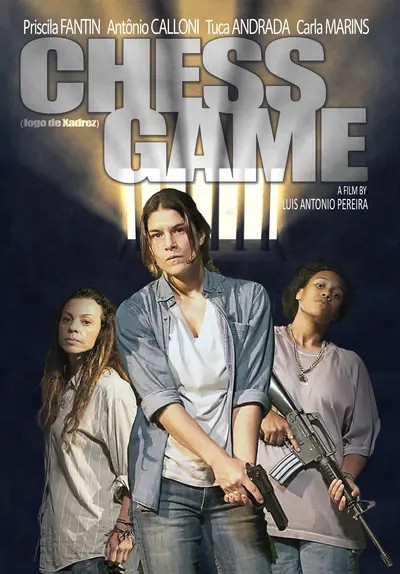 I had to work quite hard to see this: while it is on Tubi, the subtitles there were only in Spanish, and so not much help (I’m still at the “Donde esta la biblioteca?” level). Fortunately, it then turned up on Vudu, and I bravely made my way through their crappy interface and frequent adverts to bring you this review. It was worth it. This is a solid slice of women-in-prison action/drama from Brazil, though perhaps less exploitative than I expected (especially given the country’s history in the sub-genre!) . I mean, Marins is a former model in Brazillian Playboy, so you’ll understand I had… certain expectations. Fortunately, the rest of the movie proved more than adequate to hold my attention.
  The above odd combination is actually a fairly accurate assessment of what you have here. It’s a Yakuza action-thriller… but rather than being set in Tokyo or Osaka, is relocated to the Brazillian city of Sao Paolo. As an introductory credit helpfully informs us, this has the largest Japanese population of any city outside Japan. The story concerns two separate people’s quests for their pasts, which (to absolutely no-one’s surprise) turn out to be intertwined. One of these is Akemi (MASUMI), who as a young child was the sole survivor of a 1999 massacre of her Yakuza family back in Japan, was subsequently spirited away by allies and is now living in Brazil. The other is Shiro (Rhys-Meyers), an amnesiac who wakes up in hospital with no clue as to how he got there or his identity, except for a Japanese sword.
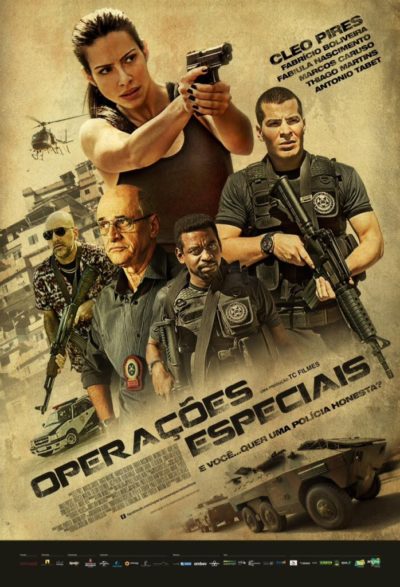 The Brazilian special police unit, known as BOPE (Batalhão de Operações Policiais Especiais) have a ferocious reputation for a hard-edged approach to its work. This is, likely, necessary for surviving the favelas (slums) of Rio in which they operate, going up against heavily-armed drug dealers. But with this also comes a “by any means necessary” approach, which has come in for criticism. They’ve been the topic of films before, most notably the incredible Elite Squad, which is an all-time classic of action cinema (and removed any chance of us attending the 2016 Olympics). It’s into this obviously macho environment, that rookie policewoman Francis (Pires) is dropped, and has to make her way.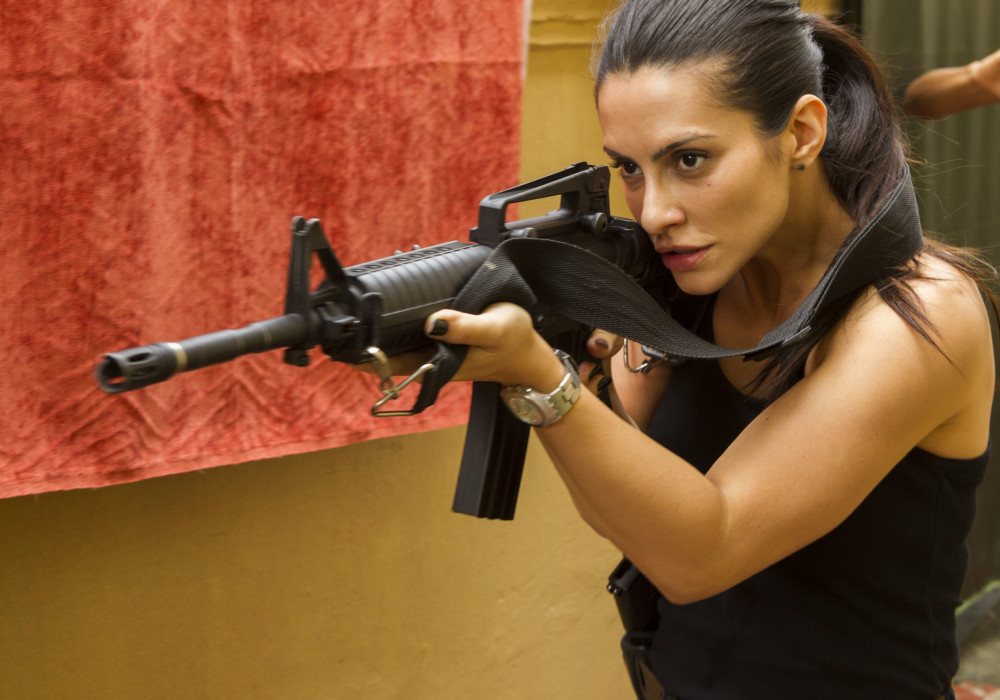
 This Brazillian-shot entry has a lot of good ideas, and some excellent moments, but comes up short with a script that borders on the incomprehensible. For example, in the middle of the film, the hero and heroine are both shot with tranquilizer darts – but no subsequent mention or explanation of this ever appears. This kind of sloppy plotting plagues the movie; it’s almost half-way through before the basic story becomes clear.
 There’s lots to appreciate, not least the actors. As opposed to many films, Hagen here actually looks like she could kick your ass, and the flashback fight sequence is excellent – I’d like to have seen more of that, and all the battles are well staged and shot. While Perry is somewhat bland, he’s effective in action; Richardson is a B-movie veteran for almost two decades (Hollywood Chainsaw Hookers, Attack of the 60-foot Centrefold, etc.), and has a nice, world-weary air here. But Putney (left) is perhaps the best find as Daniel’s gun-toting sidekick, Jackie; the final scene between her and her boss is fabulously intense. And there are other cool little aspects, in things like Daniel’s henchmen.