



★★★
“Less a damp squib than expected.”
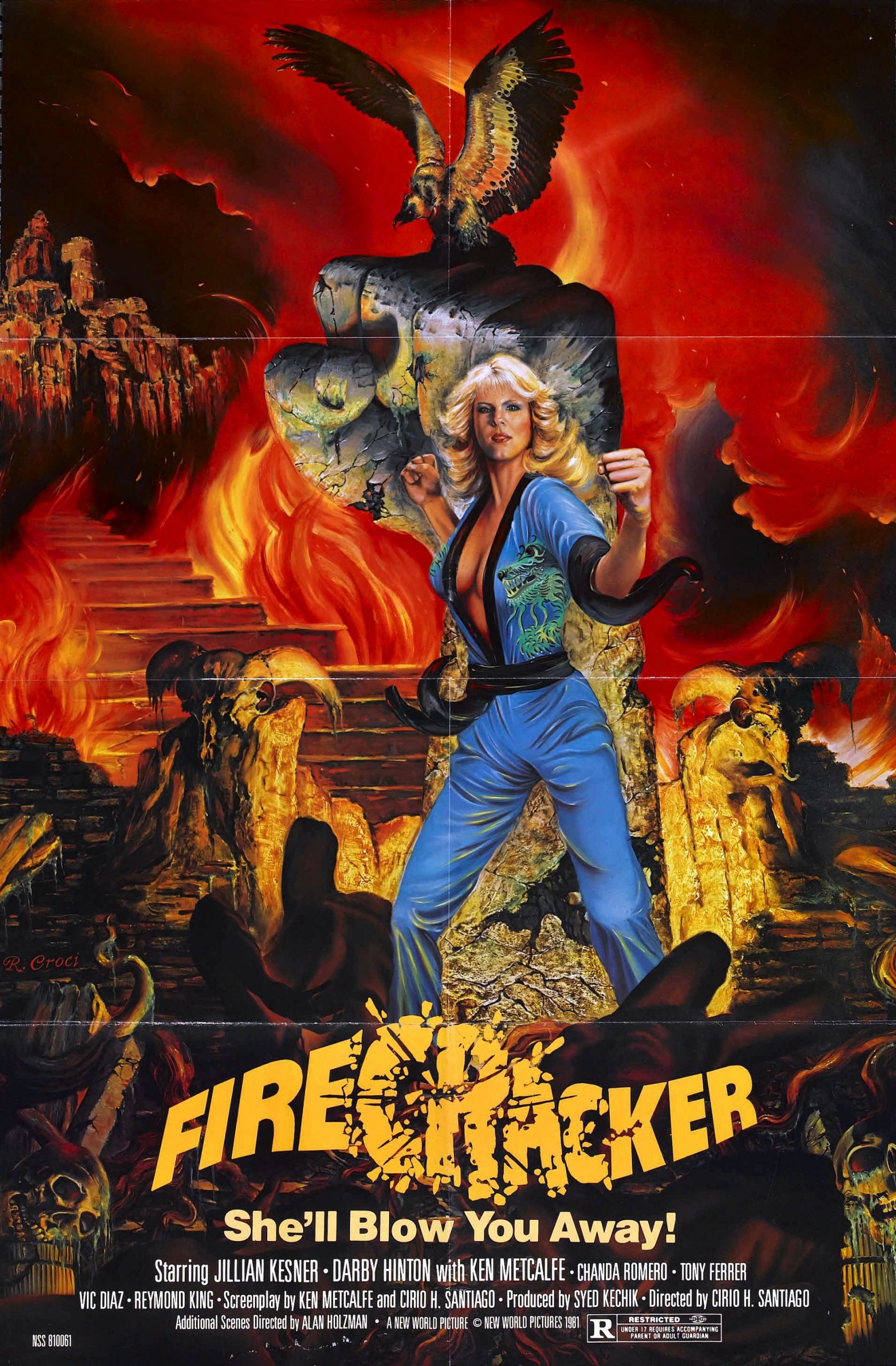 Admittedly, I did have to pause this five minutes in, because I had a strong sense that I’d seen it before. Turns out that wasn’t the case, I was just confusing it with another Cirio Santiago movie. There are quite a few candidates, but I think it was most likely Angel Fist. For both films feature blonde Americans, going to the Philippines in search of an errant sister, and have a kung-fu scene in which the heroine’s clothing proves optional, if you know what I mean and I think you do. So confusion is understandable.
The heroine here is Susanne Carter (Kesner, who ended up becoming well-known as an Orson Welles historian!), whose sister has vanished after getting too close to a criminal gang run by Erik (Metcalfe). They are nothing if not broad in their empire, which as well as the usual drugs, prostitution and gambling, also include martial arts death matches, put on in what appears to be a supper club. Dinner and a show, as they say. This is convenient, since whaddya know, Susanne has a sixth dan black belt in such things. She uses her skills to impress Erik’s similarly kung-fu able henchman, Chuck Donner (Hinton) and get close to the operation, seeking the truth about her sibling’s fate. However, turns out there is already a police operation investigating the gang, and Susanne’s presence puts that undercover case at risk.
The martial arts here are… not great. Kesner just about reaches decent on occasion, although there seems to be clear doubling going on for the more athletic moments. However, the film certainly has no shortage of action, and some of the supporting cast are good enough that the film passes muster as overall entertainment. Easily the greatest sequence is the one where Susanne is pursued on her way home by two street thugs, and through a series of misadventures, her costume is steadily reduced, going from an evening dress and high heels to, by the end of the fight, just a pair of panties. I can honestly say I have never previously seen anyone’s bra be cut open with a scythe in the middle of a fight.
That sequence, along with the villain’s demise – bamboo stakes get shoved into both his eyes simultaneously! – and the quite glorious poster (click on the image to see it full size), are sufficient to make me willing to overlook most of the film’s obvious flaws. This is very much the kind of thing meant, when people talk about the eighties being a golden age of action movies on VHS. This is certainly not a good movie, fun though it is to see the likes of Diaz – an almost ever-present sidekick, who was to the Philippino film industry, what Michael Ripper was to Hammer Films. Yet if I’d stumbled across this for one of my all-night video sessions during the decade, it would have left me thoroughly satisfied, having given me everything I was looking for.
Dir: Cirio H. Santiago
Star: Jillian Kesner, Darby Hinton, Ken Metcalfe, Vic Diaz
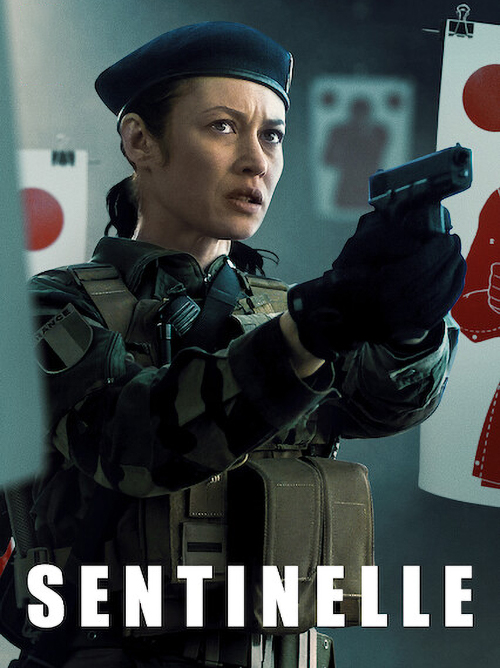
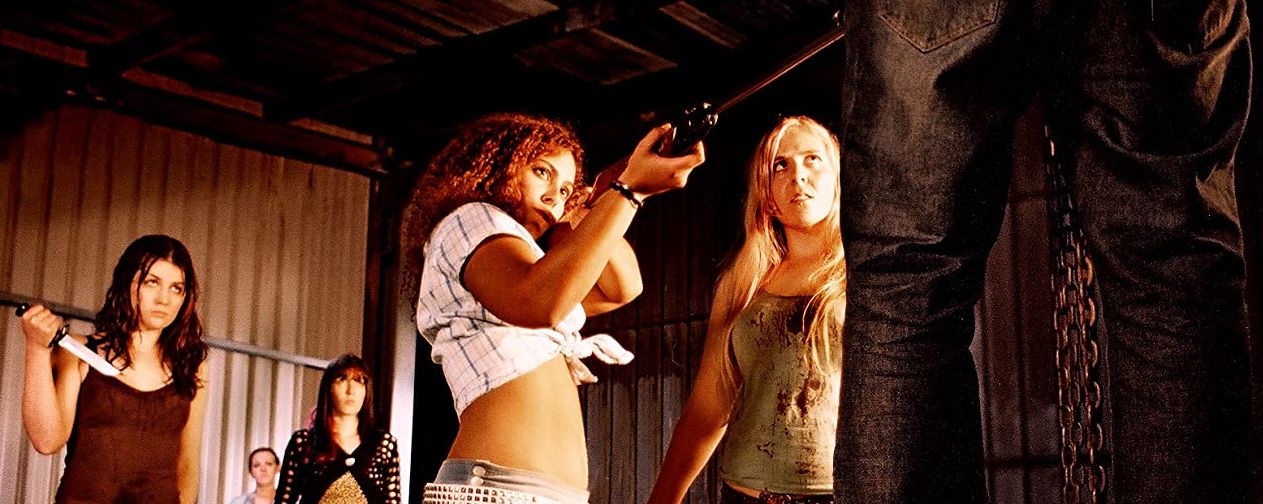
 Natalia Nicolaeva in a 19-year-old, living with her parents on a farm in Transnistria, which I imagine most people would be hard-pushed to find on a map. Per Wikipedia, “it is a breakaway de facto state in a narrow strip of land between the river Dniester and the Ukrainian border that is internationally recognized as part of Moldova.” Now you know. She lets her friend, Sonia, convince her into taking up a job offer overseas which – probably inevitably – turns out to be the gateway to them becoming the victims of sex traffickers, imprisoned in a Turkish brothel. Natalia manages to escape, though pays a heavy price, and the man in charge of the gang, Goran Zigic, has not forgotten her either.
 ★★★½
★★★½ Maybe I’m getting too old for this kind of thing. Perhaps there was a time in my callow youth when I would have been grateful for the light-to-moderate amount of gratuitous nudity which this contains. Now, though? Its flaws overwhelm any such merits. Or maybe it was the fact that I watched this while dozed up to the eyeballs on DayQuil, and frankly, coughing up phlegm proved to be a more satisfactory pursuit.
 After an incident where she shoots dead a woman armed only with a toy gun, Marie (DeCianni) quite the police force to become a housewife. However, her husband, Barry (Spadaro), has some dodgy friends, in particular, Nadi (Regina, who also co-wrote this), a man with ties to organized crime. Barry falls behind on payments, and an unfortunate car “accident” befalls him: a recent large life-insurance policy named Nadi as the beneficiary. It’s all very shady, as Marie’s old police captain (Session) admits. However, there is just not enough evidence for the authorities to take action. That’s not an issue for Marie, however, who decides to take revenge for the loss of her husband, against Nadi and his associates.
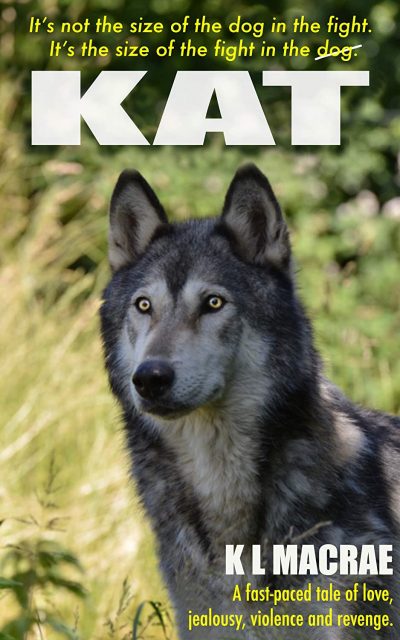 Firstly, I’m still trying to figure out the relevance of the cover (right). With a heroine named Kat, why is there a dog pictured? It’s not as if she even owns one at any point. The “size of the fight” line… well, tenuous at best. I should probably have listened to my instincts and skipped this frankly implausible tale, about a teenage girl who is smart, attractive and a black-belt martial artist with 34E breasts. Yet she ends up having to get work as a stripper, a job at which she is naturally brilliant (thanks to adopting a pseudo-Xena persona), in order to keep her alcoholic mother out of debt. She breaks the arm of a particularly unpleasant customer, Alex, an act which gets her the attention of Alex’s business partner. He runs McKenzie Personal Security, and offers Kat a job as a trainee bodyguard.
 Becky (Wilson) is the quintessential troubled teenager. Since her mother died, she has become increasingly estranged from her father, Jeff (McHale, replacing the original choice, Simon Pegg, who had to drop out due to scheduling conflicts), not least because of his new girlfriend, Kayla. Dad arranges a weekend away for everyone at the family cabin to try and repair things. However, relationship problems rapidly become the least of everyone’s concerns. For a quartet of escaped Aryan Brotherhood convicts, led by Dominick (James, going completely and effectively against type), have turned up, seeking a key they had hid on the property. Not too happy to find an inter-racial family, they capture everyone except Becky, who had stormed off in one of her huffs.
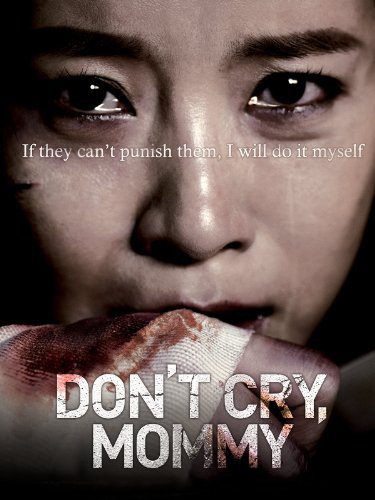 I say that, since this Korean film appears to have been at least a partial inspiration for not one, but two Bollywood films which were recently reviewed here: