



★★★½
“The real female Ghostbusters…”
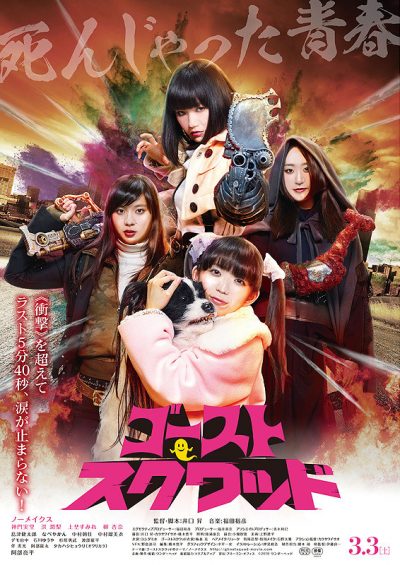 I’ll confess, the headline above is a bit click-baity. This is perhaps closer to a female version of The Frighteners, the early Peter Jackson film in which Michael J. Fox could see dead people, and had to learn to work with them. The conduit in this case is Rika (Yanagi), a young woman who has been able to see ghosts since a young age. But an encounter with a trio of ghosts, all murder victims who are seeking revenge on their killers, opens a whole new realm. For, it turns out, whenever Rika is in a life-threatening situation, the spirits can take physical form. They can also draw energy from her, which can be used to create weapons, which range from the merely strange (the “meat hammer”) to the bat-shit insane. None more so there, than that of Akari (Mikado). She has a tendency to go into puppy mode when stressed, which involves her becoming… a bit licky. So inevitably her weapon transforms Akari’s hand into Grudge Dog, capable of ripping the face off her opponent.
For I didn’t yet mention, the director is also responsible for some of the finest examples in Japanese splatter, perhaps peaking with The Machine Girl (which may well have informed one of the weapons here, as shown in the trailer). But also including a hand in Mutant Girl Squad and Robogeisha. This is relatively restrained, though the key-word there is “relatively.” There’s certainly the same degree of lunatic inventiveness at work, although the arterial spurting is considerably lower pressure than you’d expect: the comparison above to early Peter Jackson is entirely deliberate. For the most part it’s goofily endearing rather than outrageously offensive, and quite well thought out. Even if Rika is more a pipeline for vengeance, she tries to act as the group’s moral compass, for example refusing to let the ghosts take vengeance on the daughter of one culprit.
There are still a few scenes which seem a bit sleazy. Not least, that the energy transfer mentioned above is lip-to-lip. Basically, it’s a shallow excuse for some lesbo makeout sessions, which feels at odds with an approach which sometimes seems closer to Disney than extreme gore. And there’s some dancing in underwear which made me feel mildly uncomfortable; it seemed gratuitous, even by Iguchi’s standads. I was also surprised by the way the vengeance largely ended up compacted into a single battle; if this had been paced throughout the film (like Kill Bill), it might have been more effective and enjoyable. However, I still watched the vast bulk of this with a grin on my face, and laughed out loud more than once. It perhaps helped that, going in, I didn’t know who the director was; indeed, the poster above was about all I had to go on. My expectations were closer to a light comedy with action elements, and the imagination here definitely came as a pleasant surprise.
Dir: Noboru Iguchi
Star: Anna Yanagi, Sumire Ueno, Minori Mikado, Yuni Hong

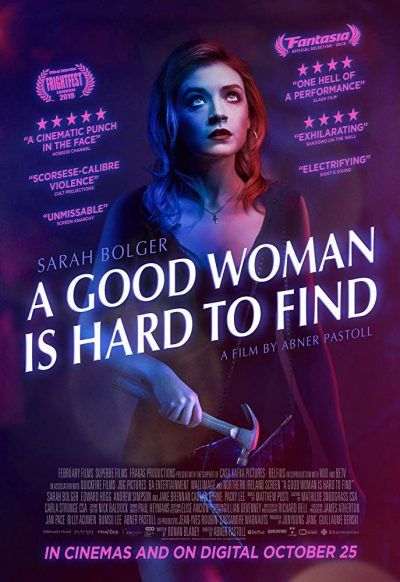 2020’s first seal of approval goes to this uber-gritty Irish film, starring Sarah Bolger, whose most familiar to us from Into the Badlands. While her GWG creds there are overshadowed by the likes oE Emily Beecham, safe to say Bolger makes up for lost time here. She plays single mother Sarah Collins, who is struggling to come to terms with the recent, unsolved murder of her husband. Barely managing to make ends meet, her life is upended when entry-level criminal Tito (Simpson) breaks in, seeking sanctuary. He has stolen some drugs belonging to top boss Leo (Hogg), and offers Sarah a cut of the proceeds if she’ll act as his safe-house. Very reluctantly, she agrees. Needless to say, it doesn’t go as they plan.
 Coming in on a wave of hype, e.g. “The Best Indie Science Fiction Movie Since Moon“, I guess I should have listened – because I didn’t think Moon was
 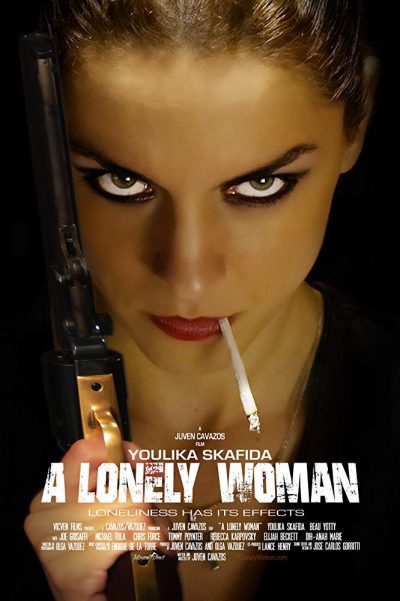 It’s one of those weird coincidences. I watched two action heroine flicks last weekend and both, while American, starred actresses who were born in Greece. Really, what are the odds?
 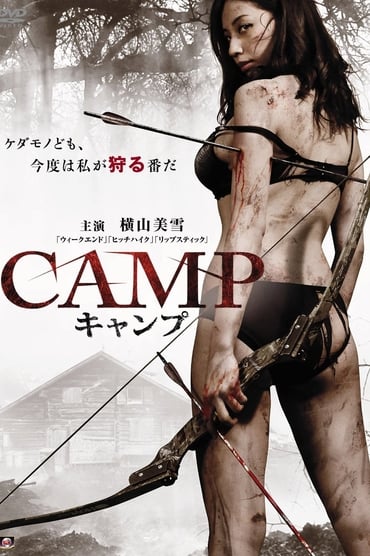 Kozue (Yokoyama) and her younger sister Akane (Momomiya) are driving through the countryside when their car breaks down, near a closed camp-ground. Closed – but, unfortunately for them, not deserted. The well-mannered young man whom they first encounter turns out to be a lure, who brings the two women into the grasp of a pack of psychopaths. The nicknames these weirdos have, largely sum up the extreme peril of the situation for the siblings: Hypo, Pyro, Copro, Necro and Thanatos. It turns out they were all pals during an enforced stay in a nearby mental hospital. When that shut down suddenly (in a way explained later on), they opted to hang around, forming some kind of sexually-deviant collective. Kozue and Akane pretty much represent a theme-park for these perverts.
 I should probably start by providing some background the film omits – likely because the intended Indian audience were well aware of it. In 2012, a notorious gang-rape took place in Delhi, the victim subsequently dying. Of the six attackers, four were sentenced to death and one committed suicide in prison – but the sixth, being a juvenile, could only receive a maximum sentence of three years. This loophole appalled many, including two journalists depicted in this film, Jyothi (Nivedhitha) and Divya (Karagada), who begin a campaign to revise the law.
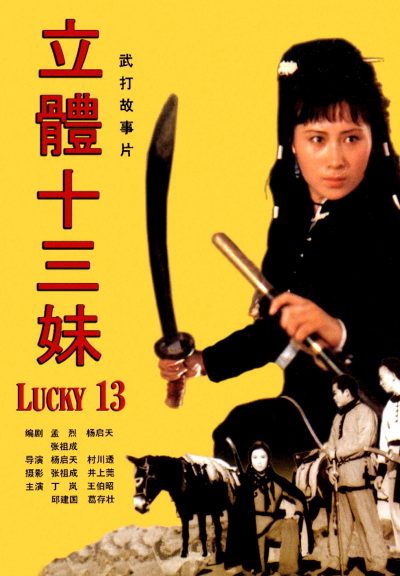 Despite a mangled title, what you have here is a straightforward tale of vengeance – and its attempts to diverge from that narrative are when the film is at its least interesting. Evil general Ji Xian Tang kills the parents of Ho Yu Fung (Ding): well, I suppose technically he only kills her father, her mother committing suicide by the corpse. In some remarkably unsubtle foreshadowing, Yu Fung is told, “This broadsword is our family heirloom. Our hope for vengeance is in your hands.” Given this, it’s no surprise she escapes with the help of a brave sacrifice from a servant, and becomes the pupil of a kung-fu master.
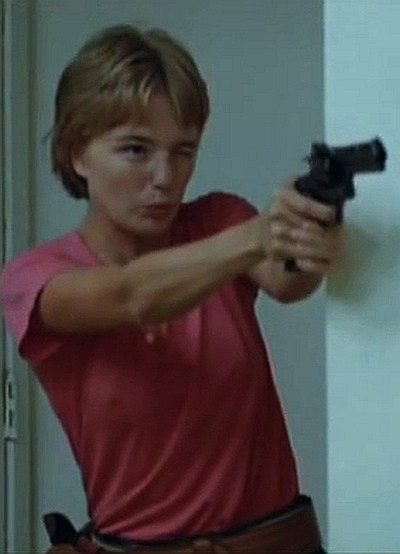 Either by intent or accidentally – and we’ll get to that in a moment – this manages to be both an indictment of and an advert for, American gun culture. That’s quite a spectacular achievement, and it’s perhaps no coincidence that the writer/director is British, so brings an outsider’s balanced eye to a topic that’s often acrimonious in the States. Kathleen Sullivan (Young) is a teacher who has just moved from Boston to a small Texas town. She falls for local attorney Larry Keeler (Day), though is only interested in friendship, not a significant relationship. The initially-charming Larry eventually won’t take no for an answer, and date-rapes Kathleen. However, the circumstances and her attacker’s local reputation mean she gets no satisfaction from the police. The meek and mild Kathleen decides to take matters into her own hands, buying a gun and taking up combat shooting – at the very same club Larry frequents – with the aim of meting out her own brand of justice.
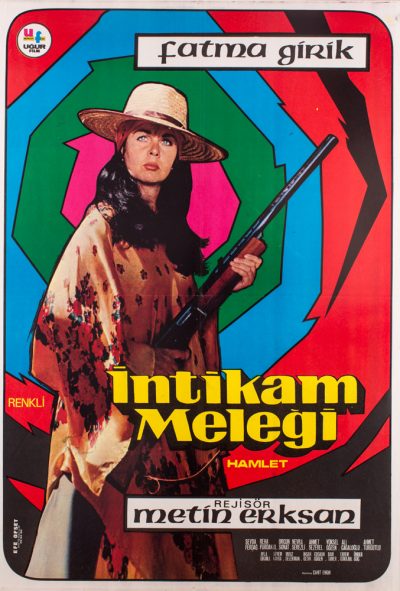 Okay, the above is shamelessly lifted from The Last Action Hero, in which there’s a spoof trailer for Arnold Schwarzenegger as Hamlet. But it applies just as much to this, which is remarkably progressive considering its origins; 1977 Turkey was not exactly in the forefront of women’s liberation. Yet here we are, with a modernized and severely truncated version of Shakespeare’s story. This runs 86 minutes, compared to 242 minutes for, say, Kenneth Branagh’s Hamlet. But it hits the main spots, even if only in passing: for instance, Hamlet’s soliloquy shows up, though “Alas, poor Yorick” gets short shrift.
 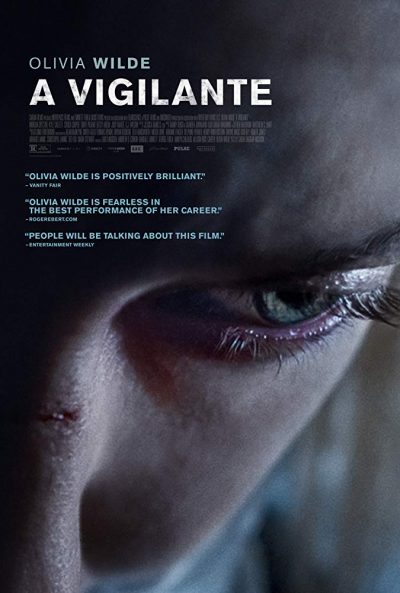 Sadie (Wilde) has escaped from an abusive relationship with her husband (Spector), but at a terrible cost: the death of her son. In an effort to come to terms with her grief, and make use of the survivalist skills forcibly imposed on her, she becomes a vigilante. Responding to coded messages left on her phone, she travels around to confront abusers and prove that there is someone tougher, willing to stand up for the victims against them. But this doesn’t give Sadie the closure or peace that she seeks. Before she can help others, she’s first going to have to help herself, and confront the man who made her what she is.