★★★★½
“The wind rises.”
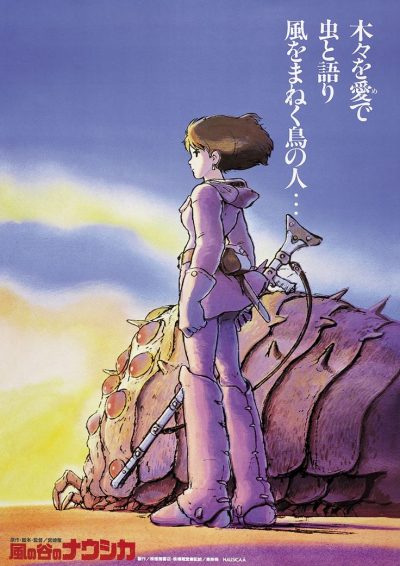
 After the enormous critical, if not commercial, success of Lupin III: Castle of Cagliostro, Miyazaki was commissioned to create a manga series for Animage magazine, with a potential film adaptation attached. Publication began in early 1982, but it would take a dozen years, albeit of intermittent publication, before that story was complete. When the series’s popularity among Animage readers was established, work began on the film adaptation, covering the early portion of the manga. Since this was before Miyazaki’s own Studio Ghibli was founded, an external company, Topcraft, were commissioned to create the animation. The budget was only $1 million, with a mere nine-month production schedule leading up to its release in March 1984.
It takes place on a post-apocalyptic world, a thousand years after the near-mythical “Seven Days of Fire”, pushed humanity to the edge of extinction. Since then, nature has taken over much of the planet, covering it in an expanding toxic jungle where the very air is poisonous in a few minutes. It is populated by equally lethal creatures, at the top being the “ohmu”, gigantic insectoids capable of destroying anything in its path. The human race is reduced to clinging on to the fringes, such as the small kingdom of the Valley of the Wind, in which a never-ending breeze keeps the toxins at bay. There, the king’s daughter, Nausicaä (Shimamoto), is one of the few brave enough to enter and explore the jungle, and has developed a mutually respectful relationship with its strange inhabitants.
The balance is destroyed when a plane from the kingdom of Tolmekia crashes. In its cargo is an enormous “God Warrior” – one of those which carried out the Seven Days of Fire – recently dug out from where it had been buried. Tolmekia and their rivals, Pejite, are wrestling for control of the warrior and the power it wields, and the crash drags the Valley of the Wind into their conflict. In particular, Princess Kushana of Tolmekia (Sakakibara) intends to use the warrior to destroy the jungle and restore mankind’s dominion over the planet. Nausicaä is ferociously opposed to this scheme, especially after discovering that the jungle is actually purifying the atmosphere and soil, absorbing the toxins from the apocalypse. She’ll do anything to stop Kushana, including being willing to sacrifice her own life if necessary.
There’s a lot going on here, as you can see. It’s somewhat understandable why, when initially shown in the West (one of the first examples of anime to receive a theatrical release), 22 minutes was cut out, in order to market it as a children’s film, retitled Warriors of the Wind. The problem is, like almost all of the director’s work, it is not a children’s film. This is not a uncommon mistake – presumably based on them having a child as the central characters, and because they’re animated, which still largely equates to Disney in many people’s minds. But they’re more about that age capturing an innocent and idealistic mentality. This is undeniably mature and thoughtful cinema. In just his second feature, and first original film, Nausicaä establishes several themes which would run through almost all of Miyazaki’s future work, in varying degrees: the joy of flight, concern for the environment, and a strong female presence.
 Miyazaki’s father ran an airplane parts company in World War II, and even his film company, Studio Ghibli, was named after an Italian plane. Almost every one of his movies includes a flying sequence, and Nausicaä certainly has plenty of them, whether its the heroine skimming across the desert on her one-person glider, or gigantic warships looming, threateningly, in the sky. Despite the imperfect animation, a result of the limited resources, the sense of wonder and awe is undeniable. If you don’t want to take to the skies after seeing these scenes, you might want to check for a pulse. Similarly, there’s no denying Miyazaki is firmly on the side of nature, with his heroine believing all life to be sacred, and humanity deserving no special place above any other species. If mankind can’t live in harmony with the world, the movie suggests, it’s mankind which needs to change. Bending nature to our will is always going to backfire.
But it’s with the depiction of womankind that the film truly succeeds. In Nausicaä and Kushana, you have two fully-formed characters that are not just among the best in animated film, they could stand beside the protagonist and antagonist of most live-action movies. The latter, in particular, demonstrates Miyazaki’s skill at depicting those who would be flat-out villains in less nuanced films, instead being given motivation and depth. While you may not agree with Kushana resurrecting the God Warrior, you can understand what she is trying to accomplish. Her actions stem from a genuine belief that what she is doing is best for the future of mankind. She just has a military-industrial approach to that, in sharp contrast to the one emphasizing ecological science and harmony, preferred by Nausicaä. Interesting to note that, in the 2005 Disney English-language dub, Kushana was voiced by Uma Thurman.
The story here builds to a stellar climax, in which a massive herd of ohmu are lured into a stampede towards the valley, while simultaneously the God Warrior is unleashed by Kushana, to horrific effect. [The animation for the latter was done by a young Hideki Anno, who’d go on to become a master of the genre himself, best known for Neon Genesis Evangelion. In a 2006 Japanese poll, Evangelion was the only anime ranked ahead of Nausicaä as an all-time favourite] Our heroine puts herself in harm’s way in an effort to stop the carnage, and… Well, I won’t spoil it in detail; Miyazaki manages to pull off an ending which could easily have come off as contrived or ridiculous, and is instead emotionally satisfying. With even the Tolmekians forces humbled by nature, as environmental messages delivered by teenagers go, it’s certainly a great deal more effective than an angry Scandinavian shrieking “HOW DARE YOU!” at the audience.
Dir: Hayao Miyazaki
Star (voice): Sumi Shimamoto, Gorō Naya, Yōji Matsuda, Yoshiko Sakakibara



 The first volume in the Imp series, A Demon Bound, was one of the most entertaining books I’ve read of late. It told the story of Samantha Martin, the human vessel occupied by a demon “who has chosen to spend her life among us mortals, rather than in the underworld… largely because it’s more fun up here.” I was thus stoked to read the next two entries in the series, with Sam’s further adventures. She’d ended the series having been “bound” to an angel, Gregory, and in the subsequent parts, this is now causing issues for both of them. He is getting flak from his colleagues for his association with her, while she is experiencing unfamiliar emotions, such as loyalty and kindness.
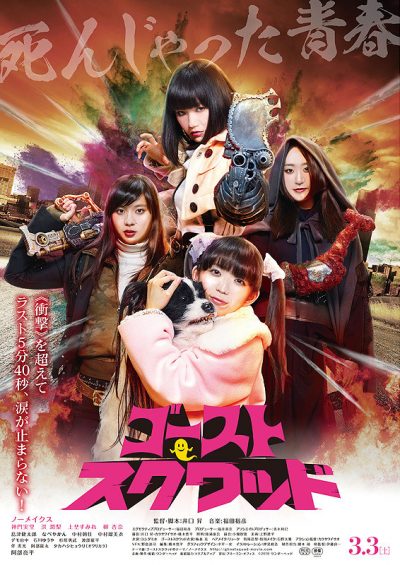 I’ll confess, the headline above is a bit click-baity. This is perhaps closer to a female version of The Frighteners, the early Peter Jackson film in which Michael J. Fox could see dead people, and had to learn to work with them. The conduit in this case is Rika (Yanagi), a young woman who has been able to see ghosts since a young age. But an encounter with a trio of ghosts, all murder victims who are seeking revenge on their killers, opens a whole new realm. For, it turns out, whenever Rika is in a life-threatening situation, the spirits can take physical form. They can also draw energy from her, which can be used to create weapons, which range from the merely strange (the “meat hammer”) to the bat-shit insane. None more so there, than that of Akari (Mikado). She has a tendency to go into puppy mode when stressed, which involves her becoming… a bit licky. So inevitably her weapon transforms Akari’s hand into Grudge Dog, capable of ripping the face off her opponent.
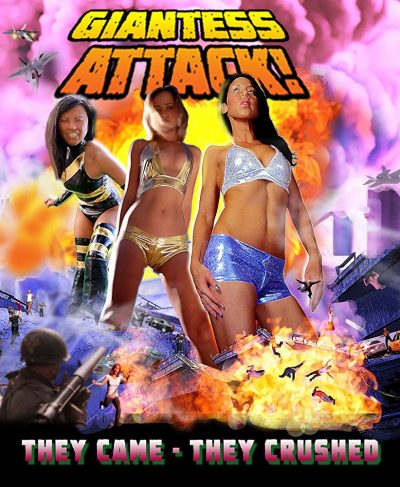 Diedre (Tacosa) and Frida (Riley) are the fractious stars of low-rent superhero show, Battle Babe and Combat Queen. When the series is canceled, they go on a bit of a binge, ended only by the appearance of two tiny aliens from Metaluna (Nguyen), who give the pair of very drunk Earth women devices that will turn them into Team Giantess Attack. These are intended to be used to rid the planet of evil. Needless to say, things don’t quite work out that way. The military, under Gen. Smedley Pittsburgh (Rowen), want to get their hands on this alien technology. But D+F won’t give it up and, instead, use it to go on the rampage and take revenge on those who previously wronged them.
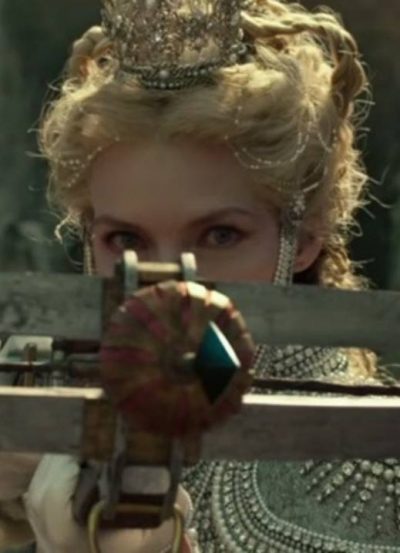 Dear god, the scenery in this is almost unutterably lovely to look at. It’s the kind of film which left me wishing I’d seen it at the cinema, even if I fear my head would have exploded at the beauty of it all. Right from the opening sequence, featuring an insane swooping shot which seems to last forever, it is just gorgeous. The final battle is so lush, a war occurring in a castle the approximate size of Bavaria, against a back-drop of exploding red-clouds made from fae genocide dust, it should be bottled and sold in the skin-care aisle.
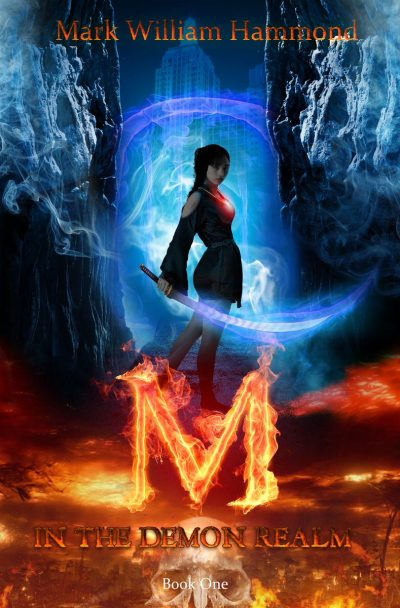 I feel a little uncertain about reviewing this, since it’s basically two-thirds of a single novel. Or maybe two connected novellas. Oddly, the three entries get longer as they go, starting at 110 pages, increasing to 160 for the second and finishing off at around 210. I’ve been waiting for the third and final part to show up on special offer for a while, but it hasn’t happened. The first two parts were somewhat intriguing, just not enough to convince me to pay full price. So I finally decided to publish and be damned. Wait and see its cost drop the week after this goes live…
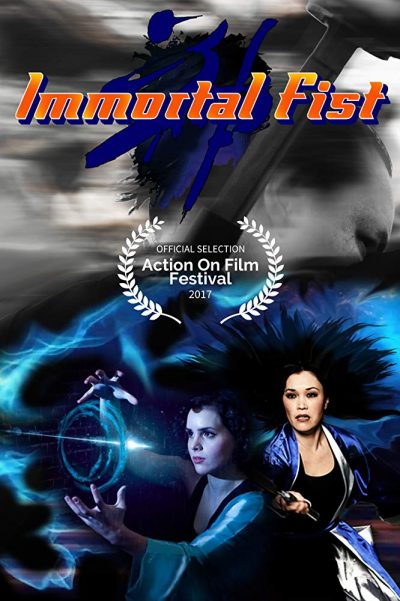 The above quote does suggest that the makers here appreciate how ridiculous the entire thing is. And that self-awareness may be the main thing which saves this from being largely cringeworthy. Just because you
  I was initially a bit concerned this was going to be a slightly-more horror oriented version of Harry Potter, based largely off the title. I needn’t have been worried. For at least the first two books, this is quite startlingly dark and on the razor’s edge. As for the third… well, we’ll get to it. The setting here is a world where Filipino shapeshifters called aswangs, which feed on the fear of their victims, are migrating across from their home country and through Alaska. Lined up to stop them, by any means necessary, are hunters; it’s a harsh and often brief occupation. To replace those lost in battle, the titular establishment exists on Kodiak Island, to train hunters – mostly members of families who have been in the bloody business for generations.
 Those opening two books keep the story going forward. In the first volume, Fear University, she learns to tap into the power her talent gives her; builds a relationship with the similarly-broken young hunter Luke, who is her mentor; discovers aswang saliva can make her feel pain; finds out who her father was; and has to go through a life-or-death test involving both her, and her best friend at FU, Sunny. The second, Killing Season, is a rather drastic change in approach, with Ollie, Luke and others sent north to Barrow for the winter break, when the aswang are most active. That was the location used for vampire action film 30 Days of Night, and serves the same kind of purpose here. However, it’s almost as much a whodunnit, with the large house which is the hunters’ base apparently home to a killer. Not helping matters: Max shows up in town.
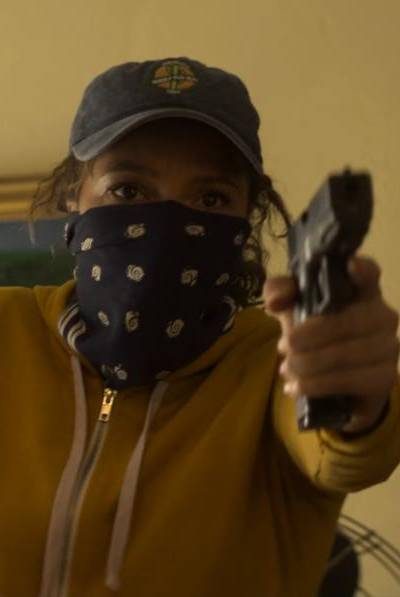 This occupies a rather odd middle-ground between a meditation on what it means to take a life, and a violent thriller. I’m not sure it manages to pull either off entirely successfully, yet some striking imagery helped sustain our interest. Katrina (Ejogo) is driving from Phoenix to Oklahoma City, with her young daughter, Clara (Pratt), to start a new life: it’s hinted that there may be an abusive partner in the rear-view mirror. The route takes her across the Texas Panhandle, and in an effort to avoid a traffic jam, she hits the back roads. This turns out to be mistake, as she first gets a flat, then Clara is bitten by a rattlesnake.
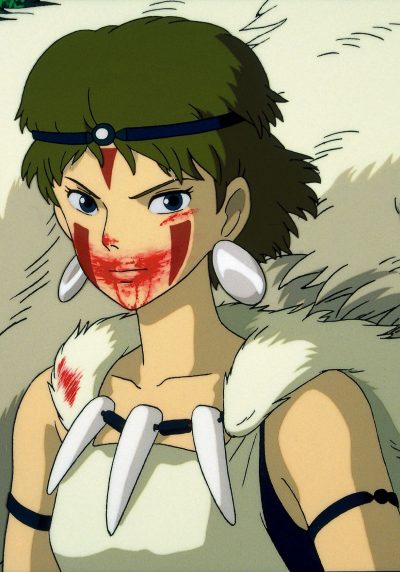 To some extent, this was the film which “broke” Miyazaki in the West, being his first feature to receive an unedited theatrical release in America. It wasn’t a huge commercial success, taking only about $2.4 million in North America. But it was very well-received, Roger Ebert listing it among his top ten films of 1999. It likely opened the door for the success of Spirited Away, which would win Miyazaki the Oscar for Best Animated Feature at the 75th Academy Awards. But if I’m being honest, I don’t like it as much as many of his movies. While there’s no denying the imagination and enormous technical skill here, it doesn’t resonate emotionally with me in the same way. I think it’s probably the central character, who is relatively bland and uninteresting, even compared to other characters in the movie.