



 ★★★★
★★★★
“God, faith, mayhem and a lot of blood”
 To be honest, I never read Boston Teran’s novel. I wasn’t aware of the story until this movie came out here on DVD – but then the book was also never released in my country. I’ve every intention to read it and have already ordered it in English. However, I can’t make any comparisons between the book and the movie adaptation, directed by Nick Cassavetes, son of John Cassavetes.
It seems that when Teran’s novel came out in 1999, it caused quite a stir in Americas crime literature circles. Most agreed about the literary quality of the book: it won several crime novel awards and was nominated for even more. At the same time, its dark outlook on life, as well as the strong violence, were criticized. Teran’s style has been compared to that of Hunter S. Thompson, Jim Thompson and Cormac McCarthy. The author himself, who writes many different sorts of novels, is seen as some kind of mystery: few people seem to know him personally and he doesn’t give many interviews. But maybe he is just not interested in being a public personality (and why should he?), constantly standing in the limelight as some “star authors” do. The movie rights were quickly bought by Hollywood and Nick Cassavetes planned an adaptation.
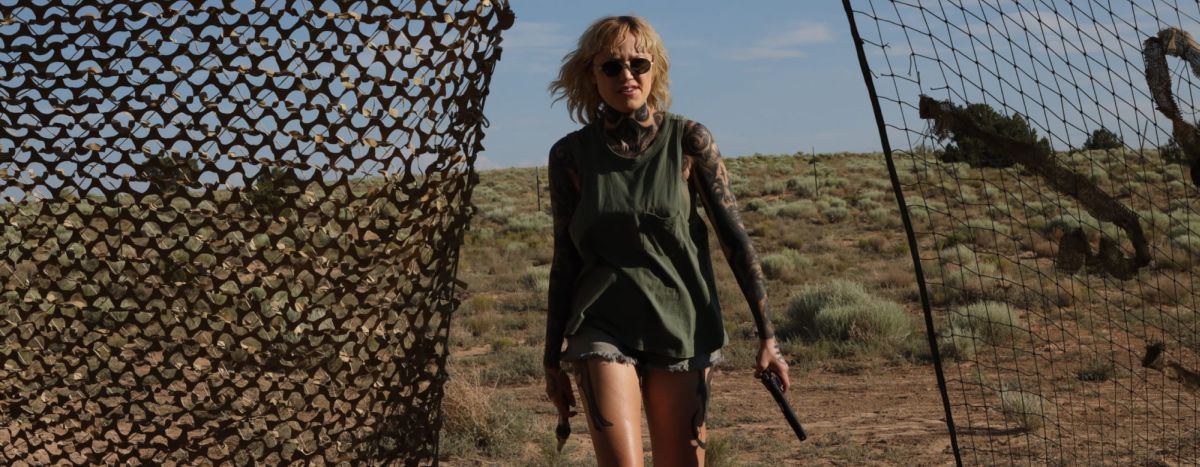
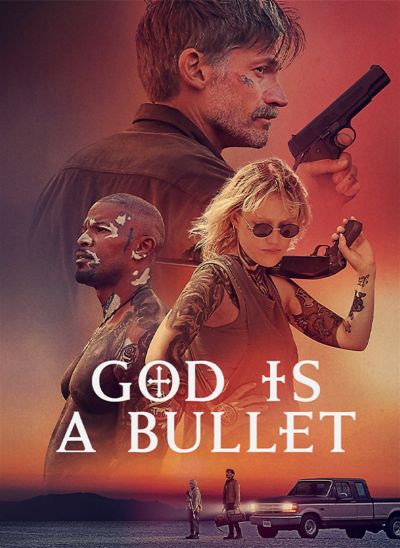
It seems to have been a passion project for him. But for whatever reason, it needed a quarter of a century until the movie, filmed in 2021 in Mexico City and New Mexico, would see the light of day. The main character is Bob Hightower (Coster-Waldau, best known as Jamie Lannister in Game of Thrones), a police officer searching for his daughter. She was abducted by a violent sect who also killed his ex-wife and her husband. A former member of the sect, Case Hardin (Monroe) declares herself ready to help him. According to her, he would never have a chance to find the gang by official means, without his daughter getting killed immediately. Bob accepts her assistance, though doesn’t know how trustworthy Case is. Does she really just want to help him rescue his daughter, from the fate that Case herself experienced 12 years ago? Or does she have other motives?
That’s the story in a nutshell. But it’s much more complicated than that, and you also shouldn’t expect this to be a non-stop action movie: it isn’t. I think you could maybe call it a road movie. The search for the young girl, while actually leading there in the end, is more a “McGuffin”, in that it moves the main protagonists forward – but under the surface, a different story is being told. There is an evaluation or discussion about faith, belief, God and values between Bob and Case. He is a believer in God and Christian convictions, while she is essentially atheist. Inevitably, they clash in the beginning until they develop an understanding. They come from two different sides of the spectrum. It’s the cruel descent into a man-made hell, where there is hardly any law except what you make for yourself, like an old-time Western, which makes them partners who rely on and save each other again and again.
 It’s the most fulfilling part of the movie. In a way, Case is Bob’s guarding angel; she knows about those people, how they behave, how to deal with them, also the danger that they embody as human life has hardly any value for them. Bob goes “undercover” to find his daughter which also means he has to look and appear like these people, so gets a full-body tattoo by “The Ferryman” (Foxx in a larger supporting role). The aim is to contact the sect, whose cult leader Cyrus (Glusman) is a specific piece of human scum, and deal with him. All of what has happened ties back to Bob’s father in law and his superior at the police office, though he doesn’t know this.
It’s an exciting and I’d even say great piece of film work, though regrettably, will probably never get the attention it deserves. As far as I can see the film never ran in German cinemas, and only I was barely aware of the movie coming out on DVD and Blu-Ray. As the movie wasn’t produced by one of the big studios, the money for marketing might not have been quite there, I assume. The film was criticized for the amount and intensity of violence and so-called misogyny, due to the fact that the movie doesn’t hold back. But bad things happen to everyone in this story, regardless if you are male or female, black or white. In that respect the film is truly democratic, mistreating everyone equally. There are no safe spaces for anyone here.
While I personally have seen worse, a little word of warning. The movie includes rapes, vicious murders, child prostitution, drug addiction, poisonous snakes, slashed throats, head-shots, and people getting killed with flame throwers or suffocated with a plastic bag. You name it, the movie has it. That said, the depiction of all the carnage listed is not gratuitous. I never had the feeling that Cassavetes indulged in violence for violence’s sake. However, if you belong to the more squeamish, this might maybe not be the movie for you.
That said, the movie feels honest in showing a different side of America: the ugly, dark side you usually don’t see in all these feel-good Hollywood movies anymore. You get the sense this is about real people experiencing real pain. Despite the violence, that is stretched over two and a half hours, giving the movie a certain kind of calmness and tranquility. Cassavetes gives his characters time to develop and it pays off handsomely. Scenes can breathe, and unlike a lot of movies today, it’s not all cut-to-the-chase. In the end, Bob and Case are just two lonely people who find each other, during their journey through backwoods towns and the desert, a trip that has something of a cathartic quality.
In the end – and that’s why it’s here – it’s in the main Case’s story. Yes, Bob hopes to find his daughter but he always appears a bit bland compared to her fascinating, broken character. The movie begins and ends with her. There are flashbacks and you start to realize that she is not just lost, she has been robbed of her childhood, that no one really cares for her. She may be on a journey to her own death as Case has no real place that she can call home. The whole depiction reminds me of characters like Revy from Black Lagoon or Lisbeth Salander. Or maybe it’s just my imagination running wild.
In any case, I was highly impressed by Maika Monroe’s performance and the movie as a whole. I personally had no problem with the depicted violence, and think this movie deserves more exposure. All told, if you want to see something different from the typical Hollywood entertainment, this might be of interest.
Dir: Nick Cassavetes
Star: Maika Monroe, Nikolaj Coster-Waldau, Jamie Foxx, Karl Glusman
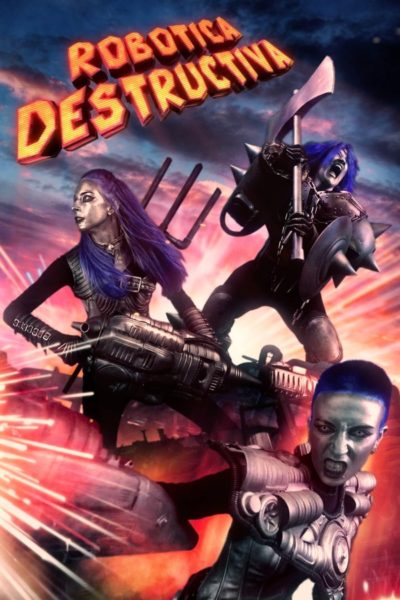 To bring out one of my go-to phrases, if I was eleven years old, and hopped up off my face on candy-floss, this would probably be one of my favorite movies. Instead, it’s the kind of film which apparently caused my brain to shut off as some kind of defense mechanism. I’m not kidding. Ten minutes into my first viewing attempt, I suddenly fell asleep. I think my mind may have experienced the cerebral equivalent of a blue screen of death and ran out of memory, forcing a shutdown. For this is just an insane overload of a movie, all the more so considering it was a labour of love, assembled over a period of multiple years.
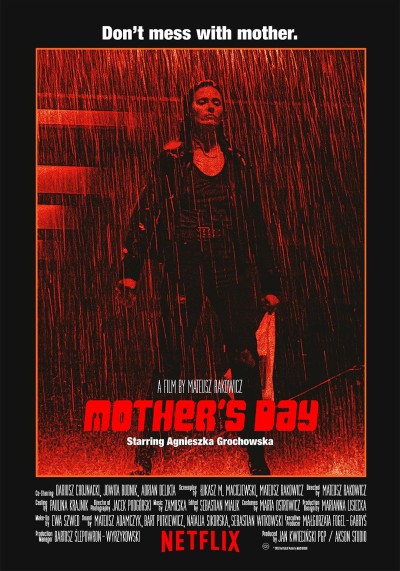 I’d be the first to admit, those issues likely extend beyond the characters in the movie, and probably extend to the script writers, because there are certainly… well, let’s just say, some novel concepts here. The heroine is Nina Nowak (Grochowska), a former Special Ops soldier, who had to fake her own death and give her son Maks up to adoption, for both their security. She’s been keeping an eye on Maks (Delikta) from afar, but after he’s abducted at the request of a gangster Nina took down, she needs to become considerably more hands-on. Rescuing Maks, however, will bring her into contact with a number of rather odd people, on both sides of the law.
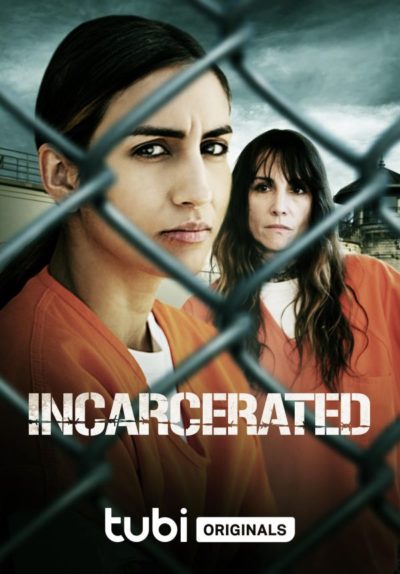 There’s an interesting idea here, at least. As a young child, Elena (Ayala) has to watch as her mother and brother are killed by crime boss babe Maeve (McComb), after her father (Pardo) made the ill-advised decision to try and steal from her. It’s particularly awkward, since Maeve made him choose which of his two children should live… then killed the one he picked, his son. This Sophie-like choice has, understandably, left the father-daughter relationship somewhat strained, to put it mildly. 15 years later, Elena is a druggie, who robs a liquor store and gets sent to jail as a result. Except, this incarceration is entirely deliberate, because it’s the facility in which Maeve is now serving time, giving Elena her long-awaited chance for revenge.
 The latest take on one of Britain’s greatest historical heroines has come in for a fair bit of critical flak. But I really did not think it was all that bad. Sure, it plays fast and loose with historical accuracy (Christianity wasn’t a thing in Britain at the time). However, we’re dealing with someone about whom there is very little reliable record. Why not throw in chunks of the Arthurian mythos, if it might make for a more interesting end product? The usual basics are there. Queen of the Iceni Boudica (Kurylenko) loses her husband (Standen), and subsequently falls foul of the occupying Roman Empire. She raises an army, leads a rebellion, kicks Roman butt for a while, but eventually goes down, fighting. That’s the Cliff Notes version.
 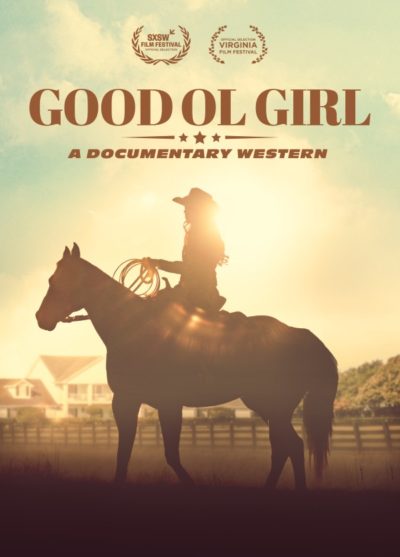 This documentary takes a look into the lives of three women in Texas, who are all operating in the male-dominated world of ranching. Some were born into it, while others came to it through choice. In particular, Mandy Dauses falls into the latter category, having left her East-coast home because she felt that Texas represented the best chance to fulfill her ambition of becoming a ranch manager. On the other hand, Sara Lemoine Knox is struggling to balance what she feels is an obligation to carry on in the family business, with her own goal of becoming a lawyer. Meanwhile, Martha Santos is looking to find work in that line, but without her own property, is finding it a challenge.
 Despite critical derision, this is actually perfectly serviceable pulp SF. Sure, it’s derivative as hell. But the critics getting all huffy about the similarities to Star Wars seem to have forgotten George Lucas only made his film, after failing to acquire the rights to Flash Gordon. This is Snyder’s equivalent to The Fifth Element, in that it’s a long-gestating SF idea, originally conceived well before he became a director. “The Dirty Dozen in space” was the high concept, although there is no denying the SW similarities, especially in the early going. I mean, young orphan on a backwater farming planet gets sucked in to galaxy-hopping adventures, joining a rebellion against an evil empire? Yeah, a little more originality would be welcome.
 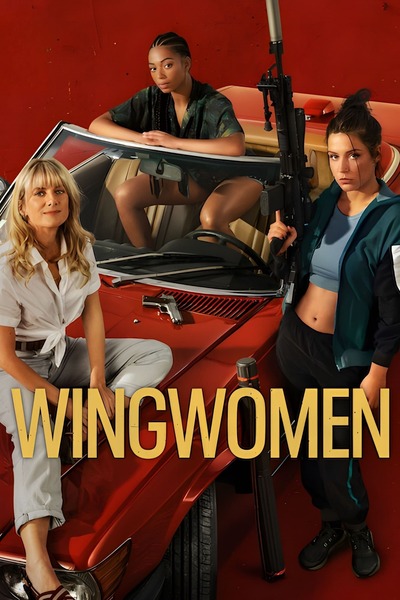 Netflix describes this as “Charlie’s Angels meets Lupin, with a dash of Killing Eve.” Um. About that… While I haven’t seen Lupin, I can confidently state any similarity to the others is tangential at best. For example, the only thing this really has in connection with Charlie’s Angels, is that there’s three of them. But here, it’s more like 2.25, since the third member is largely useless. It’s almost entirely the story of Carole (Laurent) and Alex (Exarchopoulos), two thieves who work for the enigmatic Marraine (Adjani). But Carole has discovered she’s pregnant and wants out of the business. Marraine is not happy, but agrees, providing Carole does that hoariest of film clichés: One Last Job.
 I went into this braced for it to be terrible, having sat through the same film-makers’, largely irredeemable
  I should be clear, this is not to be confused with