




★★★½
“Everybody has issues.”
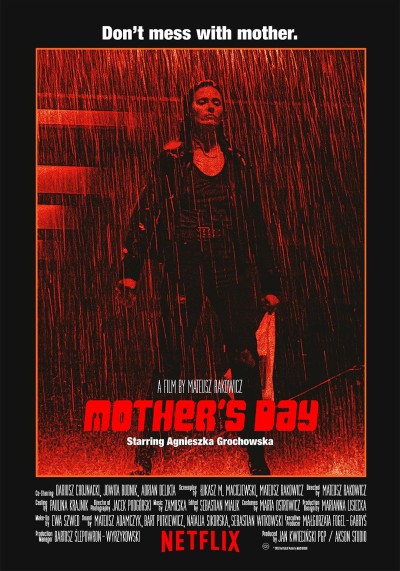 I’d be the first to admit, those issues likely extend beyond the characters in the movie, and probably extend to the script writers, because there are certainly… well, let’s just say, some novel concepts here. The heroine is Nina Nowak (Grochowska), a former Special Ops soldier, who had to fake her own death and give her son Maks up to adoption, for both their security. She’s been keeping an eye on Maks (Delikta) from afar, but after he’s abducted at the request of a gangster Nina took down, she needs to become considerably more hands-on. Rescuing Maks, however, will bring her into contact with a number of rather odd people, on both sides of the law.
In particular, there’s Igor (Delikta), her contact inside the establishment, who is divorced, and has a fragile relationship with his daughter that he desperately wants to repair. On the other side is the very strange Woltomierz (Wróblewski), a gangster who keeps the severed head of his father in a jar on his mantelpiece, and is known as “Volto” for his habit of tazing incompetent henchmen to death. Getting, and keeping, Maks out of his grasp is going to be a challenge for Nina. Although her bad-ass credentials are firmly established after she takes on a group of men outside a convenience store, armed with nothing more lethal than a six-pack of beer. Nina literally knocks one of them out of his shoes.
This is not to be confused with any of the other similarly titled films, not least the 2010 movie starring Rebecca de Mornay. Nor should it be confused with another recently released Netflix movie about a mother with special skills, looking for her abducted child, The Mother, starring Jennifer Lopez. With that said, the look and feel of this is impressive, the fight scenes in particular being well-staged and imaginative – though fair warning, do not expect realism. or anything approaching it. I’m unaware of Grochowska having any particular action background, yet she still delivers on that front. Most notably, she stabs someone in the head with a pair of carrots: I’ve not seen that since the equally bonkers Clive Owen movie, Shoot ‘Em Up.
The whole film is lit in a sickly green palette, which does a great job of making the city in which it takes place, look like a terrible place to live. Less successful are the attempts at drama. The Nina/Maks relationship is flat and unconvincing, and the rest of the cast largely seem to be weird for weirdness’s sake. They’re not as interesting as the makers think they are. The best way to look at this is perhaps as a female-fronted version of Crank: a deliberately excessive action flick, clearly not intended to be taken seriously. As such, I think it is a better effort than Jolt, another Netflix movie which seemed to be aiming along similar lines. The ending hints at a sequel and, truth be told, I wouldn’t mind one.
Dir: Mateusz Rakowicz
Star: Agnieszka Grochowska, Adrian Delikta, Dariusz Chojnacki, Szymon Wróblewski
 There’s an interesting idea here, at least. As a young child, Elena (Ayala) has to watch as her mother and brother are killed by crime boss babe Maeve (McComb), after her father (Pardo) made the ill-advised decision to try and steal from her. It’s particularly awkward, since Maeve made him choose which of his two children should live… then killed the one he picked, his son. This Sophie-like choice has, understandably, left the father-daughter relationship somewhat strained, to put it mildly. 15 years later, Elena is a druggie, who robs a liquor store and gets sent to jail as a result. Except, this incarceration is entirely deliberate, because it’s the facility in which Maeve is now serving time, giving Elena her long-awaited chance for revenge.
 If you’re even slightly familiar with the Star Trek universe, you’ll be aware of the Prime Directive. While never explicitly stated, it’s the rule which prohibits interfering with the development of less technologically advanced civilization, in particular those that are not capable of space travel, or are unaware of the existence of life beyond their own planet. It’s a key concept in this book too, though is meshed together with a religious theme – not something often found in this kind of science fiction.
 The latest take on one of Britain’s greatest historical heroines has come in for a fair bit of critical flak. But I really did not think it was all that bad. Sure, it plays fast and loose with historical accuracy (Christianity wasn’t a thing in Britain at the time). However, we’re dealing with someone about whom there is very little reliable record. Why not throw in chunks of the Arthurian mythos, if it might make for a more interesting end product? The usual basics are there. Queen of the Iceni Boudica (Kurylenko) loses her husband (Standen), and subsequently falls foul of the occupying Roman Empire. She raises an army, leads a rebellion, kicks Roman butt for a while, but eventually goes down, fighting. That’s the Cliff Notes version.
  This documentary takes a look into the lives of three women in Texas, who are all operating in the male-dominated world of ranching. Some were born into it, while others came to it through choice. In particular, Mandy Dauses falls into the latter category, having left her East-coast home because she felt that Texas represented the best chance to fulfill her ambition of becoming a ranch manager. On the other hand, Sara Lemoine Knox is struggling to balance what she feels is an obligation to carry on in the family business, with her own goal of becoming a lawyer. Meanwhile, Martha Santos is looking to find work in that line, but without her own property, is finding it a challenge.
 For a Lifetime Original Movie, this is actually close to the best of its kind I’ve seen., but it is surely docked points for being a thoroughly shameless knock-off of a certain Liam Neeson movie, all the way down to the title. As there, we have an American abroad, searching for a teenage daughter who has been kidnapped by even more foreign sex-traffickers. They will stop at nothing –
  RIP James Caan. I mention his passing, because by coincidence I watched this the same day, and there are a couple of nods to Misery, one of Caan’s most famous works. There’s a character called Mrs. Wilkes, and we also get an explicitly acknowledged re-enactment of
  By that, I am referring to the unnamed heroine of this film, because she doesn’t have to leave the house. She works as a hitwoman for Yakuza boss Yasuhiro Kokubu (Katô), and he delivers the targets to the front-door of her rural home, on the pretext of her being their entertainment. She then gives them the Black Widow treatment, having sex with them, before a couple of post-coital shots. She barely has to get out of bed, literally. In some way this makes sense, since she’s blind – I guess it’s nice to see the disabled being given equal opportunities in the assassin field. But she’s not exactly happy with her lot; her cleaner and handler Masahiko Yoshizawa (Murai) is concerned about her spiralling into alcoholism.
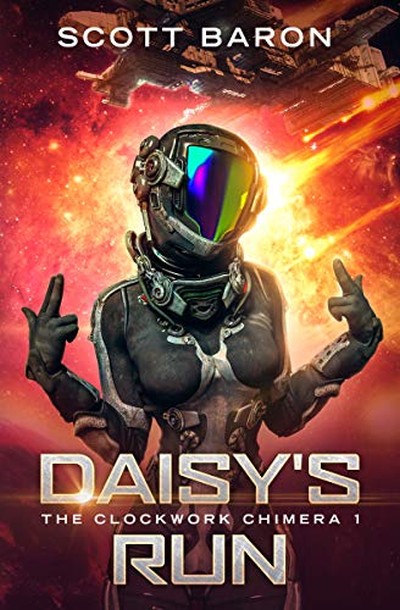 By the time I reached the end of this, what stood out most is how far we had come from the initial scenario. We start way out in deep space, where the crew of the Váli are awoken from their cryo stasis after the ship suffers significant damage as a result of a hull breach. By the end, everything has changed dramatically. The situation back on Earth, the mission of the Váli, and the very nature of the heroine, 25-year-old comms and electronics specialist, Daisy Swathmore, are are all radically different from what they initially seem to be. It’s basically a dramatic arc for the entire human race.
 There are times where I regret my choice of pastime. It means I end up watching things for this site that I would never give the time of day, given the choice. This is one such, having endured the almost physically painful experience which was