This is a sequel to Traucki’s 2010 film, The Reef, whose synopsis reads: “A sailing trip becomes a disaster for a group of friends when the boat sinks and a white shark hunts the helpless passengers.” I haven’t seen it, yet based on that, I’m not sure I need to. Replace “sailing” with “kayaking”, and you’re more or less here. Perhaps lob in a bit borrowed from The Descent, the trip in this case being partly a memorial for a lost friend. Here, it’s to honour a woman who was drowned by her abusive husband. Her sisters, Nic (Liane) and Annie (Archer), head off with Jodie (Truong) and Lisa (Lister). It’s not long before they find themselves hunted by a shark, and needing to cross open water in order to get help for an injured young girl, who was also attacked.
I’m not joking when I say the shark here appears to be a metaphor for toxic masculinity, as seen in the sisters’ murderous brother-in-law. He is literally the only man in the entire film. Fortunately, once they hit the water, it’s easy to forget the rather heavy-handed messaging which we get at the beginning. However, it does mean you know the death-toll here will be limited, because otherwise the patriarchy will have won. It’s also definitely the shark film with the most F-bombs I’ve ever seen, because Australia. I will say, given the scenario, the heroines exhibit a real lack of urgency in their kayaking. I mean, I would be flailing away like an aquatic helicopter in their situation, rather than the languid paddling they tend to demonstrate.
On the other hand, the makers do an excellent job of combining footage of real sharks with practical effects and CGI, into a cohesive whole. The results are generally effective, and occasionally impressive. The relationship between the women is nicely portrayed; they are not saints, and bicker over the best way to address the situation. Nic seems to be suffering an odd kind of PTSD, after the trauma of discovering her sister’s body in the bath. This translates into her suffering from drowning flashbacks somehow. While I dunno quite how that works, maybe a kayaking holiday isn’t the best choice of vacation?
As ever though, movies like this really are not about logical analysis, because a fear of being eaten alive by sharks isn’t logical either. [They cause maybe 10 deaths a year worldwide, compared to 2,000 killed after being struck by lightning, something we literally use as a metaphor for extremely rare events] They need to connect with the audience on a more emotional, almost a primeval level, and this did it for me on enough occasions to justify its existence. I’m not convinced about the need to try and inject social commentary into shark movies: there are plenty of other horror sub-genres better suited to it. However, it’s still possible to set that aside and appreciate the simple, oceanic pleasures this has to offer.
A version of this review previously appeared on Film Blitz.
This article was inspired by my mild irritation at documentary film Fly Like a Girl which, while a worthy item, was almost exclusively American-focused. You could have watched it all the way through, and come to the conclusion that Americans not only invented flight, they were the only ones to take to the air over the following century. That isn’t the case. Names like Jean Batten (New Zealand), Nancy Bird Walton (Australia), Hélène Dutrieu (Belgium) or Beryl Markham (Britain), all deserve recognition for their pioneering roles, rather than it being just Amelia Earhart. Which brings us to Amy Johnson who, both in life and death, was not all that dissimilar from “Lady Lindy”: shattering the glass ceiling for female aviators, breaking records and achieving huge national fame, before disappearing in a plane accident, with neither woman’s body being recovered.
It was a different era in which Earhart and Johnson operated: the world was still being explored, with many feats remaining to be accomplished. It was only in 1927 that the first solo trans-Atlantic flight occurred, and society was eager for similar examples of derring-do. Amy had grown up in a comfortably middle-class home in the North of England, going to university, but was unable to find a career that satisfied her. But she loved to fly, initially as a pastime, but with increasing fervour, getting her pilot’s license in 1929, and also becoming the first British woman with a ground engineer’s license. She began planning to be the first woman to fly solo from England to Australia, hoping to beat the existing record for the trip, Bert Hinkler’s 15½ days. It was a journey of 11,000 miles, despite her longest flight to this point being just a couple of hundred, from London to the family home in Hull.
The necessary financial backing proved hard to obtain, but she eventually raised the necessary funds with the help of her father, plus oil tycoon and aviation supporter Lord Wakefield, founder of the company which would became Castrol Oil. On May 5th, 1930, she took off from Croydon Airport, with little fanfare or attention. Among her equipment were a revolver, to fend off bandits, and a letter offering to pay a ransom – presumably if the revolver didn’t work. However, brigands proved not the biggest danger she’d encounter. She was forced down in the desert by a sandstorm as she approached Baghdad, with her plane stalling out twice. “I had never been so frightened in my life,” she said of the experience.
Repeated mechanical problems, many of which were caused by the repeated failure of an undercarriage strut, also threatened to derail Johnson’s attempt. But with good fortune and innovative thinking, she was able to continue. Perhaps the greatest example came in Burma, after she ripped up her wing in a rough landing, with no replacement cloth to hand. However, after the First World War, a stock of airplane fabric had been left behind, and recycled into shirts by the local women. Amy was able to re-recycle the shirts back into the necessary material to complete repairs and carry on. By now, word of her exploits was spreading, and she began to be feted on her arrival at each stop. Back in Britain, too, the papers began to report on her exploits, and got into competition for the rights to Amy’s story. The Daily Mail won, with a bid of two thousand pounds.
On May 24, she landed in the northern Australian city of Darwin. Johnson had not beaten the record, taking 19½ days for her flight, but had captured the public’s imagination and interest, in a way few women of the time managed to do. A six-week tour of Australia followed, during which she met her future husband, James Mollison, for the first time. She was equally celebrated on a slower, less arduous journey back to Britain, finally returning to Croydon on August 4. Although Johnson dutifully put up with all the banquets and speeches, she was never comfortable with her fame or the adulation, later saying, “I hated all the theatres, cinemas, first nights, and parties. It’s an unnatural and artificial life. I’m glad those days are over.”
The flight remained Amy’s defining moment, though it was far from her only, or even most successful, adventure. After marrying Mollison in 1931, she promptly broke his record for the solo flight from London to Cape Town, South Africa at just under four days and seven hours. With co-pilot C.S. Humphrey, she also set the UK-Japan mark, flying seven thousand miles in ten days. Finally, in May 1936, she reclaimed the Cape Town record, with a flight of three days, six hours and 26 minutes. But Amy simply lived to fly, regardless of the distance. The disappearance of her friend Amelia Earhart in 1937, did dampen her enthusiasm somewhat, though she found a new passion for unpowered flight, taking up gliding and appreciating the tranquility it offered.
World War II broke out in 1939, and Amy wanted to do her part. While Britain would not let women join their air force (unlike the Russians ended up allowing), they were allowed to be part of the Air Transport Auxiliary (ATA). Their duties included moving planes around the country as needed, such as from the factory to the air fields from which they would operate. Amy signed up, receiving a salary of six pounds per week. But on January 5, 1941 – two years to the day after Earhart was officially pronounced dead – Amy took her final flight. It appears she lost her way in fog, on a flight from Blackpool to Oxfordshire, and bailed out of her plane, but landed in the River Thames and drowned. Her body was never recovered, but she remains a heroic figure, representing courage, perseverance, dedication and humility in equal measure.
Below are a selection of film clips documenting her life and death, including sections of 1932 short Dual Control, which featured both Johnson and her than husband, Jim Mollison.
There have been two feature films based on Johnson’s life, made over 40 years apart, and interesting as much for their differences as anything else. Below, you’ll find reviews of both movies.
They Flew Alone
By Jim McLennan
★★½
“Puts the plain in aeroplane.”
This bio-pic of aviator Amy Johnson appeared in British cinemas a scant eighteen months after she disappeared over the River Thames. That put its release squarely in the middle of World War II, and explains its nature which, in the later stages, could certainly be called propaganda. There’s not many other ways to explain pointed lines like “Our great sailors won the freedom of the seas. And it’s up to us to win the freedom of the skies. This is first said during a speech given by Johnson in Australia, then repeated at the end, over a rousing montage of military marching and flying. I almost expected it to end with, “Do you want to know more?”
From the start, the film does a decent job of depicting Johnson (Neagle) as a likable heroine, who refuses to bow to convention – she’s first seen rebelling against the straw hat that’s part of her school uniform. We then follow her through university, though the degree apparently only qualifies her for jobs in a haberdashery or as a secretary (must have been a gender studies…). Unhappy with these dead-end occupations, she takes up flying, earning her pilot’s license and buying her own plane. It’s about here that the film really hits trouble, because director Wilson has no idea of how to convey the thrill of free flight. Endless series of newspaper headlines, ticker tapes and cheering crowds is about all we get, along with obvious rear-projection shots of Amy looking slightly concerned in the cockpit.
It’s almost a relief when the romance kicks in, represented by fellow pilot Jim Mollison (Newtron), who woos Amy while looking to set flight records of his own. Problem is, he’s a bit of a dick: quite why Amy falls for him is never clear. It’s clearly a mistake, with his drinking, womanising (or as close as they could depict in the forties!) and resentment at her greater fame and desire for independence eventually dooming the marriage – in another of those newspaper headlines. However, there is one decent sequence, when the husband and wife fly as a pair from Britain to America, largely through dense fog. This is edited nicely and, in contrast to all other flights, does generate some tension.
The bland approach includes Johnson’s final mission, depicted here as her running out of fuel while seeking somewhere to land in fog, bailing out, and drowning in the river. Cue the montage mentioned above, though the film does redeem itself with a final caption, worth repeating in full. “To all the Amy Johnsons of today, who have fought and won the battle of the straw hat – who have driven through centuries of convention – who have abandoned the slogan ‘safety first’ in their fight for freedom from fear – from want – from persecution – we dedicate this film.” It’s an honourable thought, considerably deeper and more well-executed than something which generally feels like it was rushed out, without much effort put into it.
Dir: Herbert Wilcox Star: Anna Neagle, Robert Newton, Edward Chapman, Joan Kemp-Welch
a.k.a. Wings and the Woman
Amy
By Jim McLennan
★★★
“What rules?”
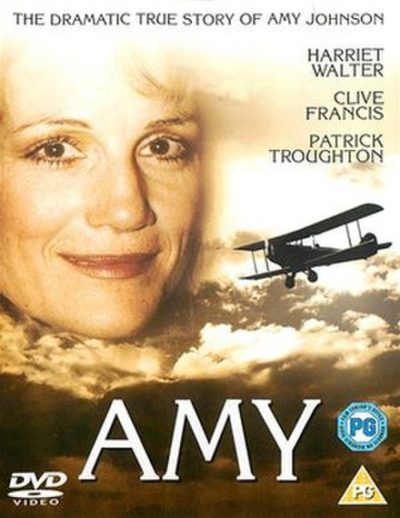
It’s interesting to compare the approach taken in this biopic of aviation heroine Amy Johnson, made in 1984, with the one over 40 years earlier (and shortly after her death) in They Flew Alone, and note the similarities and differences. Both are relatively restrained in budget. The earlier one because it was a low-cost production, made during a war; the later one because it was made for television – and the BBC at that, never a broadcaster known for its profligate spending! As a result, both are limited in terms of the spectacle they can offer, and end up opting to concentrate on Amy as a character. It’s the cheaper approach.
This benefits from a little more distance, and doesn’t need to paint an almost beatific picture of its subject for patriotic propaganda purposes. It begins with Amy (Walter) already fully grown up and seeking to raise funds for her record-setting flight to Australia, despite only a hundred hours of solo experience. Actually, 102, as she points out to a potential sponsor, also delivering the line above. when it’s pointed out she’s not even supposed to be in the hangar. The film does a somewhat better job of capturing Amy in flight, with wing-mounted camerawork that’s an improvement over the obvious rear-projection used in Alone. Yet there’s still too much reliance on newspaper headlines, to avoid having to spend money, though there is some deft use, of what’s either genuine newsreel footage or artfully re-created, sepia facsimiles.
There is a similar focus on her failed marriage to fellow aviator, Jim Mollinson (Francis, who really does not sound Scottish at all), and he doesn’t come off much better than the character did in Alone. Jim is portrayed again as a drunken womanizer, though this version plays down the idea of him becoming fed-up at being overshadowed by Johnson’s exploits. It feels like there’s a slight hint of a romantic relationship between Johnson and earlier co-pilot Jack Humphreys (Pugh). There’s also a statement that she had an operation to prevent her from having children, which I had not heard before. But it does depict Amy as quickly becoming fed up with the endless appearances required by her Daily Mail contract post-Australia flight, which seems accurate: she was happier out of the public eye.
The biggest difference between the two films is probably the way they depict her death. This… simply doesn’t. It ends instead, in a 1940 meeting with her ex-husband, while they were both ferrying planes around Britain for the Air Transport Auxiliary. Barbs are traded, and Jim seems annoyed when a fan comes up seeking Amy’s autograph and ignoring him completely. She leaves for her flight, despite being told regulations won’t let her take off due to the conditions. “What rules?” she says, before a caption details her death in 1941. It’s understated, and that’s in line with the approach taken here – perhaps too much so. While I think it is slightly better than Alone, this feels mostly due to better technical aspects. I still can’t feel either film gave me a true understanding of what she was like, or what made her tick.
Dir: Nat Crosby Star: Harriet Walter, Clive Francis, George A. Cooper, Robert Pugh
This bio-pic of aviator Amy Johnson appeared in British cinemas a scant eighteen months after she disappeared over the River Thames. That put its release squarely in the middle of World War II, and explains its nature which, in the later stages, could certainly be called propaganda. There’s not many other ways to explain pointed lines like “Our great sailors won the freedom of the seas. And it’s up to us to win the freedom of the skies. This is first said during a speech given by Johnson in Australia, then repeated at the end, over a rousing montage of military marching and flying. I almost expected it to end with, “Do you want to know more?”
From the start, the film does a decent job of depicting Johnson (Neagle) as a likable heroine, who refuses to bow to convention – she’s first seen rebelling against the straw hat that’s part of her school uniform. We then follow her through university, though the degree apparently only qualifies her for jobs in a haberdashery or as a secretary (must have been a gender studies…). Unhappy with these dead-end occupations, she takes up flying, earning her pilot’s license and buying her own plane. It’s about here that the film really hits trouble, because director Wilson has no idea of how to convey the thrill of free flight. Endless series of newspaper headlines, ticker tapes and cheering crowds is about all we get, along with obvious rear-projection shots of Amy looking slightly concerned in the cockpit.
It’s almost a relief when the romance kicks in, represented by fellow pilot Jim Mollison (Newtron), who woos Amy while looking to set flight records of his own. Problem is, he’s a bit of a dick: quite why Amy falls for him is never clear. It’s clearly a mistake, with his drinking, womanising (or as close as they could depict in the forties!) and resentment at her greater fame and desire for independence eventually dooming the marriage – in another of those newspaper headlines. However, there is one decent sequence, when the husband and wife fly as a pair from Britain to America, largely through dense fog. This is edited nicely and, in contrast to all other flights, does generate some tension.
The bland approach includes Johnson’s final mission, depicted here as her running out of fuel while seeking somewhere to land in fog, bailing out, and drowning in the river. Cue the montage mentioned above, though the film does redeem itself with a final caption, worth repeating in full. “To all the Amy Johnsons of today, who have fought and won the battle of the straw hat – who have driven through centuries of convention – who have abandoned the slogan ‘safety first’ in their fight for freedom from fear – from want – from persecution – we dedicate this film.” It’s an honourable thought, considerably deeper and more well-executed than something which generally feels like it was rushed out, without much effort put into it.
Dir: Herbert Wilcox Star: Anna Neagle, Robert Newton, Edward Chapman, Joan Kemp-Welch
a.k.a. Wings and the Woman
It’s interesting to compare the approach taken in this biopic of aviation heroine Amy Johnson, made in 1984, with the one over 40 years earlier (and shortly after her death) in They Flew Alone, and note the similarities and differences. Both are relatively restrained in budget. The earlier one because it was a low-cost production, made during a war; the later one because it was made for television – and the BBC at that, never a broadcaster known for its profligate spending! As a result, both are limited in terms of the spectacle they can offer, and end up opting to concentrate on Amy as a character. It’s the cheaper approach.
This benefits from a little more distance, and doesn’t need to paint an almost beatific picture of its subject for patriotic propaganda purposes. It begins with Amy (Walter) already fully grown up and seeking to raise funds for her record-setting flight to Australia, despite only a hundred hours of solo experience. Actually, 102, as she points out to a potential sponsor, also delivering the line above. when it’s pointed out she’s not even supposed to be in the hangar. The film does a somewhat better job of capturing Amy in flight, with wing-mounted camerawork that’s an improvement over the obvious rear-projection used in Alone. Yet there’s still too much reliance on newspaper headlines, to avoid having to spend money, though there is some deft use, of what’s either genuine newsreel footage or artfully re-created, sepia facsimiles.
There is a similar focus on her failed marriage to fellow aviator, Jim Mollinson (Francis, who really does not sound Scottish at all), and he doesn’t come off much better than the character did in Alone. Jim is portrayed again as a drunken womanizer, though this version plays down the idea of him becoming fed-up at being overshadowed by Johnson’s exploits. It feels like there’s a slight hint of a romantic relationship between Johnson and earlier co-pilot Jack Humphreys (Pugh). There’s also a statement that she had an operation to prevent her from having children, which I had not heard before. But it does depict Amy as quickly becoming fed up with the endless appearances required by her Daily Mail contract post-Australia flight, which seems accurate: she was happier out of the public eye.
The biggest difference between the two films is probably the way they depict her death. This… simply doesn’t. It ends instead, in a 1940 meeting with her ex-husband, while they were both ferrying planes around Britain for the Air Transport Auxiliary. Barbs are traded, and Jim seems annoyed when a fan comes up seeking Amy’s autograph and ignoring him completely. She leaves for her flight, despite being told regulations won’t let her take off due to the conditions. “What rules?” she says, before a caption details her death in 1941. It’s understated, and that’s in line with the approach taken here – perhaps too much so. While I think it is slightly better than Alone, this feels mostly due to better technical aspects. I still can’t feel either film gave me a true understanding of what she was like, or what made her tick.
Dir: Nat Crosby Star: Harriet Walter, Clive Francis, George A. Cooper, Robert Pugh
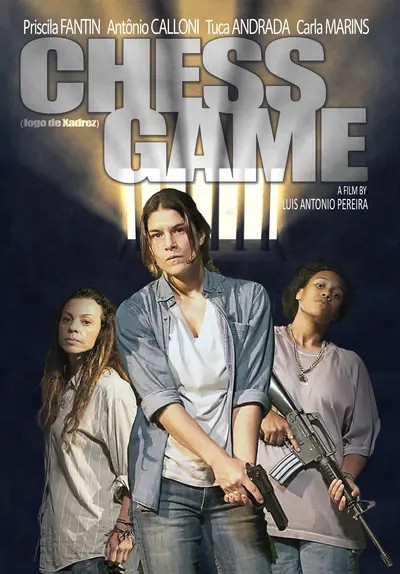
I had to work quite hard to see this: while it is on Tubi, the subtitles there were only in Spanish, and so not much help (I’m still at the “Donde esta la biblioteca?” level). Fortunately, it then turned up on Vudu, and I bravely made my way through their crappy interface and frequent adverts to bring you this review. It was worth it. This is a solid slice of women-in-prison action/drama from Brazil, though perhaps less exploitative than I expected (especially given the country’s history in the sub-genre!) . I mean, Marins is a former model in Brazillian Playboy, so you’ll understand I had… certain expectations. Fortunately, the rest of the movie proved more than adequate to hold my attention.
After a welfare fraud is discovered, Guilhermina Dos Santos (Fantin) takes the fall and gets a 16-year prison sentence, while the real mastermind, Senator Franco (Calloni) escapes consequences. Three years into her sentence, Mina has become top dog in the facility. After her parole request is turned down, the Senator decides it’s best if she ceases to be a problem. He pays the warden (Andrada), who bribes an inmate to shank Mina. The attempt fails, thanks partly to the intervention of new inmate, Beth (Marins), and Mina decides she needs to escape. With the help of a friendly guard, this is accomplished, with Mina, Beth and Mina’s lieutenant Martona now on the outside, where her sister, Juliet, offers her assistance. Mina kidnaps the Senator’s son, to force him to pay her share of the fraud profits. Yet not everything is quite as it seems, as things escalate towards a confrontation in a hospital.
Fantin, in particular, makes for an excellent heroine, especially when establishing her bad-ass credentials. There were points where this felt like an entry in the Female Prisoner Scorpion series from Japan – albeit less in terms of style, than Fantin’s attitude mirroring that of Meiko Kaji, and in its fairly cynical view of society in general. The plot is nicely handled as well, with the title proving quite appropriate, as Mina and Franco seek to gain the upper hand on each other. [I’ve also read that “chess” is a slang term for prison in Brazil, adding another layer of meaning] These twists continue until the film’s final shot, literally. However, the film does suffer from some pacing problems, e.g. a lengthy sequence where the escaped women shoot pool, drink and harass a man, brings things to a halt, just when it should be accelerating. I also have some questions, such as in regard to security in Brazillian jails, where it seems remarkably easy for multiple prisoners to waltz on out of there, with the help of just one guard. It’s not the only example of slipshod plotting, and it’s likely these flaws which stopped it from achieving a seal of approval, as it still does a lot in its eighty minutes.
Dir: Luis Antonio Pereira Star: Priscila Fantin, Carla Marins, Antonio Calloni, Tuca Andrada
a.k.a. Jogo de Xadrez
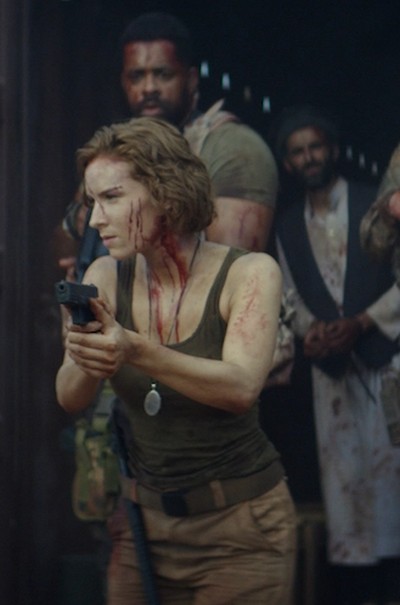
There is a tendency for directors married to actresses to make them action heroines. This perhaps started with Renny Harlin and Geena Davis, but the most famous example is probably Paul W.S. Anderson and Milla Jovovich (she was previously married to Luc Besson too). It seems that Marshall and Kirk may be heading that way, with her starring in his last two movies. First there was witch-pic The Reckoning, and now this, which blends elements from a number of genre films. Not the least of which are Marshall’s own Dog Soldiers and The Descent. However, you can also throw in Predator, Aliens and perhaps even Starship Troopers. The result is, obviously, derivative as hell – yet I can’t deny, I enjoyed it.
Pilot Capt. Kate Sinclair (Kirk) is shot down in hostile Afghani territory. While being pursued by insurgents, she stumbles across and takes refuge an abandoned underground base left over from the Soviet occupation in the eighties. What’s inside turns out to be very aggressive and unpleasant, and Sinclair barely escapes with her life. She finds refuge in a nearby allied base commanded by Major Roy Finch (Bamber), and her tales of Soviet engineered monstrosities meet with understandable scepticism. Until night falls, and the creatures emerge from their laur and go on the offensive. The next day, Capt. Sinclair and the survivors decide they need to go back to the Russian base and plant enough C4 to reduce it and its inhabitants to their constituent atoms.
The last Marshall film we covered here was Doomsday back in 2008. Since then he has honed his skills more in television; of particular note, a couple of episodes from Game of Thrones, including the spectacular “Blackwater”. He seems to have put the experience to good use here, with a fine eye for the fight sequences between the soldiers and the creatures. There are a lot of practical effects, and the Resident Evil franchise is another clear influence. I do wish the creatures’ talents had been further illustrated: for instance there’s one point where Sinclair is grabbed by a monster’s multiple tongues. I kept expecting this feature to return later; it never does.
There are, unfortunately, too many holes for this to be a classic, with a heroine whose behaviour falls short of logical, or even making sense. I get the “no man left behind” thing, but dragging all your comrades back into danger, in order to rescue one person, is very different from going in alone (as Ripley does, to rescue Newt, at the end of Aliens). Some of the accents here are flat-out terrible: Bamber’s Southern drawl is the worst – were there no actual actors available from South of the Mason-Dixon line? – but Ockenden’s Welsh isn’t convincing either. I’m also impressed by the way Sinclair’s hair and make-up remain pristine through the entire movie, regardless of what grubby underground trench she has had to crawl through: I guess being the director’s wife has its benefits… As an entertaining B-movie though, I’ve no complaints, and if this couple want to continue down the Anderson/Jovovich road in future, I’ll be fine with that.
Dir: Neil Marshall Star: Charlotte Kirk, Jonathan Howard, Jamie Bamber, Leon Ockenden
Roughly ten minutes into this, it was clear I’d made a terrible mistake. I’ve seen my share of wretched creature features in my time, and this is down near the bottom of the barrel. It does have an interesting, if totally ludicrous idea. Five women are invited to a remote hotel, to take part in a game-show, competing for a prize of £100,000. Among them is struggling single mother Sienna (Wunna) who, unable to find a baby-sitter, takes her two kids with her. As the cover ever so subtly suggests, the game has carnivorous dinosaurs roaming the hotel and grounds, and “winning” simply means not getting eaten. Naturally, Sienna’s two kids also disobey Mum’s instructions not to leave the room.
There are only two things stopping this from being any good. Unfortunately, those are the budget and a complete lack of film-making ability. Wunna isn’t bad, as the competitor on whom the movie focuses. There were points at which I found myself teetering on the edge of actually giving a damn about her, and the other women are competent enough to pass muster. However, it was a horrendous mistake to have Sienna’s two kids played, it appears, by her two real kids. Professional child actors are bad enough; amateurs like these (“What. Was. That?”) are completely unwatchable. The Games Master (John) delivers his lines with more emotion, and he’s a robotic eye in the sky.
I suspect the two issues mentioned above interact with each other. By this I mean, the depiction of the dinosaurs is so inept, it hamstrings the director in terms of what he can do. Shot of extinct, hungry reptile. Shot of contestant looking terrified, and probably screaming. Thoroughly unconvincing shot of reptile eating contestant. Rinse. Repeat. There’s no sense of escalation or real development, beyond one of the competitors being a plant. Oops, I’ve spoiled it. Sue me. There’s a (rather unconvincing) gun found at one point, and that might have been an interesting way to develop things, with various “power-ups” being available. The writer couldn’t be bothered, apparently.
Mind you, the same goes for just about every other aspect of the script too, including the logistical one of how no-one has apparently noticed dinosaurs roaming rural England. As a result of this laziness and general incompetence, everything unfolds in utterly predictable fashion. The dinosaurs refuse to eat the children, and the film can’t even be bothered to play by its own rules. It has repeatedly been stressed that as far as winners go, to borrow a line from Highlander, there can be only one. Then, at the end… Nah, never mind. And that’s aside from the question of how the winner is going to get paid after the person running the event has been eaten. Oops, more spoilers. But if you still wish to watch this, after everything I have said above, a) I have failed at my job as a critic, and b) you deserve whatever results.
Dir: Jack Peter Mundy Star: Chrissie Wunna, Chelsea Greenwood, Alexander John, Ruby Wunna
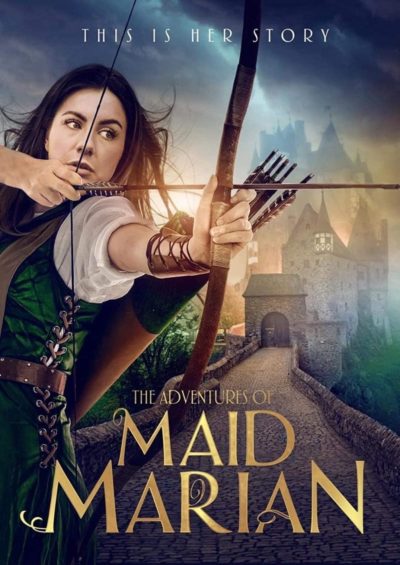
The above rating reflects my deep-held tolerance for low budget cinema. If a film is made with heart, I’m generally prepared to overlook, to some degree, technical shortcomings. Both sides of that equation are present here, in a somewhat revisionist take on the Robin Hood mythos. This takes place after Hood’s original victory over the Sheriff of Nottingham, and he has now gone on crusade to the Holy Lands with King Richard. In their absence, however, the country has not fared well. Marian (Craig) has adopted another identity, and is hiding out as novice nun Matilda, though occasionally sneaks out to help poach from the rich, and give to the poor.
Richard dies abroad, and Robin (Andersen) returns, to find himself greeted warmly by Marian, who has been booted out of her religious order, and not-so warmly by the former Sheriff, William De Wendenal (Cryer), who still bears a grudge against the pair for their role in the loss of his title. Robin is captured and injured, leaving Marian as the only hope of rescue before he’s executed along with his long-time sidekick, Little John (Pellet). Naturally, she is more than up to the task, having both run with the outlaws of Sherwood Forest, and then had to fend for herself, during the three-year span when Robin was overseas. While Marian may be a damsel, she’s more likely to be causing distress, rather than being in it.
She’s certainly more convincing a hero of folklore than Robin, who looks barely old enough to shave, never mind lead a popular rebellion against authority. As a contrast, the last film I saw about the character returning from the Crusades was Robin and Marian, starring a very world weary and middle-aged Sean Connery. Andersen has none of that gravitas, perhaps deliberately to avoid taking the focus away from the heroine. Craig is fine, holding her own dramatically and in action, and occasionally better than fine, even if the ease with which she dispatches enemies close to twice her weight in sword-fights, is painful. In particular, their “armour” doesn’t seem to give them any protection at all: the slightest tap from Marian and they fold like cheap sheets.
As noted, you very much need to be able to look past what is, by and large, an exercise in running around in the forest. There are no bustling towns to be found here: I’m not sure there was ever a scene where the count of participants reached double figures. The buildings are unconvincing. and you never get any sense of this genuinely being the 13th century. However, it is played gratifyingly straight, since otherwise it’d have to compete with fondly-remembered nineties TV series, Maid Marian and her Merry Men (created by Baldrick from Blackadder). Yet it’s also so fast and loose in its cheerful disregard of historical accuracy, it almost plays as a dead-pan spoof. The ending is left wide-open for a sequel, and despite (because of?) all its flaws, I have a sneaking hope that comes to pass.
Dir: Bill Thomas Star: Sophie Craig, Dominic Andersen, Bob Cryer, Jon Lee Pellet
The main theme of this book appears to be, “How far will a mother go, to protect her daughter?” Based on what we read here, the answer to that question appears to be, “Very, very far.” The heroine is Sherica Daniels, who initially appears to have somewhat lucked out and escaped a nasty and abusive relationship. Her husband, drug addict Roy, has just died following a pair of botched armed robberies. That should leave her and teenage daughter Ashlynn to get on with their lives. Not so fast. For it’s only a short while before Roy’s drug dealer, Tokie, shows up. He’s demanding Sherica pays her husband’s debt – and more, because he believes she knows where the unrecovered loot from Roy’s robberies was hidden. When she fails to convince Tokie otherwise, he abducts Ashlynn.
The police are limited in what they can do, for Ashlynn has substance abuse issues of her own, and tells the authorities she wasn’t kidnapped. Sherica knows otherwise. She sets out to track down and rescue her daughter, from a man who turns out to be not just a drug dealer, but also a pimp. Though how do you rescue somebody who doesn’t want to be rescued? Especially when you have no experience, few resources – though Sherica does have her late husband’s .357 Magnum – and your only ally is a gas station clerk, a refugee from the Yemen. The answer is mostly tenacity: the heroine simply won’t sit back and accept any other outcome, except for getting Ashlynn back.
The style here is occasionally a tad clunky. I found myself having to reread some sentences several times to figure out their meaning, such as, “After all, you can’t live your life thinking back about what you should have done if only you’d known something you could never have known in the first place. You just can’t.” Uh… Sure, I guess? Despite the cover, it is also very restrained on the action front. There is only one such sequence, and most of its content unfolds over little more than a minute in real-time. Though it is spectacularly gory, and partly makes up for in intensity, what it might lack in duration.
The book’s main plus point is probably the character of Sherica, who is not your typical heroine. Her situation largely sucks, mainly as a result of poor choices, yet Halpin still manages to make her sympathetic. The fierce devotion to her daughter, and desire to give Ashlynn a better life, goes a long way in this regard. While told in flashback, there are hints at the downbeat way things will turn out throughout and the significance – indeed, even the meaning – of the title only becomes clear at the end. I’m not entirely convinced a situation like this would [and I’m skirting spoilers here!] conclude in the manner described. Yet it’s just plausible enough, and this is more about the journey than the destination.
Author: James Halpin Publisher: Amazon Digital Services, available through Amazon, both as a paperback and an e-book Standalone novel




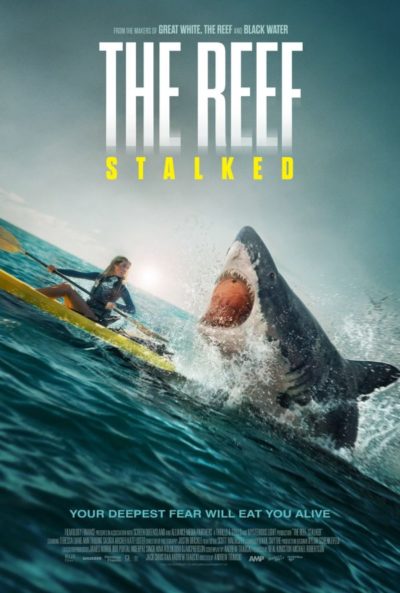 This is a sequel to Traucki’s 2010 film, The Reef, whose synopsis reads: “A sailing trip becomes a disaster for a group of friends when the boat sinks and a white shark hunts the helpless passengers.” I haven’t seen it, yet based on that, I’m not sure I need to. Replace “sailing” with “kayaking”, and you’re more or less here. Perhaps lob in a bit borrowed from The Descent, the trip in this case being partly a memorial for a lost friend. Here, it’s to honour a woman who was drowned by her abusive husband. Her sisters, Nic (Liane) and Annie (Archer), head off with Jodie (Truong) and Lisa (Lister). It’s not long before they find themselves hunted by a shark, and needing to cross open water in order to get help for an injured young girl, who was also attacked.
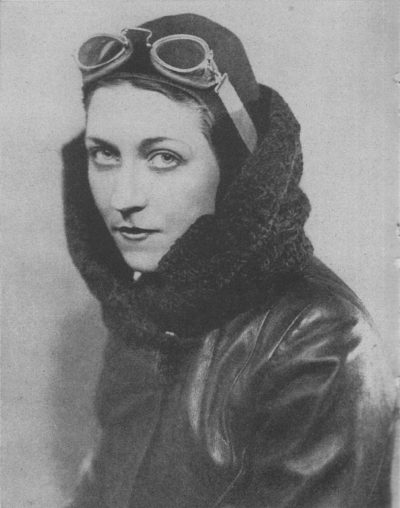 This article was inspired by my mild irritation at documentary film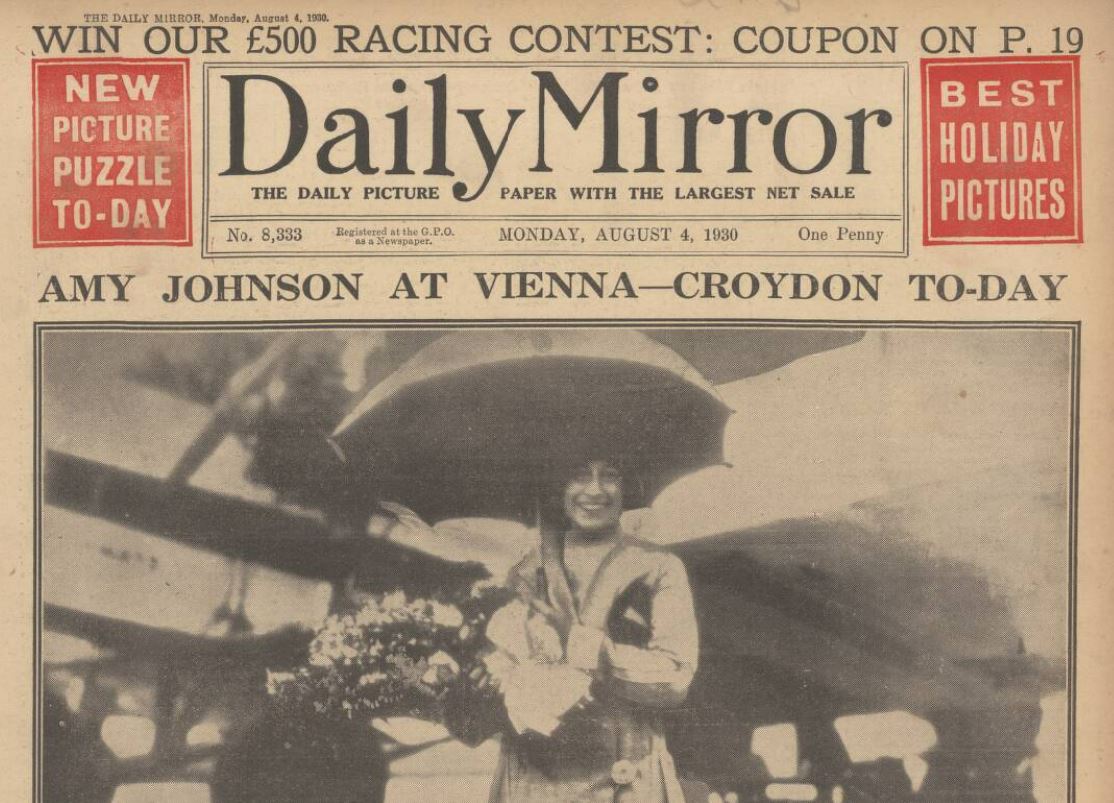
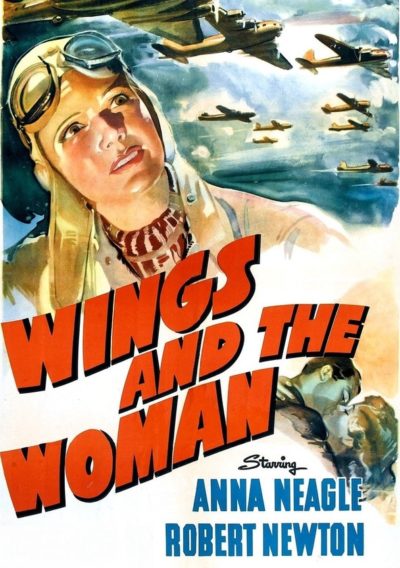 This bio-pic of aviator Amy Johnson appeared in British cinemas a scant eighteen months after she disappeared over the River Thames. That put its release squarely in the middle of World War II, and explains its nature which, in the later stages, could certainly be called propaganda. There’s not many other ways to explain pointed lines like “Our great sailors won the freedom of the seas. And it’s up to us to win the freedom of the skies. This is first said during a speech given by Johnson in Australia, then repeated at the end, over a rousing montage of military marching and flying. I almost expected it to end with, “Do you want to know more?”
 It’s interesting to compare the approach taken in this biopic of aviation heroine Amy Johnson, made in 1984, with the one over 40 years earlier (and shortly after her death) in
  I had to work quite hard to see this: while it is on Tubi, the subtitles there were only in Spanish, and so not much help (I’m still at the “Donde esta la biblioteca?” level). Fortunately, it then turned up on Vudu, and I bravely made my way through their crappy interface and frequent adverts to bring you this review. It was worth it. This is a solid slice of women-in-prison action/drama from Brazil, though perhaps less exploitative than I expected (especially given the country’s history in the sub-genre!) . I mean, Marins is a former model in Brazillian Playboy, so you’ll understand I had… certain expectations. Fortunately, the rest of the movie proved more than adequate to hold my attention.
  There is a tendency for directors married to actresses to make them action heroines. This perhaps started with Renny Harlin and Geena Davis, but the most famous example is probably Paul W.S. Anderson and Milla Jovovich (she was previously married to Luc Besson too). It seems that Marshall and Kirk may be heading that way, with her starring in his last two movies. First there was witch-pic The Reckoning, and now this, which blends elements from a number of genre films. Not the least of which are Marshall’s own Dog Soldiers and
  Roughly ten minutes into this, it was clear I’d made a terrible mistake. I’ve seen my share of wretched creature features in my time, and this is down near the bottom of the barrel. It does have an interesting, if totally ludicrous idea. Five women are invited to a remote hotel, to take part in a game-show, competing for a prize of £100,000. Among them is struggling single mother Sienna (Wunna) who, unable to find a baby-sitter, takes her two kids with her. As the cover ever so subtly suggests, the game has carnivorous dinosaurs roaming the hotel and grounds, and “winning” simply means not getting eaten. Naturally, Sienna’s two kids also disobey Mum’s instructions not to leave the room.
 The above rating reflects my deep-held tolerance for low budget cinema. If a film is made with heart, I’m generally prepared to overlook, to some degree, technical shortcomings. Both sides of that equation are present here, in a somewhat revisionist take on the Robin Hood mythos. This takes place after Hood’s original victory over the Sheriff of Nottingham, and he has now gone on crusade to the Holy Lands with King Richard. In their absence, however, the country has not fared well. Marian (Craig) has adopted another identity, and is hiding out as novice nun Matilda, though occasionally sneaks out to help poach from the rich, and give to the poor.
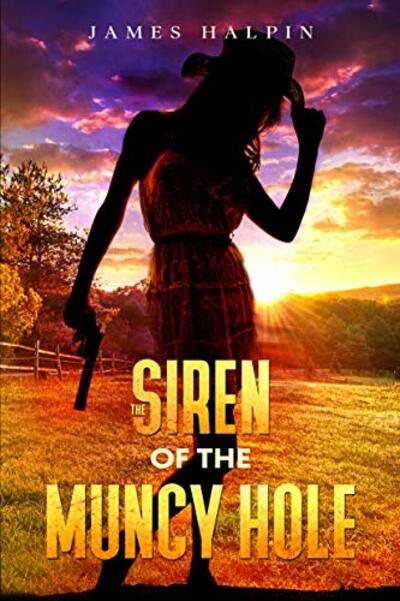 The main theme of this book appears to be, “How far will a mother go, to protect her daughter?” Based on what we read here, the answer to that question appears to be, “Very, very far.” The heroine is Sherica Daniels, who initially appears to have somewhat lucked out and escaped a nasty and abusive relationship. Her husband, drug addict Roy, has just died following a pair of botched armed robberies. That should leave her and teenage daughter Ashlynn to get on with their lives. Not so fast. For it’s only a short while before Roy’s drug dealer, Tokie, shows up. He’s demanding Sherica pays her husband’s debt – and more, because he believes she knows where the unrecovered loot from Roy’s robberies was hidden. When she fails to convince Tokie otherwise, he abducts Ashlynn.