★★
“Moral: never try and take a pregnant woman’s gun.”
 This begins, literally, with a bang. We first meet the heavily pregnant Maria (Docampo), carrying a rifle and preparing to leave her house. A man rises from the floor, and after a struggle for the gun, it goes off, and he drops back down. She hits the road in their pick-up truck, fearful of what she had done, and intending to head back to Naicó, the town where she was born. However, it’s not long before the people she meets on the road, seek to dissuade her from going there. It seems like everyone has a weird story about why her destination is not a good idea, from mysterious lights that abduct you, to a cult of blond people with possible Nazi connections.
Meanwhile, in flashback, we also see that what happened was she had been escaping from her abusive husband, Lionel (Ajaka) whose treatment of her had become too much. Despite her fears, it turns out she had not killed him, just grazed his head with the bullet. He’s now coming after her, and is not happy about her leaving with their unborn child. It’s all a very slight story-line, and feels more like an Argentinian take on that quintessentially American genre, the road movie. In particular, it’s not so much about the destination, as the journey, the people you encounter along the way, and the way in which you interact with them.
For example, Maria and Lionel both meet the same man at different points. She ends up buying him a meal in a roadside restaurant, despite being strapped for cash, and in turn, he marks the location of Naicó on her map (its absence being another element of weirdness about the place). He, on the other hand, points a gun in his face and harshly interrogates him, as soon as he realizes that his victim had met Maria. It’s an obvious contrast – though like so much about the film, I’m not very sure what point Romero is attempting to make. Even at 75 minutes long, it all feels quite impenetrable, not least due to the lack of resolution. Oh, the Maria/Lionel situation is resolved. It’s just everything else that’s left open to your own interpretation.
The movie includes narration, apparently in hindsight, by her then unborn son, though again: I’m uncertain what is the point of lines like “This story somehow resembles a hunting.” Well, yes? There’s no doubt Maria is certainly attached to her weapon, even if most people she meets, stop seeing her as a threat after they recognize her condition. The film is at its (rather underwhelming) best when she is interacting with others. Her family seems well-known and her late father, who died with her mother in murky circumstances, was the former mayor of Naicó; the resulting dialogue has a relaxed and conversational approach that’s easy to listen to. But once the end credits rolled, I was left largely unsure about the purpose of the whole endeavour.
Dir: Alberto Romero
Star: Guadalupe Docampo, Alberto Ajaka, Héctor Bordoni. Mario Alarcón
a.k.a. Hell and Back






















 Football is known as “The beautiful game,” but you wouldn’t know it based on this documentary, which seems perversely intended to remove anything like that from its topic. It focuses on
 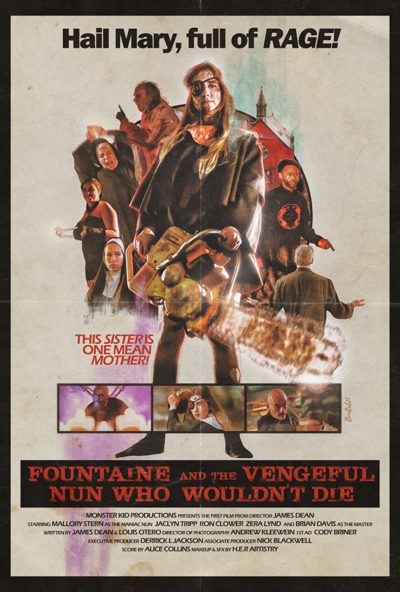 You will probably understand why the title more or less rocketed to the top of my watch-list, especially when accompanied by the poster (right). Naturally, it was almost inevitable that it could not possibly live up to either: the question was mostly, how far short it would fall. The answer is, “a fair bit, yet not irredeemably so,” even if the first half if considerably duller than I wanted. Indeed, it’s also rather confusing, in terms of what’s going on. As well as I can piece things together, Mary (Stern) is a nun who gets sent to an asylum after losing her sister, though it turns out to be less a mental-care facility than you’d expect.
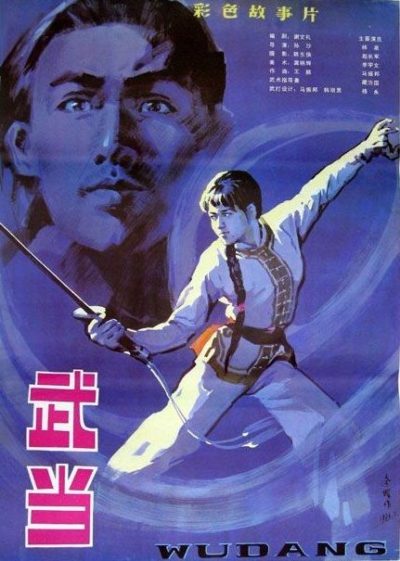 Chinese kung-fu movies took off in the early eighties, after the success of Shaolin Temple, starring an unknown teenager called Jet Li. Over the years that followed, a slew of imitators followed, with varying success. Where these largely differed from their Hong Kong counterparts, were in a more grounded approach to combat: wire-work and trampolines were avoided, in favour of players who (like Li) were martial artists first, and actors second. I believe the same is true of the heroine here, though information about Lin is hard to come by. According to the IMDb, this was her acting debut, though it’s tricky to grade her work there, thanks to the rather clunky dubbing on the print viewed for this review.
 I think it’s safe to say you’ll probably be able to decide within a few minutes, whether or not this is your cup of tea. The opening scene is set in a strip-club where the next act on the main stage is dressed as a nun. After a couple of minutes, she pulls out an unfeasibly large weapon from under her clerical garb, and guns down the mobsters present, in gory fashion. Thereafter, you can expect more of the same, along with extremely savage jabs at organized religion. Catholicism is the main target, but Judaism and Hinduism get their share of jabs: for example, Gandhi is a martial arts teacher. Or there’s a Yiddish hitman, Viper Goldstein (Lavallee), who practices the art of “Jew Jitsu”. If you just roll your eyes at that, this is likely not for you. However, if you roll your eyes and also laugh, then you, like me, may be the intended target audience.
 This dystopian future takes place after the United States of America is no longer united, having fragmented into a group of disparate regions that exist in an uneasy piece with each other. The heroine is 14-year-old Caroline, who lives in a remote part of the Appalachians, her town loosely affiliated to the People’s Republic of Virginia. She’s a scout, and one day encounters forces from the Democratic Alliance. The population of her village who escape, head towards the state capital of Warrenville, pursued by the invading army. On the way, Caroline begins to come into startling abilities which were literally injected into her as a small child.
 Of all the scathing reviews this has accumulated on Letterboxd.com, I think my favorite is the one which starts, “Obviously written by someone who knows absolutely nothing about the penal system.” Yes, seriously. I strongly suspect things like this were written by people who know absolutely nothing about women-in-prison films, and who inexplicably managed to overlook the title of the damn movie in their expectations. Me, I had initially overlooked this, believing it to be just a retitling of the same director’s
  Not to be confused with the 2021 rape-revenge film of the same name (which I’ll get round to reviewing down the pipe), this is somewhat lighter in tone, though there’s a case to be made that this clashes terribly with the subject matter. Jenny (Hsu) is a journalist, working under Cheryl (Garofalo),and her work has brought her to the attention of an online stalker, who sends her increasingly disturbed and disturbing emails. When the harassment begins to move from the cyberworld into the real one, and the authorities fail even to reach the level of disinterest, Jenny teams up with room-mate Lisa (Morales), to hunt down the perpetrator and bring him to justice themselves.
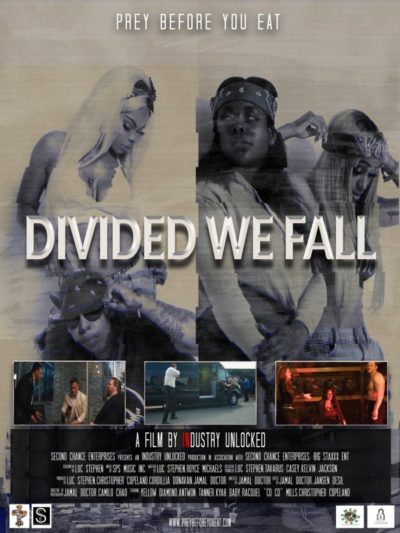 We begin with the usual disclaimer for films of this kind: middle-aged white guys like me are not the target audience. However, I think it’s fair to say that concepts like story-telling and character development are not limited to any particular race, colour or creed, so I still feel equipped to offer an opinion on these aspects. Though, actually, what felt like it worked best here was its strong sense of place. I’ve never been to the projects in Jamaica, New York (though Chris grew up elsewhere in the same borough of Queens). But the film does a good job of showing you that environment; it certainly works better than the (largely token) efforts to convince you some scenes take place in Miami, or even Moscow.