



★★
“Megumi Kudo: the real ‘Barb Wire’…”
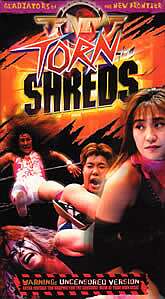 I really wanted to use little barb-wire icons to mark this one, instead of the usual stars, but whenever I typed in “barb wire jpg” into search engines, I always seemed to find myself staring at Pamela Anderson. Yes, get those digressions out of the way early, that’s what I always say…
This is the sixth in Tokyo Pop’s ongoing series of releases featuring Japanese wrestling from the FMW (Frontier Martial-arts Wrestling) federation, and while the others have all contained women’s matches, it’s the first to concentrate exclusively on this angle. So credit to them for putting out what is – correct me if I’m wrong – the first official release of Japanese women’s wrestling in the West. Unfortunately, that’s largely where the credit stops as far as they’re concerned.
To start with, FMW are a long way from being the best Japanese federation for women’s wrestling – they don’t even bother these days, having given up several years ago (these bouts largely date from 1995, so are hardly current) and think they might even have gone bankrupt now. Secondly, in line with FMW’s policy of hardcore – they’re kinda the Japanese equivalent of ECW – the women have largely been chosen for their willingness to do the extreme stuff, rather than any actual wrestling ability. This shows itself most prominently in the case of Shark Tsuchiya, whom I’ve encountered on several “unofficial” tapes, and is definitely one of the worst pro wrestlers I’ve seen. It’s significant that the best wrestler to be seen in this title is KAORU, who’s actually from another federation.
 Thirdly, while they could have cherry-picked the best matches, most of the fights here are off one card, including lame rookie bouts not really worthy of note. [People like Sonoko Kato might be good now, but she had a lot to learn in those days…and was unlikely to do it in FMW] Fourthly, and most damningly, since the others are perhaps less within Tokyo Pop’s control, the two presenters are awful. John Watanabe is clueless, while his irritatingly fey partner, Eric Geller, annoyed me in a disturbingly Tarantino-esque way. On the DVD, you can at least switch to Japanese commentary during the matches, but you will want to skip their inter-bout “banter”.
There’s only one bout here that’s genuinely memorable, and it’s purely on a geek-show level. It’s part of the long rivalry between Shark Tsuchiya and the queen of FMW, Megumi Kudo, and is notable for it being a barbed-wire match, with the ropes of the ring being replaced by strands of (entirely genuine, I might add) barbed-wire. Having seen Kudo fight in cards for other promotions, I know she can actually wrestle, but there’s no sign of that here, stuck as she is with a useless lump like Tsuchiya. The bout follows almost the same pattern as all their others: Tsuchiya brutalises Kudo, Kudo bleeds, Kudo comes back gallantly.
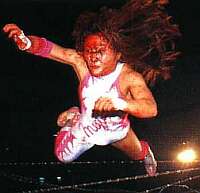 The only major change here is how much Kudo bleeds: it’s buckets. I’ve seen few men’s matches as gory, and this is certainly among the worst of women’s bouts (there was a cage match pitting Shimoda and Mita against Watanabe and Ito that may come close). Kudo takes some severe bumps, particularly against the folding table that just won’t give, taking four attempts to break it [the Japanese must make them of stronger stuff!] You’ll probably find yourself shaking your head as Kudo’s face becomes totally red, a mask of blood.
The DVD offers some extras: brief highlights from an additional bout, extra footage of Watanabe and Geller (oh, joy…), a picture gallery of FMW wrestlers and some cheesecake footage of Kudo, which you’d be advised to watch before you see her gushing blood, as that will likely destroy any cuteness factor present for her. In other words: nothing to sway the vacillating purchaser.
As mentioned, it’s good to see this release, even if as an introduction to Japanese women’s wrestling, it’s largely a failure, being neither representative, nor good enough to attract the casual viewer. Meanwhile, the hardcore fan will likely have the bouts already, and will certainly possess better. This is a shame since there are some phenomenal athletes to be found, and it’s an area deserving of exposure here, particularly given the largely-woeful state of mainstream women’s wrestling. If it opens the gate to other, better titles, it’ll have performed an excellent, much-needed job, but on the whole, you should go for some of the unofficial tapes available through the Internet: names to look for would include Manami Toyota, Akira Hokuto, Aja Kong, Kyoko Inoue and Mima Shimoda. And definitely not Shark Tsuchiya…
Star: Megumi Kudo, Shark Tsuchiya, KAORU, Combat Toyoda
 Eryn Cates (Hague) returns home to Texas from finishing school in New York, to find her family farm teetering on the edge of foreclosure [maybe if they hadn’t spent all that money to send her to finishing school in New York…]. In a misguided attempt to help things, her brother tries to rob a stagecoach carrying payroll, but is injured. The attempt fails, but local mogul Mortimer (Harris), who holds the loan on the Cates farm, sees a chance and pockets the loot. Two Texas Rangers, including the young and handsome Flint (Hagenbuch) show up to investigate the robbery, but it’s up to Eryn to save the family property, take on the mantle of the bandit, fend off the unwanted advances of Mortimer and engage in pseudo-romantic banter of the least interesting or convincing sort with Flint.
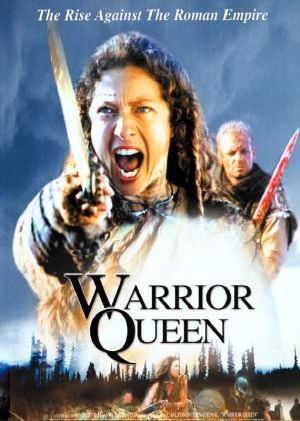 Probably best to approach this with few expectations of this being a factual representation of the time; more than once, it felt clearly like the writer was using the Roman occupation of Britain, and Boudica’s rebellion, as a metaphor for American’s involvement in Iraq. There are certainly enough anachronisms, particularly in the dialogue (the Roman Emperor chatting informally away with the leader of a British tribe, and references to “terrorists”), that it seems deliberate. The basic story is the one well-known of legend: after her husband’s death, and the raping of her daughters by the invading Romans, Boudica (Kingston) led her tribe in an initially successful revolt, only to be stopped when the full force of the Empire was turned on them.
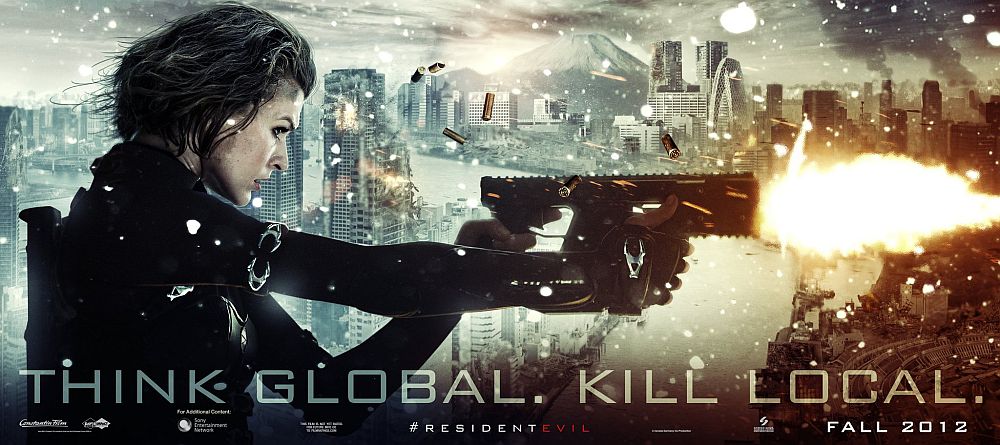 ★★★★
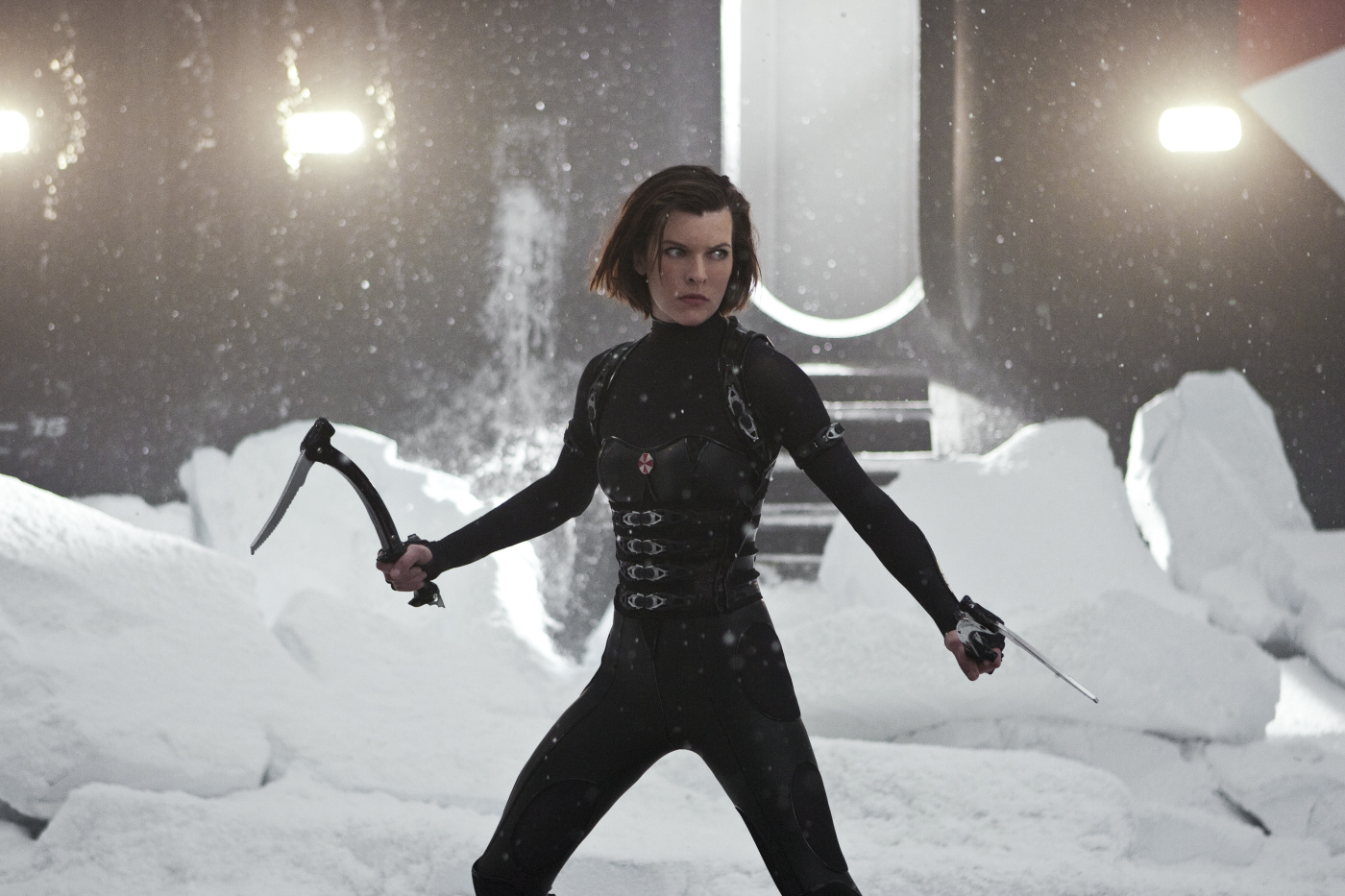
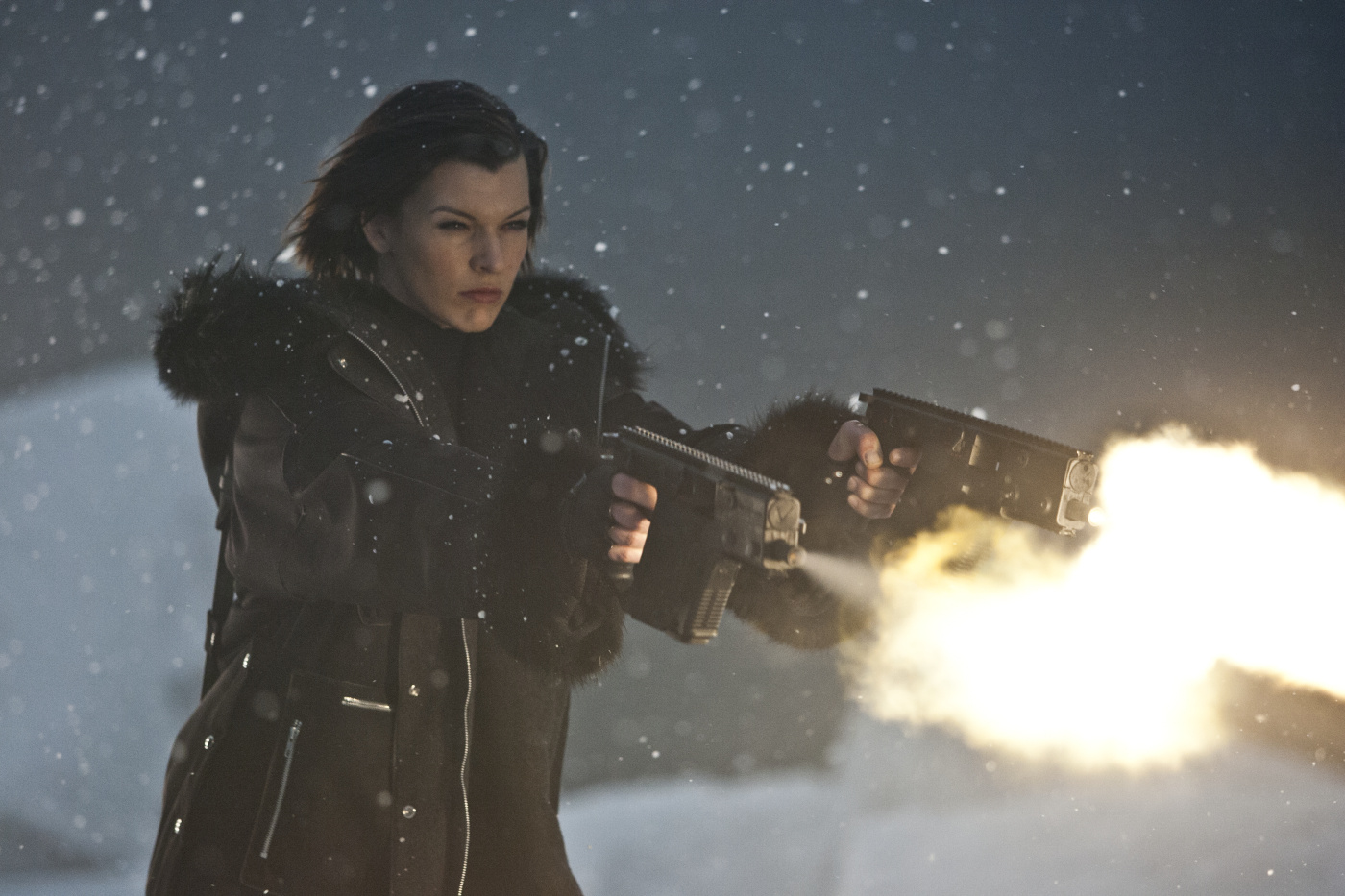
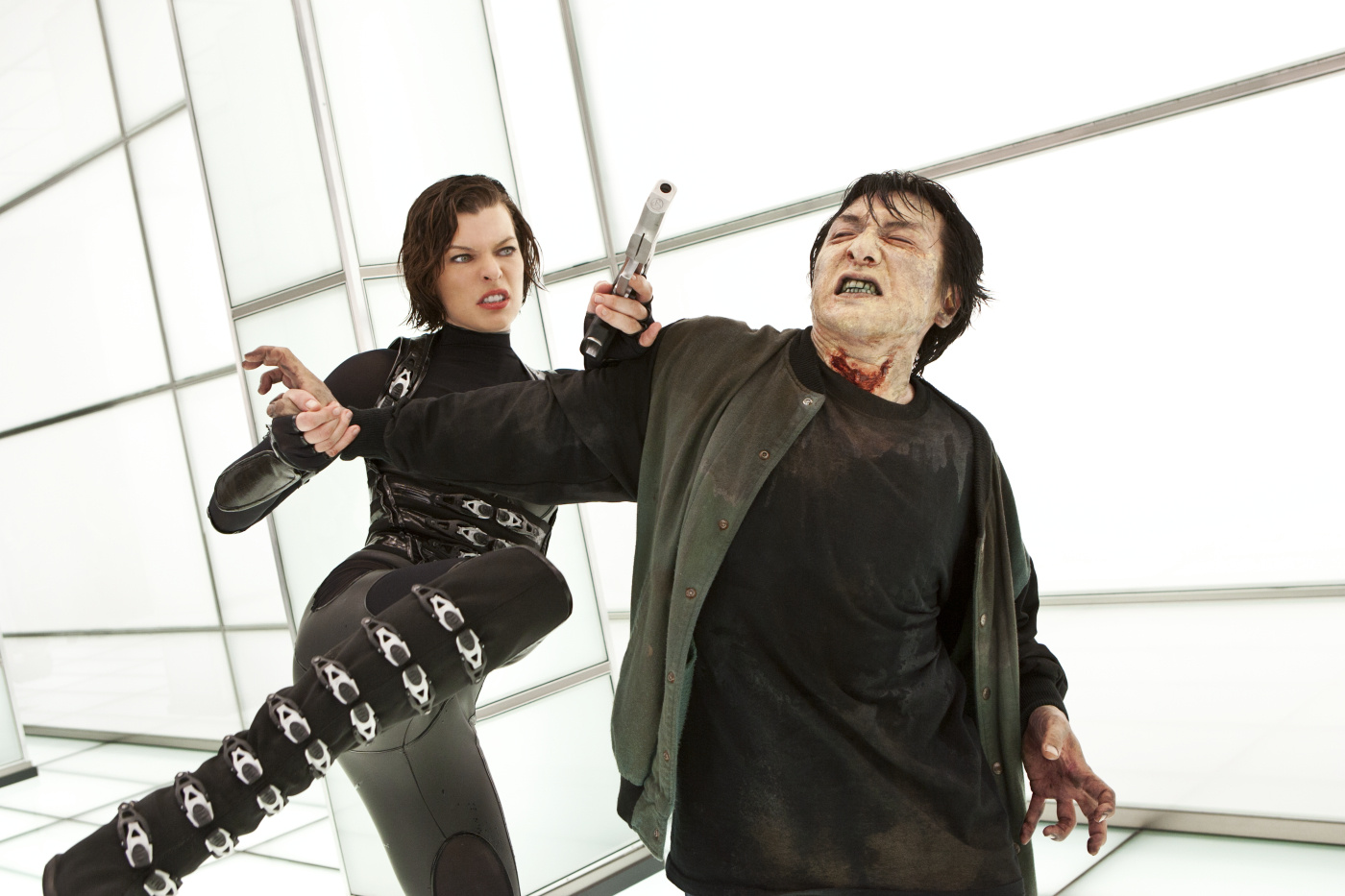
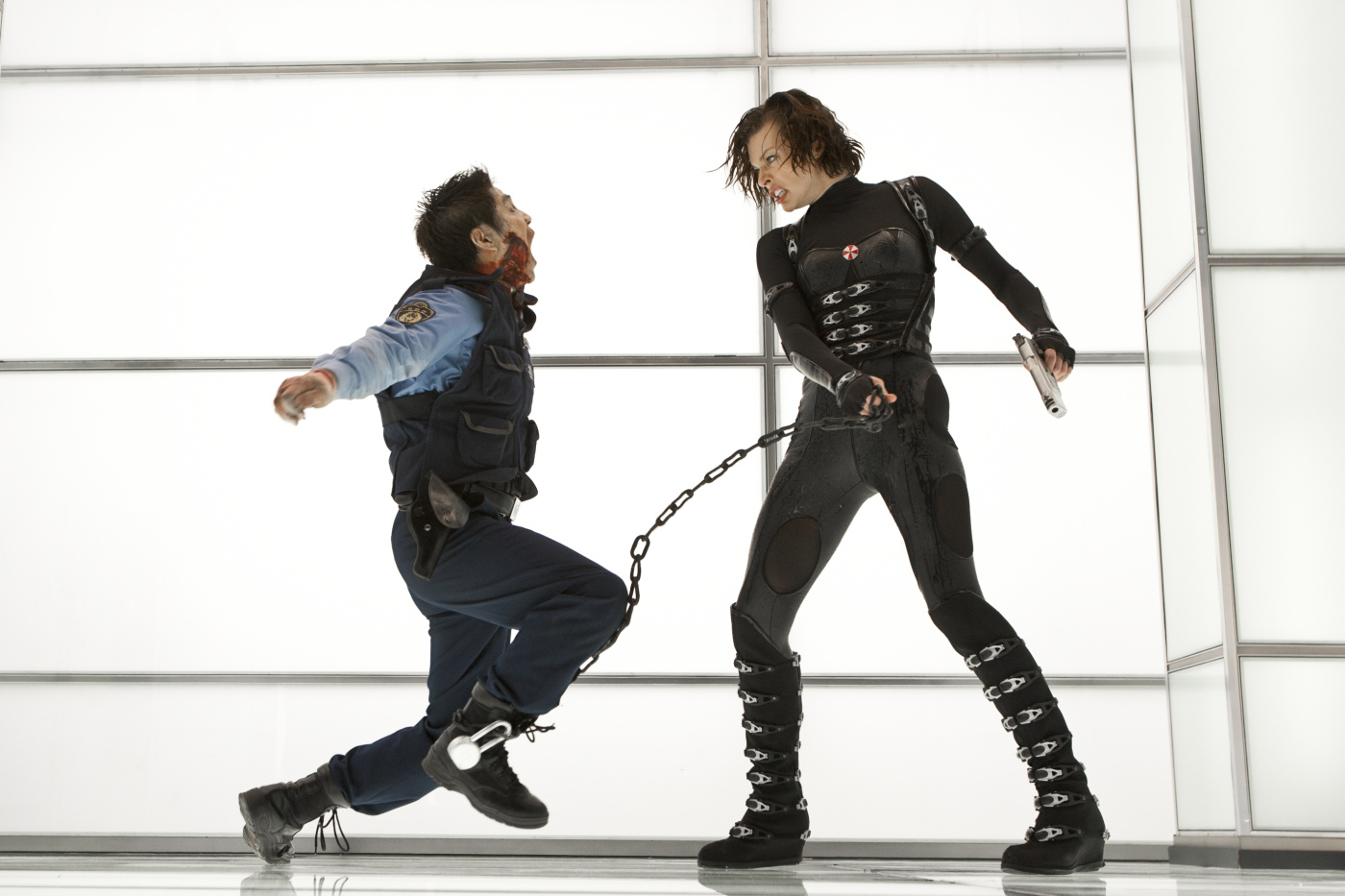
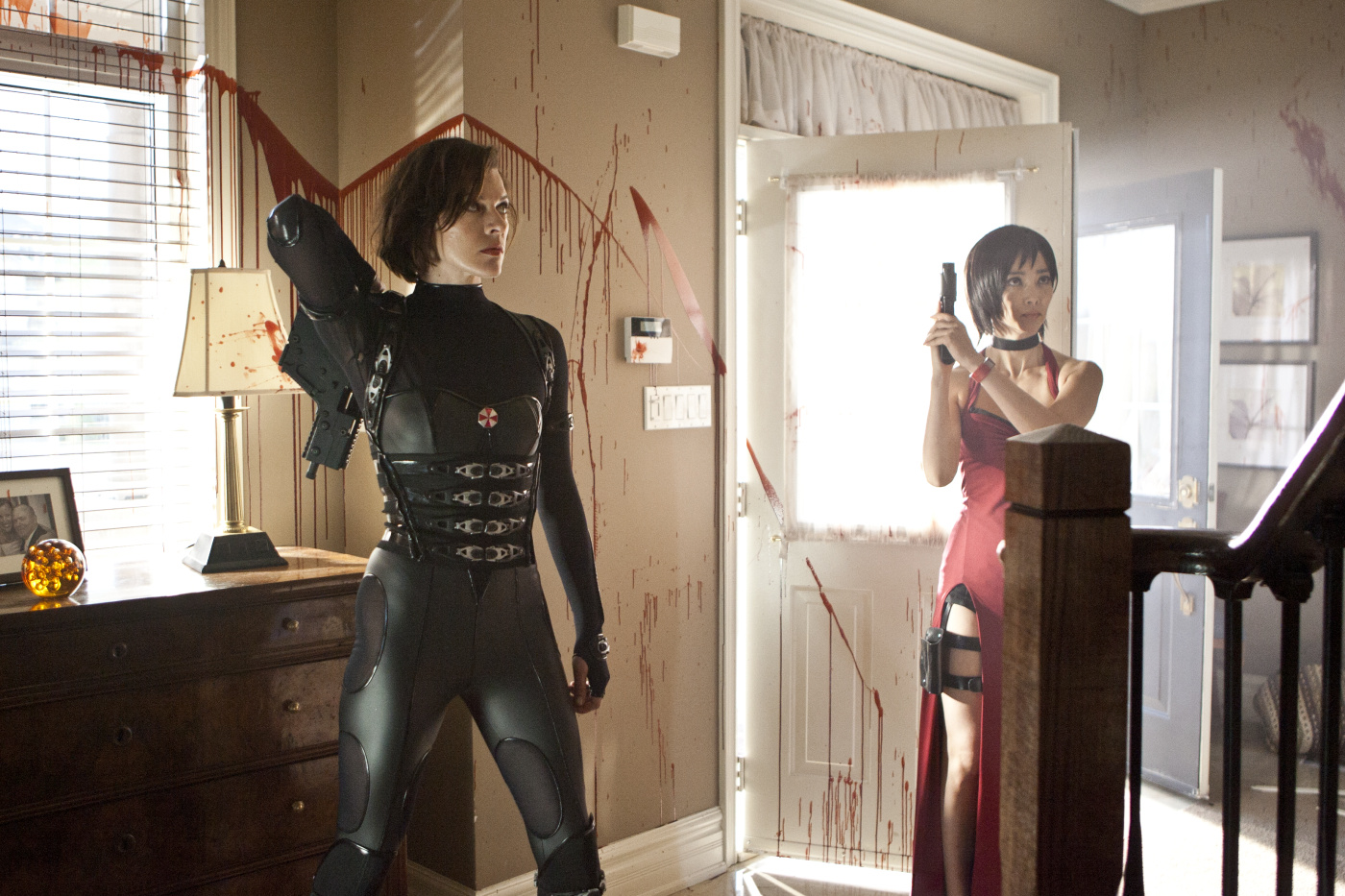
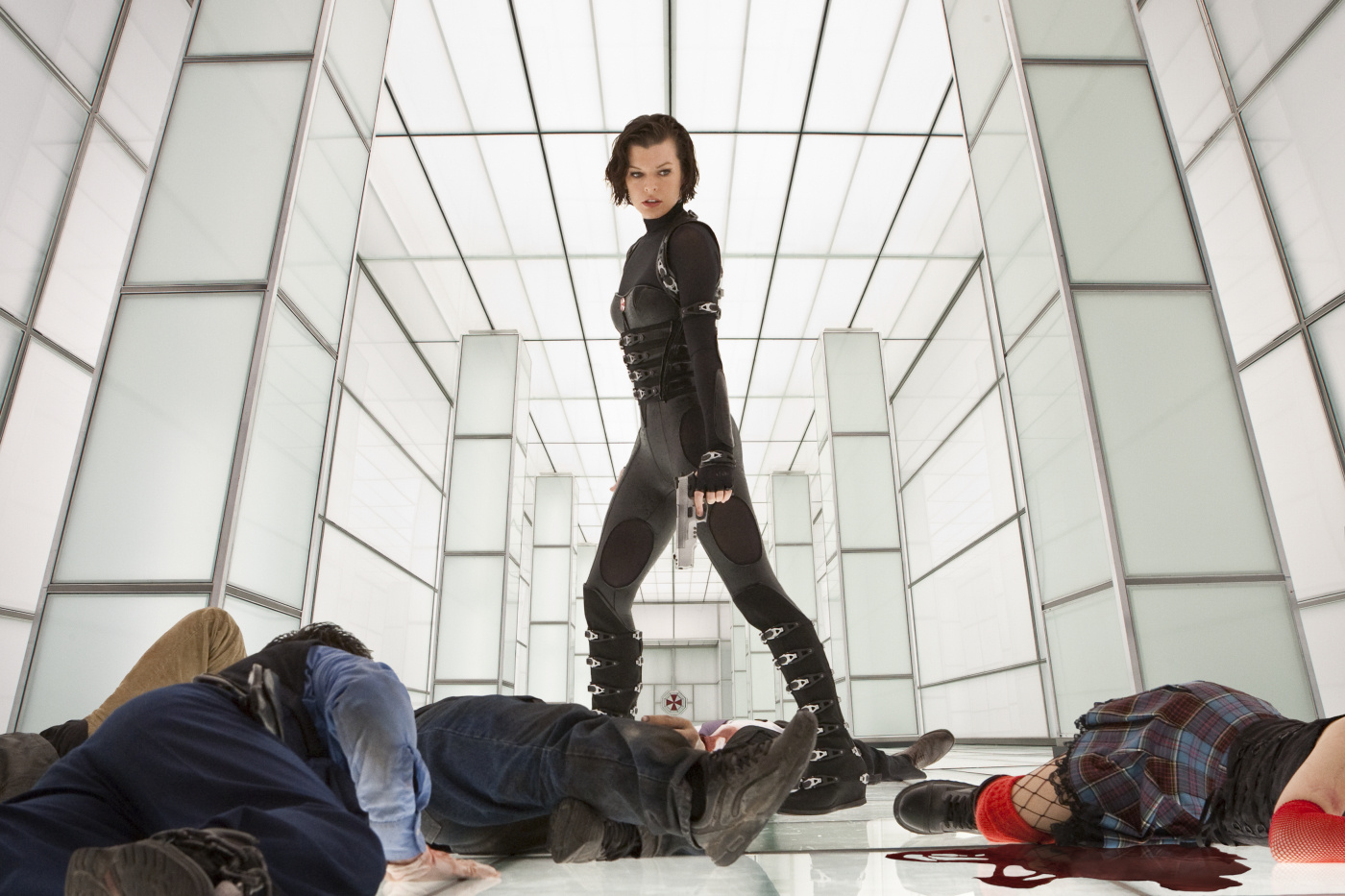
★★★★ While being (again) largely disappointed by the previous entry, Afterlife,
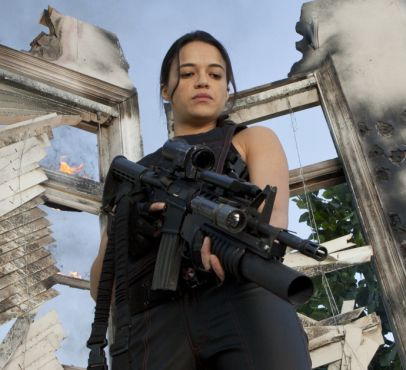
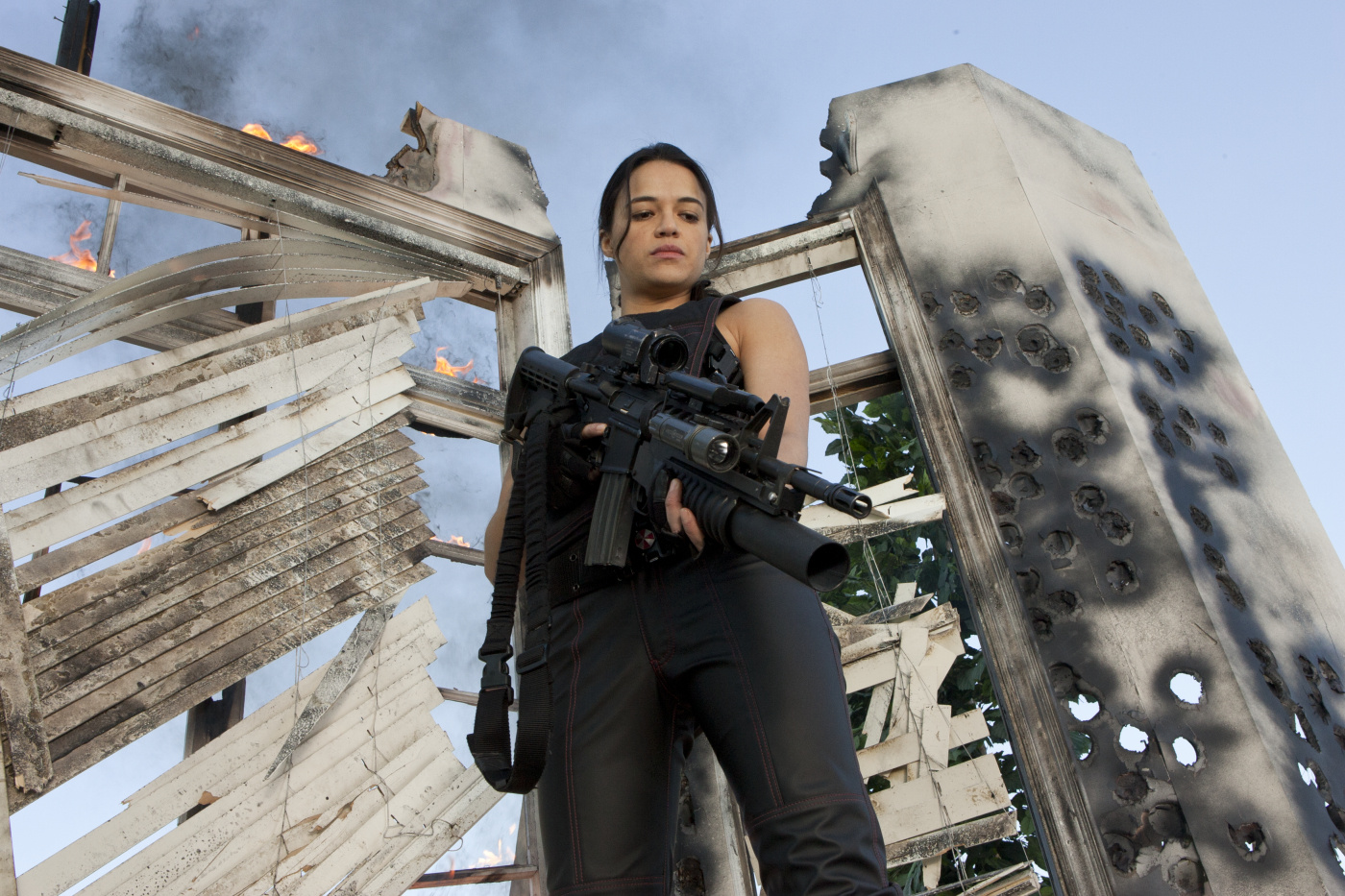
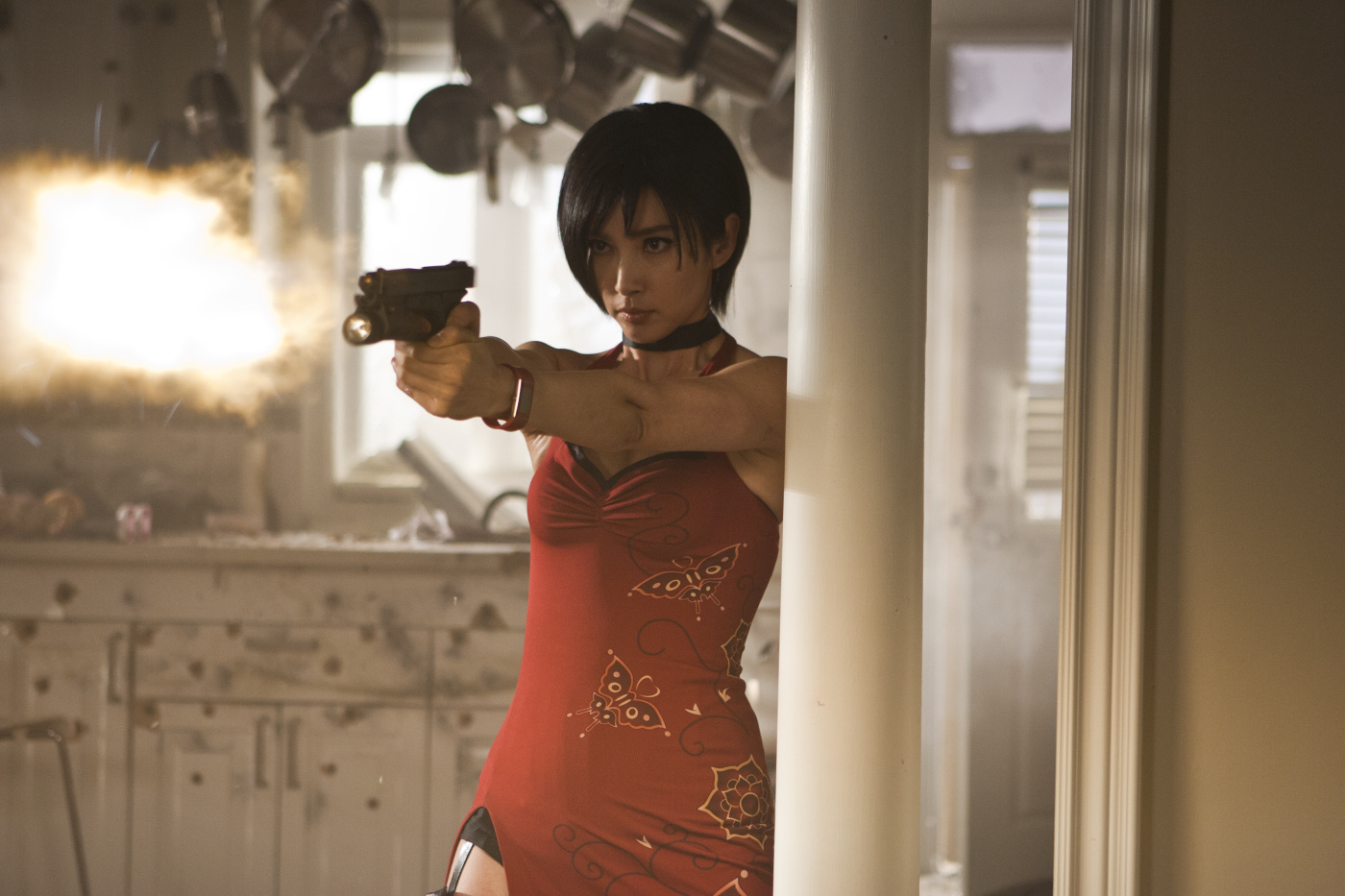
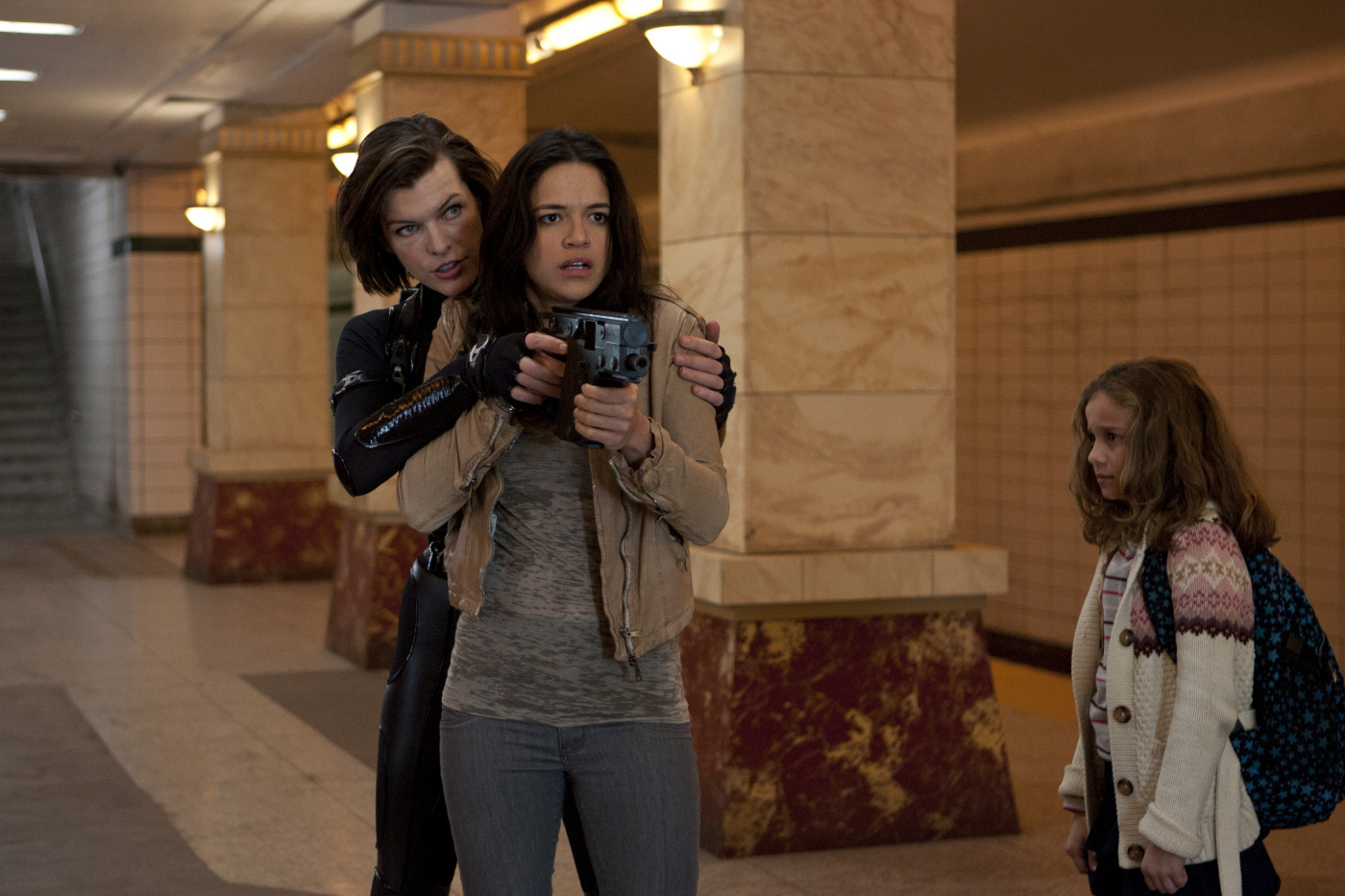
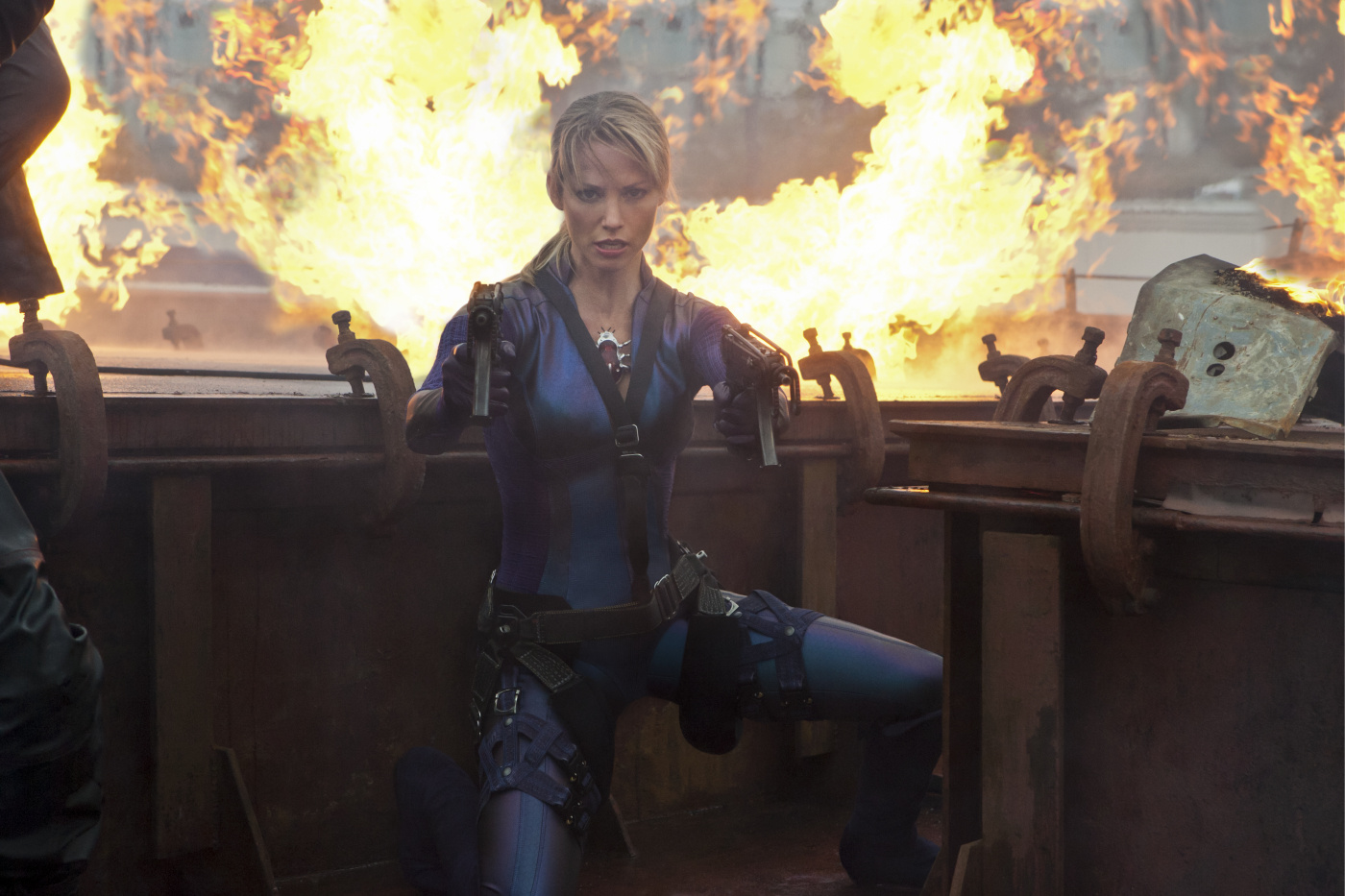
 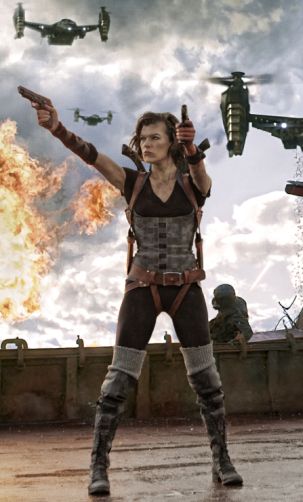 Though actually, this is almost a “greatest hits” package, especially in terms of participants. Not seen since the first film, are Rain Ocampo (Michelle Rodriguez) and James Shade (Colin Salmon). Apocalypse brought us Jill Valentine (Sienna Guillory) and Carlos Olivieira (oded Fehr), while Extinction introduced the audience to Claire Redfield (Ali Larter) and K-Mart (Spencer Locke). Finally, Afterlife was the debuts of Luther West (Boris Kodjoe) and Chris Redfield (Wentworth Miller). But they are
  It might be wise for Jovovich to contemplate retirement from the series. After all, she turned 37 earlier this month, and there are few things sadder than an action hero/ine desperately clinging on, past their prime (see also, Universal Soldier: Day of Reckoning). She’s not quite there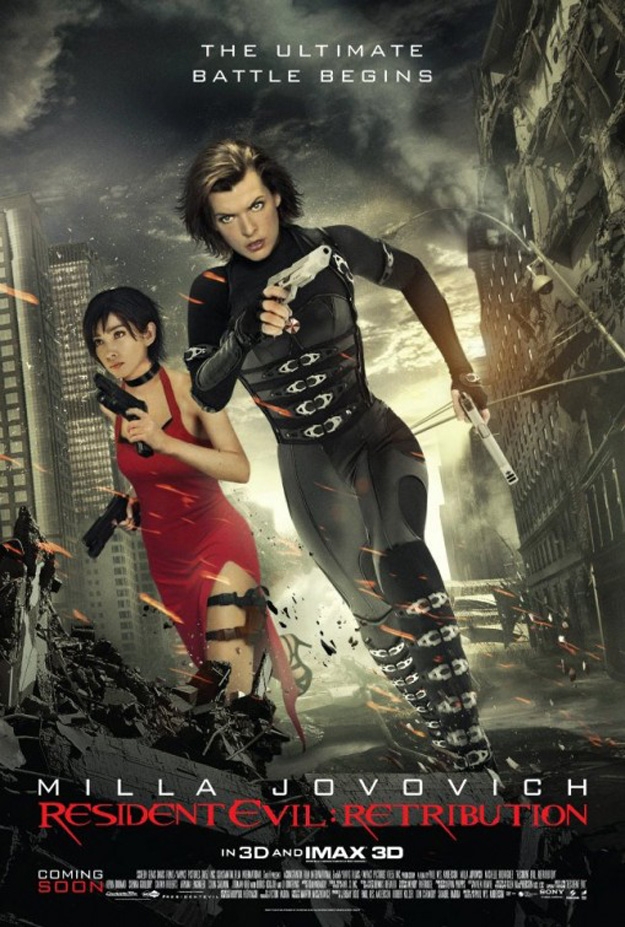



 Of course, this being independent wrestling where the phrase “card subject to change” is a given, the eight women scheduled to complete ended up being seven and a man. MC Ian Rotten said that Delilah Starr had a car-crash on the way here, and another competitor, LuFisto, had broken her hand fighting another notorious garbage wrestler, Necro Butcher, in a Canadian Death Match tournament called “Bloodstock”. Taking advantage of the open spot was SeXXXy Eddy, a male wrestler with a long history of intergender matches, which his in-ring persona thoroughly enjoyed, as you can imagine from his name. The roster also included reigning IWA women’s champion Mickie Knuckles, Rachel Putski (grand-daugher of WWE Hall of Famer Ivan Putski), and two joshi wrestlers, Mayumi Ozaki and Sumi Sakai.
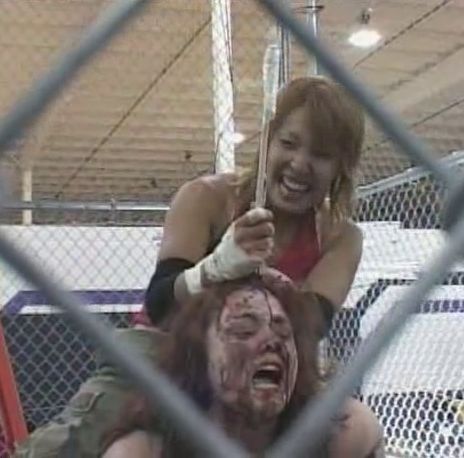 The final, between her and Knuckles was officially described as a (deep breath!) “No Rope Barbed Wire Fans Bring The Weapons Electrified Lighttubes Cage Match”. Basically, pretty much anything went, inside a steel cage which came already furnished with a ladder, beer barrel, barbed-wire ropes, a host of other offensive shrapnel (barbecue fork, baking tray, and bizarrely, a light-up magic wand with a star on the end) and enough fluorescent light-tubes to illuminate Vegas – yes, some of which were plugged in and working, for added emphasis. It is, I think, the first wrestling bout I’ve seen where the referee wore eye-protection. Knuckles hadn’t even bothered to clean up after the last bout, coming to the ring still covered in dried gore from her semi-final.
 ★★★
★★★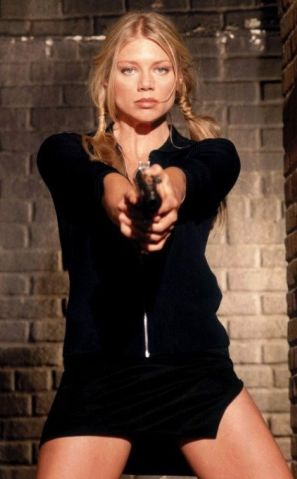 The other chance is that Section One, their version of Division, is not malicious – at least not in the same way. It’s certainly a heartless organization, which is utterly ruthless, and prepared to dispose of anyone who may interfere with their actions, but it’s more an awareness that when you’re dealing with terrorists, organized crime or other threats to the country and world, you can’t be unwilling to get your hands dirty. It leads to a significant bleaker overall tone, and is amazingly prophetic, given this was screened well before 9/11 led to this attitude become a necessary part of national security. Early on, it’s established that you can never trust Section heads Operation (Glazer) and Madeleine (Watson, who was also part of the remake, playing Senator Pierce – her given name there was also Madeleine), to the extent that their deceit becomes almost a cliché.
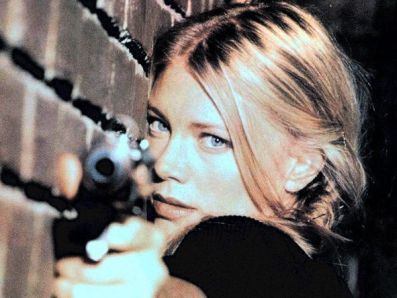 On the other hand, apart from the lack of action, the angle I liked least was the relationship between Nikita and her handler/fellow agent, Michael (Dupuis). I’ll come right out and say it: I hate ‘shippers, and storylines that pander to them are nothing more than an irritant to me, especially in shows which I watch for action, where they do little except interfere with the good stuff, in my humble opinion. [We’ve seen this in the new incarnation, where the show has disintegrated from one of the best shows on TV, into little more than Mr. and Mrs. Smith And Friends.] I’m definitely a “noromo”: If I wanted unresolved sexual tension and relationship nonsense, I’d watch daytime soap operas. Right from the first time Nikita and Michael meet, it’s doe-eyed heaven, even though there is obviously little or no honesty, trust and anything else on which a genuine relationship could ever be founded.
 ★½
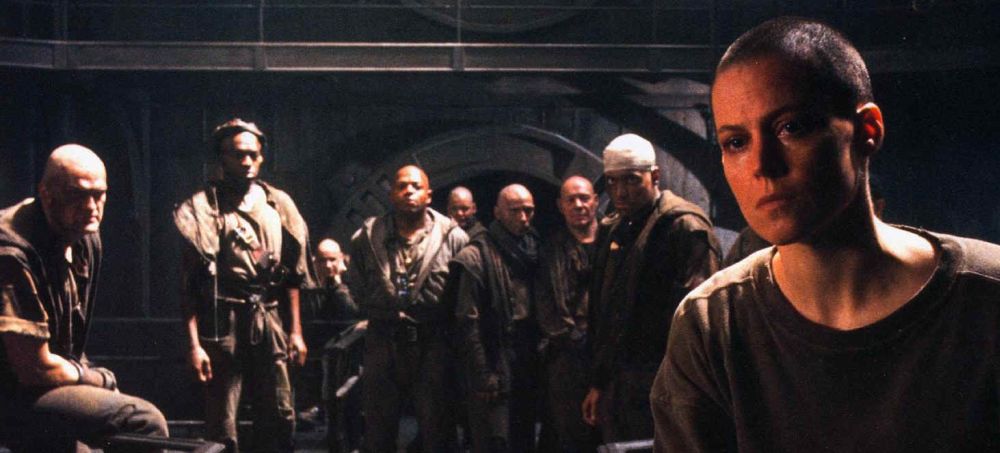
★½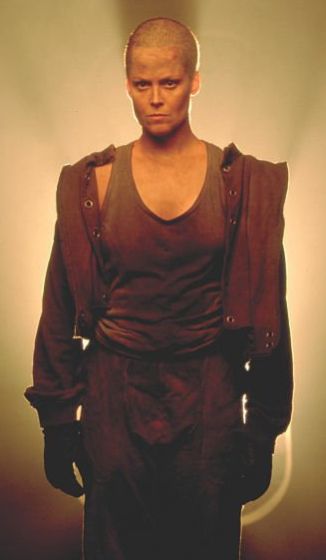 Right from the get-go, the script basically junks its predecessor. An emergency on the spacecraft bringing Ripley, Newt, Hicks and Bishop home causes it crash-land, with Ripley apparently the only survivor. It’s a near-derelict former prison planet, which was about to be decommissioned, but the inhabitants, under spiritual leader Dillon (Dutton), opted to stick around, under minimal supervision. They’re none too happy to have a woman dropped into the middle of their society, and a message is sent to request Ripley be removed as soon as possible. Needless to say the Weyland-Yutari Corporation are more than happy to oblige. However, it soon becomes clear that Ripley was not the only living thing to escape the crash, as local residents start turning up “diced.” When it’s confirmed, through Ripley re-activating Bishop, that there was indeed an alien present: destroying it is necessary, not only to survive, but also to stop it from falling into the hands of Weyland-Yutari.