
★★★
“A taste of anti-paradise”
 Somehow, I get the feeling I should have liked this more than I did. The elements are all these – high-energy, hyper-violence and no shortage of style – but, somehow, the whole felt rather less than the sum of its parts. It’s a post-apocalyptic scenario, after the corporate wars have pretty much trashed the planet, and the Council of Nine hand out rewards for the deaths of white-collar criminals. These are collected by the titular hunters, the best being Drifter (Marsden) and Mary Death (Pitre) – the latter is a star, followed by fans and paparazzi, much to the chagrin of the former. However, the Council suddenly issue a kill notice for Drifter; he heads to confront them and sort out the “mistake”, with Mary in hot pursuit, intent on collecting the bounty. Of course, and after quite a bit of the old ultra-violence, Drifter and Mary team up, to take down the real bad guys.
An adaptation of a graphic novel, it does, at least, a better job of capturing the grindhouse philosophy than the limp Machete Kills. The inspiration – actually, it’s more shameless plagiarism – is more Mad Max 2, particularly in its stubbly hero and an extended chase sequence across the desert, in which he’s chased by a pack of nomads with painted faces. That’s perhaps the problem, because Drifter was a great deal less interesting than Mary Death to me; Marsden delivers a bland performance, over so much screen-time that this almost didn’t meet the necessary minimum standards for GWG qualification. I could also have done without the embarrassingly blunt attempts at “satire”, which feel like they came from an earnest late-night session at a liberal arts college. It’s not clever and it’s not funny.
But the bits that work, work quite nicely. There’s a great scene where Drifter is being yelled at in a soundproof office by the lead villainess (Loken), who is oblivious to the mayhem being wreaked by Mary on the other side of the glass. Indeed, virtually every time Ms. Death is on screen, the interest level increases significantly, and not merely for the obvious reasons. Pitre struts, stomps and raised the sardonic eyebrow to such impressive effect, that you wonder why you’ve never heard of her before. If Drifter is reheated leftovers of every post-apocalypse hero from the past 20 years, Death gives us something new. Hopefully, if there’s any sequel, Marsden will be “unavailable”, and the makers can concentrate much more on the heroine.
Dir: Henry Saine
Star: Matthew Marsden, Christian Pitre, Barak Hardle, Kristanna Loken

 This opens with two young women, Violet (Bledel) and Daisy (Ronan), peeved because their favourite singer, Barbie Sunday, has cancelled an upcoming concert, to which they’d been looking forward. Their conversation continues as they approach an apartment, curiously dressed as nuns, and delivering pizza. However, curiosity will likely turn to bewilderment: when the door is opened, the girls both pull out hand-guns, and a brutal gun-battle erupts. Welcome to the surreal, yet oddly heart-warming world of Violet and Daisy, two hit-women who are talked out of a planned holiday with the promise of a job, offering them enough money to buy their hearts’ desires: clothes from Barbie’s Sunday’s fashion line. Except, their target, Michael (Gandolfini), seems bizarrely happy to see them. I mean, as well as him helpfully telling them where to get additional bullets, after their misguided attempt to shoot him with their eyes closed, none of their other victims have ever baked them cookies before…
 From there, things are gradually revealed about the participants and their various issues. Violet, the older assassinette (Bledel was almost 30 while shooting this), acts as a mentor to Daisy, who has just turned 18, and hasn’t yet come to terms with the violence required for the job. It’s an interesting contrast to Ronan’s younger, somewhat similar, yet far more callous character in Hanna. Meanwhile, lurking in the background is Iris (Jean-Baptiste), the number one killer, who is intent on ensuring that Violet + Daisy don’t feel too much sympathy for their intended victim, and back out of the job. Michael, meanwhile, is keen for them to get on with it, because a pair of more unpleasant fates are also coming towards him. It’s nicely nuanced, shifting from blackly-comedic – check out V+D’s “internal bleeding dance” – through to poignant and emotional, the latter enhanced by the death, earlier this year, of Gandolfini.
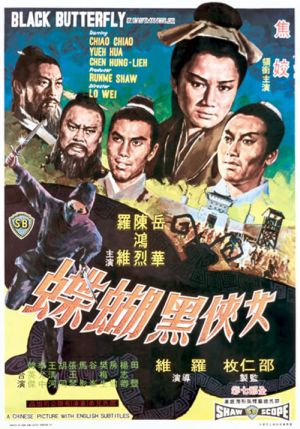
 We’ve covered a couple of entries in the series previously, but I’ve decided to start work a rather more comprehensive set of reviews, systematically watching them in order, rather than the sporadic pieces previously published, as they fell across my retinas. Some of those pieces were also reprints from a previous publication, and were also shorter than the ones I’ve grown accustomed to writing. This was largely inspired by stumbling across the first movie, dating from the seventies, and realizing that I could now cover the entire set. I hate incompleteness. :) This will be an ongoing project, likely taking me through the winter and into next spring, so check back often (okay: fairly often!) for updates.
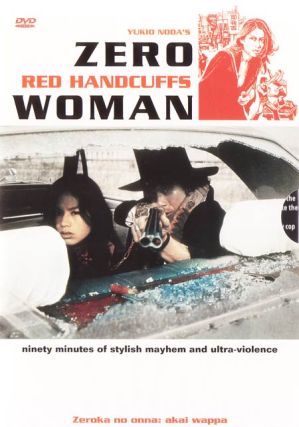 When the series started in 1974, it originally appeared to be trying to take on the Female Convict Scorpion series at its own game – both were inspired by Toru Shinohara manga series. However, going by the fact it took more than two decades for a second entry in the series, I can only presume the commercial returns weren’t anywhere near as strong. This starts off well, with policewoman Rei (Sugimoto) luring in, and then blowing away, the man responsible for torturing and killing another woman. Turns out the perpetrator was a diplomat and in the resulting scandal, Rie is sent to jail. Her chance at redemption comes when a gang of thugs stumble into the kidnapping of the daughter of a politician (Tamba): to avoid a scandal, Rie is offered a pardon if she infiltrates the kidnappers and kills them all. Initially, all goes to plan, with the first member taken out quickly, but it soon becomes clear the other members are rampaging psychos, and the situation rapidly spirals out of control, to the point where the politician yanks his support and orders the deaths of everyone, in the name of damage limitation – including both his daughter and Rie.
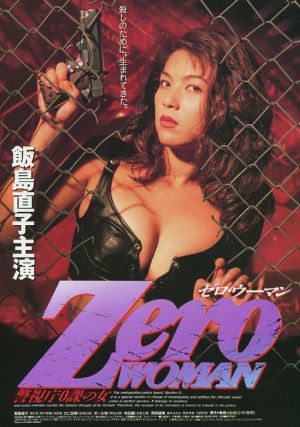 Probably the least accurate title of any film ever – at least Friday the 13th put out a few movies before using “final” – you definitely should begin here if you’re looking for much coherence. Rei (Iijima) is now partly employed as secretary to the head of Section Zero, but also takes out criminals for whom traditional channels of law enforcement aren’t enough, for one reason or another. She also pals around with Takako (Fukuoka), a detective from another section and a girl he helped bring out of delinquency, in what’s vaguely intimated as a love triangle. One night, they witness a hit and run, and discover the perpetrator (Suzuki) is the daughter of a powerful economic figure. Despite encountering official resistance, Rei and Takako persist with their investigation and, inevitably, this brings out more robust sanctions.
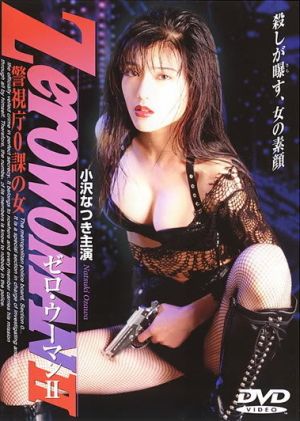 Confusingly titled in the West, without any indication it wasn’t the first of the rebooted franchise, this perhaps explains why there’s little or no explanation of… Well, anything, really. What is Section Zero? Who is Rei? Where did she come from? “Never mind about that,” seems to be the film’s attitude, “Here are Natsuki Ozawa’s breasts to distract you from such trifles.” That’s particularly the case early on, when it seems Rei is unable to go five minutes without showing them off, whether it’s through being molested, becoming inescapably randy or simply taking a soapy shower (to wash off the blood after a kill, so I guess it’s a shower necessary to the plot – it also replays the intruder shower scene from its predecessor, with a different ending).

 After the genuinely impressive bleakness of Assassin Lovers, the series comes crashing back to earth with a splat like a rotten tomato for this entry, which fizzles out early on, and then manages to lumber on for another 45 minutes. Rei (Tachihara) spends her time between missions hanging out at a gay bar, and rescues one of the rent boys, Mitsusu (Kitagawa), who ply their trade there after a vicious assault – accompanied, it has to be said, by the least appropriate music in the history of cinematic homosexual rape. He ends up moving in with her, to the latest in a series of unfurnished apartments provided by Section Zero, and the two damaged individuals start creating a life, of sorts, for themselves. However, there’s a serial killer, apparently with a deep hatred of men, operating in the area, and Rei is given the mission of tracking down and eliminating the psycho.
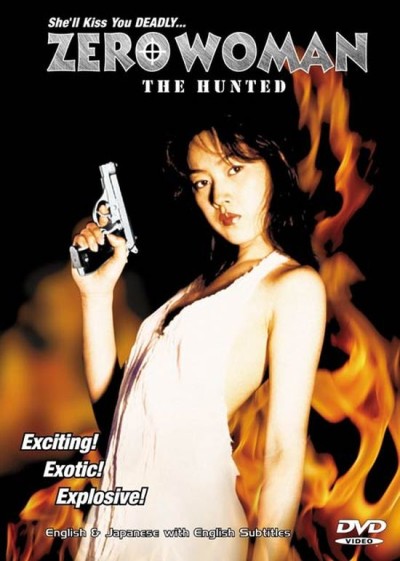 If ever I become an evil overlord, I will ensure my minions’ idea of security does not involve walking slowly in the open, towards an attacker, while firing wide of them from a range no greater than a slightly oversize dinner-table. That’s the first thing we take from this, which begins with a thoroughly implausible scene where Rei (Ono, who had been a part of 90’s J-pop group CoCo) manages to drown her target, a German industrialist, despite him being roughly twice her size, and without anyone in or around the swimming-pool noticing anything. She then climbs out, pulling a gun from who knows where, kills bodyguards who’d fail the Imperial Stormtrooper accuracy exam, and abseils down the side of the building to escape. That sets the tone for much of what follows, combining a reunion with someone from her past, a blossoming relationship with a chef, and her boss’s traditional surly reluctance to allow anything as banal as “personal happiness” to distract his #1 killer from her work.
 The main mission given to Rie (Shiratori this time) is a little bit different, from her usual, straight-forward assassinations. Instead, she’s given the job of protecting a witness. Nana (Matsuda), the disgruntled mistress of an organ-trafficking ring, who has had enough and agreed to co-operate with the police. Rie is part of the protection detail, but soon finds out that the gangsters, under ever-so strange boss Kaneda (Nogami) with his transvestite tendencies, are not going to sit back and wait for Nana to take the witness stand. Oddly, the cops let Nana stay in her own apartment, perhaps figuring that’s the last place her former lover would look. but when that is unsurprisingly stormed, Rie takes the target back to the operative’s flat, where they hang out, exchanging small talk – that’s mostly Nana, of course, since Rie is about as talkative as the enormous pet fish she has in a tank, and to which she feeds goldfish.