★★★ [plus an extra ½ for hardness!]
“The night Olga decided to paint a British parking garage red”
 For one reason or another, in the last few years Great Britain has become the place to go for medium-budget action thrillers. Examples include the Pierce Brosnan-Milla Jovovich-actioner Survivor (2015) or the Noomi Rapace agent movie Unlocked (2017). Maybe this has to do with the “action-thriller” as a general genre, seeming to die out slowly in North America, where the comic book superhero genre appears largely to have replaced it. Be that as it may, The Courier belongs to that “dinosaur” genre. Released at the end of last year, it was not well-received by critics, though one has to ask: why?
No one expects profound thoughts on human nature or the state of society from an action movie. At least, I don’t. What I want to see when watching one, is a more or less well-connected story, nice visuals and definitely convincing action scenes. And though this may have several plot holes, that if you think about them, make the whole story fall down like a card house, it delivers on all of the above-mentioned elements. So I just can’t agree with the many critics who seemed intent on tearing down the movie for no reason at all. This isn;t to say the film hasn’t its problems: The movie opens with music over several photos and headlines of newspapers, and is all over a little bit too quickly, before you can realize this is the backstory (though later, the film uses flashbacks to explain certain things). I was also initially a bit clueless about who would be the main character, as she had not appeared yet.
Crime lord Ezekiel Mannings (Gary Oldman) is taken into police custody while sitting in an American church. As he is under arrest, he can’t do anything against witness Nick Murch (Amit Shah) who is going to testify against him, via internet live feed while sitting in a British safe-house. So it’s up to his daughter Alys (Calli Taylor) to make the necessary arrangements. Unfortunately for Nick, these are for a courier who will deliver a package, supposedly with equipment needed for the online interrogation. But they will unknowingly deliver a device that will release cyanide, killing off the witness and his guards – as well as the courier, who will be made to look like the murderer. [This part reminded me a bit of Unlocked]
Unfortunately for the bad guys, said courier is played by Olga Kurylenko. Kurylenko has made a moderate name as a regular in action movies and thrillers, since she first was seen by a large audience as the Bond girl next to Daniel Craig in Quantum of Solace (2008). In the past she could be seen in genre movies such as Hitman (2007), Centurion (2010), Oblivion (2013), The November Man (2014) or Momentum (2015). Here, dressed in black skin-tight leather and on a motorbike, she evokes visual memories of Lisbeth Salander or maybe Milla Jovovich in Ultraviolet (2006). Personally, I think she is not such a good actress and a little expressionless. But in the context of an action movie, that might have starred Bruce Willis in the 80s, she works perfectly well. There is some good-natured banter between her and Shah (who’s cursing is not entirely convincing), that is funny without becoming ridiculous.
Naturally, it goes without saying that the involuntary heroine has to rescue Nick. Equally naturally, that won’t be easy, for Mannings’ daughter has already called in the heavyweights to finish the mission. Mayhem with fatal consequences ensues. 😉 The movie is R-rated in Germany, and I think that’s justified, with the fights and kills more graphic than we’re used to in an average action thriller today. There is quite a bit of bloodshed, and also remarkable inventiveness, the Courier’s opponents using anything from snipers to drones to master that merciless woman. Meanwhile, she herself has a computer-equipped motor-helmet that could be right out of Tony Stark’s workshop.
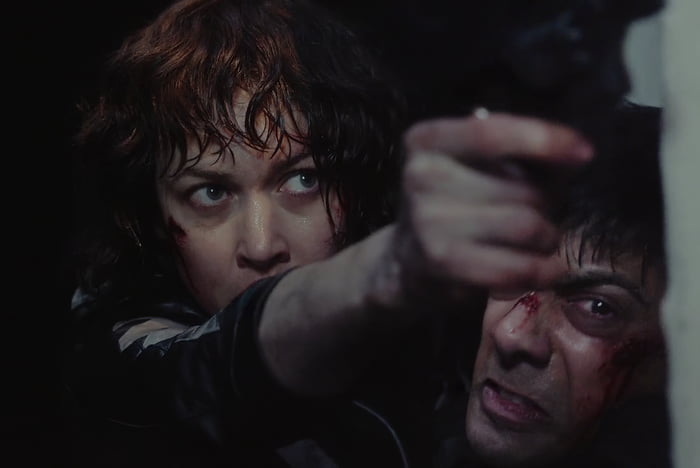 If Kurylenko’s character never reveals her name, at least some backstory is given as to why she is such a badass fighter. She used to be an Ukrainian soldier, part of a special forces battalion in Syria. After the death of her brother, she deserted and went to ground, taking menial jobs like this one. So for once we’ve got an explanation, as to why a smaller woman can take on big men who are professional killers. The fact that she is not just throwing them over her shoulder to the wall – like, let’s say, Angelina Jolie in Salt (2010) – adds a more realistic feel to the fights. We regularly see Kurylenko bleed, or even get overwhelmed. When she wins, it’s usually due to her quick thinking, using whatever the situation offers to kill off her opponents, or her army experience.
Some critics have called this the worst performance of Gary Oldman’s career and I just wonder how they came to this assessment. This is a solid, toned-down villainous portrayal by Oldman. You wanna see over-the-top Oldman? Go and watch Léon: The Professional (1994), The Fifth Element (1997) or Lost in Space (1998)! For me, it seems like “evil Oldman” has settled down and mellowed a bit with age. I find it more regrettable his character doesn’t have much to do, due to his house arrest. He mainly sits around, drinks whisky and listens to music – including the Diva Plavalaguna song from The Fifth Element, a nice inside gag.
There’s definitely a desire for some visual beauty and style. For example, when we see at the beginning the courier driving alone on a motorway while drenched in blue light, or flashbacks that pop up in black and white, and sometimes slow-motion. Director Adler has put more effort into this movie than other action directors usually do. Also, the very good soundtrack is worth mentioning. Though the end feels a bit abrupt, after someone turns out to be on the pay list of Mannings, only to run into a trap set by the courier and Nick.
While this might not be anything special or groundbreaking, in my personal opinion, the movie has been judged very unfairly by the critics. It doesn’t blow the feminist trumpet, where you have to point out, like an idiot and a thousand times, that this is a woman who wins against men. Oh, and have I already mentioned THIS CHARACTER IS A FEMALE? But it is a good, mindless bit of fun, of the gorier variety. There are moments in life when you are not in the mood for Bergman, Fellini or Bunuel films and just want to see some well-done bloody action. By that standard, the movie delivers, and should be judged on what it promises to be. If you were expecting something else? That’s your problem, not the movie’s.
Dir: Zackary Adler
Star: Olga Kurylenko, Gary Oldman, Amit Shah, Alicia Agneson


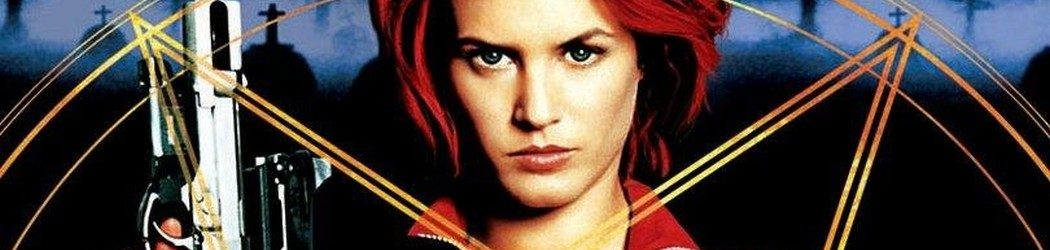

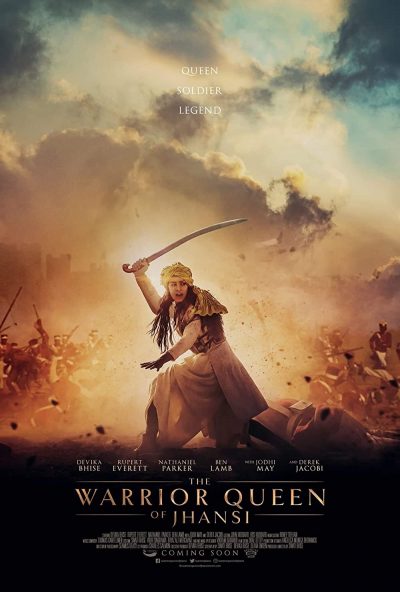 This version of the story of Rani Laxmibai, Queen of Jhansi, falls unfortunately between two stools. As a result, it seems likely to leave no-one satisfied, so its critical (3.5 on IMDb, 24% on Rotten Tomatoes) and commercial (less than $180K in North America) failure doesn’t come as much of a surprise. Western audiences were perhaps put off by the stereotypical portrayal of the colonialists – matters may not have been helped by a surprising, and I’d say quite harsh, R-rating. But, conversely, Indian audiences may well have been unimpressed by the Westernization of their beloved historical heroine. Most obviously – apart from the star being born in Manhattan – would be the hinted-at relationship between the Jhansi and good Briton, Major Robert Ellis (Lamb). This element seems to have been taken from Rani, a book by London-based author Jaishree Misra, whose publication triggered protests in her native land in 2008.
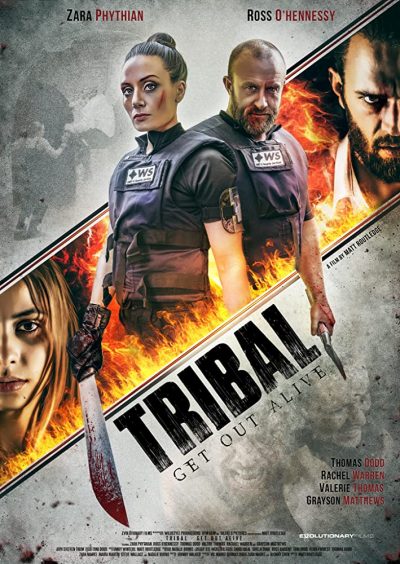 The IMDb omits the colon from the title, making rather less sense. Though it’s not inappropriate, because sense is likely not this film’s strongest suit. Indeed, I’d be hard-pushed to call it a “good” film. It is, however, consistently entertaining, and a fine piece of B-movie making. Ex-soldiers Caitlin (Phythian) and Brad (O’Hennessy) are bailiffs… Wait, is that a thing outside the UK? Just in case it’s not, let me quickly explain: they are not quite cops, but are still legal officials who can, for example, impose evictions or collect debts.
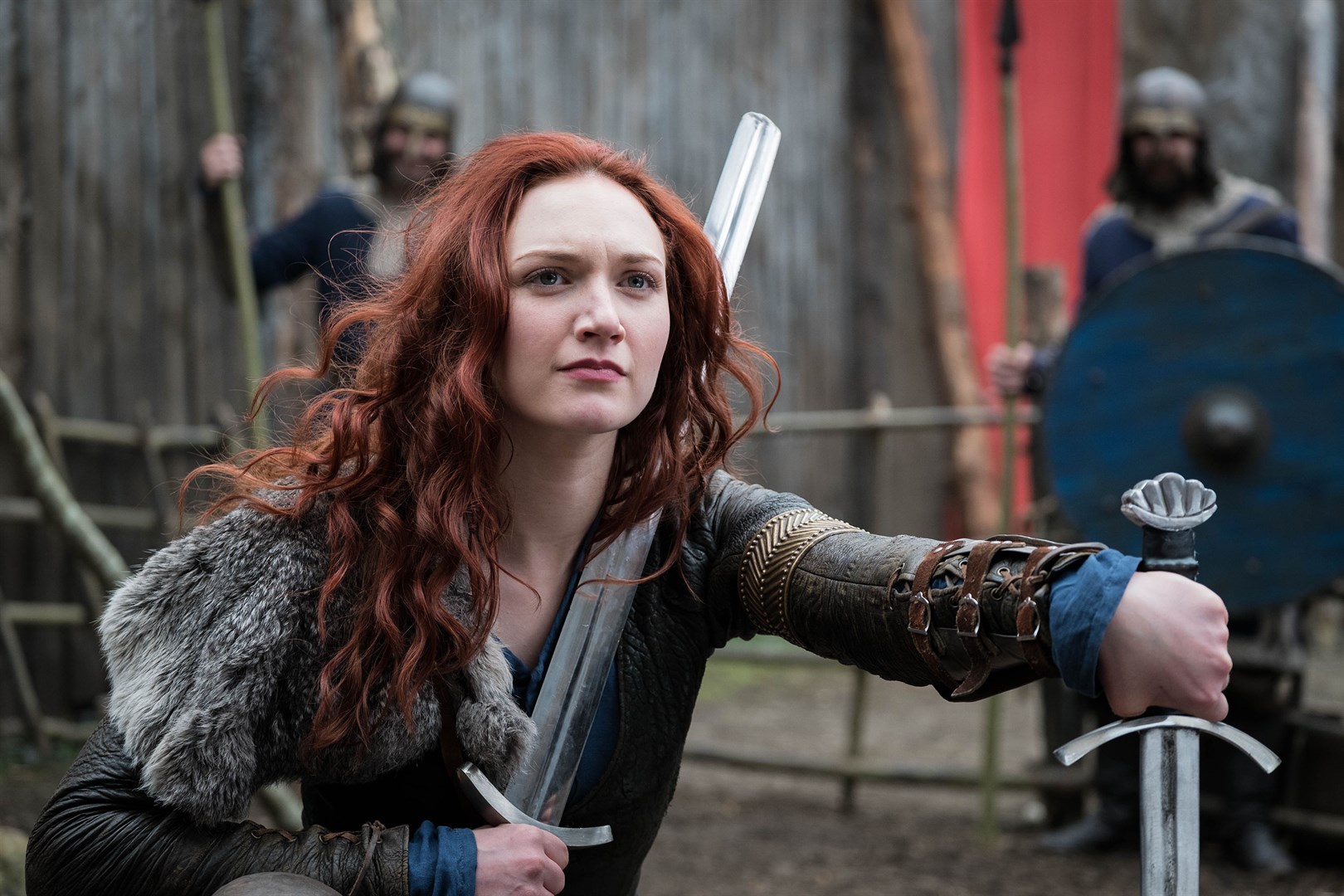
 I try and not let my expectations influence my reviews: a movie deserves to be judged on what it is, rather than what I expected it to be. A film-maker usually doesn’t get to decide, for instance, the DVD sleeve. But when you invoke the name of Boudica in your title, this creates certain requirements with regard to your content, especially when combined with the words “warrior queen.” These are requirements which this movie is utterly incapable of meeting. Technically, the word “rise” is probably the only accurate element to be found, on the cover, which certainly counts as among the most inaccurate in recent memory.
 I remember how the first series of Killing Eve blew my socks off, and was completely unlike anything else on television. The second series fell short, but that was unsurprising – how could it be otherwise? – and there was still the chance for it to mount a course correction and recover. This third installment, however, has if anything accelerated the downward trend. What was once must-see television has become something which sits on in the background, typically as I surf the Internet on my phone. I can’t think of another series which has collapsed in such a remarkably brief time-frame.
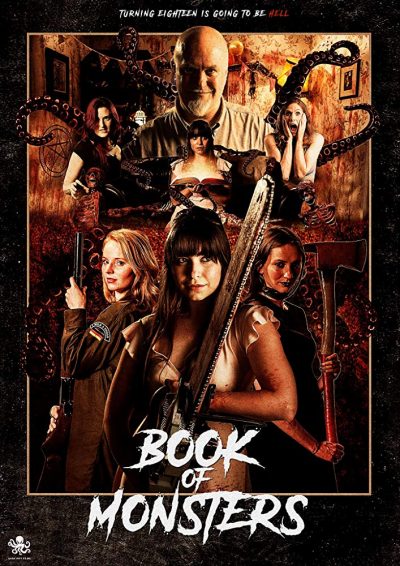 Ten years ago, the mother of eight-year-old Sophie (Craine) was attacked and killed by what her daughter insisted was a monster – a claim to which she held, resulting in her being institutionalized. Now, a somewhat recovered Sophie is about to enjoy her 18th birthday, having organized a party with her friends. But she’s about to discover that the monsters were very real, and just waiting for her to reach adulthood. Fortunately, Mom was a bit of a monster hunter, who conveniently left a book of helpful tips as well as a secret vault of tools and weapons. Together with her pals, Sophie is prepared to make a stand and defend her home against the attackers.
 ★★★
★★★ Origin stories are all the rage, it appears. Though it’s probably just coincidence we watched this prequel to
 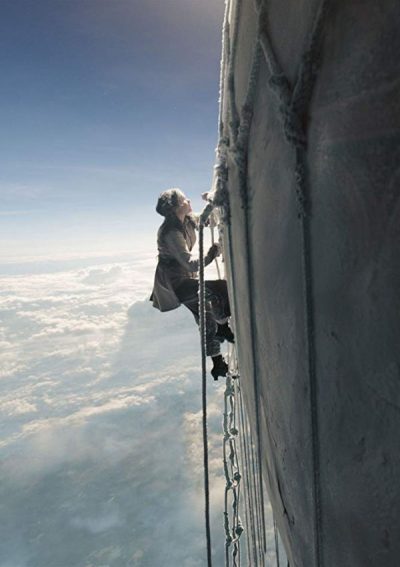 I was genuinely stoked when I got to the end of this one, which details the derring-do of 19th-century pioneers James Glaisher (Redmayne) and Amelia Wren (Jones). The former is a scientist in the fledgling field of meteorology, who wants to obtain data from the upper atmosphere. The latter is a balloon pilot, carrying on despite the death of her husband on a previous flight. Together, they team up, to fly higher than any person had ever gone before. Indeed, further than even they wanted to go, as a frozen valve prevents them from descending when they need to do so. With Glaisher out of commission through oxygen deprivation, it’s up to Wren to climb, by herself, up the outside of the balloon, in order to reach the top and clear the valve.
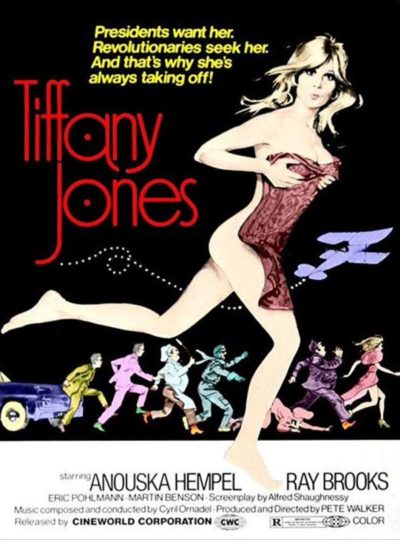 Fashion model Tiffany Jones (Hempel) finds herself dropped into the middle of international intrigue, after President Boris Jabal (Pohlmann), leader of the Eastern European state of Zirdana, takes a shine to her during a state visit to Britain. It’s supposed to be a trade negotiation, but is really to allow Jabal to broken an arms deal with some shady Americans. Her meeting the President brings her to the attention of two factions of Zirdanian rebels.