★★★★
“Six chicks with picks.”

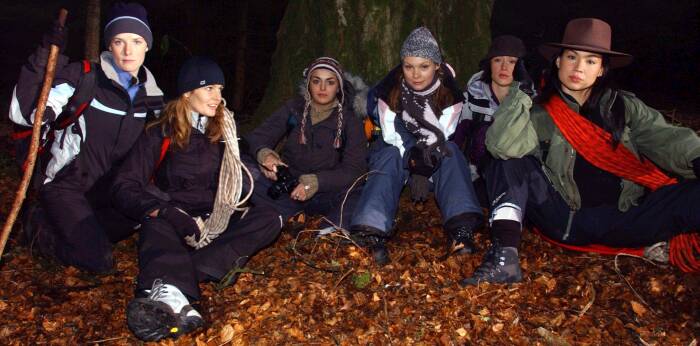
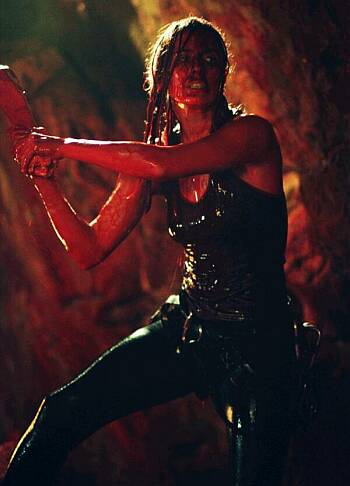 Simplicity is under-rated, especially when it comes to genre films. The simplest horror movies often work the best, because they prey on widely-held fears: monsters (Jaws), getting lost (The Blair Witch Project) or claustrophobia (Below). And now, we get The Descent, which combines all three into one ball of nerves, pitting six female cave-explorers against things below ground. This will do for speleology, what Touching the Void did for mountaineering or Open Water for scuba-diving – and I don’t care if the cave, as one character here disparagingly says, “has handrails and a gift-shop”.
This is an interesting reversal by Marshall from his first film, Dog Soldiers, though both did have a group of people in a small location, facing an outside menace. Dog centered on a group of soldiers in an isolated farmhouse, facing a pack of werewolves – as you can imagine, testosterone levels were set to eleven on that one. Here, save one brief, opening character, all the roles are filled by women, which adds a different dynamic to things. Central are friends Sarah (Macdonald), Juno (Mendoza), and Beth (Reid), whom we first encounter white-water rafting, though it seems Juno and Sarah’s husband have their own leisure activity…
However, a year later, a car accident has changed Sarah’s life, and the trio re-assemble, with three other women, for a little light caving. Unfortunately, rather than the scheduled, well-known cave, Juno opts to take them into a newly-discovered one. This is unfortunate when a rock fall shuts off the entrance, and it becomes clear no-one outside knows where they are, so the women have to press on, into the depths. Sarah is convinced she sees someone nearby: initially, no-one believes her, but eventually it’s clear that there are inhabitants of the system, who are none too pleased to see them – except in a “nourishment” kind of way.
There’s no doubt, this is not exactly new – you’ll spot references to (if you’re feeling kind – “bits stolen from”, if you’re not) other films throughout, from The Thing through Aliens to Pitch Black. The first half is also, to be honest, a little sluggish. Marshall throws in some cheap “Boo!” moments to keep the audience awake, of varying effectiveness, but it’s only when the movie goes underground that this the edge of your seat becomes familiar territory. And once it does, the film barely pauses for breath until the final frame [The American version had a different, slightly-less bleak ending, from the UK version – having had it described to me, I’m curious to see it, though can’t say that I felt the US cut was significantly deficient].
 The focus of the film is Juno and Sarah, with the rest of the cast largely reduced to cannon-fodder – though not badly-drawn cannon-fodder, I must admit. Juno is a near-Amazon, while Sarah has to become one, simply in order to survive, and that’s about the extent of the character development here. Demureness, beauty, the ability to bear babies, and all other typical “feminine” traits, are of absolutely no use whatsoever. The ability to drive your pick-axe, repeatedly, into the head of pissed-off Gollum wannabes, on the other hand… Yeah, that will help. But in another interesting contrast to Dog Soldiers, sisterly teamwork is notable by its absence. In the end, the women do almost as much damage on themselves, as the monsters.
The technical aspects are great, with set design and cinematography particularly worthy of praise. An uncomfortable feeling of being trapped in a dark, enclosed space has rarely been better captured; the only light present is what the explorers bring, and it gradually becomes less and less effective for their needs. It is occasionally chaotic, and a combination of limited illumination and the incidents that befall the characters often make it easy to lose track of who’s who. That aside, however, this is a seriously kick-ass film, and the prospect of The Descent 2 would be extremely welcome here (though particularly in the British cut, somewhat unlikely…). I’m thinking, in that one, our heroine could perhaps get talked into leading a team of marines back into the monsters’ lair… Stop me if you’ve heard that one before. :-)
Dir: Neil Marshall
Star: Shauna Macdonald, Natalie Mendoza, Alex Reid, Saskia Mulder



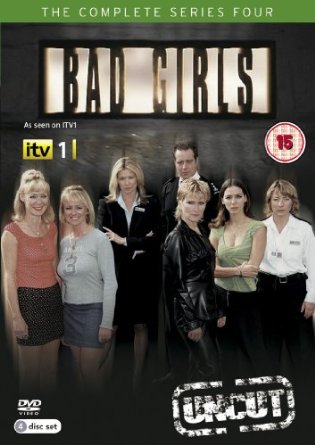 The real strength of Bad Girls is the almost limitless possibilities of the scenario; if ever things are in danger of getting stale, it’s easy to lob in fresh characters to get the pot stirred up and create whatever angles you want. Exhibit A: new governor, Neil Grayling (Gadds), whose arrival gave the show a whole new direction, at least among the staff – and particularly Jim Fenner, who discovered a whole new viewpoint of sexual harassment. Not that it really made him see the error of his ways, of course.
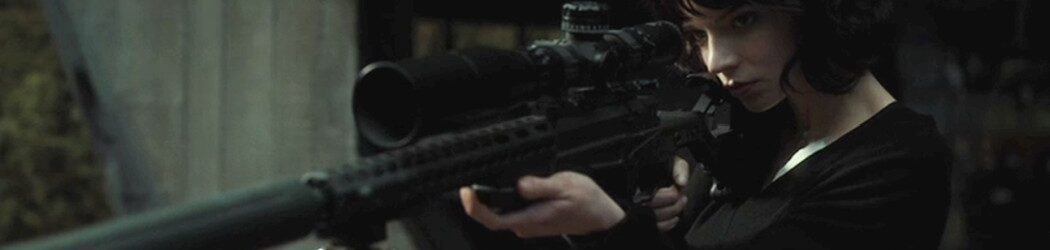
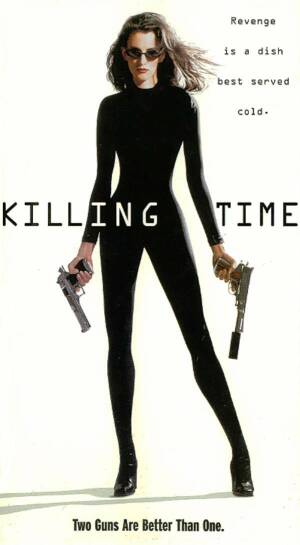 We Brits don’t do girls-with-guns movies: too busy drinking tea and arranging matchsticks, I imagine. This is a rare exception, and works not badly, combining a striking ‘Italian’ hitwoman in Maria (Torgan), with the bone-dry sarcasm of Guy Ritchie – at least, before he started making movies starring his missus, Madonna. Maria is brought in by Newcastle cop Bryant (Fairbrass) after the local crime lord (Leach) leaves a fellow policeman nailed to Bryant’s front door. Only, Bryant can’t afford to pay her, so blackmails some local thugs, led by Charlie (Thirkeld) to kill her after she’s done the job. Needless to say, things don’t quite go as planned, and the dead bodies start to accumulate, in a most non-British way.
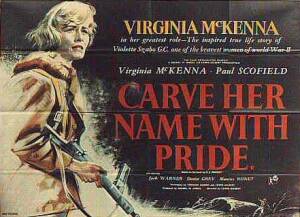 This is based on a true story, so we know from the start this is going to end in front of a firing-squad – at least until the Hollywood remake, with a happy ending. Given this, the film still tries to crank up the tension, but as written, Violette Szabo comes off as beyond saintly, without flaws or imperfections. Almost as irritating, she is shown as being mostly inspired by the death of her husband, rather than any innate patriotism (Charlotte Gray similarly portrayed a female SOE agent as passive-reactive). Having said that, the movie generally stays true to the facts, though the poem supposedly written by her husband was actually, in far less romantic reality, by her SOE codemaster – interestingly, the SOE’s name is not mentioned at all. Much of the end is fictionalised; details of her interrogation, for example, are obviously unavailable.
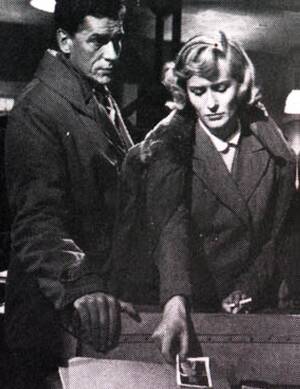 The film does take
 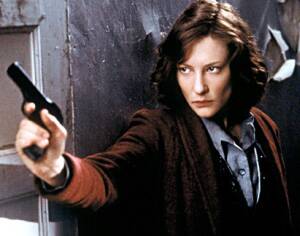 Love story or wartime thriller? The script here tries to have it both ways, and as a result of this uncertainty, the undeniable potential in the idea is unfulfilled. Gray (Blanchett) is dropped into Vichy France during World War II as an agent, but her bosses don’t realise she is more interested in finding her pilot lover (Penry-Jones), who’s been shot down nearby. While conflict between love, and love of country, would have been interesting, the former is almost ignored, then disposed of in a thoroughly unconvincing manner. Not that this diversion is uninteresting; you get a real sense of the terrors of war, with people being “vanished” in seconds, and the tension of living your life on a knife-edge behind enemy lines.
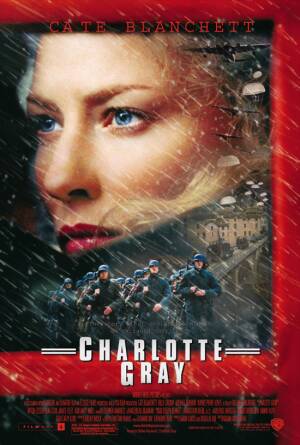 Mostly, the film is concerned with Charlotte’s protection of two Jewish children, and involvement in a resistance cell led by Julien (Crudup). They’re communists, so the British don’t really like them, but they’re convenient – and can be abandoned when necessary, the revelation of which provides the film with its most chilling moment. Blanchett has the right steely resolve for the role, and the cast is generally excellent; particular credit to Gambon (magnificently surly as Julien’s father), Ron Cook as Gray’s contact, and Anton Lesser, an oily collaborator who had us screaming “Die! Die!” at the TV set.
 The third series hit the ground running, Michelle Dockley taking evil warder Jim Fenner hostage, after stabbing him in the stomach with a broken bottle (to loud cheers here), and Nikki Wade breaking
 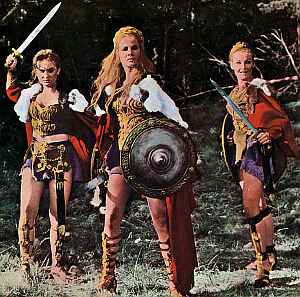 Hammer were best known for their horror movies, but tried virtually every genre save Westerns at one time or another. This Roman “epic” is loosely based on the life of Boadicea, who led a revolt against the Romans in the first century A.D. They get the name of her tribe right (the Iceni), and some basic facts, such as her suicide after capture, but change her name to Salina and sprinkle in some wild inaccuracies. Despite the title, there are no actual Vikings to be found, and we also get the Druids worshipping Zeus, a Greek god!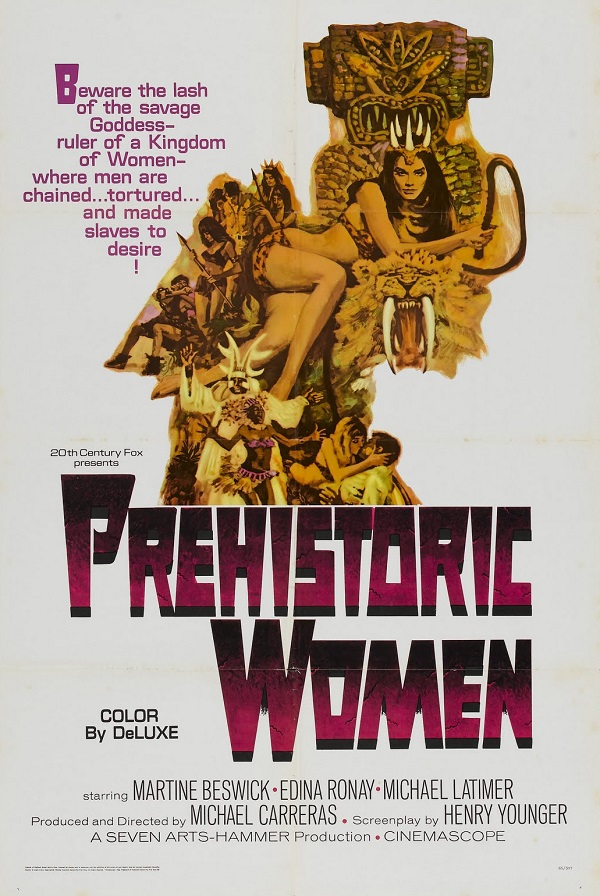
 After thirty minutes, I was toying with the idea of giving this the first ever 0 star rating. On that basis, eventually creeping up to two counts as something of a miraculous recovery. The heroine is an alien, transporting her child across the English countryside, while being pursued by white-masked hunters. There is almost no dialogue, which is so obviously a penny-pinching device it hurts – the video stock and woeful “martial arts” don’t help.
 Women-in-prison is not a genre greatly within our remit, since they’re often just an excuse for a bit of soft-core masochism. There are occasional exceptions, however, and this is one, with its origins as a network TV show forcing restraint of the more exploitative aspects, as well as permitting the characters to develop more fully than in a movie.