


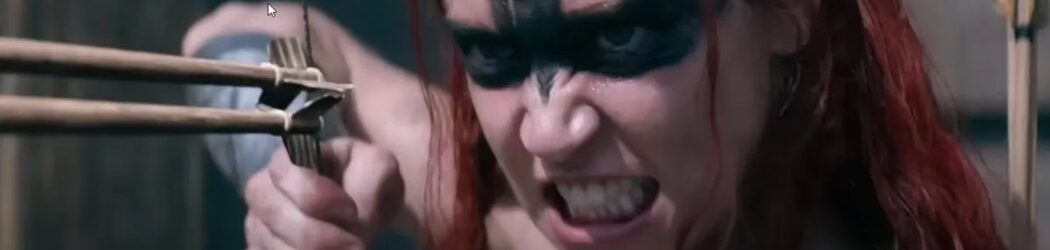

★★★★
“Assault on Precinct 1.”
 After a year which has been filled with disappointments and films which have failed to generate much reaction beyond a mild “Meh,” it’s nice to see one which certainly surpasses expectations. Indeed, with about two months left to go in 2023, this would certainly be a finalist for GWG Film of the Year, were there to be such an award, and potentially could walk away with that hypothetical trophy. It’s the kind of movie which, even when you know exactly what’s about to happen, still delivers in a way that can generate an undeniable reaction. Considering my expectations going in were not much more than the made-for-TV level – this being a BET channel exclusive – it surpassed those greatly.
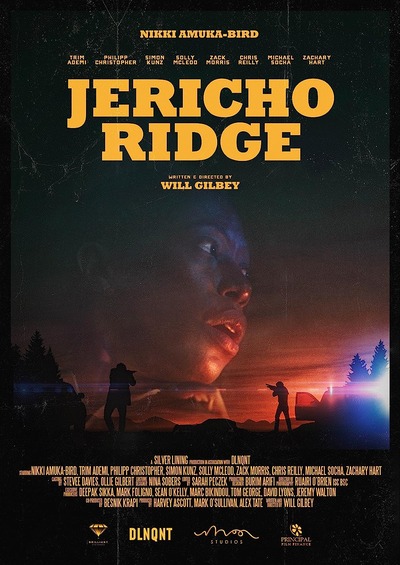 The heroine is Tabby Temple (Amuka-Bird), a deputy in a small, rural North Washington town (albeit one entirely faked in Kosovo!). She is just heading back to work following an extended lay-off due to a broken ankle. The reason for this injury is not immediately clear. Nor is the reason why she is no longer a chief deputy, but it appears to be something to do with her troubled teenage son, Monty (Morris). She returns to find the police station in some turmoil, due to a burglary the previous night, while an investigation is also under way regarding the murder of a local drug dealer. Sheriff Eddie Reynolds (Kunz) goes out to visit a suspect, leaving Tabby behind, to guard domestic abuse prisoner Earl Macready (Socha), and await the arrival of a locksmith to install new station locks.
It’s here things go very badly wrong, with Tabby discovering there is apparently something in the station that a certain party is prepared to go to any lengths to obtain, with the burglary being just the first step in that process. She finds herself under siege, and severely out-gunned, the station’s armoury having been stripped almost bare. Local help is… not going to help, shall we say, and the state variety won’t get there for some time, leaving Tabby to try and survive until they do. The unexpected arrival of Monty during a lull in proceedings, only heightens the stakes, and also forces mother and son to confront the truth about their fractured relationship, and how it became that way.
But this is not s touchy-feely emotional drama, to put it mildly. Once it gets going, this is a relentless assault, which sees Tabby go from a quiet, almost passive observer, into a fully-fledged warrior queen. Amuka-Bird is quite excellent in both parts of that dual role, being entirely plausible as both devoted mother and unstoppable force. And she needs to be, because the villains are just as brutal in their approach. The film also does well with passing out the necessary information to the audience, doing so in its own time, despite a couple of scenes which do feel rather too obviously expositional. In general though, this does a great deal without the need for stars or big production values. Story, performance and crisp execution are all on point instead, and the results are all the better for it.
Dir: Will Gilbey
Star: Nikki Amuka-Bird, Zack Morris, Simon Kunz, Michael Socha
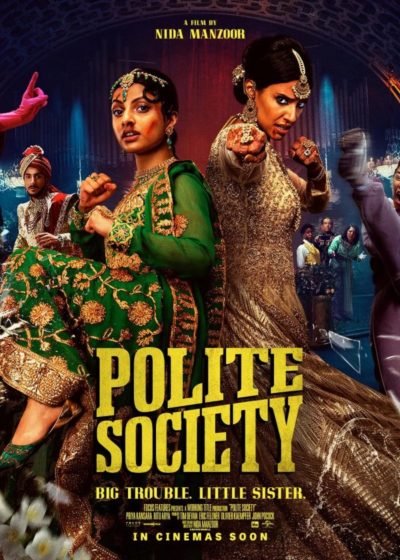
 While technically solid, and occasionally looking quite good, this may be the laziest scripting I have seen in a movie for a long time. I feel I may have lost actual IQ points through the process of watching it, such is the degree of stupidity which this provides. The heroine is Mina (Black-D’Elia), a college student whose life is upended when she and her little sister narrowly escape a home invasion by Arab terrorists, in which both her parents are killed. She’s rescued by intelligence agent Olivia (Leonard), who tells her she’s the only heir of an Afghani warlord, Khalid (Arditti). Her mother betrayed him, and had to change her identity: he finally caught up with the family, and wants his daughter back.
 To be honest, it’s more character- than action-driven overall, yet that’s its strength, since it does a great job of creating people who feel “real”. Nobody here is perfect: everyone has flaws, and struggles to cope with life’s ups and downs. Maggie is the focus, having to operate in an era when casual disregard for a woman’s talents was the norm. Not least by her Scottish colleague, Bob Croft (Gwaspari), though he eventually came to appreciate her many talents, such as Forbes’s fierce devotion to justice. Fortunately, her boss, Detective Chief Inspector Bill Russell (Marlowe) always had her back, even if his approach means cutting her no slack either. But every episode seemed to have one or more great performance, taking advantage of the vast pool of top-tier British character actors.
 Sitting somewhere between
 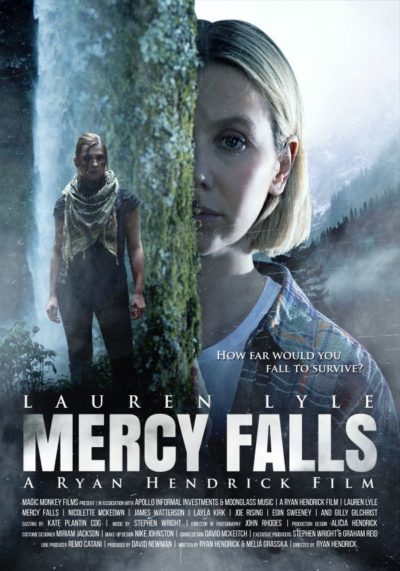 Even though I haven’t lived there since the eighties, I remain a sucker for a Scottish film. This delivers, with no shortage of rugged mountain landscapes, beautiful lochs, a ceilidh band and trees. So. Many. Trees. The foliage is understandable, because most of it takes places in the woods, where Rhona (Lyle) and her friends are looking for a cabin, deep in the wilds, which belonged to her late father. To help find it, they enlist the help of local Carla (McKeown), whom they meet down the pub when they have a pre-trip planning get-together. She initially seems fun to be with. But once they’re away from civilization, a shocking incident proves she… has issues, shall we say. And might not be the only one in the party.
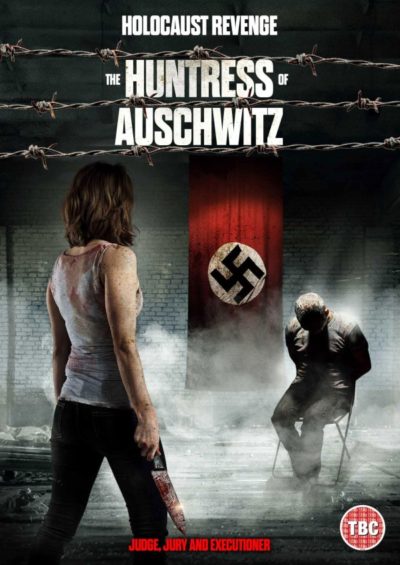 I came into this somewhat braced, given its 3.0 IMDb rating, and reviews which tended to be scathing e.g. proclaiming “This May Be The WORST Movie I’ve Ever Seen!” While it’s clearly not
 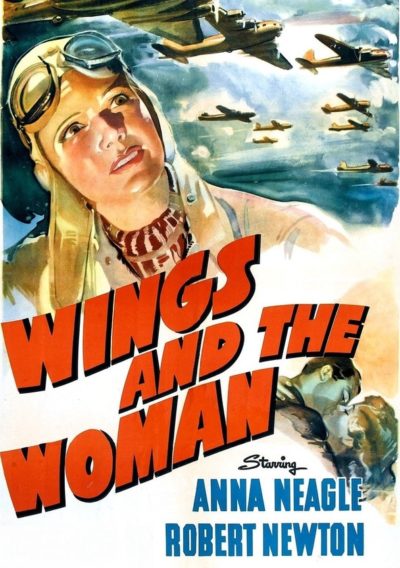 This bio-pic of aviator Amy Johnson appeared in British cinemas a scant eighteen months after she disappeared over the River Thames. That put its release squarely in the middle of World War II, and explains its nature which, in the later stages, could certainly be called propaganda. There’s not many other ways to explain pointed lines like “Our great sailors won the freedom of the seas. And it’s up to us to win the freedom of the skies. This is first said during a speech given by Johnson in Australia, then repeated at the end, over a rousing montage of military marching and flying. I almost expected it to end with, “Do you want to know more?”
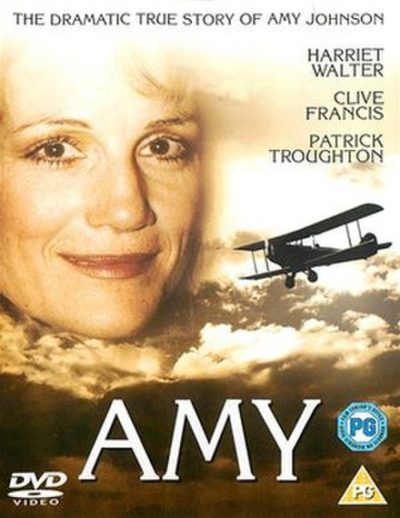 It’s interesting to compare the approach taken in this biopic of aviation heroine Amy Johnson, made in 1984, with the one over 40 years earlier (and shortly after her death) in
  Roughly ten minutes into this, it was clear I’d made a terrible mistake. I’ve seen my share of wretched creature features in my time, and this is down near the bottom of the barrel. It does have an interesting, if totally ludicrous idea. Five women are invited to a remote hotel, to take part in a game-show, competing for a prize of £100,000. Among them is struggling single mother Sienna (Wunna) who, unable to find a baby-sitter, takes her two kids with her. As the cover ever so subtly suggests, the game has carnivorous dinosaurs roaming the hotel and grounds, and “winning” simply means not getting eaten. Naturally, Sienna’s two kids also disobey Mum’s instructions not to leave the room.
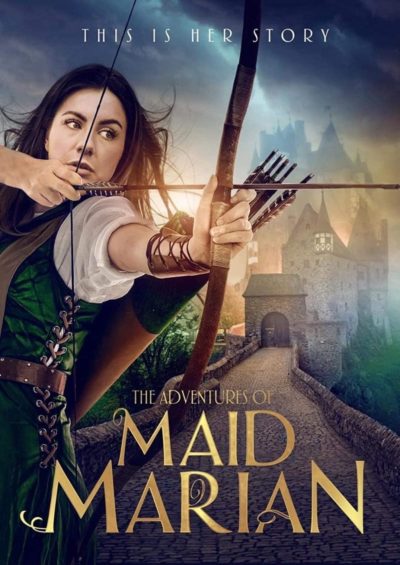 The above rating reflects my deep-held tolerance for low budget cinema. If a film is made with heart, I’m generally prepared to overlook, to some degree, technical shortcomings. Both sides of that equation are present here, in a somewhat revisionist take on the Robin Hood mythos. This takes place after Hood’s original victory over the Sheriff of Nottingham, and he has now gone on crusade to the Holy Lands with King Richard. In their absence, however, the country has not fared well. Marian (Craig) has adopted another identity, and is hiding out as novice nun Matilda, though occasionally sneaks out to help poach from the rich, and give to the poor.