




Literary rating: ★★
Kick-butt quotient: ☆☆☆½
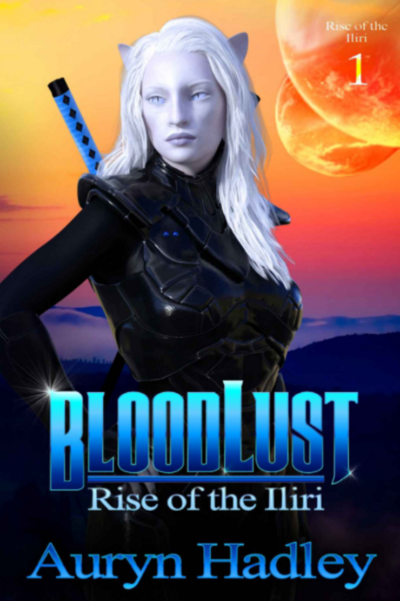 Three millennia previously, the Terrans landed on the planet of Ogun, and took it over. The native Iliri, though in many ways superior to the new arrivals in both mental and physical ability, ended up subjugated. They are now very definitely second-class citizens, only remembering vague legends of their once-proud past. One such is Salryc Luxx, a rare pure-bred Iliri who is a private in the army. Despite the fierce prejudice against “her kind”, she gets a try-out for the Black Blades, the military’s elite special forces. Which, it turns out, is a haven for Iliri and their supporters. Sal becomes the first woman in the unit, and her talents – including the ability to shape shift – quickly become an essential part of the team, allowing her to become one of their top covert assassins. However, her presence also causes significant static, not least her relationship with the Black Blades’ commanding officer, Blaec.
Oh, dear. Who knew there was a market for thinly-veiled identity politics crossed with soft porn? But let’s start with the positives, such as the well-considered setting – I liked the way that metal is an extremely rare commodity, helping explain the lack of both firearms and vehicles (though it’s not yet quite clear how the Terrans got to Ogun? Wooden spaceships?). Hadley also has a good hand on the action aspects, with Sal’s missions being tense and bloody. However, Sal is a bit of a Mary Sue, being stronger, faster and just downright better than any man, even including the hand-picked soldiers of the Black Blades. It’s all a bit too obviously author wish-fulfillment.
Still, it is considerably less problematic than the relationships here, not least the idiocy of Blaec. For a commanding officer, he’s as dumb as a log, right from when he has a one-night stand with a woman, and lets her dictate a key element of the test Sal and her two rivals will go through the next day. For the woman is Sal, using her shape-shifting talents. Well played, it has to be said. But he then starts an actual relationship with her, in defiance of all (very sensible) military orders of officers bedding subordinates. And my eye-rolling reached epic levels when it turns out that Sal’s post-operation reaction is to go full-on nympho – hence the title, I guess – in particular, getting sweaty with colleague and fellow assassin, Cyno. Which makes Blaec go all sad puppy.
Everything about these aspects feel just… wrong, on so many levels. From the Goodreads reviews, it appears this is an entry from the “reverse harem” fiction genre, in which, according to UrbanDictionary.com, a single girl is liked and followed by a bunch of handsome men. You learn something new every day, I guess. If this had been mentioned a bit more in the Amazon blurb, rather than being described as, “a powerful and intriguing female lead, the likes of which the fantasy genre hasn’t yet seen,” I might well have skipped it.
Author: Ella Summers
Publisher: Spotted Horse Productions, available through Amazon as both an e-book and paperback.
Book #1 of 7 in the ‘Rise of the Iliri’ series.
 Gia Valentina Santella is the daughter of a rich Italian family in California. She doesn’t seem to do much with the bountiful hand fate has dealt her: drinking, casual sex and designer labels appear to be her main interests. But her easy life is rudely disrupted after her parents die in a fire at their estate in Switzerland (!). In the aftermath, she is sent a letter from the man who carried out their autopsies, confessing that he was paid off to conceal the real, much less accidental cause of death. As Gia starts to dig into the past, seeking the truth, it soon becomes apparent that it was a good deal murkier than initially appears. And also, that someone has a strong, vested interest in ensuring it stays covered.
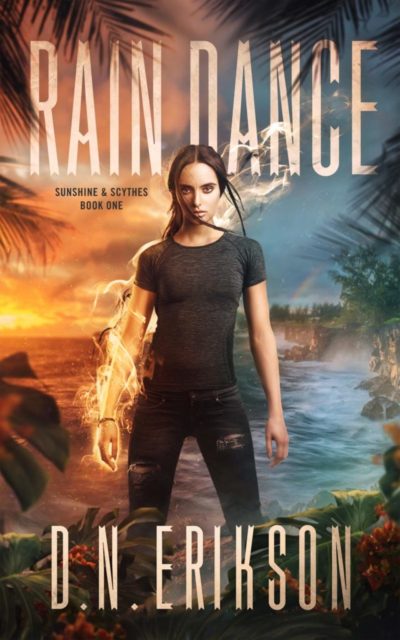 The saying, “You only live twice,” is supposed to be a metaphor, but for Eden Hunter, it ends up being very much a statement of fact. She’s a former con-artist, dragged back from beyond the grave by vampire warlord, Aldric. He puts her to work on a hidden island as his personal soul-harvester, with a strict quota per week. It’s not great work, but it’s steady – at least until Eden’s beach-front house is attacked by a werewolf with murder on its furry mind. She then finds herself seen by the FBI as their prime suspect after an old partner in confidence tricks turns up dead on her doorstep. But, wait! There’s more! She has to deal with the rain goddess – presumably, the source of the title – to whom Eden is also in thrall, and whose rules she just broke. A gang involved in robbing her boss of millions in gold bullion. Her dead sister. A serial-killer politician. Oh, and a talking cat.
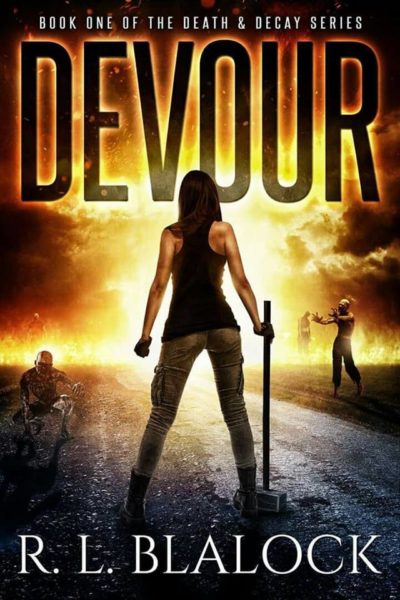 Back when I was growing up in Britain during the eighties, I was a voracious reader of horror fiction. The two staples of my literary diet were the works of James Herbert, who occupied the more “literary” end of the spectrum, and Shaun Hutson, whose novels were about as subtle as a kick to the groin. This likely tends towards the latter end of the spectrum, being a straightforward tale of survival during the zombie apocalypse. It begins as Olivia Bennett is heading home from lunch with her husband, when the St. Louis freeway on which she is driving becomes one of the first killing zones.
 Having started our acquaintance with the Ladies Shooting Club trilogy last year with the third book, The Blacksmith’s Bravery (long story), my wife Barb and I are now reading the other two volumes in order. Neither of us were disappointed in this one! My reviewing it here was a happy surprise. Although the covers of all three books feature gun-toting women, and a basic plot current of the trilogy is women learning to take responsibility for defending themselves and others, the heroine of the third book wasn’t actually called on to engage in any gun-fighting action. So I assumed the same would be the case here. But [at the risk of a mild “spoiler” –though for fans of this site, this will add interest rather than spoil it :-)], in this series opener, our heroine does need to step up to the plate with a Winchester. (Contrary to many fictional and movie depictions, rifles were used more for serious shooting in the Old West than six-guns). Despite that difference, though, both books have a lot of similarity in tone, content and style. Since I gave the concluding volume five stars on Goodreads, that’s a good thing!
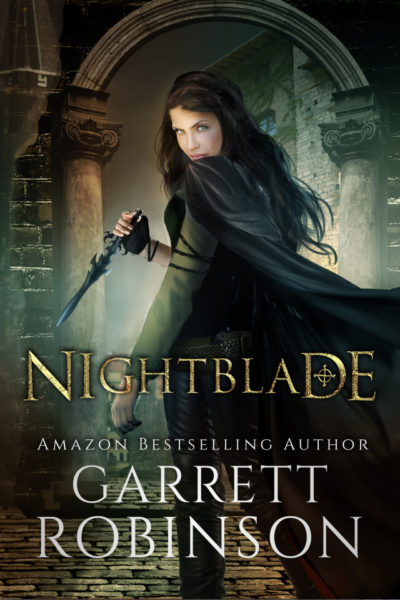 One of the common problems I’ve found with fantasy novels is establishing the universe. It’s clearly going to be very different from the reader’s, and the author needs to get them up to speed on how things work in the book’s setting. If this isn’t done quickly and effectively, the reader can be left floundering in a world they know nothing about. Robinson uses a neat trick to get around this. His heroine, Loren, basically knows nothing about it either, because she has been brought up in a remote rural area. Virtually all she knows about life outside the woods comes from tales told to her by an itinerant tinker, and her dreams of becoming a heroic thief seem no more than fantasies.
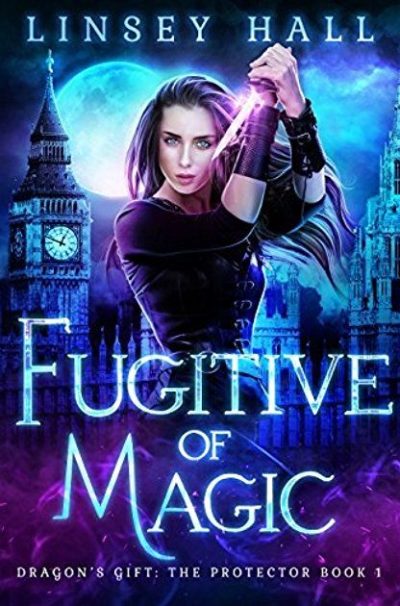 It’s probably worth noting that although this is Volume 1 in the somewhat clunkily-named “Dragon’s Gift: The Protector” series, it follows in the wake of two other Dragon’s Gift threads by the same author, The Huntress and The Seeker. While you don’t need to have read those to enjoy this, it does explain a structure, which could seem somewhat odd. For the volume sets up a trio of treasure-hunting magicians – Cass, Del and Nix – then all but discards the first two and concentrates heavily on Nix. Turns out Cass and Del were the subjects of the Huntress and Seeker sagas respectively, and the Protector gives Nix her turn in the spotlight. This is why some aspects, such as the shop run by the three women, seems more than a bit undeveloped: I presume they were featured in the ten or so previous volumes set in the same world.
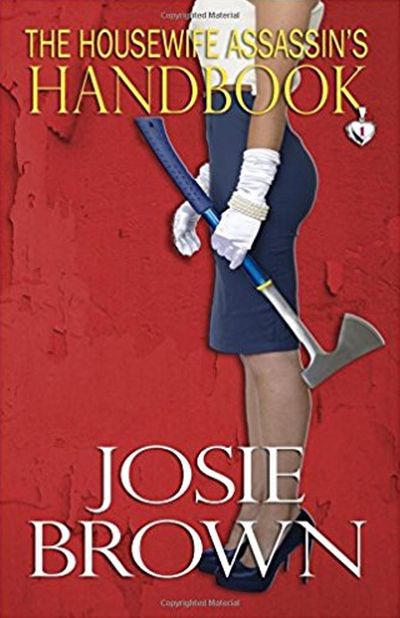 My preferred format for reading is paper; and that’s the only format I support financially, since the only language Big Publishing understands is dollars and cents. Even for a reader like myself, though, e-books have their uses. Writers can offer particular books for free in that format, and that makes it possible to read them first in order to check the quality before you buy the paper edition. And sometimes that opportunity saves you money that would have been wasted if you’d taken a chance on the paper book to begin with! For me, this series opener (which Brown makes available free in e-book format on a permanent basis) was one of those books I was thankful I didn’t have to spend money on, which I’d have regretted.
 The principal problem I had here was that the plotting is simply not well thought out, and not convincing. One could argue that the essential premise is far-fetched; but I was okay with suspending disbelief that far. (Whether or not black ops organizations would hire a single mom with kids is a matter of speculation, since real life organizations like this don’t publicize their personnel policies. :-) ) But even within the premise Brown creates, much of her plotting simply doesn’t stand examination. Some of the major actions by the villain(s) are at cross-purposes with some of their other major actions; several events that take place here would involve the police in the story, at a level that couldn’t be ignored, but there’s no indication of that here; Donna’s reasoning for one major decision is weak and unconvincing; and Acme (the company she works for) would be much more actively involved in the decision-making at the end, not passive as it is here. Also, characters could not realistically suddenly just shrug off previously incapacitating wounds (which happens here twice), and there are other significant logical slips that took me out of the story. The author writes prolifically, but she apparently wrote this novel too quickly to take her craftsmanship in plotting seriously, or to put any real thought behind it. (That’s a real shame.)
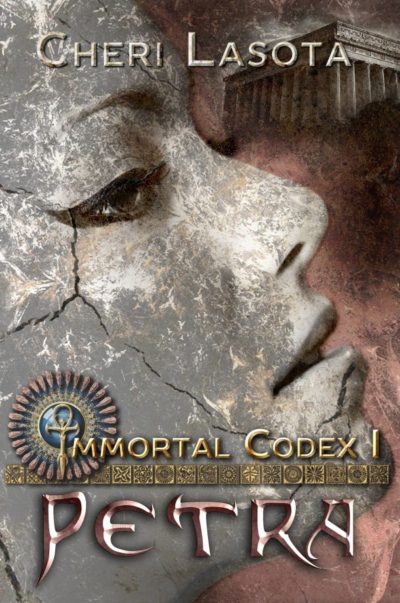 Petra is a teenage Roman slave at around the birth of Christ. She is completely under the thumb of her sadistic master, Clarius, until a strange conjunction of events and a poisonous herb with mystical qualities changes the power dynamic entirely. Both of them, together with her lover, Lucius, attain immortality. But it’s an immortality which requires the two men to drink from Petra annually, or they will degenerate into sub-human monsters. Neither is happy with the arrangement: Clarius is not used to being reliant on anyone, least of all his former property, and Lucius hates the fact Petra agreed to submit to their ex-master, in order to save him. As the centuries stretch into millennia, Petra begins, slowly, to put together a group people who will be capable of defeating Lucius and the immortals he has recruited, allowing her to live in eternal peace with Lucius.
 “Have you not learned by this time that I am not a weak woman, but a strong one? You have harried me and injured me and wronged me and set tortures for me, but here I stand, unharmed. This day I will have my revenge.”
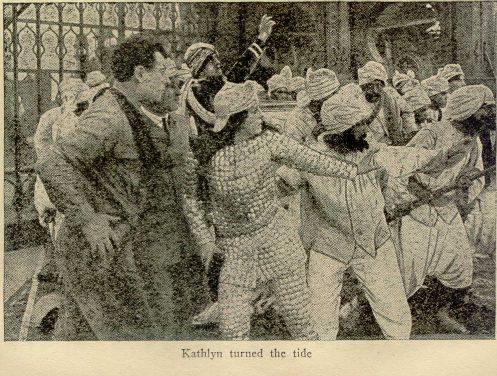 The writing style, while enthusiastic, is occasionally odd in that it chooses to skip over what should be thrilling moments. I wonder if perhaps this was the book’s way of not stealing the serial’s thunder? For example, as Kaitlyn sets off, accompanying a big cat her father was shipping to its end buyer, a major incident is all but entirely skipped over thus: “How the lion escaped, how the fearless young woman captured it alone, unaided, may be found in the files of all metropolitan newspapers.” Uh, what? But there are times when MacGrath does hit it out of the park, descriptively: “In the blue of night the temple looked as though it had been sculptured out of mist. Here and there the heavy dews, touched by the moon lances, flung back flames of sapphire, cold and sharp.”