




Literary rating: ★★★★
Kick-butt quotient: ☆☆☆
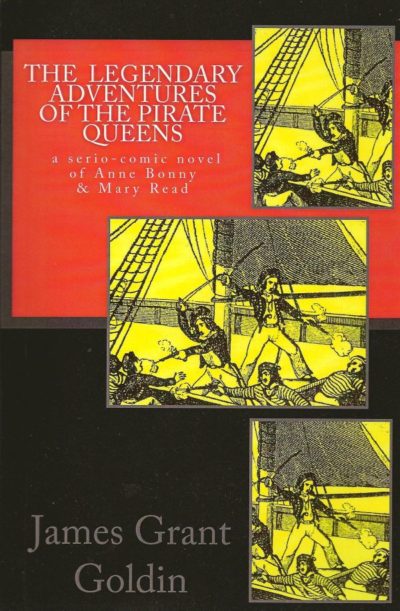 “Two women with swords was a sight that none of Vane’s men had ever imagined. It was like seeing a two-headed snake; one such monster would be a freak of nature, while two would indicate a terrible new species.”
Readers of the site should already be aware of Anne Bonney and Mary Read, as we covered them in our piece about women pirates a while back. They’re a good candidate for a story, because the known facts about them are relatively scant, allowing lots of scope for an author to fill in the blanks, however they wish. Goldin has no qualms on this front, freely admitting in the prologue, “A lot has just been made up.” This isn’t a bad thing, providing you’re looking for the “serio-comic novel” this is, not a recounting of the historical record. While based on the facts, and including both persona who existed and events which took place, Goldin does a good job of weaving them into a more complete narrative which, if unprovable at best, could have been how things happened.
After spending time in the military, and also becoming a widow, Mary Read is masquerading as “Martin” on a Dutch ship in the Caribbean when it is is captured by Calico Jack Rackham and his pirates. S/he and another member of the crew, Peter Meredith, defect to Rackham’s crew, where Read meets Bonney, the Captain’ lover. Subsequent issues include an encounter with Bonney’s ex-husband; Read’s daring rescue of Rackham and Bonney from New Providence, where Governor Woodes Rogers is trying to rid the colony of pirates; and the return of Rackham’s former boss, Captain Charles Vane. It ends with a grandstand finale, in which Vane seeks to recapture New Providence, only to find his ship facing a rather better-armed Spanish ship with the same aim, as Read (by this point “outed” as a woman) and Bonney try to spike the fortress’s guns.
Indeed, about all there isn’t, is much in the way of actual piracy, though only after it was all over did I notice this omission. And it’s occasionally educational. I never realized pirates were so… democratic. For according to the articles the crew sign, “The Captain shall be chosen by majority vote of the Company, and shall have supreme power during a battle. But before and after, every man shall have an equal vote in affairs of moment.” Who knew? [I’m presuming this is accurate, anyway: googling “pirates majority vote” led me down a rabbit-hole involving the Pirate Party of Iceland…] It makes for a fast, light read, driven by a bunch of engaging central characters who sound like they would be fun to be around, with unconventional quirks that play against pirate stereotype, e.g. Rackham’s desire to be considered witty.
Perhaps they’re too engaging? For the book sometimes feels in need of a true antagonist to balance the scales, a really hissable villain, with Governor Rogers and Captain Vane both turning out to be not entirely bad after all. Meredith also comes over a bit underdeveloped, a milquetoast romantic interest for Mary; it occasionally seems as if he’s there mostly to defuse any potential lesbian subtext between her and Anne. On the other hand, the relationship between Jack and Anne is spot-on, a fiery combination of steel and gunpowder which can go from volcanic passion to equally fiery confrontation in the blink of an eye. The novel was based off a script Goldin wrote for a prospective TV series, which makes sense, as it come across as visual in style, with the battles unfolding easily in your mind’s eye. Shame it wasn’t picked up: he says, “I really think the story bothers producers on some level. I also do think that, even now, the shadow of Cutthroat Island is long and dark.”
Still, we will always have the novel, and it was refreshing to read something which, for once, worked perfectly as a standalone story, rather than dropping the reader off a cliff-hanger, with an exhortation to buy the next in the series. A sequel is planned down the road, but Goldin got distracted by another series, on the children of the Norse gods. That should hopefully be finished by the end of 2018, then he promises to work on the further adventures of Anne and Mary. I’m looking forward to that.
Author: James Grant Goldin
Publisher: Basilisk Books, available through Amazon as both an e-book and a paperback.
A free copy of the book was supplied to me, in exchange for an honest review.
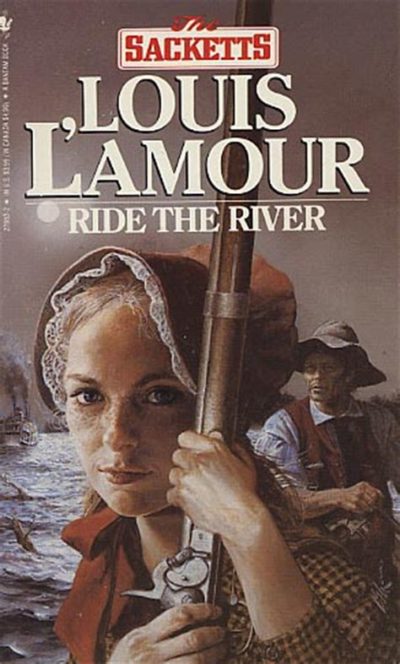 Goodreads characterizes this novel, set in 1840, as the fifth volume in the author’s Sackett series. The fictional Sackett family, in L’Amour’s writings, are descended from tough, larger-than-life Barnabas Sackett, who emigrated to America in the 1600s and settled on the frontier, and who laid down a law for his descendants that whenever a Sackett was in trouble, the rest were bound to lend their aid. This book is indeed about a Sackett, and no doubt chronologically the fifth in that sequence. But the sequence forms a multi-generational saga in which the individual books are generally about different people; though some knowledge of the family origins, as mentioned above, might be helpful (and is repeated in the text of this book, for readers who didn’t read the series opener), they can be read perfectly well as stand-alones. (I haven’t read any of the other Sackett novels.) L’Amour also wrote sequences of novels and stories about two other fictional families that bred adventurous pioneers, the Chantrys and the Talons, whose paths sometimes cross those of the Sacketts –and the paths of a couple of the Chantrys will bring them into this tale as well.
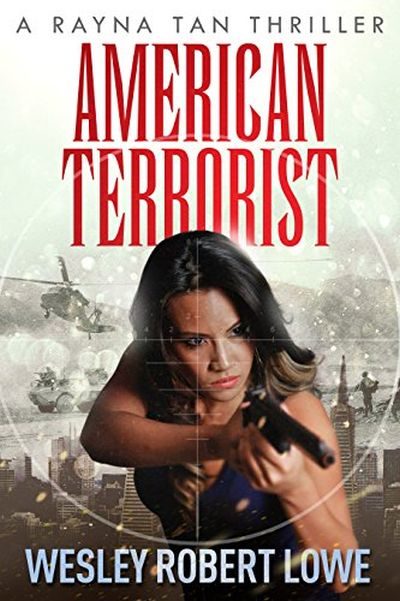 This was a disappointment, and a real chore to get through. If it had been a film, I’d have been reduced to surfing Facebook distractedly on my phone for the majority of its running time. Unfortunately, you don’t get to leave a book on in the background. It’s a stylistic and literary mess, throwing at the reader Canadian Special Forces heroine Rayna Tan, without providing any real background or character building beyond an incident in the Middle East. It then randomly switches around between her, a brother/sister pair of Islamic terrorists, Ahmed and Fatima, and their startlingly incompetent American recruits, who appeared to have strayed in from Four Lions. Throw in some unsubtle politicizing – even if I don’t necessarily disagree with the ideas expressed, it’s not what I want to read in my fiction – and it feels more like a half-finished collection of ideas than a coherent novel.
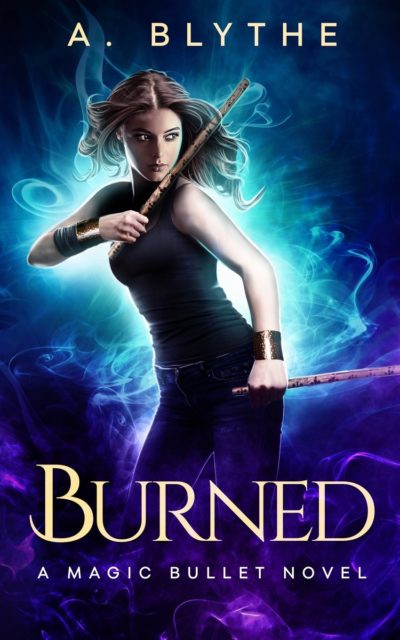 My name is Alyse Winters. I used to be a
  Stylistically and in terms of its general tone and vision, this second volume of the author’s A Murder in the Mountains mystery series, set in contemporary West Virginia, has much in common with the first book, Miranda Warning. It’s also set in the fictional small town of Buckneck (near real-life Point Pleasant, in west-central WV near the Ohio River), and a number of the characters from the first book are here as well, especially protagonist Tess Spencer and the family she married into. We have the same leavening of humor, the same realistic characterization, and the same affectionate evocation of modern mountain life.
 The handling of this story is a little different from the usual novel. Julien adopts an “episodic” approach, with the story initially released in novella-length installments (seven of which have come out to the point of writing), some with cliffhangers. In structure, this is almost like the
  No army in recent military history has made more use of women than the Soviets during World War 2. As we’ve
  The half-elven Lady Bethany has shattered the glass ceiling for women in the military forces, rising to third in command, a position she has achieved on her own merit. Of course, it probably didn’t hurt that she is daughter of the goddess Apaxia, although her ancestry causes as many problems as it solves. This is due partly to some pesky secret prophecies which outline – in typically vague prophetic ways, with references to the “Diamond” and the “Viper” – Bethany’s very important place in future events, and partly her estranged twin sister, Sarissa. For she has turned to the dark side of magic, insanely jealous of her sister’s success, with the emphasis squarely on “insanely” there…
 This initially seemed like a borderline entry, which I kept reading purely for entertainment. It’s about an exploratory star-ship, the Gemini, out on the very edge of known space, which comes across a giant barge, packed with nuclear waste and populated by a race of rat-humanoids, the Raetuumak. The Gemini is an appropriate name for the craft, as it’s effectively two separate ships, each with their own captain and very different approaches. Maggie Antwa, commander of Gemini Right, is a cautious scientist who abhors violence in any form, and was compelled to take on this mission after being involved in a environmentalist rebellion against the ruling Empire. Over in Gemini Left, on the other hand, Skip Sutridge is a square-jawed believer in shooting first and asking questions… well, never, to be honest. He has been sent to the fringes, probably to try and keep him out of trouble.
 I’ve come to the conclusion I prefer bad films to bad books. A bad film can be appreciated and offer entertainment in unexpected ways. I’ve rarely found that to be the case with literature, which just… lies there, dully. If a movie sucks, then you can at least allow it to drift into the background, while you check your phone, play with the cat, or do household chores. A bad book, on the other hand, requires every bit as much effort as a good one: the return on that investment is just a great deal less.