

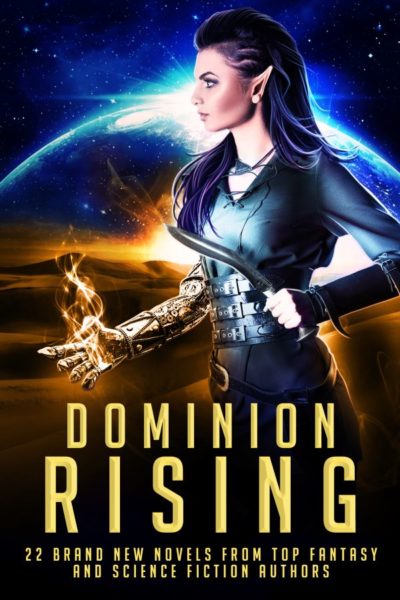
 I am a sucker for bulk-buying. Regular readers will know this, since one of the first things reviewed here was the Women Who Kick Butt DVD box-set, which was a mixed bag, to say the least. But it did introduce me to Sister Street Fighter, so I consider the effort well-spent. Naturally, when an offer popped up on my Kindle app, giving me the chance to purchase no less than twenty-three novels for the low, low pre-purchase price of 99 cents, it didn’t take me long to click on ‘Buy Now’.
Kinda regretting that decision. Not due to quality (at least, not so far), and not due to a lack of action heroine content. It’s just that there is an insane amount of content in the Dominion Rising collection. Amazon lists it at 5,563 pages, which at my low rate of reading (it’s a good day if I get 25 minutes in) is probably close to a year before it’d be finished. Rather than waiting for that, I’ve opted to review the individual items as I finish them – as long as they meet the usual site criteria, and I can find some kind of artwork with which to illustrate the piece. They’ll appear both as stand-alone reviews, and below.
One thing I am noticing already – and it’s rather annoying – is the tendency for the stories here to be incomplete, frequently ending on cliff-hangers, rather than offering a fully-formed and finished tale. It may seem churlish to complain, when I paid less than a nickel per book. But the discount box-sets of DVDs that I’ve bought, don’t cut off the movies after 60 minutes, and then require you to buy the last reel at a higher price. Even if I’m somewhat enjoying a story, an abrupt ending followed by an exhortation to buy volume two, is not likely to have the desired impact. Finish off telling a good story, and the odds of me buying more from you are significantly better.
Below, find the full list of contents, which will (eventually!) be read in order – titles struck through are ones that didn’t qualify for the site, and will be skipped.
- Reign of Steel and Bone by Erin St Pierre and Gwynn White
- Mind Raider by S.M. Blooding & P.K. Tyler
- Sorcery & Science by Ella Summers
Spectral Shift by Daniel Arthur Smith- Petra: Immortal Codex, Book 1 by Cheri Lasota
- Infinite Waste by Dean F. Wilson
Girard The Guardian by Ann ChristyFlicker by Rebecca RodeStar Compass by Anthea SharpVengeance: Warships of the Spire by S. M. Schmitz & Lisa Blackwood- Touching Infinity by Erin Hayes
Death Plague by K. J. Colt- Curiouser and Curiouser by Melanie Karsak
Ultras by Timothy C. WardMaze: The Waking of Grey Grimm by Tony BertauskiBlood for Stone by Logan T. SnyderThe Incurables by Felix R. Savage- Ferromancer by Becca Andre
- The Other by Marilyn Peake
- New York by J.C. Andrijeski
- Rift Cursed by Margo Bond Collins
- The Zoo at the End of the World by Samuel Peralta
- Iron Tamer by Tom Shutt (incomplete)
Authors: Various
Publisher: Pronoun, though the collection appears to be no longer available through Amazon as an e-book. Some entries may also be available individually, as noted in their entries below.
Reign of Bone and Steel by Erin St Pierre and Gwynn White
By Jim McLennanLiterary rating: ★★★
Kick-butt quotient: ☆☆½
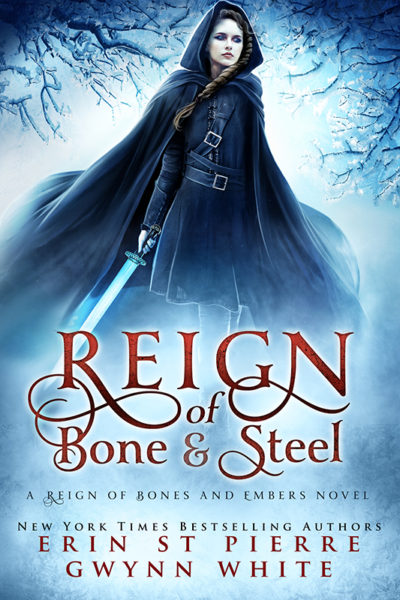 This certainly doesn’t waste any time, starting in the middle of a brutal pitched battle between the kingdom of Yatres, and their mortal enemies, the Nyhans. Among the Fae – basically, elves – in the former army is the warrior Caeda, and it’s her side that emerges victorious. But the price paid by the fallen on both sides is an ugly one. Their souls are absorbed through a magical sword, wielded by the Fae known as the Soul-Reaper, and fed to an artifact called the Bone. The trinity of Bone, sword and Reaper have helped sustain Yatres’s power down the centuries.
But while the nation is celebrating its victory, the Soul-Reaper is killed and the Bone stolen. Worst of all, for Caeda, the sword – which is intelligent, telepathic and very chatty – chooses her as the new Soul-Reaper. Caeda and her new pointy pal have to figure out who was responsible, before the power in the Bone can be wielded by the state’s enemies. Yet the more she interacts with the sword, the more she realizes that the soul energy powering Yatres is morally indefensible. Caeda comes to realize, the only legitimate thing she can do, is ensure the Bone is not returned to the service of her king either.
It’s an unusual mix of fantasy and whodunnit, with no small helping of romance. Caeda falls for Dominik, the scion of a the King’s closest advisor (who may, or may not, be involved in the Bone theft); unfortunate, since he is already engaged to be married to the Princess Taliesin. To be honest – and, let’s face it, as usual – this is likely the weakest element in my eyes. The heroine is a supposedly kick-ass warrioress, and certainly proves capable on that front, when necessary: in a world ripe with magic, it’s a nice touch that she doesn’t have any such skills. Given her apparent self-reliance, the speed with which Caeda melts into making moist, googly eyes at Dominik is almost embarrassing. The book also ends painfully abruptly, as if the authors had reached a predetermined word-count, though this is more likely a misguided effort to flog volume two.
It’s a shame, as this wasn’t bad until the cliffhanger which serves no purpose other than commercial. Pierre and White do a nice job of world-building, and the borderline insanity of the intelligent sword, a result of the unfortunate circumstances surrounding its creation, was particularly effective. Imagine having Gollum inside your head 24/7, and you’ll understand why the usual fate of Soul-Reapers involves being driven to insanity. Indeed, there’s a little from Lord of the Rings in the overall concept, with the hero(ine) seeking to destroy a powerful device which could be used for evil. However, the undercover nature of Caeda’s mission, which she can only share with a trusted few, is a good twist, and there’s enough fresh here to make for an enjoyable read.
Author: Erin St Pierre and Gwynn White
Publisher: CreateSpace, available through Amazon as a printed book. It also forms part of the Dominion Rising collection for Kindle.
Mind Raider by S.M. Blooding & P.K. Tyler
By Jim McLennanLiterary rating: ★★
Kick-butt quotient: ☆☆
 I’m not sure if the problems here are a result of there being two authors credited on this story. It could certainly explain them. For rather than providing a single coherent vision, this feels like both its universe and characters are being pulled in too many different directions. It’s overstuffed with ideas and, instead of them being developed fully, scurries from one to the next, as if the writers were competing to have the final word. This comes to an end in a rather ludicrous finale. There, the entire plot takes a right turn, with the biological weapon which has formed much of the early focus all but discarded.
The heroine is Keva Duste, an “engineered human,” who was originally pod-grown for use as a super soldier. However, she proved able to over-ride her programming so was discarded after refusing an order. And by “discarded”, I mean tossed into space. From there, she was fortuitously rescued, and began a new life as an agent working for the Syndicate. This is one of a number of murky groups, including the Elite and the Families, who are waging a proxy war for power around the network of planets and space stations which are the setting here. None of them seem to have the population’s interests at heart.
She’s sent undercover to an Elite planet, to find out information about the bio-weapon mentioned, which will shortly be tested on an unsuspecting batch of subjects. However, troubled by an increasing moral compass, she goes off-mission and also rescues Dothylian, the new wife of the not very nice Elite (to put it mildly) on whom Keva is spying. This causes problems all its own, partly because of Dot not being fit for the harsh world of the “Black”, where Keva operates. And partly due to the increasingly self-aware AI she brings with her, which has an agenda of its own.
I found it all kinda annoying. Ideas and concepts like the “slip drive” are hurled at the reader, without adequate explanation, and the focus bounces around, to diminishing effect. There is some a bit of decent tension built up when Keva is on the Elite planet, because her undercover identity is that of a dead woman. Anyone who knows that will be understandably surprised to see the corpse walking around, so it’s a very risky situation. For a genetically-engineered super-soldier though, especially one with a permanent connection to a high-powered AI in her head, she doesn’t seem to make much use of her talents. There’s rather more of Keva moping around her spaceship, and unresolved sexual tension with Captain Hale.
From reading interviews with the authors, it appears one wrote and the other edited, so my theory about competing pages doesn’t seem to be valid (much though it’d explain the deficiencies). I’ll split the blame here, with perhaps a little more going to the editor, Tyler. She should perhaps have spotted and corrected the structural issues that rendered this more chore than pleasure at about the half-way point, and turned into a real slog in the final stretch.
Authors: S.M. Blooding & P.K. Tyler
Publisher: Macmillan, available through Amazon as an e-book only. It also forms part of the Dominion Rising collection for Kindle.
Sorcery and Science, by Ella Summers
By Jim McLennanLiterary rating: ★★★
Kick-butt quotient: ☆☆☆
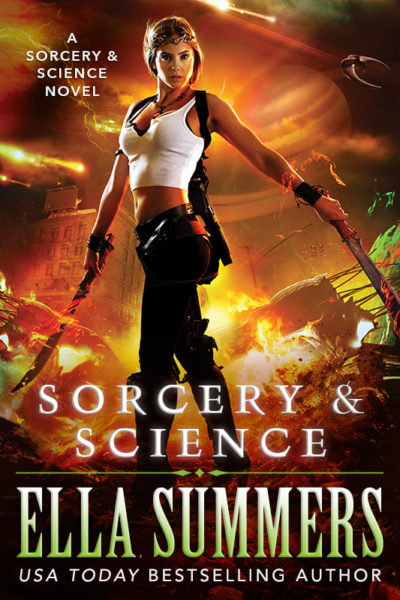 The blurb for this one reads, “Terra Cross is just your typical paranormal princess. She plays poker with goblins and leprechauns. She savors her morning muffin from the Pacific Sunrise Bakery in suburban California. She solves galactic crime cases. And on a particularly wild day, she can even see into the future.” It is somewhat inaccurate, at least as far as this novel goes. I don’t recall any poker at all, muffins appear once, and as for the crime-solving… Well, sorta but not really. There is, however, likely good reason, since the novel is a prequel to Summers’s “Sorcery and Science” series, in which I presume Terra does more of the above.
This is both a blessing and a curse. It allows this book to stand on its own: you reach the end, and there’s a fairly well-defined line drawn beneath the fates of most characters. On the other hand, it does require a clunky jump in the epilogue to tie into the body of the series. Not much more than, “we moved to the other end of the galaxy and started a private-eye business.” Wait, what? It almost works better if you skip that, and treat it as the first volume in its own, standalone series. The paranormal princess aspect makes more sense this way, in a universe where advanced technology and magic co-exist, and Earth is being carefully blocked from knowledge of both. Vampires, witches, elves, etc. all have their own realms, making varying use of the “sorcery and science” from the title.
Cross is the daughter of the mage’s king, but likes to sneak off on adventures with her best friend and mage enforcer, Jason. However, they bite off more than they can chew when chasing after a renegade scientist-wizard, Vib. He is creating an advanced breed of super-mages, with multiple, shared talents instead of the standard limit of one type of magic per person. Needless to say, this research – despite being way beyond the pale – is of great interest to the competing races. Terra and Jason find themselves not just fending off Vib’s creations; they also becomes pawns in the political battle for dominance between the various forces that seek to control the galaxy.
I generally enjoyed this, once I got past Summers’s fondness for prose which tends toward the over-descriptive, it seems especially when it comes to colours, for some reason. The world she crafts is quite an interesting one, and the techno-pagan blend of SF and fantasy is intriguing. While Jason is the more action-minded of the duo, Terra becomes more active later on, especially after taking one of Vib’s experimental concoctions, out of desperation. It allows her to use some of Jason’s talents, which are significant;y more combat-oriented than her precognitive ones.
The sudden right turn at the end, to tie it into the main body of the series, leaves me uncertain whether I would want to continue, since it appears potentially rather different in tone. Not least, I get the horrible feeling there’s going to be one of “those” love triangles, putting the heroine between Jason and the dark, brooding vampire commander she encounters. Fortunately, that was only hinted at in the prequel, and what’s here was, overall, pleasant enough.
Author: Ella Summers
Publisher: Currently only available as part of the Dominion Rising collection for Kindle.
Petra by Cheri Lasota
By Jim McLennanLiterary rating: ★★★
Kick-butt quotient: ☆☆
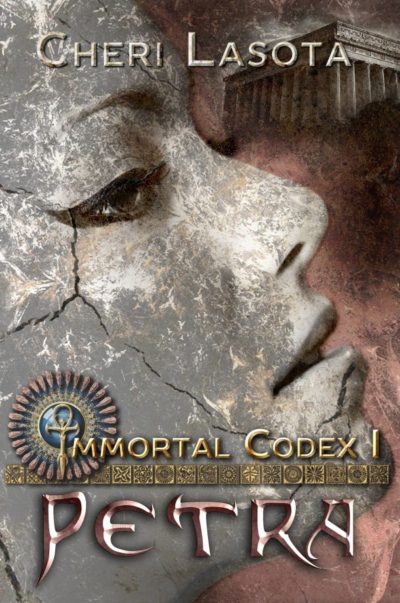 Petra is a teenage Roman slave at around the birth of Christ. She is completely under the thumb of her sadistic master, Clarius, until a strange conjunction of events and a poisonous herb with mystical qualities changes the power dynamic entirely. Both of them, together with her lover, Lucius, attain immortality. But it’s an immortality which requires the two men to drink from Petra annually, or they will degenerate into sub-human monsters. Neither is happy with the arrangement: Clarius is not used to being reliant on anyone, least of all his former property, and Lucius hates the fact Petra agreed to submit to their ex-master, in order to save him. As the centuries stretch into millennia, Petra begins, slowly, to put together a group people who will be capable of defeating Lucius and the immortals he has recruited, allowing her to live in eternal peace with Lucius.
If you’re getting a bit of an Interview With The Vampire vibe here, you are not far off the mark, with the story spanning multiple human lifetimes. Fortunately, it largely stays clear of the vampiric cliches, and what could have been little more than Twilight with delusions of historical significance becomes a little more. It’s recounted in flashback from the 18th century, though there are huge gaps in the narrative, where you’re left to wonder what Petra was doing during the 1,300+ intervening years. I’m still a little vague on the specific mechanism of the immortality, too: it is based on Petra’s blood, the herb, or is it the combination? But my major problem was the overpowering emphasis on the romantic angles. Look, we get it: Petra and Clarius are super in love. Now, can we move on to interesting anecdotes about life everlasting?
Proceedings take a sharp right turn in the 14th century, when Lucius has had enough of it all, and bails. This volume is, frankly, much more interesting with him not about. Petra goes in search of him, and the resulting adventure is easily the strongest section of the book. Hearing stories of an “immortal”, she heads out from Genoa, hoping that it’s her lover, and finds herself trapped in Kaffa, a port on the Crimean Peninsula, which is being besieged by the Mongol hordes. It’s a hellish landscape, made all the worse by the plague-infected corpses which the attackers lob over the walls (this actually happened – it was the first recorded case of biological warfare, and helped decimate Europe, as merchants who survived the siege brought bubonic plague with them when they returned home). This is a very well-handled meshing of historical events with fictional characters, working to good effect. I’d like to have seen more of this, and less sloppy romance.
Petra says that she’s an accomplished swordswoman – and given the hundreds of years she’s had to practice with weapons, that makes sense. There’s rather more talk than walk, in this volume, though I sense this may be a case of the author wanting to keep her powder dry for subsequent volumes and the battles against Clarius which seem destined to come. Would I read them? Hard to say. Lasota showed she has plenty of potential, but there’s still a risk this could end up collapsing into teenage mush. Probably a case where I’d borrow volume 2, or wait for a 99 cent sale on Amazon.
Author: Cheri Lasota
Publisher: CreateSpace, through Amazon – this was part of the Dominion Rising collection for Kindle.
Book 1 in the Immortal Codex series.
Infinite Waste by Dean F. Wilson
By Jim McLennanLiterary rating: ★★★½
Kick-butt quotient: ☆☆☆
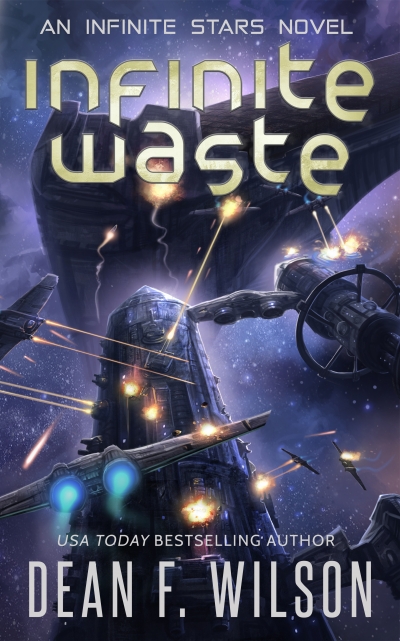 This initially seemed like a borderline entry, which I kept reading purely for entertainment. It’s about an exploratory star-ship, the Gemini, out on the very edge of known space, which comes across a giant barge, packed with nuclear waste and populated by a race of rat-humanoids, the Raetuumak. The Gemini is an appropriate name for the craft, as it’s effectively two separate ships, each with their own captain and very different approaches. Maggie Antwa, commander of Gemini Right, is a cautious scientist who abhors violence in any form, and was compelled to take on this mission after being involved in a environmentalist rebellion against the ruling Empire. Over in Gemini Left, on the other hand, Skip Sutridge is a square-jawed believer in shooting first and asking questions… well, never, to be honest. He has been sent to the fringes, probably to try and keep him out of trouble.
It doesn’t work. Skip finds himself captured by the Raetuumak, leaving Maggie to strap on the battle armour and rescue her co-captain. That’s not the end of the matter though, as they discover the barge is an interstellar weapon, aimed at the heart of the Empire. Worse still, is the creature made of pure shadow that stalks the corridor of the ship, absorbing the energy of anyone it touches: this is one of the Umbra, long since considered to be no more than the bogeymen of fairy tales. Not only is this belief incorrect, they’re now apparently returning from their exile to take on the Empire. Maggie and Skip will have to put aside their deep philosophical differences to deal with both this massive dirty bomb, and the Umbra.
It’s Maggie’s character arc which eventually qualifies this for here: she and Skip are complete opposites, who initially share only mutual loathing. Yet they eventually realize that neither one of their approaches will be sufficient to defeat this threat. As the book states, “He was sword and she was shield. Separately, they were vulnerable. Together, if they could ever find a way to really work with each other, they would be powerful beyond measure.” That’s really the core of the book here: the convergence on a middle ground which is able to make use of both their undoubted talents. It’s Maggie who drives this, with the solo rescue of Skip proving her courage and audacity, and forcing him to admit her abilities. Yet, she also finds that her long, deep-held pacifism has limits: after realizing the need to deal with the Umbra, “Perhaps for the first time in her life, the thought of killing something didn’t upset her at all.”
I have to say, the way in which it is eventually dealt with, was more than a little weak: if they’re so easily defeated, it’s hard to see how the Umbra could be any kind of threat to the galaxy. Yet, except for that moment, this was a strong page-turner. As mentioned at the start, kept me interested even in the early going, when its action heroine credentials were in doubt. Both Skip and Maggie are capable of carrying the story on their own, and the pairing of them is an effective combination. I’m intrigued to see where they go from here.
Author: Dean F. Wilson
Publisher: Currently only available as part of the Dominion Rising collection for Kindle.
Book 1 in the Infinite Worlds series.
Touching Infinity, by Erin Hayes
By Jim McLennanLiterary rating: ★★★★
Kick-butt quotient: ☆½
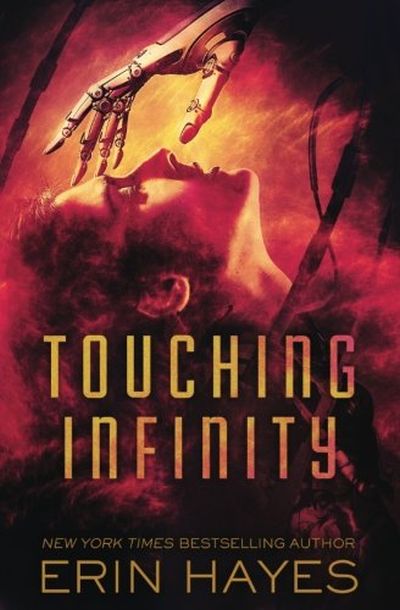 I will confess to a little post-read confusion here. Amazon calls this Volume 2 in the author’s Rogue Galaxy series – but I could find no information, there or elsewhere, regarding Volume 1. I suspect Amazon and Goodreads are wrong, and this is actually the first entry, as stated in the Dominion Rising collection. It certainly reads like an opening work, introducing us to Clementine Jones and the rest of the crew of the Picara.
They’re freelance data pirates, taking on corporate espionage missions from the companies who rule the galaxy, with Clem the recovery specialist. Their latest mission seems too good to be true: Syn-Tech offers a massive bounty for the simple retrieval of patent information from a derelict ship. Despite misgivings, they accept the job, and to no-one’s surprise, it is too good to be true. In addition to the patents, they end up bringing back a lethal virus – the actual target for Syn-Tech, who want to develop an anti-virus they can then monetize. The disease has the ability to infect both organic and synthetic systems, merging them. The results are… messy, to say the least, leaving Clem and her colleagues rapidly running out of options, especially ones not involving the dubious mercies of their employer.
Hayes’s other works appear more in the romance line, yet she demonstrate an impressive grasp of hard SF in this. The future depicted, corporate war by proxy, seems plausible, a universe where many opt to trade freedom for security as a “Lifer”. That makes you, basically, a company indentured servant: as Clem disparagingly puts it, “Your entire existence is owned by that corporation… even which lavatories you’re allowed to shit in.” Free Agents like her rely instead on cyborg parts to enhance and repair themselves, to such an extent she is sometimes left doubting her own humanity. A particularly interesting hook here is, the virus is self-aware, and communicates with Clem in order to come to a mutually beneficial arrangement: it gets to spread, she makes it promise to spare her crew-mates. Yet can you really trust a disease?
The author does a fine job of painting word imagery with a cinematic eye, such as the black hole into which the derelict is tumbling. It did take a while before I even realized that “Clem” was a woman, with the story unfolding in her first-person narrative, leading to “I” rather than “she”. That’s not intended as a criticism, just an observation; similarly, there are hints at her feelings for the ship’s android, Orion, though since she’s about 50% cyborg herself, it is less creepy than you’d think. My sole complaint is its relatively light action quotient: until she teams up with the virus, this is so low-key as to be a borderline candidate for the site. Though even so, it’s never less than entertaining, tells a complete tale and sets the scene in a way that leaves you wondering where the story might go next. The “real” second book is one I’ll probably be buying.
Author: Erin Hayes
Publisher: CreateSpace, available through Amazon, currently only as a paperback, but was part of the Dominion Rising e-book collection.
Book 1 of 2 in the Rogue’s Galaxy series.
Curiouser and Curiouser by Melanie Karsak
By Jim McLennanLiterary rating: ★★★½
Kick-butt quotient: ☆☆
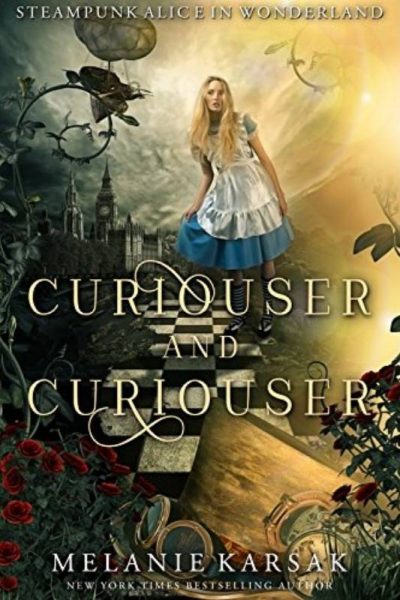 If you thought “Alice in Wonderland was okay, but it really needed more air-ships,” then this book is for you. It’s a steampunk take on Lewis Carroll’s classic tale, set in an alternate universe version of Victorian London. Specifically, 1851, when the renowned Great Exhibition took place in Hyde Park. Though it doesn’t actually feel particularly “alternate”; this angle lives mostly in its trappings, such as people using air-ships to get around, or clockwork cats, rather than in elements necessary to the plot. But that’s okay, because at its core, the story is strong enough to stand on its own.
The heroine is Alice Lewis, an orphan who, along with her sister Bess, was rescued from the workhouse and brought up by the Jabberwocky, one of the leaders of London’s underworld. She fell in love with William, another of the Jabberwocky’s employees, but Alice walked away from both the criminal life and William, after being morally unable to handle the actions it required from her. But several years later, she gets dragged back in, and has to re-unite with William on a job to steal the famous (and cursed) diamond, the Koh-i-Noor, which belongs to Queen Victoria, from the Great Exhibition. It’s the only way William can pay off a debt to the occultist known as the “Queen of Hearts,” who intends to use the Koh-i-Noor in a ritual to make her immortal. And that’s far from the creepiest thing about the Queen, since her role-model is Countess Bathory.
Karsak does particularly well with her world-building, to the extent that this feels like an established universe. The timeline bounces back and forth, between the present and the various incidents which brought Alice to where she is. It’s an approach which could easily be disruptive, but I felt this was admirably pulled off, and balanced nicely. I was, however, a bit disappointed that much of the book seems to be directed towards a final-act heist, to which I was quite looking forward. Only, the plot makes a left-turn in the later stages, which renders the heist superfluous. This sends the book onto somewhat thin ice in terms of believability on a couple of aspects, and an alternate method of resolution might have worked better.
All told though, this is a fun insight into a world that is both familiar and strange, with both heroine and villainess being strongly characterized and memorable. You probably need to be at least somewhat aware of the works of Lewis Carroll – otherwise some of the terms might seem more like unpleasant STDs (“I caught a bad dose of Bandersnatch”). But Alice in Wonderland is deeply enough ingrained into the collective unconscious that this isn’t likely a major issue for most potential readers. I look forward to the Guillermo del Toro adaptation in due course. Well, we can dream, can’t we?
Author: Melanie Karsak
Publisher: Clockpunk Press, available through Amazon, both as a paperback and an e-book
1 of 4 in the Steampunk Fairy Tales series.
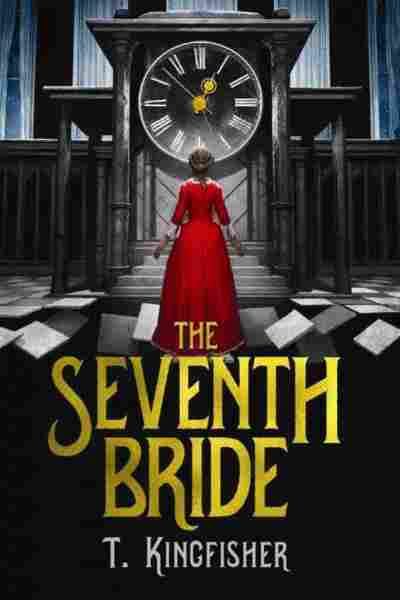 Almost all the action heroine novels I’ve read of late have been Volume 1 in a series. While not necessarily a bad thing, this does tend to lead to a sense of unfulfilled resolution. “Happy ever after” is frequently replaced by a semi-cliffhanger, intend to separate the reader from their cash for Volume 2. It rarely works, and is more likely to annoy me. After all, I’ve invested significant quantities of time (if not perhaps money; these introductory items tend to be of the 99-cent variety, so I guess the buyer should beware) in each tale, and to be left dangling is frustrating. That’s why it was especially nice to read a book like this, which tells a complete story, with a beginning, a middle and a solid, satisfactory end.
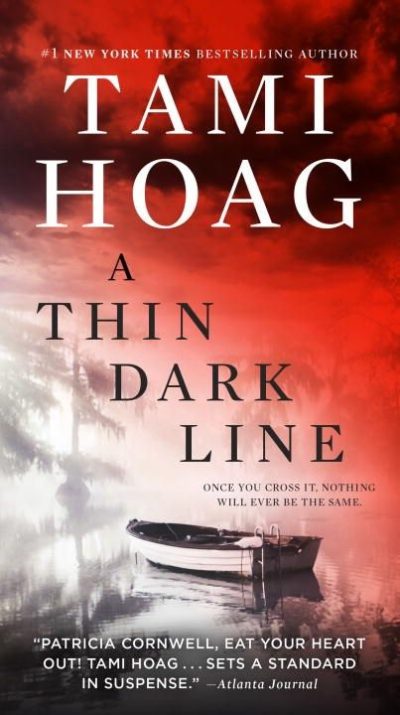 This is officially characterized (though not in the cover copy) as the fourth book of the author’s Doucet series. However, that nominal “series” is apparently very loosely connected, only by having main or other characters from the fictional Doucet clan; and a Doucet appears in this novel, though not as the protagonist. Our protagonists are sheriff’s deputies Nick Fourcade, a detective, and Annie Broussard, a uniformed deputy who’d like to be a detective. (The book is also counted as the opener of the Broussard and Fourcade series, which is apparently more connected; but it has a resolution to the mysteries involved in this volume, while leaving things open for new ones.)
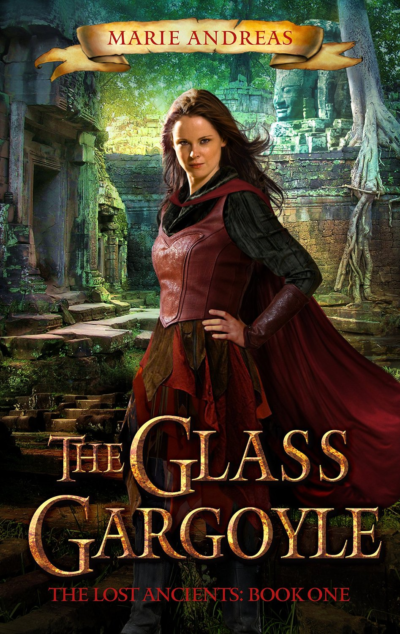 Taryn St. Giles is an out of work archaeologist, who has taken up bounty hunting in order to pay the overdue rent, after the untimely death of her current patron. However, her latest target turns out to be considerably more than she can handle. For Alric is a master of both disguise and hand-to-hand combat, and Taryn’s pursuit of him rapidly entangles the heroine in a deepening web of magic and intrigue. The titular artifact – which doesn’t actually show up until well into the second half – is a potential gate, which could open a doorway and leave this world a thoroughly unpleasant place for just about everyone. Fortunately, Taryn has friends both academic and physically-inclined on her side, as well as a trio of semi-domesticated fairies. Though the last-named are engaged in their own war, with a local family of squirrels.
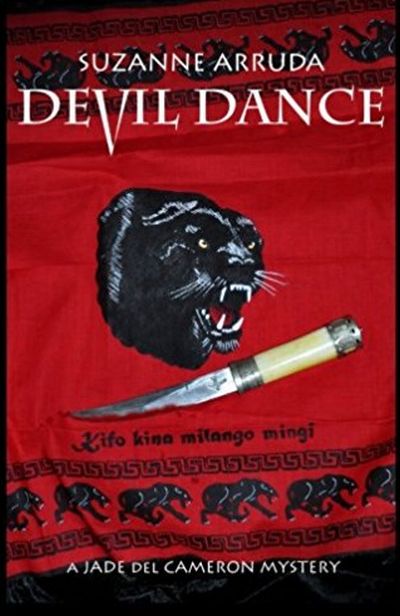 This final installment (the author confirms that fact in her Acknowledgments) of the series is set in May 1921, a few months after the previous one. The book’s opening finds Jade in Zanzibar, a new setting for her, which takes her out of the Nairobi area and away from her friends there. One reviewer complained about their absence, but as a compensation, we get to not only spend some more time with Jade’s formidable Spanish-born mother, Inez, but to meet Jade’s dad as well. Her parents have come to Africa for her impending nuptials, and she and Inez plan to enjoy a relaxing sight-seeing trip while Richard del Cameron gets acquainted with his new son-in-law on a planned safari.
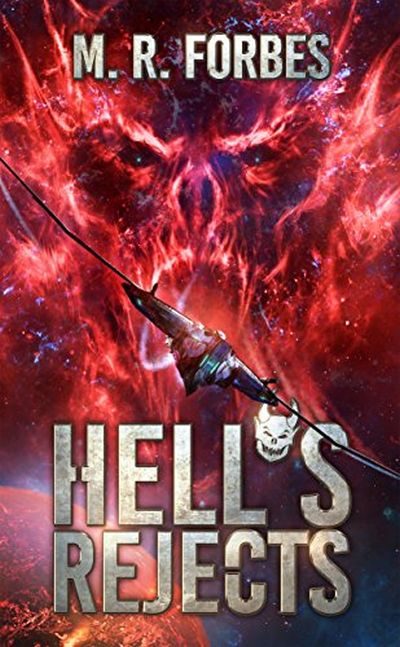 The heroine in this enjoyable slice of space opera is Lieutenant Abigail Cage. She’s a “breaker” – effectively, a hacker – although one who is highly trained in combat. Her latest mission is to enter a rebel compound and recover a laptop, but the job goes awry, and she finds herself framed for treason after a cache of weapons goes mission, and sent to Hell. No, literally: that’s the name of the planet, and it’s an entirely apt one.
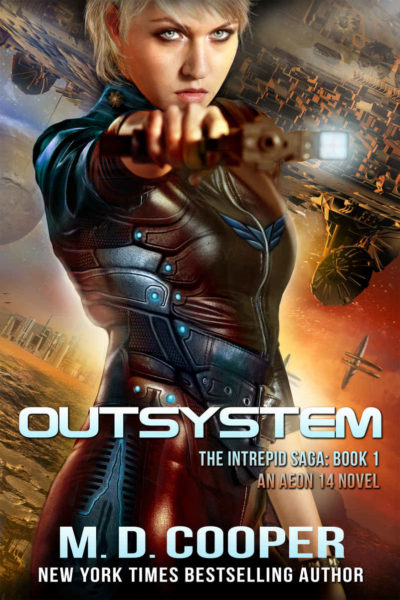 This is certainly “hard” SF, by which I mean a story driven by (and to a large extent, more interested in) scientific advancements. In tits 42nd-century future, humanity has expanded to fill the entire solar system, and is now reaching out with colony ships to nearby stars. One such ship, the Intrepid, is being assembled at the