Spoiler warning. I will be discussing parts of the novel’s story as well as things that may – or may not – go on in the movie adaptation.
 Background & backstory
When former illustrator Philip Reeve’s first book, Mortal Engines, was released in 2001, he couldn’t have known it would be that successful. Coming out amidst the Harry Potter craze and Lord of the Rings movies, the book market had started to focus on young adult novels, very often with fantasy or SF-themed plots, resulting in a sharp increase in their sales. For a time that worked very well: I like to see how these genres, usually only occupying a little niche in bookshops, were getting their own big areas, shelf over shelf filled with books of this sort. However, I also saw traditional books for boys and girls, well-liked evergreen children’s classics for decades like Pippi Longstocking, The Robber Hotzenplotz and the books of Michael Ende, more and more pushed out by the Harry Potter type. That personally hurt me a bit as I grew up with all these classics.
But things have changed. Traditional book shops seem to have become a thing of the past, with more and more people seeming to order books online. Books themselves seem to have become an oddity, with every second person reading e-books on their Kindle and the young adult genre seems to be dead now. Few of the many authors walking in Joanne K. Rowling’s footsteps were able to compete with her enormous success. Though the YA genre would enjoy other successes such as The Hunger Games or Twilight, this genre really seems to have seen its day. Even in the cinemas, many attempts flopped. Percy Jackson never became a franchise; Divergent ended before its final part; and did anyone really watch the last movie in the Maze Runner series?
While some numbers give cause for concern, such as a drop in book sales in the last four years, there is also positive news as classic children books seem to have made a comeback, in film form. German cinemas enjoyed new movies based on The Little Witch and The Little Ghost (Otfried Preußler), Hannie & Nanni and the Famous Five (Enid Blyton), The Boys from Castle Horror Rock (Oliver Hassencamp) and Jim Knopf (Michael Ende). A new Robber Hotzenplotz book has also come out, 45 years after the last one – and 4 years after author Otfried Preußler’s death!
But I digress. ;-)
Reeve’s book came out in the midst of the YA craze and was received very well. It obviously proved popular enough that the author would follow this success with 3 sequels, 4 prequel novels, an illustrated guide and a short novella. Film-maker Peter Jackson had been interested in the series since 2008. But the idea of enormous cities rolling overland was not translatable to the big screen with then-available CGI. Add his own sudden involvement with the Hobbit movies (originally to be directed by Guillermo del Toro), and the idea stalled. Now, it seems these hurdles have been cleared, and though Jackson left directing to his prodigy and co-worker for 26 years, Christian Rivers, we finally saw a movie version of the first book in December.
But what are these books – specifically, the first – about?
 Summary
Reeve invented in his first book a rich colourful world which plays far, far in the future but feels definitely retro. Aficionados know this kind of genre which often is labelled “steampunk” – or in this case even “dieselpunk”. But Reeve, as well as Jackson and Rivers in recent interviews, stress it’s not quite that, but rather incorporates elements of steampunk as well as of post-apocalyptic science-fiction with the Young Adult approach of something like let’s say… Harry Potter. It should be also noted that the idea of “cities on wheels” had already been used before in Edgar Rice Burrough’s “John Carter of Mars” series.
In the book, the world has been devastated by a terrible conflict, called the “Sixty Minute War”, thousands of years ago. It destroyed most of the ecology of the earth: earthquakes and volcano eruptions were caused by the aftermath of that war. Traditional knowledge about our world, our history and our technology has been lost. New knowledge has replaced it, that has changed the way people live in this post-apocalyptic world.
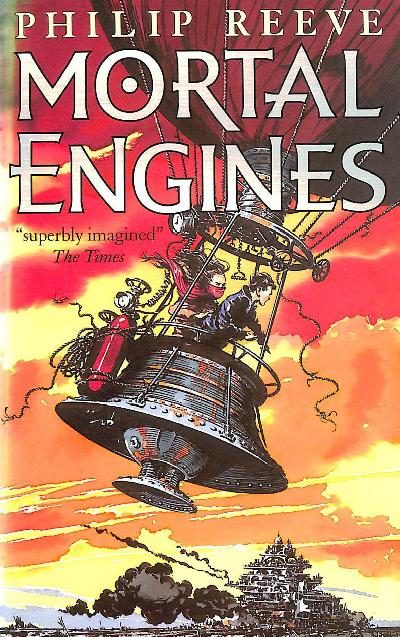
In order to survive, people have found a way to put entire cities and towns on wheels. These now roll over land and through dried-out seas, in order to capture and “devour” other cities, whose parts and elements are used to fuel their own city and replenish resources. The captured inhabitants of those cities may be integrated into their captor’s society or be sold as slaves. Transport to or discovery of other cities is managed via fast airships.
The story revolves around young orphan Tom Natsworthy, third assistant in the Guild of Historians, who works in a museum. Things seem to be going fine for Tom and his dreams of a better life, as he meets Thaddeus Valentine, a key figure in the city of London. Valentine seems very positive towards Tom, and his daughter Katherine seems to take a liking to him. At least, until a girl with a scarf across her disfigured face tries to kill Valentine. Her attempt is thwarted by Tom, though he can’t prevent her from falling into a waste chute during the subsequent chase. She had just revealed her name to him as Hester Shaw, information which proves so embarrassing for Valentine, he throws Tom right behind her.
That is just the beginning. Out of need, Tom joins the young woman in order to get back to London. They experience a series of adventures on their journey involving a city in the air, pirates, cool aviatrix Anna Fang, a big city not on wheels but hiding behind a big wall, and a forgotten weapon of mass destruction called “Medusa” from the Sixty Minute War. Shocking revelations are… ahem… revealed to the characters and readers, resulting in a finale that leaves no eye dry, and with a death toll that would have Game of Thrones nodding in approval.
I don’t think Reeve planned this book to become the first in a series, or he wouldn’t have written such a definitive ending. I suspect book two, which I haven’t read, will probably have to kind of “re-start” the series. But it’s perhaps fortunate he did, for as we say in Germany, it means he’s really making “nails with heads”. That means he’s not above making tough decisions, which readers may not expect (or even approve of, had they known beforehand). As far as I’ve heard that’s something that he stays true to, for the remainder of the series.
 Style & themes
Reeve writes in a very fluent and “readable” style. He gives descriptions where they are needed but doesn’t exaggerate them. It’s definitely the writing style you expect in a YA novel (this is not meant to be negative at all). Very often, he lets you into what his characters are feeling or thinking, without the characters articulating their thoughts or emotions directly. Sometimes I wish he would be a bit more direct, but then I think Reeve believes in the old “actions speak louder than words” approach, and has his characters give verbal explanations only where he deems them necessary.
The story is told from different perspectives, Mainly it alternates between Tom and Katherine, so that one chapter describes Tom’s and Hester’s exploits and the next reveals what Katherine and her tame wolf discover. These are interspersed with chapters from other perspectives and sometimes longer descriptive passages, mostly about the cities. A nice trick Reeve plays, is often having a chapter end with a little climax or “Aha!”-moment. It leaves the reader wanting to know what happens next – only to have another person’s story in the next chapter. This is an effective storytelling technique to keep your reader’s interest awake.
Principally, my feeling is that in this first book Reeve is still “trying”, but the rich- and inventiveness of his fictive world is already there. He seems to be “finding his voice,” and according to others who have read his follow-up books he has succeeded better in these. The basic idea of cities on wheels that “eat” other cities is intriguing, and that image must probably also have been what may have captured Peter Jackson’s imagination.
Whether there is a deeper meaning behind the book’s story is left to the reader’s own interpretation. Though without much effort I can see a couple of possibilities. Isn’t there right now a “culture war” happening, with different cultures battling it out over dominating each other? And aren’t many employees forced, day in and out, to travel to locations far from their respective homes for work? Where is your real home if you are constantly being asked to be “flexible”?
A couple of years ago, I was in Brighton where people explained to me that this is actually “Brighton & Hove” but the two united into one over time. While for the tourist it presents itself as one city, the inhabitants still can tell you exactly where Brighton ends and Hove begins – a very good example of a “real” city “devouring” another city. I’m not saying Reeve may have intended any of these associations. Maybe he just saw The Spy Who Loved Me with a big ship swallowing submarines! Interestingly, the main villain is London’s Lord Mayor Magnus Crome, and his last words are: “I just wanted to make London strong!” I couldn’t help reading the line as “I just wanted to make London great again!” While that’s my own mind playing practical jokes, considering the book was written 17 years ago, maybe it has acquired contemporary resonance?
A recurring motif of the novel seems to be that things don’t necessarily turn out as planned. In the beginning, Tom dreams of making a career, and in his day-dreams experiences an adventure with him as the hero and a beautiful girl at his side. Instead, he finds himself literally tossed out of his comfort zone by his almost-mentor, his hopes having dissolved into dust within a moment. He’s stranded in the outside world with a disfigured girl on his side, who is far from being nice or friendly (at least at first).
Similarly, Thaddeus has big plans and understandable motivations, having made a career after acquiring devastating ancient technology by killing Hester’s parents. He ends up pressured by Crome, and all of his hopes go down the drain at the end of the story. Valentine may be a villain but he’s more a fallen hero – Reeves wins extra points with me for not falling into the trap of creating simple “good” and “evil” characters. You may even feel some pity for Valentine as Hester does at the end when she decides to spare his life. We’ll see how the movie will handle these aspects of the novel!
Again and again, Tom and Hester have to counter new problems and challenges on their way back to London. Reeve may be saying that you can make a difference and change things for the better, despite being in an unfortunate position, by working hard to overcome one’s personal hurdles. To me, it’s a very positive message that reminds me of the basic tenor in my preferred YA series The Wardstone Chronicles by Joseph Delaney.
 The girls
I almost forgot about the girls – though I’m not really sure if I would call this a GWG book, since the main protagonist in this volume is definitely male. First, there’s Hester Shaw, the young, disfigured woman out for revenge. Though she may be the most prominent overall character of the series, she isn’t so in this book: it’s Tom. I’ve heard that the second book is told from her perspective, with her being center-stage, while book 3 and 4 are focused on her and Tom’s daughter, Wren. This reminds me of some other literary characters: for example, Lisbeth Salander was a supporting character in the first Millenium novel, as was Hannibal Lector in Red Dragon.
Here she’s mainly a supporting character. After her initial attack on Valentine, which she survives badly wounded, Hester doesn’t do much for the next 100 pages and is mainly half-carried around by Tom. He has the biggest character development, finally deciding to help the “anti-tractionist”, those who are against the moving cities and live behind the walls of Batmunkh Gompa. Still, it’s a strange, unique character Reeve has created: Hester isn’t really sympathetic at first sight and not a beauty on any sight, but the reader slowly warms up to her. Her life-story hasn’t been a beautiful one, she has similarly “fallen out of paradise” like Tom, but doesn’t show much empathy for him.
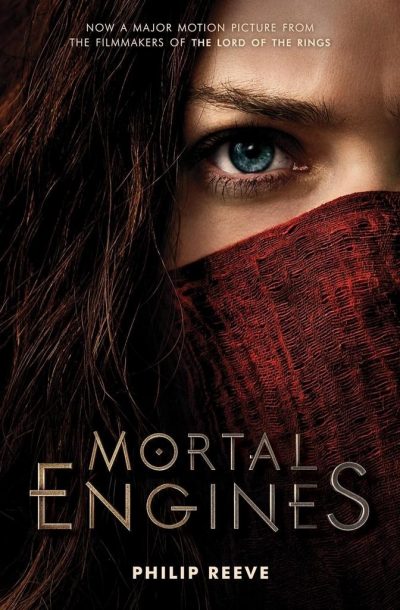
Her disfigured face leaves her far from a beauty queen; maybe this was Reeve’s intention, to point at the fact that we too often judge just by that what we see on the surface than what’s inside. In contrast, Valentine who comes across as likable at first and is described as an honorable, remarkable man – only to try to murder Tom moments later. What I find strange is that obviously in the promotion of the movie, Hester is in the front of the marketing material (as in the movie tie-in version of the book above), and the powers that be have definitely dialed back on her ugliness. This makes little sense. The original idea seems to have been it was this hideous scar which made Hester the tough, harsh character she is. In the trailer, the actress playing her is a very beautiful young woman with two eyes, an unharmed nose and some, well… let’s call them scratches on her face which do not really require to be hidden. It feels a betrayal of the original intent for this character.
Maybe it’s enough that the villain killed your Mom. But why, then, put a scarf around that girl’s face and advertise it with, “Some scars never heal”? Some fans have already voiced their disapproval of what’s typical for Hollywood. Remember how Brienne of Tarth was so much more “eye-friendly” in the Game of Thrones TV series than the books? They see that disfigurement making a huge statement: not every female character has to be a typical beauty to be a heroine (although Hester probably falls more in the category of anti-heroine) and there even existed an online petition with the intention to change it. This worked as well as the one to replace Ben Affleck as Batman before the production of Batman vs. Superman.
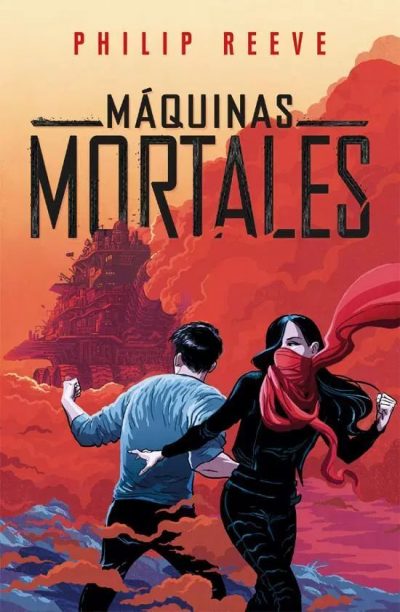
I personally think it takes quite a bit away, from a character who always wears that red scarf when depicted on a book cover. There are also fan drawings and paintings online that show how Hester could have looked with her terrible scar, without appearing downright nightmarish. I can’t help but suspect the studio (maybe Jackson, Rivers or the make-up department) realized that they have a very cool character on their hands – then lacked the conviction to go with it, and watered the character’s appearance down. Just my 2 cents.
Another important character is Katherine Valentine. She is a good person, regrets the presumed death of Tom whom she liked, and with the help of a young engineer and her own tame wolf “Dog”, slowly discovers the big secret of her father’s and Magnus Crome’s secret plans. She definitely plays a bigger, more active role in this book than Hester. Actually, I’m astonished that she is not the poster-girl for the up-coming movie, or even obviously in the trailer, as she does really much more than Hester Shaw, though the fails in the end.
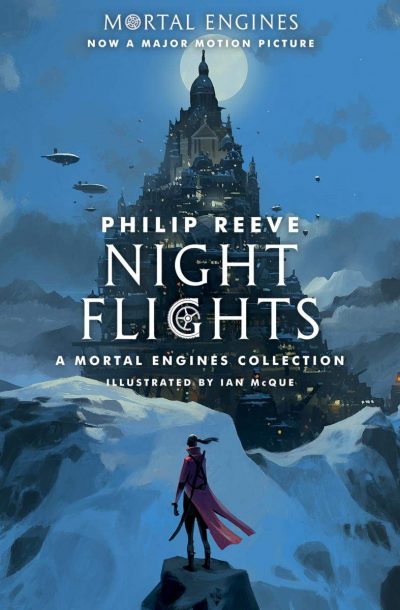
Finally, there is Asian aviatrix Anna Fang (known as “Feng Hua” to her air collegues). She is working for the “anti-traction league” and helps Tom and Hester more than once. She has a nice sword fight with Valentine at the end, but unfortunately loses to him. Obviously Reeves regretted that decision later. I read that when he met the actress who plays Fang in the movie Korean singer Jihae), it inspired him to write a book of short stories all about her character, published under the title Mortal Engines 05: Night Flights.
Conclusion
Mortal Engines is a very readable YA novel, which can also be read by grown-ups without any problems. It’s fast, action-paced and never gets boring, though it could have had some more work done in the character depiction of Hester. Reeve creates a rich, fascinating and colourful fantasy world with some good surprising “A-ha!”-moments and doesn’t make life easy for his protagonists. He doesn’t flincg from describing grisly situations, physical battles or blood, and surprises his readers with outcomes for his characters you wouldn’t necessarily expect. I never regretted having bought this book, without any specific expectations. I might even be interested in buying book 2, which some people – including Peter Jackson – claim to be better than the first.
Author: Philip Reeves
Publisher: Scholastic Inc., available through Amazon, both as a paperback and an e-book
Book 1 of 4 in the Mortal Engines series.




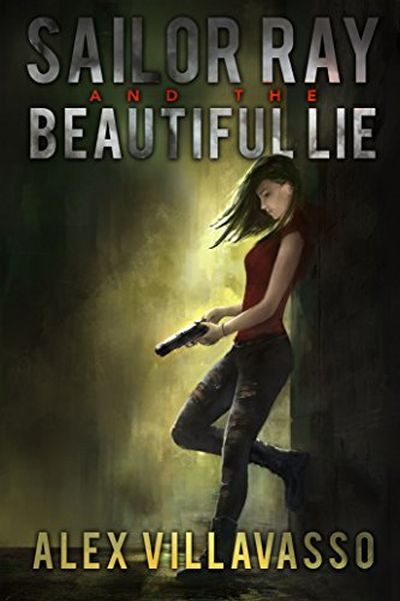 This got off to a frankly rocky start, to the point that a few pages in, this felt like it might become a very rare DNF (Did Not Finish) book. It’s an incredibly clumsy and stilted opening, depicting the internal conversation between Sailor Ray and the demon who inhabits her. Literally, “Why am I reading this?” bad. Still, I persisted: and in the end, the story redeemed itself, though the final third was considerably weaker overall.
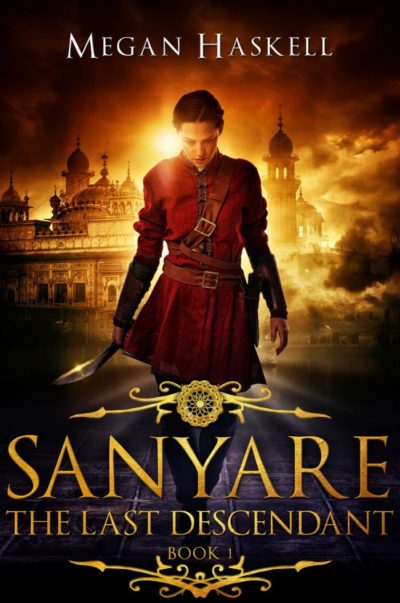 Nuriel Lhethannien, known as Rie, is an orphan human in a multi-verse, populated by elves, vampires known as sidhes, trolls and a host of other magic creatures. She has a job as a messenger for King Othin, the ruler of the Upper Realm. But when she’s attacked by assassins from the Shadow Realm, she’s in deep trouble. For such is the enmity between the realms, that Othin decreed, “Anyone in contact with the Shadow Realm, in any way, would be executed.” To save her own life, Rie has to become even more of an outlaw, and journey down below, seeking to find the truth about who attacked her and why.
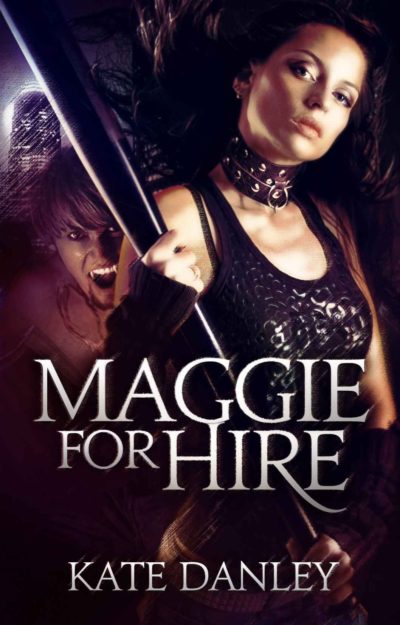 Maggie McKay is an inhabitant of two overlapping worlds, courtesy of her genetics and upbringing being a little bit from both. Her father was from the “Other Side,” but her mother was from Earth, and they lived here until Maggie’s awakening talents of her own necessitated a quick departure back to the O.S. She still operates mostly in this realm, hunting down and dispatching the nastier denizens who sneak across: vampires, ghouls, werewolves, etc. This everyday work gets escalated, when she discovers her previously unknown (and not very nice) uncle, Ulrich, has teamed up with a vampire clan, to acquire a pair of artifacts which control portals between the sides, and also allow the vamps to walk in daylight. Unchecked, this could lead to chaos, and it’s up to Maggie and her elf sidekick, Killian, to make sure that doesn’t happen.
 It took me about six years after reading the series opener to get back to the adventures of one of my favorite action heroines, Seeley James’ Pia Sabel; but I only wish I’d done so a lot sooner! Some of my comments in my
 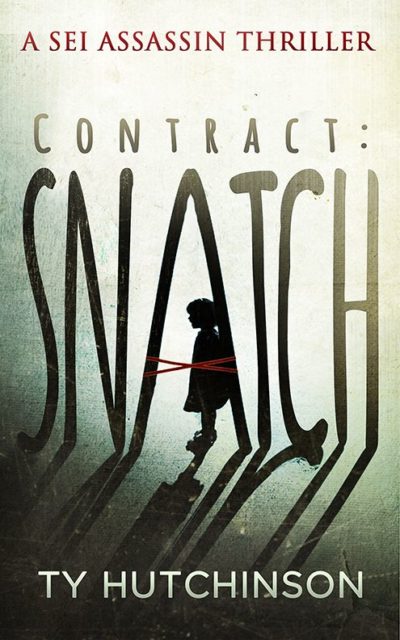 Sei is a former assassin, who quit the industry after getting pregnant, then having her daughter stillborn. She has taken up a quiet life in the Belgian countryside, when she’s brought out of retirement by a shocking offer she received over the deep web. Her prospective employer says Sei’s daughter is not dead, and offers information in exchange for carrying out a job: breaking another assassin, the notorious Black Wolf, out of the Turkish prison where he is being held. After confirming with the doctor who was present that the claim of her daughter’s survival is true, Sei accepts the mission. However, it turns out she was set up as a patsy, and finds herself also incarcerated in conditions which seem not have improved much since Midnight Express.
 Although I haven’t read much pirate-themed fiction, I find the premise interesting; so I’ve had my eye on this historical novel ever since the BC library (where I work) acquired it. It definitely didn’t disappoint! Set mostly in the early 1720s, with some stage-setting in the years leading up to those, this action-packed tale follows the life and adventures of first-person narrator Nancy Kington (b. ca. 1704), the daughter of a Bristol merchant, who finds herself packed off to the family’s plantation in Jamaica at the age of 15, and is subsequently led by circumstances to voluntarily sign articles on a pirate ship.
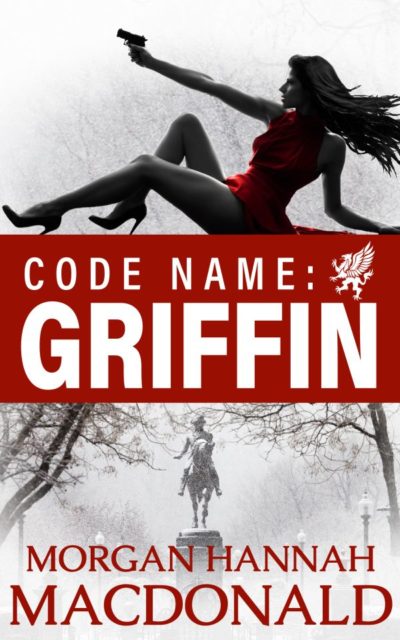 A painfully clunky mix of spy and crime thrillers, this really needs to decide which it wants to be. Alexandria Kingston – code name Griffin, in case you hadn’t guessed – was an abused child, with the good fortune to be rescued and brought up by Margaret Murphy, the head of Irish organized crime in Boston. Though to avoid Alex being targeted for leverage, she was never acknowledged to be part of the family. As an adult, Alex joined the CIA and became a top field agent, jet-setting over the globe on demand. But when her foster mother suffers a stroke, she returns to Boston to find herself in the middle of a war for control of the turf. The rival Killeen clan, sensing an opportunity, pounce. It’s up to Alex and her brothers to defend the family – and then take the battle to the Killeens.
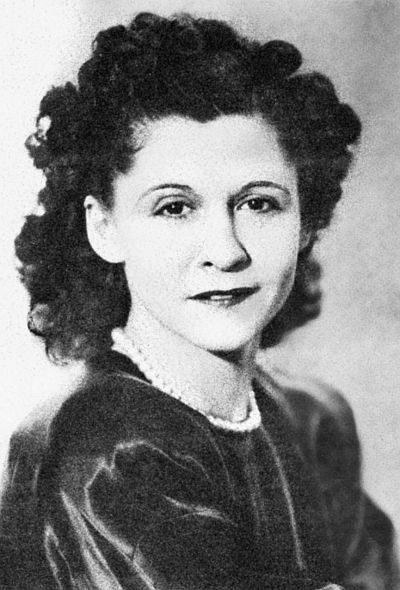 In September 1941, the author returns to Manila, the capital of the Philippines, starting work as a nightclub singer and falls in love with American GI, John Phillips. Which is unfortunate timing, because soon after, the Japanese bomb Pearl Harbor, kicking off the war in the Pacific. A hasty marriage to John follows on Christmas Eve, but Japan invades, and Claire’s husband becomes a prisoner of war. Left to fend for herself, after a period spent hiding out in the countryside, she returns to Manila, adopting the persona of Dorothy Fuentes, born in the Philippines of Italian parents. In order to help the resistance, she opens a venue, Club Tsubaki, aimed at officers of the occupying forces.
 briskly functional rather than particularly memorable: by which I mean, I read the book in fairly short order… only to discover, when I finished it, that I didn’t remember very much about it. Not even the heroine’s name. Mallory? Mindy? Miley? Definitely an M word… Ah, yes: Melody Cale. She’s an agent for the Geirty Solutional Diversity Group, a murky government organization – also known as the Get Shit Done Group – who “do what the CIA couldn’t… without having politicians, or reporters, looking over their shoulders.”