




 ★★★★
★★★★
“Calor blanco”
 This is far from the first time we’ve covered films, series or documentaries about Griselda Blanco, the drug boss who ruled Miami with a lead fist in the eighties. There was Colombia narconovela La Viuda Negra. Lifetime TVM Cocaine Godmother, starring the not exactly Colombian, Catherine Zeta-Jones. And there was factual retelling, Queen of Cocaine. Now, we get the highest-profile version, made by Netflix and starring probably Colombia’s best-known actress. Albeit best-known for her role in long-running sitcom, Modern Family. We saw her here previously in the underwhelming Hot Pursuit, but this is a very different kettle of fish. Concern was understandable. Would she be up to the dramatic lifting required for such a heavy and complex role?
Yes. That’s the short answer. She does a fine job of depicting a character whose defining trait, in this rendition, is single-minded determination. It’s an aspect apparent from the start, where she flees her abusive husband in Medellin. Griselda arrives in Miami with her three kids, and little more than the clothes on her back. Oh, and the kilo of top-shelf cocaine, swiped from her spouse. Through sheer refusal to take no for an answer, she finds a buyer and convinces him to give her a shot [she meets him in Miami’s Mutiny club – Chris was actually a member there back in the day!]. When he stiffs her, she reels in a Colombian supplier, convinces him to front her 100 kilos, then creates her own market and network of dealers.
 It’s kinda inspiring, weirdly. Early on, the series can be seen a twisted version of the American dream, where an immigrant can come to America, pull themselves up by their bootstraps, and anyone can achieve success if they work hard. The reality is, Blanco didn’t arrive in Miami seeking asylum from domestic abuse, but fleeing increased law-enforcement heat for drug trafficking in New York. Not exactly what Vergara described the show as, depicting “How beyond all odds, a poor uneducated woman from Colombia managed to create a massive, multi-billion dollar empire in a male-dominated industry, in a country that was not her own.” You go, #girlboss! #slay!
Often literally. For her chosen profession here is thoroughly illegal, and the hard work involves ordering brutal violence against your rivals and enemies. This might be a cause for concern. But who are we to quibble? The makers have said they didn’t want to make a hero(ine) out of her. Neither did Brian de Palma, and yet, you can buy Scarface T-shirts. The market decides for you, and the way it depicts the violence for which Blanco is responsible seems more like an attempt at plausible deniability. It’s the usual double standard of Hollywood: making disapproving noises, while also depicting Griselda strutting glamourously out of the Mutiny, blood spattered on her cheek from a recent victim.
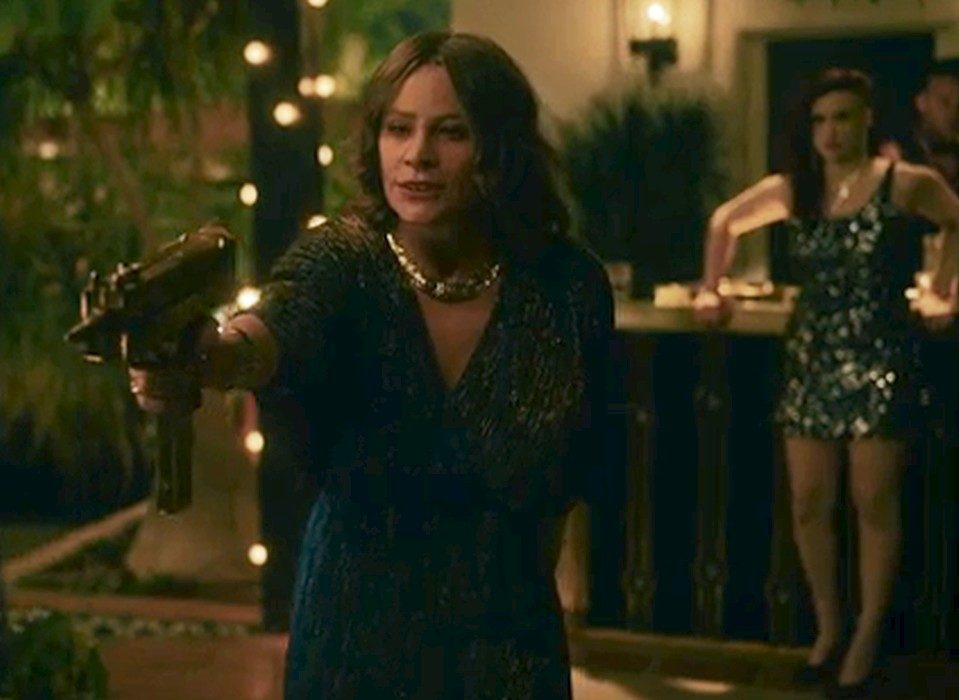
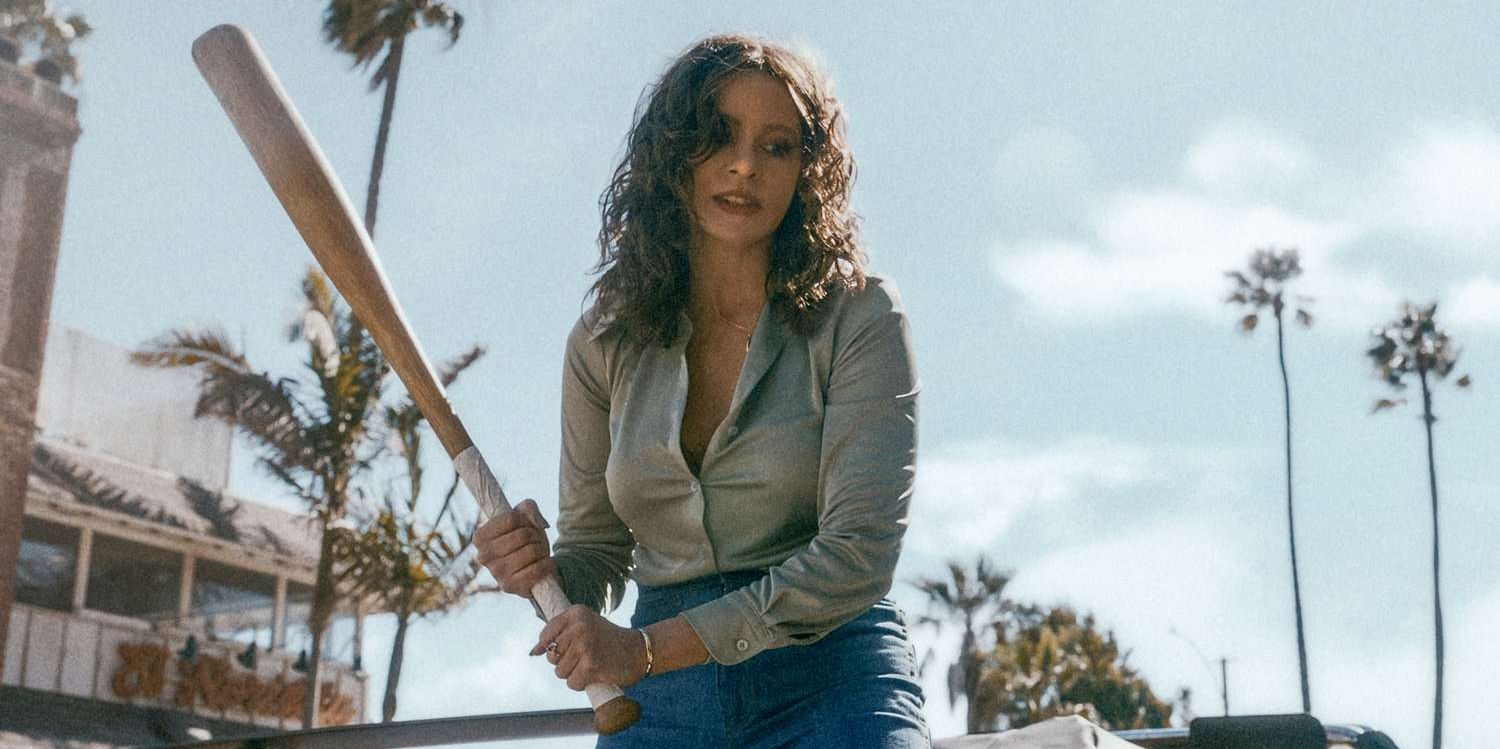
Griselda has a strict zero-tolerance for anyone who thinks she is a soft mark because she’s a woman. Especially in the early part of her career, was quite willing to wield a baseball bat or gun to that end. Later on… well, she had people for that sort of thing. But as we head into the second half, things get progressively darker. Griselda starts to become paranoid, suspecting the people around her – an attitude not helped by her taste for smoking crack. She believes there’s an informant in her circle, and takes brutal action against those who she thinksit might be. Things peak at a birthday party for Dario (Guerra), her third husband. It ends in Griselda letting loose with her gold-plated MAC-10 (top).
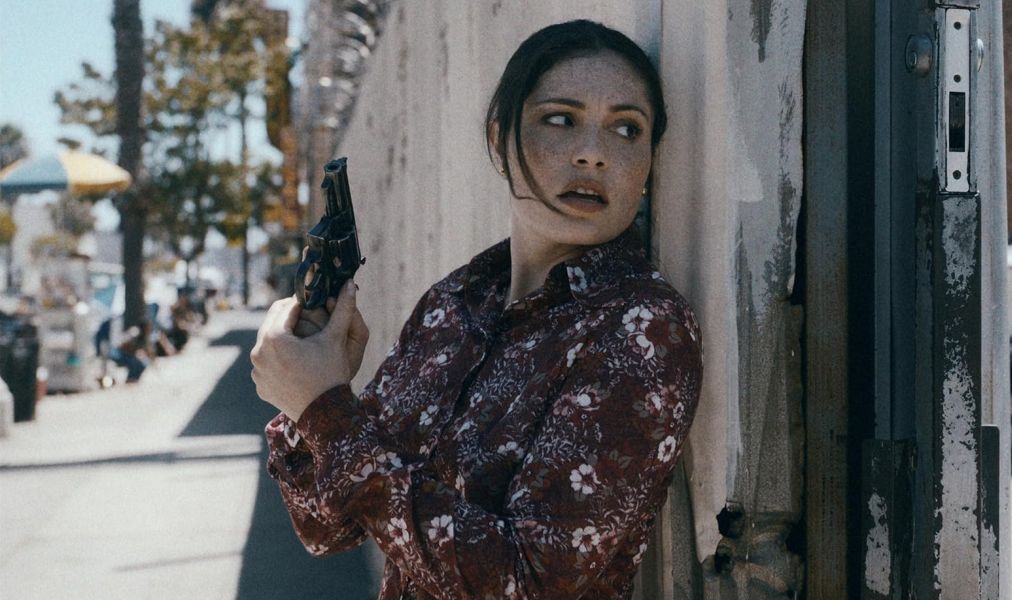
The irony is, there’s no informant: just good police work. For on the other side of the law, the series gives us June Hawkins (Martinez, bottom), intelligence analyst and detective in the local police force. She was also a real person, one who played a significant role in the pursuit and capture of Griselda, being one of the first to realize a woman had taken over the drug trade in Miami. I suspect her role was likely inflated somewhat, in order to act as a counterpoint to her target: co-creator Doug Miro admitted about the character, “There’s a fair amount of artistic license.” That applies to the whole series, though I’m not inclined to complain.
It is a fairly straightforward rise-and-fall, charting first Griselda’s path up to the top, when she was earning $80 million per month. This is followed by the slow but likely inevitable collapse, as her business rivals and law enforcement catch up with her. We know how the story eventually ends – in a pool of blood outside a Medellin butcher’s shop. The series doesn’t bother going all the way to the end. It finishes with Blanco released from jail, sitting on the beach. But it’s not a happy ending, having just been told that she has lost almost everything for which she worked: three of her four sons have been murdered. Conventional morality wins out in the end.
 In terms of production value, this is definitely several slices above the other efforts, even if Los Angeles stood in entirely for Miami (the latter no longer resembling what it was at the time). Of particular note is the make-up work on Vergara. It must have been a challenge, because events unfold over a significant number of years: your lead is, obviously, more or less fixed at a point in time. Initially, there’s little of note, but it gradually builds up, in a way that’s so subtle you might not notice. Until, by the end, you suddenly realize the character no longer looks like the actress. Though still rather prettier than the real Griselda.
I highly doubt this will end up being the final or even the definitive version of the Griselda Blanco story. The last surviving son, Michael Corleone, filed suit against Netflix, and reports indicate he has his own version of the family story he would like to tell. For now, however, this is the best adaptation of her life. If obviously skewed towards a questionable message of feminist “empowerment” which the makers wanted to send, Vargas’s strong performance holds the strands together and makes for a captivating experience.
Dir: Andrés Baiz
Star: Sofía Vergara, Alberto Guerra, Martin Rodriguez, Juliana Aidén Martinez
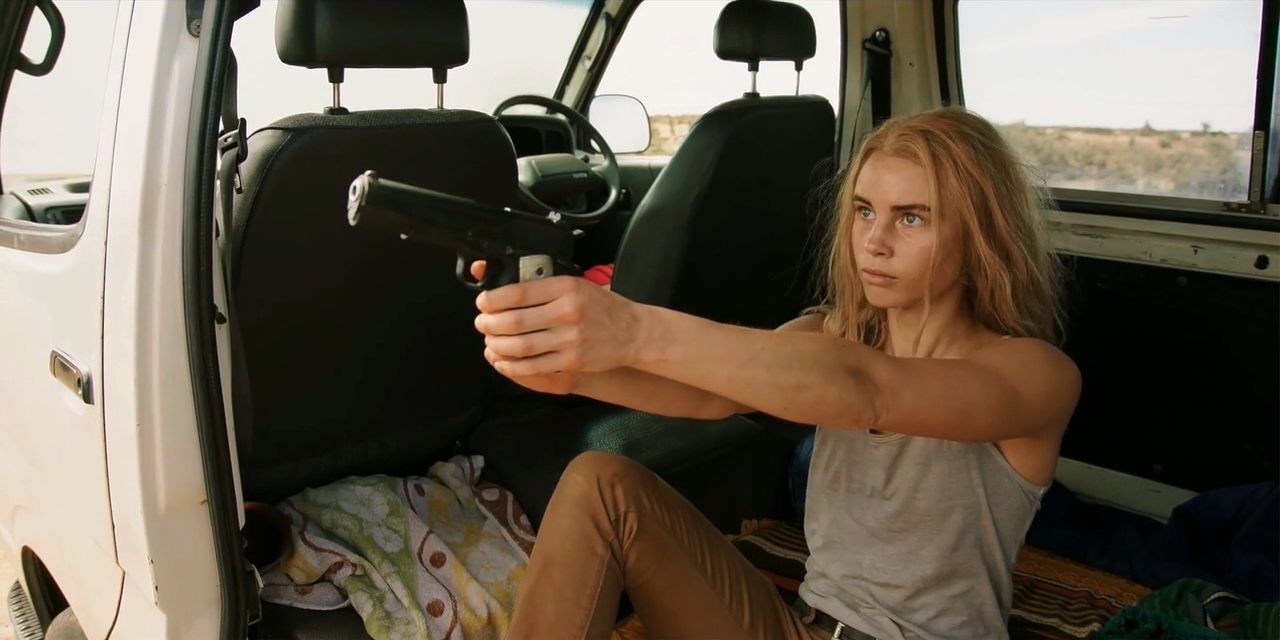 ★★★★
★★★★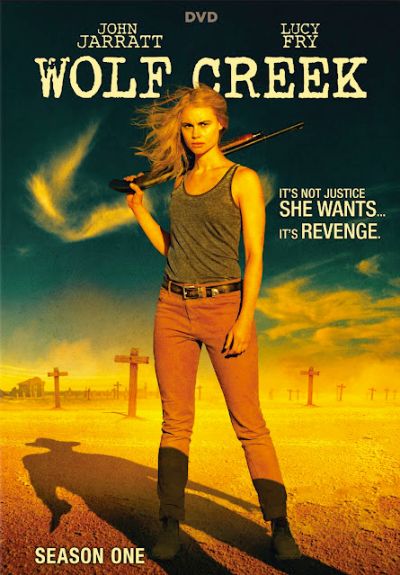 I have to say that this series really surprised me. I had bought it based solely due to the cool cover photo and didn’t expect much more than a probably over-gruesome third-rate slasher, I mean, is Australia really famous for great serial killer psycho thrillers? Though there is the very good Stacy Keach and Jamie Lee Curtis thriller from 1981, Road Games. As a matter of fact, this short (six episodes) series blew me away with its astounding quality. When you read the above, you might be forgiven for getting the impression the whole thing will come across as a bit cheap in its storytelling, or the motivation of its characters – a bit schlocky in general.
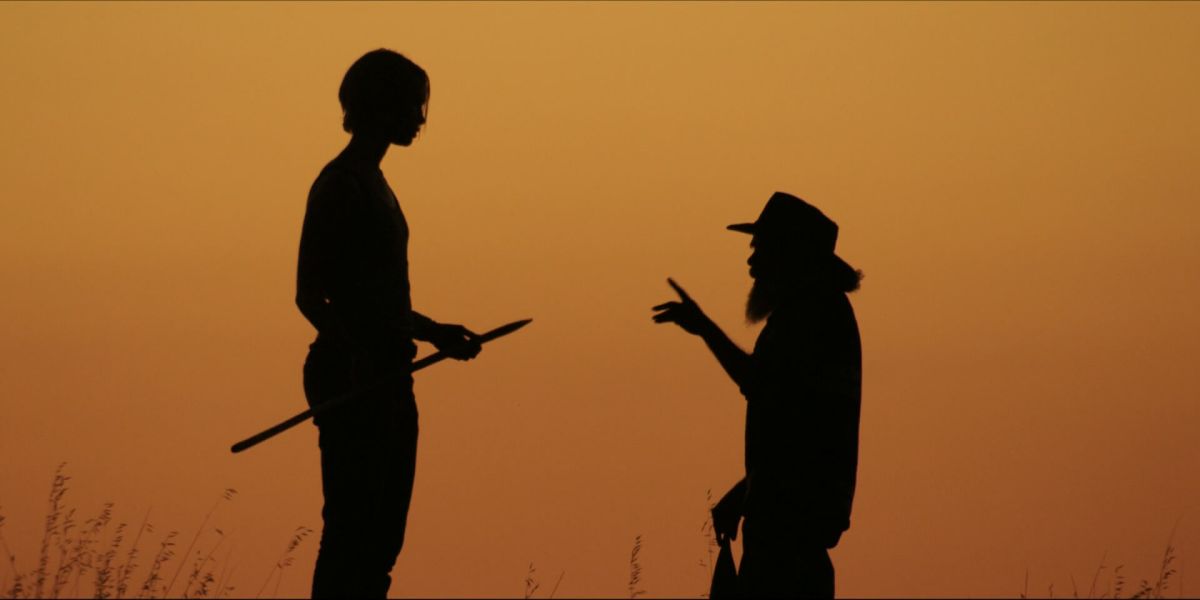 Eve is repeatedly confronted by these criminals, or wanna-be-rapists who see a normal dressed woman as an offer, and experiences family tragedies that actually form the core of the narrative. She is not without help though. As well as the policeman on her trail who reluctantly starts to cover-up for her, there is a criminal whom she meets in the desert, an old Aborigine who fits into the classic mentor role, a colleague in a bar and she even gets a canine companion. Though the question always lingers while watching the show: Will she get her revenge? What will she do when meeting the man who killed her family? Does she even have a chance against an experienced, sadistic killer like Mick?
 The heroine is
  We begin en media res, on her first mission as a fledgling operative in a town on the Egyptian Sinai penninsula, where she’s supposed to provide scouting and lookout functions for a team tasked with taking out a terrorist. (But circumstances will cause her role to morph into something more demanding….) Well positioned flashbacks show us how, as a smart, physically fit and observant Tel Aviv Univ. student with a double major in economics and foreign languages, a solid background of martial arts training, and no close family (her mother had recently died, and her brother had emigrated to the U.S.) she was recruited into Mossad. (Later flashbacks show her family’s harrowing trek to Israel from danger in an unraveling Ethiopia, on which her father was killed, when she was a very small child, and a later formative experience of standing up to two bullies in order to defend another child, which shaped her penchant for defending innocents.)
 To be honest, it’s more character- than action-driven overall, yet that’s its strength, since it does a great job of creating people who feel “real”. Nobody here is perfect: everyone has flaws, and struggles to cope with life’s ups and downs. Maggie is the focus, having to operate in an era when casual disregard for a woman’s talents was the norm. Not least by her Scottish colleague, Bob Croft (Gwaspari), though he eventually came to appreciate her many talents, such as Forbes’s fierce devotion to justice. Fortunately, her boss, Detective Chief Inspector Bill Russell (Marlowe) always had her back, even if his approach means cutting her no slack either. But every episode seemed to have one or more great performance, taking advantage of the vast pool of top-tier British character actors.
 ★★★★
★★★★ I think this makes it quite an unusual movie as – in contrast to many other movies – we are not immediately brought up to speed with an info-dump, so that we tie ourselves emotionally to Jean. As a result, the fear and tension she experiences are really palpable to us, too. We don’t know who Cal is and why he is helping her, or why people are after Jean. In my opinion, the movie is particularly successful in showing a female perspective, as part of something that would otherwise potentially have been just an ordinary gangster story. In the beginning, Jean does whatever she is told, while at the same time also trying her best to be a good mother to the little baby, even if her knowledge in this respect is also just rudimentary.
 The Charlotte club was formed in 2000, and based on what we see here, is as much a social organization as a sports club. There does appear to be quite a lot of consumption of adult beverages. But there’s no doubt, they take the sport seriously, and recruit from all round the area, both Irish and American players. On North America, teams can bring in experienced players from Ireland, known as “sanctions”, to help grow the sport. But some clubs do that to excess: Charlotte refuse to go that route, putting their team at a potential disadvantage compared to Boston, or their arch-rivals from San Francisco, the Fog City Harps. The film follows Charlotte as they develop their team, and take part in the 2016 and 2017 senior women’s tournament, for the best sides in North America.
 That peace is shattered when someone is washed up on the Western Isles island of Dachaigh where 20-year-old Melcorka lives with her mother. It turns out the Norse are invading, and the king must be notified of the threat. Melcorka and the rest of her clan head towards the capital, only to arrive too late: the army of Alba (as Scotland was then called) has been routed and the nobles scattered. However, Melcorka has a destiny to fulfill… And also inherits a large sword, Defender, with a history dating back centuries, whose powers transform her into the titular character. It’s up to her to rally forces, including the ferocious Picts from the North, to take on the invaders, and send them back across the North Sea to Scandinavia.
 At Cole’s funeral, a meeting with Curt, an old acquaintance of his that he’d recommended her to, led to a three-month gig in “security” for one Mr. Falcone, another mobster like her former employer, who now prefers to be called Mr. Falcon since he’s looking to shed his Mafia image; also like the late Mr. McIntyre, he’s moving to position himself as more plausibly “legitimate.” (So “security” work for him involves dealing with his double-crossing employees, and attacks by thugs working for his equally shady rivals.) Near the beginning of this book, she’s invited to join his personal bodyguard team, where a sudden vacancy has opened up. But the way it opened up isn’t encouraging…. Since there are a couple of more books in the series, we know that our girl’s going to make it home at the end of the day. But she doesn’t have any such assurance, and the chances of this job ending with a tag on her toe look pretty real. She needs the money, though, since failing to provide for Donnie isn’t an option she’ll accept; and she’s about to face another unexpected existential threat to her little family unit, from a totally different quarter.