




Literary rating: ★★★
Kick-butt quotient: ☆☆☆
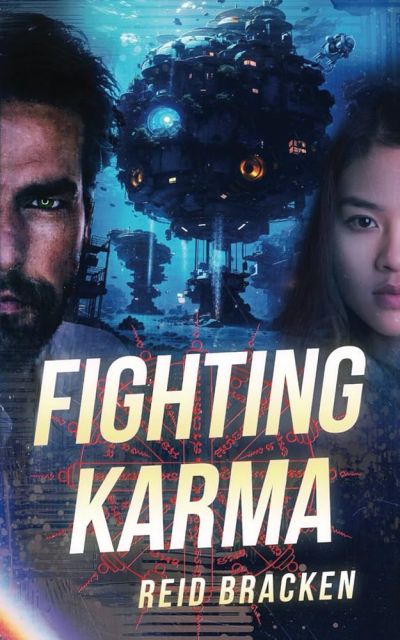
 Not many novels come with a ringing endorsement from a former director of the CIA, but Gina Haspel calls this “A thoroughly enjoyable, engrossing thriller.” Argue with her, and she’ll send you an exploding cigar, or something. While it certainly isn’t bad, the rating above reflects its likely moderate appeal for readers here. A general audience might be more impressed, especially with regard to the second half, where the heroine becomes more of a passenger. Things begin at the very end of World War II with a flight out of Berlin carrying documents intended to secure the future of the Reich. It doesn’t reach its destination, crashing in the depths of the African jungle.
Almost eighty years later, a botanical expedition stumbles across the downed plane and its cargo. When word seeps out, various very interested parties converge on the Congo, intent on securing the contents by any means necessary. Surviving the initial onslaught is Sara West, daughter of the expedition’s head, who bails with the documents, and the parties in hot pursuit. In the jungle at least, Sara has more experience and proves eminently capable of turning the tables on her pursuers. After escaping the wilderness, she convinces one of the hunters, CIA agent Jeb Fisher, to change sides, and his assistance becomes increasingly valuable as they head through Africa, into Italy, and eventually to Zurich. There, they make a final stand, in the unlikely location of a venerable Swiss bank.
The above should hopefully explain why this feels like a book of two halves. I really enjoyed the first half, with Sara using all her knowledge, built on years of living in the jungle, to stay one step ahead of the opposition – or sneak up from behind on them. She rarely over-powers her enemies, relying more on stealth, wits and turning their own resources against them. It is still a bit of a stretch to imagine a young woman, untrained in combat, taking out a whole slew of Russian special forces. However, Born certainly sells the illusion well enough to work. The problems arise with the arrival of Jeb, not least the ease with which he disobeys orders to take Sara’s side.
Thereafter, he also becomes the main protagonist. While it makes sense that his skills would become more important outside of the jungle, it results in Sara being somewhat (though not entirely) sidelined. There’s also the almost inevitable romantic dalliance, and I feel that having a Jebina instead of Jeb, might have addressed that, and a lot of the problems I felt hampered the second half. It’s still a decent enough read on its own terms, building nicely towards the grandstand finale – although I can’t imagine even Swiss authorities taking so long to get to a hellacious firefight in downtown Zurich! But I feel it does not do Sara the justice she deserves, especially after the impressive heights reached earlier on.
Author: Gary Born
Publisher: Addison & Highsmith Publishers, available through Amazon, both as a paperback and an e-book
Standalone novel
 Not to be mixed up with
  This is a sequel to
  Maya Stern (Keegan) is having a rough patch. A former helicopter pilot in the military, she was sent home and discharged under murky circumstances. While she was away, her sister was killed in what looks like a botched burglary, and not long after her return, husband Joe is also shot and killed in front of Maya, when they are walking in the park. But is everything what it seems? Because when checking the nanny-cam monitoring her young daughter, Maya sees a shocking site: her supposedly dead husband visiting the house. This kicks Maya into an unrelenting search for the truth, which will send her down a rabbit-hole and uncover a lot of sordid secrets, dating back decades.
 Director LaBute is best known around these parts for his ill-conceived remake of classic horror The Wicker Man, which is generally regarded as spectacularly bad, and is probably best-known for spawning memes involving Nicolas Cage and bees. So expectations going into this were… not high, shall we say. On that basis, the three-star rating is something of a pleasant surprise, though most of the credit for this should got to its star, rather than the director. Tess (Q) is a veteran of the war in Iraq, who is struggling to reconnect to her two sisters. Rose is getting married, and is nice enough that Tess is willing to attend her bachelorette party at the family cabin, deep in the country. But Beth (Foster) is a straight-up bitch.
 This is a prequel of sorts to
  Tubi TV has become a goldmine of obscure, weird and,
  This Taiwanese kung-fu potboiler just about manages to sustain interest for an hour, before losing the plot (literally, and such as it was to begin with) down the stretch. It begins with ten martial arts masters stealing an omnibus edition of fighting manuals from the local Shaolin temple. Trying to get entry, and failing, because they won’t admit women, is Shi Fu Chun (Kwan). With the help of former head priest Lin Chiu (Chan), who still lives nearby, she is taught a slew of skills, and ends up assigned the task of recovering the purloined books, and restoring the temple’s honour. Oh, except the “positive kung-fu” learned is causing Shi Fu to transition into a man. So she/he (inexplicably, the 1977 film does not provide us with preferred pronouns…) needs to find and learn some “negative kung-fu” stat, to counter the process.
 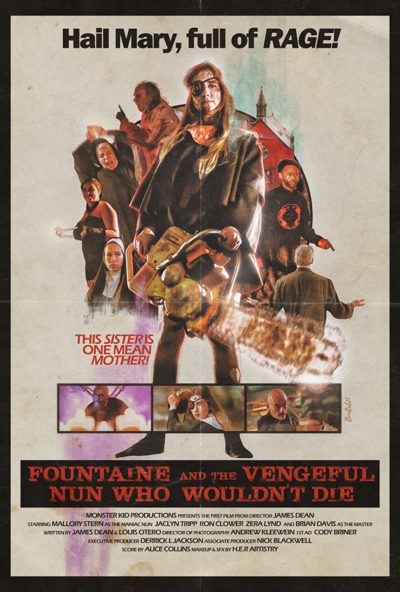 You will probably understand why the title more or less rocketed to the top of my watch-list, especially when accompanied by the poster (right). Naturally, it was almost inevitable that it could not possibly live up to either: the question was mostly, how far short it would fall. The answer is, “a fair bit, yet not irredeemably so,” even if the first half if considerably duller than I wanted. Indeed, it’s also rather confusing, in terms of what’s going on. As well as I can piece things together, Mary (Stern) is a nun who gets sent to an asylum after losing her sister, though it turns out to be less a mental-care facility than you’d expect.
 This documentary is about the field of women in aviation, combining archive footage with interviews, covering the range from those who aspire to fly (giving their Lego aircraft lady pilots!) to those who have been into space, fought combat missions in the Middle East or dodged death in aerobatic displays. There’s not any particular structure to proceedings, choosing instead to bounce around between its topics and subjects. This helps keep things fresh, yet at the cost of any narrative beyond, I guess, “Women can do anything men can”? Which, to be fair, deserves saying in the aviation field particularly: how much strength is needed to handle a joystick?