



★½
“Claws for concern…”
 I don’t review movies without subtitles very often. This would be a good reason why. I knew very little about this going in: there’s no IMDB entry, no other reviews appear to exist, and virtually the only Google hits are the range of more or dubious sites from which you can download the movie. Subtitles? Don’t make me laugh. That no-one has done so indicates one of two things: no-one was interested enough to do so, or it’s difficult to subtitle a movie with one hand, if you know what I mean, and I think you do. Either way, it leaves me in a difficult spot: any or all of what follows may be wildly inaccurate. However, the chances of anyone ever correcting me are likely slim, so what the hell…
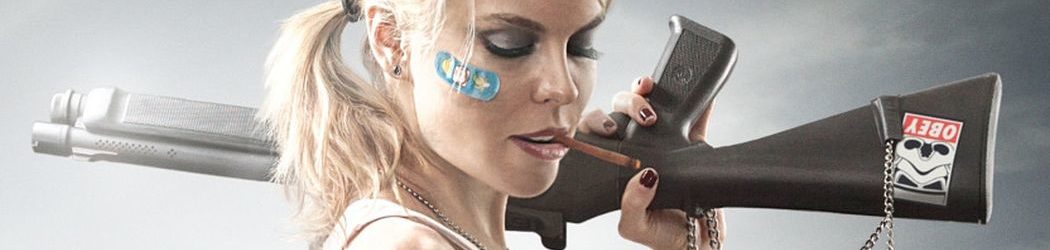
The heroine, it appears, has a flier for a ‘cyber cosmetic laboratory’, but it appears to be rather different from the norm – whatever that is – since the next thing we see, she’s tied up to a table, being oiled up (at some length) by the mad scientist in charge. Turns out this is just a front, to bring in an attractive young woman, on whom he can carry out his fiendish experiment. This involves infusing the target with feline DNA, which apparently causes them to a) start growling a lot, b) attack other people with stylized cat-like gestures, and c) wear skimpy lingerie, topped off by a mask which is complete with little cat ears. That must surely be the Nobel Prize committee, calling on line one to make an appointment.
But what use is a single cat girl? Another one, apparently a Western friend of our heroine (there’s a pic of them together) is also kidnapped and felinized, lead to a head-to-head fight between “Cat Girl” and the new “Cat Devil.” This consists of about 15 minutes of very bad pro wrestling moves, accompanied by more grunting than I’ve see since the last time Monica Seles played Jennifer Capriati. But, oh no! Cat Girl sees Devil Girl’s tramp stamp of a butterfly, realizes it’s her friend, and refuses to fight any more! After this, things get more confusing, with the two girls apparently swapping costumes for some reason, before eventually teaming up to take on a Cat Guy in the big finale. At least, I think that’s what happened, my interest had drifted off to do something else entirely by that point.
Cheap and poorly-staged, I don’t think it’s the lack of subtitles which are to blame for making this as uninteresting as it is. It’s more like a fetish video made for a curiously specific market, where furries intersect sadomasochists with an interest in sploshing – no other way to explain the length sequence where the scientist slowly hoses Cat Girl down with a nozzle dribbling green goo. Given the content would technically be no more than PG-13 – there’s not even a glimpse of a nipple – it’s all remarkably sleazy. The best thing I can say is, it’s not a film I’ll likely forget in a hurry. Which should save me from making the mistake of ever watching it again.
Dir: No clue.
Star: Even less idea.
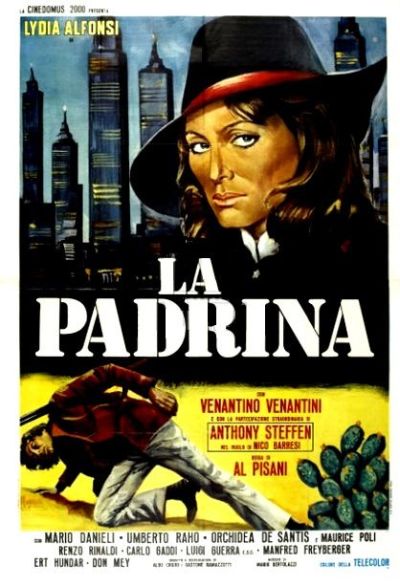 The tenth wedding anniversary of Donna Costanza (Alfonsi) in New Jersey is rudely interrupted when her husband is gunned down during the party. For he was a Mafia boss who, it appears, had crossed the wrong person. Before dying, he whispers to his wife, “Giarratana from Palermo,” apparently fingering the man behind the hit. Seeking revenge, Madam Costanza flies to Sicily, and meets up with a loyal family employee, soliciting his help to plan the death of the local boss fingered by her husband’s last words. But things are considerably more murky than they seem, as Costanza has wandered into the middle of some shenanigans involving a corrupt local official, a police investigation and an arms deal, which are all leaving a trail of corpses in their wake. And someone wants Donna to join the dead bodies, first trying to blow up her plane, then sabotaging the brakes on her car. When a supposedly blind man guns down her contact in the street, it’s getting too warm for comfort.


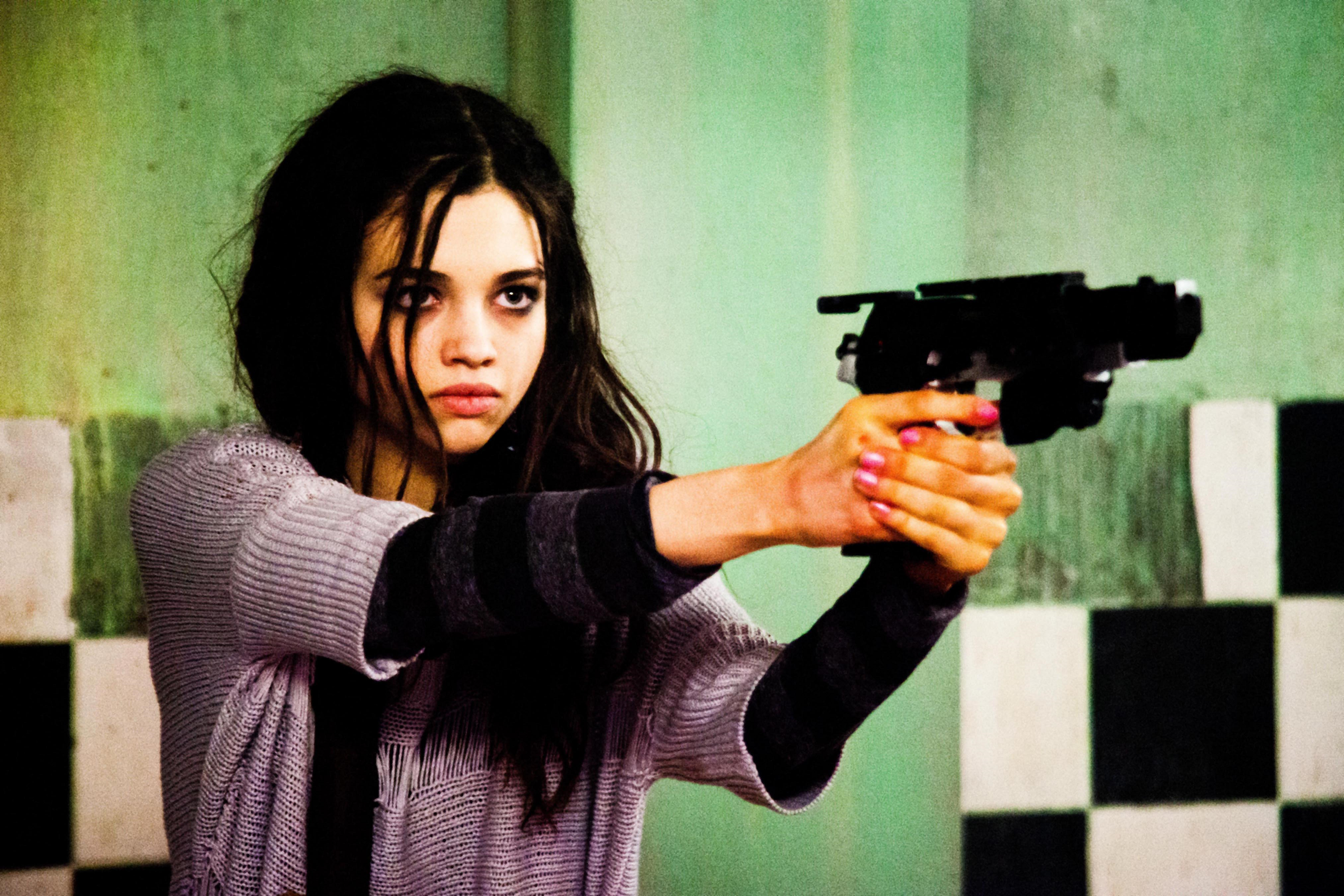


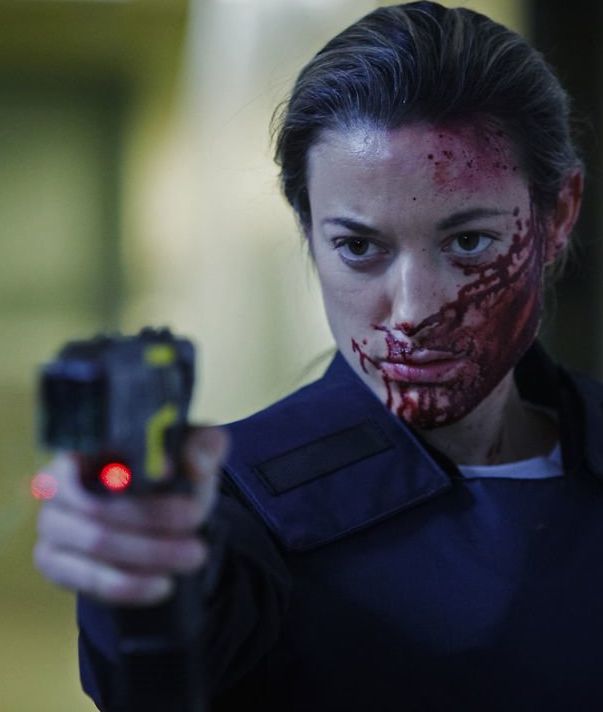
 The main mission given to Rie (Shiratori this time) is a little bit different, from her usual, straight-forward assassinations. Instead, she’s given the job of protecting a witness. Nana (Matsuda), the disgruntled mistress of an organ-trafficking ring, who has had enough and agreed to co-operate with the police. Rie is part of the protection detail, but soon finds out that the gangsters, under ever-so strange boss Kaneda (Nogami) with his transvestite tendencies, are not going to sit back and wait for Nana to take the witness stand. Oddly, the cops let Nana stay in her own apartment, perhaps figuring that’s the last place her former lover would look. but when that is unsurprisingly stormed, Rie takes the target back to the operative’s flat, where they hang out, exchanging small talk – that’s mostly Nana, of course, since Rie is about as talkative as the enormous pet fish she has in a tank, and to which she feeds goldfish.
 I first encountered this in a dreadful copy on Youtube: dubbed, cropped to 4:3 and apparently filmed off someone’s TV during a Force 10 storm at sea. However, what was left after that, was still impressive enough to make me track down a better copy. Well, somewhat better: it had subs, albeit burned in and incomplete, while the 16:9 ratio was at least a vague approximation to the original widescreen print. Still, you take what you get, and this is certainly enough fun to overcome the adversity of any flaws in the format.