Coral Hare, Atomic Agent, by Clive Lee
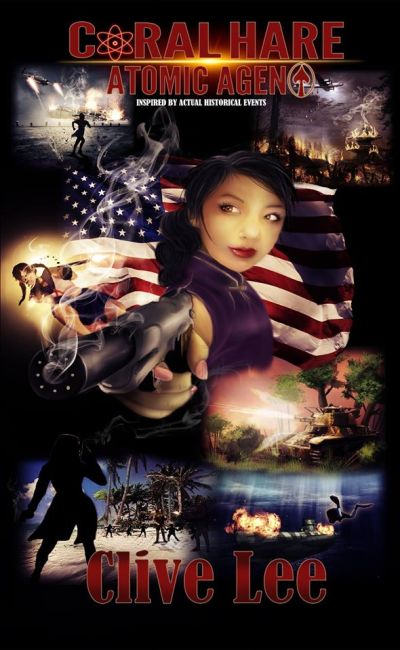 Full disclosure at the outset: the author, who’s a member of my Action Heroine Fans group on Goodreads, gifted me with a no-strings-attached free copy of this novel.
Most people who’ve read much at all about World War II are aware that Germany, as well as the U.S., had an active atom bomb development program. The information that Japan did too was only recently declassified. First novelist Lee draws on this new historical data to produce a riveting espionage-action thriller –and the adjective “high-octane,” for once, isn’t just hype!
After a blood-drenched prologue set in Tokyo in 1937, our story focuses on Mina Sakamoto, a Nisei (American-born offspring of Japanese immigrants to the U.S.), born and raised in Honolulu, who’s recently turned 14 at the time of Pearl Harbor. Largely Americanized and seeing herself as American, she’s the daughter of a medical doctor, who’s unofficially trained her to function as a practical nurse. She’s also good at languages (the Hawaii of that day was quite an ethnic melting-pot) and a bit of a tomboy, good at roller skating and rabbit hunting with a slingshot. This background is going to come in handy, because the events of Dec. 7, 1941 will propel her into becoming, before she’s 15, a full-fledged field agent of the OSS (Office of Strategic Services), the World War II-era forerunner of. the CIA. (“Coral Hare” is her coded radio call sign.) Out of 64 chapters, the last 50 focus on the spring and summer of 1945, when the now-17-year-old goes up against Japan’s A-bomb program.
The story arc is constructed well; the time devoted to Mina’s grueling OSS training provides the necessary believability for her transformation into a kick-butt warrior, and the intervening years between this and her climactic 1945 missions are handled very adeptly. Lee shows us some personal growth on Mina’s part, and her relationship with her mentor is nicely depicted. But I’d say that 80-90% of the book consists of either fighting action, in which absolutely no punches are pulled by the combatants or the author, or of horrific descriptions of the effects of bomb blasts, both conventional and atomic, on human beings. The mayhem is very graphic, gory and grisly; despite the teen protagonist, this is definitely not YA fiction (though some teens would like it). A lot of serious research to insure historical accuracy obviously went into this, and that’s a significant strong point of the novel; but Lee avoids the trap of shoe-horning all of his information into the tale via info-dumps. (He does use footnotes, which the reader can skip over or read. I found some of these quite educational; I wasn’t much interested in the military hardware specs, but serious World War II buffs might be.)
His prose style is clear and readable, with language and diction mostly handled capably, despite a few typos. (There are a few cases of incorrect sentence construction or misused words –a person can’t lie “prone on her back,” since “prone” means face-down, and Lee tends to confuse “flanking” with approaching from behind– and rare details that don’t ring true, such as Mina’s not being done with eating one hamburger when she’s been in a diner for two hours; but these aren’t big deals.) Several fascinating historical appendices make it clear how much real-life history (a LOT!) was incorporated into the narrative, as well as providing information on real-life Allied female spies in the war, and an honor roll of real Japanese-Americans who served in the OSS. Lee’s respect for the courage and sacrifice of the “Greatest Generation,” to whom the book is dedicated, is clearly evident, and commendable.
Even with a doctored birth certificate and some string-pulling, Mina’s age poses some credibility problems (the biggest one, which Lee mostly finesses, being parental consent for her going off in the first place). Despite this, Mina’s an unforgettable character, with an industrial-strength level of indomitable spirit and courage, and fighting prowess that’s second to none. Allowing for their differences in setting and weaponry, she actually has some similarities to Billy Wong’s epic-fantasy swordswoman protagonist Rose Agen in Iron Bloom: they’re both teens who’ve had to grow up quickly (but who yet retain some traces of the teen), both super-lethal fighters with massive kill counts, and both possessed of endurance and recuperative powers that amaze observers. But while Lee is by far the better stylist of the two, Wong has created a character who’s the more morally introspective. Rose is bothered by killing, even though she does a lot of it, and does so only to protect innocents from harm. Protection of the innocent plays into Mina’s motives, but she’s more driven by revenge, and if killing bothers her, she doesn’t show it; at times, she rather appears to enjoy inflicting mayhem. That makes her harder to like unreservedly –though I still did like her, and root for her.
 For me, the main weakness of the novel was a sense of missed opportunity for moral reflection. True, Mina’s trying to stop WMD’s from being built and deployed, which is certainly a commendable goal. She also doesn’t harm any civilians herself. But she knows about the Manhattan Project, which is a mirror image of the Japanese effort, and is present for the firebombing of Tokyo (shown left, and in which more civilians died than in both atom bomb attacks combined). We’re not told what, if anything, she thinks about any of this; the silence can suggest that she pretty much endorses an “us against them” ethic in which whatever “our side” does is okay, because OUR cause is just. For the time and place, of course, that attitude is realistic (for both sides), and Mina at least doesn’t have the racism that fueled a lot of that attitude.
But I missed the kind of grappling with the ethical issues that could have raised this into a five-point rating instead of four. (True, the graphic descriptions of human suffering from both atom and conventional bombs might inspire some of that grappling in some readers.) I’d also argue that by the summer of 1945, the Japanese could not have won the war even if they’d produced an operational A-bomb; and despite Lee’s historical research, I doubt that the OSS ever used torture to interrogate prisoners. (We know that the Axis powers did, and probably the Soviets, too –they used it to extract “confessions” in the Stalinist purge trials a few years earlier– but besides the ethical issues, I think U.S. intelligence realized how unreliable it is as a source of honest information.)
For all that, this book does what it does very well; it’s an unabashedly pulpy, edge-of-the-seat thrill ride through hell and back, with a take-no-prisoners heroine who’s in a new mortal jeopardy every time you turn around. (And remember, this isn’t a series book; there’s no guarantee that our gal’s going to make it home!) If you’re an “action junkie,” you’ll get your fix here, and then some. This would have real possibilities for a movie adaptation (which would definitely be R-rated for violence), and if one is ever made, it’s going on my to-watch list!
Note: There is a notable amount of bad language here, mostly of the d, h, and s-word type, but also some profanity, and eight uses of the f-word. (That’s arguably realistic for the speech of U.S. soldiers; less so for the speech of Japanese-language speakers, before the U.S. Occupation.) However, there’s no sex (except for a rape scene, which isn’t graphically described). It’s noted in passing that Mina wants to marry and have kids someday; but right now, she has other priorities besides boys. (Like staying alive!)
Author: Clive Lee
Publisher: Self-published, available through Amazon, both for Kindle and as a printed book.
Official website
A version of this review previously appeared on Goodreads.




 Partly to celebrate the 75th birthday of its late creator, Shotaro Ishinomori, the first live-action feature adaptation of his spy series 009-1 was made – it had previously been made into a TV show, during the late sixties, and a 12-episode anime series in 2006. This version was helmed by Sakamoto, best known for his work on the action in Kamen Rider and Power Rangers, but we’ve been a fan since his involvement in 1997’s Drive, with Mark Dacascos, whose fights still hold up very well today. And this is almost as much fun, combining bone-crunching action with more philosophical insights, into what it means to be human.
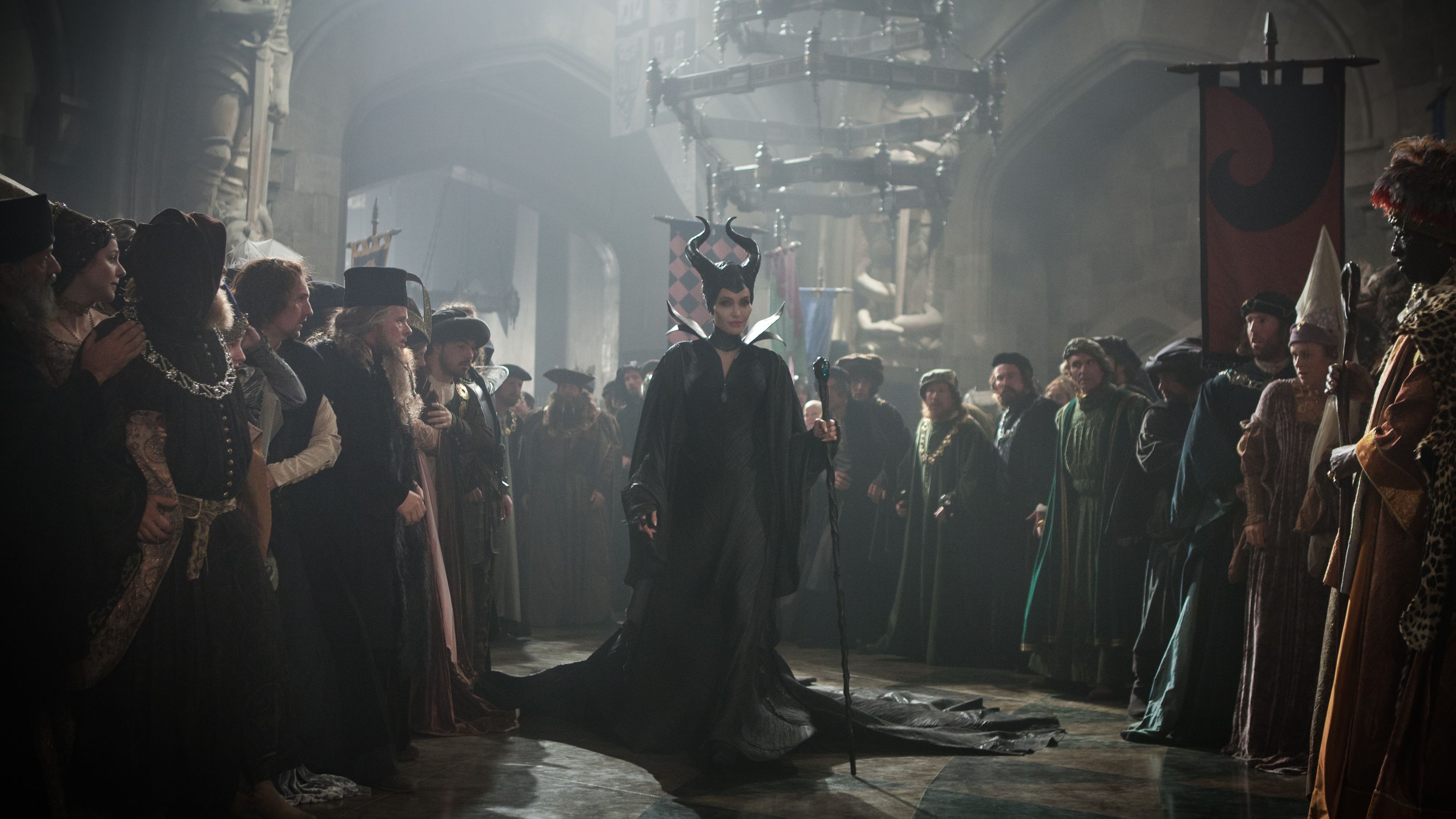
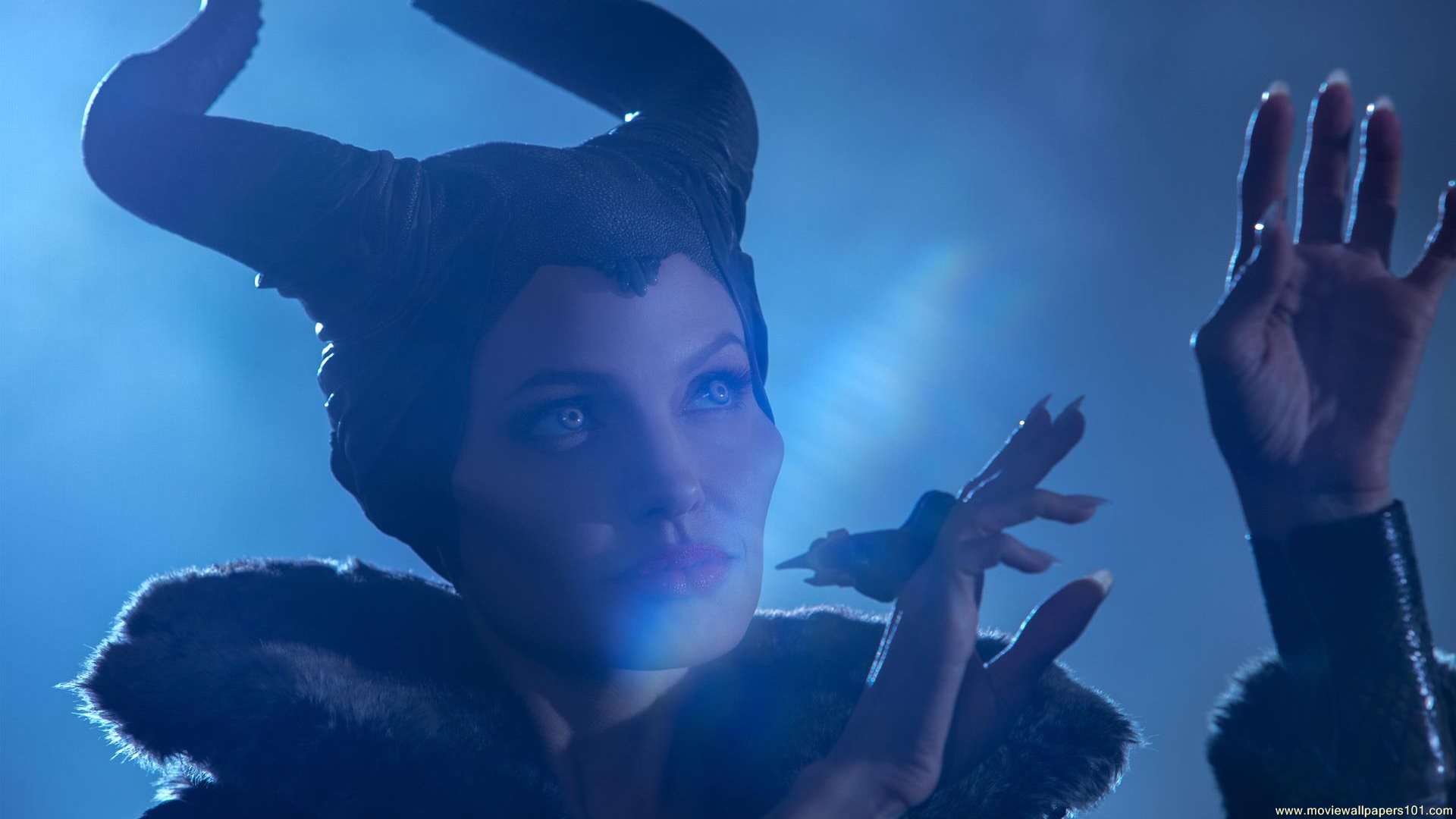
 Except, there’s one very significant twist. Chris and I took a pie break an hour in, and she complained the film’s direction was “obvious.” Yes… and no. It was clearly pointing in the Prince Charming and happy ever after directions, but I’m delighted to report this is then subverted into something entirely different, and which packs a much greater emotional wallop. There was sniffling coming from beside me on the couch before the end, let’s just leave it at that. If there’s a Disney moral to be found in the (mostly awesome) ending, it’s perhaps not just the value of forgiveness over revenge, but that when someone offers you the former, it’s often wisest just to take it. Oh, and another important lesson: if you go plummeting off battlements with a creature that has wings and can fly, there’s really only going to be one loser in that scenario.















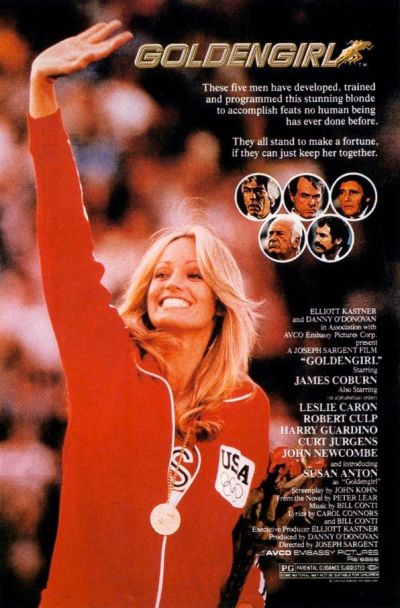 And Frankenstein Created Woman? That might have been an alternate title, with German scientist Dr. Serafin (Jurgens) in the role of the creator – he’s a man with a dubious past, and whispers of involvement in Nazi experimentation. Now “rehabilitated” to the US, in what may be a medical version of Operation Paper Clip, he uses an unholy mix of pharmaceuticals and extreme training methods to convert his own daughter, Goldine, into a 6’2″ athletic superwoman, with the aim of completing an unheard of triple crown at the upcoming Moscow Olympics, winning the 100, 200 and 400 metre gold medals. To fund this work, he brings in a consortium of businessmen who aim to capitalize on Goldine’s success with advertising, merchandising, etc. Brought in to advise them, as Goldine is prepared for her first public events, is agent Jack Dryden (Coburn), who gradually realizes the one person not wholeheartedly committed to the entire proceedings, is the runner herself.
 This review is more in the nature of a warning than a critique, since it would be easy for someone to look at the cover (right) and think that this might be a movie about – oh, I dunno, boxing? It seems a reasonable expectation, given the following synopsis:
 Roger Corman’s New World Pictures weren’t the only ones using the Philippines as a factory to churn out B-movies in the seventies, as this 1973 entry, from Arthur Marks’ General Film Corproration shows. Dr. Tsu (Kwan) and her posse of henchwomen are kidnapping athletes, the not-so-good doctor having perfected the ability to do brain transplants. She’s now selling this as a service to rich, old people, who can become young again. However, after kidnapping a jai-alai star, the insurance company on the hook for the half million dollar policy hires Mike Harber (Hagen) to investigate. As he starts nosing around and making waves, first the local gangster boss, then Dr. Tsu, send their minions out to stop him. Needless to say, this is of limited success, and he is soon on his way to the remote island where Tsu operates, to take down her operation.
 Part one was deemed by the qualification panel as falling short of the necessary minimum level for inclusion here, being a mix of poignant drama about an elderly man whose lifelong companion’s battery is running down, and porn. The sequel, however, just about does enough to qualify, albeit while retaining a hefty dose of the latter aspect – and you don’t need to have seen part one either. Here, disgruntled scientist Professor Uegusa (Horiken) hatches a plan to destroy the appearance-based culture of romance, and to finance this sends out his “hostroids”, attractive male androids, in a variety of guises, e.g. office manager, door-to-door salesman, etc. to seduce woman and bilk them of their savings. He also sends them to kill rival researcher Dr. Kouenji, who had been building a countermeasure, in the form of a maid android, Maria (Yoshizawa). Before his death, Kouenji sends Maria to geeky student Shotarou (Haraguchi), but she isn’t ready, needing her “love circuit” activated before she can attain her full potential needed to defeat Uegusa and the hostroids. Can Shotarou manage that final step before the hostroids take him and Maria down?
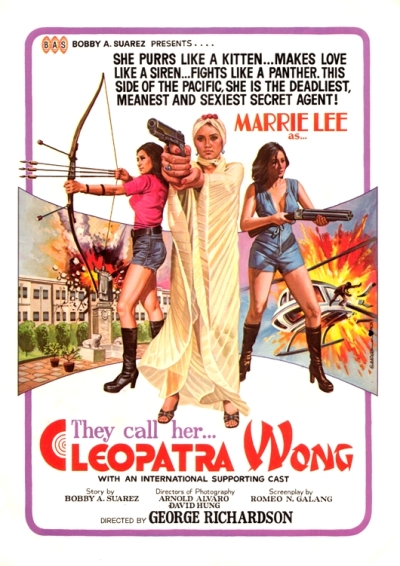 “Cleopatra Wong is Asian Interpol’s answer to James Bond, Flint, Cleopatra Jones and Stacey.” Well, less an answer, more like a repetition of the question, since this is firmly in “cheap Asian knock-off” market, though has some charm in its first half. Wong (Lee) is an agent, assigned to investigate a flood of near-undetectable counterfeit money which is flooding the markets in Hong Kong, the Philippines and elsewhere in the far East. It’s happening in such volume, there’s potential to destabilize the entire economies of the affected countries. She takes down the Singapore branch of the operation, and then discovers the money is being transported in shipments of strawberry jam, emanating from a monastery north of Manilla. After finding them to be not exactly a social order, Wong takes pictures by flying over their compound, which shows that these nuns have some nasty habits – specifically, they’re brothers rather than sisters, and concealing automatic weapons under their vestments. Time for Cleo to assemble and lead a team of crack agent in a raid on the convent, take out the bad guys, rescue the real nuns and save the world for free-market capitalism.
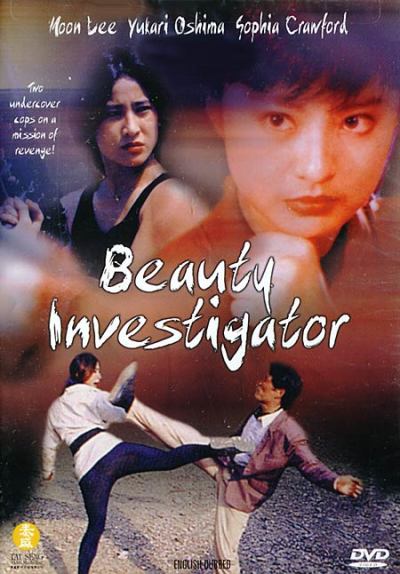 Ellen (Lee) and Grace (Kim) are police officers, who are first on to arrive when the latest victim of a serial sexual predator is found in a dumpster. After a brief diversion to catch a purse snatcher – really, how dumb must you be to do that at a murder scene? – they are sent undercover as nightclub hostesses, since that’s the profession of all the victims. While fending off both lecherous customers and employers, they stumble across an arms smuggling outfit, whose leader Bill (Tsui) has pulled a fast one over his Yakuza partners, with the help of a hired hitwoman (Oshima, whose character in the end credits is named as, I kid you not, “Japanese Jap”!). Rather than letting their superiors know, they decided to investigate themselves. Probably not the wisest of moves: as they’ll discover by the end of the movie, discretion is indeed the better part of valour…
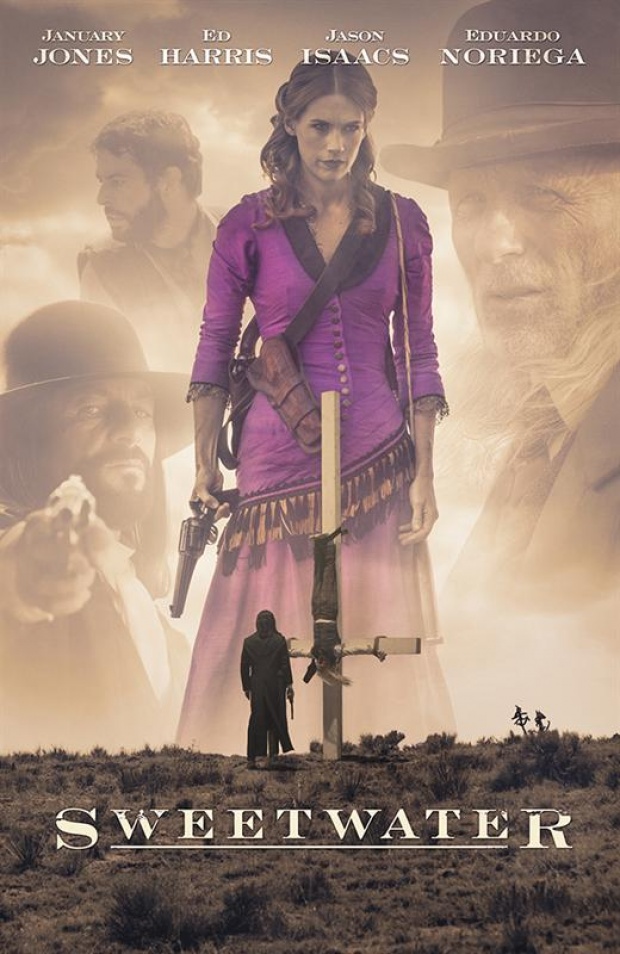
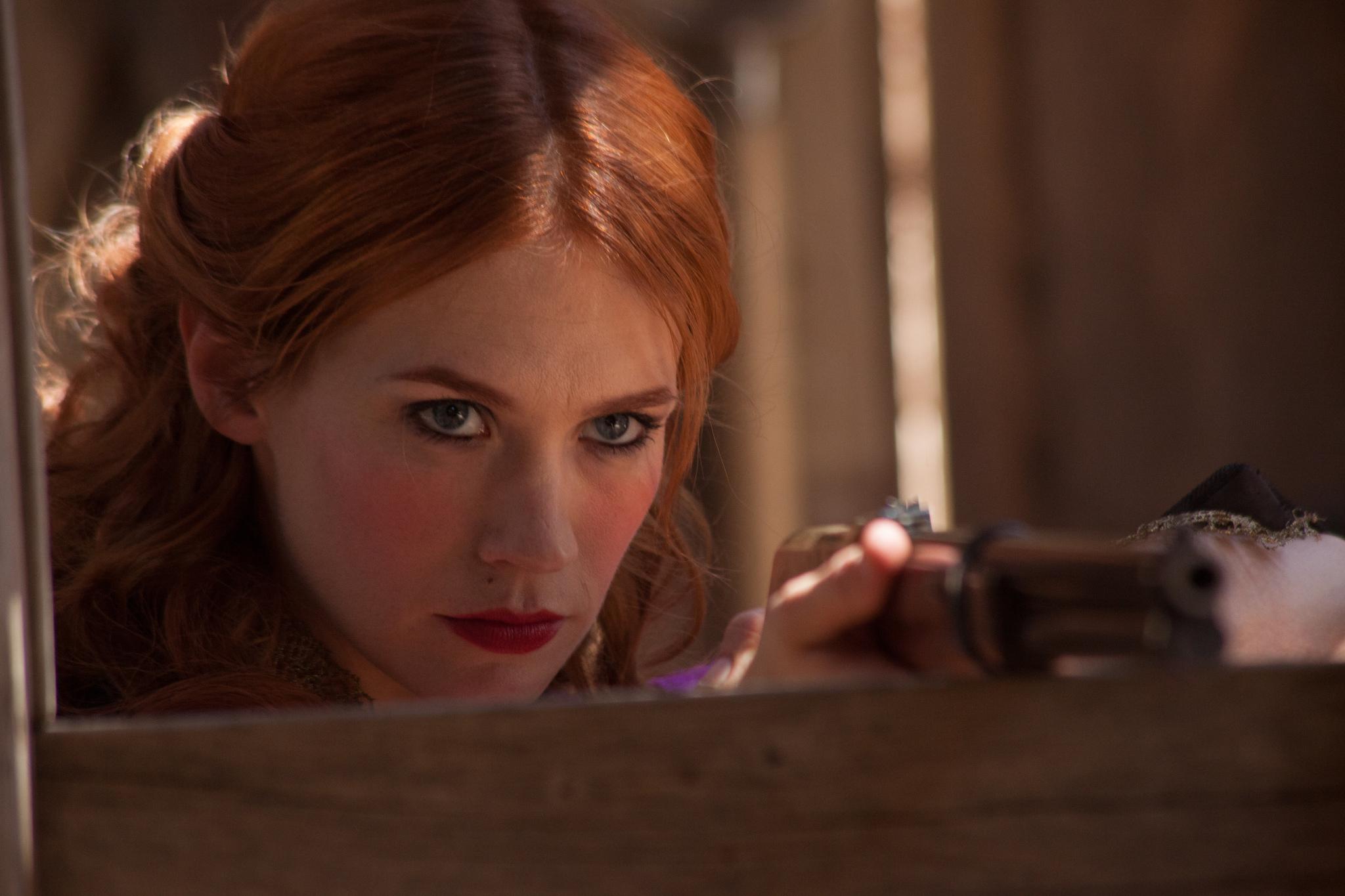
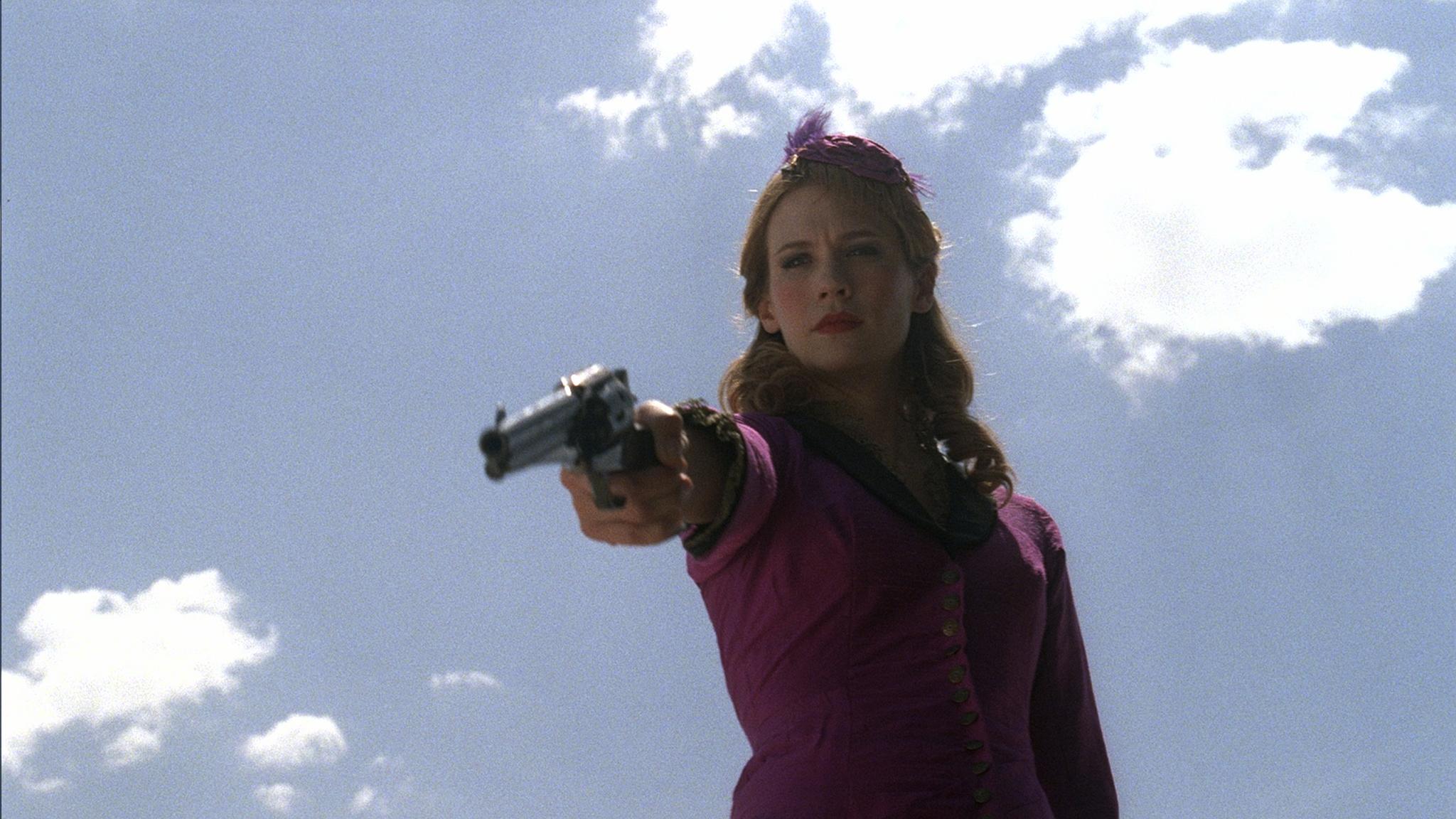
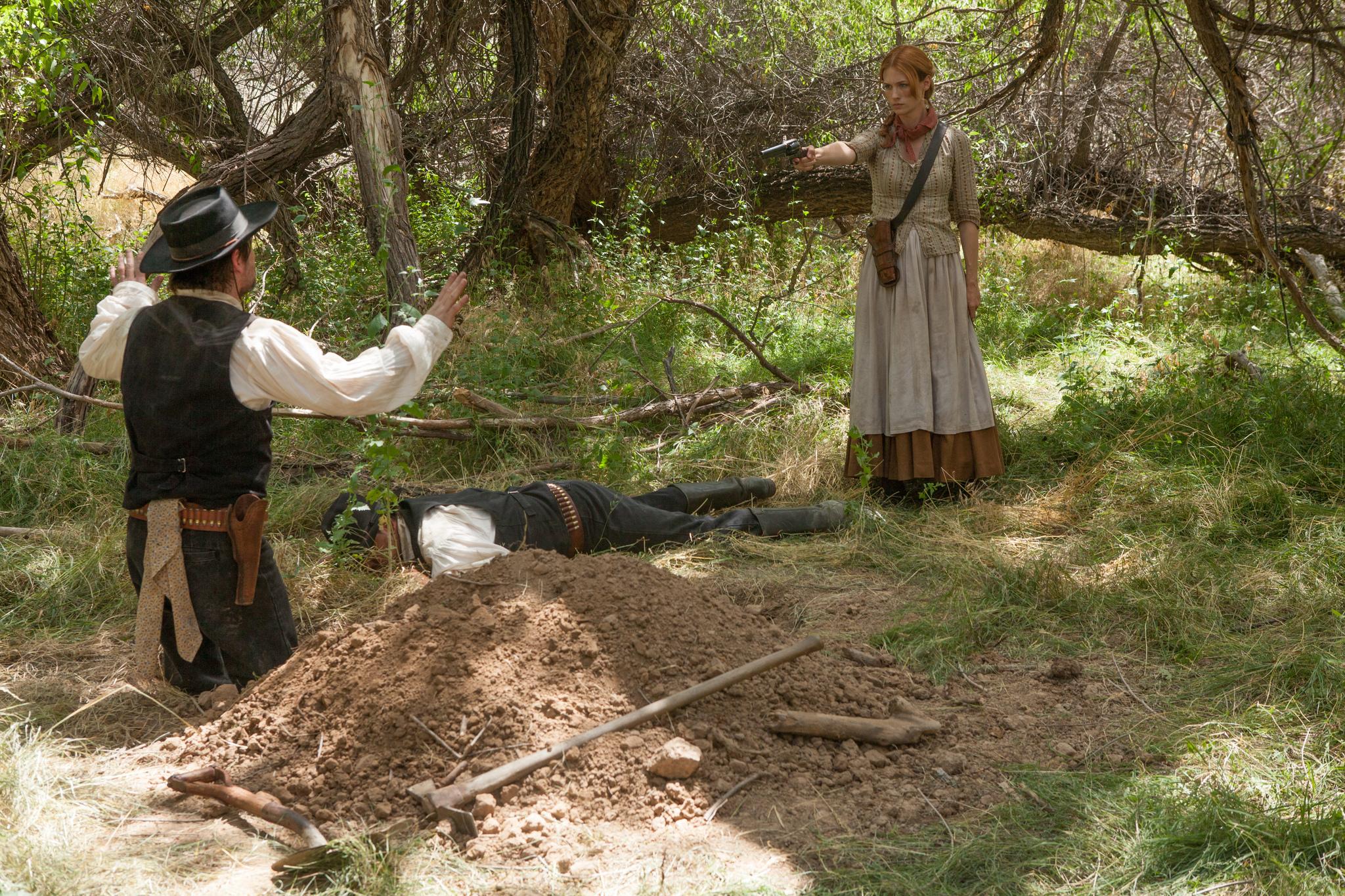
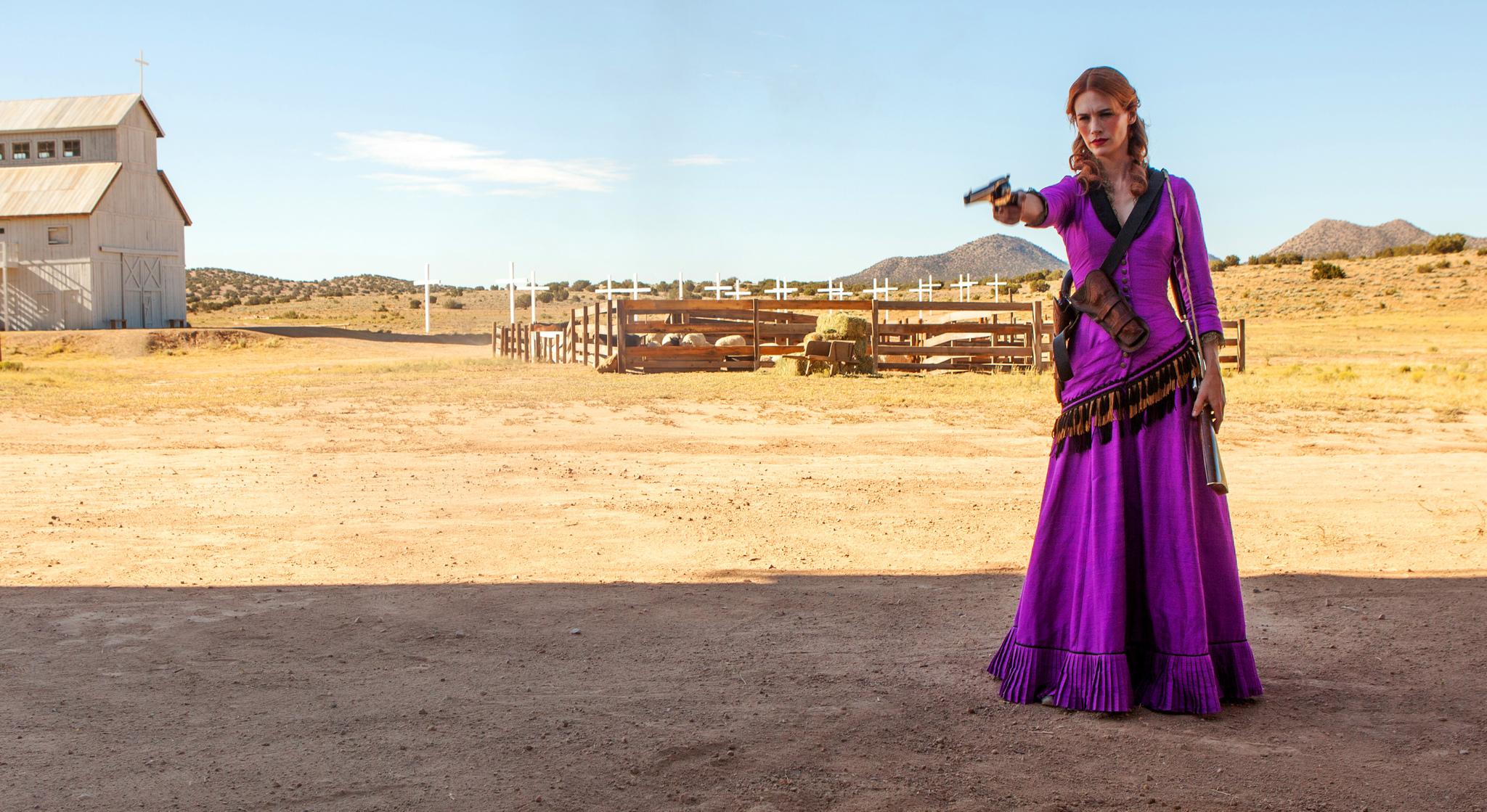
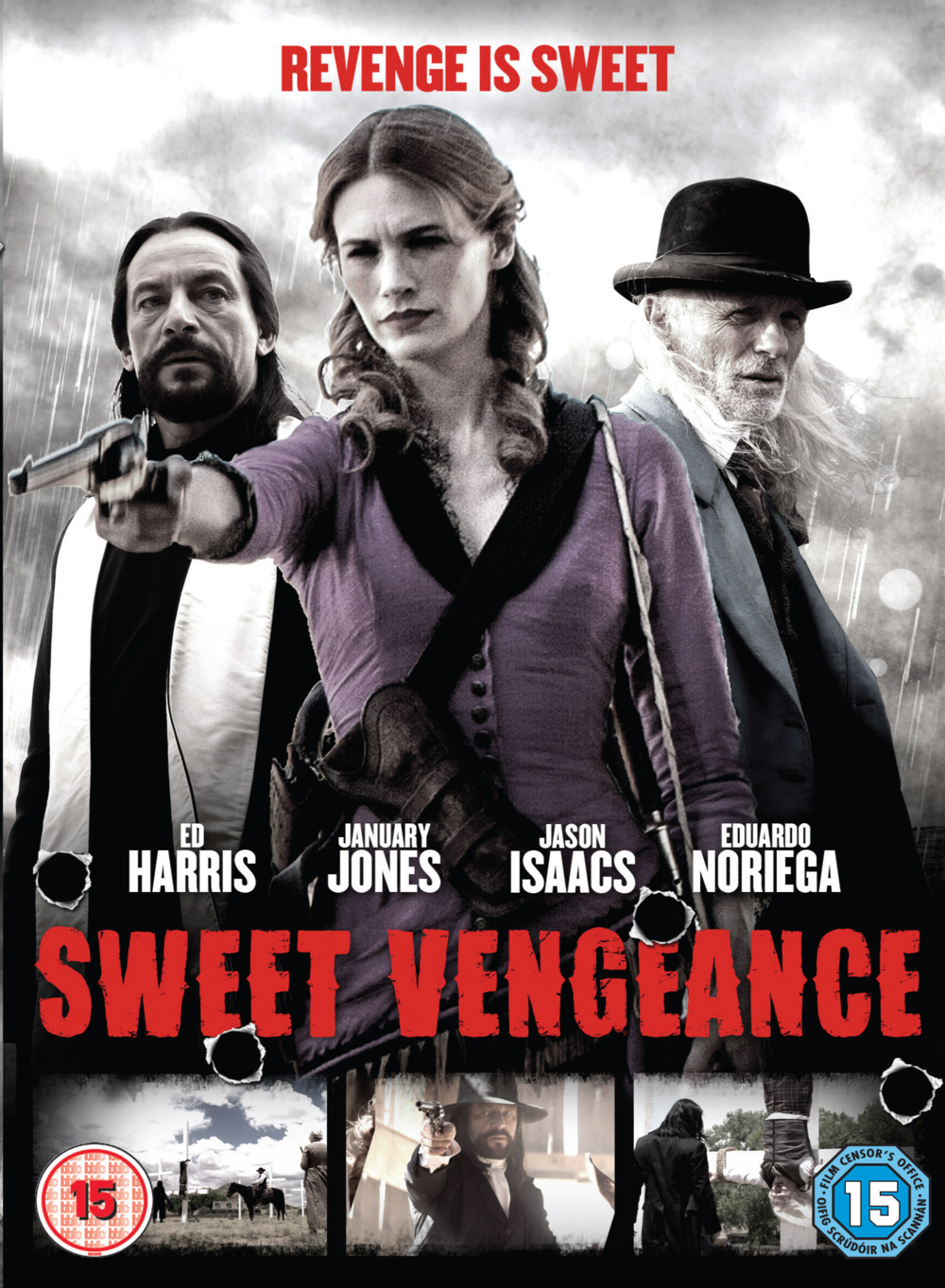
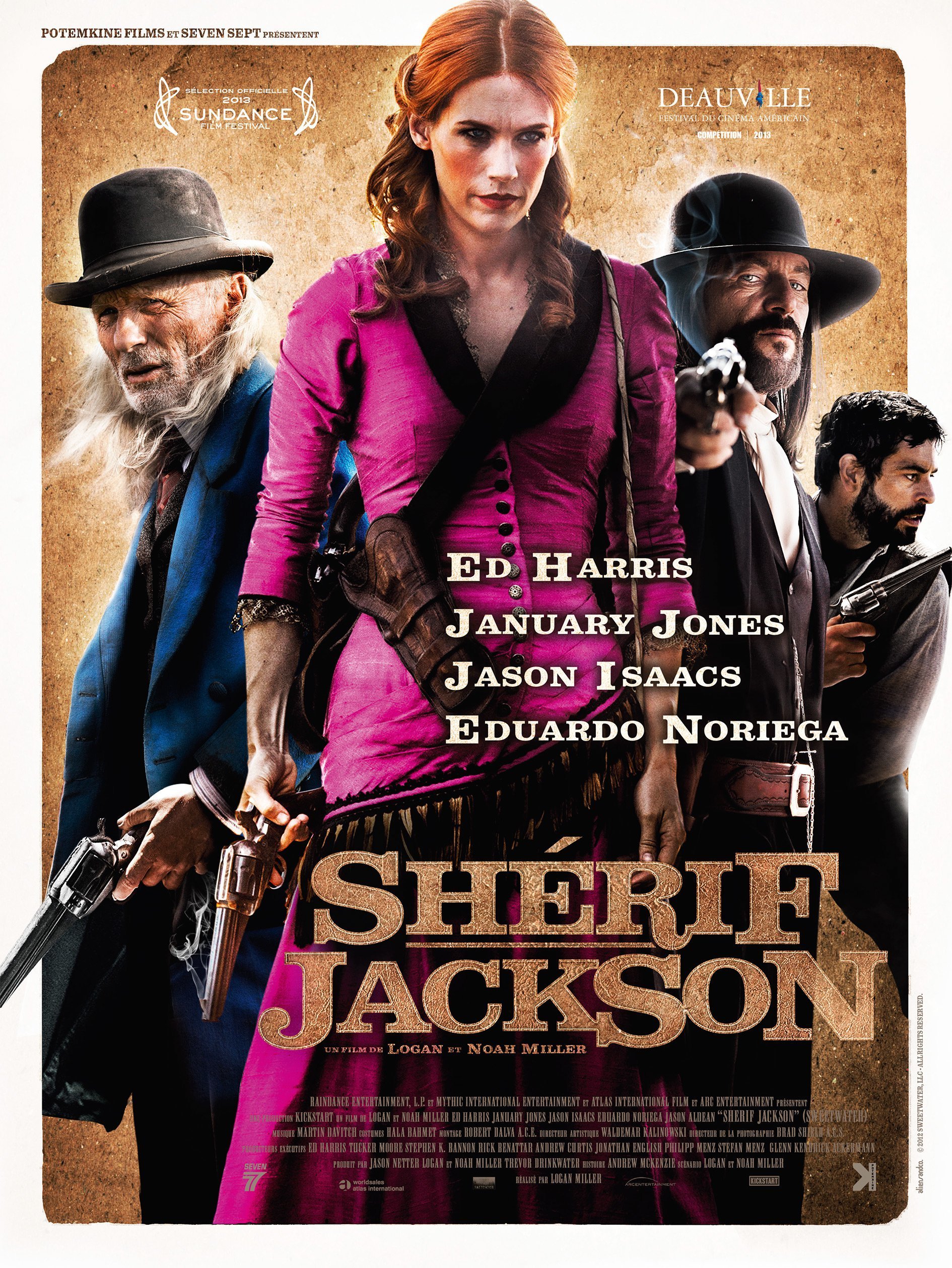
 Life in the old West was tough. It was particularly tough if you were a woman, such as Sarah Ramírez (Jones), struggling to make an honest living with her farmer husband Miguel (Noriega), having escaped life as a prostitute. This movie shows it to be especially tough, after Miguel has had his throat slit by batty preacher Prophet Josiah (Isaacs) – it doesn’t help he has the hots for Sarah, apparently taking the “love thy neighbour” line very literally, and runs the local area as if it were his own personal fiefdom. Fortunately, she has an unusual ally in Sheriff Jackson (Harris). The lawman shows up, looking for two people who disappeared on a journey which took them right across Josiah’s territory, and is about the only other person willing to stand up to the lunatic religious fringe. Finally, Sarah has had enough, and embarks on her vengeance against, not only Josiah, but anyone else who has wronged her, such as the shopkeeper who spied on her in his changing-room.