 “Into every generation a sorceress is born.”
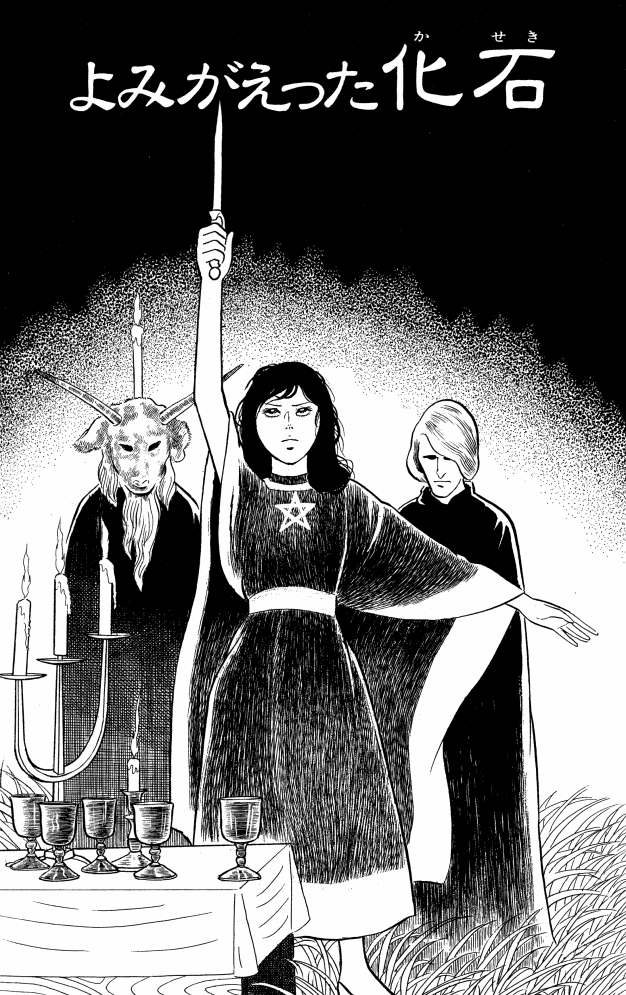
No, Buffy was not the first schoolgirl with supernatural powers, tasked with ensuring the denizens of hell were kept under control. Beginning in 1975, Shinichi Koga’s manga series Eko Eko Azarak, serialized in Weekly Shōnen Champion, told the story of Misa Kuroi, a young girl who transfers in to a new school, bringing with her occult abilities as a witch. This is not the first, nor will it be the last, darkly-troubled educational establishment attended by Misa, whose name can loosely be translated in Japanese as “Black Mass”. In this case, it’s the focus of a Satanic cult, who are killing students at precise locations around the city, as ingredients in a ritual with the intended end result of summoning Lucifer himself.
This and the subsequent adventures of Misa, ran for three and a half years, and was subsequently collected into an 18-volume manga series. The title comes from a Wiccan chant, first recorded in the 1920’s, and which also shows up during a 1971 Doctor Who serial, The Dæmons. [Its meaning is obscure, but the names appear to belong to old gods and goddesses] But it took more than two decades for the series first to be turned into a live-action film. This pre-dated the breakout hit of Japanese horror, Ringu, by two years, which may explain why it didn’t receive a fraction of the attention. However, it did begin a series of adaptations which intermittently continued, across various media, for the following 15 years. This included six films, a pair of separate television version and something best described as pseudo-anime. Let’s take a look at some of those, pausing only to hold hands and chant as one:
“Eko Eko Azarak, Eko Eko Zamelak.
Eko Eko Kernonos, Eko Eko Aradia.”
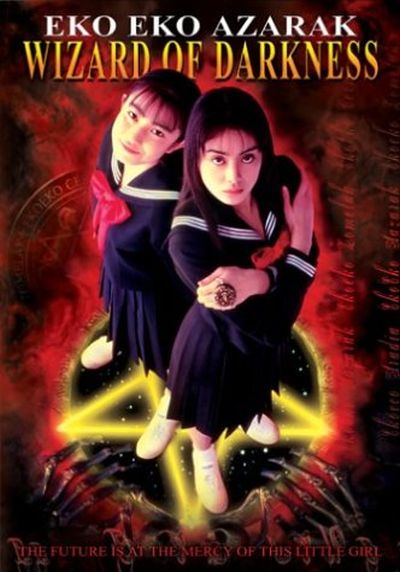
Eko Eko Azarak: Wizard of Darkness
★★★
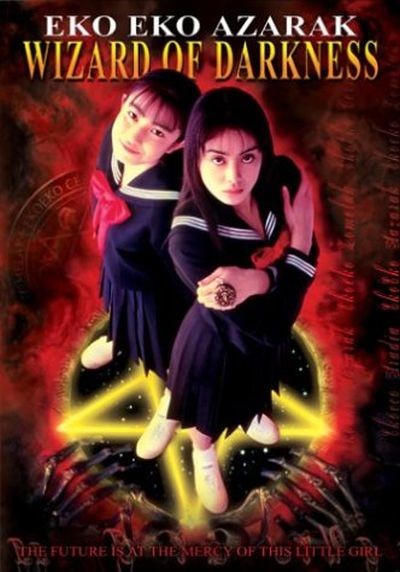 Someone appears to be offing pupils at a Tokyo school, in messy “accidents”, such as getting their head crushed by a falling girder: the death scenes form a pentagram, with the school at its centre. Into this strained atmosphere comes Misa Kuroi (Yoshino), who soon established herself as someone with a solid knowledge of certain occult arts, by taking care of a grubby male teacher who has, shall we say, a “hands on” approach to education. She and 12 classmates are ordered to stay behind one day and take a test: on completion, they discover they can’t leave the school, with every exit either sealed, or taking them right back inside again. Worse soon follows, beginning with a drowning in a toilet cubicle: the number 13 which appeared mysteriously on the blackboard, becomes 12, and it’s clear that someone has malicious intent towards the group, with the aim of sacrificing them all, in order to resurrect Lucifer himself.
Who might that be? Creepy classmate Mizuno (Takahashi), who is openly interested in black magic, yet keeps pointing the finger of suspicion at Misa? The predatory, lesbian teacher, Miss Shirai (Takaki)? And even if she finds out, what can Misa do, given the binding which traps her and the rest of her colleagues, has also severely weakened her own powers? While low-rent in nature, and obviously shot on video, this is decent enough, and despite being just past its 20th birthday, hasn’t dated too badly, in the wake of what seems like a million and one J-horror films set in similar establishments. There’s something of a Buffy echo (though the manga was decades before even the Kirsty Swanson version), in that Misa has come to a new school under murky circumstances, leaving a trail of bodies in her wake. However, I’m not quite sure who the target audience is: one would presume a young adult one, based on the high-school age of the characters. Yet, there’s a lengthy lesbian sex sequence, which seems to be aimed at a rather different set of viewers, shall we say, and according to the (female) director, were required by the film’s producers. [I just realized she also did the Western film, Tale of a Vampire, starring Julian Sands, which I remember seeing and enjoying, not least since I was living near some of its South London locations]
The film does occasionally suffer from being too obvious. For instance, we really do not need repeated shots focusing on a pointy object, to foreshadow the fact that someone will shortly be falling onto it. Nor do we probably need 13 victims before we get the idea, and the film seems to realize this, wiping out half of them in once particularly messy incident. Misa, herself, is also somewhat disappointing: we never get any real appreciation for her powers, before she’s robbed of them for much of the film. Maybe this is better explained in the manga, though reports indicate her character there is much more of a vengeful bad-ass. Which, to be honest, sounds more interesting. However, as a messy romp, perhaps in the vein of a Japanese Dennis Wheatley adaptation, this was interesting enough to keep me interested and entertained.
Dir: Shimako Sato
Star: Kimika Yoshino. Miho Kanno, Naozumi Takahashi, Mio Takaki
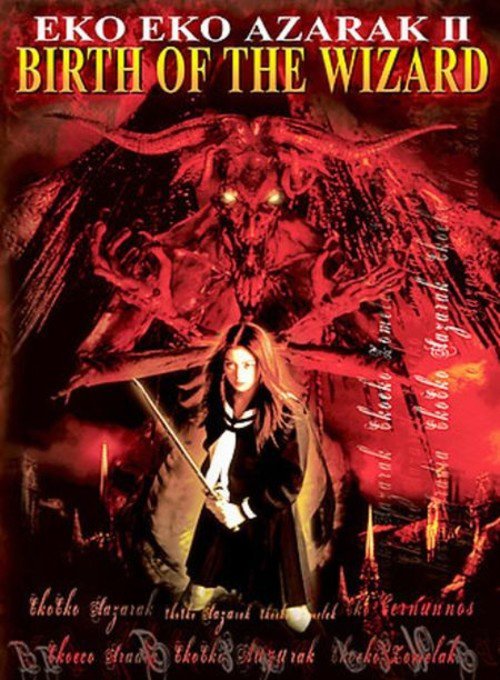
Eko Eko Azarak II: Birth of the Wizard
★★½
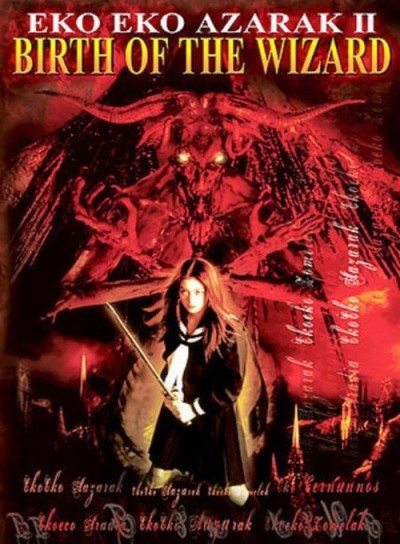 It took me quite some time to realize that this in not actually a sequel, it’s a prequel, telling the story of how Misa (Yoshino) came to realize her powers, and what awakened them. The history of that actually dates back more than a century, when a misguided attempt to resurrect a dead woman, actually triggered the extermination of an entire village. The demon responsible then goes into hibernation for a century, waiting for an appropriate vessel to be born. A century later, this happens: that would be our heroine. When the demon’s mummified body is dug up by unwitting archaeologists, it is awakened, and it foes in search of its new home, possessing those unfortunate enough to cross its path. Saiga (Shihôdô) is sent forward in time from the 19th century to locate Misa. Plan A has her untapped potential being triggered, since she is the only one capable of killing the demon. Plan B, in the event of Plan A, not being possible, is to destroy Misa, since allowing her to be taken would lead to horrors of unimaginable proportion.
Yeah, it’s basically a shameless occult knock-off of the first two Terminator movies, albeit with the time-frame flipped and someone coming from the past to protect the future, rather than the other way around. There is a nice touch, in that Saiga has previously met Misa when she was a little girl, and she has held a candle for him ever since, even into high-school. However, the obviously derivative nature is definitely a step back from the first film, and nor does it help that Misa spends 95% of the time with her powers dormant, just as Linda Hamilton spends most of the first Terminator film running and screaming, reliant on the superior fire-power of her male protector. It’s a curious decision by Sato who, unlike for the first film, also wrote the script here. Everything seemed set up nicely at the end of part one, for a kick ass sequel that shows her putting her abilities to full use, so I was disappointed this went in, literally, the opposite direction, with an origin story.
Don’t interpret this criticism to mean it’s actually bad, for Sato again does wonders in terms of generating atmosphere on a low budget, and this also moves on at a steady pace, with few dull moments. For other purposes, this would certainly rank half a star, perhaps a full grade, higher. However, we’re all about the action heroine on this site, and the paucity of such here leaves me with a clear sense of disappointment and feeling it was a lost opportunity, failing to capitalize on the promise shown in the original.
Dir: Shimako Sato
Star: Kimika Yoshino, Wataru Shihôdô, Chieko Shiratori, Eisei Amamoto
Eko Eko Azarak: The TV series
In between the second and third entries of the movies, there was a television series that ran between February and May in 1997. Information on the show, which ran for 26 episodes of twenty-five minutes, is hard to come by, beyond it starring a new actress, Hinako Saeki in the role of Misa Kuroi. It appears in some ways to be a supernatural version of Sukeban Deka, with Kuroi acting as a roaming investigator, who attends various educational establishments where paranormal or occult events are taking place. I’ve only seen the first three episodes (one is embedded above, with English subtitles), but according to the IMDb synopsis, “Carrying a dagger and a heavy leather bag, she uses her powers to eliminate the evil forces that thrive on deadly sins of the human race… Her parents were changed into wooden miniatures and her beloved sister is captured by the demons. Her ultimate aim is to cleanse the earth and rebuild her broken family.”
The opening trio all take place in the same location, Huirigaoka High School, but tell separate stories. The first deals with a rash of suicides, which initially look like the work of a vengeful spirit, but it turns out there’s something nastier at work. This also sets up Misa’s “Scooby Gang” of fellow pupils – Ikuo, Hiromi and Taketo – whom she saves from dark forces in this episode. The second is kicked off by an unofficial beauty pageant held by the pupils: when the reigning champion discovers Misa poses a threat to her crown, she attempt to use black magic to ensure her victory. But it isn’t Misa’s first time at the magical rodeo, and she reflects the curse back to its perpetrator, with face-melting results. The third sees a teacher at the school getting married, but Misa has serious qualms about her fiancé, especially when she sees the occult relic sitting in pride of place on their mantelpiece.
Having seen barely 10% of the series, I can’t give it a rating, but based on these three, I was generally impressed, particularly with the writing. Between opening and closing credits, there’s little more than twenty minutes to work with, but the show does a good job of telling a complete tale, without seeming rushed. The Misa we see is clearly experienced, well-versed in the dark arts, and largely doesn’t give a damn who knows it. When a dagger falls out of her bag and is spotted by Taketo, she straight up informs him, it’s for use “In rituals, to offer blood sacrifices.” Containing some surprising nudity – maybe it was a cable show? – there doesn’t appear to be much in the way of character development or an over-riding story arc – certainly none of the topics mentioned in the IMDb synopsis – but it’s still early. I just hope the fan-subbing group which did the first three, will eventually get back to working on the remaining 23.
Eko Eko Azarak III: Misa the Dark Angel
★★★½
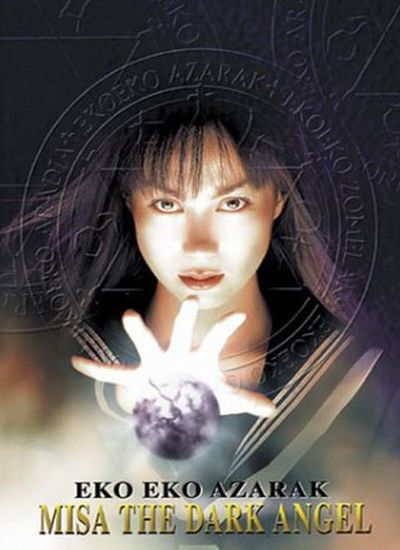 With a new director and a new actress in the role of Misa Kuroi – Hinako having carried over her role in the TV series from the previous year – this has a somewhat different feel, but works better than the first sequel, simply because Mida is fully aware of her powers, which lets her kick more ass. The story kicks off with the discovery of a horribly disfigured dying young woman, who whispers “Misa Kuroi” with her last breath. Conveniently, the autopsy doctor is Misa’s uncle, so she is aware of the presence in the victim’s possession of a play script. This takes her to the unsubtly-named St. Salem School for Girls, where she hooks up with the local drama club, under head-girl Hikaru (Hagiwara). They are working on a play which, shall we say, appears to have more than its fair share of occult symbolism, and the dyfunctional bunch of teenagers are about to head off on their traditional summer camp in a remote mansion. What could possibly go wrong?
If you are in any way surprised to learn that the answer to that question is, “Just about everything.” you need to watch more Japanese horror movies. For what unfolds is unsurprising more in the details, which harken back to an earlier attempt, first, to create a homunculus – artificial life – and then, imbue it with a human soul, this lack being what distinguishes it from the rest of us. The process, again unsurprisingly, involves a lot of human sacrifice, and Misa is the only one savvy and gutsy enough to stand in the way. There also appears to be a Lovecraftian subplot, with the gods invoked in the ceremonies being taken from the Cthulhu mythos; unfortunately, the subtitler appears blithely unaware of this, so you get frequent references to “Yog Sototo” instead of Yog-Sothoth. It’s a small matter, but the lack of attention to detail does rub me the wrong way.
Hinako does bring a different approach to the character from Yoshino, both in look and temperament, she’s less “cutesy”, seeming more angular and cold, as if by this point Misa had seen too many things and failed a few saving throws on her “Humanity” skill. Katsuhiro borrows liberally from the classics, in particular a shrubbery assault lifted from The Evil Dead, but more subtly, a sense of atmosphere that seems to echo Dario Argento’s Suspiria. But it’s also its own beast, and it’s good to see Misa getting a far greater chance to be the heroine whose potential has only been occasionally glimpsed in the first two episodes. The ending is both surprisingly poignant, and unexpectedly final: it doesn’t appear to leave significant room for a sequel – but just as in Western horror franchises, it appears that if the box-office returns prove adequate enough, a way will always be found for another entry…
Dir: Ueno Katsuhiro
Star: Saeki Hinako, Ayaka Nanami, Yuki Hagiwara, Chika Fujimura
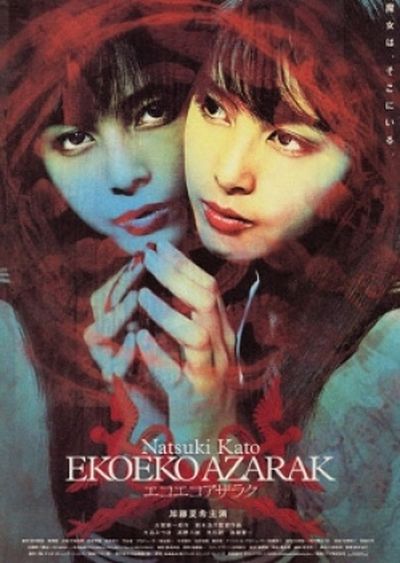
Eko Eko Azarak IV: Awakening
★★★★

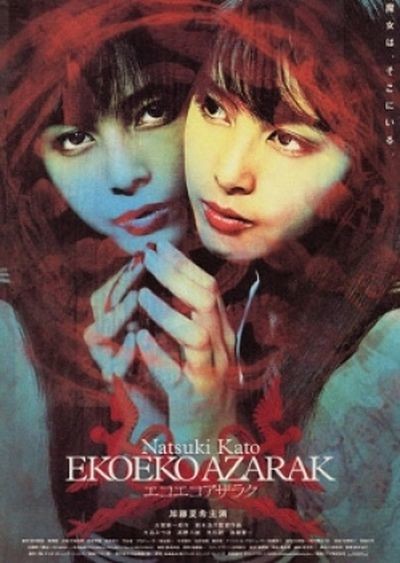 After a few years’ break, the series returned in 2001 with a fourth installment, that took a radically different approach – and one which, for my money, was all the better for it. It’s actually a reboot – the Japanese release was simply Eko Eko Azarak, with the suffixes only being added for the bootleg edition available in the West from the usual sources. Certainly, the Misa Kuroi we get is initially again one who is unaware of her powers. We first encounter her as the sole survivor of an apparent massacre in a forest which left five corpses, all badly mutilated. Misa (Kato) is carted off to hospital, unconscious, where the police wait to question her and find out what happened. But even as she lies unconscious, the body-count continues to mount.
Needless to say, the media has a field day, especially after Misa escapes the hospital, leaving the body of a nurse by her bed, turned into a starched-white popsicle. The film has a lot to say about how the media twists a story to its own purposes and sensationalizes or trivializes things in pursuit of ratings. For instance, they prepare two versions of the initial story, depending on whether they want to portray Misa as a virgin bravely defending her honour, or a psycho slut who was asking for it. As one hardbitten journalist puts it, “If you don’t come up with a sensationalist headline immediately you see something, you aren’t going to make it.” The defense for this is that television is just a mirror for society, and “A mirror doesn’t have a soul, does it?” So, they frame the story as they want, even going so far as to hire a fake to pretend to be Misa, leading to the climactic confrontation at the TV station between media, police, pseudo-Misa and the real thing, where the journalist taunts Misa into revealing her true powers
This goes about as well for him as you’d expect.
What works really well is the sense of foreboding, with a brooding atmosphere which is incredibly well realized. Rather than explicit shocks, it relies much more on things happening out of sight. While this can often be a cop-out [you don’t have to budget for what you don’t show!], in the right hands this can also be highly effective. Suzuki is clearly the right hands, and is a master at using sound – or even the lack of sound – to create apprehension in the viewer. This is reflected in things like a really creepy answering machine message left for Misa by her mother, or at the end, when the camera pulls slowly away from a closed studio door, leaving you to imagine what awful forces are at work on the other side. While the others are easy to write off as genre entertainment, that isn’t the case for the combination of social commentary and thoroughly effective chills that you get in this installment. Smart and scary like this is a rare combination.
Dir: Kosuke Suzuki
Star: Natsuki Kato, Mitsuho Otani, Hassei Takano, Ken Mitsuishi
To Be Reviewed
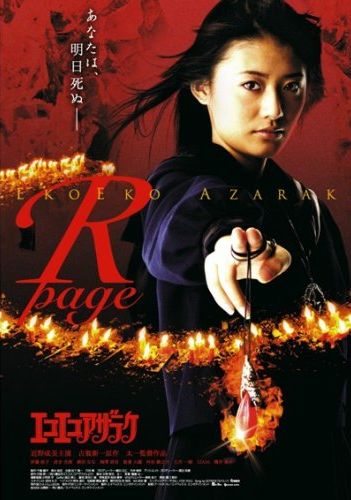
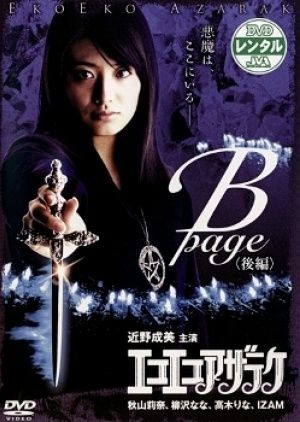
There are a number of other entries and adaptations of the character, which I have not yet been able to find, or which only exist at this point in Japanese language versions, without subtitles. First of all, 2004 brought a further television series to TV Tokyo, lasting 13 episodes, called Eko Eko Azarak -eye-. In 2006, there were a pair of features, released two weeks apart theatrically: R-Page and B-Page. The first saw a journalist investigating a string of mysterious deaths in a rural town, who teams up with Misa Kuroi to find the (supernatural, unsurprisingly) cause behind them. In the second, Misa continued her search for the demon Ezekiel, bringing her into contact with a wheelchair-bound doll maker.
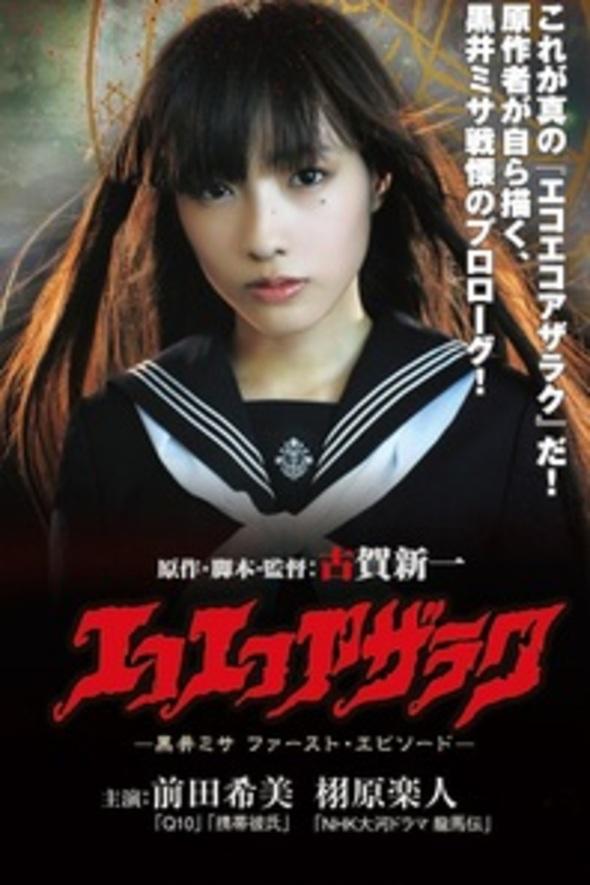
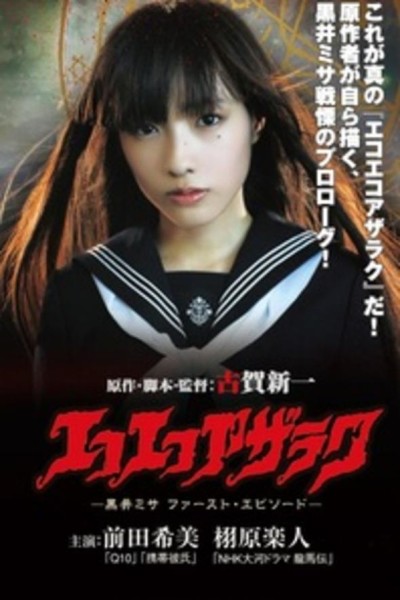
Around the same time, there was also an anime OAV with two stories in one volume – though by most accounts, this was less “animated” than using still images with voiceover narration (a medium known as “ga-nime”). Finally, there is The First Episode of Misa Kuroi, a 60-minute story which came out in January 2011. It was supposed to have been released in the West by Tokyo Shock, first in December 2013, then was delayed to August 2014, but does not appear to have turned up at all. As/when I get access to an understandable version of these, I’ll include them here.
 |
 |
 |
Eko Eko Azarak: R-Page
Dir: Taichi Ito
Star: Narumi Konno, Mitsuki Koga |
Eko Eko Azarak: B-Page
Dir: Shinichi Koga
Star: Narumi Konno, Rina Takagi |
Eko Eko Azarak:
The First Episode of Misa Kuroi
Dir: Shinichi Koga
Star: Nozomi Maeda |



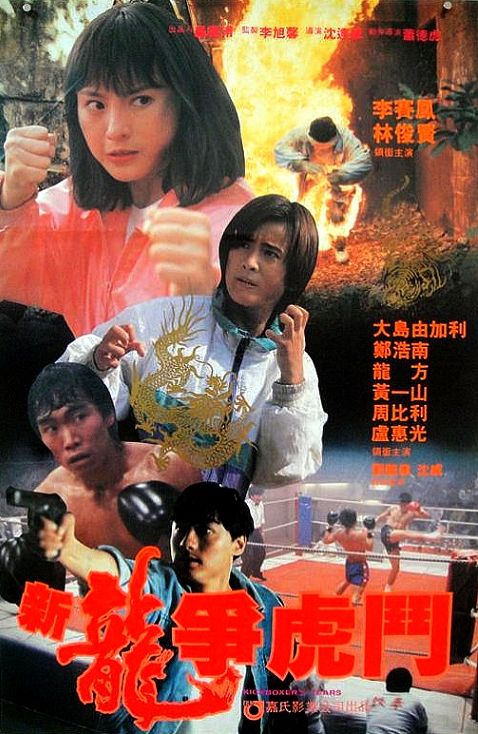 A truly crappy plot here, used to link fight scenes that range from the boring – that would be the actual kickboxing, which greatly outstays its welcome – to the impressive. Li Feng (Lee) is visiting her kickboxer brother in Hong Kong, when he is killed by a cheating opponent, after refusing to take a dive on the orders of Mr Wong (Lung). The death also throws into jeopardy the family training gym/healthcare establishemnt [a crossover at which no-one blinks an eye], which was already financially shaky. To both get revenge, and earn enough money to stabilize things, Li goes to Wong, and demands an underground rematch against his fighter. When that happens, but leaves her opponent permanently paralyzed, Mrs. Wong (Yukari Oshima), who is the victim’s brother, as well as the promoter’s wife, demands a winner-take-all match to the death. And she kidnaps Li’s semi-boyfriend (Lam) to make sure Li turns up for the contest.