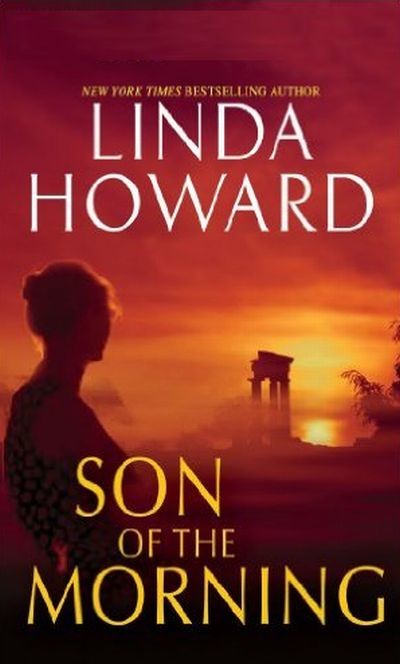
Point of Honour, by Madeline E. Robins

Literary rating: ★★★★★
Kick-butt quotient: ☆

“I lost my virginity. I lost my innocence. The world seems to regard this as the same thing as honor, but I do not.”
–Sarah Tolerance, Point of Honour

pointOver the last several decades, the detective genre has come to be graced by quite a few brave, gun-packing female P.I.s, who can handle the rough stuff on the mean streets of the urban jungle, as well as the more cerebral arts of observation and deduction. Robins’ Sarah Tolerance is one of this sisterhood, but with a key difference: her beat is the London of 1810, and the guns she packs are one-shot flintlocks –so it’s practical to wear a sword for backup, and luckily her brother’s now-deceased fencing master (with whom she ran away years ago) taught her to use one very capably. The term P.I. isn’t in use in her world; she bills herself as an “agent of inquiry,” a profession she’s created for herself.

For most serious readers, any mention of the Regency period immediately conjures the thought of Jane Austen, who introduced so many of us to it, and directly or indirectly influenced just about every later writer who employed that setting. Robins is one of them; she calls her predecessor “one of the sharpest, funniest writers in the English language,” and tips a hat to her with the opening sentence here: “It is a truth universally acknowledged….” But the rest of that sentence lets us know immediately that her picture of the Regency world encompasses a much broader and darker canvas than Austen’s: this is not only a world of aristocrats and landed gentry, but of harlots and bawds, pickpockets and Bow Street Runners, and a world where sinister things can go on. And where Austen’s heroines might push the envelope of social conventions a bit (Lizzie Bennett, for instance, is smarter and more outspoken than many males then –or now– are really comfortable with), Sarah will outright defy them. The typical Austen heroine doesn’t pack (and use) weapons, wear male-style breeches and ride a horse astride rather than side-saddle, nor live in a cottage out back of her aunt’s high-end brothel and have a male prostitute for a friend.

This book is a bit of a challenge to classify. It’s definitely a mystery (and, before long, a murder mystery); and one with an indebtedness to Dashiel Hammet that I recognized even before reading Robins’ mention of him in the same sentence with Austen –which has to be the first time in history that pair was juxtaposed! But it also has a claim to be science fiction (if you classify alternate-world yarns as SF), because this is a slightly alternate Regency England, where the regent is Queen Charlotte. (Robins explains the few other minor differences in her “Note on History, and of Thanks.”) This isn’t, as some reviewers have supposed, a pointless quirk; it plays into the fabric of Tory vs. Whig political infighting that’s crucial to the plot. (In writing alternate-world fiction, the diverging premise has to be something that could plausibly have happened. That test is met here, since in this world Prince George’s marriage to a Roman Catholic wasn’t kept secret, and was wildly unpopular with commoners and ruling class alike; and there was ample precedent in other countries for royal women to hold regencies, while England itself had had a few ruling Queens.) It brings to life a setting so nearly like real-world Regency England, though, that it qualifies in my book as historical fiction. (Some people have apparently classified it as a “romance,” but it doesn’t follow the conventions of the romance genre as the book trade would define that.)

If classifying it could be a challenge, though, rating it wasn’t. I really like this period of history (as a fictional setting –I wouldn’t have liked to have lived in it!), with its more formal manners and speech, the slower pace of a world attuned to horses and written messages rather than cars and cell phones, the grace of a lifestyle that’s not yet complicated and coarsened by high technology. Added to the appeal of the setting is that of the central character. Sarah is a wonderful, well-realized creation: not perfect, but principled; kind, generous, honest, smart, brave, capable; no bully, but well able to hold her own in a fight –in short, just about everything I admire in a heroine. Robins delivers a page-turning plot, spiced with some action scenes, centering around a mystery that’s really challenging (I figured out most of it slightly ahead of the big reveal, but not all of it!), and does a good job of tying one plot strand, that might have seemed pointless to some readers, to the main plot in a brilliant way. Her style is pitch-perfect for the setting, with a bit of a 19th-century flavor that’s not exactly like the original, but still lets you know you aren’t reading something dumbed down to the lowest common denominator, nor limited to a 200-word vocabulary. She captures a lot of the authentic idioms and flavor of actual Regency speech, and provides enough description to give the writing a “you are there” quality.

Obviously, her treatment of sexual matters is franker than Austen’s, not shying away from the fact that this was a period with a gender-based double standard that stinks as badly as the manure and sewage in the streets, where just one of the king’s sons had no less than 10 out-of-wedlock kids and London alone had some 50,000 prostitutes (by the century’s end, it would be 100,000). But there’s no explicit sex here, and despite Sarah’s “fallen woman” status and sexual choices we might disagree with, she definitely comes across as a woman who takes sex seriously, who respects herself and others, and doesn’t stoop to exploitative or lewd behavior; nothing she’s done or does here makes us disrespect her. As far as bad language goes, there’s some, as there actually was in the speech of that day; not a plethora of it, and I’d guess mostly not too rough, though I can’t tell. This copy was bought used, and it turns out a previous owner used a dark pen to blot out most of the cuss words. (Sigh! As a writer myself, though I personally feel that usually the less bad language a book has, the better, if a writer chooses to put it in, I think his/her choice should be respected enough to let readers read it as it was intended to be, and make their own evaluations of it.)

Every time I read in this book, I was glued to the page; I’d have read it non-stop if I could have, and as it was finished it in just a bit over two weeks, which for me is a pretty quick read, indicative both of its interest level and its smooth flow. I’d love to see it adapted as a movie, provided it was done faithfully (though Hollywood’s track record for faithful adaptations of books isn’t great)..

Note: There’s some bad language here (as there actually was in the speech of that time), but not much of it. I’m guessing it’s not too rough, but I can’t say for sure –I read this in a used copy, and a previous owner had used a dark pen to blot out most of the cuss words!

Author: Madeleine E. Robins
Publisher: Tor, available through Amazon, both for Kindle and as a printed book.

A version of this review previously appeared on Goodreads.

The Last Survivors

★★★½
“Oregon, after the rain…”

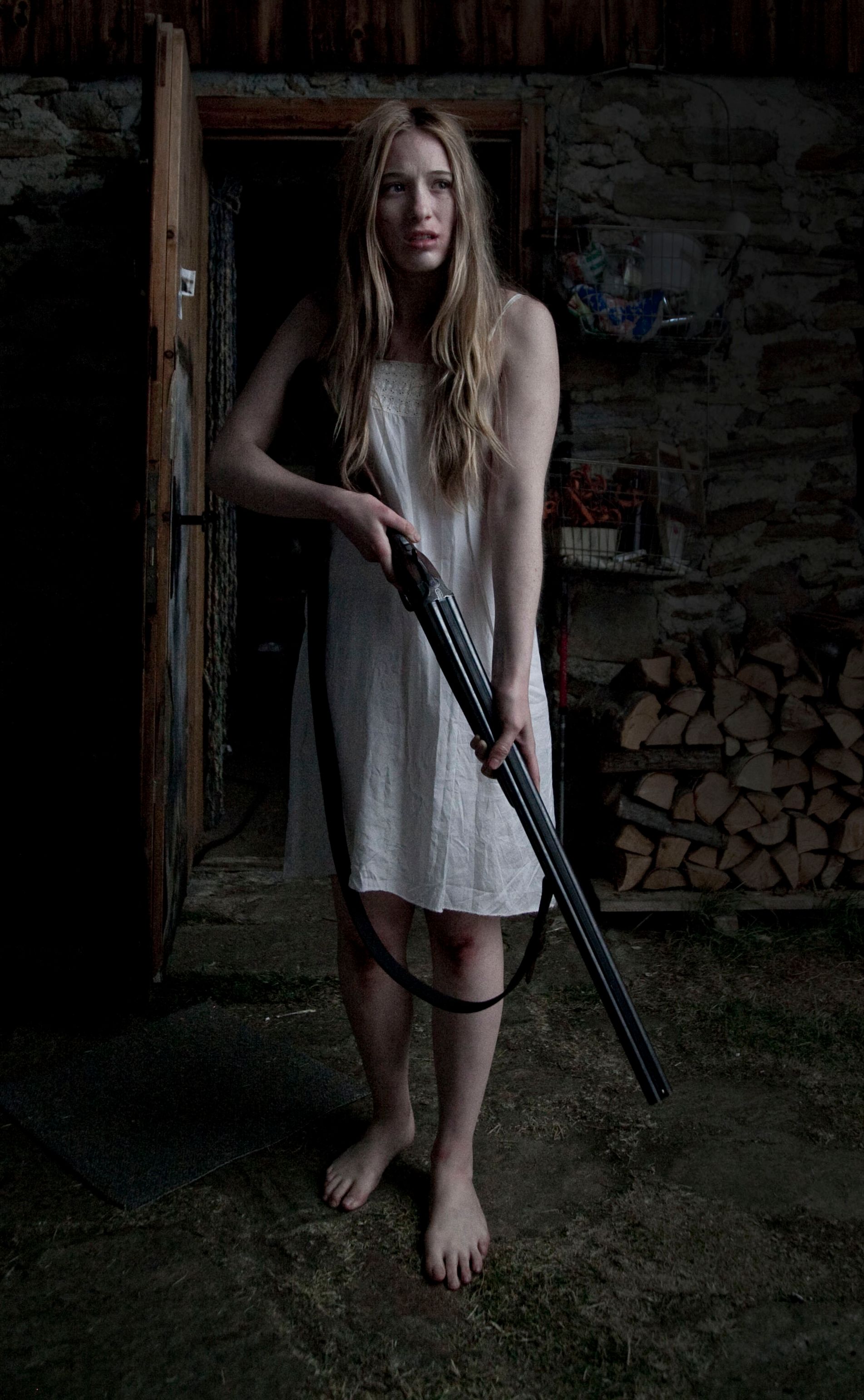
lastsurvivorsThe Pacific North-West is now a blasted, bone-dry desert, in which a few survivors eke out a precarious living, drawing what water they can from their wells. Intent on taking over the entire area is Carson (Gries), who bullies landowners into joining up with his posse, so he can take their water, or simply fleeing – and kills those who won’t comply. Hiding out is Kendal (Richardson) and her sick brother, Dean (Stewart – seriously, who calls their kid “Boo Boo”?), who needs lots of water to help his failing kidneys cope. She is seeking a distributor cap, so the plane they have stashed in the barn can be used to fly them to safety, but will she find that before Carson figures out their “deserted” farm actually holds both them and a functioning well?

There are a lot of strong elements here, but they are counter-balanced by a number of weaknesses. To get the latter out of the way first, Dean’s character arc is painfully obvious; five minutes in, Chris turned to me and said, “You know he’s going to die, right?” Also, the kid who lives next-door, Alby (Charles), doesn’t serve much purpose at all, until the very end, when he simply steps into Dean’s shoes as someone who needs Kendal’s protection. And speaking of Kendal, she is remarkably well-kept, considering she’s living in a world where every drop of water is a precious asset to be conserved. Long, luscious locks, apparently shampooed daily, fresh-faced complexion, etc. In terms of styling, Kendal needs to be much more Charlize Theron in Fury Road, and less Aeon Flux.

While these negatives are more or less severe, they don’t outweigh positives that are equally apparent, and greater in number. Kendal is an unrepentant bad-ass, prepared to do absolutely whatever it takes, for her and her brother to survive, whether it’s with her pump-action shotgun or a katana – the latter seems to be preferred on the video sleeves, although it’s actually the former she uses more often. The almost complete lack of romance, often seen in YA novels and films, is very refreshing; there’s no hero over whom Kendal goes all moist-eyed, and the only real love shown is for her sibling. The supporting cast is very good too, highlighted by Gries, who seems about a million miles from his best-known character, Uncle Rico from Napoleon Dynamite. The rest of his crew are little less scary, and there’s a nice, albeit very minor supporting turn from horror legend Barbara Crampton. The Mojave Desert stands in for drought-stricken Oregon well, with the photography making heavy and effective, use of sepia filters.

It is a bit of a steady climb through the foothills, before things start to kick off, so you do need to be a little patient. However, the payoff is largely worth it, even if the final batter, between Kendal and Curtis’s daughter, Brooke, leaves a little to be desired, mostly because Brooke has never been established as much of a credible antagonist beforehand. Like the rest of the film’s flaws, I can’t say it damaged our enjoyment beyond repair; there’s still plenty to enjoy, and Richardson carries the film with an assurance beyond her years.

Dir: Thomas S. Hammock
Star: Haley Lu Richardson, Booboo Stewart, Jon Gries, Max Charles
a.k.a. The Well

War Witch

★★★
“Definitely not Sabrina.”

This was originally titled Rebelle, perhaps a slightly better title than something that sounds as if it comes from a Norwegian death-metal album. Perhaps the change was to avoid confusion? A quick Google Images search for the original name shows you that was also the title for Brave in some territories. Safe to say, this is nothing like that. It’s the worthy, rather than anything else, tale of a young girl, Komona (Mwanza), who is kidnapped from her African village by anti-government forces at the age of 12, and forced to join their army. Her apparent supernatural ability to “see” government forces brings her to the attention of their leader, Great Tiger (Mwinga), who appoints her as his “war witch.” But on discovering the fate of the previous three appointees – a clue, they didn’t retire with full pensions – she deserts, along with an albino colleague, Magicien (Kanyinda). Their happiness is short-lived, as their commanding officer (Bastien) recaptures Komona and turns her into his concubine, right up until a nasty trick involving a piece of fruit and a razor-blade.warwitch

A few things stand out. Firstly, the casual approach to everyday violence, which seems to numb all those who perpetrate it, including Komona. But it can still be chilling, most notably Komona’s understated description of her uncle: “Every time he would cut the meat with his machete, it would remind him of what happened to his family… I will not tell you what happened to his family. Because, if I do, you won’t listen anymore.” Yikes. There’s also the way in which the supernatural permeates things, and no-one seems too bothered. As well as the whole “war witch” thing, which is as bizarre as Ronald Reagan using an astrologer, Komona sees the ghosts of her dead parents, and one of the reasons for deserting is so she can give them the proper burial and send them to rest. Magicien makes and carries “grigri”, talismans designed to protect him, and when he seeks a white rooster to offer as a dowry, the price of information on where to find it is one such amulet. Magic, it appears, is everywhere. As, apparently are albinos: I think there are more shown in this film than in every other movie I’ve ever seen, combined.

It’s very restrained on just about every level. In some ways that works, since it avoid the obvious histrionics you expect from the subject matter. But I have to say, I found Mwanza’s performance – or, rather, her non-performance – extremely flat and distancing. It’s hard to care about all the death on display, when it seems the central character is unbothered by it. Nguyen doesn’t explain some significant aspects either, such as the “coltan” which Great Tiger has his forces mine, is short for “columbite–tantalite”, an important ore used in electronics. Demand for this in the West is among the causes of conflict in the region. Would have been nice to find this out from the film, rather than Wikipedia. My over-riding reaction to the film was one of relief that I don’t live there, mixed with an appreciation for the the things we take for granted, like running water and a lack of roaming militia groups. This is a glimpse into another world; it’s just not one I have much interest in visiting again.

Dir: Kim Nguyen
Star: Rachel Mwanza, Serge Kanyinda, Alain Lino Mic Eli Bastien, Mizinga Mwinga

When Taekwondo Strikes

★★★½
“The Angela Strikes Back”

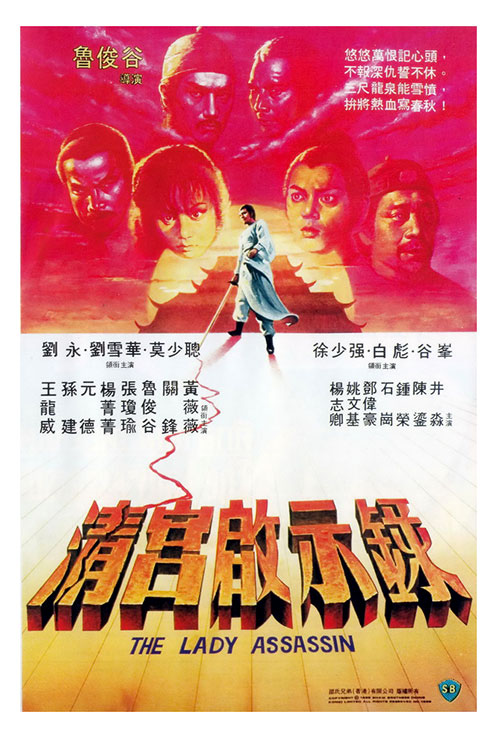
7242870.3There’s more than a hint of Hapkido here, with many of the same cast, and more less the same thirties setting, with Korea again laboring under the yoke of Japanese occupation, etc. Things kick off when Jin (Wong) seeks sanctuary from the occupying forces in a local Catholic church. The Japanese soldiers rush in, but get demolished by Uncle Li (Rhee), a rebel topping their wanted list who has been hiding out as the priest’s gardener. Jin and Li depart, along with the priest’s niece (Winton), but the priest himself remains, and is captured and tortured for information about Li’s whereabouts. Wang Lin Ching (Mao) is drawn in when Li asks her to check on the cleric, causing her to become targeted by the Japanese too. An attempt to rescue the priest goes wrong, ending with Li being captured, and the others having to flee Korea for mainland China. However, that may not be far enough, and when the Japanese figure out where they are, they us Li as bait to lure Wang and the others out of hiding.

Despite being considered the father of American Tae Kwon Do, and a good friend of Bruce Lee, this was Rhee’s only released film (rumors of another have been heard). Seems a bit of a shame, as he makes his presence felt here, particularly toward the end. For action heroine fans, the focus will naturally be on Mao, and we’ll get to her shortly. However, we shouldn’t forget Winton, also in her only film role, who makes an immediate impression as an martial arts trained nun  Going by her clothing, anyway; the film is kinda loose on Catholic ritual. Man, The Sound of Music would have been so much cooler, if Julie Andrews had only known kung-fu…

As for Mao, she has a couple of absolutely stellar fight scenes, including a church brawl [after the soldiers realize she isn’t Catholic, because she didn’t cross herself on entering!], a battle in a forest, and the final fight. However, in terms of her action, things perhaps peak when she returns to her family restaurant to find a long-haired Sammo Hung, playing a Japanese henchman, roughing up her mother, along with his goons. The last is embedded below – it should start at the correct time, but if not, 39:20 is where you want to be. I just love the way she casually flicks her pigtail round the back just before things kick off, as if to say, “I am serious Angela Mao. This is serious business.”

The one thing that stops the film from getting a seal of approval is a disappointing slump in the middle, after the (fairly lame) effort to rescue the priest. Nothing much happens for what feels like a good half-hour, and that’s a shame, since the action elsewhere is both copious and often excellent. Many fights are virtually the equal of any Bruce Lee film, not least because there are half a dozen excellent martial artists involved here, rather than Bruce being far and away the best. This adds a real sense of balance to proceedings, and if you’re looking for an introduction to the movies of Angela Mao, this is certainly recommended.

Dir: Huang Feng
Star: Angela Mao, Jhoon Rhee, Carter Wong, Anne Winton

Serena and the Ratts

★★
“Look what the RATTs dragged in…”

serenaA somewhat jumbled mix, this sounds like a film about a punk-rock band but certainly isn’t. It actually starts off playing as a WW2 version of The Terminator, then morphs in the middle to become a mongrel crossbreed of Leon and Nikita, more or less abandoning the whole time-travel aspect entirely. The reasons for this do eventually become clear, yet still leave you feeling like the first third of the film was an entire waste of effort. To begin in the middle, Serena (Marie, who as you can see from the left, even looks like early Anne Parillaud) is a young woman, plucked off the streets by the Boss (Thomson) and raised in his image to become an assassin. She and her boyfriend, Leonard (Neal) are given a very strange mission. A group of scientists have discovered how to manipulate the space-time continuum, allowing them to travel in time, and they have sent someone back to kill Hitler as a child. A counter-group, the RATTs – Researchers Against Time Travel – believe this will just make things worse i.e. allowing someone else, more competent, to rise instead, so through Boss, hire Serena and Leonard to kill the assassin. So how do you stop someone, when those behind them have the ability to control time itself, and counter every move?

By coincidence, I watched this the same week as Predestination, and that film demonstrates how time-travel, altering past effects and the resulting paradoxes, should be handled. Here, the film never gets a firm grasp on it, and nor does the budget allow for anything approaching the credible depiction of a previous era that is necessary. The performances are all over the place too, mostly under-emoted and flat, though there’s also the worst apparent attempt at a British accent I’ve heard in years: Dick Van Dyke snorts derisively from the corner. [Look, I know we make great villains and all, but if you don’t have someone who can do it properly, and the Britishness isn’t necessary to the plot, I have to wonder: why bother?] As noted, there’s a sudden switch in focus, and it’s quite jarring, although I suppose it kinda makes sense for a story (nominally) about time-travel to have a fractured structure. Here again though, it doesn’t add anything to the plot, and a more linear retelling might perhaps have allowed the makers to build more empathy with Serena.

It wouldn’t have impacted the plot much, since it’s only at the end, when the Boss does the whole “let me tell you the entire plan for no good reason” thing – a staple of movie characters since early Bond flicks – that it makes sense. However, please note the sharp distinction between “sense” and “compelling viewing”, since the latter is never even approached here. Technically sound, with some interesting camerawork and a decent soundtrack, this remains just marginally passable as entertainment, mostly thanks to a script in need of at least two more rewrites.

Dir: Kevin James Barry
Star: Evalena Marie, Jonathan Thomson, Dave Neal, Marek Tarlowski

Werewolf Woman

★★★
“Hungry like the wolf”

wolfwomanWhile there have been plenty of female vampires over the year, the number of female werewolves is a lot smaller. There’s the wonderful Ginger Snaps (and its not as wonderful sequels), the forgettable Cursed, TV series Bitten, and most infamously of all, Howling II: Your Sister Is a Werewolf.  However, perhaps the closest relative here is a little off to one side: the remake of Cat People, made by Paul Schrader in 1982. It is not dissimilar in tone and approach, both taking a firm, if somewhat hysterical psychosexual tone to proceedings, and Giorgio Moroder’s musical score sounds like the synthesized one here. Both have heroines whose transformations are triggered largely by sexual excitement, and who eventually find a man happy to love them for who they are – only for that happiness to be short-lived. Of course, this one being grindhouse, the reason for its abrupt termination is her boyfriend being stabbed to death while trying to stop her from being raped, which triggers a rampage of revenge that justifies its inclusion on this site.

But I’m getting ahead of myself here. It’s also a sexual assault which triggers the psychological problems for Daniela Neseri  (Borel). The psychological trauma and Daniela’s obsession with a family legend involving an ancestor who supposedly turned into a predatory animal, form a potent combination, and she develops a deeply-held belief that she also changes into a wolf at the full moon. That doesn’t appear to be the case, but it still brings tragedy down on the family, when Daniela gets all hot and bothered after seeing her sister (Lassander) making love to her husband. The resulting carnage get her committed to a psychiatric hospital by her aristocratic father (Carraro), only for Daniela to escape after an encounter with the facility’s local nymphomaniac. After some more brutal murders, which baffle the local police, she finally meets her soulmate, who works as a stuntman. And this takes us back to where this paragraph came in.

It’s pure exploitation cinema, not skimping at all on the nudity, and with a healthy amount of gore as well – what else would you expect from a director who, the same year, gave us Deported Women of the SS Special Section? This isn’t quite as sleazy, though certainly is not family viewing, and is well enough made to make for an interesting viewing experience for broad-minded spectators. Borel has a nicely lupine quality about her, and even if the transformation sequences [most notably the opening dream sequence] leaves a bit to be desired, the various elements – the heroine, her family, the cops who gradually realize the connection between the corpses – are tied together with a script that has had more effort put into it than you might think. They truly don’t make them like this any more.

Dir: Rino Di Silvestro
Star: Annik Borel, Howard Ross, Dagmar Lassander, Tino Carraro
a.k.a. La lupa Mannara or The Legend of the Wolf Woman

Winter’s Bone

★★★½
“A grim fairy-tale.”

Ashlee Thompson as Ashlee Dolly (left), Jennifer Lawrence as Ree Dolly (centre) and Isaiah Stone as Sonny Dolly (right)Not perhaps our traditional fare, but there’s a good case to be made for its inclusion, with a strong, single-minded heroine who is prepared to do whatever it takes, including putting herself at considerable risk, to keep her family together. Certainly, you can see why Lawrence went on to stardom, and knowing her subsequently as Katniss Everdeen makes going back to her breakthrough role interesting. For you can see echoes of Katniss’s steely determination in 17-year-old Ree Dolly, trying to cope with a mentally-ill mother, two young siblings and an absent father. She’s just about coping, until she discovers that her father has skipped out on an impending court date for cooking meth, and put up the family home as collateral for his bail bond. If Ree can’t track him down, the bail company will be able to seize the family’s property and turf them out. Tracking him down is going to require Ree poking her nose into some very unpleasant corners of rural Missouri, where some intimidating characters have good reason for the missing man to remain that way.

It’s a disturbing glimpse into a world that seems barely part of America. I haven’t been so unsettled by a film’s location for a long time – the only comparable movie I can think of, is the East European gypsy slum in Import/Export, which looked more like a bomb site than a functioning residential area.  Outside the natural surroundings of the Ozark Mountains, beauty is rare here; happiness, even rarer: survival is a full-time occupation, leaving no time for anything else. Outside of Ree, and her young sister and brother, who are too little to know different, there is hardly anything approaching a sympathetic character here. They virtually all pose a threat of some kind to Ree’s mission, and she has to navigate her way through them as if they were wolf-infested woods, knowing the right time to push, and the right time to back down. Except, even Ree isn’t fallible, which is how she ends up on the floor of a barn, beaten to a bloody pulp. Yet that’s when help arrives, from an unexpected source, and I guess, almost everyone lives happily after. Or as happy as possible, given the circumstances.

Lawrence is great, convincing and sympathetic, resilient and focused, a heroine who is credible without being incredible. Indeed, all the performances hit the required spots, to a degree where you wonder if Granik simply put out a casting call for meth dealers. However, the script isn’t as convincing, relying too much on people who have behaved one way, suddenly switching tack, for no obviously apparent reason beyond it being necessary for them to do so. It’s not exactly light entertainment either, and if you’re expecting flashy set-pieces, definitely look elsewhere. Falls more into the category of films which are to be respected, rather than enjoyed, yet Lawrence’s portrayal takes the viewer along, on a trip into the heart of Missouri darkness.

Dir: Debra Granik
Star: Jennifer Lawrence, John Hawkes, Lauren Sweetser, Garret Dillahunt

Dakiti, by E. J. Fisch

Literary rating: ★★★★½
Kick-butt quotient: ☆☆☆☆

dakitiThis series opener is a rousing science-fiction action adventure yarn, far better crafted than today’s average first novel. (I’m guessing that Transcendence Publishing is a real small press, not simply a printing service for self-publishing authors; but in either case, Fisch has taken her craft seriously and given readers a polished work.) The premise appealed to my liking for action-oriented heroines, so I took the opportunity to try out the series by downloading this novel when it was offered free for a day. (I’ll definitely be buying a print copy!)

We have here a tale of interplanetary intrigue, set in a far-future galaxy widely colonized by humans, whose far-flung settlement has brought them into contact with various alien races. Our main series characters belong to one of these, the humanoid Haphezians. They’re not really “super-human,” but they are taller and more muscular than Earth humans, with strength and endurance to match; and with two stomachs, they only need to eat every few days. (Otherwise, they’re physically much like humans, except for more vividness and variation in eye and hair color.) In this novel, we also meet another alien race, the reptilian Sardons. Characters from all three races will interact here, in a galaxy that’s riven by tensions, and sometimes open warfare.

Much of human space is ruled by a powerful Federation. But some fringe human planets like Tantal maintain their independence; and as in the Star Wars universe, the Federation faces resistance from a guerrilla insurgency that has elite fighters, the Nosti, who have special telekinetic powers (unlike the Jedi, theirs are derived from injections every ten years with an illegal psi-enhancing drug). The Haphezian monarchy faces a terrorist insurgency of its own, called Solaris; and some years ago fought a war with the Sardons, who sought to end the Haphezian monopoly on the caura extract trade. Ziva and Aroska serve the Haphezian Crown as agents of the HSP, Haphezian Special Police; and Haphezians are much in demand from other, less combat-capable, peoples as allies or as mercenary soldiers. That’s what’s brought hereditary Tantali governor Enrike Saiffe and his son Jayden on a diplomatic mission to Haphez near the novel’s beginning. Meanwhile, there’s a plot afoot that Ziva and her team will have to discover, and it’s a nasty one.

All of this political background is quickly sketched here in the process of narrating swiftly-moving events, without noticeable info-dumps (I expect it to be developed more in the succeeding books). Haphezian culture is suggested a bit more fully than that of the other two races involved here, but detailed world building isn’t the author’s strong point. Rather, her strong points are tight plotting, smooth and direct prose style that does what she wants it to, well-written action scenes (and a lot of them!), a conflict against a foe whose aims and methods are definitely evil, though that doesn’t mean that we think the Haphezian regime necessarily resembles goodness incarnate; and above all, character development and interrelationships between characters. (We’re not talking about romantic relationships here, but human relationships –and Haphezians are as “human” as you and I in those respects, regardless of how many stomachs they have.) Fisch throws some twists and turns into her plot (one of these I saw coming –but the satisfaction of guessing rightly is part of the fun!) and the last chapters especially are suspenseful right up to the end (reading these, I was glued to the screen!).

Ziva Payvan is a complex, round and dynamic character, embodying more than physical strength, good aim with a gun, and quick reflexes –though she’s got all of those, in enough measure to make her a VERY formidable fighter in any combat situation; you definitely don’t ever want her as an opponent! She’s an intelligent, layered person with a capacity for strong feelings, an inner moral code, and a lot of loyalty; but she’s not necessarily likeable. A product of a rough childhood and adolescence and of a dysfunctional family, she harbors some secrets and has made some bad choices, one of them really dark. And her government has trained her, and used her, as a professional assassin for State-sanctioned killings, with attendant toll on her softer feelings. She’s also abrasive, arrogant, and hot-tempered. But Fisch manages to make her a person you care about.

Aroska Tarbic is also a well-developed character, a strong, tough male well able to handle himself in combat, and with no problems about fighting shoulder-to-shoulder alongside of a woman. (Commendably, Fisch shows both male and female characters routinely taking fighting responsibility, and handling it well.) Indeed, all of the important characters here come to life in the author’s words. Many of the situations and scenes here are powerfully emotionally evocative.

One aspect of the premise here is problematical: Haphez is a highly-developed, tech-savvy planet with a culture that undoubtedly boasts centuries of development. It seems implausible that they wouldn’t have developed a more efficient judicial system, and a more efficient way of carrying out capital punishment, than they apparently have here. We can say the same for a few key details of the plotting that don’t stand strenuous examination too well. And hard-SF buffs will quibble about the impossibility of real-time interplanetary radio communication between planets that are light-years apart, given the relatively slow speed of sound waves. (In Ursula LeGuin’s fictional Hainish universe, an invention called the “ansible” eliminates this problem –we’re not told how, it just does!– but as far as we know, Haphez doesn’t have the ansible.) None of these factors kept me from really liking the book, though! I absolutely plan to continue with the series.

Note: Bad language here (strictly of the d- and h-word sort) is minimal, and there’s no sex, explicit or implied. Very romance-phobic readers can approach this tale without fear.

Author: E. J. Fisch
Publisher: Transcendence Publishing, available through Amazon, both for Kindle and as a printed book.

A version of this review previously appeared on Goodreads.

Lady Avenger

★★½
“Big hair, big sunglesses and a little budget.”

ladyavengerDeCoteau gave us one of the all-time worst GWG films, in American Rampage. Made the same year, 1989, this is surprisingly… Well, while I wouldn’t go so far as to say “good,” it looks like Citizen Kane beside Rampage; let’s settle on “surprisingly semi-competent.” The heroine, Maggie (Sanders), is serving time in jail, when she is let out on furlough to attend the funeral of her murdered brother. Maggie escapes, and sets about tracking down those responsible, working her way up the chain of command, wielding everything from a baseball bat to a flamethrower(!), and with a fetching line in 80’s wraparound shades, which she wears even when exploring a dimly-lit warehouse. Hey, it was the eighties, man – the decade that gave us Miami Vice! How you looked was at least as important as what you did… The trail of those responsible ends up a good deal closer to home than is comfortable; the character in question is not exactly unexpected, so that doesn’t count as much of a spoiler.

There’s probably only one person in the cast you’ll recognize, and you have to be a B-movie aficionado even for that – scream queen Bauer (under her name at the time, Michelle McLellan) shows up as Maggie’s two-timing friend, who delivers a copious amount of entirely gratuitous nudity and lingerie, to liven things up. Sanders was the Playboy Playmate of the Month for January 1990, which tells you just about all you need to know regarding her acting ability. Wisely, the script opts not to test the limits of her thespian ability, giving her a bit of low-tier emoting early on, as she gets told of her brother’s demise and attends her funeral, before she heads into stone-faced machine of vengeance mode. The villains are a curiously preppy-looking bunch of drug-dealers, all white, mostly with nice teeth, and many wouldn’t seem out of place at a frat party.  Still, they all go down like ninepins, though the action is of widely varying quality; some of the car chases are pretty good, yet on the other hand, the less said about the grenade sequence, the better.

Given how much I was braced for something irredeemably bad when I discovered who had directed this, I will confess to being pleasantly surprised. This is, however, at least as much a result of my low expectations, as any reflection of the film’s quality, and you’d be well-advised to follow suit. If you’re looking for a slice of cheesy, straight-to-video 80’s goodness, from a time in history not long after the question “VHS or Beta?” was still being asked, and with a lurid sleeve to match, this and a couple of beers will represent a throwback to a more innocent era. The trailer below offers a perfect appetizer for it.

Dir: David DeCoteau
Star: Peggy Sanders, Tony Josephs, Jacolyn Leeman, Michelle Bauer

Blood Soaked

★★
“Zombie Women of the S.S.”

bloodsoakedIt’s nice to see a horror movie which has women on both sides: not just the “final girl” trope, but as the entirely deranged pair of antagonists. This is equality at work, folks! In this case, the villains are sisters Sadie (Grendle) and Katie (Derryberry), who were apparently left orphaned by the unexpected death of their father who was… Well, if I’d to guess, I’d say he was trying to continue the work of Nazi scientists, with the aim of creating an army of undead slaves through the use of a resurrection serum, who can then be used to bring about the Fourth Reich. I’m kinda assuming this, from the use of copious public-domain Nazi footage during the opening credits, and the swastikas hanging around their desert bunker. Meanwhile, peppy student Piper (Wilder) is starting at college, and before long is exploring her sexuality with fellow student, Ashley (Corona). The pair head out into the desert, but a roadside encounter with our psycho sisters kicks off the horror part of proceedings, with Piper in particular being stalked, captured and dragged into the Naziettes lair where even worse things await.

There are two main problems here: one stylistic, and the other an issue of pacing. The former is the decision to switch into high-contrast black and white, when it first becomes clear to Piper, the trouble she’s in. While it certainly adds impact to the that moment, the film-makers apparently forgot to flip the switch back on their camcorder, and any impact is lost. You give your film a title like Blood Soaked, and we expect to see… well, blood. Here, however, it might as well be chocolate sauce, as used by Alfred Hitchcock in Psycho. That’s when you can see it at all, as the high-contrast mentioned tends to wash everything into the two ends of the spectrum: all or nothing.

Equally problematic, is the film taking too long to get to a point where it is even attempting to justify the title. It barely runs an hour between opening and the end credits rolling, which should be an incentive to get cracking and have things moving on at a fast pace. We do not need to see Piper showing up to college with her mom. We do not need to see Piper and Ashley meeting and building their relationship. We do not care. I’d have been a lot more interested to see what Sadie and Katie were up to over the decade after their father died, though quite how such a pair of certifiable loony tunes were able, not just to survive but flourish, escapes me. In the end, it commits the single, unforgivable sin of both original grindhouse cinema and modern films which attempt to reproduce its philosophy: it’s mostly dull. By the time the mayhem eventually showed, I was already trying to figure out if I could do household chores, while leaving this on in the background. Never a good sign…

Dir: Peter Grendle
Star: Heather Wilder, Rachel Corona, Hayley Derryberry, Laina Grendle