



★★
“Had me at ‘chainsaws’, to be honest.”
 This probably seemed better than it is, simply because it had the benefit of being watched immediately after Iconoclast. Two hours of static would have been an improvement on that. All told, this doesn’t suck. While clearly extremely low-budget (it reportedly cost a thousand bucks), and I’m not sure the plot would stand daylight any better than a vampire, it does at least deliver on what the title and sleeve promise. Indeed, within the first five minutes, we have fanged women wielding mechanical wood-cutting equipment. Check, check and check, even if the specific woman on the poster is not actually in the movie.
It plays somewhat like a backwoods version of Underworld – there’s certainly a lot more running through forests. By this, I mean the vampires are engaged in a centuries-long war against their enemy, into which an innocent human man is drawn, only for the lead vampire ass-kicker to fall in love with him. The vampires here also seems to share the same couture choice, albeit (obviously) at a much lower level of budget. The main difference is the opposition is provided, not by werewolves, but extra-terrestrials called “outlanders”. They came to earth and mated with our species, the resulting offspring being vampires. However, again for reasons of cost, the aliens are indistinguishable from humans, except for coughing up green blood when shot, stabbed or cut up (out of shot) with chainsaws.
The hero is Quinn Ash, whose life has sucked since his wife left him, and he’s living in a crappy trailer, thoroughly disgruntled. Even though he’s a redneck in a vest. he speaks in voice-over, like a private eye in a hard-boiled film noir. Things change, albeit not necessarily for the better, when he literally runs into a young woman on a country road. Remarkably unhurt, she injects him with a syringe and runs off, before being captured by a group of men. Quinn is then captured too, by Karel (Lisonbee) and her vampire posse. They eventually – and by this, I mean after about 40 minutes where neither hero nor audience have any clue what’s going on – explain the scenario. Turns out Quinn had been injected with an experimental drug, developed by the outlanders to kill the otherwise immortal female vampires. So, the makers have seen Ultraviolet as well.
With a bit more money, this could have been worthwhile, even if the scenario (as noted) largely consists of aspects cobbled together from elsewhere. Instead, there’s too much running around in woods, and even the chainsaws are almost entirely sound effect. The script also needs to establish what the hell is going on a lot quicker: by the time there’s any meaningful exposition, you’re halfway through and have largely given up hope. All this said, it was never specifically dull, and I’d not mind seeing what Diego could do with a bit more resources. But this was simply a significant improvement on Iconoclast, and I’m very grateful for that alone.
Dir: Carlos Don Diego
Star: Adam Abram, Jenna Lisonbee, Jamie Rosquist, RaeAnn Christensen
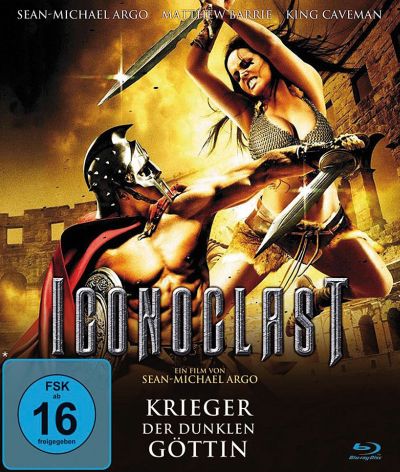 Ladies and gentlemen, we have finally found it: the Plan 9 From Outer Space of action heroine films, which manages to combine shoddy production values and pretentious nonsense to devastating effect, with the result being a completely incoherent mess. I knew I’d made a terrible, terrible mistake inside the first five minutes, which consisted of utterly overlong shots of a beach, into which a woman strolls, apparently coming directly from a clearance sale at Hot Topic, and performs an interpretive dance routine. She then wanders aimlessly round the woods, and menaces another woman, who is tied to a tree, while endlessly repeating, “Blood for blood. A life for a life. The wheel upon which we must all be broken.” It didn’t get any better, or any more comprehensible, thereafter.
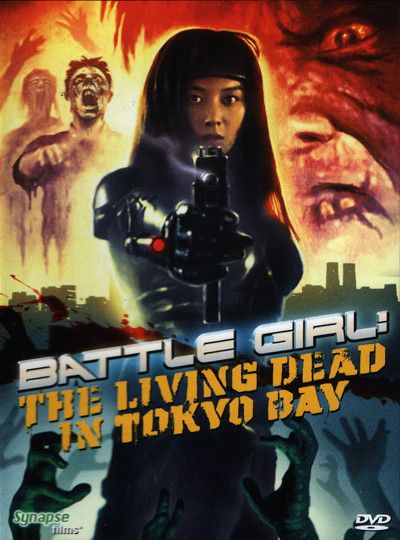 A meteor crashes into Tokyo Bay, creating a cloud of “cosmo-amphetamine” that infects everyone in the area. When they die, that drug immediately takes over, bringing them back to life as flesh-eating zombies. Colonel Kirihara is leading the rescue mission, and sends his daughter, K-ko (Suzuki) into the contaminated zone to scope things out. She finds that one of his underling, Captain Fujioka, is using the chaos to carry out human experiments, deliberately infecting survivors with the cosmo-amphetamine, in order to turn them into an unstoppable force of undead soldiers. He’s not willing to let anyone get out alive, least of all K-ko. Fortunately, her father gave her a battle suit, which helps to even the odds against the living dead army she faces.
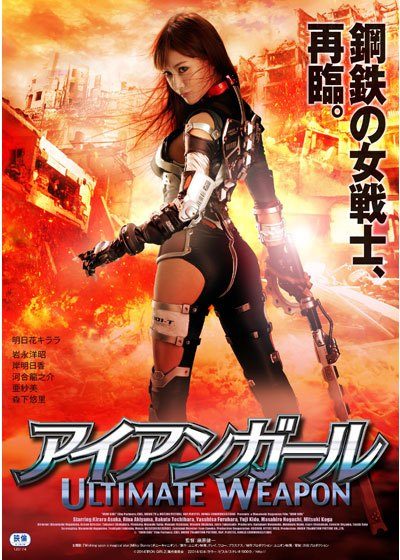 Having used my entire quota of hyphens for this review in that tag-line, what do we have here? I could remember virtually nothing about the original, even though it was only a couple of years ago we reviewed it. Seems to have ended up with the same vaguely mediocre rating though. The problem here, however, is mostly one of pacing. After a brief flurry of impressive activity at the beginning, there’s not much happening on the action front for about an hour, and what takes its place falls short of adequate entertainment.
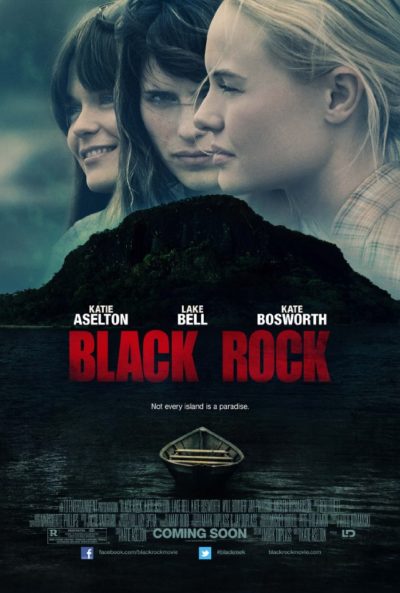 Maybe I’m getting old and deaf. Or maybe it’s just not a good idea to have dialogue that appears to consist largely of characters yelling (or whispering) over the top of each other. Either way, probably a negative the muddy audio is the main thing I remember about this survival horror film. Childhood friends Sarah (Bosworth), Abby (Aselton) and Lou (Bell) re-unite for a weekend on an island near where they grew up. There’s some reluctance here, Abby and Lou not having been on speaking terms for some years, due to the latter having slept with the former’s boyfriend years previously. The island is supposedly deserted, so they’re surprised to encounter three men hunting there, one of whom is known to Lou. A drink leads to another, and before you know it, Abby has fended off advances, in lethal fashion. The two survivors don’t take kindly to this, and begin hunting the trio to take revenge for their friend.
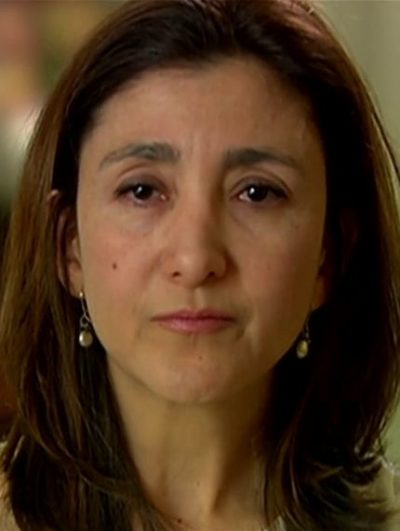 In February 2002, Ingrid Betancourt was travelling through a rural area of Colombia, as part of her campaign in the presidential election for the Green Party. She was stopped at a road-block run by the Marxist rebel organization, FARC, and when they realized who they had, she and her assistant, Clara Rojas, were kidnapped. Betancourt would spent more than six years of jungle captivity with the guerillas, until she was rescued, in a startling piece of deception, by Colombian military forces. This documentary film tells her story, through archive footage and interviews with Betancourt, Rojas, other kidnappees and some of the FARC members.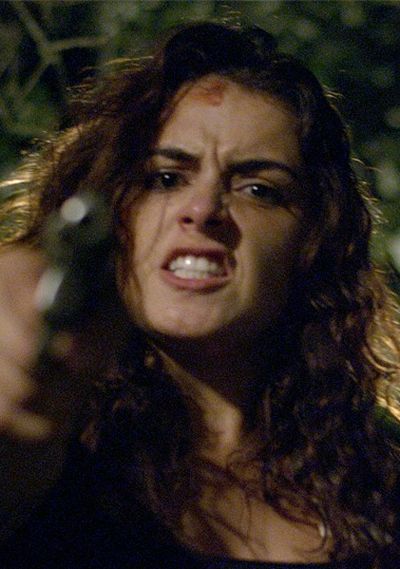
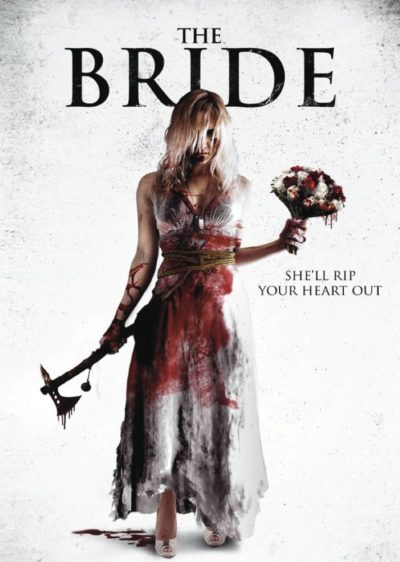 About to get married, Kira (Riddervold) and Marco (Campos) head out for a last quiet weekend together, at a luxurious cabin in the woods. Unfortunately, they become the target for the local rednecks and their kidnapping plot. This goes wrong, leaving Marco shot dead and Kira raped, then shot dead. Both bodies are buried in the woods, but – what are the odds? – it’s at the base of a tree where a native American woman was similarly slain by American soldiers in the mid-19th century. The spirit of that victim resurrects Kira out of her grave, in order for her to take her vengeance on those responsible.
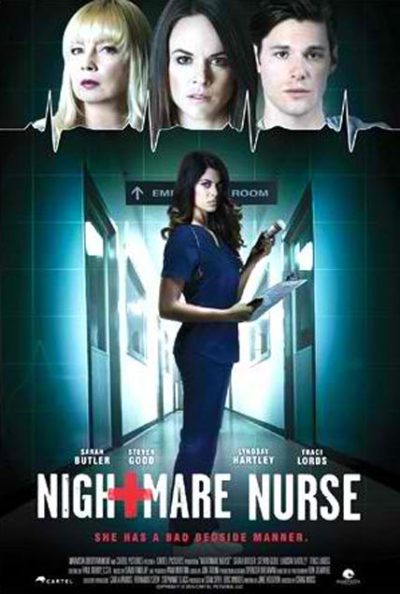 This Lifetime TV movie is the story of Brooke (Butler) and Lance (Good). The happy young couple get into an accident returning from celebrating her promotion at the restaurant where she works. The pedestrian they hit is killed, while Lance breaks his leg, and is confined to bed while he recuperates. To assist with that task, since Brooke has to work, they hire Chloe (Hartley). She initially appears perfect for the job, helping out with the household chores as well as her nursing work. However, it’s not long before strange little incidents suggest that not all is well in Chloeland. We see her life with an abusive boyfriend, and she develops an attachment for Lance well beyond the normal bounds of professional concern. Might this, possibly, be something to do with the accident?
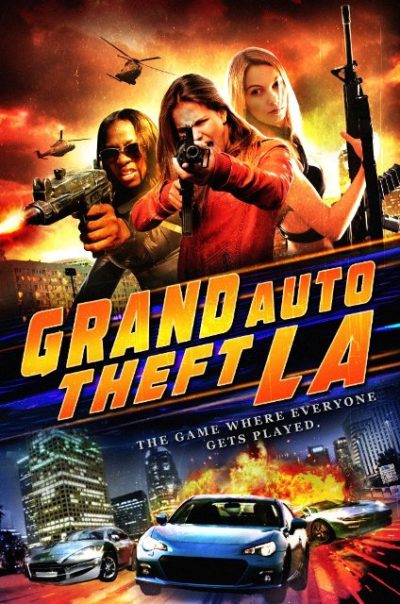 Vixen (Zachary) and her girl pals Sarita (Almonte), Kandy (Kodding), Electra and Katie are ambitious young dope-dealers on the streets of Los Angeles. After discovering that someone is pushing lethal drugs, Vixen’s moral streak kicks in, and she cuts off the head of the snake responsible, Kane. Unfortunately, this opens the door for the even more dangerous Andre, who is completely insane and willing to stop at nothing to prevent Vixen and her gang from interfering with him. After he kidnaps, rapes and kills one of her crew, it’s clear this war won’t end until one of them is dead. Then there’s “The Shadow,” a mysterious and unknown figure, lurking behind Andre.