




Literary rating: ★★
Kick-butt quotient: ☆½
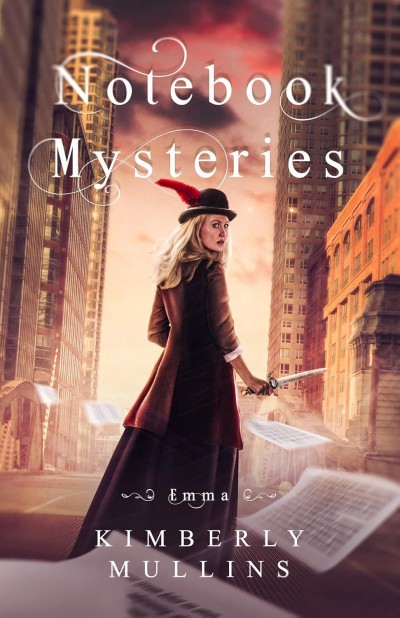 This begins with the Great Chicago Fire, an 1871 conflagration which killed around three hundred people. One of those is the mother of Emma Evans, and ten years later she’s a bright, inquisitive 16-year-old. She works part-time in the family bakery her mother previously ran, and also helps our her civil engineer father, but is also learning more… unusual skills, such as escapology and self-defense. These come in handy, as when she’s out carrying out deliveries with her friends Tony and Tim, Emma’s observational skills allow her to notice suspicious behaviour. When she has gathered enough evidence, she can then pass matters on to the appropriate authorities.
However, these activities don’t exactly win her friends in the criminal underworld, and she gradually discovers that her mother’s death might not have been the terrible accident it appeared to be. There’s also the matter of an unknown person who is clearly keeping a very close eye on Emma’s daily activities. Are they doing so for good or evil? All is eventually revealed – though oddly, after what feels very much like it should have been the climax, the book then meanders on with another investigation for another half-hour. Truly anti-climactic, literally. Mind you, I was still coming to terms with the facile ease Emma kills someone during that confrontation. While arguably justified, she does not seem particularly bothered about it afterward.
The historical setting, nineteenth century Chicago, was a fresh one, and this was quite evocatively handled [though I’m disappointed my Kindle copy didn’t contain the baking recipes other reviews indicate were present! I checked. Twice.]. There are some elements which feel like they don’t quite fit with society of that time: everyone seems remarkably chill with Emma learning how to throw knives like a circus performer, and going out with one strapped to her leg. Formal education also seems notable by its absence, despite Emma being smart and from a middle-class background. It does feel a little “young adult”-ish, perhaps aimed even at an early teen crowd. Which is interesting, because later books in the series definitely have Emma all grown-up. I wonder if the language matures with her.
It all feels a fraction too sanitized for my tastes, with only an occasional suggestion of actual peril for her heroine, despite her poking her nose into some potentially dangerous locations. The main antagonist is… Well, there isn’t really one specifically, it’s more of a nebulous concept of “organized crime in Victorian Chicago.” There were some twists I didn’t see coming, and appreciate the way that not everyone was as good, or bad, as they initially appeared – our heroine’s skills at observation definitely don’t extend to reading people’s intentions! While I didn’t dislike this, there were not sufficient positives for it to come close to interesting me in further installments. It’s very much a one and done.
Author: Kimberly Mullins
Publisher: JKJ Books, available through Amazon, both as a paperback and an e-book
Book 1 of 7 in the Notebook Mysteries series.
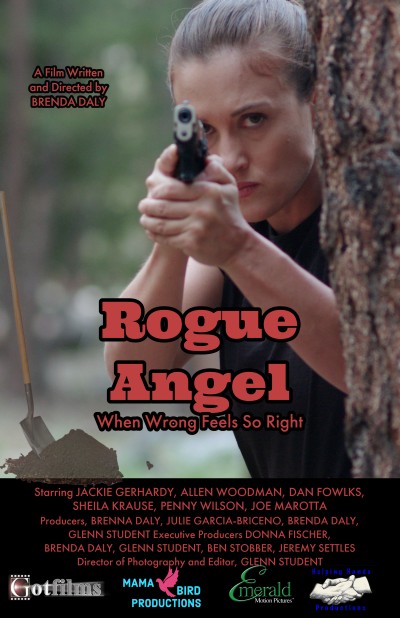 There is certainly something laudable taking on the challenge of making a feature film in seven days, and on a budget of seven thousand dollars. Doing so, and coming out the far end with anything remotely watchable, requires discipline and commitment. However, it also comes with certain penalties. The end consumer isn’t going to care about any of those constraints. They’re going to look at the screen and see takes which are “good enough,” rather than good, and particularly among the supporting cast, performances by people selected more for availability than talent. I tend to suggest it might be better to put the time and resources into making the
 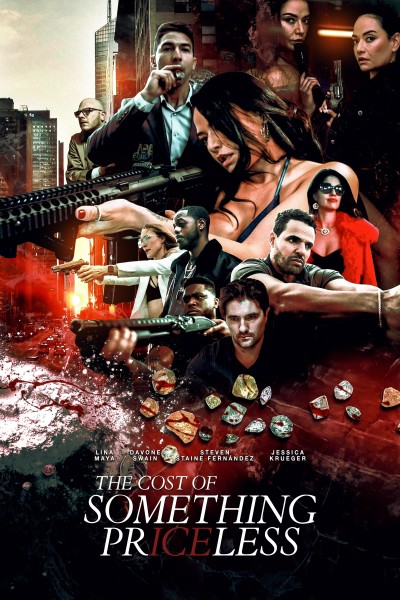 I think it was the start of the closing credits where I realized why I disliked this so intensely. The film describes itself as, “A Flick by Adam ‘Ace’ Silva.” There’s hardly a part of that which does not make me cringe. Having the nickname “Ace” is one thing: it should only apply if you’re a sixties test-pilot. But putting it in your film is… yeah. Then there’s calling your movie a “flick”. No. Just no. It’s an attitude which, in hindsight, infuses the entire production. But what do you expect, when Silva didn’t just direct it. He also wrote it, edited it, did the cinematography and composed the music. All one hundred and eleven minutes of it.
  I guess some credit is due here for going against type, at least. Molly Reese (Stack) is not your typical vigilante. She’s actually a doctor who works in an emergency room, and suffers a debilitating mental blow when her husband and daughter are both killed in an accident. She subsequently goes to a very dark place psychologically, telling her therapist she has thoughts about killing people. This is particularly unfortunate, after she is unable to save a local mob-boss, and his gang decide she is to blame. For Molly gets to put all those murderous impulses into action, under the guise of self-defense, and then proceeds to take the fight to the gangsters, all the while becoming increasingly unstable.
  Despite coming in as a “Tubi Original” – a badge which has previously been as much
 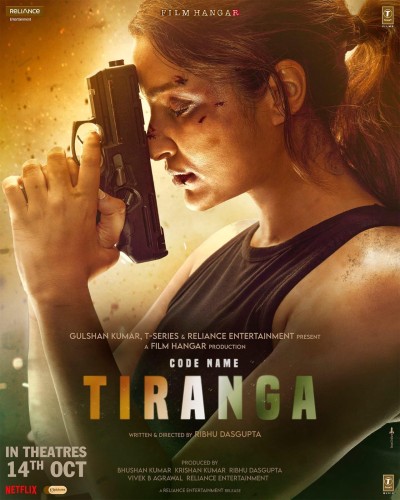 This Indian movie flopped at the local box-office, and comes limping onto Netflix with an IMDb rating of just 3.2. Reviews there are largely scathing, calling it “unrealistic.” Oh, sure: but people bursting into song for elaborate musical numbers – that totally happens in Mumbai. To be clear, I love the likes of RRR. But realism, or anything in that solar system, is pretty low down on the list of reasons I watch Bollywood films. This is… well, serviceable, is what I’d call it. It is too long for the material, at 137 minutes, but again – length goes with the territory, it’s more a question whether the film is capable of filling it adequately. Here, not so much, at least in the second half.
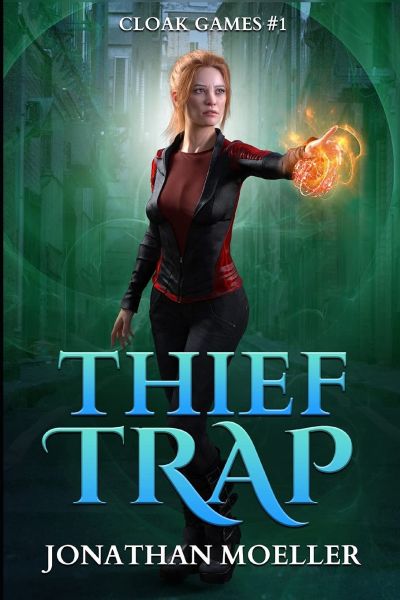 I previously reviewed Moeller’s
 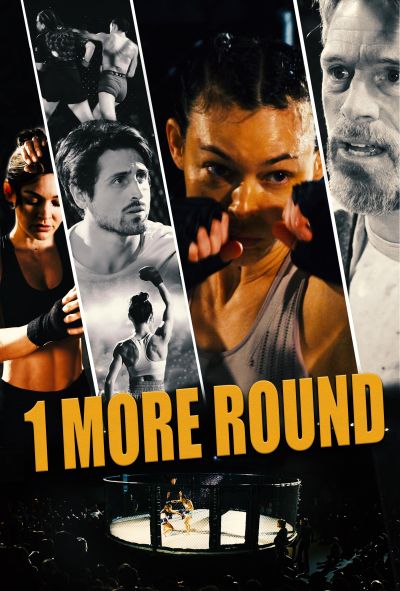 Reading the comments on YouTube, there’s an awful lot of “inspirational” and “motivational” to be found there, and these are not wrong. This is as template-based a sports movie as you can imagine, to the point that it feels almost more like a Victorian melodrama, in terms of its saintly heroine, fighting (literally) for what she believes in. This sort of thing would normally be completely ludicrous, and isn’t helped by James Schafer’s soundtrack, which leaves no orchestral cliché uncued. However… I found a genuine sincerity on display here, helped by a very good performance from Stone, and this really sells the sub-Hallmark conceit at its core. Her character believes, so you do.
 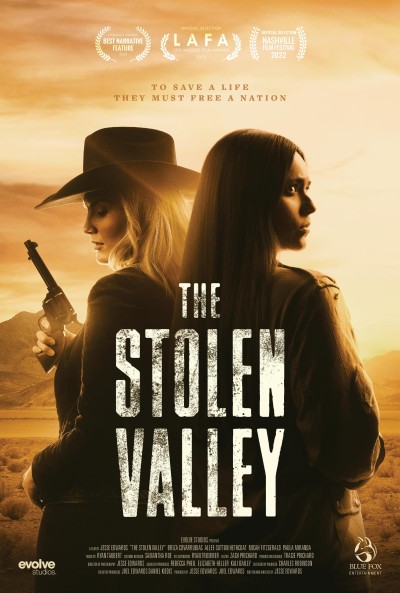 This feels like a modern Western. I think it was shot up on the borders of Utah and Arizona, since I recognized scenes shot at the Buckskin Tavern, in that area. While contemporary, with relatively minor tweaks, it could easily take place a century or more ago, back when robber land barons were a thing in the Old West. Lupe (Covarrubias) is in desperate straits, with her mother Adamina (Miranda) in need of money to pay for medical treatment she can’t afford. There’s another shock: the father, Carl (Fitzgerald), who Lupe long believed dead, is actually alive, and might be the last chance of getting the necessary funds. So she decides to make the journey to see him.
 Written, directed by, and starring husband and wife team Sam and Johnna Hodge, this is the kind of film it would be easy to deride as poverty-row garbage from the bottom drawer. There’s precious little plot, some of the performances are painfully amateur, and it seems to exist mostly as a show-reel for spraying around corn syrup with red food colouring in it. And yet… If Chris and I made a movie – something we have discussed – it might well end up being not too dissimilar to this. On the other hand, if we had a spare $55,000 lying around – the budget here, according to the IMDb – we’d probably go on a nice holiday instead.