




Literary rating: ★★★½
Kick-butt quotient: ☆☆
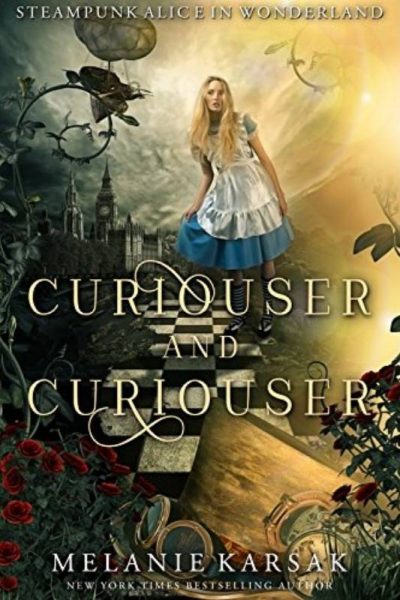 If you thought “Alice in Wonderland was okay, but it really needed more air-ships,” then this book is for you. It’s a steampunk take on Lewis Carroll’s classic tale, set in an alternate universe version of Victorian London. Specifically, 1851, when the renowned Great Exhibition took place in Hyde Park. Though it doesn’t actually feel particularly “alternate”; this angle lives mostly in its trappings, such as people using air-ships to get around, or clockwork cats, rather than in elements necessary to the plot. But that’s okay, because at its core, the story is strong enough to stand on its own.
The heroine is Alice Lewis, an orphan who, along with her sister Bess, was rescued from the workhouse and brought up by the Jabberwocky, one of the leaders of London’s underworld. She fell in love with William, another of the Jabberwocky’s employees, but Alice walked away from both the criminal life and William, after being morally unable to handle the actions it required from her. But several years later, she gets dragged back in, and has to re-unite with William on a job to steal the famous (and cursed) diamond, the Koh-i-Noor, which belongs to Queen Victoria, from the Great Exhibition. It’s the only way William can pay off a debt to the occultist known as the “Queen of Hearts,” who intends to use the Koh-i-Noor in a ritual to make her immortal. And that’s far from the creepiest thing about the Queen, since her role-model is Countess Bathory.
Karsak does particularly well with her world-building, to the extent that this feels like an established universe. The timeline bounces back and forth, between the present and the various incidents which brought Alice to where she is. It’s an approach which could easily be disruptive, but I felt this was admirably pulled off, and balanced nicely. I was, however, a bit disappointed that much of the book seems to be directed towards a final-act heist, to which I was quite looking forward. Only, the plot makes a left-turn in the later stages, which renders the heist superfluous. This sends the book onto somewhat thin ice in terms of believability on a couple of aspects, and an alternate method of resolution might have worked better.
All told though, this is a fun insight into a world that is both familiar and strange, with both heroine and villainess being strongly characterized and memorable. You probably need to be at least somewhat aware of the works of Lewis Carroll – otherwise some of the terms might seem more like unpleasant STDs (“I caught a bad dose of Bandersnatch”). But Alice in Wonderland is deeply enough ingrained into the collective unconscious that this isn’t likely a major issue for most potential readers. I look forward to the Guillermo del Toro adaptation in due course. Well, we can dream, can’t we?
Author: Melanie Karsak
Publisher: Clockpunk Press, available through Amazon, both as a paperback and an e-book
1 of 4 in the Steampunk Fairy Tales series.
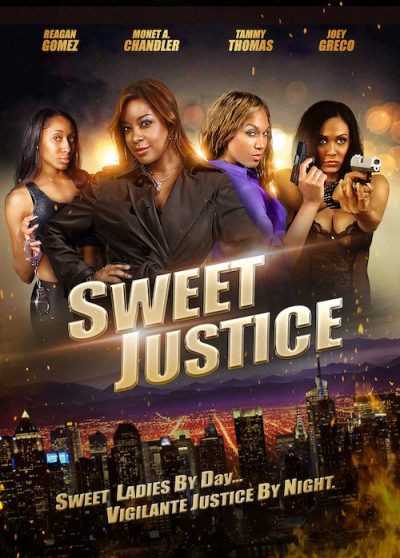 Four women run a charitable agency in Texas, helping single mothers track down and obtain child support payments from deadbeat dads. However, they don’t limit themselves to the simple serving of legal papers. The women adopt a more… hands-on approach, shall we say, first luring their targets in with the promise of sex, then threatening them at gunpoint, to make sure they pay up. For obvious reasons, the cops soon take interest in this string of unusual armed robberies. Meanwhile, the city’s white mayor, is dealing with a domestic crisis of her own, thanks to her daughter having had a child by (gasp!) a black man.
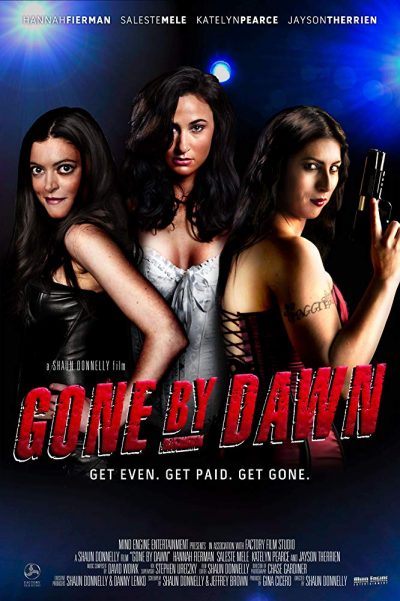 I decided I might as well combine these two into a single review. Having watched them back-to-back, even though made and set three years apart, they felt very much like the continuation of a single story about the same characters. The main one is Roxy (Mele), who is a dancer at a Wisconsin strip-club run by the sleazy Stag (Therrien), mostly as a money-laundering front for local organized crime. When he and his pal rape an employee, Alana (Pearce), Roxy along with the victim and another dancer, Crystal (Fierman), decide to take revenge by robbing Stag. That means getting into the safe in his office where the money is, and he’s not exactly going to give up the combination freely. Still, nothing that a piano-wire garrotte round the testicles can’t solve, surely? Except, as usual in this genre, the heist doesn’t go smoothly. Stag’s office quickly begins to resemble a mortuary, as unwelcome guests need to be handled.
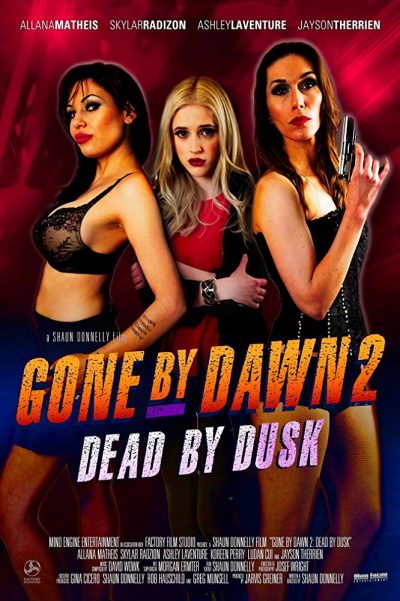 I didn’t think the sequel worked as well. While Roxy returns, she has been recast, being now played by Matheis – I’m not sure what happened to Mele. Still, I did laugh when one supporting character greets her with, “You look different!” Oddly, while the first film started with Roxy skipping town, the second sees her back, working at the same venue where she was involved in a multiple homicide. I know strippers are renowned for making poor decisions, but still… It turns out, having absconded with nine hundred grand of the mob’s money isn’t a good idea. They want it back, and to this end, have sent a trio of hired killers, named the Three Bears by Roxy. They’re prepared to do anything, up to and including both kidnapping and murder. But Roxy, along with Jesse (Radzion), a friend of Alana’s, and another dancer, Alura (Laventure), plots to turn the tables on the Three Bears, by robbing their boss.
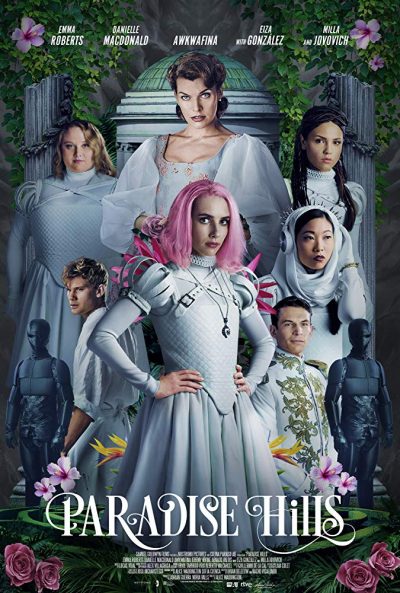 And there I was, thinking Maleficent: Mistress of Evil would be the prettiest picture I saw in all of 2020. There’s a new champion, and whoever assembled the look of this one should have been honoured at the Oscars. Shot in Barcelona and the Canary Islands, it beats Maleficent by almost entirely avoiding CGI, in lieu of stunning locations such as the former residence of sculptor Xavier Corberó: “a mazelike estate constructed from cement that features nine connected structures and 300 arches.” That quote comes from a
 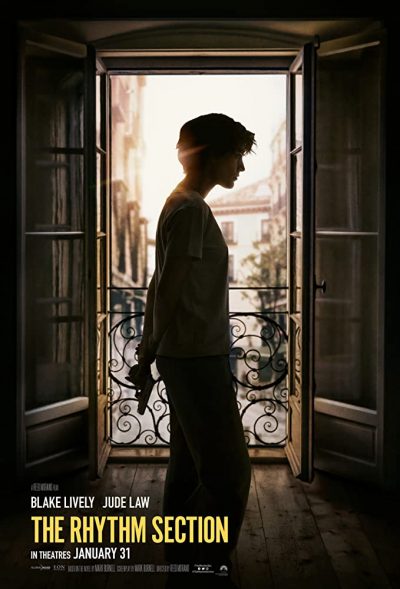 The action-heroine genre has seen its share of high-profile flops in the past. But this long-delayed entry, originally due out in February 2019, is among the worst, setting a record for the lowest ever opening at the North American box-office for a wide release. It took in only $2.8 million from 3,049 theaters when it opened in January, and ended with a worldwide gross below $6 million, against a budget of $50 million. While smaller in scale, that’s a
 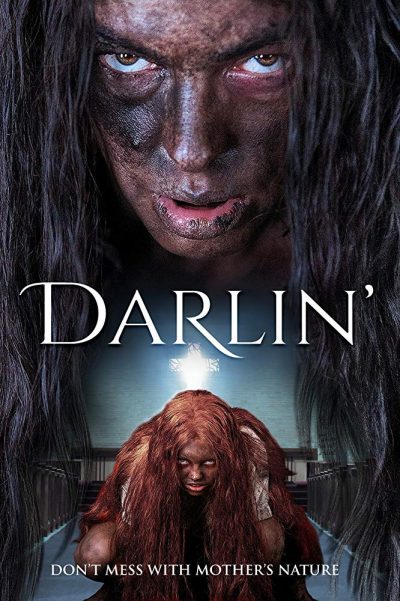 This strange little film probably makes more sense if you’ve seen The Woman, in which a feral cannibalistic woman, played by McIntosh, was captured and kept in the basement of a dysfunctional family. While this features McIntosh in the same role, it does work as a standalone film: its predecessor may help explain some of the background. Here, the woman drops off her equally uncivilized teenage daughter (Canny) at a hospital. Unsure of quite how such an unusual child should be handled, Darlin’ – called that, because of a bracelet spelling that out which she is wearing – is handed over to the Catholic church.
 Even if the film doesn’t quite live up to the title and poster, it turned out to be better than I expected… from the title and poster, to be honest. It has been my experience that, the more lurid the advertising, the more disappointed I’m likely to be. Films like this often don’t just fail to deliver on what they promise, they also struggle with basic aspects of film-making, like plot and characterization, providing a double-whammy of failure. While the former is true here (no-one, at any point, is
 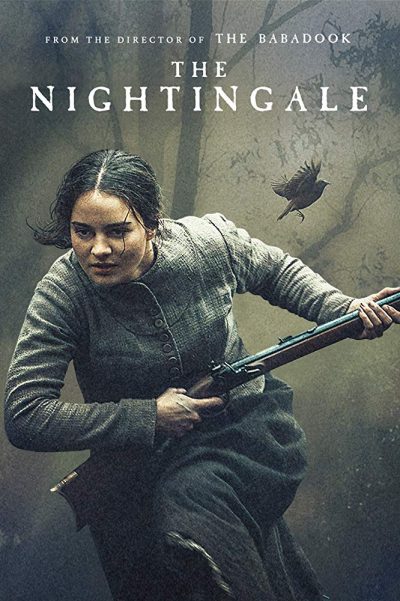 History is largely filled with people being unpleasant to each other, usually for belonging to a different race, religion, nationality or even species [if you want to go back to the Cro-Magnons pushing out the Neanderthals about 40,000 years ago]. It’s sad and unfortunate, but it’s not something for which I feel personal responsibility – not least because it tends to work in both directions. My ancestors may have been part of the British Empire who, for example, invented the concentration camp in the Boer War. But my ancestors were also subject to the ethnic cleansing of the Highland Clearances, forced out to make way for sheep. Attempts to make me feel guilty for the sins of my forefathers are thus largely doomed to fail.
 ★★
★★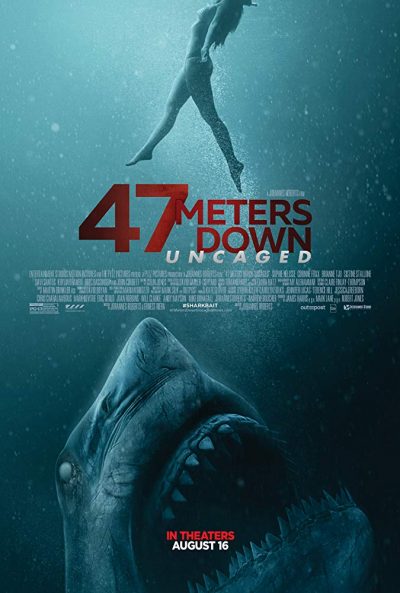 Director Roberts returns for a sequel to