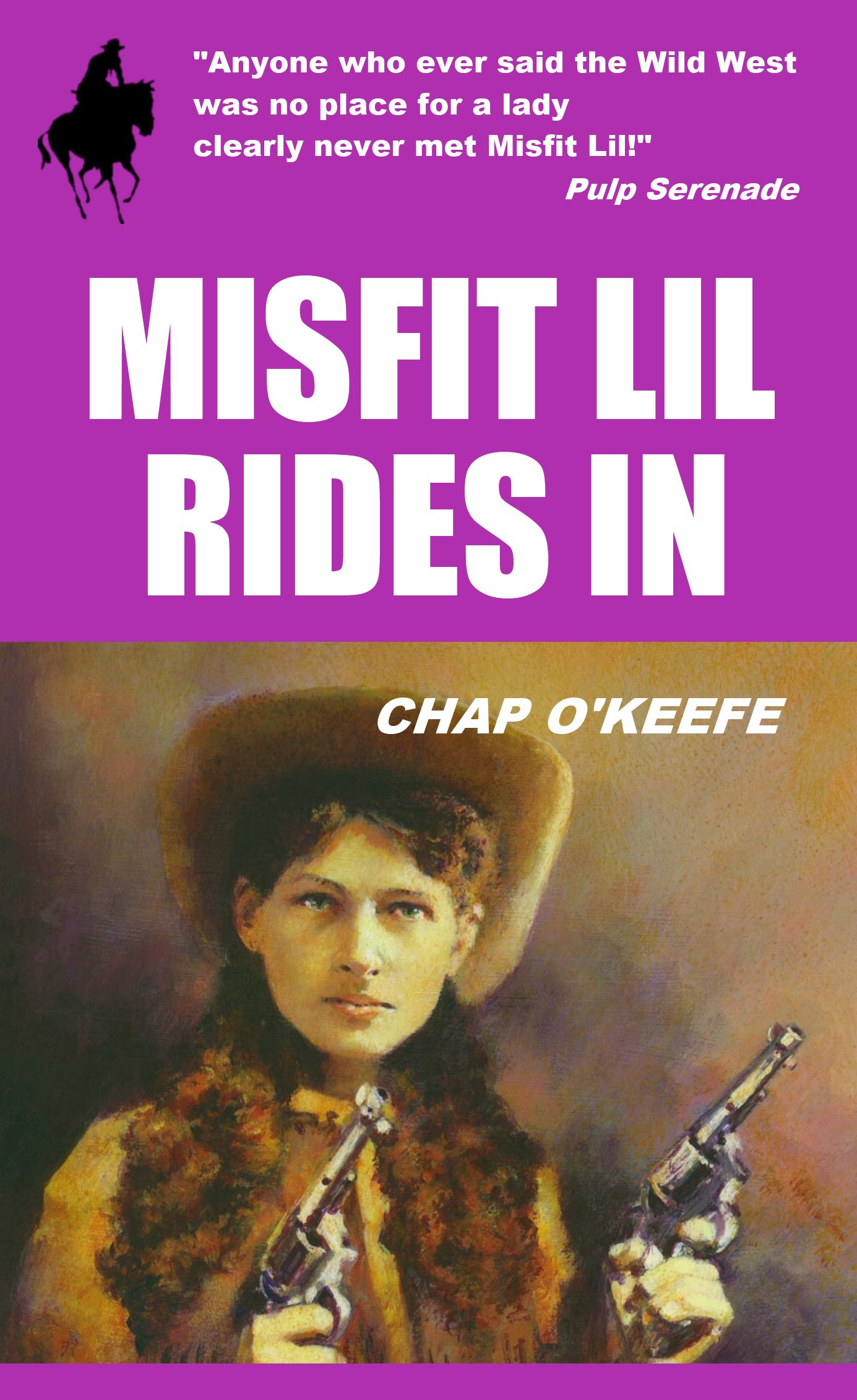
Misfit Lil Rides In: Literary rating: ★★★, Kick-butt quotient: ☆☆
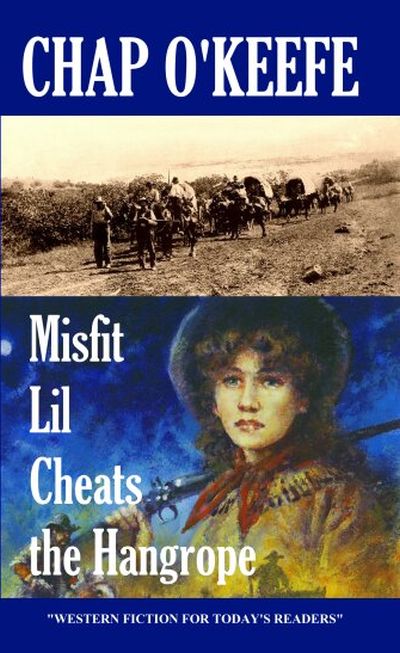
Misfit Lil Cheats the Hangrope: Literary rating: ★★★★, Kick-butt quotient: ☆☆½
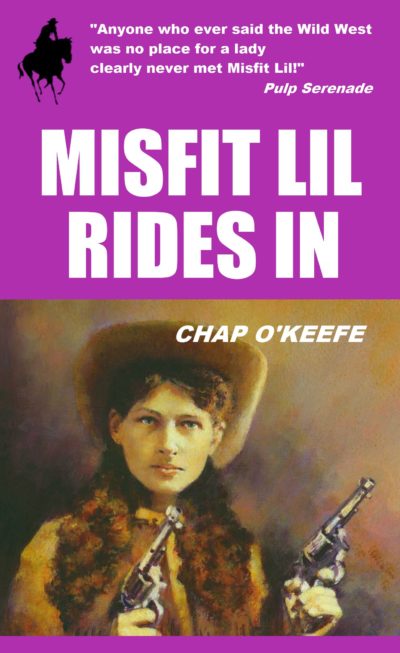 The Western is typically among the most macho of genres, and this applies to the world of pulp fiction as much as to movies. There are exceptions: Werner has covered quite a few in the past, such as The Complete Adventures of Senorita Scorpion, and I recently dipped my toe in the genre, with the first book of Chrissy Wissler’s Cowboy Cat series, Women’s Justice. While set in the past, that did have a contemporary feel to it: Cat felt like a 21st-century heroine in an antiquated world. That seems significantly less the case for Miss Lilian Goodnight, despite her nickname of “Misfit Lil”. These two stories feel like a throwback to the golden age of pulp. There is no obvious agenda beyond entertaining the reader, which is almost refreshing. They’re quick, uncomplex, and occasionally slightly disreputable reads. Nothing wrong with these elements, I should stress.
Lil is the daughter of cattle rancher Ben Goodnight, who has resisted all attempts by her father, a widower, to turn her into a proper young lady. In particular, he sent her to a Boston boarding school; rather than uplifting Lillian, she succeeded in corrupting the other pupils, and we sent home in disgrace, earning her nickname. Since then, she has been riding free, helping out on the ranch, with occasional stunts that bring her into conflict with the local authority, such as showing off her pistol marksmanship on the local Main Street. “Once she hammered five four-inch nails halfways into a boardwalk post, then drove each of ’em in with a bullet from twenty paces.” The local sheriff was unimpressed, locking her up overnight, until her long-suffering father bailed her out. But Lil gained another nickname: “Princess o’ Pistoleers”.
Beyond the heroine, the players do overlap, in particular, a co-lead in both books is Jackson Farraday, local scout and guide, who takes on commissions both for the army and for civilians seeking to cross the dangerous territory. She has a crush on him, though acknowledges its futility, with him being twice her age (doing the math based off this and other information, it makes Lil about twenty, and Jackson almost forty), and he similarly has no interest in her for romantic purposes. But he certainly respects her skills and bravery, and they have no hesitation in helping each other out when needed. Which is the case in both of these novels, with Farraday being falsely accused of murder in each.
The first, Misfit Lil Rides In, sees him framed for killing the wife of store owner Axel Boorman. While Axel was actually the killer, in a fit of jealous rage, with the help of the local law, Farraday is blamed, and a posse sent after him. With Lil’s aid, the posse is fended off, though she is arrested, and Jackson believed to have fallen to his doom. He is actually still alive, but ends up captured by the local Apaches, so both are in serious trouble. Even after Jackson escapes, he falls foul of an Army officer with a grudge against him, and ends up behind bars too. Lil needs to free herself, break her friend out, then find some way of proving the truth – not least about Boorman’s scheme to sell guns to the Indians – and convince the authorities to take action.
 I think my major surprise was how relatively even it felt like the book was split between Jackson and Lil. While Jackson isn’t a bad character, he is fairly generic as Western heroes go. I was considerably more interested in Lil, and every page that detailed her colleague’s adventures felt like it was wasted, especially as the whole book is under two hundred pages. I almost found myself speed-reading the Faraday heavy sections, to get back to what Lil was doing. Outside of the gun-battle against the posse, that was largely using her brain rather than her pistols. But of particular note here is an author’s afterword, Heroines of the Wilder West, in which O’Keefe discusses some of Lil’s predecessors and inspirations, such as Hurricane Nell and Denver Doll. I sense a rabbit-hole for future exploration, and may have to watch Along Came Jones as well, for its proto-heroine.
However, any issues are well addressed in Misfit Lil Cheats the Hangrope; it seems O’Keefe has grown more comfortable with his characters by this, the most recent entry. While Faraday plays a significant role here, Lil feels more the focus, and the story flows around her in a fluid way. It begins when Lil helps rescue a wagon train of settlers headed west, who make an ill-informed decision to try and cross the mountains as the weather comes down. She gets Jackson a job as co-guide on the train, but the previous sole guide, Luke Reiner, is far from happy about it. When the corpse of a young, female settler turns up drowned in a creek, suspicion falls on Farraday, because Lil isn’t the only woman to find him attractive. It’s up to her to find the necessary proof that will exonerate her friend, before Reiner succeeds in whipping up a lynch mob.
There’s a good sense of escalation here, and it’s a solid page-turner, with each incident providing a natural progression into the next. It works both as a Western and as a whodunnit mystery, with the killer’s identity shrouded in uncertainty. As for the cause of death… Well, that might be one of those “slightly disreputable” elements mentioned earlier, even if there are worse ways to go, it has to be said! Again though, Lil seems to be almost loathe to use her shooting skills. To me, the point of guns is that they are a great equalizer, allowing the weak (or “weaker sex,” to use a slightly pejorative term!) to stand up against the strong. But over both volumes, I’m not sure there was any real demonstration of the sure-shot abilities described early in the first book.
This is a relatively minor complaint, however. These may be stories, rather than Great Literature; yet there’s an absolute lack of apparent pretension to the approach, which I appreciated. If the intention of the author was, as discussed above, simply to provide a good yarn that entertains the reader, I’d say they accomplish that mission.
Author: Chap O’Keefe
Publisher: Amazon Digital Services, available through Amazon, both as a paperback and an e-book
Books 1 and 7 in the Misfit Lil series.
I was provided copies of both volumes, in exchange for an honest review.




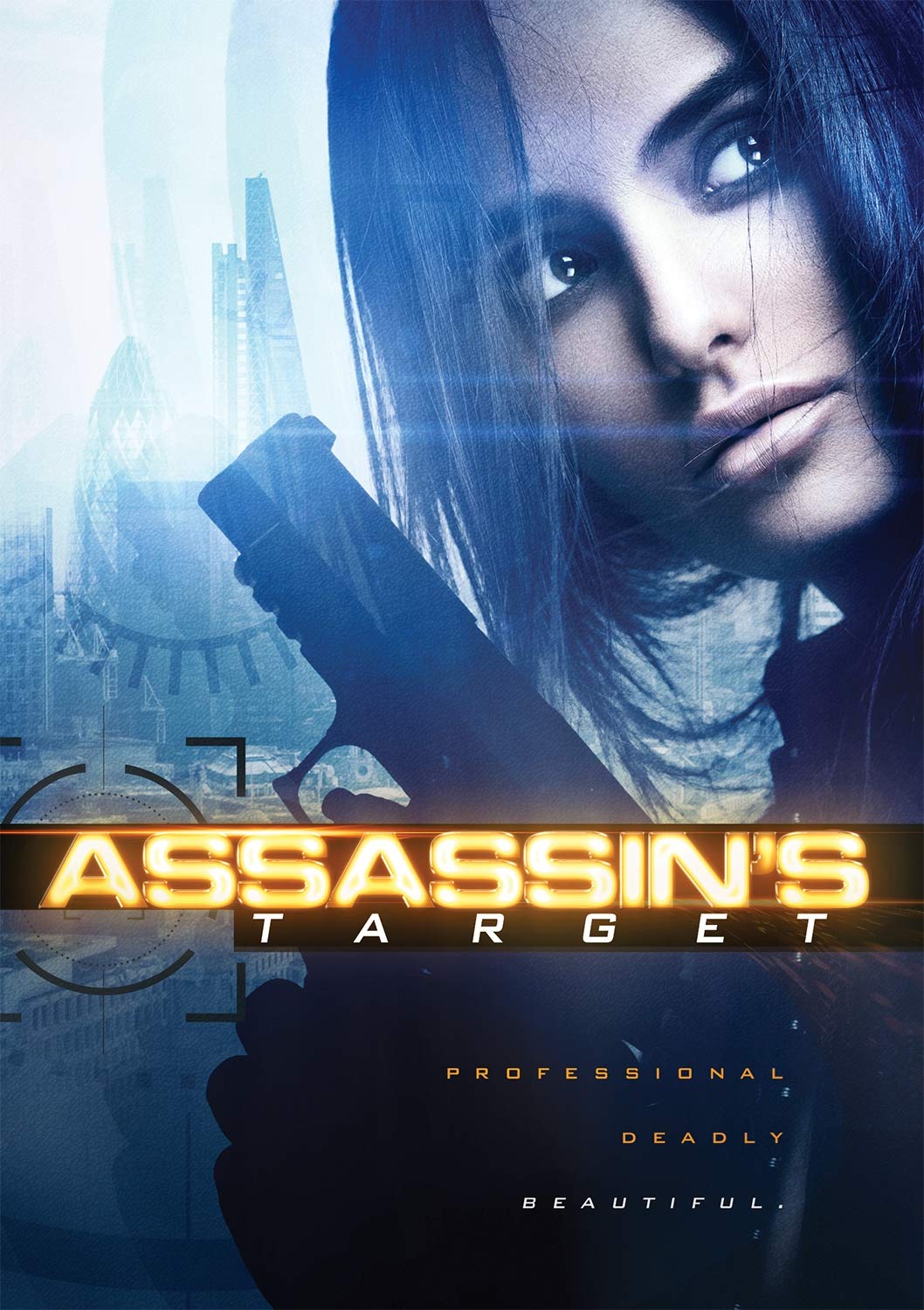
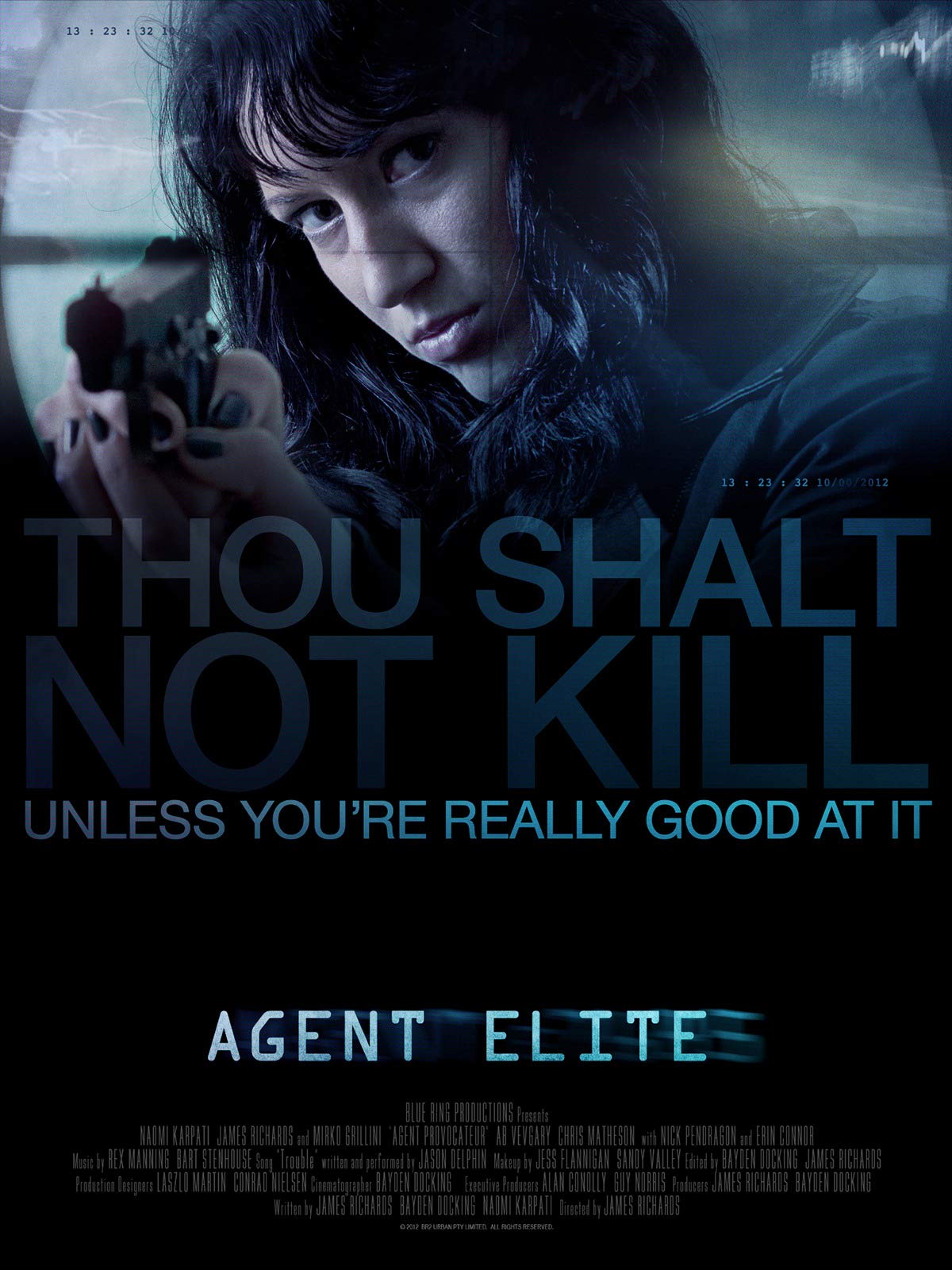 When she was very young, the parents of Alex (Karpati) were killed by Lester Casey (Richards), on the orders of the shadowy organization for whom both he and her father worked. She was adopted by them, and brought up, trained in a variety of lethal arts, to become a perfect weapon. However, her mentor, Montgomery Lomax (Grillini), also instilled in her an unwelcome sense of right and wrong, and when he dies, she goes on the run from the organization. After defeating the agents sent to take her out, they use that moral compass to entrap Alex, and bring her back under their control. Brainwashing ensues. Whether it will stick, and the consequences if it doesn’t, are to be determined.