



★★★
“Christmas shopping can be hell”
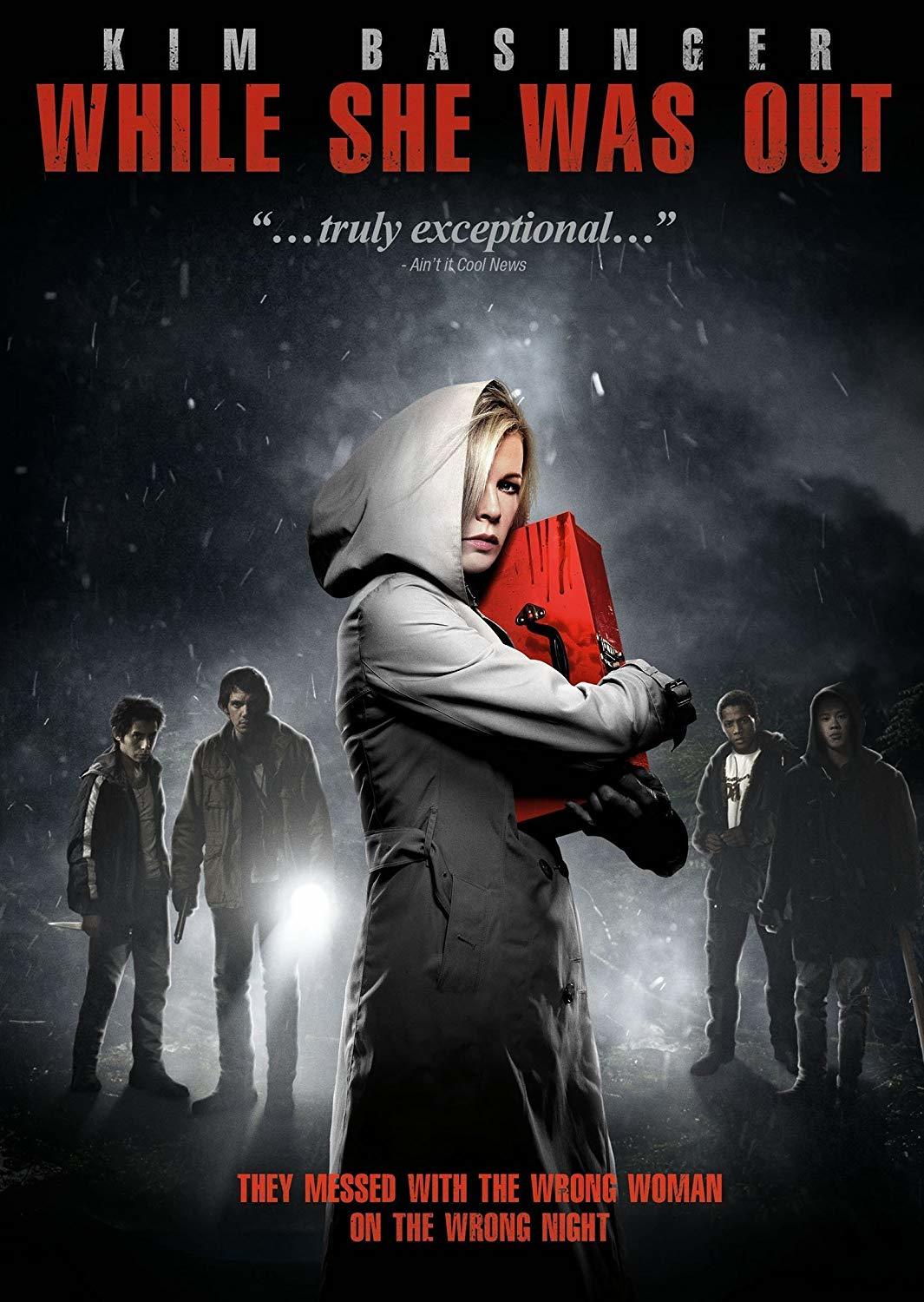 Della (Basinger) is stuck in a marriage with her abusive husband (Sheffer). But she deals with it, for the sake of their two children, whom she adores. It’s Christmas Eve, and she escapes to the mall for a little retail therapy. The lot there is packed, and she leaves a passive-aggressive note on the windscreen of a particularly selfish parker. Big mistake. For it belongs to Chuckie (Haas) and his young group of multiracial thugs (one black, one Hispanic and one Asian, so that’s nice…). The subsequent altercation leads to the death of a mall cop, with Della as the only witness. So they pursue her, first to a construction site, then into the nearby woods, intent on making sure she can’t testify against them.
It’s kinda daft, and that’s putting it mildly. Takes a bit of time to get going too, with scenes of Della mall-ratting, and suffering microaggresions like a barista spelling her name wrong. Eventually, it gets to the violence, and things pick up, even if the silliness persists. Most obviously, Della lugging a big, red tool-box with her, shown in the poster, while she runs around the forest. It is, admittedly, a tool-box necessary to the plot, not least for its part in an energetic and impressive, “tyre-iron repeatedly to the face” sequence. This is just one of the ways in which Della dispatches the gang members, although the first is more the victim of an unfortunate accident than enemy action.
The loopiness reaches its peak at the end, when the face-off between Della and the last gang member goes in a direction you probably would not have expected. Let’s leave it at that. But overall, this is an enjoyable enough slice of nonsense, with a story which is all the better for being extremely simple. Though it is easy enough to think of ways in which it could be improved though. For example, give Della some kind of back story to explain her ability to best young men in hand-to-hand combat. The story makes mention of her classes in Pilates, Spanish and mechanics; would it be so hard to have thrown in a karate class as well?
Probably the major potential area for improvement is on the villains’ side. Haas has a somewhat creepy vibe, however it’s one better suited to a lone psycho than a gang leader. Some of the dialogue between the members is also risible, as if writer/director Montford had no experience she could use to relate to her characters. They come off as largely unthreatening, more like kids playing dress-up than actual psychos, and the relative ease with which Della can counter them doesn’t help. But Basinger is good value in her role, and I will confess to nodding in appreciation at the final scene, even if it’s something we should probably have seen coming. I was entertained adequately by this, and that’s all I wanted.
Dir: Susan Montford
Star: Kim Basinger, Lukas Haas, Leonard Wu, Craig Sheffer
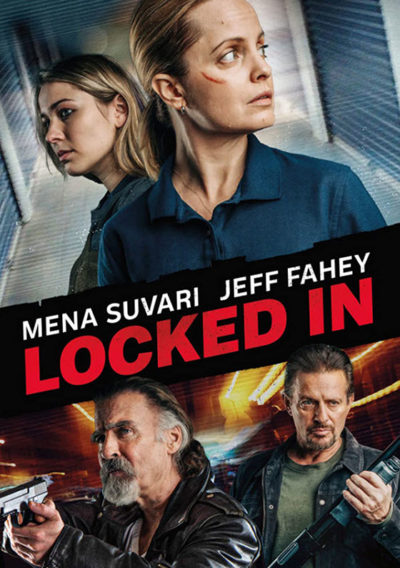 I am old enough to remember when Suvari was playing jailbait in American Beauty. It is therefore a bit disturbing to find her here, taking on the role of the mother of a seventeen-year-old daughter. Where has the time gone? But then, it has now been approaching 23 years since Beauty came out. This realization is probably more chilling than anything this technically competent, but almost entirely lacklustre thriller is able to deliver. It starts off with an interesting premise, and even has some not commonly-seen elements in its heroine. But the longer this goes on, the more it feels rote and by the numbers, without enough to differentiate it from other, better entries in the (more or less) Die Hard knock-off sub-genre.
 Firstly, I’m not quite sure whether this is a movie or not. The IMDb lists it with a running time of 98 minutes, but Tubi had it as 4 x 25-minute episodes. I’m guessing the former is just a compilation of the latter, it works about the same either way. The title translates as “The way of the empty hand”, and the emphasis here is very much on the first part: the journey. The heroine is Nicki Wright (G. Niebauer), who has barely got out of rehab for alcohol problems, when she gets involved in a brawl, after seeing a woman being assaulted by a man. Her mother had had enough of dealing with Nicki’s taciturn BS, and dumps her on her father, Cliff (D. Niebauer).
 This likely suffered, having been watched the day after Boyka: Unleashed which, while not an action heroine film by any stretch of the imagination, is a near-perfect demonstration of how brutal, no-holds barred fights
  Bea is living a quiet life, far out in the Wyoming countryside, with her husband Justin and young son, Bear. However, this isolation is an entirely deliberate choice in order to escape from her past. For in her previous life, she was Phoenix Romano, an enforcer and hit-woman for her mob boss father. After deciding she’d had enough of that life, she liberated several millions of his money, and vanished, hoping never to be found again. Naturally, things don’t quite work out like that. Justin and Bear are killed in a car crash, but Phoenix has reason to suspect it wasn’t an accident, and that instead her past life is catching up with her. But why did whoever was responsible for that go after her family, and leave her alive?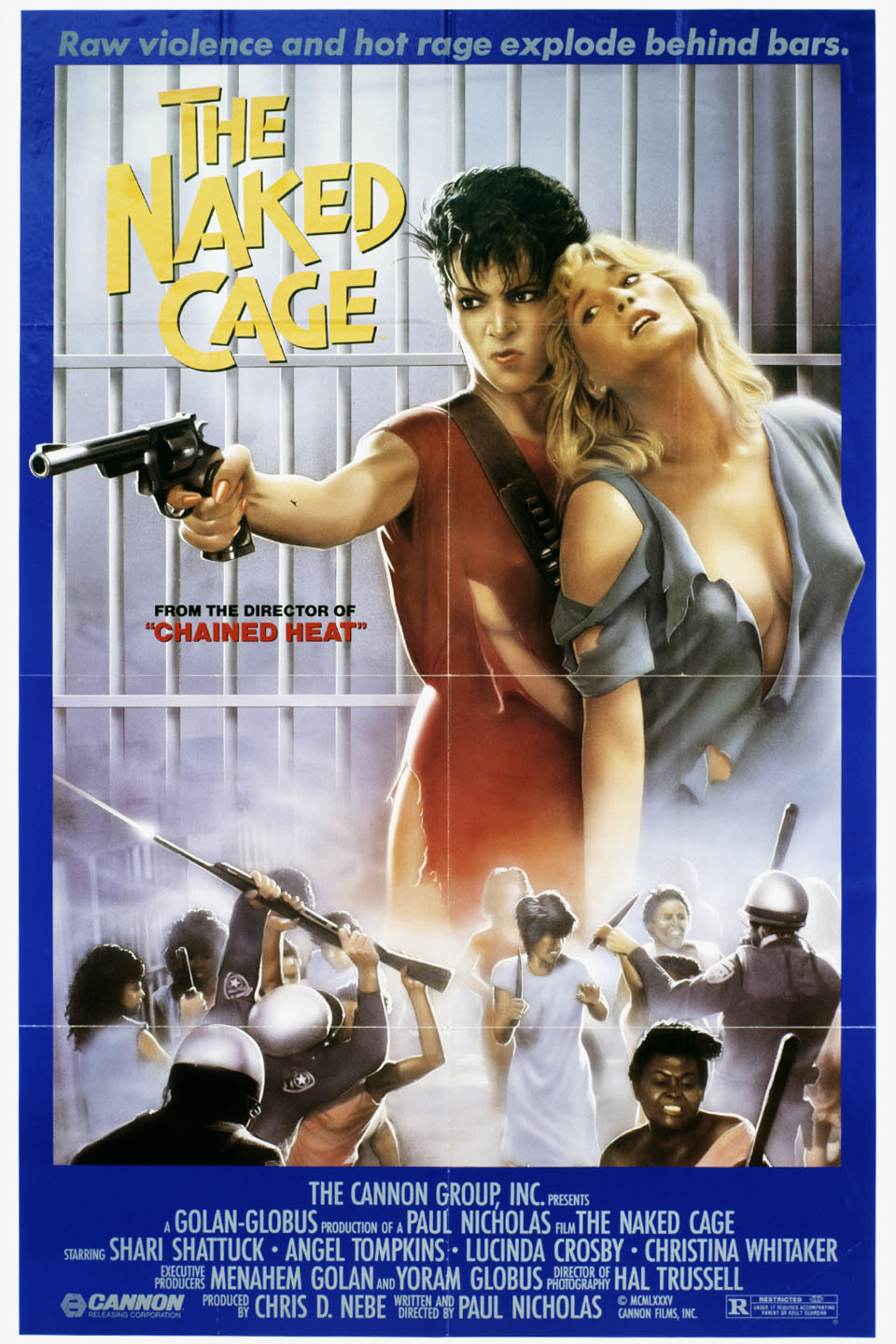
 Yes, in some way, this is probably among the closest the West has come to reproducing the DGAF attitude of Japanese entries like the
 This is one of those cases where you can see what a film is trying to do. It just isn’t very good at doing it. In this case, the central character is Gina (Killips), who works as a collector of debts for the mysterious and reclusive “Max”. This is for reasons that become clear towards the end – yet, like a lot else in the film, it doesn’t actually prove to be of much significance. Her latest job involves locating a very large sum of money which went missing from his organization. Suspicion falls on Myles (Orille), and Gina is tasked with finding out whether he was indeed responsible and if so, what he did with the loot. To this end, Gina inserts herself into Myles’s life and comes under increasing pressure from her boss, Simon (Rumley), to get results for Max. But Gina is increasingly disenchanted with her profession, and also increasingly convinced of Myles’s innocence.
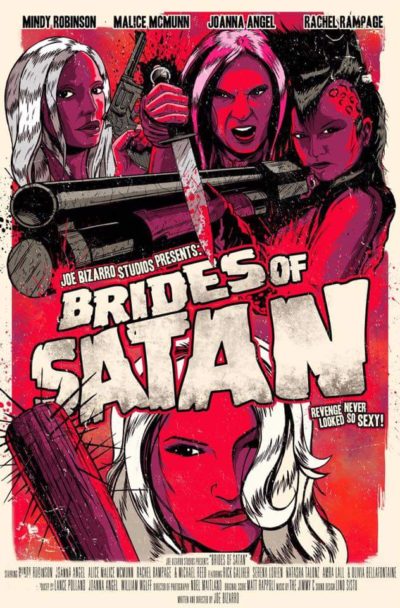 It’s probably significant that the opening credits of the film talk about the bands and the whiskey company involved. Any mention of the actual actresses taking part, is relegated to a secondary sequence, 15 minutes into the film. That seems to indicate where the priorities lie: if you told me the whole thing was made up to get freebies and as a showcase for the director’s mates, I’d have no problem believing you. Another warning sign is the way every post-production visual trick you can imagine is thrown in there; this often indicates an attempt to paper over flaws in other areas. There’s no doubt the film is certainly trying. However, Bizarro simply tries far too hard, and it’s not long before it becomes simply trying on the viewer instead.