



★★½
“Sisters, doing it for themselves.”
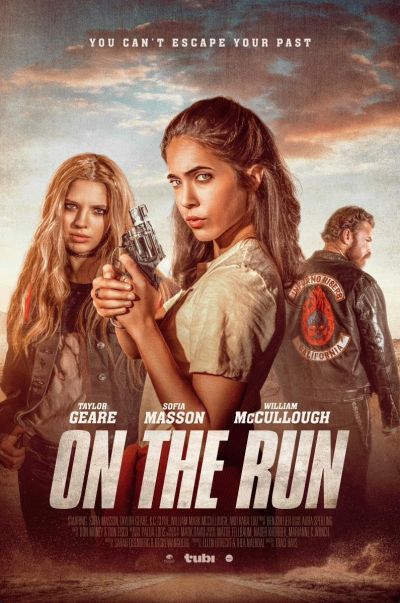 I guess it’s equality at work. This film, written by, starring and directed by women, proves that they are every bit as capable as men… Of knocking out vaguely competent, forgettable, low-to-mid tier action films, anyway. #GirlBoss This is another in the ongoing series of Tubi Originals I’ve reviewed here, including Calamity Jane, Kiss of Death, and The Vigilante. There’s definitely a “Tubi type” at play, with content which tends largely to go down tried and trusted routes, rather than pushing boundaries. It’s likely somewhat unfair – though only somewhat – to describe them as tending to be slightly more edgy versions of Lifetime content, but… hey, at least I’m not comparing them to Hallmark movies.
This is another which offers passable entertainment, yet contains little that would ever merit a rewatch. It begins with a falling out between biker friends Vince (McCullough) and Rick (Clyde) over a scheme to steal drugs from a rival gang. Fifteen years later, Vince gets out of jail, and makes a beeline for revenge. For Rick testified against him, entered witness protection, abandoned his road life, and is happily married to Laurie, with two teenage daughters, of sharply differing personalities. “I’m gonna be a teacher like mom,” proclaims good girl Kayla (Masson), while bad girl Paige (Geare) is doing an unconvincing impression of playing guitar in her room, and wants to run off from Utah to New York to be in a band.
Such things take a back seat after Vince shows up and kills mom. Rick takes his daughters on the road, but the pursuit is inexorable: the tracking software her parents installed on Paige’s phone backfires there. We then discover that Vince’s goals are not limited strictly to payback, because – and this is so obvious it’s not really a spoiler – Paige is his daughter, and he wants a family re-union. Fortunately, “Aunt Steph” (Pamela Rose Rodriguez) is also on the case. For she is actually the US Marshal assigned to the family by the witness protection program, and likely represents the best chance at stopping Vince before he is able to split up the sisters and spirit Paige out of the country. Frankly, it’s as generic as the title, and only qualifies for inclusion here due to a somewhat rousing final twenty minutes.
The script is the main problem. I’m far from convinced the writers know how witness protection works, or law enforcement in general, e.g. Steph taking Kayla along with her to rescue Paige. The explanation for why she doesn’t call for backup is… unconvincing, and that’s being charitable. Similarly, Vince growls at Rick, “No one breaks the code,” but the ease with which Steph gets his location out of another biker would, um, suggest otherwise. There’s also gratuitous terminal illness, so maybe the Hallmark comparison wasn’t so far off. Fortunately, the performances aren’t bad. Masson and Geare are credible as siblings, and that goes a significant way to keep this just about watchable.
Dir: Traci Hays
Star: Sofia Masson, Taylor Geare, William Mark McCullough, K.C. Clyde
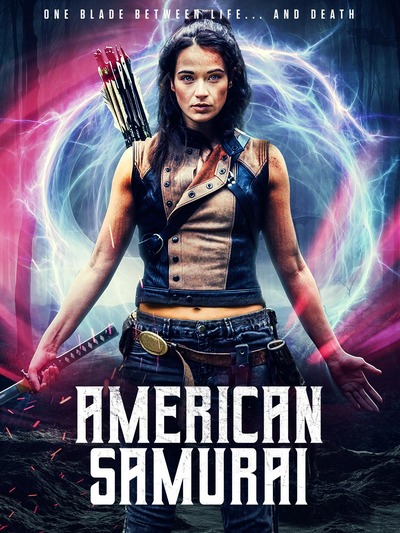 If I’d realized earlier this was by the director of the underwhelming, non-GWG film,
  There are reviews which are easy to write, because – good or bad – the subject generates a lot to talk about. This is not one of those. It’s a bland slice of semi-urban fantasy, which just… sits there, the literary equivalent of a bowl of vanilla pudding. It’s not good, nor is it bad enough to be memorable. It merely exists, remarkable mostly in how unremarkable it is. Put it this way, I finished it less than 24 hours ago, and I can’t even remember the heroine’s name, so little impression was made. Instead of writing, I find myself almost preferring the Star Trek musical episode Chris is watching next to me. And I don’t really like Star Trek. Or musical episodes.
 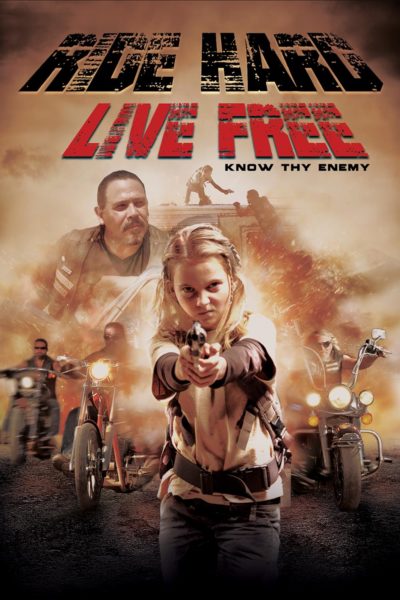 I was a little nervous on reading the IMDb trivia section: “Three motorcycle clubs participated as extras and offered technical advice.” If this sucked and I gave it a bad review, would I get a visit from a group of annoyed bikers, offering me ‘technical advice’ with a wrench? Turns out I needn’t have worried. While low-budget by Hollywood standards, it has some interesting ideas, and the execution is competent enough to pass muster. The events here take place after the collapse of the United States, when everywhere West of the Mississippi has basically been left to fend for itself. In this part of Nevada, that means two biker gangs, the Skoners and the Gypsies are fighting for control.
 Reaching the summit of Mount Everest once is a remarkable achievement, done by only a few thousand people in history, with hundreds having died in the attempt. But what about climbing the world’s highest peak on no less than
  I feel the need to start with the IMDb synopsis, because it explains things considerably better than the film. “The Story of two former military criminals turned special sleeper cell Soldiers of Fortune by a secret agency called “The Order of the Black Box”. While agent Sage Martinez is undercover as a low level drug dealer’s wife her more volatile and violent sister Jay Bird is A.W.O.L that’s until they get orders for a special mission (their last kill mission to buy their freedom).” This bears so marginal relationship to what I just watched, if it weren’t for the characters’ names matching, I’d be wondering if it came from a completely different film. Little beyond the names is recognizable.
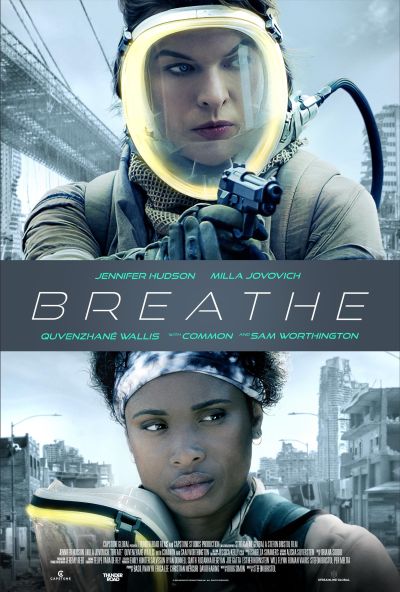 I only remembered about this when looking at our preview for last year, and realizing I’d not heard anything more about it. Turns out it was released on April 26th, to what was apparently “limited theatres,” the same day it hit on-demand. I must have missed the memo. So, here we are, and it’s very much a bit of a mixed bag. The scenario is interesting, if vague. Initial tension building is well-done, but the further it went on, the more it struggled to hold my interest. It’s a post-apocalyptic scenario, with the oxygen level of the atmosphere rapidly depleted to a lethally low percentage. This wiped out almost everyone – though where all the corpses went is one of many unanswered questions.
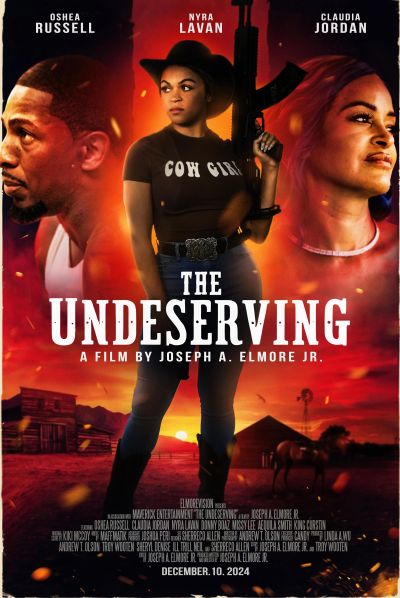 I’m slightly grading this on a curve, because this is likely the best of the low-budget modern blaxploitation movies I’ve seen, by some margin. By “normal” standards, that still falls some way short of Oscar-winning, with the limited resources still being obvious at some point. But compared to some of the other entries I’ve sat through, this is a palpable improvement, avoiding many of the worst cliches of the genre, in favor of a story which has had some attention given to it. It’s not an African-American knockoff of Scarface, like so many others, and does not entirely rely on a soundtrack of bad rap songs by the director’s pals. That alone puts it ahead of the pack.
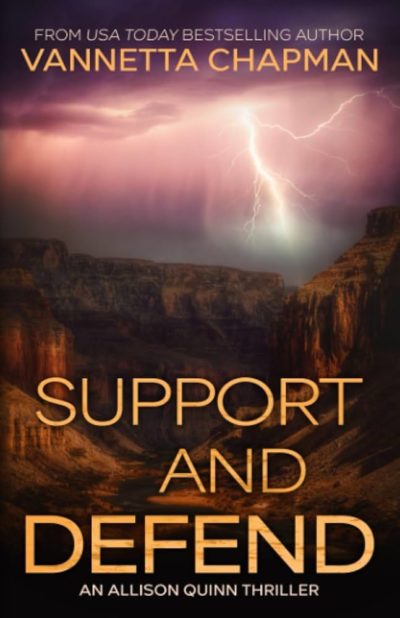 It’s funny. You wait ages for an action heroine novel set in Arizona, then two show up at once. Right on the heels of