 Welcome to our fifteenth annual round-up of girls with guns calendars, though the first three were solely on our late, not-so lamented forum which has gone to the Internet graveyard. But this will still be the twelfth one in the site archives, which is kinda impressive. Another year in the books, and at least a couple of decent theatrical GWG films in 2024, a contrast to 2023. But I am still living in Arizona. Plans to move to North Carolina kinda got squashed courtesy of Hurricane Helene, so we’re now looking at less meteorologically troubled areas. Possibly at altitude here in AZ. But as mentioned last year: “We’ll see…”
Not a huge amount to report. If anything, 2024 was even quieter than 2023, but I’m fine with that. I’m at the age where “Nobody I knew died this year” is about the best I can hope for! Had some trips to various places, including Florida. Watched a bunch of films: all told, probably somewhere north of four hundred. Endured another US presidential election in which I can’t vote. Renewed my green card. Failed to acquire a new kitten. Yay!
On the calendar front, numbers seem fairly stable, with almost all of the top entries returning (or, in a couple of cases, promising to return!). Last year, I had to miss Zahal Girls, who didn’t publish anything in time for this review, but I’m pleased to report they are back for 2025. That balances out the loss of Airsoft Pro. Prices seems to have stabilized too, after the sharp increase last year. Below, you’ll find prices (generally excluding shipping), sample images and links to purchase for all the calendars we could find. We’ll add more if we see them, feel free to email us if you know of any others.
TAC GIRLS
Amazon link – $19.95 [though you may be able to find some coupons on TacGirls.com]
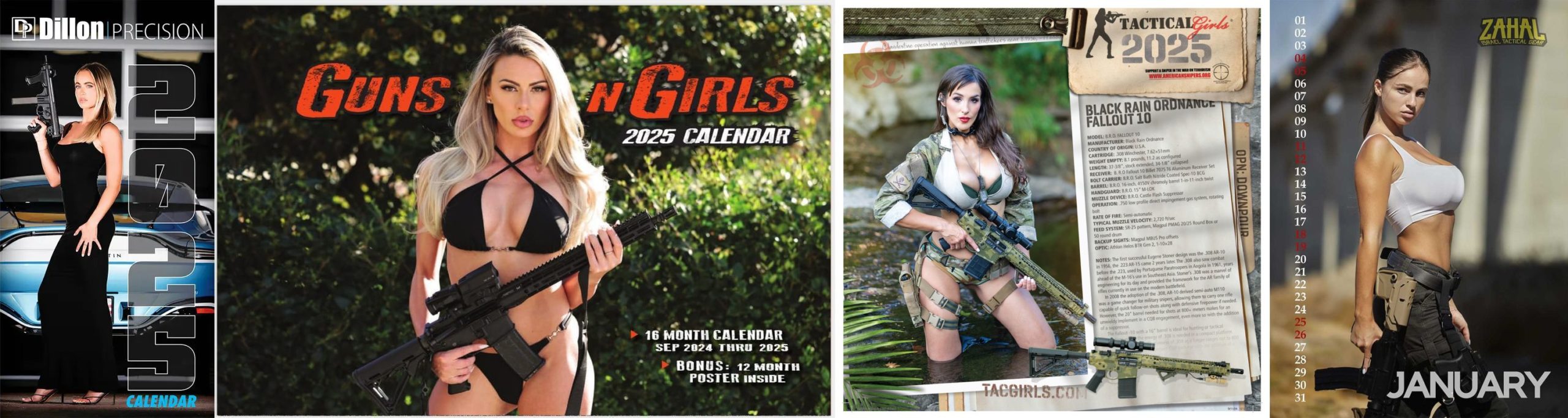
The Tactical Girls 2025 Bikini Gun Calendar has 13 months (1/25-1/26) of Beautiful Girls and Exotic Weaponry! Every Calendar includes a 12×24″ pull out mini-poster of cover model LaTasha – slides out, no perforations to tear or staples to pull. The 2025 Tactical Girls Calendar brings you 13 months of gorgeous pinup models with some of the world’s most exotic weaponry in realistic tactical settings. Includes the EAA Disruptor Pistol, an AR-10 and an AR Pistol from Black Rain Ordnance, an original M1 D Sniper Rifle from WWII / Korea and a Sig MPX.
You’ll find sexy zombie hunters, secret agents, army girls and tributes to your favorite female action movie heroines cradling AR-15 carbines, battle rifles, machine guns, tactical pistols, and sniper rifles, 12 x 24 inches open! Each month includes trivia dates from military, law enforcement and firearms history like The Battle of the Bulge, The Gunfight at the OK Corral and Samuel Colt’s birthday.

GUNS AND GIRLS
GunsAndGirlsCalendar.com – $15.47
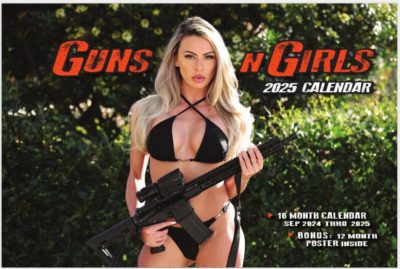
This 2025 wall calendar features stunning photographs of beautiful women posing with firearms. Deluxe Edition: Upgrade your calendar experience with the deluxe version, which includes a bonus free poster. Practical Design: This calendar is the perfect size for your home, garage or office wall. Monthly Layouts: Each month offers a new captivating image, along with ample space to write appointments and notes. Collectible Item: As a limited edition, this calendar is a must-have for fans of the ‘Guns & Girls’ series.
WEAPON OUTFITTERS
WeaponOutfitters.com – $39.69
Looks like they’re back to offering both a G- and R-rated version of the calendar this year (the cover of the former is below), as well as another R-rated once called “After Dark Nudes and NODS”, described as “a collection of nude and night vision themed photography.”

DILLON PRECISION
DillonPrecision.com – $19.99
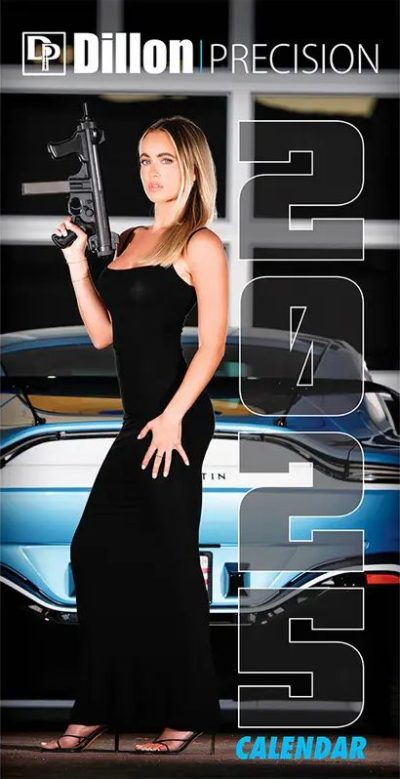
Weapons Outfitters, however, are positively voluble in describing their products, compared to Dillon Precision, who limit the information regarding their product to: “Dimensions: 13.5 X 26.5”. They clearly believe a picture is worth a thousand words…
ZAHAL GIRLS
zahal.org – $38.00
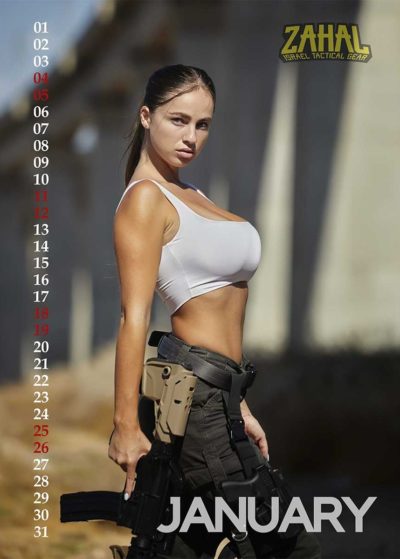
We are proud to present our new ZAHAL Girls Calendar which combines the best of both Former IDF Women and the best tactical gear. No gun bunnies! Only IDF veterans. Size is Approx A3. The Zahal Girls 2025 Calendar is a curated collection of images that honors the valor and commitment of female IDF veterans. Each page of the calendar unfolds with a powerful portrait that not only reflects the individuality and strength of these veterans but also embodies the ethos of the IDF. With an artistic blend of tactical aesthetics and evocative backdrops, the calendar tells a story of determination, unity, and pride, month by month. It serves as a tribute to the spirit of these remarkable women who have served their country with honor, offering inspiration and insight into the lives of those who protect and serve.
WILD DAKOTA GIRLS
wilddakotagirls.com – $18.00
As with last year, the cover doesn’t include any armament. But the promotional video for this year’s calendar definitely includes some firearms, so that works.

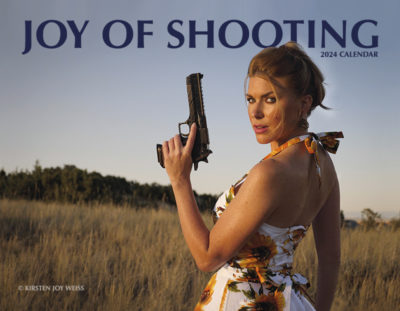
THE JOY OF SHOOTING
JoyOfShooting.com – $27.99, also available in an autographed edition.
This one is on uncertain territory, the link above says ‘2025 calendars coming soon!’, but given I’m writing this in the last week of November 2024… I hope it does survive, as this was definitely one of the more impressive items last year. Check out the link and keep your fingers crossed, I guess!
BULLETS AND BIKINIS
bikinicalendarstore.com – $17.99
12 Months in the Hottest Women in Shooting Sports. 11 x 17 When Opened

CCFR GUNNIE GIRL FUNDRAISING CALENDAR
firearmrights.ca – $19.99
This is another one which should perhaps be coming out between now and the end of the year. They had a call for models in April, and it looks like the shoot was in August, but as yet the website has not been updated with ordering information. I’ll leave this one up, linking to the store in general. Price, info and image below are all from the 2024 edition.
This annual fundraising project by the CCFR Women’s Program is critical to financing ladies range days across Canada. Beautiful colour photos highlight real members with the coolest guns! Includes promotional poster (17×22 in.) and instructions on how to register your calendar for free prizes! 8.5 x 11 in. landscape format. Limited quantities available.





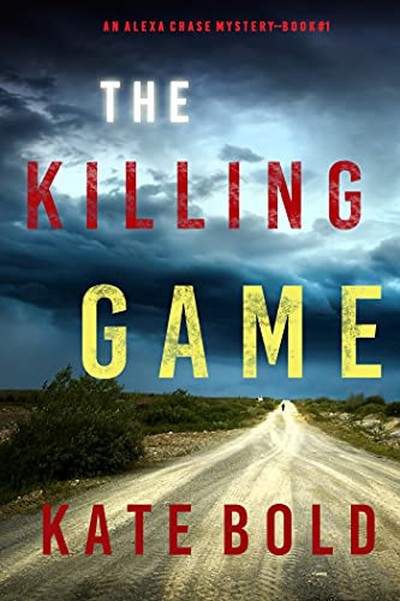 Bold is an incredibly prolific author, whose site lists eight separate series of novels, with a total of sixty-four books between them. The series are mostly named in the format, “<PROTAGONIST NAME> FBI thriller”, which does suggest a certain production-line quality to them. I wonder if, perhaps, they are each set in a different part of the country, in order to get the local market. By chance, this one is set around Arizona, where I live – I think it’s the first such action heroine novel I’ve read, and this did add a certain level of interest. “A Tempe reference! I’ve been there!” Hey, I’m easily pleased, what can I say?
 We’ve been keeping an eye on the career of writer-director Ojeda since
  She was badly injured in the crash, and ends up taking shelter in the small town of San Lucas, at the home of police officer Julio (Carvajal) and his family. He’s gathering evidence against his corrupt boss, Chief Santiago (Compte), who’s working with the cartel. When Julio is exposed, Santiago decides an example must be made of the informant, wiping out not just his employee, but his entire family. The only thing standing between them and annihilation is Dominique. After she successfully repels the initial assault, she has to fortify the family home, and prepare to fend off everything Santiago can throw at her. Which is a lot of cannon fodder. Most of it tactically inept, I must say.
 I liked the idea of this. A gang of five thieves, four women and Liev, give up the game after a robbery goes wrong and Liev gets arrested. He doesn’t give up his accomplices, who include his pregnant girlfriend Willa (Banus), and goes to jail. Six years later their daughter falls ill, and desperately needs matching tissue to repair her heart valve. The bad news: it has to be her father, who’s still in prison. Worse news: he’s in a coma, having been beaten up on the orders of the governor. Willa decides to put the band back together, along with an unlicensed surgeon, to break
  Well, after taking ten years to get from the third film to the first, the gap between first and second is
  El Jardinero
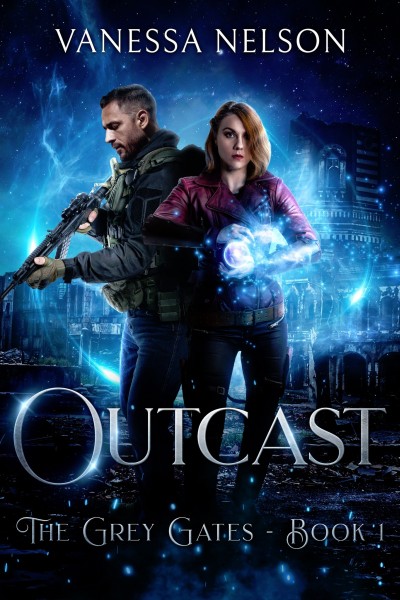 This is a solid slice of urban fantasy, taking place in a city surrounded on all sides by The Wild. This is more or less what it sounds like, a wilderness inhabited by a variety of monstrous creatures, most of which pose a significant threat to human life. They’re kept out of the city by magical barriers, but these are imperfect. When they fail, and the creatures enter the city, it’s up to the Marshals to hunt them down and contain the threat. One such is Max Ortis, though she only joined them after being kicked out of the Order, eight years previously.
 This one ends by informing us definitively that “Bang Bang Betty will return.” The statement may cause some confusion to viewers in this installment, because Bang Bang Betty is not present to begin with. No, this sequel to
  Well, that only took… twenty-one years. Back in 2003, I watched and reviewed
 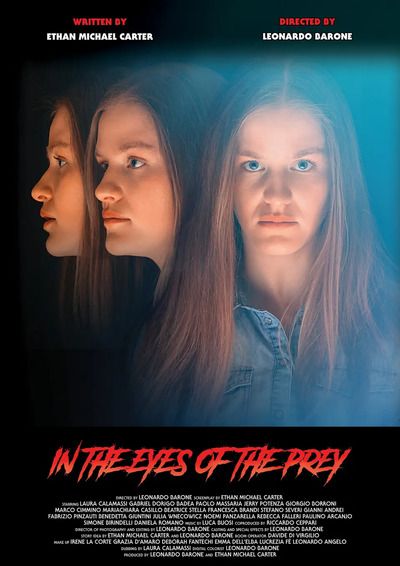 New rule. If ever I become an evil, kidnapping overlord, I shall be sure not to leave potentially lethal power-tools left lying easily accessible, around the place where the abductee is being kept. This is just one of the many mistakes made by the criminals here, in what could be an instructional guide on how NOT to execute a kidnapping. Admittedly, they weren’t aware that their victim suffers from multiple personality disorder. The alternate version is more than happy to wield the aforementioned power-tool – specifically, a nail gun – with extreme prejudice. It helps that these grown men and hardened criminals make it remarkably easy, for a 110-lb woman to overpower them in various ways.