



 Time for our 12th annual preview of what might be to come in the year ahead for action heroine fans. But first, a review of 2024, which was… a mixed bag. On the plus side, Furiosa: A Mad Max Saga came out, and I really liked it. On the other hand, going by the box-office, I might have been the only one, merely the biggest failure of what has been a continued dismal run for GWG in the movies. The second part of Rebel Moon was… not good, and the Netflix animated version of Tomb Raider was mediocre. There was positives, however: Griselda lived up to expectations, and The Shadow Strays came out of nowhere to deliver the year’s hardest-hitting action.
Next year has some promising titles though. Carrying forward from last year we have Ballerina, which… Well, we’ll get into that. The even longer-delayed In the Lost Lands, looks finally to be coming out too. Below, you’ll find more information on both of those, as well as a good number of other projects, currently slated for release in 2025. More or less, anyway. As we’ve seen previously, any dates given will be subject to change. In addition, like Strays, it’s possible the best films of 2025 may sneak up on us from behind and provide an unexpected groovy treat. [And that’s the first and last Finitribe reference you will see on this site!] Thanks to Dieter, for pointing me in the direction of some of these.
Note that I’m only including films which are listed as 2025 in the Internet Movie Database, though I don’t need a specific release date. Things like the reboot of Cliffhanger, now starring Lily James instead of Sylvester Stallone (that’s quite the casting change!), might show up this year. Or they might not. You will just have to wait and see!
Alpha (TBA)
“Two fierce female agents tackle dangerous missions in a thrilling world of espionage, as they navigate perilous situations, execute daring stunts, and face unexpected turns in this action-packed adventure.” Well, I admire the idea, though Bollywood has tended to be rather more macho. One of the reported stars here is Alia Bhatt, who was in Raazi, one of the few genuine GWG movies out of India. However, I’d be less skeptical if some of the supposed promo pics on the IMDb did not involve face-swaps rather than actual pictures, and particularly poor ones at that. I will believe this film exists, when I see it.
 Ballerina (June 6)
Or, to give it its full title: From the World of John Wick: Ballerina. Sheesh. This has been a troubled production, with the product delivered original director Len Wiseman (a.k.a. Mr. Kate Beckinsale) apparently requiring very significant reshoots. The good news: the reshoots were helmed by Chad Stahelski (Atomic Blonde), so if anyone can make the film kick significant quantities of butt, it would be him. Plot looks nothing special: “An assassin trained in the traditions of the Ruska Roma organization sets out to seek revenge after her father’s death.” But then, are we really watching this for the story, rather than Ana de Armas-inspired mayhem?
Cleaner (February 21)
“A group of radical activists take over an energy company’s annual gala, seizing 300 hostages in order to expose the corruption of the hosts. Their just cause is hijacked by an extremist within their ranks, who is ready to murder everyone in the building to send his anarchic message to the world. It falls to an ex-soldier turned window cleaner, played by Daisy Ridley, suspended 50 stories up on the outside of the building, to save those trapped inside, including her younger brother.” In other words: “It’s Die Hard in… a skyscraper”? However, Ridley says, “I would say this is probably the toughest action I’ve done.” It’s also by Martin Campbell, who did Dirty Angels. You decide if that’s a promise or a threat!
The Gorge (February 14)
“Two highly-trained operatives become close after being sent to protect opposite sides of a mysterious gorge. When an evil emerges, they must work together to survive what lies within.” Those operatives would be played by Anya Taylor-Joy, sent there by her boss (Sigourney Weaver) and Miles Teller. Nice to see Taylor-Joy doing more action after Furiosa. This is directed by Scott Derrickson, who did Doctor Strange, and judging by the rather detailed trailer, has some promise. However, this is an Apple TV production, and those have proven to be hit or miss, from what I’ve seen of them. But at time of writing, it’s #2 on the IMDb among next year’s films, behind only 28 Years Later.
In the Lost Lands (February 28)
“A sorceress travels to the Lost Lands in search of a magical power that allows a person to transform into a werewolf.” Shooting on this finished two years prior to its release date, which feels a bit long. However, it marks the re-union of Paul W.S. Anderson, a.k.a. Mr. Milla Jovovich, with… um, his wife, Milla Jovovich. Who would be the sorceress in question, Grey Alys. Dave Bautista plays her ally, Boyce, and – as it was when I wrote about it in last year’s preview! – this is based on a short story by George R.R. Martin. At least it’s one he completed, so there won’t be any Game of Thrones shenanigans here. Hopefully it will also be a bit more memorable than Monster Hunter.
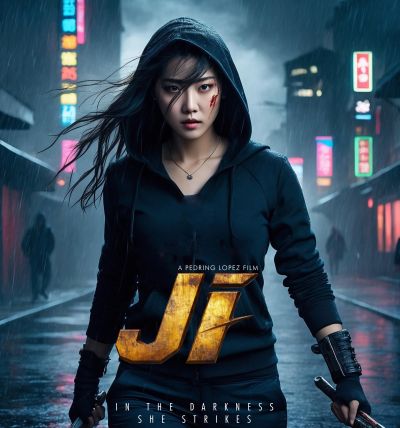 Ji (TBA)
“When the head of a Korean crime syndicate, Jin Eun-Ji, arrives in the Philippines to rescue her kidnapped mother, she finds herself caught in a deadly game of betrayal and revenge between rival gangs.” This is still listed in pre-production, and I don’t know who is playing the heroine. However, its IMDb page lists Yayan Ruhian, who was in both of The Raid movies, so I’m interested. The director, Pedring Lopez, gave us the fairly decent Maria a few years ago, another reason to be hopeful. Might end up being one we carry forward into our 2026 installment, however.
K-Pop: Demon Hunters (TBA)
Okay, I was about to write this one off as some kind of obvious fake, and blatant fan service… But, guess what, folks? It actually exists, being an animated project for Netflix made by Sony Pictures Animation. This is apparently “a musical action adventure that follows the story of a world-renowned K-Pop girl group, as they balance their lives in the spotlight with their secret identities as bad-ass demon hunters, set against a colorful backdrop of fashion, food, style and the most popular music movement of this generation.” I have written about Barbie movies here before, so you can probably expect a review of this in due course.
Powerpuff Girls: the Revenge of Mojo Jojo (August 25)
“Mojo Jojo, has escaped prison, and now plans to destroy Townsville once again. It’s up to Blossom, Bubbles, (and Buttercup to stop Mojo Jojo to finishing his masterplan.” Well, this is unexpected. But is it real? From what I can tell, it appears to be a fan film, rather than an official production. Yet it lists Genndy Tartakovsky as a supervising producer and storyboard artist, and he wrote/directed many episodes of the original show. I loved the Powerpuff Girls back in the day. But can you go home again? I fear not.
Predator: Badlands (November 7)
“In the future, a Predator traverses on an alien wasteland, while two sisters discover their horrifying past.” After Prey, director Dan Trachtenberg goes back to the Predator well, though in a different way. It appears this one might be more focused on the monster. He said, “The creature is front and centre, leading the charge. He’s still badass, but there’s something there that touches you emotionally, too.” However, the film also starts Elle Fanning playing multiple characters – perhaps both of the sisters mentioned in the synopsis. “She faced intense challenges on this movie — dramatically, physically, logistically,” added Trachtenberg, cryptically.
Star Trek: Section 31 (January 24)
“Emperor Philippa Georgiou joins a secret division of Starfleet tasked with protecting the United Federation of Planets, and must face the sins of her past.” I’ve kinda lost track of the multiple different incarnations of Trek: I leave that to Chris, since she has been a fan forever. But since Georgiou is played by Michelle Yeoh – sorry, these days, that’s Oscar winner Michelle Yeoh! – this might rise above the “I’ll do something else while it’s on in the background” level of the shows. Her character, particularly when in evil mode, has been a lot of fun to watch, because she doesn’t care about politeness. It helps this will also be a one-off movie, rather than a series.
Uppercut (February 28)
“When Elliott (Ving Rhames), a tough ex-boxing champion, accepts the challenge to train Toni (Luise Grossmann), the two mismatched characters form an unlikely alliance. Their sparring and Elliott’s keen insights show the resilient young fighter that real strength comes from the challenges you overcome when life throws its biggest punches your way.” On the upper end, this could be Million Dollar Baby. or Girlfight. But that synopsis seems rather too cliché-ridden, so I’ve a feeling it is more likely to fall short of those lofty ambitions. Rhames is usually worth watching though. Interestingly, this is an English-language remake of the director’s Leberhaken, which also starred Grossmann, a former professional athlete.
Below are trailers for some of the movies discussed above.
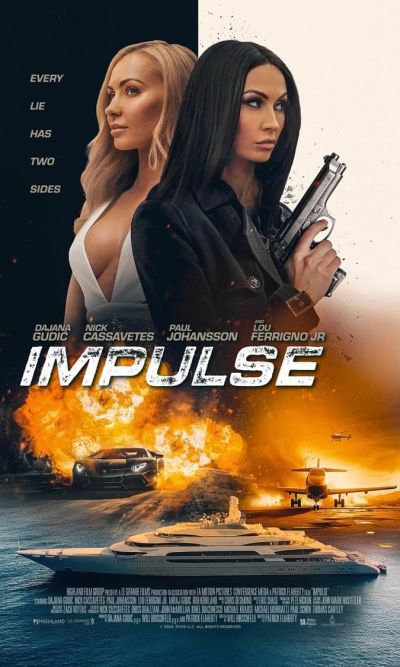 This is one of the more successful efforts to spin a conspiratorial narrative – at least until the final act, where it topples over into implausibility. It’s a bit like how QAnon were not wrong about the rich and powerful being involved in sex trafficking… it just wasn’t out of the basement of a pizza restaurant. The heroine here is Sofia (Gudic), a journalist who is investigating a series of odd murders, in which powerful men are killed in highly compromising positions. These are assassinations carried out by an escort-assassin, Theda – yeah, one of the less subtle anagrammatic names I’ve seen – on behalf of a shadowy, super-powerful group of the wealthy and famous, under the oversight of Zane (Cassavetes).
 This was my favourite new television show of 2024, and might have been my pick overall. It’s a very strong mix of action and drama, with a fabulous cast of characters. I think I might have to go back to the first season of
 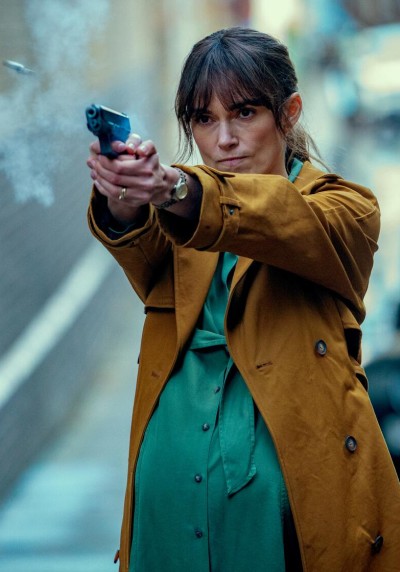 Reed calls in her top assassin, Sam (Whishaw), to protect Helen, fearing she might also be targeted. He has a history with Helen, dating back to before the birth of her children with Wallace. Things spiral out of control, involving the suspicious death of the Chinese ambassador, his missing daughter, a previous hit Sam botched, and Helen’s relentless pursuit of revenge, while trying to keep her family life intact. It’s a lot of balls to keep in the air, but the script does a fine job of avoiding confusion, with the wrap-up proving particularly admirable in its clarity. While I’ve read complaints about it being implausible, I have definitely seen worse. There’s room for both this, and more grounded spy shows like Slow Horses.
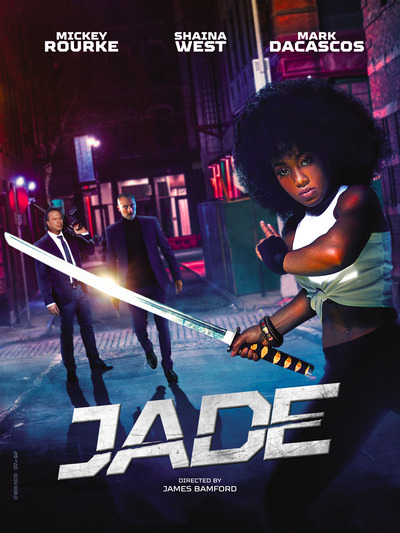 Director Bamford has certainly had himself a year. This is the third film of his in 2024 to be reviewed on this site, following
  It’s important to realize that this is a throwback to movies from an earlier, simpler time. One when action movies could consist largely of a red-blooded American hero, killing evil furreners in spectacularly violent ways. And it didn’t matter much whether the person playing the hero was actually a foreigner themselves i.e. Arnold Schwarzenegger. Thirty years later, we are supposed to be more tolerant, and watch films where nuance has replaced shallow stereotypes. We have met the enemy and he is us, or some similar guff. Dirty Angels cares not one whit for such niceties. Its sole concession to ‘progress’, is a hero with a vagina. Who is still actually a foreigner, Eva Green being French.
 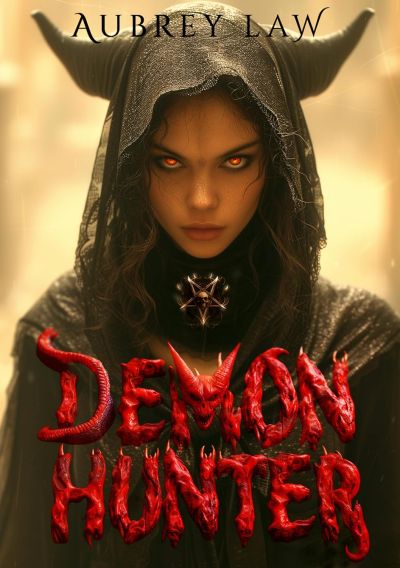 I wouldn’t call this great literature, by any stretch of the imagination. In fact, in many ways, it’s not very good. But I must admit: I was entertained, and was far from unhappy to realize that I’d picked up an omnibus of books 1-5 further into my reading list. I’m not sure I’m going to bother with reviewing those following installments; certainly not independently, it would be a bulk package, if at all. But I’m going to read them, and probably enjoy them. What’s interesting is, the author has created a protagonist who is, in many ways, a terrible person. But by then pitting them against arguably worse people, the reader is left on her side.
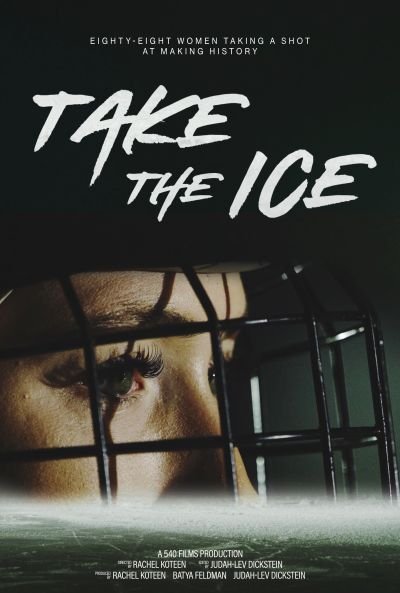 There’s no doubt that women’s sports very much plays second fiddle to their male equivalent, though the gap varies from sport to sport. The WNBA is experiencing a surge of popularity, though the NBA is still a financial behemoth. This documentary focuses on ice-hockey, and the debut season in 2015 of the first professional women’s competition in the US, the National Women’s Hockey League. Though
 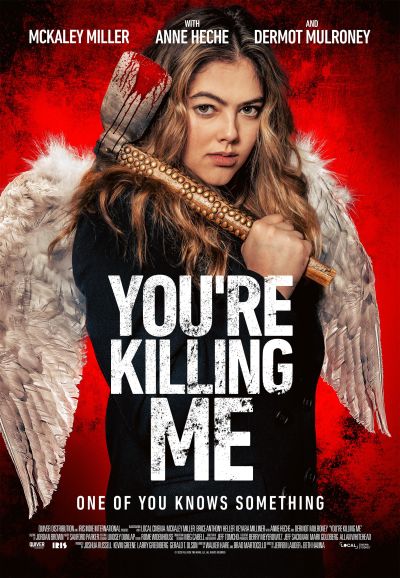 Eden Murphy (Miller) has a problem. She desperately wants to get into Pembroke College, but is currently on the wait list. However, classmate Barrett Schroder (Heller) has a congressman for a father, a letter from whom would surely push her application forward. Barrett isn’t exactly helpful, so along with friend Zara (Milliner), she crashes his party, hoping to press her case. A series of events ensue, resulting in Eden being trapped in a bedroom with a passed-out drunk Zara, and a phone belonging to one of Barrett’s friends, Gooch (Deusner). This has some incriminating video footage on it, apparently linking Barrett to the recent disappearance of another classmate. He is
  Interesting the title dropped the “Special Ops” prefix from the title for this series, necessitating a bit of a retro-fix on
 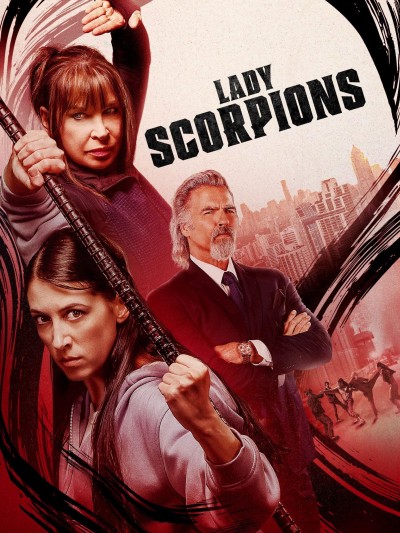 Cynthia Rothrock is 67 years old. That is considerably older than I am, and I consider it a victory if I manage to get out of bed in under ten minutes. I am certainly not kicking and punching my way through a slew of bad guys, in moderately convincing fashion. While this certainly has its flaws, it’s hard not to be impressed, especially for anyone familiar with Rothrock’s long career in action movies. Personally, I’m just glad she has moved on from the “erotic thriller” period of her career. Sixty-seven