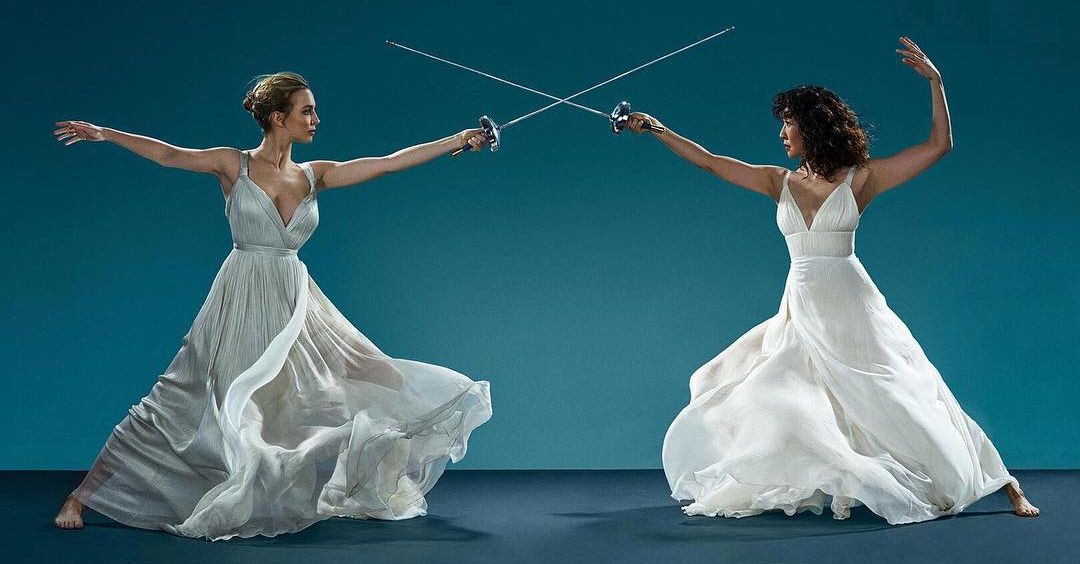
Credit: Entertainment Weekly
“You are an evolutionary necessity.”
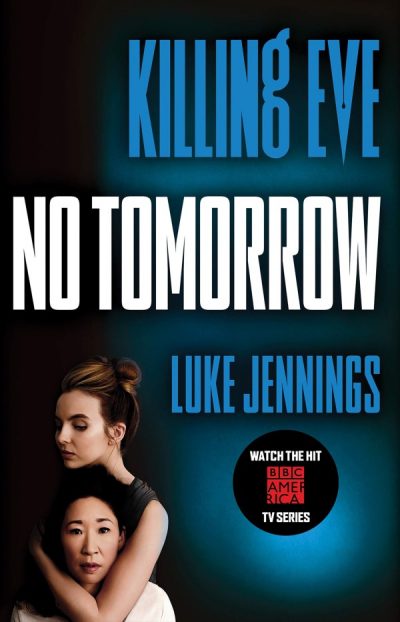
With the second series of Killing Eve starting this month, and one of our most eagerly anticipated TV shows of the year, it seems a good point to take a look back at Luke Jennings’s original source material, and its translation to the small screen. Codename: Villanelle was originally self-published by Jennings as four separate novellas, the first (with the same name) appearing in February 2014. It was followed by Villanelle: Hollowpoint in August, then Villanelle: Shanghai and Odessa in February and June of the following year.
It wasn’t Jennings’s first published work: far from it, with Atlantic appearing back in 1995. These were mostly what Jennings calls “politely received but unprofitable novels,” adding “Our income was, to say the least, patchy.” That probably explains why he was dance critic at The Observer newspaper for 14 years. Which in turn explains the entry in his bibliography which stands out as most un-Villanelle like: his co-authorship of The Faber Pocket Guide to Ballet…
Codename: Villanelle was optioned for the screen relatively quickly after the first novella, in spring 2014. Initially pitched to Sky Living, they turned the project down, but it was reworked by writer Phoebe Waller-Bridge, to put more emphasis on Eve, and these modifications also triggered the title change. It was a wise decision, I think. Codename: Villanelle seems very passive, a label given to a character (and half-meaningless unless you’re an expert on French perfume). Killing Eve is considerably more active, and also reflects the shift in focus from the hunter to the hunted. It helped get the show picked up by BBC America, and in autumn 2016, the show was given the go-ahead for an eight episode first series. But such was the advance buzz, that a second series was commissioned before even the first episode was broadcast.
This proved to be a wise decision. For it became a word-of-mouth hit, with ratings increasing by two-thirds from the first episode to the last. Critical reaction was no less enthusiastic: Killing Eve was included in more TV writers’ top tens for 2018, than any other show. Sandra Oh’s performance as Eve was particularly lauded, and she won the Golden Globe, Screen Actors’ Guild and Critics’ Choice Television Awards for her portrayal. The success of the series helped propel the first book onto the best-seller lists, and allowed Jennings to quit his day job at The Observer. The second volume, No Tomorrow, was published in October; we’ll have a review of that up later in the week.
But for now, we’re concentrating on the first book – and in particular, comparing and contrasting the show with its source material. What are the similarities? And, perhaps more interestingly, what are the differences? [Of necessity, what follows include significant spoilers for both TV and literary incarnations]
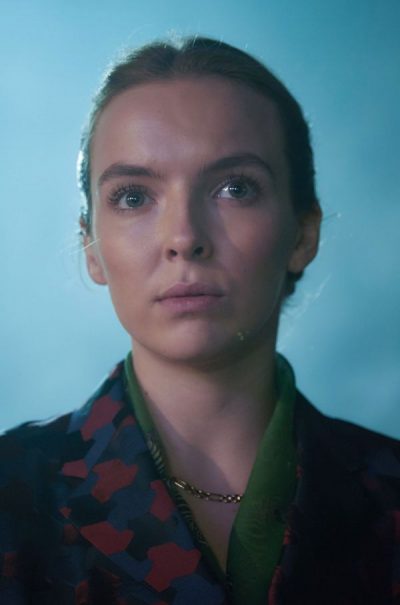 Villanelle
“They had recognized her talent, sought her out and taken her from the lowest place in the world to the highest, where she belonged. A predator, an instrument of evolution, one of that elite to whom no moral law applied. Inside her, this knowledge bloomed like a great dark rose, filling every cavity of her being.”
As noted above, the book leans considerably more towards Villanelle than the TV series in balancing the characters. In the show, she is initially a blank slate, and only slowly is her background revealed, as Eve peels back the layers behind her fake persona. The novel, however, fills in the basic details by page 13, while Eve doesn’t even appear until almost a quarter of the way in. Villanelle is a convicted triple-murderer, having taken revenge on the criminals responsible for killing her father – just one of a number of incidents that illustrate her socio/psychopathic nature [let’s not get bogged down in labels]. In the TV series, it’s a less family-oriented crime which gets her put away: castrating and murdering the husband of a teacher/lover.
She is then spirited out of prison by a shadowy group, known as “The Twelve” and trained in a range of lethal arts, becoming an assassin employed by them. “Shadowy” is putting it mildly for the TV version. Entirely opaque is probably closer to the truth, since we know almost nothing about them. The novel, in contrast, opens with a depiction of their meeting, and The Twelve deciding to unleash Villanelle on a target. We still don’t know who they are or their goals, however. They clearly don’t mess around though. While Konstantin, Villanelle’s handler, is in an “is he dead or not?” limbo at the end of season one, there’s no such doubt in the book. He’s 100% dead, killed by Villanelle after he has been rescued by her from kidnapping – just in case he divulged any incriminating information. Guess you never know. That’s considerably more brutal than in the show, where Konstantin does indeed “go rogue”.
The Vilannelle we see is considerably more anti-social than in the book, where she is entirely capable of hanging out with people as and when necessary. The version on the page is considerably more sexual too – likely impacted by the TV show being on basic cable – with a habit, after completing an assassination, of finding some random stranger – male or female, she’s not bothered – for a meaningless fling. For her, it’s all about making them want her, and the resulting power she has over them. [There’s also a rather gratuitous scene, describing in unnecessary detail the unpleasant sexual fetish of one victim]
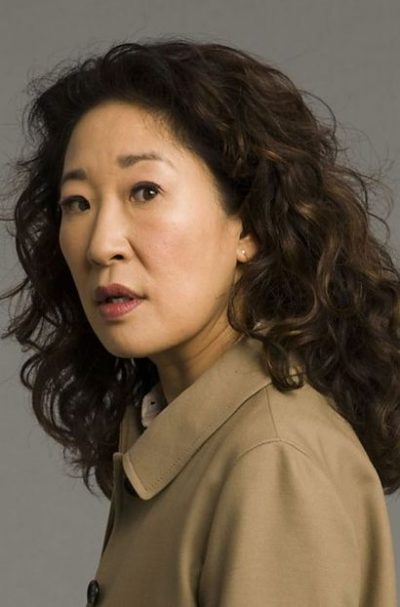 Eve Polastri
“Eve Polastri is looking down at Lambeth Bridge and the wind-blurred surface of the river. It’s 4 p.m. and she has just learned, with mixed feelings, that she is not pregnant.”
Even on the most superficial level, the small-screen version of Eve is radically different. In the book, she’s British and aged 29. The change in nationality was something BBC America required. Given their audience, it’s somewhat understandable, despite the resulting, somewhat clumsy need to explain why a Yankee is working for the British security services. That Sandra Oh is two decades older than the original Eve diminishes the suggestion in the novel that Eve and Villanelle are two sides of the same coin. Both are professional, childless women who have turned to their work, to the exclusion of almost everything else. Instead, the generation gap creates other echoes, almost a mother/delinquent daughter relationship.
Despite her youth, book Polastri has risen to become the head of her department at MI-5, which arranges special protection for visitors to the UK who are deemed at risk. She’s already intrigued by the whispers of Villanelle she has found, but this becomes a full obsession after the assassin takes out a Russian fringe politician on Eve’s turf, causing the civil servant to lose her position. Both versions then have Eve being recruited for an off-book operation to hunt Villanelle down, cutting ties with her previous colleagues.
This brings tension to Eve’s marriage with Niko, though much more so on television. In the book, while they still have their disagreements when Eve puts work before previously-arranged social engagements, there is a reconciliation (of sorts) towards the end. Niko and his academic pals help Eve crack a USB password, the device containing information that leads to an operative associated with The Twelve inside MI-5. Their marriage is certainly in a far better place at the end of volume one, than series one.
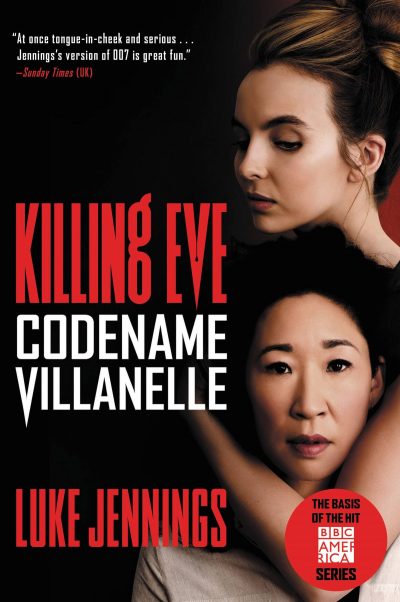 Eve vs. Villanelle
“She knows who I am. Killing Simon was a message, addressed to me. She was saying I can take you, and the people you care about, any fucking time I want…”
It’s at the nexus of the two main characters, in their relationship, that the TV series and book diverge most drastically. Because, in the novel, there pretty much isn’t one. Eve and Villanelle have virtually no conscious interaction at all. Emphasis on conscious, since the most time they spend together is when the killer slips into the spy’s Shanghai hotel room while Eve is sleeping and “inhales her warm smell.” What there is, is strictly adversarial: Eve regards Villanelle solely as a threat who must be stopped. “It’s just beginning,” are the three words from Eve with which the first book ends, as she puts a Glock 19 pistol in her bag. There’s little doubting her intentions.
What Phoebe Waller-Smith did in the show, was broaden and deepen that relationship, in a myriad of ways, both little and big. It feels more like Clarice Sterling and Hannibal Lecter in Silence of the Lambs, with a charming psychopath playing games against a dogged, somewhat dour bloodhound. By deepening the discord between Eve + Niko, and her overall discontent with life, and playing up Villanelle’s bisexuality, the TV show has added a slab of unresolved sexual tension between the pair, which simply wasn’t present in the first book. It has certainly helped make the show become a firm favourite in the gay community, though thanks to the wonderful performances of Oh and Jodie Comer, it’s far more than ghetto TV.
I do have concerns, however. In a Reddit AMA, Jennings said, “The fandom drives the success of the books and the show, and also influences it. Killing Eve: No Tomorrow would be a different book if I hadn’t spent time listening to fans.” It seems a perilous route for any creative person, to let the consumers dictate where your story goes. I’ve already seen Xena: Warrior Princess destroyed when its makers started pandering to the demands of gay fan ‘shippers. Will Killing Eve go the same way? We can only hope it doesn’t.



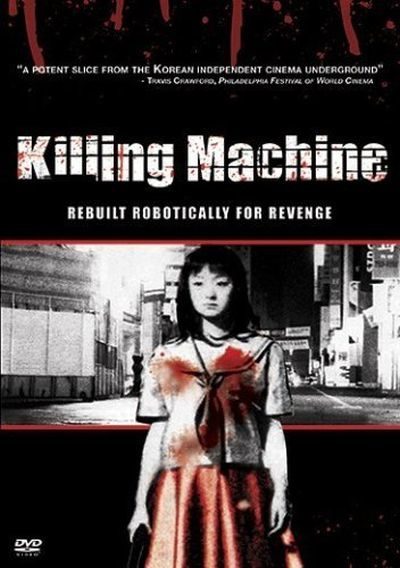 You’ll understand why, when skimming leisurely through a streaming channel on the Roku, I screeched to a halt at this title. Even though the “official” English title is just Killing Machine, I knew I immediately had to watch it. Yet, while the title technically reflects what happens, it’s a masterly bait-and-switch. For instead of the expected grindhouse apocalypse, it’s far more arty and surreal. The word “Lynchian” is likely over-used, yet it’s hard to argue its accuracy here. If David Lynch had been contractually obligated to deliver a movie with this title, it’d perhaps have looked very similar.
 As we
As we 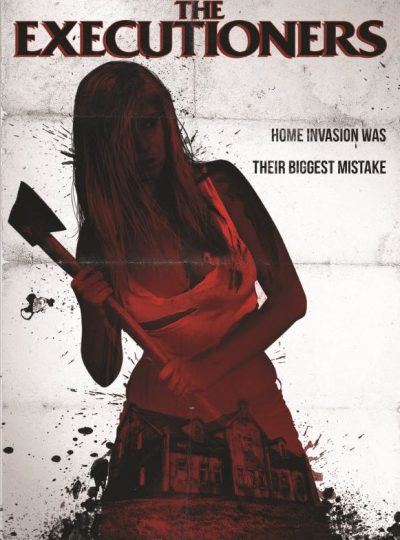 “I realized that there was no such thing as a boundary between good or evil, black and white, right or wrong. All I learned is that this world is divided by the executed and executioners.” The above is spoken by a character toward the end of this, and explains the significance of the title, though your mileage may vary as to how convincing it is as an explanation. Four young women go to a country house by a lake, which holds dark memories for one of them. Belle (Dallender, known here from
 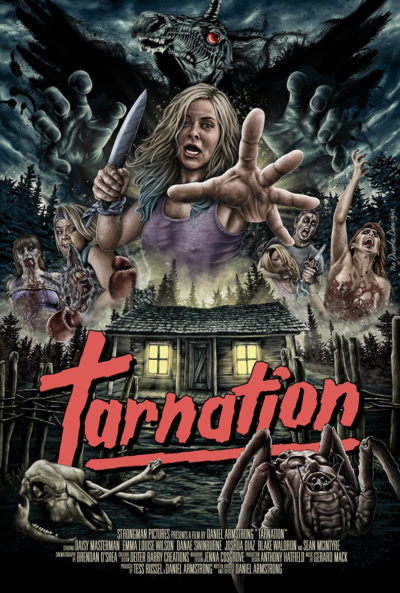 Following on after
 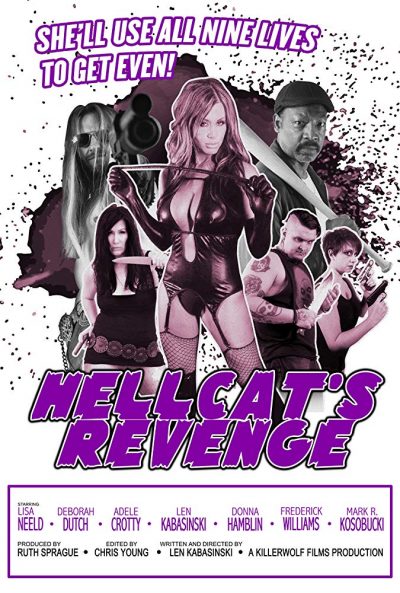 The leader of all-girl biker gang the Hellcats is brutally beaten and murdered, by Repo (Kosobucki). Her replacement, Kat (Neeld), tries to get to the bottom of the killing, and take vengeance on the perpetrators. Complicating matters is Repo’s position in the Vipers, another motorcycle club with whom the Hellcats have previously had generally friendly relations. Part of that is due to Kat’s on-again, off-again relationship with their leader, Snake (Kabasinski); he also has the advantage of being cosy with some of the local cops, who divert confiscated drugs back to the Vipers for resale. But was he aware of – or did Snake perhaps even order? – Repo’s actions?
 After reading some particularly scathing reviews of this, e.g. “stunningly atrocious”, I was braced for something
 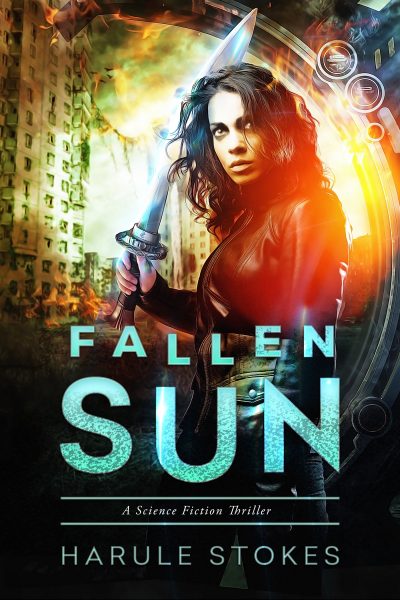 While not perfect, I think this one will probably end up sticking in my mind longer than most of the books I read. For one, it helps being a stand-alone and complete work, rather than the first of a multi-volume set. While I understand the rationale behind the latter – that’s where the bread and butter of writing income is made – it was refreshing to get a beginning, middle and proper end, without a cliff-hanger or opening for sequels. It was also different in content, rather than being yet another book which drops fantasy creatures like elves or vampires in a contemporary setting. I’ve seen enough of those this year, thankyouverymuch.
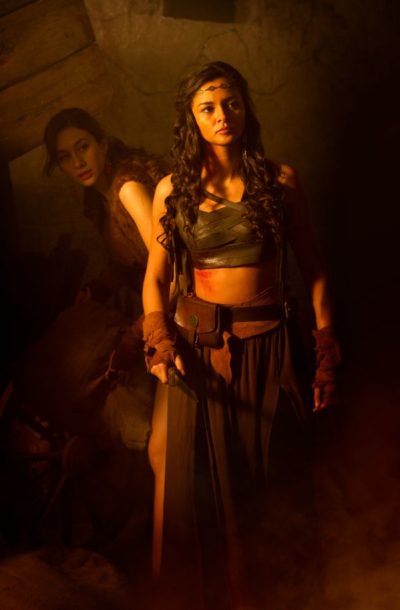 This has the potential to be truly bad, and you need to be willing to look past ropey production values, a possibly deliberately shaky grasp of period (unless “Daisy” really was a popular girls’ name in early medieval times…) and uncertainty as to whether or not this is intended to be a comedy. Yet, I have to admire its “everything including the kitchen sink” approach: throwing together elements from genres as disparate as Vikings, zombies, aliens, sword ‘n’ sorcery and female vengeance shows… well, ambition, at the very least.
 Crown International were an independent movie studio, who operated from the sixties through the eighties: we’ve covered some of their work before, such as