




★★½
“Nightmare nurse.”
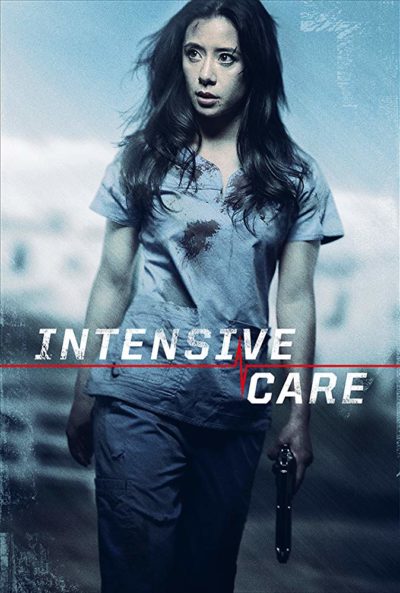 I’m generally an easy-going guy with regard to plots in my action heroine films. Give me adequate amounts of ass-kicking and I’ll happily overlook most weaknesses in the storyline. I mention this, to stress I’m not a nitpicky kind of reviewer, who requires an Aristotlean level of logic from their movies. So when I say, there are major problems with the scripting here… There are MAJOR problems with the scripting here.
Alex (Macken) is a nurse, hired as a caregiver to the terminally-ill Claire (Easterbrook), when Claire’s only living relative, grandson Seth (Sizemore), turns up. He’s desperate to get into granny’s good graces and get his inheritance, because he is in deep debt to some dangerous people. Claire is not fooled at all by this sudden show of family feeling, and tells Seth where to go. He teams up with a pair of local hoodlums to rob the safe where grandma keeps her money – only to discover that Alex is far from the innocent caregiver she seems, and has a very particular set of skills. Skills she has acquired over a very long career. Skills that make her a nightmare for people like Seth and his crew.
This comes as absolutely no surprise to the audience, because of an opening sequence showing these skills on view in a gym before she heads off to take up her position. There’s hints of some defining experience in the Philippines – never expanded on, so you wonder why they bother. It would likely have been more fun if her talents had come as much as a surprise to the audience as the home invaders. The main problem, however, is the idiocy of everyone involved, which generates plot holes so gaping, you could sail an oil-tanker through them. Sideways.
Most obviously, we see early on how ruthless and vicious Seth’s accomplices are, killing a prostitute. Given this, there is absolutely no need for them to keep the captured Alex alive: she is in no way needed to help them open the safe. Yet, inexplicably, they do so, even after she learns their names and sees their faces. And repeatedly, both sides fail to press home an advantage when they get the jump on the opposition, preferring to exchange non-witty banter. This is especially unforgivable for Alex, who is supposedly some kind of ex-special forces reconnaissance type, someone whom you’d think would have precisely zero qualms about terminating an obvious, lethal threat, given the chance. And please do not ask me about the scene where Alex takes a bath… in her bra and panties. I hooted loudly about that.
It’s a shame, because Macken is rather good, whom I’d like to see more of (and no, not in the bra and panties sense…). If you’re a WWE fan, there’s something of the A.J. Lee about her, and the actual action sequences are well enough handled. She had a supporting role in Raze, so clearly knows her way around a fist. Indeed, this feels a little bit like an early entry in the career of Zoë Bell, back when she appeared in things that weren’t necessarily worthy of her talents. Hopefully, Macken’s career trajectory will improve similarly, to films capable of meeting even my low threshold for plot logic.
Dir: Jared Bentley
Star: Tara Macken, Kevin Sizemore, Jose Rosete, Leslie Easterbrook
 Definitely a mixed bag in this independent work about an assassin on the run from her employers after she botches a contract. Seay is thoroughly compelling as Set, proving that less can sometimes be more when it comes to dialogue. She’s a woman of few words, yet the strength of her emotions still comes through in her performance. I think it’s the eyes. Unfortunately, the makers appear not to have had enough confidence to let her silence stand on its own. Instead, they fill the gap with the inane burblings of Samuel (Laballe), a young man who sees Seay, and decides she’s a battered woman in need of rescue. He quickly discovers that isn’t the case, as she ends up rescuing him from one of the killers sent on her trail. However, his sister Dana (Cné) is unimpressed with her brother’s new friend, and turns Set in to her boss, Karlton (Brown).
 This is based on a TV series from Britain, which ran for two seasons in the eighties – I’ve seen it, but for some reason never got round to writing about it. The show would have been right in our wheelhouse, being written by Lynda LaPlante, who also created
 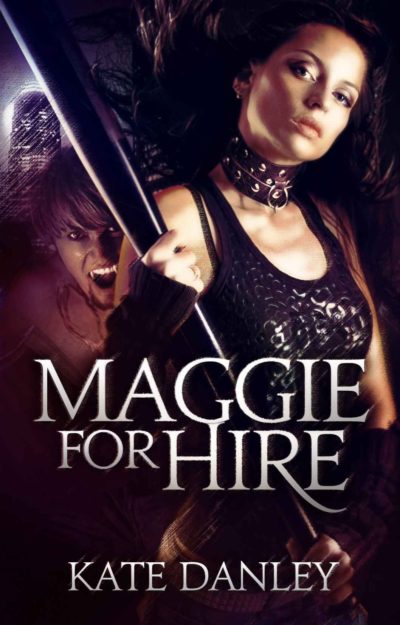 Maggie McKay is an inhabitant of two overlapping worlds, courtesy of her genetics and upbringing being a little bit from both. Her father was from the “Other Side,” but her mother was from Earth, and they lived here until Maggie’s awakening talents of her own necessitated a quick departure back to the O.S. She still operates mostly in this realm, hunting down and dispatching the nastier denizens who sneak across: vampires, ghouls, werewolves, etc. This everyday work gets escalated, when she discovers her previously unknown (and not very nice) uncle, Ulrich, has teamed up with a vampire clan, to acquire a pair of artifacts which control portals between the sides, and also allow the vamps to walk in daylight. Unchecked, this could lead to chaos, and it’s up to Maggie and her elf sidekick, Killian, to make sure that doesn’t happen.
 Look, I tried. I really did. When I found my attention had drifted away from watching the film, in good faith, I rewound the film to the point where I’d lost interest, and took up the movie again the following day. After all, maybe it was me. But when I still could barely bring myself to finish this leaden lump of poorly-crafted revenge-fu… No, having gone above and beyond the required effort, it’s really not me. This is lacklustre stuff, to put it mildly, even by the generally low standards of Taiwan.
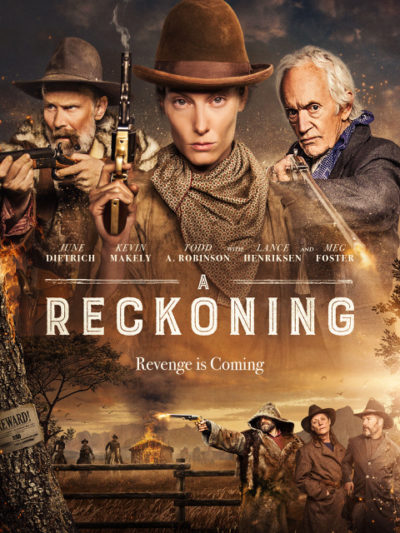 Considering how little actually happens here, I enjoyed this considerably more than expected. It kicks off with 19th-century settler Mary O’Malley (Dietrich) being informed her husband has been brutally slain. Despite the warnings of fellow settler Henry Breck (a small role for Lance Henriksen), Mary heads out on the trail through Oregon for revenge, looking for the serial killer responsible. He’s known as “Marrow” (Makely), for reasons which eventually become clear. She encounters Jebediah (Robinson), a bounty-hunter after Marrow who doesn’t appreciate the competition, and Barley (Crow), a trader who offers and receives temporary companionship.
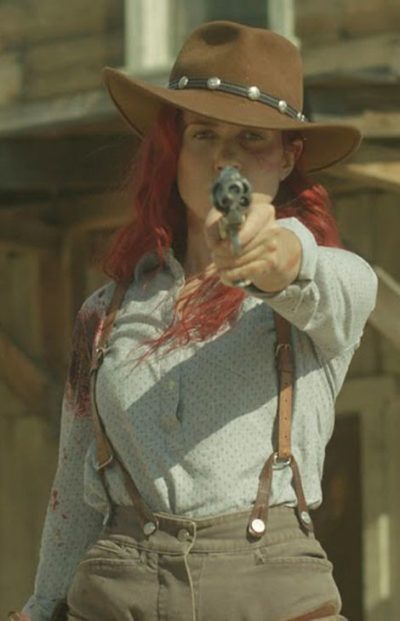 Josephine “Joe” Cassidy (Eiland) is promised in marriage to Tom (Jenkins), the son of the area’s richest rancher, but her heart actually belongs to Jakob (Grasl), the Indian who is Tom’s adopted brother. The two lovers consummate their relationship when Tom is away, but the spurned fiancee hatches a long-term plan to get revenge. Years later, after becoming the local sheriff, he uses these connections to frame and execute Jakob for murder. Word of this reaches Joe, who conveniently for the plot is handy with a firearm, because her father (Cramer) was a renowned bounty-hunter, and passed on the necessary skills to her. Dying her hair red – hence the title – she sets out to take revenge on Tom, only for him to reveal that Jakob is not dead… Not
 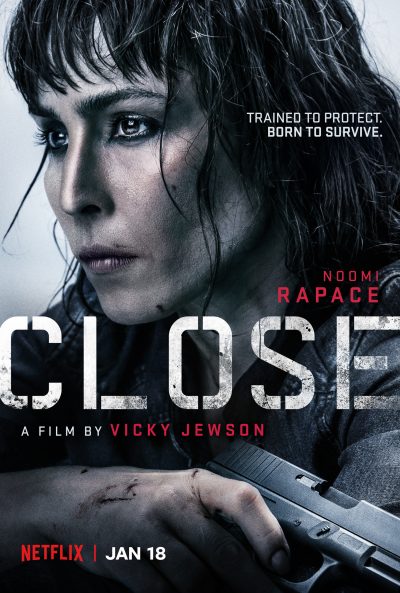 Rapace appears to be aiming for a niche in the straight-to-video (or, at least, straight to Netflix) action market, this coming on the heels of
 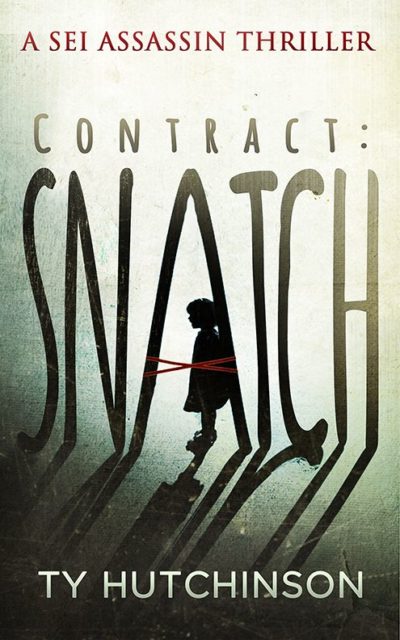 Sei is a former assassin, who quit the industry after getting pregnant, then having her daughter stillborn. She has taken up a quiet life in the Belgian countryside, when she’s brought out of retirement by a shocking offer she received over the deep web. Her prospective employer says Sei’s daughter is not dead, and offers information in exchange for carrying out a job: breaking another assassin, the notorious Black Wolf, out of the Turkish prison where he is being held. After confirming with the doctor who was present that the claim of her daughter’s survival is true, Sei accepts the mission. However, it turns out she was set up as a patsy, and finds herself also incarcerated in conditions which seem not have improved much since Midnight Express.