



★★★
“The girls with the dragon tattoo”
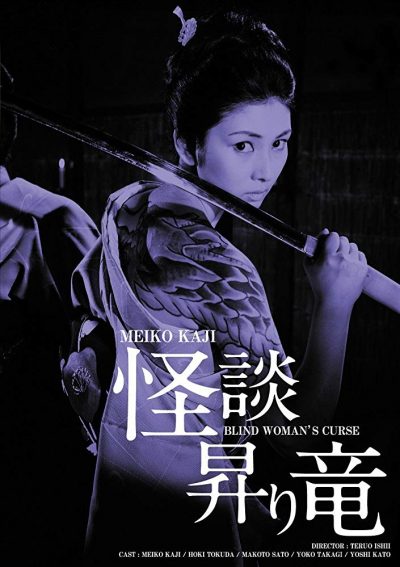 Akemi Tachibana (Kaji) is second in command of her yakuza gang. During a battle with another group, she accidentally blinds Aiko Gouda (Tokuda), the sister of an enemy – an incident Akemi believes leaves her cursed, after a black cat laps up the blood spilled as a result. Following three years in jail, she returns to find the clan on the verge of war against their rivals, the Dobashi group. Various members of the Tachibanas are turning up dead, and with their tattoos flayed off. Turns out that Gouda has joined the Dobashi gang, with the aim of extracting vengeance on the woman who took her sight, even though Akemi has borne the guilt of that event ever since.
When it concentrates on their relationship, the film is really good, with both actresses commanding the screen with an impressive presence. This leads to a final confrontation which certainly feels like it may have been an influence on the one at the end of Kill Bill, Volume One, between the Bride and O-Ren. What’s particularly outstanding is the surprising way in which it is resolved: based on everything you’ve seen to that point, you’d be forgiven for betting, odds-on, that there will be an oce-lot of arterial spray. There isn’t – though I’ll say not much more than that. It’s a strangely effective moment, like a Western where the two gunslingers eventually face off at high noon… and decide to go for a pint instead.
What’s considerably less effective is the stuff around the edges, much of which is silly – or, perhaps, played a great deal better on the page than the screen. For example, Akemi’s female minions each have part of a dragon tattooed on their back, so when they expose their shoulders and line up, it forms the entire thing. Which sounds really cool, but ends up looking more like a samurai version of the Human Centipede. There’s also the member of the enemy clan who goes around wearing a scarlet loin-cloth. It’s difficult to take someone as a threat, when they’ve apparently forgotten to put their pants on. In its defense, this is apparently played for comedy purposes, because he smells. Yeah. About that…
This illustrates the film’s main weakness, an apparent desire to be all things to all viewers. I’m not if the audience in 1970’s Japan was crying out for comedy-horror-yakuza-swordplay films, because that’s what they get here, and the various elements vary too much in quality and fail to mesh together at all. When it concentrates on what it does well – and that’s the relationship between the two female leads – it’s very good. You can easily see why Kaji, making her debut under that name here, would go on to stardom. Given how effectively they play off each other, it’s something of a surprise Tokuda didn’t follow suit, though she did go on to become (briefly) the last of writer Henry Miller’s five wives.
Dir: Teruo Ishii
Star: Meiko Kaji, Hoki Tokuda, Makoto Sako, Hideo Sunazuka
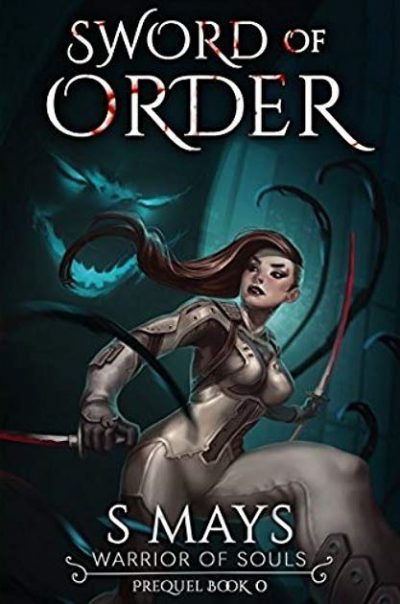 Book 0 in the series? It seems a little odd, as this obviously leads in to the “first” book – Curse of Souls, published in September 2017 – yet Sword came out just three months later. Reading the synopsis, it seems as if Curse may be focused on a different character: college student Sverre Walker, who encounters Jessica Luvkrafft, warrior for the Order of Mankind. Sword is the story of how Jessica became that warrior.
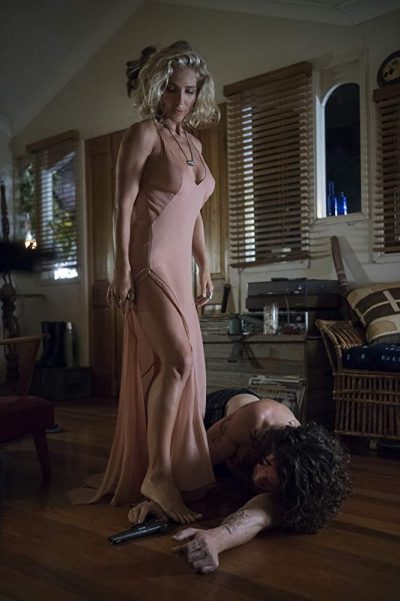 Cal McTeer (Best) has just got out of prison after serving a 12-year sentence for arson leading to murder, a crime she committed as a teenager. Returning to her home town of Orphelin Bay, she finds her brother, Augie (Jakubenko), now working as a conduit for drugs, with the connivance of at least some local cops, and supplied by the mysterious Adrielle Cuthbert (Pataky). She oversees a commune near town called L’Attente with a zero-tolerance policy for dissent, and uses the proceeds of her narco-aquatics to fund a worldwide search for mysterious fragments of pottery. Turns out she is queen of the Tidelanders: the offspring of humanity and legendary sirens who inhabit the ocean. Though Cal doesn’t know it initially, a near-death experience shows that she is of similar stock. Adrielle doesn’t like the competition. And neither does local gangster Gregori Stolin (Koman), who is intent on muscling in on Augie’s business, and cutting out the middleman, to work directly with Adrielle.
 The elevator pitch version of this sounds like a million other kung-fu films: Shen Ping Hong (Li) seeks revenge on the people who killed her parents and left her crippled. But there’s rather more going on beneath the surface, and shades of grey on both sides. One of her targets, Lord Kao Hung, regrets what happened and wants to help Shen regain the use of her legs. But Shen only agrees to let his son Tien-Ying (Yueh) help, in the belief that it will make her mission of vengeance easier. It feels almost like she’s a mad dog, lashing out at anyone who tries to help; keeping the severed heads of her victims in jars is a clue there. Meanwhile, Kao’s associates – and Tien-Ying’s ex-girlfriend (Chiao) – think he’s helping because he wants to get Shen’s jade sword for his own ends, and are intent on getting their revenge in on her first.
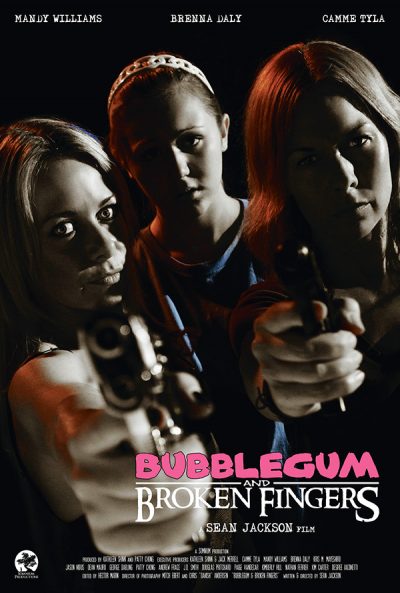 Outside of Kill Bill, I’ve never been a fan of Quentin Tarantino. But this film did give me some appreciation for him. Because it’s only when you see Tarantino done badly, that you realize the aspects he does well. It undeniably takes some skills to keep a story-line involving multiple sets of characters in the air, especially when centered on a Macguffin like a suitcase whose contents are never revealed. Jackson tries to do exactly the same thing here, and the result is, frankly, a mess, where you’re left caring little or nothing about any of the participants.
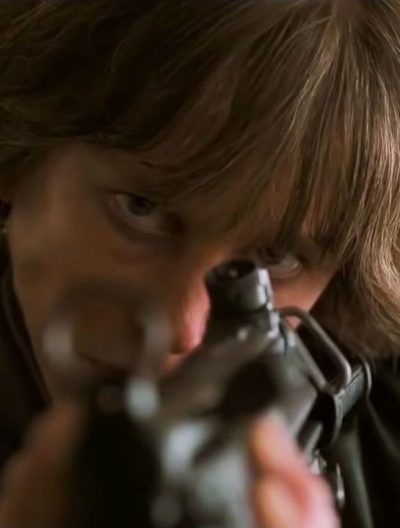 A fine, almost unrecognizable performance by Kidman succeeds in maintaining interest, despite a script which appears to regard time less like an arrow, and more like a big ball of wibbly-wobbly, timey-wimey stuff. Deeply troubled cop Erin Bell (Kidman) wakes up in her car, apparently badly hungover, looking like ten pounds of crap in a five-pound bag. Not far away, her colleagues are poring over a newly-discovered murder scene: a body with a dye-stained hundred-dollar bill on the corpse. And that’s about the last time when I was quite certain of the timeline.
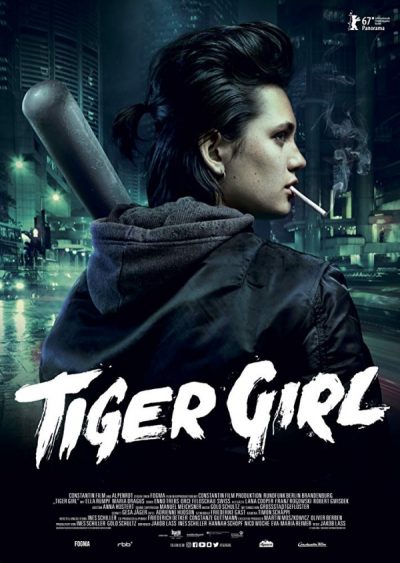 Maggie (Dragus) just failed the police entry exam in humiliating fashion, and is now taking a course to become a security officer, despite her meek nature. She encounters Tiger (Rumpf), a street punk girl who is everything Maggie is not: brash, confident and perfectly willing to go toe-to-toe with anyone she feels deserves it. The pair strike up an unlikely friendship, with a purloined uniform allowing Tiger to join Maggie in her security work, and in turn engage her increasing fondness for mayhem and violence. Meanwhile, Tiger’s example helps bring Maggie – or ‘Vanilla’, as Tiger calls her in half-mocking endearment – out of her shell. Though Tiger’s drug-dealing friends are less than impressed to find her palling around with a wannabe cop. And as Maggie begins to adopt a more… physical approach to confrontation, it becomes clear that Tiger’s restraint is something Maggie does not possess.
 I usually try to be tolerant when it comes to low-budget cinema and the resulting flaws. There are some things which you just cannot expect when a film is financed on the maker’s credit-card, and I’m willing to overlook rough edges if a movie can hold my interest in other ways. However, there are times when the end product is almost irredeemably bad, with few, if any, merits. This would be one such case. Your script is the main area which should be an area of equal opportunity, regardless of budget. Here, if anything, the flaws at the technical level are magnified by the failings on the page.
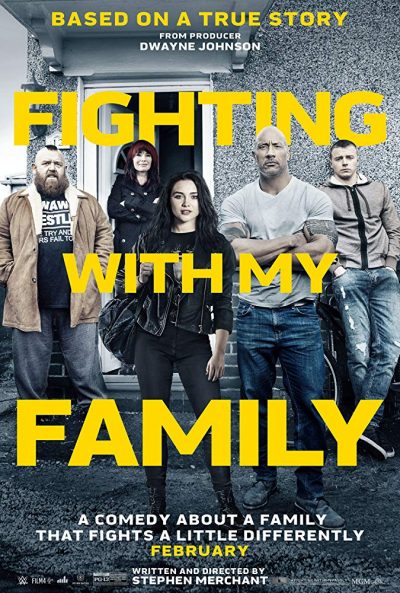 This biopic of WWE Women’s Champion Paige, a.k.a. Saraya Knight from the English seaside town of Norwich, gets a lot of things right about professional wrestling. In particular, it strikes a good balance between the various aspects – positive and negative – of the sports entertainment business. Over the past twenty years, Chris and I have been intermittently involved with the independent end of the wrestling scene, like Knight and her family, and this captures the low-rent showbiz aspects beautifully. Yet it doesn’t shortchange the seductive – almost addictive – appeal of performance for a responsive crowd, or the potential escape from a drab life it offers someone like Saraya/Paige.
 This feels less like a novel, than a novelization of a screenplay, adapted by a not particularly proficient writer. The text is littered with paragraphs which seem more like stage directions than literature, and is startlingly repetitive. For example, in one section near the beginning of the book, five of seven consecutive paragraphs start with, “As she/Kayla…” It’s not necessarily a bad screenplay, with an idea containing some potential. But it would be in need of several rewrites before any studio exec would sign off on it.