 More than five years ago, in March 2014, we wrote about the women of Game of Thrones, and ranked the top ten at that point. However, at that point, only three series had been screened of the show. Since then, we’ve had forty-three more episodes over five seasons, and a lot of water – as well as blood and other body fluids – has flowed under the bridges of Westeros in that time. With the finale having screened last month, it seems a good point at which to go back and revise the earlier article, in the light of subsequent events.
Stating the obvious, what follows includes massive spoilers for the entire show. Rankings were determined entirely at the whim of the author, based on a range of factors including survival or otherwise, eventual position in the Westeros community, glory of their fate and general bad-assery over the entire course of the show. I have to say, despite the large volumes of criticism (some of it wildly overblown: I mean, a petition for a do-over? Really?), I didn’t find the last season anywhere near as bad as some claim. Yes, elements of the writing could have been improved, and we’ll touch on a few in this countdown. But overall, it remains the finest TV series of the decade. And with that…
10. Ygritte
- Previously: #7
- Played by: Rose Leslie
- Status: Dead
- Fate: Shot with an arrow while attacking Castle Black
- Quote: “You know nothing, Jon Snow…”
One of GoT‘s many tragic love stories [seriously: do not fall in love in Westeros. It rarely ends well], Ygritte met Jon after being captured by the Night’s Watch. However, the tables were turned, with Jon becoming a prisoner of the Wildlings. Eventually, the two began a relationship, with Ygritte aggressively pursuing Jon, and eventually taking his virginity. A skilled archer and fierce fighter, she was part of the Wildling force sent to take Castle Black; they believed Jon to have defected from the Night’s Watch, but when his loyalty was exposed, the pair were separated. Ygritte shoots Jon with three arrows for his betrayal, though was unable to finish him off. When they meet again during the attack on Castle Black, her hesitation proves fatal, and she was shot in the back. I repeat: do not fall in love in Westeros.
9. Ellaria Sand
- Previously: not ranked
- Played by: Indira Varma
- Status: Unknown
- Fate: Last seen, imprisoned in King’s Landing
- Quote: “No wonder you can’t stand, you have no spine.”
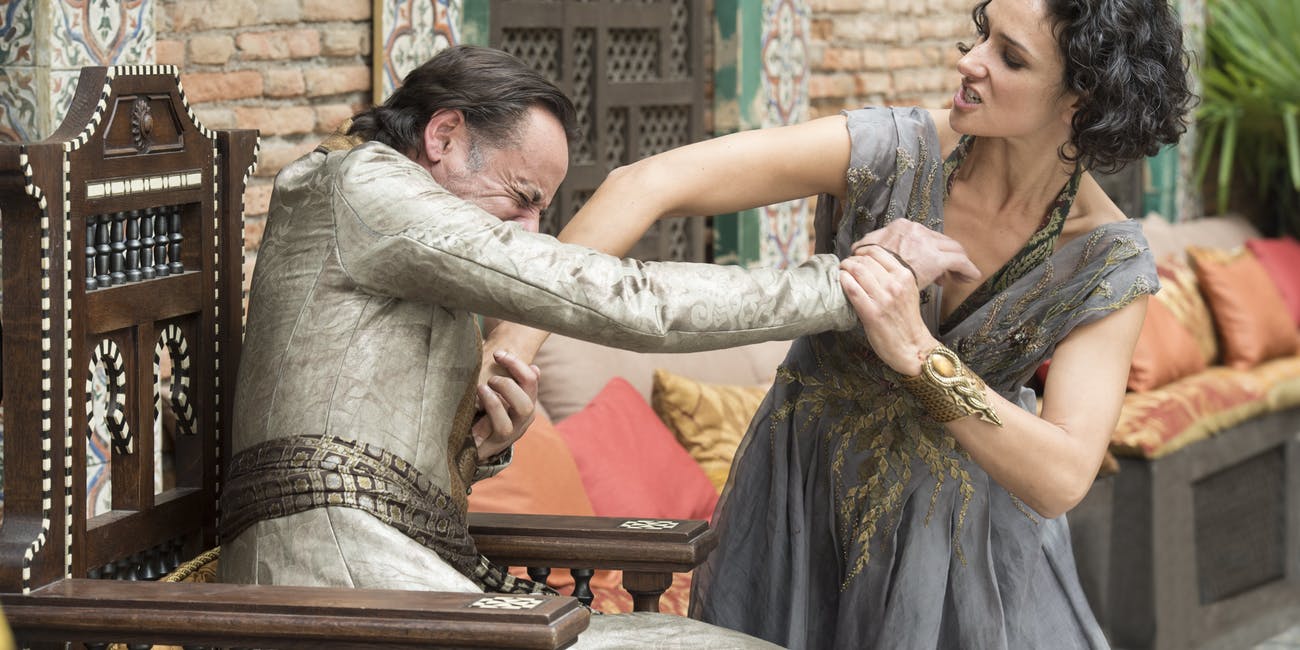
The mother of the Sand Snakes – a trio described as “the show’s worst characters”, but let’s not hold that against her. She began her path of vengeance after her lover, Oberyn Martell is killed in particularly gruesome fashion by the Mountain, in Tyrion Lannister’s trial by combat. Ellaria blamed Cersei, due to her false accusation against Tyrion, and swore revenge. An attempt to kidnap Cersei’s daughter, Myrcella Baratheon, is foiled, but when Myrcella departs back to King’s Landing, a farewell kiss is fatal, due to Ellaria’s poisoned lipstick. She stages a coup in Dorne, and allies it with Daenerys Targaryen. Captured in an ambush at sea by Euron Greyjoy, she is taken to King’s Landing. There, Ellaria was imprisoned in the Red Keep and, presumably, dies in its destruction.
8. Olenna Tyrell
- Previously: #9
- Played by: Diana Rigg
- Status: Dead
- Fate: Takes poison, after her capture by the Lannisters.
- Quote: “I’ve known a great many clever men. I’ve outlived them all.”
The matriarch of House Tyrell was its final survivor. Initially allied with the Lannisters, her grand-daughter Margaery was briefly married to Prince Joffrey, before his death on their wedding day. But she hated Cersei with a passion, and it was mutual, with Olenna one of the few who gave no damns. Once greeted by Cersei with, “Ah, yes – the famously tart-tongued Queen of Thorns, Olenna Tyrell”, she fired back with both barrels, “And the famous tart, Queen Cersei.” While not exactly an action heroine, we’ll allow it since Diana Rigg was almost eighty, and probably already in our hall of fame, for her portrayal of Emma Peel. Olenna certainly died the way she lived – with a barbed tongue. Her last words concerned the murder of Joffrey: “Tell Cersei, I want her to know it was me.”
7. Melisandre
- Previously: #8
- Played by: Carice van Houten
- Status: Dead
- Fate: Dies of old age… kinda.
- Quote: “The night is dark and full of terrors.”
Proof of the power religious conviction can give a person, Melisandre was a fanatical devotee of R’hllor, the Lord of Light. This seemed to give her abilities including eternal youth, pyrokinesis and the ability to create shadow demons, such as the one sent to assassinate Renly Baratheon. Her faith proved infectious: she managed to convince Stannis Baratheon to burn his own daughter as a sacrifice to R’hllor. After Stannis was defeated, she turned her support to Jon Snow, whom she resurrected after his death, believing he will lead the forces of light to defeat ice. In the Battle of Winterfell, she helped convince Arya to kill the Night King, reminding her of an earlier meeting, where she said, “I see a darkness in you… Brown eyes, blue eyes, green eyes. Eyes you’ll shut forever.” Her mission accomplished, she ended the magic which had prolonged her life and expired.
6. Cersei Lannister
- Previously: #4
- Played by: Lena Headey
- Status: Dead
- Fate: Crushed in the collapse of the Red Keep
- Quote: “So we fight and die or we submit and die – I know my choice.”
I would say was a severely disappointing ending, for arguably the greatest villainess in television history. Given Cersei’s relentless pursuit of power at any cost, and the number of people she had wronged or flat-out murdered along the way, the joy of inflicting her death going to a pile of falling masonry just seems… wrong. Indeed, she was underwhelmingly absent for much of the final season, doing little except stare out the window. Considering how much she had done before then, and her outstanding qualities of ruthless ambition and cold-hearted cunning, I found this passivity hard to accept. Still, I guess her fate was prophesied by her most famous quote, “When you play the game of thrones, you win or you die.” Turns out, it was the second.
5. Yara Greyjoy
- Previously: #5
- Played by: Gemma Whelan
- Status: Alive
- Fate: Queen of the Iron Islands
- Quote: “What is dead may never die… But kill the bastards anyway.”
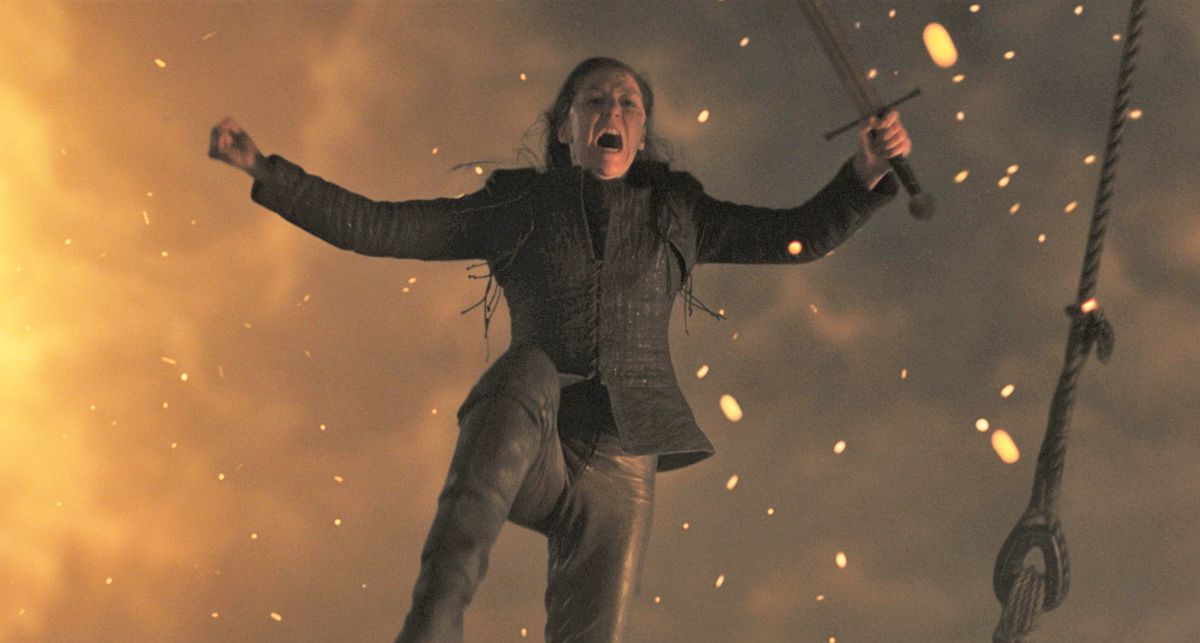
Life on the Iron Islands is hard, and it breeds hard folk. They don’t come much harder or fiercer than Yara. She may have been the daughter of their ruler, but had nothing handed to her, and had perpetually to battle prejudice from those ironborn who feel women should not fight or command. She led a brave attempt to rescue her kidnapped and tortured brother, Theon, but when her father was assassinated, lost out in the subsequent power struggle to his brother, Euron. Fleeing the islands, she allied with Daenerys, who preferred Yara’s terms to Euron’s more matrimonial ones. After her uncle captures her, Theon returns the earlier favour, rescuing his sister, and she retakes the Iron Islands, becoming Queen. I suspect a declaration of their independence may not be far behind.
4. Lyanna Mormont
- Previously: not ranked
- Played by: Bella Ramsey
- Status: Dead
- Fate: Crushed by a zombie giant, whom she killed with her last breath.
- Quote: “I may be small. I may be a girl. But I won’t be knitting by the fire while I have men fight for me.”
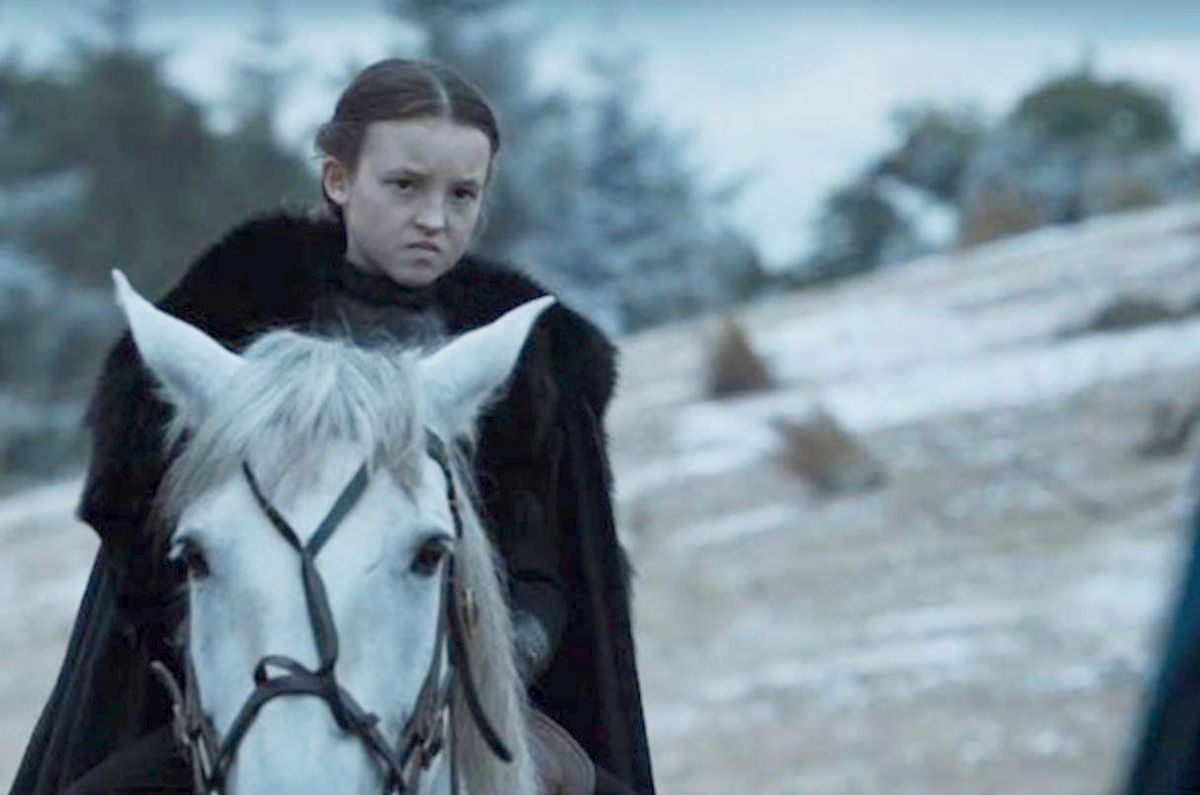
Surging in with a tiny, unstoppable bullet, she was only supposed to be in a single scene, but impressed the showrunners so much, they kept bringing her back for more. Fandom fell in love with her irrepressible attitude, which knew absolutely no fear and had a zero-tolerance policy for those who did. Woe betide anyone in the show who dared treat her like a little girl: they got off lightly if they only had to endure a withering stare in return. Before the Battle of Winterfell, she refused to take shelter in the crypt with the other women and children, and fought alongside everyone else. is The smallest character on the show fell victim to the largest, crushed in the grip of a giant. But she took it down, stabbing the monster in the eye with her dragonglass dagger. In a show where truly heroic deaths were few and far between, this was the finest one of all.
3. Ser Brienne of Tarth
- Previously: #3
- Played by: Gwendoline Christie
- Status: Alive
- Fate: Lord Commander of the Kingsguard
- Quote: “All my life, men like you have sneered at me. And all my life, I’ve been knocking men like you into the dust.”
Ah, Brienne. We pretty much fell in love with you the first time we saw you. And you remained one of the few truly good characters in the show, never compromising your morality for the sake of expediency. When you made a promise, you kept it, regardless of the personal difficulties which may have resulted. You were a better knight than a vast majority of those who bore that name, and there wasn’t a dry eye in the house – well, our house, at least – when Jamie Lannister bestowed that honour on you, the night before the Battle of Winterfell. Your romantic ideals proved a fatal weakness, however, Jamie abandoning you to return to his sister-with-benefits in King’s Landing. You deserved a considerably better finish to your own story than merely writing his down. But at least you made it through to the end with your high morals intact, as well as with your life.
2. Daenerys Targaryen
- Previously: #1
- Played by: Emilia Clarke
- Status: Dead
- Fate: Stabbed by Jon Snow
- Quote: “I’m not going to stop the wheel. I’m going to break the wheel.”
Yeah… About that… Think the 560 parents who named their daughters Khaleesi last year, are suffering a case of buyer’s remorse? For the amazing rise of Daenerys, from reluctant bride to, literally, touching the Iron Throne, imploded over the final two episodes. First, in the genocide of King’s Landing residents after their surrender; then in her death at the hand of her lover/nephew. Given how beloved a character she was, a “heel turn” like we saw in the penultimate episode was always going to be problematic for a lot of people. That’s even considering her family history of psychological issues, to put it mildly, and her fair share of immensely cruel acts, albeit with a higher degree of justification.
That may be what was missing here. Once the firestorm got under way, we saw little or nothing of Daenerys; she and her dragon became more like a natural catastrophe, raining fire from the heavens. And what we got from her in the final show was more a well-staged speech to rally the troops than any kind of explanation. I have read the interesting suggestion that her actions made most sense, if read through the lens of Machiavelli, who believed that cruelty can be well- or ill-used, and famously wrote, “It is much safer to be feared than loved.” But she stands best as a reminder of the murky world depicted in Game of Thrones, where there is rarely black and white to be found, in morality or characterization.
1. Arya Stark
- Previously: #2
- Played by: Maisie Williams
- Status: Alive
- Fate: Heading west to explore parts unknown
- Quote: “A bruise is a lesson… and each lesson makes us better.”
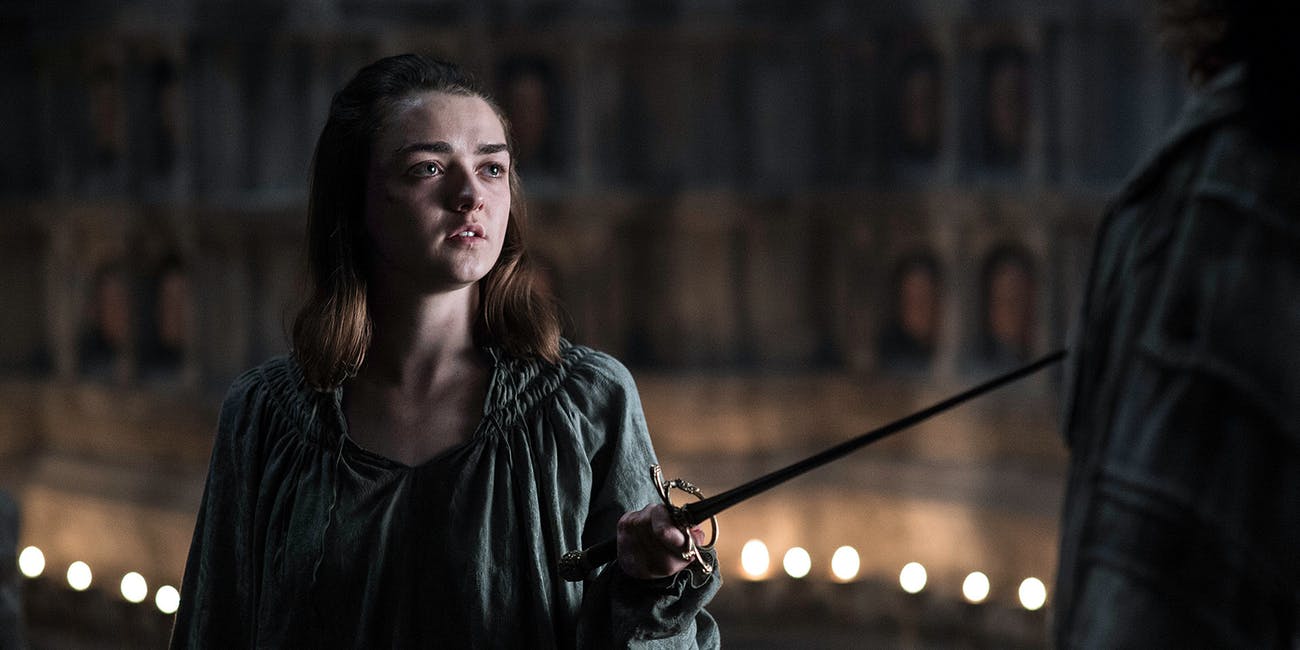
What a journey. If you watch season one, and the tiny, timid Arya, being traumatized by the execution of her father, then compare what we had by the end of the show, there seems little argument that her character’s arc has been the most monumental, even surpassing the Mother of Dragons in the final reckoning. She was always a bit of a proto-badass, demanding (and getting) sword lessons, but in the early days, it felt like a kid playing dress-up. Only after she had to go on the run and undercover, initially dressed as a boy, did we see the steel within her character, reciting like a bedtime prayer, the names of all the people she was going to kill. Most of them did end up dead, whether or not by her hand.
We probably reach Peak Arya during her stint training to be an assassin, with the Faceless Men of Braavos. Though she eventually rebelled against them, refusing to kill a target, then taking out the Waif, a colleague sent to kill Arya [which led some crazy fan theories of its own]. It still gave her the stealth and skills she would need at the Battle of Winterfell, when all seemed lost, to plunge a dragonglass dagger into the heart of the Night King, and pretty much save the entire kingdom of Westeros. Deciding, at the end, to sail away into the sunset and start afresh, was the act of a true adventurer. The tedious palace life in a Northern castle her sister “won”, was not going to be Arya’s fate. For that, and a hundred other reasons, she’s the ultimate action heroine the show gave us.



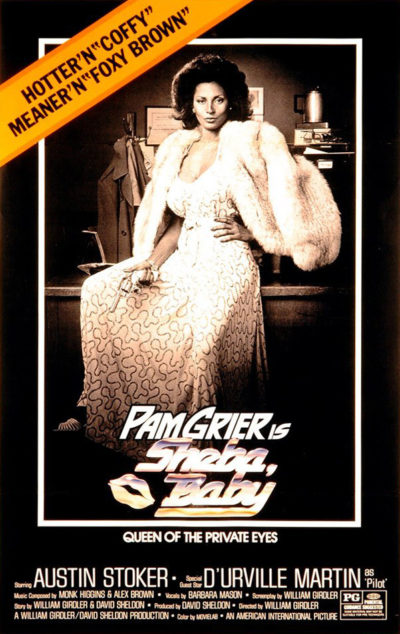
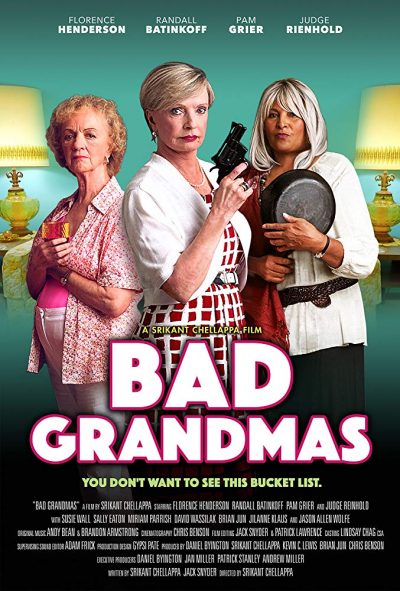 There is entertainment value to be found even in bad movies. Bad action, horror and SF are sometimes just as amusing as the good stuff. But bad comedy is almost irredeemable: that’s why Mystery Science Theater 3000 rarely go there. Bad comedy just… sits there, dull and unamusing, almost worthless. And that’s what we have here. It’s a somewhat interesting idea, with some potential. Unfortunately, the execution – mostly in the script and direction – are so woefully inept that even the brave efforts of Florence Henderson, in her final film, aren’t enough to salvage it. And wasting the talents of Pam Grier needs to be some kind of cinematic capital offense.
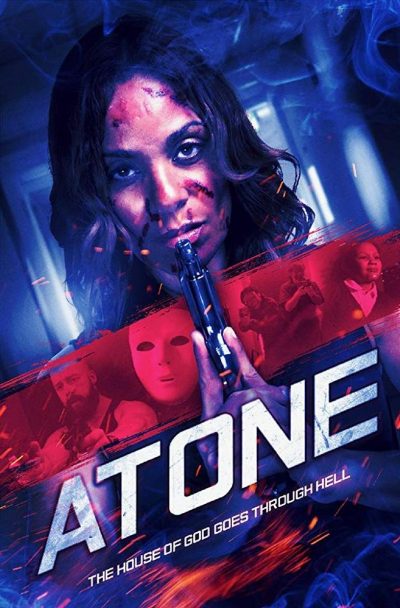 I mention the above for two reasons. Firstly, because Chris wondered why the film was called “At One”. Secondly, because when it finished, I turned to her and said those four little words which mean so much: “I can only apologize…” Yes, to use it in a sentence, I’ll be atoning for picking to watch this low-rent “Die Hard in a church” offering, for some time to come. [Though the following night, I had to sit through her choice of Justice League: paid back in full, I’d say…] There were a couple of aspects here that weren’t terrible; unfortunately, the overall execution was painfully close to… well, god awful seems the appropriate term here.
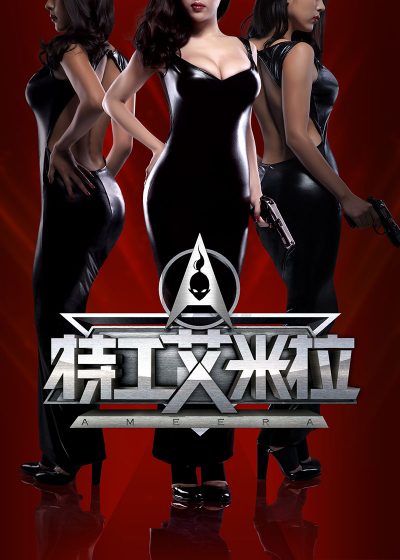 I should probably have learned from my first experience with Ms. Hu: the thoroughly mediocre jungle ensemble piece which was
  Vic Stratton
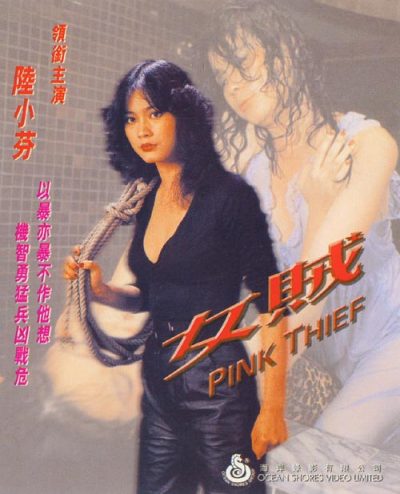 Lan Hsiao-Tieh (Lu) is one of four illegal immigrants to Hong Kong, who manage to escape from the human traffickers bringing them to the colony – albeit after Lan has been raped by one. She and her friends just about manage to eke out a living on the edge of society, which treats them very unkindly in comparison to legal residents: for example, working as a coolie, they get only a fraction of the wages. As a result, they’re forced into criminal activity. One of the victims of the resultant pick-pocketing is the feared Chief Detective Lu (Lui), who tracks down the gang and makes them an offer: go undercover and help in his investigation of a Triad gang called the Eagles, in exchange for legal status. Lan is doubtful – until she realizes that one of the targets is the man who raped her. With the assistance of training from a retired thief, Lan is inserted as the moll of the gang’s leader, Hao (Tien Feng).
 After the success of
  This 1986 TV movie was the first film made about an FBI agent while they were still active. Gibson was the fifth black female agent in the bureau’s history: she broke new ground by being the first such assigned to the Fugitive Matters department in the Miami branch, and was also the first to reach a supervisory level within the FBI. That would, however, be well after the story told in this film. It covers how she came to join the FBI, and her first major undercover operation, taking down a gun-running ring operated by ex-NFL star, Adam Prentice (Lawson). However, Gibson starts to find the lines between real-life and undercover work blurring, and begins feeling genuine affection for her target. This doesn’t sit well with her partner, TC (Rollins). If it sounds all very by the numbers… It is.
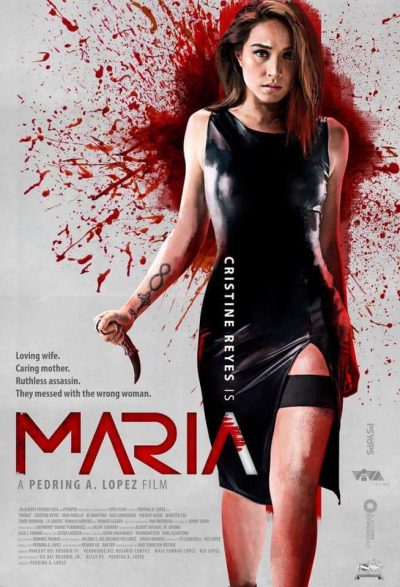 Proof that a lack of originality is not necessarily a bar to being an entertaining movie, this pulls together elements from all over the place, but probably most notably, The Long Kiss Goodnight and John Wick. You have the “former assassin now leading an idyllic family life, until her past catches up with her” of the former. And the “Oh, they’re surely not going to kill tha… Hoo-boy. The hero/ine is going to be VERY angry with them” of the latter, among other elements.
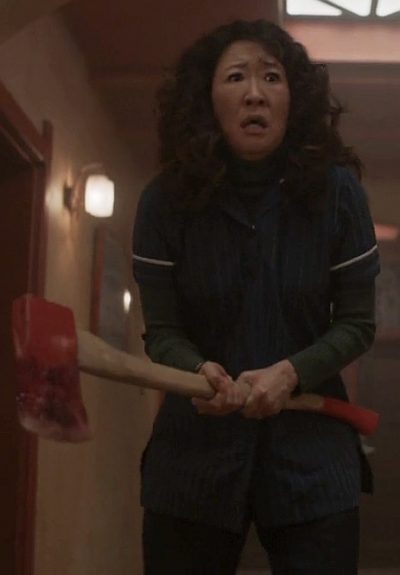 [Warning: this piece will contain significant spoilers for the show. READ ON AT YOUR OWN RISK!] It was always going to be difficult, if not impossible, for the second series of Killing Eve to match the brilliance of the first. That had ended with mousy MI-5 desk jockey Eve (Oh) stabbing ruthless assassin Villanelle (Connor), as they lay on a bed – platonically, but you could cut the sexual tension with a knife. Where would things go from there? The answer, unfortunately, is nowhere particularly much, except for some thoroughly unconvincing plot twists, such as Villanelle going to work for MI-5. Hello? Did everyone forget her cold-blooded murders of agents Bill Pargrave and Frank Haleton in season one? Let’s just pretend she’s one of us, and send her off on a mission without so much as a background check, m’kay?
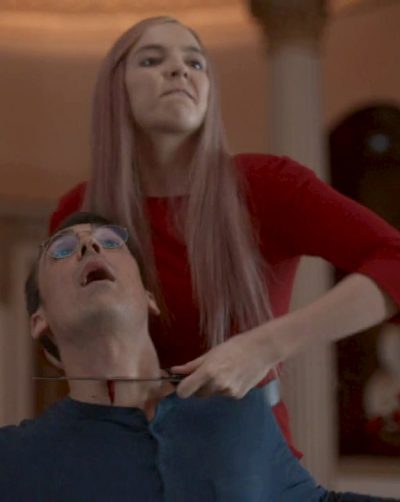 After becoming an under-the-radar hit the first time, the second set of episodes seems to have left a lot of people unsatisfied, for a variety of reason. And the ratings reflect this. Having managed the almost unprecedented feat of increasing almost every week the first time round, this season saw fewer viewers for every part after the debut, than the equivalent in series one. Maybe renewing it the day after that opening episode was a mistake? The final scene of this series ends in a mirror image of its predecessor, Villanelle shooting Eve in a fit of pique after she responds to Villanelle’s declaration of love with “You don’t know what that is,” and walks away. Of course, the renewal and critical acclaim basically make it certain Eve isn’t dead. So it’s less a case of “What will happen?”, than “What cheat will the writers use to get out of the corner into which they’ve painted themselves?” I’m going with a bullet-proof vest.